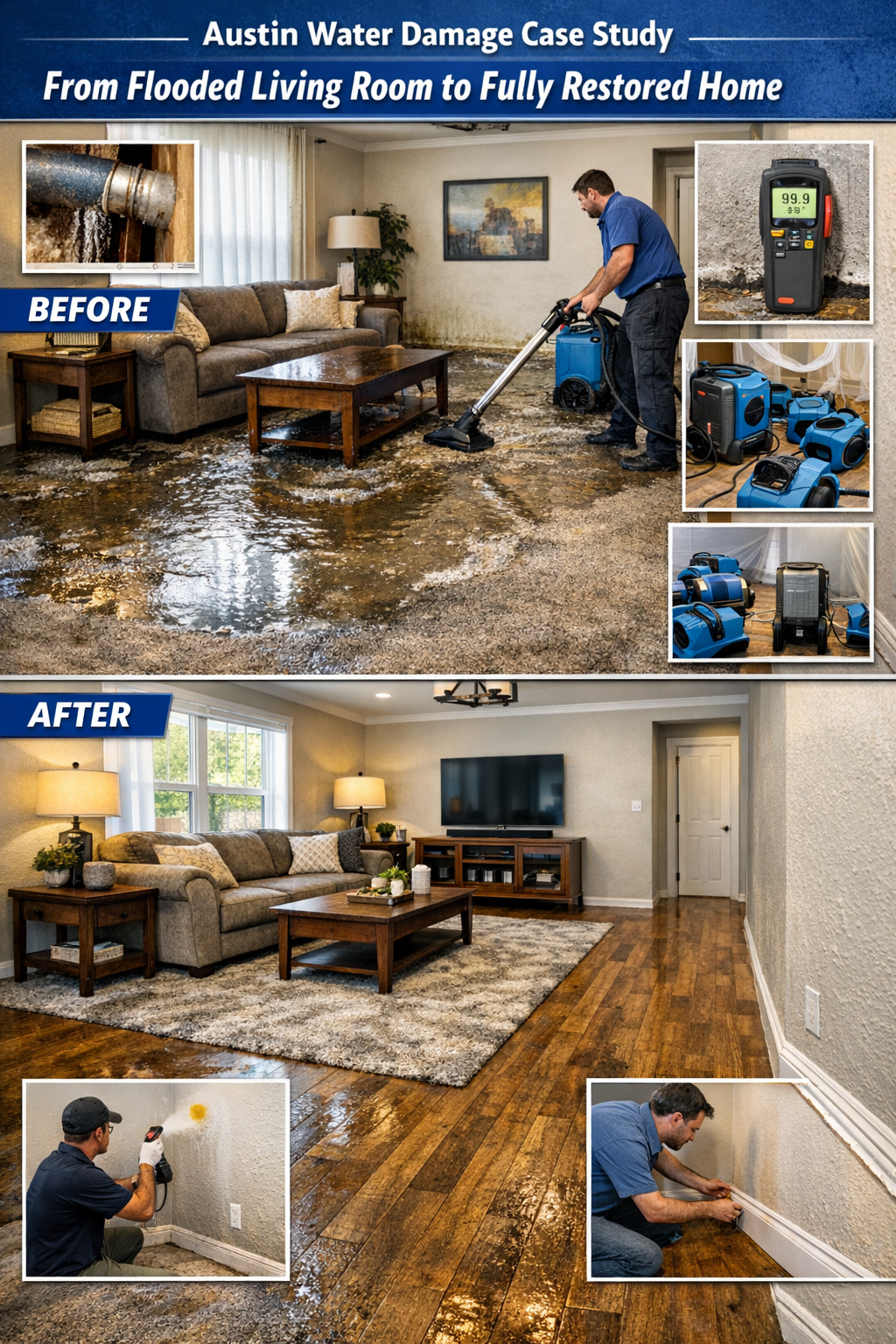
Real Austin Case Study — From Flooded Living Room to Fully Restored Home
/
Water damage can happen suddenly and cause significant disruption for homeowners. Whether caused by a burst pipe, appliance leak, or severe storm
Read More
Explore expert tips on water damage restoration, carpet cleaning, rug cleaning, mold remediation, and air duct cleaning in Austin, TX. Trusted local insights from The Steam Team since 1983.
Water damage can happen suddenly and cause significant disruption for homeowners. Whether caused by a burst pipe, appliance leak, or severe storm
Read MoreWater damage is one of the most common property problems homeowners face. From plumbing leaks to severe storms, water can quickly damage floors
Read MoreWater damage is not always visible on the surface. Even after standing water is removed, moisture can remain trapped inside walls, under flooring
Read MoreWhen water damage occurs in a home, restoration work often begins quickly to prevent additional structural damage and mold growth.
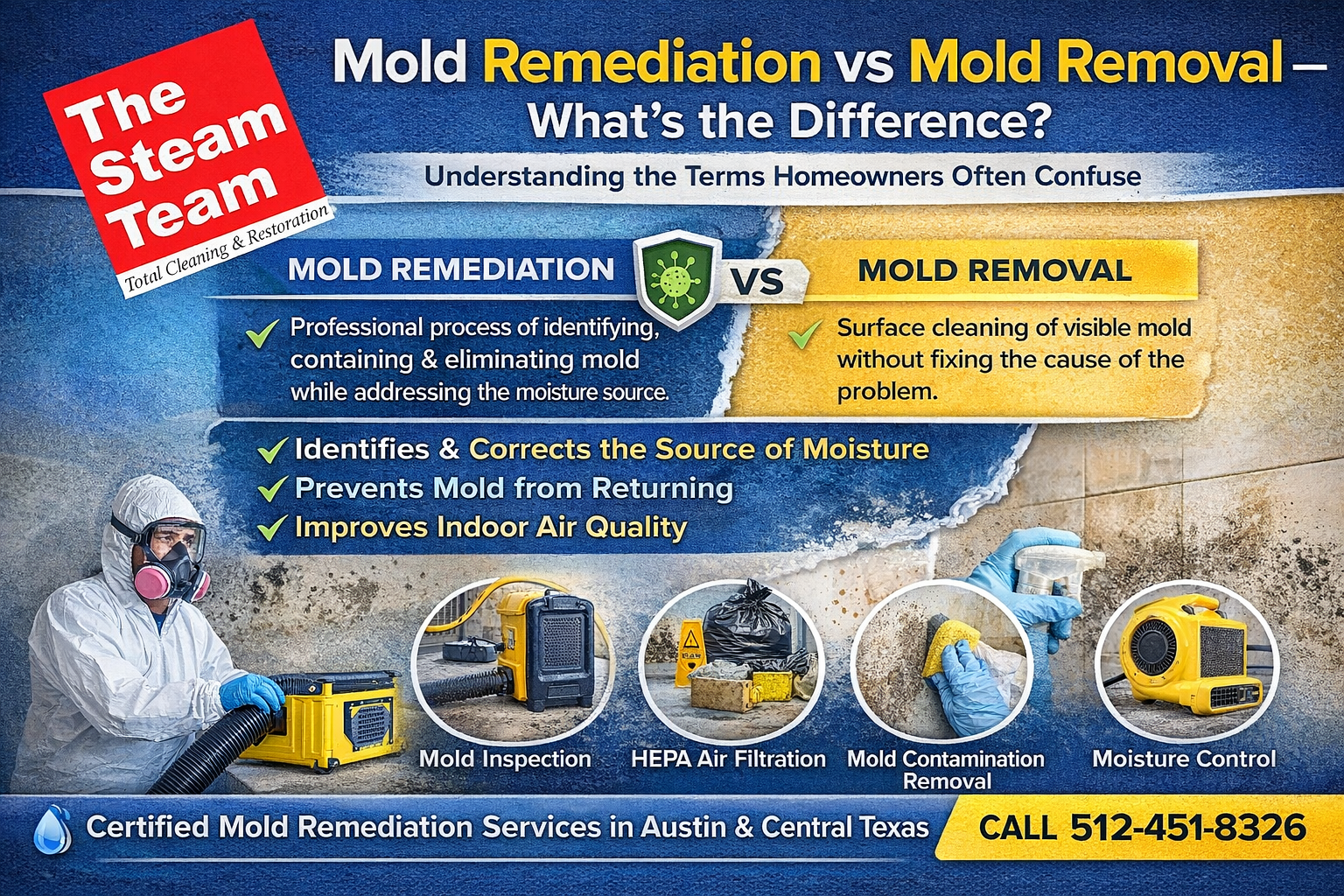
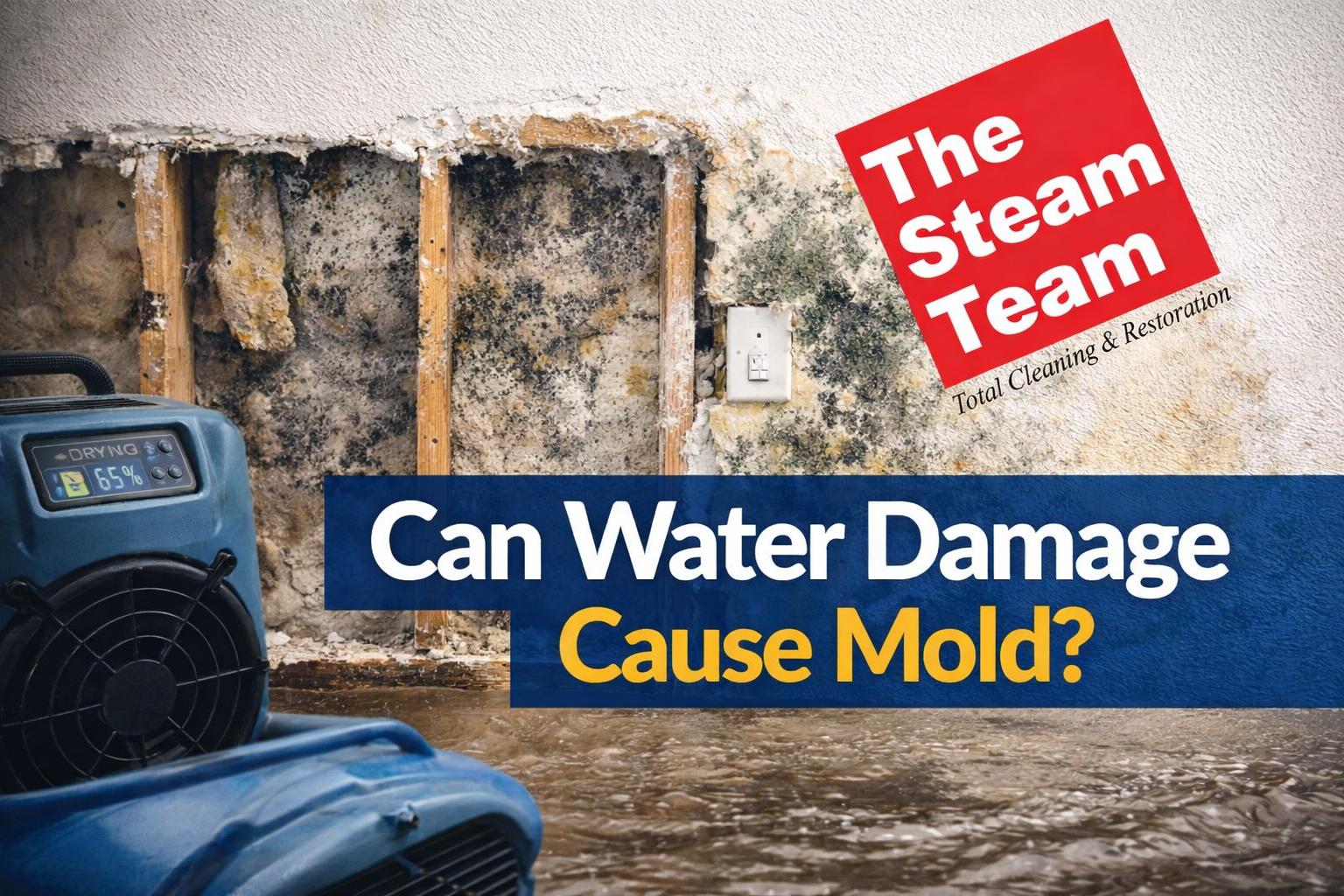
Read MoreWhen homeowners discover mold in their homes, they often hear the terms mold removal and mold remediation used interchangeably.
Read MoreFlooding can cause serious damage to flooring materials inside a home. Whether the water comes from a burst pipe, storm flooding, appliance leak
Read MoreWhen water damage occurs in a home or building, removing standing water is only the beginning of the restoration process.
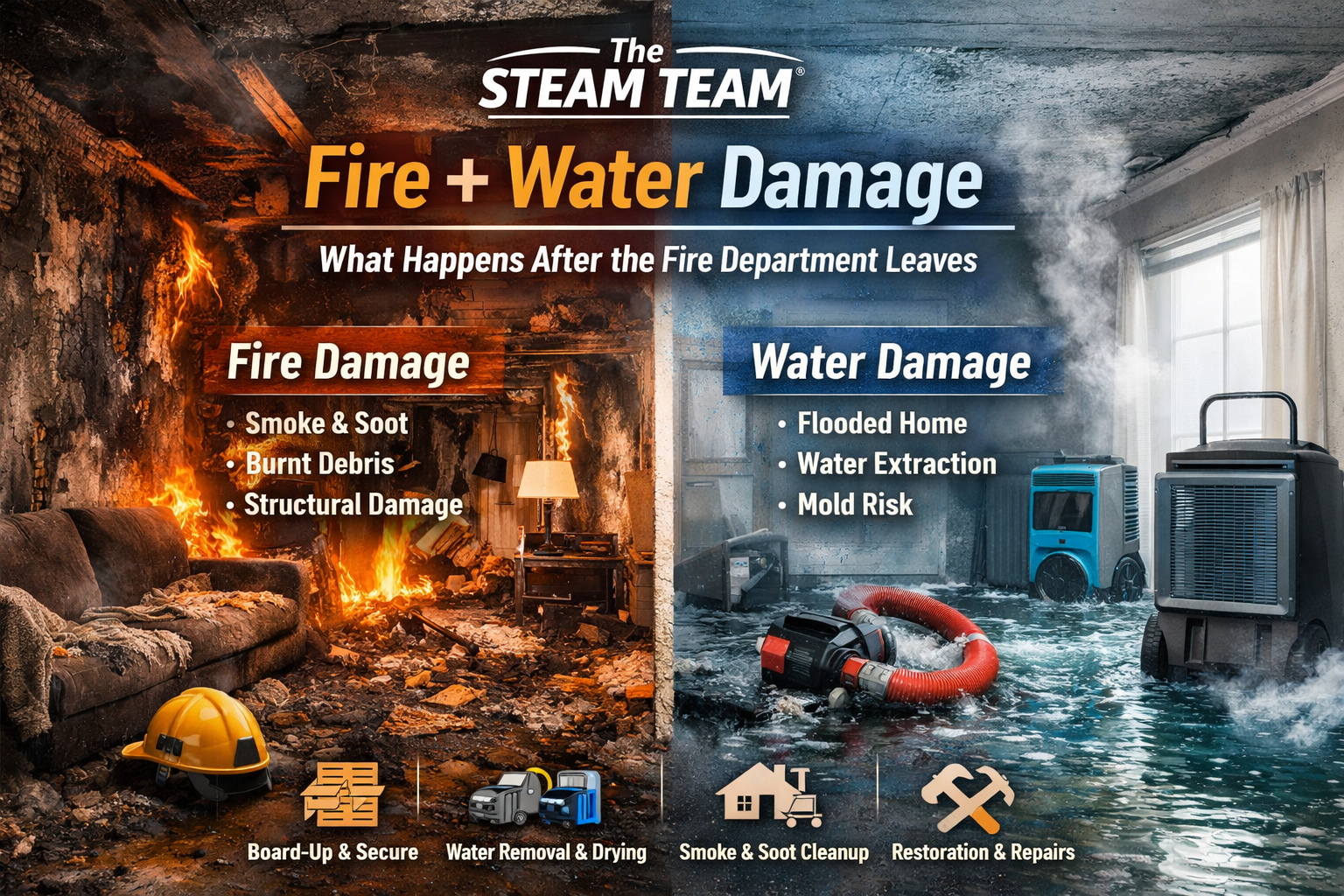
Read MoreWhen a fire occurs in a home, the fire department’s primary goal is to extinguish the flames and ensure everyone’s safety.
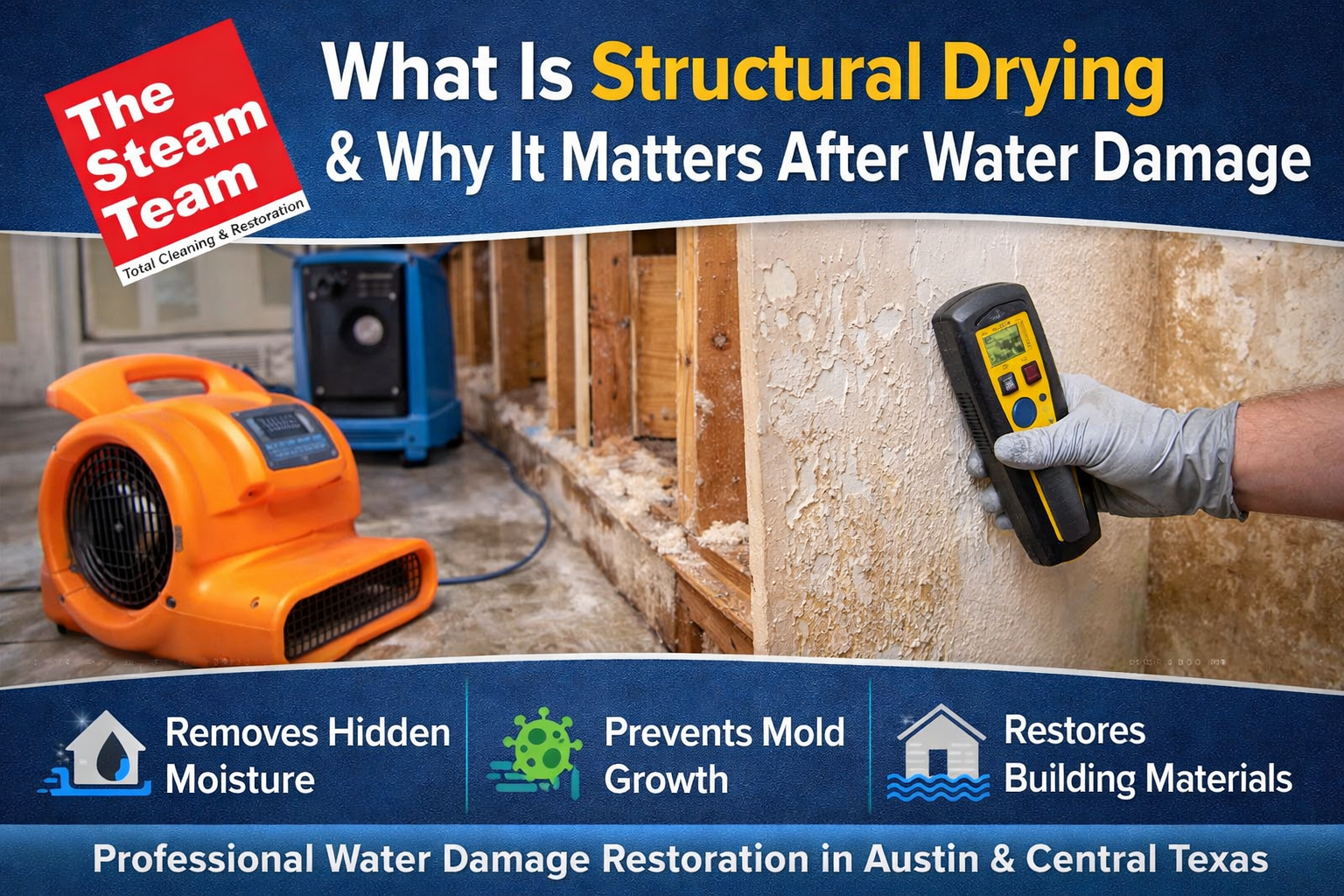
Read MoreAfter water damage occurs, removing standing water is only the first step in the restoration process. Moisture can remain trapped inside building materials such as drywall, insulation, and flooring even after visible water is gone.
If this hidden moisture is not removed quickly, mold can begin growing within 24–48 hours.
Professional structural drying is designed to remove moisture deep inside materials and prevent mold development. Understanding how professional drying equipment prevents mold growth in Austin homes helps homeowners recognize why proper restoration is essential after water damage.
The Steam Team has been providing professional structural drying and water damage restoration in Austin since 1983, helping homeowners protect their properties from mold and long-term damage.
Mold spores are naturally present in the environment. However, mold requires specific conditions to grow.
These conditions include:
• Moisture
• Warm temperatures
• Organic materials such as wood or drywall
When water damage occurs, building materials absorb moisture and create an environment where mold can develop rapidly.
Austin’s warm climate can accelerate this process if moisture is not removed properly.
Many homeowners assume that opening windows or using household fans will dry wet areas after water damage.
While this may help dry surfaces, it often does not remove moisture trapped within structural materials.
Hidden moisture can remain inside:
• Drywall
• Subfloors
• Insulation
• Wood framing
Without professional drying equipment, moisture may remain for days or weeks, increasing the risk of mold growth.
Professional structural drying uses specialized equipment designed to remove moisture from building materials quickly and efficiently.
Restoration professionals monitor humidity levels and moisture content throughout the drying process.
The goal is to restore materials to normal moisture levels and prevent microbial growth.
Restoration companies use several types of equipment during the drying process.
Air movers circulate large volumes of air across wet surfaces.
This airflow accelerates evaporation by pushing moisture out of materials such as carpet, drywall, and flooring.
Professional air movers are significantly more powerful than household fans.
Dehumidifiers remove moisture from the air during the drying process.
When moisture evaporates from wet materials, it enters the air as humidity.
Dehumidifiers capture this moisture and convert it back into water, which is removed from the environment.
This prevents humidity from slowing the drying process.
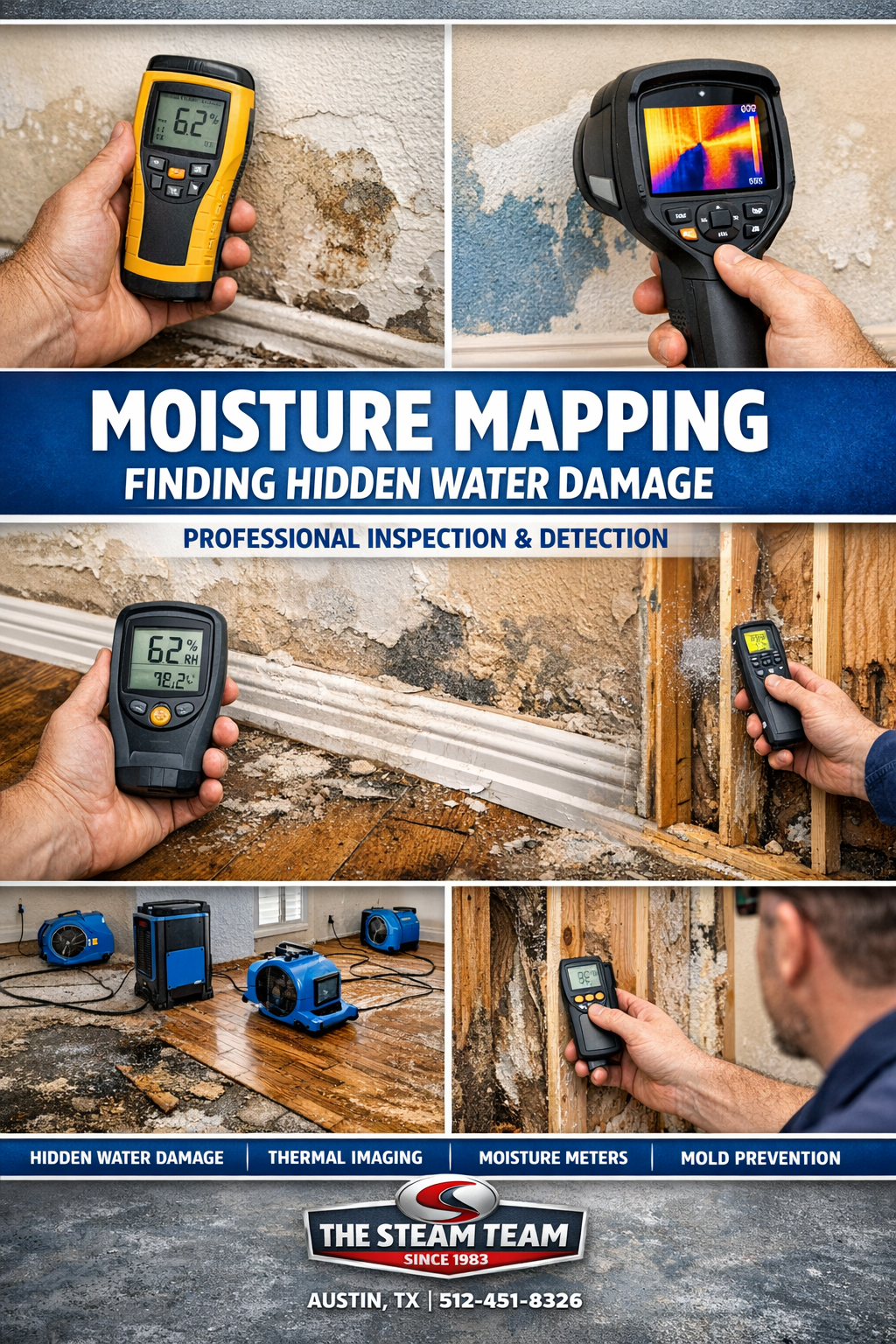
Professional restoration technicians use specialized tools to locate hidden moisture.
Common tools include:
• Moisture meters
• Thermal imaging cameras
• Hygrometers for humidity monitoring
These tools help ensure that moisture is completely removed from affected materials.
Structural drying is not a one-time process. Restoration professionals typically monitor drying progress daily.
Moisture readings are taken from materials such as:
• Drywall
• Flooring
• Structural framing
• Subfloors
Monitoring ensures that drying equipment remains in place until materials reach safe moisture levels.
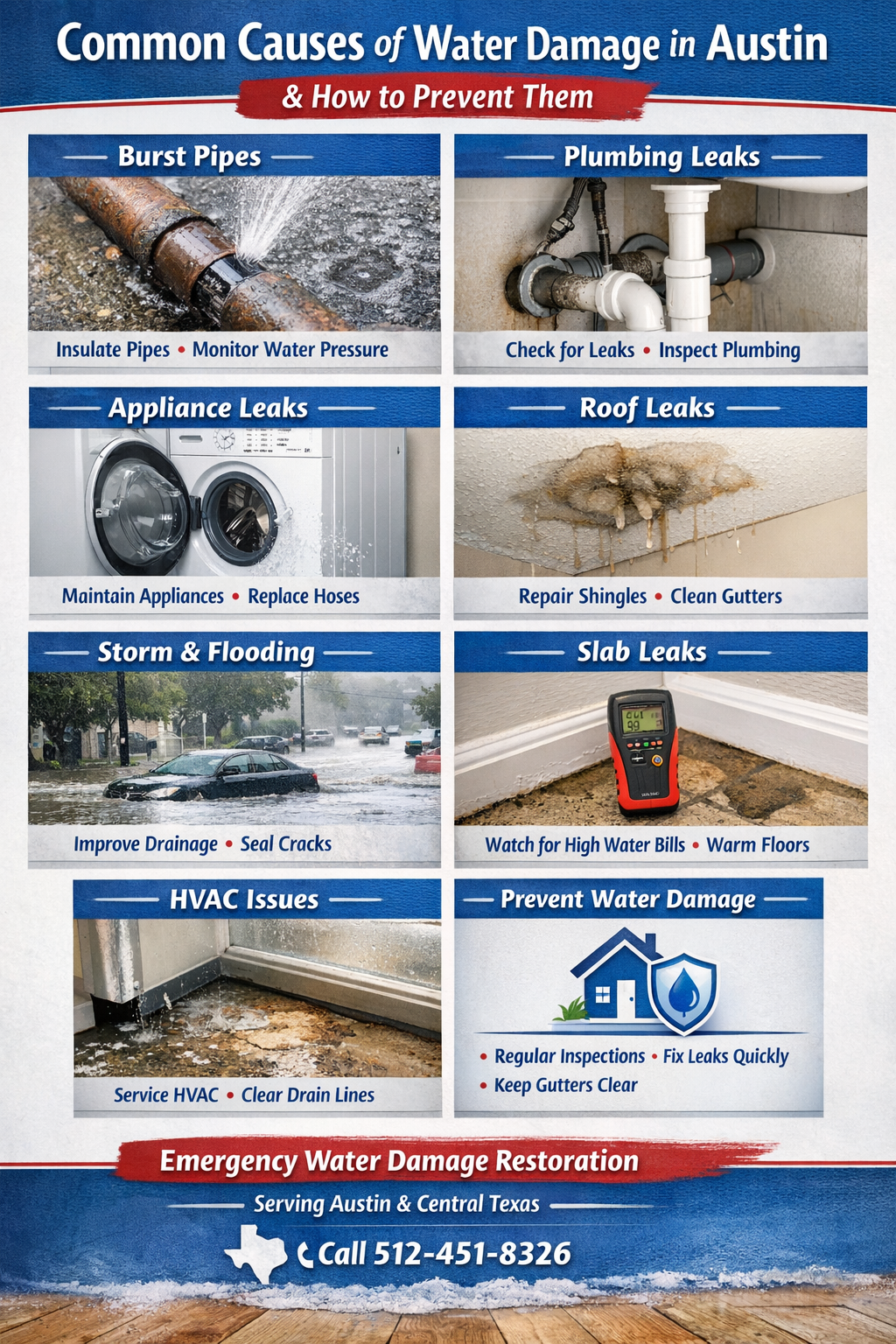
After water damage, moisture often becomes trapped in areas that are difficult to dry.
Common hidden moisture locations include:
• Behind drywall
• Under flooring
• Inside wall cavities
• Beneath cabinets
• Around insulation
Professional drying equipment helps remove moisture from these hidden spaces.
Rapid drying removes the moisture mold requires to grow.
Benefits of professional drying include:
• Reduced mold risk
• Faster restoration timelines
• Prevention of structural damage
• Improved indoor air quality
By removing moisture quickly, restoration professionals prevent mold spores from developing into colonies.
Structural drying timelines depend on several factors.
Typical drying time ranges from 2–4 days, depending on:
• The amount of water present
• The materials affected
• Indoor humidity levels
• Air circulation
Technicians monitor drying progress until the structure returns to normal moisture levels.
Water damage restoration involves more than removing visible water.
Professional restoration companies provide:
• Water extraction
• Structural drying
• Moisture detection
• Mold prevention treatments
• Damage assessment
These services help ensure that moisture is removed completely and the home is safe to occupy.
Mold can begin developing within 24–48 hours if moisture remains inside building materials.
Fans may dry surface moisture, but they typically cannot remove moisture trapped inside walls or floors.
Most structural drying projects take 2–4 days, depending on the extent of the damage.
Yes. Dehumidifiers remove moisture from the air, helping prevent mold growth.
No. Equipment should remain in place until professionals confirm that materials are fully dry.
• Serving Austin since 1983
• Certified water damage restoration technicians
• Advanced structural drying equipment
• Professional moisture detection tools
• Trusted across Central Texas
Our team helps homeowners prevent mold and restore their homes safely after water damage.
If your home has experienced water damage, proper structural drying is essential for preventing mold and long-term damage.
The Steam Team provides professional water damage restoration and structural drying in Austin, helping homeowners restore their property quickly and safely.
📞 Call 512-451-8326 for assistance
Serving Austin, Round Rock, Cedar Park, Georgetown, and surrounding Central Texas communities.
Not all water damage is the same. In the restoration industry, water damage is classified into different categories based on contamination levels.
Read MoreSlab leaks are one of the most serious plumbing issues homeowners can face in Central Texas.
Read MoreCeiling water damage is a common problem for homeowners in Austin. Water stains, sagging drywall, and dripping ceilings can appear suddenly after plumbing leaks, roof damage, or severe storms.
Even small leaks can lead to significant structural damage if not addressed quickly. Moisture trapped above ceilings can weaken drywall, damage insulation, and create ideal conditions for mold growth.
Understanding the causes and repair options for ceiling water damage in Austin homes helps homeowners take quick action and prevent costly structural repairs.
The Steam Team has been helping Austin homeowners restore properties after water damage since 1983, providing professional water extraction, structural drying, and restoration services throughout Central Texas.
Ceiling damage usually occurs when water leaks from areas above the ceiling structure.
Common causes include:
• Roof leaks caused by storms or damaged shingles
• Burst or leaking pipes in upper floors
• Plumbing leaks from bathrooms or kitchens
• Overflowing bathtubs or sinks
• HVAC condensation issues
• Water heater leaks in attic spaces
Homes in Austin, Round Rock, and Cedar Park often experience roof-related leaks during heavy rainstorms, which can lead to ceiling water damage.
Water damage often begins with subtle warning signs.
Homeowners may notice:
• Yellow or brown water stains on ceilings
• Paint bubbling or peeling
• Damp spots near light fixtures
• Musty odors coming from ceiling areas
• Small cracks or discoloration
Identifying these early signs allows homeowners to repair the problem before the ceiling structure becomes weakened.
In some cases, ceiling water damage can create safety hazards.
Severe water damage may cause:
• Ceiling drywall to sag or collapse
• Electrical hazards near ceiling fixtures
• Mold growth in insulation and drywall
• Structural damage to ceiling joists
If the ceiling begins to sag or bulge, homeowners should avoid standing underneath the area and contact restoration professionals immediately.
Water entering the ceiling does not always stay in one location.
Moisture can spread through:
• Insulation above the ceiling
• Wooden framing and ceiling joists
• Drywall panels
• Electrical fixtures and wiring
This means the visible stain may not always represent the full extent of the damage.
Professional moisture detection tools help identify hidden moisture inside ceiling cavities.
The best repair approach depends on the severity of the damage.
If the damage is minimal and the water source is resolved quickly, repairs may involve:
• Drying the affected area
• Repainting stained surfaces
• Replacing small drywall sections
Proper drying is essential to prevent mold growth.
If drywall becomes saturated or begins weakening, repairs may include:
• Removing damaged drywall sections
• Drying structural framing and insulation
• Installing new drywall panels
• Repainting the repaired area
Professional drying equipment is often required to remove moisture trapped inside ceiling cavities.
In cases of major flooding or structural damage, larger repairs may be necessary.
These repairs may involve:
• Removing large sections of drywall
• Replacing insulation
• Repairing framing or support structures
• Full ceiling reconstruction
Restoration professionals can assess the extent of damage and recommend the best repair solution.
Ceiling leaks often create conditions where mold can develop quickly.
Mold may begin growing within 24–48 hours if moisture remains inside drywall or insulation.
Preventative steps include:
• Immediate water removal
• Professional structural drying
• Proper ventilation
• Removing saturated materials
Addressing moisture quickly helps reduce the risk of mold contamination.
If water stains or leaks appear on the ceiling, homeowners should take the following steps:
Identify the source of the leak if possible
Move furniture and belongings away from the area
Place containers under dripping water
Turn off electricity near affected areas if necessary
Contact a water damage restoration professional
Quick response helps prevent further damage to the home.
Water stains are usually caused by roof leaks, plumbing leaks, or overflowing fixtures from upper floors.
Yes. Minor damage may require drying and repainting, while severe damage may require drywall replacement.
Severe water damage can weaken ceiling materials and create collapse risks if not repaired.
Yes. Moisture trapped inside ceilings can lead to mold growth if not dried quickly.
Minor cosmetic repairs may be possible, but significant water damage often requires professional restoration.
• Serving Austin since 1983
• Certified water damage restoration technicians
• Advanced moisture detection equipment
• Professional structural drying services
• Trusted across Central Texas
Our team helps homeowners identify water leaks, dry structures, and repair damaged ceilings safely.
If your ceiling shows signs of water damage, addressing the issue quickly can prevent larger structural problems.
The Steam Team provides professional water damage restoration in Austin, helping homeowners locate leaks, dry structures, and repair damaged ceilings.
📞 Call 512-451-8326 for assistance
Serving Austin, Round Rock, Cedar Park, Georgetown, and surrounding Central Texas communities.
Water damage can be stressful for homeowners, especially when dealing with unexpected repairs and restoration costs.
Read MoreWater damage and mold growth are closely connected. When water enters a home due to leaks, flooding, or plumbing failures
Read MoreWater damage doesn’t always appear immediately. In many cases, moisture spreads quietly behind walls, under floors, or inside ceilings long before homeowners notice visible damage.
Hidden water damage can lead to structural deterioration, mold growth, and costly repairs if not addressed quickly. Learning how to identify early warning signs can help homeowners protect their property and prevent larger restoration issues.
Understanding the signs of hidden water damage in Austin homes allows homeowners to catch problems early and respond before serious damage occurs.
The Steam Team has been helping homeowners detect and repair water damage in Austin since 1983, using advanced moisture detection technology and professional restoration services throughout Central Texas.
Water often travels through building materials in ways that are difficult to see.
Leaks may begin in places such as:
• Inside walls
• Under flooring
• Above ceilings
• Around plumbing fixtures
• Beneath appliances
Because moisture can spread slowly through drywall, wood framing, and insulation, visible damage may not appear until the problem has already worsened.
Homes in Austin, Round Rock, and Cedar Park may experience hidden leaks from plumbing systems, slab leaks, or roof damage during storms.
One of the most common indicators of hidden moisture is a persistent musty smell.
These odors often develop when moisture becomes trapped in materials such as:
• Drywall
• Carpet padding
• Wooden subfloors
• Insulation
Musty odors may become stronger when HVAC systems run or when humidity levels increase.
This is often an early warning sign that moisture is present somewhere in the home.
Water damage often appears as stains on painted surfaces.
Common signs include:
• Yellow or brown ceiling stains
• Discolored drywall patches
• Water rings around light fixtures
• Streaks running down walls
These stains may indicate water leaks from pipes, roof damage, or condensation issues.
When moisture accumulates inside walls, it can cause paint and drywall surfaces to deteriorate.
Signs may include:
• Paint peeling or cracking
• Bubbling or blistering walls
• Wallpaper separating from the wall
These symptoms often occur when moisture becomes trapped behind wall surfaces.
Flooring materials are highly sensitive to moisture.
Hidden water damage may cause:
• Hardwood floors to warp or cup
• Laminate flooring to swell
• Tile grout to loosen
• Carpet padding to remain damp
Floor damage may occur even if water is not visible on the surface.
Unexpected increases in water bills can sometimes indicate hidden plumbing leaks.
Leaks inside walls, under foundations, or around fixtures may allow water to escape continuously without being noticed.
Monitoring utility bills can help homeowners identify plumbing issues early.
Mold often develops in damp environments caused by hidden water damage.
Common areas where mold may appear include:
• Around air vents
• Behind furniture
• Along baseboards
• Inside closets
• Near plumbing fixtures
Mold growth may indicate an ongoing moisture problem inside the structure.
Walls affected by hidden moisture may feel soft when touched.
This can occur when drywall absorbs water and begins losing structural strength.
Spongy walls may indicate:
• Pipe leaks inside walls
• Roof leaks above ceilings
• Long-term moisture exposure
Professional inspection may be required to locate the exact source of the problem.
Water damage restoration professionals use specialized tools to locate moisture that cannot be seen.
These tools may include:
• Moisture meters
• Thermal imaging cameras
• Hygrometers for humidity monitoring
• Moisture mapping technology
These devices help restoration technicians locate hidden water pockets before they cause major damage.
Several issues commonly cause hidden water damage in Central Texas homes.
These include:
• Slab leaks beneath foundations
• Roof leaks during storms
• Appliance leaks from washing machines or dishwashers
• Plumbing failures inside walls
• Condensation around HVAC systems
Regular inspections can help identify these issues early.
The longer hidden water damage goes undetected, the more expensive repairs can become.
Early detection helps prevent:
• Mold contamination
• Structural weakening
• Damage to flooring and drywall
• Expensive reconstruction projects
Quick response allows restoration professionals to remove moisture before permanent damage occurs.
Professional help may be needed when homeowners notice:
• Persistent musty odors
• Unexplained stains on ceilings or walls
• Warping floors or soft drywall
• Mold growth inside the home
• Sudden increases in water bills
Restoration professionals can identify the source of moisture and begin the drying process.
Yes. Water damage can develop behind walls, under flooring, or inside ceilings before visible signs appear.
Restoration technicians use moisture meters and thermal imaging cameras to locate hidden moisture.
Yes. Mold can begin growing within 24–48 hours in damp environments.
Homeowners should contact a professional restoration company to inspect the property and locate the source of moisture.
Coverage depends on the cause of the damage and the homeowner’s insurance policy.
• Serving Austin since 1983
• Advanced moisture detection technology
• Certified restoration technicians
• 24/7 emergency water damage services
• Trusted across Central Texas
Our team helps homeowners identify hidden moisture problems and restore their homes safely.
If you suspect hidden water damage in your home, early detection can prevent costly repairs.
The Steam Team provides professional water damage inspection and restoration in Austin, helping homeowners locate moisture, dry structures, and restore their property.
📞 Call 512-451-8326 for assistance
Serving Austin, Round Rock, Cedar Park, Georgetown, and surrounding Central Texas communities.
Flooding can cause serious damage to homes and businesses within minutes. Whether caused by severe storms, burst pipes, appliance failures, or plumbing issues, floodwater spreads quickly and can affect flooring, drywall, furniture, and structural materials.
The first 24 hours after flooding are the most important for preventing additional damage. Immediate response can reduce repair costs, prevent mold growth, and protect structural components of the home.
Understanding what happens during emergency flood cleanup in Austin helps homeowners respond quickly and begin the restoration process safely.
The Steam Team has been providing emergency flood cleanup and water damage restoration in Austin since 1983, helping homeowners and businesses recover from water damage quickly and efficiently.
When flooding occurs inside a home, the first step is identifying and stopping the source of water if possible.
Common causes of indoor flooding include:
• Burst pipes
• Overflowing appliances
• Water heater failures
• Roof leaks during storms
• Plumbing system failures
Turning off the main water shutoff valve can prevent additional water from entering the home.
If flooding is caused by storms or external water sources, professional help may be required to safely remove the water.
After the water source is controlled, the next step is assessing the damage.
Professional restoration teams typically perform:
• Property inspection
• Identification of water source
• Moisture mapping of affected areas
• Safety evaluation of electrical systems
This inspection helps determine the extent of damage and the best approach for water removal and drying.
Homes in Austin, Round Rock, and Cedar Park often experience flash flooding after heavy storms, making early inspection essential.
Once the inspection is complete, the next priority is removing standing water.
Professional restoration companies use commercial-grade equipment such as:
• High-capacity water pumps
• Industrial wet vacuums
• Extraction tools for carpets and flooring
Water extraction must be performed quickly to prevent water from spreading deeper into building materials.
The faster water is removed, the easier it is to restore affected materials.
During major flooding events, some materials may already be too saturated to salvage.
Common materials removed during flood cleanup include:
• Carpet and carpet padding
• Severely soaked drywall
• Damaged insulation
• Waterlogged furniture
Removing saturated materials helps speed up the drying process and reduces the risk of mold growth.
Once standing water is removed and damaged materials are addressed, the structural drying phase begins.
Professional drying equipment may include:
• High-powered air movers
• Commercial dehumidifiers
• Moisture monitoring devices
• Temperature and humidity controls
These tools help remove moisture trapped inside walls, flooring, and structural materials.
Proper drying is essential for preventing mold and long-term structural damage.
One of the biggest risks after flooding is mold growth.
In warm climates like Austin and Central Texas, mold can begin growing within 24–48 hours after water exposure.
Professional restoration teams focus on rapid drying and humidity control to reduce the risk of mold contamination.
Floodwater can create several safety hazards inside the home.
Potential risks include:
• Electrical hazards
• Structural weakening of floors or ceilings
• Contaminated water exposure
• Slip and fall hazards
For safety reasons, homeowners should avoid entering heavily flooded areas until professionals assess the property.
While minor water spills can sometimes be handled by homeowners, large flood events require professional restoration.
Signs professional help is needed include:
• Standing water covering large areas
• Water reaching walls or ceilings
• Floodwater entering multiple rooms
• Electrical systems exposed to water
• Persistent moisture or odors
Professional equipment ensures water is removed completely and drying is performed properly.
After the initial emergency response, restoration continues with:
• Ongoing structural drying
• Daily moisture monitoring
• Cleaning and sanitizing affected areas
• Repairing or replacing damaged materials
Depending on the severity of flooding, full restoration may take several days to several weeks.
If flooding occurs in your home, these tips may help minimize damage:
• Shut off water supply if possible
• Avoid electrical hazards
• Document damage for insurance claims
• Remove valuables from affected areas
• Contact a professional restoration company quickly
Fast action is the most important factor in reducing water damage.
Floodwater should be removed as soon as possible, ideally within the first few hours.
Yes. Floodwater can soak into drywall, flooring, insulation, and structural materials.
Initial water removal may take several hours, while full restoration can take 3–7 days or longer.
Yes. Mold can begin growing within 24–48 hours if moisture is not properly removed.
Coverage depends on the cause of flooding and the homeowner’s insurance policy.
• Serving Austin since 1983
• 24/7 emergency flood cleanup services
• Certified restoration technicians
• Advanced water extraction and drying equipment
• Trusted across Central Texas
Our team responds quickly to minimize damage and restore homes safely.
Flood damage requires immediate attention.
The Steam Team provides 24/7 emergency flood cleanup in Austin, helping homeowners remove water, dry structures, and restore their homes quickly.
📞 Call 512-451-8326 for emergency service
Serving Austin, Round Rock, Cedar Park, Georgetown, and surrounding Central Texas communities.
Drywall is one of the most common materials affected during water damage events. When pipes burst, ceilings leak, or flooding occurs, drywall quickly absorbs water and can become weakened or contaminated.
However, wet drywall does not always need to be replaced. In some cases, professional drying techniques can restore the material before permanent damage occurs.
Understanding when wet drywall can be saved and when it must be replaced helps homeowners make informed decisions after water damage in Austin homes.
The Steam Team has been helping Austin homeowners handle water damage restoration since 1983, providing professional structural drying, water extraction, and restoration services across Central Texas.
Drywall is made from gypsum sandwiched between paper layers. While this material works well for walls and ceilings, it is highly absorbent.
When exposed to water, drywall can:
• Absorb moisture quickly
• Lose structural strength
• Warp or swell
• Develop mold growth
The longer drywall remains wet, the more likely it will require replacement.
Homes in Austin, Round Rock, and Cedar Park often experience drywall damage from burst pipes, appliance leaks, and heavy storms.
In some situations, drywall can be dried successfully without replacement.
Drywall may be salvageable when:
• Water exposure is minimal
• The drywall was exposed to clean water (Category 1)
• The wall has not been wet for long
• No visible swelling or crumbling is present
• Mold growth has not started
Professional restoration companies use specialized drying equipment to remove moisture trapped inside wall cavities.
When addressed quickly, drying can often prevent permanent damage.
Unfortunately, wet drywall often requires replacement when damage is severe.
Replacement may be necessary when:
• Drywall has been saturated for extended periods
• The water source is contaminated
• The drywall has begun to crumble or warp
• Mold growth is present
• Structural integrity has been compromised
In these cases, damaged drywall is typically removed and replaced to prevent further issues.
Water damage is typically classified into three categories, which help determine whether drywall can be saved.
This includes water from sources like:
• Broken supply lines
• Sink overflows
• Appliance leaks
Drywall exposed to clean water may sometimes be dried successfully if addressed quickly.
Gray water may come from:
• Washing machines
• Dishwashers
• Toilet overflows (without waste)
This water may contain contaminants, and drywall may need replacement depending on exposure time.
Black water includes highly contaminated water from:
• Sewage backups
• Floodwater
• Storm runoff
Drywall exposed to Category 3 water must almost always be removed and replaced for health and safety reasons.
Professional restoration companies use specialized equipment designed to remove moisture trapped inside wall systems.
Drying techniques may include:
• High-powered air movers
• Industrial dehumidifiers
• Wall cavity drying systems
• Moisture monitoring tools
Technicians also use moisture meters and thermal imaging cameras to locate hidden moisture behind walls.
Proper structural drying helps prevent mold growth and structural damage.
Homeowners may notice warning signs that drywall has been damaged beyond repair.
Common signs include:
• Soft or spongy walls
• Bubbling paint
• Swollen or warped drywall
• Discoloration or staining
• Musty odors
If these signs appear, professional evaluation is recommended.
Water damage can spread quickly through building materials.
Within 24 hours, drywall begins absorbing moisture.
Within 48 hours, mold growth may begin developing inside wall cavities.
Prompt restoration helps prevent more extensive repairs.
One of the biggest risks of wet drywall is mold development.
To prevent mold:
• Begin drying immediately
• Reduce indoor humidity levels
• Remove severely saturated materials
• Use professional drying equipment
Proper moisture control is essential for maintaining a healthy indoor environment.
Drywall can begin deteriorating within 24–48 hours if not dried properly.
Yes, in some cases. If the water is clean and drying begins quickly, drywall may be salvageable.
Restoration technicians use moisture meters and infrared cameras to detect hidden moisture.
Not always, but prolonged moisture increases the risk of mold growth.
Drywall may dry slowly on its own, but professional drying equipment ensures proper moisture removal.
• Serving Austin since 1983
• 24/7 emergency water damage response
• Certified restoration technicians
• Advanced structural drying equipment
• Trusted across Central Texas
Our team helps homeowners restore damaged walls and prevent long-term structural problems.
If your home has experienced water damage, quick action can prevent major repairs.
The Steam Team provides 24/7 water damage restoration in Austin, helping homeowners remove water, dry structures, and repair damaged materials.
📞 Call 512-451-8326 for emergency service
Serving Austin, Round Rock, Cedar Park, Georgetown, and surrounding Central Texas communities.
When water damage occurs, one of the first questions homeowners ask is how long the restoration process will take. Whether the damage is caused by a burst pipe, storm flooding, appliance leak, or roof failure, the timeline for cleanup and repairs can vary depending on the severity of the damage.
In many cases, the drying process alone can take several days, and additional repairs may take longer depending on the materials affected.
Understanding water damage restoration timelines in Austin helps homeowners prepare for the recovery process and minimize further damage.
The Steam Team has been helping Austin homeowners recover from water damage since 1983, providing professional water extraction, structural drying, and restoration services throughout Central Texas.
Although every situation is different, most water damage restoration projects follow a similar timeline.
The first day focuses on stopping the water source and removing standing water.
During this stage, restoration professionals typically:
• Inspect the affected areas
• Identify the water source
• Extract standing water using professional pumps
• Begin moisture mapping to detect hidden damage
• Start initial drying equipment
Fast action during this stage can significantly reduce structural damage.
Homes in areas such as Round Rock, Cedar Park, and South Austin often experience sudden flooding from burst pipes or heavy storms, making immediate response critical.
Once standing water is removed, the most important phase begins: structural drying.
Professional drying equipment may include:
• High-powered air movers
• Industrial dehumidifiers
• Moisture detection tools
• Temperature and humidity monitoring
Drying typically takes 2–4 days depending on the materials affected.
During this stage, restoration technicians monitor moisture levels daily to ensure proper drying.
After the structure is fully dried, restoration professionals assess what materials can be saved and what must be replaced.
This phase may include:
• Cleaning and sanitizing affected areas
• Removing damaged materials such as drywall or carpet
• Deodorizing the property
• Evaluating structural repairs
If the damage is minimal, the restoration process may be completed at this stage.
If structural repairs are required, reconstruction may take additional time.
Common repair tasks include:
• Replacing drywall
• Installing new flooring
• Repairing ceilings
• Repainting affected areas
• Restoring cabinets or trim
Smaller projects may be completed in a few days, while larger projects can take several weeks.
Several factors influence how long water damage restoration takes.
Large flooding events require more time for water removal and drying.
Minor leaks may only affect small areas and dry faster.
• Category 1: Clean water from plumbing leaks
• Category 2: Gray water from appliances or washing machines
• Category 3: Contaminated water from sewage or flooding
Category 3 damage often requires additional sanitation and cleanup steps.
Different materials absorb water at different rates.
Examples:
• Carpet dries faster than hardwood
• Drywall absorbs water quickly
• Insulation often requires replacement
The materials involved can significantly impact drying time.
Water can spread behind walls, under floors, and inside insulation.
Professional moisture detection tools are used to identify hidden moisture pockets that may extend drying timelines.
Professional restoration companies use specialized equipment designed to accelerate the drying process.
This equipment helps:
• Remove moisture from walls and flooring
• Control humidity levels
• Prevent mold growth
• Speed up overall restoration timelines
Residential fans and household dehumidifiers are typically not powerful enough to dry structural materials effectively.
Mold growth is one of the biggest risks after water damage.
In warm climates like Austin, mold can begin developing within 24–48 hours after water exposure.
Proper structural drying is essential for preventing mold contamination.
Even after visible water is removed, hidden moisture may remain.
Signs of incomplete drying include:
• Musty odors
• Warping floors
• Bubbling paint or drywall
• Persistent humidity indoors
Professional restoration companies use moisture meters and thermal imaging tools to confirm complete drying.
Homeowners can take steps to help accelerate the restoration process.
Helpful tips include:
• Contacting a restoration company immediately
• Removing valuables and furniture quickly
• Improving ventilation where possible
• Avoiding walking on wet materials
Fast response is one of the most important factors in minimizing damage.
Structural drying usually takes 2–4 days, depending on the materials affected.
Most projects take 3–7 days, though major structural repairs may extend the timeline.
In minor cases, water extraction may be completed quickly, but full drying usually takes several days.
Many policies cover sudden water damage such as burst pipes, but coverage depends on the cause and policy details.
Incomplete drying can lead to mold growth, structural damage, and long-term indoor air quality problems.
• Serving Austin since 1983
• 24/7 emergency water damage response
• Certified restoration technicians
• Advanced structural drying equipment
• Trusted across Central Texas
Our team helps homeowners recover quickly from water damage emergencies.
Fast response is critical when water damage occurs.
The Steam Team provides 24/7 emergency water damage restoration in Austin, helping homeowners extract water, dry structures, and restore their property safely.
📞 Call 512-451-8326 for emergency service
Serving Austin, Round Rock, Cedar Park, Georgetown, and surrounding Central Texas communities.
Burst pipes are one of the most common causes of sudden water damage in Austin homes. When a pipe ruptures, hundreds of gallons of water can quickly flood floors, walls, and ceilings within minutes.
Winter freezes, aging plumbing systems, and sudden pressure changes are common causes of pipe failures across Central Texas. Acting quickly after a pipe bursts can significantly reduce structural damage and restoration costs.
Understanding how to handle burst pipe cleanup in Austin helps homeowners protect their property and begin the restoration process safely.
The Steam Team has been helping Austin homeowners recover from burst pipe water damage since 1983, providing emergency water extraction, structural drying, and restoration services throughout the region.
Although Austin has a generally warm climate, pipes can still burst due to several factors.
Common causes include:
• Winter freeze events
• Aging or corroded plumbing lines
• High water pressure
• Pipe blockages or buildup
• Shifting foundations or slab movement
During sudden temperature drops, water inside pipes can freeze and expand, causing pipes to crack or rupture.
Homes in neighborhoods such as Round Rock, Cedar Park, and Pflugerville experienced significant burst pipe issues during past Texas freeze events.
The most important first step after discovering a burst pipe is to stop the water flow immediately.
Locate the main water shutoff valve for your home and turn it off.
Shutting off the water supply prevents additional flooding and limits the amount of damage inside the property.
If you are unsure where the valve is located, most homes have it near:
• The water meter outside
• The garage
• The utility room
If water has reached electrical outlets, appliances, or wiring, electricity should be turned off in the affected areas.
This helps prevent electrical hazards.
Never walk through standing water near outlets or electrical panels.
If there is uncertainty about safety, wait for professionals to inspect the property.
Once the main water supply is turned off, open faucets throughout the home to release remaining water inside the plumbing system.
This helps reduce pressure and prevents additional leaks.
Flush toilets and run faucets briefly until water stops flowing.
Water left on floors can quickly damage flooring materials such as:
• Hardwood floors
• Carpet and padding
• Laminate flooring
• Baseboards and drywall
Removing standing water as quickly as possible helps limit damage.
Methods may include:
• Wet/dry vacuums
• Mops and towels
• Portable pumps
For significant flooding, professional water extraction equipment is often required.
Items to move away from affected areas include:
• Electronics
• Important documents
• Furniture
• Area rugs and décor
Placing aluminum foil or blocks under furniture legs can help prevent further water absorption.
Once water is removed, drying the structure becomes the most critical step.
Moisture can remain trapped inside:
• Drywall
• Insulation
• Subfloors
• Cabinet bases
• Structural framing
Using fans and dehumidifiers can help begin the drying process.
However, professional restoration companies use specialized industrial drying equipment to remove hidden moisture more effectively.
Burst pipe damage often spreads further than homeowners initially realize.
Water can travel through walls, ceilings, and flooring systems quickly.
Professional restoration teams use advanced tools to detect hidden moisture and prevent long-term damage.
Professional services typically include:
• Water extraction
• Moisture mapping
• Structural drying
• Dehumidification
• Mold prevention treatments
Early professional intervention can significantly reduce restoration costs.
Many homeowners are surprised at how quickly mold can begin growing after water damage.
In warm environments like Austin, mold can begin developing within 24–48 hours after water exposure.
Proper structural drying and humidity control are essential for preventing mold growth.
Warning signs include:
• Warping or buckling floors
• Discolored drywall or ceilings
• Musty odors in rooms
• Peeling paint or bubbling walls
• Persistent humidity indoors
Professional moisture detection tools help locate hidden water before mold or structural damage occurs.
However, policies may vary depending on the cause of the pipe failure.
Homeowners should:
• Document all damage with photos
• Save receipts for emergency repairs
• Contact their insurance provider quickly
• Keep records of restoration services
Professional restoration companies often assist homeowners with documentation needed for insurance claims.
Preventative steps can reduce the risk of future pipe failures.
Helpful prevention tips include:
• Insulating exposed pipes during winter
• Maintaining consistent indoor heating during cold weather
• Allowing faucets to drip during freezing conditions
• Monitoring water pressure levels
• Scheduling regular plumbing inspections
Preparing for cold weather can help protect plumbing systems in Central Texas homes.
Shut off the main water supply, turn off electricity in affected areas, and begin removing water if safe to do so.
A burst pipe can release hundreds of gallons of water per hour, causing severe flooding if not stopped quickly.
Most restoration projects take 3–7 days, depending on the amount of water damage.
Yes. Mold can begin growing within 24–48 hours if moisture is not properly removed.
Many policies cover sudden pipe failures, but coverage varies depending on the cause and policy details.
Our team helps homeowners recover quickly after burst pipe emergencies.
If your home experiences a burst pipe, immediate action can prevent major structural damage.
The Steam Team provides 24/7 emergency water damage restoration in Austin, helping homeowners remove water, dry structures, and restore damaged areas safely.
📞 Call 512-451-8326 for emergency service
Serving Austin, Round Rock, Cedar Park, Georgetown, and surrounding Central Texas communities.
Water damage can happen suddenly and without warning. Whether caused by a burst pipe, storm flooding, appliance leak, or roof failure, water entering your home can quickly damage floors, walls, and belongings.
The first 24 hours after water damage are the most critical. Acting quickly can significantly reduce repair costs and prevent additional issues like mold growth.
Understanding what to do immediately after water damage in Austin can help homeowners protect their property and start the restoration process safely.
The Steam Team has been helping Austin homeowners respond to water damage emergencies since 1983, providing professional water damage restoration, structural drying, and mold remediation services throughout Central Texas.
The first priority is to stop the source of water if possible.
Common water sources include:
• Burst or leaking pipes
• Overflowing appliances
• Roof leaks during storms
• Plumbing failures
• Slab leaks
If the source is internal plumbing, turn off the main water shutoff valve immediately.
For storm-related flooding or external water intrusion, try to prevent additional water from entering the home if it is safe to do so.
Water and electricity are extremely dangerous together.
If water has reached electrical outlets, appliances, or wiring:
• Turn off electricity at the breaker panel
• Avoid walking through standing water near outlets
• Do not operate electrical appliances
If you are unsure whether it is safe, wait for professionals to inspect the area.
Before moving or removing damaged items, take photos or videos of the affected areas.
Important documentation includes:
• Damaged floors and carpets
• Wet walls or ceilings
• Furniture and belongings
• Standing water in rooms
These records can help support insurance claims for water damage in Austin.
Many insurance providers require visual documentation of damage before restoration work begins.
If the water level is manageable, removing standing water quickly can help reduce damage.
Common water removal methods include:
• Wet/dry vacuums
• Mops and towels
• Portable pumps
However, large water events should be handled by professional restoration companies with commercial water extraction equipment.
Homes in neighborhoods such as Round Rock, Cedar Park, and South Austin often experience flooding after heavy storms, making rapid water extraction essential.
Protecting personal belongings can prevent additional losses.
Items to move away from wet areas include:
• Electronics
• Important documents
• Area rugs and carpets
• Furniture and décor
Place aluminum foil or blocks under furniture legs to prevent water absorption from carpets.
After water removal, drying is the most important step in preventing structural damage and mold growth.
Basic drying methods may include:
• Opening windows if weather permits
• Using fans and dehumidifiers
• Removing wet rugs or cushions
However, residential fans often cannot remove moisture trapped inside walls or flooring.
Professional structural drying equipment is typically needed for full restoration.
Many homeowners underestimate how quickly water damage spreads.
Water can penetrate:
• Drywall
• Insulation
• Hardwood flooring
• Subfloor structures
• Cabinet bases
Professional restoration teams use specialized tools to detect hidden moisture and prevent long-term structural damage.
Professional services typically include:
• Water extraction
• Moisture mapping
• Structural drying
• Dehumidification
• Mold prevention treatments
Delaying cleanup can lead to serious problems within hours.
Within 24 hours:
• Materials begin absorbing water
• Carpets and drywall swell
• Mold growth may begin
Within 48–72 hours:
• Structural materials weaken
• Mold spreads quickly
• Odors develop
Fast action reduces restoration costs and prevents further damage.
Several issues commonly cause water damage in Central Texas homes.
These include:
• Burst pipes during winter freezes
• Heavy rainstorms and flash flooding
• Appliance failures (dishwashers, washing machines)
• Roof leaks
• Slab leaks under foundations
Understanding these risks can help homeowners prepare and respond quickly.
Emergency water damage restoration may be required when:
• Large areas are flooded
• Structural materials are saturated
• Electrical hazards are present
• Contaminated water is involved
• Mold risk is high
Professional restoration teams can respond quickly to stabilize the property and begin the drying process.
Water damage should be addressed within the first 24 hours to prevent mold growth and structural damage.
Yes. Mold can begin growing within 24–48 hours in damp environments.
Sometimes. Wet drywall may be salvageable if dried quickly, but severely saturated drywall often requires replacement.
Many policies cover sudden water damage such as burst pipes, but coverage varies by policy.
Most restoration projects take 3–7 days, depending on the severity of the damage.
• Serving Austin since 1983
• 24/7 emergency response
• Certified restoration technicians
• Advanced drying and extraction equipment
• Trusted throughout Central Texas
Our team helps homeowners recover quickly from water damage emergencies.
If your home experiences water damage, fast action is critical.
The Steam Team provides 24/7 emergency water damage restoration in Austin, helping homeowners remove water, dry structures, and restore damaged areas safely.
📞 Call 512-451-8326 for emergency water damage service
Serving Austin, Round Rock, Cedar Park, Georgetown, and surrounding Central Texas communities.
Our mission is to provide you with the most outstanding service experience ever. Some of our most popular services include Carpet Cleaning, Tile Cleaning, Air Duct Cleaning, Water Damage, Fire Damage Restoration and Construction Services.
Quick Cleaning Quote
Email: info@thesteamteam.com
Georgetown: (512) 868-0358
Dallas: (214) 631-8326
Naples, FL: (239) 450-1936
Toll Free: (800) 880-7785