How Moisture Mapping Finds Hidden Damage

How Moisture Mapping Finds Hidden Damage

The Technology Behind Accurate Water Damage Detection

Water damage is not always visible on the surface. Even after standing water is removed, moisture can remain trapped inside walls, under flooring, and within structural materials.

If this hidden moisture is not detected and dried properly, it can lead to mold growth, structural damage, and costly repairs.

Moisture mapping is a professional inspection method used by restoration technicians to locate hidden moisture throughout a property.

Understanding how moisture mapping works in Austin water damage restoration helps homeowners see why professional inspections are essential after leaks or flooding.

The Steam Team has been using advanced moisture detection technology since 1983, helping homeowners across Austin and Central Texas identify hidden water damage quickly and accurately.

What Is Moisture Mapping?

Moisture mapping is a systematic process used by restoration professionals to identify and track moisture levels inside a building.

Technicians use specialized tools to detect moisture in materials such as:

β€’ Drywall
β€’ Flooring
β€’ Wood framing
β€’ Insulation
β€’ Subfloors

Once moisture levels are identified, the affected areas are documented and mapped to guide the restoration and drying process.

Why Hidden Moisture Is a Serious Problem

Water spreads quickly through building materials, often moving far beyond the original leak location.

Moisture can travel through:

β€’ Wall cavities
β€’ Ceiling insulation
β€’ Floor layers
β€’ Structural framing

Because of this movement, visible water stains may represent only a small portion of the total damage.

Homes in Austin, Round Rock, and Cedar Park frequently experience hidden moisture after plumbing leaks, appliance failures, and storm damage.

Tools Used During Moisture Mapping

Restoration professionals use several advanced tools to locate hidden water damage.

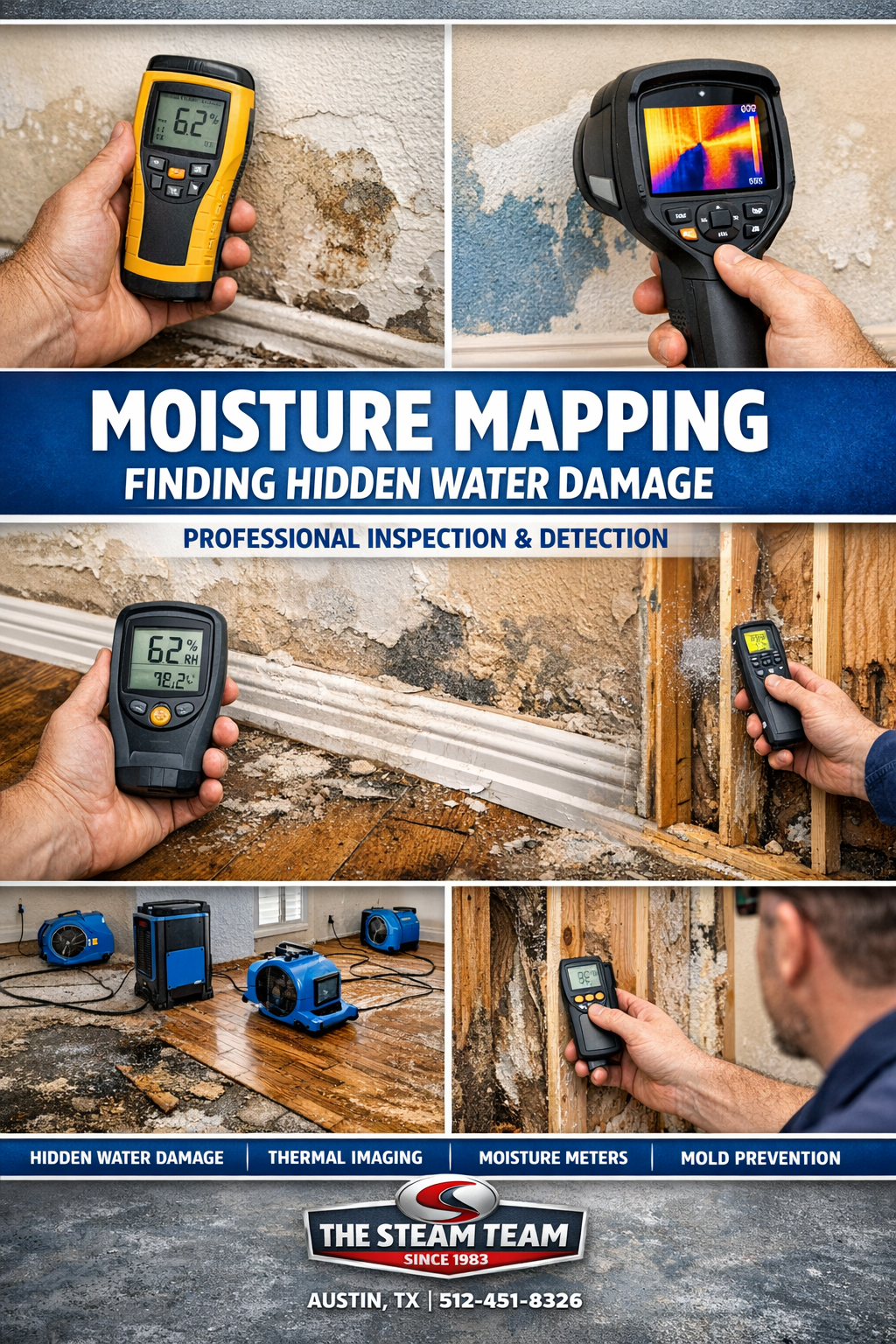
Moisture Meters

Moisture meters measure the moisture content inside building materials.

These handheld devices allow technicians to test walls, flooring, and wood framing to determine how saturated materials are.

Moisture meters provide precise readings that help determine drying progress.

Thermal Imaging Cameras

Thermal imaging cameras detect temperature differences caused by moisture within materials.

Wet materials often appear cooler than dry areas on thermal images.

This technology allows technicians to locate moisture behind walls and ceilings without cutting into the structure.

Hygrometers

Hygrometers measure humidity levels in the air.

High indoor humidity can indicate hidden moisture within the building.

Monitoring humidity helps restoration technicians control the drying environment.

Moisture Mapping Documentation

Once moisture readings are collected, technicians document the affected areas using diagrams or digital reports.

This β€œmap” shows exactly where moisture exists and guides the placement of drying equipment.

Moisture maps also help track drying progress during restoration.

How Moisture Mapping Helps Restoration

Moisture mapping plays an important role throughout the water damage restoration process.

It helps technicians:

β€’ Identify the full extent of water damage
β€’ Locate hidden moisture inside structures
β€’ Place drying equipment strategically
β€’ Monitor drying progress over time

Without proper moisture detection, hidden water could remain inside walls or floors.

When Moisture Mapping Is Used

Moisture mapping is typically used during several stages of restoration.

Common situations include:

β€’ Water damage from burst pipes
β€’ Flood damage from storms
β€’ Appliance leaks
β€’ Roof leaks affecting ceilings
β€’ Slab leaks beneath flooring

Accurate moisture detection helps ensure restoration work addresses all affected areas.

The Role of Moisture Mapping in Mold Prevention

Hidden moisture is one of the main causes of mold growth after water damage.

If moisture remains inside building materials, mold can begin developing within 24–48 hours.

Moisture mapping helps restoration professionals locate damp materials quickly so they can begin structural drying.

Proper drying helps prevent mold contamination and protect indoor air quality.

How Moisture Mapping Improves Restoration Efficiency

Moisture mapping allows restoration technicians to target the areas that require drying instead of guessing where moisture may be present.

This improves restoration efficiency by:

β€’ Reducing unnecessary demolition
β€’ Preventing missed moisture pockets
β€’ Speeding up drying timelines
β€’ Ensuring complete restoration

Accurate moisture detection helps restore homes more quickly and safely.

Signs Hidden Water Damage May Be Present

Homeowners may suspect hidden water damage if they notice:

β€’ Musty odors inside the home
β€’ Discoloration on walls or ceilings
β€’ Warped or buckling floors
β€’ Peeling paint or bubbling drywall
β€’ Increased indoor humidity

Professional inspection using moisture mapping can confirm whether hidden water damage exists.

Why Professional Inspection Is Important

Water damage restoration requires more than simply drying visible surfaces.

Professional restoration companies use advanced tools to ensure moisture is completely removed from building materials.

This helps prevent long-term problems such as:

β€’ Mold growth
β€’ Structural deterioration
β€’ Persistent odors
β€’ Hidden moisture pockets

Proper moisture detection ensures the home is fully restored after water damage.

FAQ: Moisture Mapping

What is moisture mapping?

Moisture mapping is the process of identifying and documenting moisture levels inside building materials during water damage restoration.

How do professionals detect hidden water damage?

Technicians use moisture meters, thermal imaging cameras, and humidity sensors to locate hidden moisture.

Why is moisture mapping important?

Moisture mapping ensures that all affected areas are properly dried, preventing mold and structural damage.

Can homeowners detect hidden moisture themselves?

Most hidden moisture cannot be detected without specialized equipment used by restoration professionals.

How long does moisture mapping take?

Initial moisture inspections typically take one to two hours depending on the size of the property.

Why Austin Homeowners Trust The Steam Team

β€’ Serving Austin since 1983
β€’ Advanced moisture detection technology
β€’ Certified water damage restoration technicians
β€’ Professional structural drying equipment
β€’ Trusted across Central Texas

Our team uses moisture mapping to ensure water damage is detected and restored properly.

Need Water Damage Inspection in Austin?

If your home has experienced water damage, professional moisture inspection can help locate hidden damage before it becomes a larger problem.

The Steam Team provides professional water damage restoration and moisture detection services in Austin, helping homeowners restore their properties safely.

πŸ“ž Call 512-451-8326 for assistance

Serving Austin, Round Rock, Cedar Park, Georgetown, and surrounding Central Texas communities.

How to Tell If Your Floors Can Be Saved After Flooding

How to Tell If Your Floors Can Be Saved After Flooding

Understanding Flood Damage to Flooring

Flooding can cause serious damage to flooring materials inside a home. Whether the water comes from a burst pipe, storm flooding, appliance leak, or plumbing failure, moisture can quickly soak into flooring and spread beneath the surface.

One of the most common questions homeowners ask after flooding is whether their floors can be saved or must be replaced.

The answer depends on several factors, including the type of flooring, how long the materials were exposed to water, and whether proper drying begins quickly.

Understanding how to evaluate flood damage to floors in Austin homes helps homeowners make informed decisions about restoration and repairs.

The Steam Team has been helping homeowners restore water-damaged floors in Austin since 1983, providing professional water extraction and structural drying services throughout Central Texas.

Why Flooring Is Vulnerable to Water Damage

Most flooring materials are highly susceptible to moisture.

When water enters the home, it can seep into:

β€’ Carpet and carpet padding
β€’ Hardwood floorboards
β€’ Laminate flooring
β€’ Subfloors beneath the surface
β€’ Grout lines in tile flooring

Because water often spreads beneath the visible surface, flooring damage may continue even after standing water is removed.

Homes in Austin, Round Rock, and Cedar Park frequently experience floor damage from burst pipes, appliance leaks, and storm flooding.

Key Factors That Determine If Floors Can Be Saved

Several factors determine whether water-damaged flooring can be restored or must be replaced.

Type of Flooring Material

Different flooring materials react differently to water exposure.

For example:

β€’ Tile flooring may resist water but moisture can affect grout and subfloors.
β€’ Hardwood flooring can warp or swell when saturated.
β€’ Carpet may absorb water quickly and trap moisture beneath the surface.

The type of flooring plays a major role in determining restoration options.

Duration of Water Exposure

The longer flooring remains wet, the greater the risk of permanent damage.

Typical damage timeline:

β€’ First 24 hours: Floors may still be salvageable if drying begins quickly.
β€’ 48 hours or more: Materials may begin warping or deteriorating.
β€’ Several days: Mold growth and structural damage may occur.

Quick response is essential for saving flooring materials.

Category of Water Damage

The type of water involved also affects whether floors can be restored.

Water damage categories include:

β€’ Category 1: Clean water from plumbing leaks
β€’ Category 2: Gray water from appliances or washing machines
β€’ Category 3: Contaminated water from sewage or flooding

Floors exposed to contaminated water often require removal for safety reasons.

When Hardwood Floors Can Be Saved

Hardwood flooring is particularly sensitive to moisture, but it can sometimes be restored if drying begins quickly.

Hardwood floors may be salvageable if:

β€’ Water exposure is limited
β€’ Drying begins within 24 hours
β€’ The boards have not severely warped
β€’ Moisture has not penetrated deep into the subfloor

Professional drying equipment can remove moisture trapped beneath hardwood flooring and help restore the material.

When Carpet Can Be Saved

Carpet may sometimes be restored depending on the water source and exposure time.

Carpet can often be saved if:

β€’ The water is clean (Category 1)
β€’ The carpet has been wet for less than 24 hours
β€’ Padding underneath can be dried or replaced

However, carpet exposed to contaminated floodwater typically must be removed.

When Tile Flooring Can Be Restored

Tile flooring is generally more water-resistant than other flooring materials.

However, flooding can still affect:

β€’ Grout lines
β€’ Subfloors beneath the tile
β€’ Adhesives holding tiles in place

Professional drying may be needed to remove moisture trapped beneath tile surfaces.

Signs Flooring May Need Replacement

Some flooring damage may be too severe to repair.

Common signs flooring may require replacement include:

β€’ Warped or buckled floorboards
β€’ Loose or separated tiles
β€’ Carpet padding that remains soaked
β€’ Persistent musty odors
β€’ Mold growth beneath flooring

When structural materials are compromised, replacement may be the safest option.

How Professional Drying Helps Save Floors

Professional restoration companies use specialized equipment designed to remove moisture from flooring systems.

Drying equipment may include:

β€’ High-powered air movers
β€’ Industrial dehumidifiers
β€’ Floor drying systems
β€’ Moisture detection tools

These tools help remove moisture from both the surface and the subfloor.

Proper drying can often save flooring materials that might otherwise require replacement.

The Risk of Mold Under Flooring

Moisture trapped beneath flooring can lead to mold growth if not removed quickly.

Mold can begin developing within 24–48 hours after flooding.

Professional drying helps prevent mold growth by removing hidden moisture inside flooring systems.

What Homeowners Should Do After Flooding

If flooding affects flooring inside your home, quick action can reduce damage.

Homeowners should:

β€’ Remove standing water immediately
β€’ Move furniture away from wet areas
β€’ Increase ventilation if possible
β€’ Contact a water damage restoration professional

Early response greatly improves the chances of saving flooring materials.

FAQ: Flood-Damaged Floors

Can hardwood floors be saved after flooding?

In some cases, hardwood floors can be restored if drying begins quickly and the damage is not severe.

Should flooded carpet be replaced?

Carpet exposed to contaminated water usually requires replacement, but clean water exposure may allow restoration.

How long does it take to dry floors after flooding?

Professional structural drying typically takes 2–4 days, depending on the extent of the damage.

Can mold grow under flooring?

Yes. Moisture trapped beneath flooring can lead to mold growth if not properly dried.

Should homeowners attempt to dry floors themselves?

Minor spills may be manageable, but major flooding often requires professional drying equipment.

Why Austin Homeowners Trust The Steam Team

β€’ Serving Austin since 1983
β€’ Certified water damage restoration technicians
β€’ Advanced structural drying equipment
β€’ Professional moisture detection tools
β€’ Trusted across Central Texas

Our team helps homeowners restore water-damaged flooring safely and efficiently.

Need Flood Damage Restoration in Austin?

If your home has experienced flooding, fast professional response can help save flooring and prevent mold growth.

The Steam Team provides water damage restoration and structural drying services in Austin, helping homeowners restore their property quickly and safely.

πŸ“ž Call 512-451-8326 for assistance

Serving Austin, Round Rock, Cedar Park, Georgetown, and surrounding Central Texas communities.