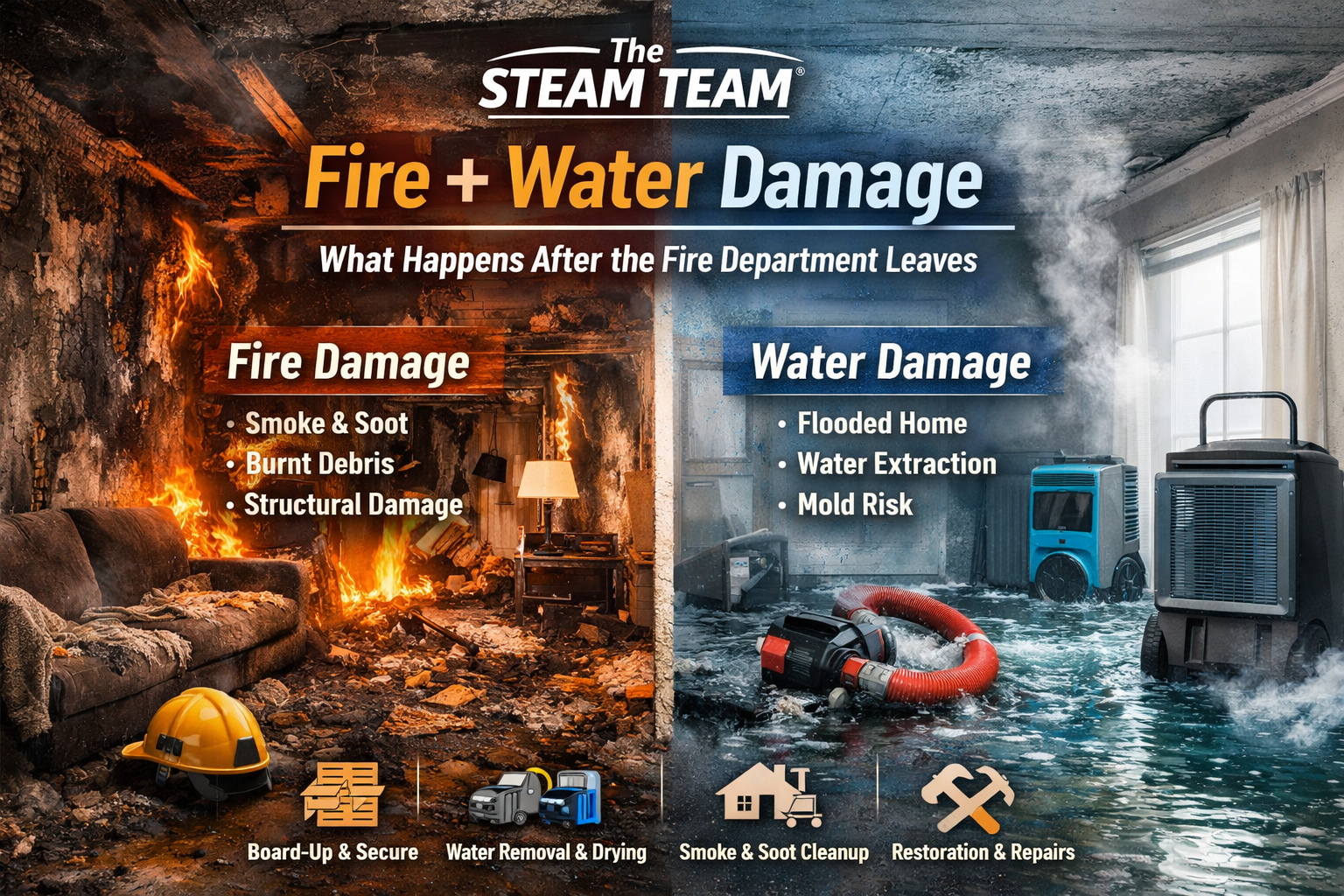
Fire + Water Damage — What Happens After the Fire Department Leaves
/
When a fire occurs in a home, the fire department’s primary goal is to extinguish the flames and ensure everyone’s safety.
Read More
Explore expert tips on water damage restoration, carpet cleaning, rug cleaning, mold remediation, and air duct cleaning in Austin, TX. Trusted local insights from The Steam Team since 1983.
When a fire occurs in a home, the fire department’s primary goal is to extinguish the flames and ensure everyone’s safety.
Read MoreA home or business fire is a sudden, disorienting event that threatens safety, possessions, and structural integrity; fire damage restoration is the organized process of stabilizing a property, removing hazards, cleaning smoke and soot, and rebuilding so occupants can safely return. This guide explains the key phases of fire damage restoration immediate safety and securing steps, detailed assessment of structural, smoke/soot, and water impacts, the cleanup and contents-restoration workflow, insurance navigation, common timelines, and mold prevention, and practical prevention tips tailored to Austin and Central Texas. Provide useful information about cleaning and restoration services, build trust, and lead potential clients to request a quote or schedule an appointment. If you need immediate assistance after a fire, call 512-451-8326 to request emergency response or a quote; expert teams are available 24/7 to help secure your property and begin mitigation. The sections below map an ordered recovery path and technical details so you can make informed decisions quickly and confidently.
Immediate actions after a fire prioritize life-safety, stabilization to prevent secondary damage, and documentation for insurance and restoration planning. Start by following directions from emergency responders and avoid re-entering the structure until it is declared safe by authorities; this prevents exposure to structural collapse, lingering smoke, and unseen hazards. Next, prioritize controlling utilities and securing openings to limit weather, vandalism, and animals from compounding losses; short-term stabilization is central to reducing overall restoration cost and scope. The final early step is to document visible damage with photos and notes. If it is safe, then contact both your insurer and a restoration provider to coordinate emergency mitigation and an initial scope.
This ordered checklist explains what to do first and why each action matters before professionals arrive.
Ensure personal safety and follow official instructions: Wait for the fire department to clear the scene and heed evacuation or re-entry guidance.
Shut off utilities or confirm they are disconnected: Gas, electricity, and water should remain off until inspected by professionals.
Photograph and document visible damage when safe: Capture exterior and interior conditions to support immediate claims.
Contact emergency restoration and your insurer: Notify both so mitigation and claims work can begin without delay.
Secure openings with board-up or tarps as needed: Temporary protection prevents weather and trespasser damage.
These ordered steps reduce immediate risk and prepare the property for professional assessment and mitigation, which is the next priority.
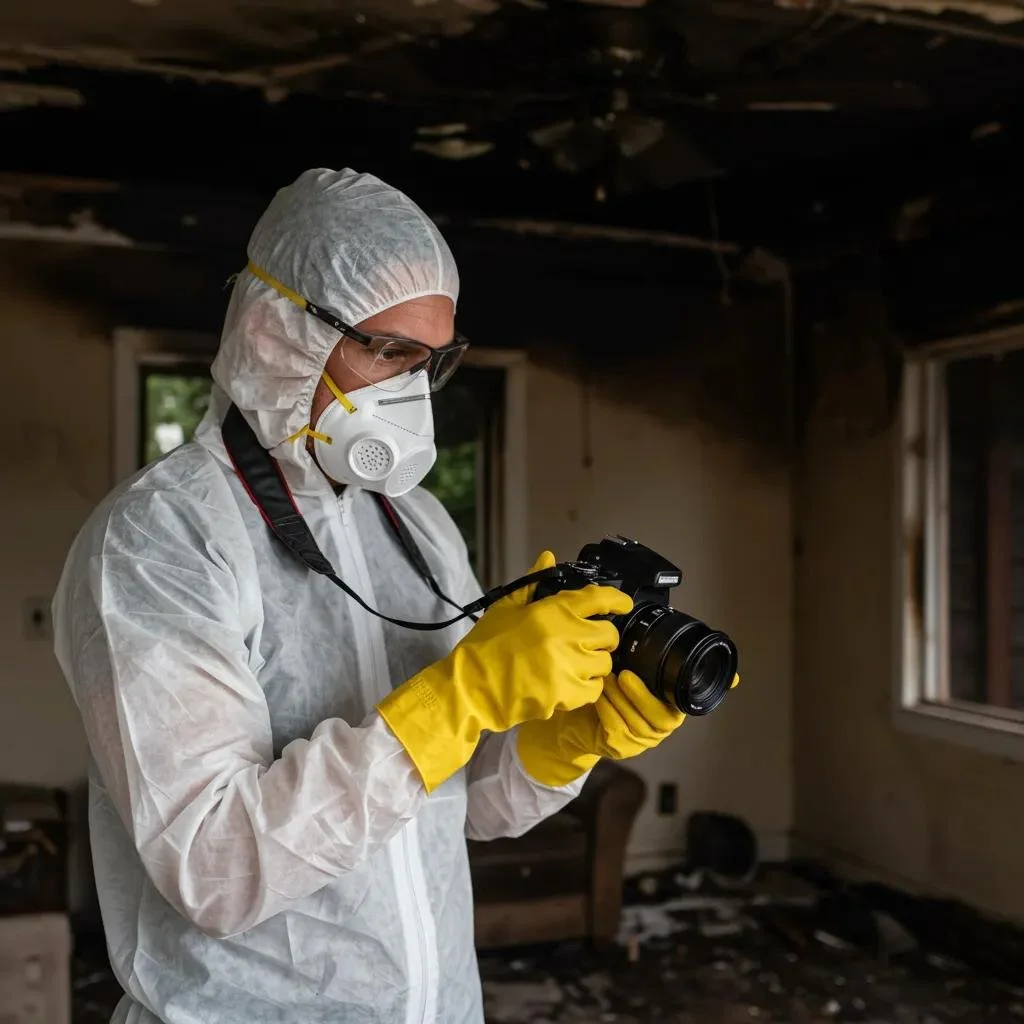
Safety and property security start with confirming that the fire department has extinguished all active flames and declared the structure safe for limited access, because unseen hot spots and weakened framing can cause delayed collapse. If allowed a brief entry, avoid touching electrical panels, do not operate appliances, and wear protective gear respirators, gloves, and eye protection, because soot and ash contain hazardous particulates. For short-term protection, board-up services and tarping limit exposure to rain and wind; these actions also reduce the risk of theft, vandalism, and wildlife entry. Contact professionals to perform a formal check for gas leaks, electrical hazards, and hidden embers so stabilization can be completed and reliable next steps planned.
Securing the site reduces exposure and allows restoration teams to begin mitigation safely, which leads to decisions about professional intervention and scope.
Call restoration experts as soon as the scene is safe because early mitigation, water extraction, drying, board-up, and soot stabilization prevent costly secondary damage such as mold growth and progressive material deterioration. Certified restoration teams bring specialized equipment, air scrubbers with HEPA filtration, industrial dehumidifiers, thermal imaging for hidden moisture, and controlled demolition tools that home remedies cannot substitute- and they follow industry standards to document work for insurers. In urgent cases, a 24/7 emergency response capability ensures mitigation begins without delay; rapid response shortens drying timelines and improves the likelihood of salvaging contents. Engaging professionals early also supports a clearer insurance workflow and faster overall recovery.
Prompt professional involvement reduces long-term loss and forms the foundation for claims documentation and reconstruction planning.
Fire damage assessment is the systematic evaluation that determines which parts of a property are structurally unsafe, which materials are contaminated by smoke and soot, and where firefighting water introduced moisture that risks mold and continued deterioration. Assessors inspect load-bearing elements, examine smoke penetration into porous materials, perform moisture mapping with meters and thermal imaging cameras, and evaluate HVAC and ductwork to prevent re-soiling. Accurate assessment defines the mitigation priority: stabilizing the structure, removing water, cleaning soot, and salvaging contents. Understanding the different damage types, structural, smoke/soot, and water, helps owners set expectations for scope, timelines, and costs.
Below is a compact comparison to clarify how professionals distinguish damage types and immediate risks.
Damage Type
Assessment Attribute
Typical Indicator/Result
Structural damage
Load-bearing integrity
Sagging beams, cracked foundations, unsafe framing
Smoke & soot penetration
Material porosity and residue type
Black/gray residues, discoloration, odor transfer to fabrics
Water/moisture intrusion
Moisture readings and thermal anomalies
Elevated RH, wet insulation, hidden saturation behind walls
This comparison helps homeowners understand why repair approaches differ and why a layered restoration plan is necessary for full recovery.
Structural damage after a fire appears as visible deformation, such as warped or sagging floors and ceilings, cracked masonry, or exposed, charred framing that compromises load paths; these signs indicate that a structural engineer or licensed contractor must evaluate safety. Inspectors look for misaligned doors and windows, new cracks in foundations or load-bearing walls, and areas where fire or thermal shock has caused rapid material weakening. Temporary shoring and targeted demolition may be required immediately to stabilize these elements before full reconstruction. If you observe any of these indicators, restrict access to the affected zones and arrange for professional evaluation to avoid catastrophic failure during cleanup.
Recognizing these signs early prioritizes safety and guides the scope of stabilization and longer-term reconstruction.
Technicians identify smoke and soot types, wet versus dry smoke, because residue chemistry drives the selection of cleaning agents and methods; wet smoke often requires different solvents and more aggressive surface restoration than dry smoke. Professionals sample surfaces, test HVAC systems and ductwork for contamination, and use moisture meters and thermal imaging to locate hidden water intrusion from firefighting. Air quality is measured using particle counters and odor detection to design deodorization strategies such as air scrubbing with HEPA filtration and specialized thermal or chemical deodorization when needed. These evaluations inform whether contents can be cleaned on-site or require off-site pack-out and specialized restoration.
A precise technical assessment ensures cleaning methods and equipment match the contamination, improving salvage rates and indoor air quality.
Post-Fire Damage Assessment: Evaluating Heat, Smoke, and Soot Impact
The physical and/or operational damage from the heat and/or residual smoke in the aftermath of a fire in a building is largely a safety/engineering determination. Additionally, once the immediate toxic gases and particulates have dissipated, residual combustion deposits on surfac
The cleanup and restoration workflow follows distinct phases: emergency mitigation, water extraction and drying, smoke/soot cleaning and odor control, contents restoration, and structural repair/reconstruction. Each phase uses specific equipment and certified techniques, air movers and dehumidifiers during drying, HEPA vacuums and controlled cleaning chemistries for soot, ultrasonic and freeze-drying for delicate content, so sequencing and documentation are critical to success. This phased approach minimizes cross-contamination, prevents mold after water intrusion, and allows accurate cost and timeline projections for rebuilding. The steps below outline the typical sequence so owners can follow progress and ask targeted questions of providers.
Mitigation and stabilization: Board-up, tarping, and temporary shoring to prevent further exposure.
Water extraction and drying: Remove standing water, set up dehumidification, and monitor moisture.
Cleaning and deodorization: Remove soot, clean surfaces, and apply odor-control technologies.
Contents restoration and pack-out: Inventory, triage, and clean salvageable items on-site or off-site.
Reconstruction and finishing: Structural repairs, systems replacement, and final inspections.
These steps connect mitigation through reconstruction to return the property to pre-loss condition, while controlling costs and health risks during the process.
Introductory table comparing phases, typical tasks, and expected durations follows to set clear expectations.
Phase
Typical Tasks
Typical Duration
Mitigation
Board-up, tarping, emergency debris removal
1–3 days
Drying & Water Extraction
Pumps, extractors, air movers, dehumidifiers, and monitoring
3–14 days (varies by moisture)
Cleaning & Deodorization
HEPA vacuuming, surface cleaning, air scrubbing, and deodorization
3–10 days
Contents Restoration
Inventory, ultrasonic/textile cleaning, pack-out services
Days to weeks
Reconstruction
Demolition, framing, systems replacement, finishing
Weeks to months
This phase table illustrates typical durations, but remember that severity, insurance approvals, and permitting influence actual timelines.
After firefighting, thorough water extraction is essential to prevent mold and hidden structural damage; technicians use weighted extractors, pumps, and portable extractors to remove standing and trapped water quickly. Once bulk water is removed, drying equipment, high-capacity air movers, and industrial dehumidifiers create airflow and moisture-removal gradients while technicians map moisture levels with meters and thermal imaging for targeted drying. Teams document progress with daily moisture readings and photos until materials reach safe thresholds; this record supports insurance claims and confirms that mold risk has been mitigated. Prompt drying within the first 24–72 hours is critical to preventing microbial growth and preserving as much structure and contents as possible.
Consistent monitoring and adaptive drying strategies reduce restoration time and long-term material loss.
Soot removal requires matching cleaning chemistry and technique to the residue type and substrate: dry chemical sponges and HEPA vacuums for light, dry soot; solvent-based cleaning and abrasive methods for heavy, oily residues from wet smoke. Air scrubbing with HEPA filtration removes airborne particulates during cleaning, while targeted deodorization uses thermal fogging, hydroxyl generators, or activated carbon filtration, depending on odor source and material absorption. Specialty surfaces such as upholstery, draperies, and HVAC components require specific approaches, encapsulation, professional wet-cleaning, or ductwork restoration to prevent re-soiling. Proper sequencing (cleaning before HVAC restart) ensures particulates are not redistributed and that indoor air quality is restored for occupants.
Choosing the right combination of mechanical filtration, chemical cleaning, and deodorization improves salvage outcomes and occupant health.
Contents restoration begins with a documented inventory and triage: items are categorized as cleanable, salvageable with specialty restoration, or non-salvageable, which guides pack-out plans and insurance documentation. Restoration techniques include ultrasonic cleaning for metal and jewelry, freeze-drying for moisture-damaged documents, and specialized textile cleaning or dry-cleaning for fabrics; electronics undergo corrosion-inhibiting treatments and evaluation by qualified technicians. Secure off-site facilities allow controlled, thorough restoration when on-site conditions are too contaminated for safe cleaning, and detailed chain-of-custody records support claims. Owners should expect an itemized inventory and condition report that pairs with photographic documentation for adjuster review.
A disciplined contents process increases recovery rates and provides transparent claims support for damaged personal property.
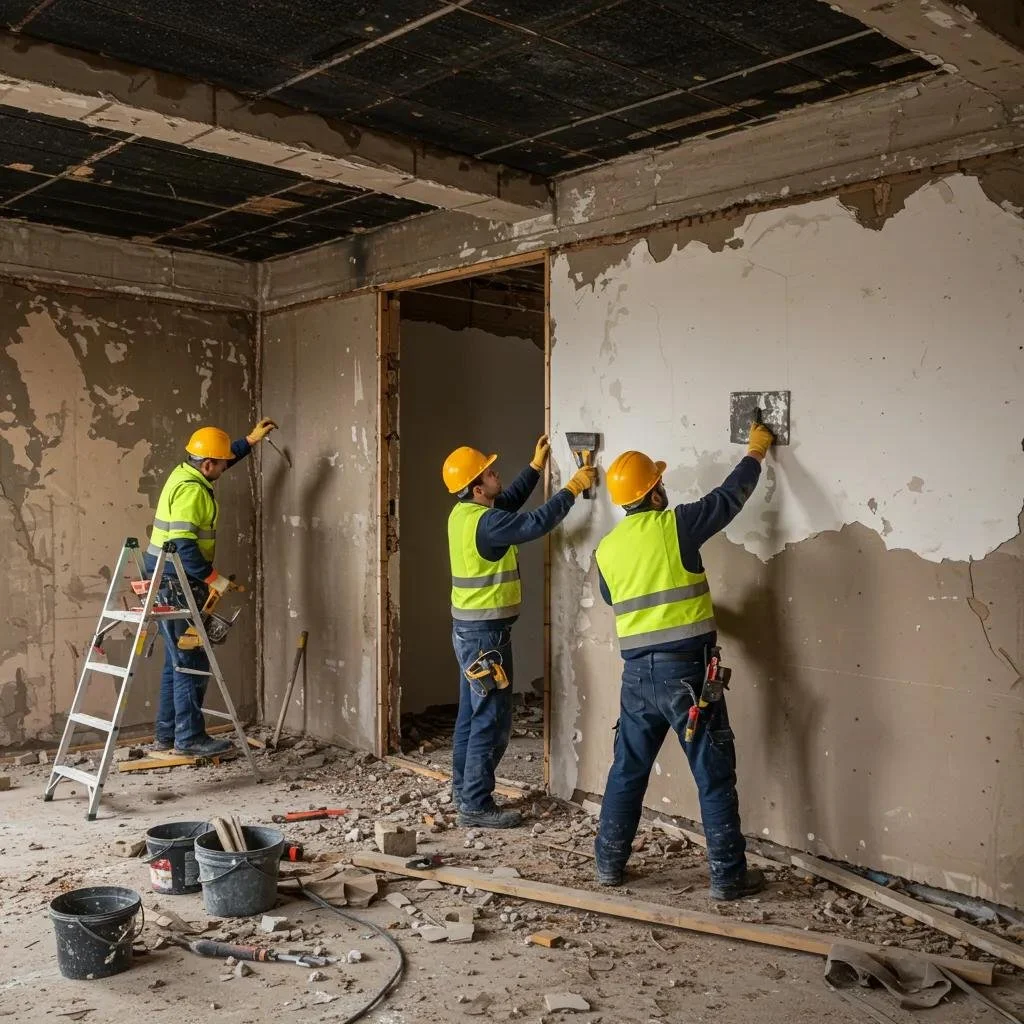
Structural repair and reconstruction start with selective demolition of irreparably damaged materials while preserving sound structure, followed by structural repairs, framing, roof and wall systems, and replacement of mechanical, electrical, and plumbing systems as required. Reconstruction requires permits, coordination with licensed contractors and possibly structural engineers, and phased inspections to ensure code compliance and occupant safety. Finish work restores aesthetics and function drywall, paint, flooring, and cabinetry, while final quality checks confirm systems, airtightness, and odor elimination. Throughout reconstruction, clear documentation and staged approvals help keep timelines and budgets aligned with the scope developed in earlier phases.
Coordinated reconstruction restores habitability and value while maintaining records needed for final insurance settlement.
Navigating insurance after a fire requires prompt documentation, clear organization of damaged property inventories, and coordinated communication with adjusters to ensure scope and estimates reflect true restoration needs. Begin by submitting initial photos and a basic inventory, then retain copies of any emergency mitigation receipts and contractor estimates. Restoration companies can support this process by providing professional scopes of work, itemized estimates, and documented mitigation activities that match industry standards. Understanding policy limits, endorsements, and claim deadlines reduces surprises and expedites funds for necessary repairs.
This checklist-style approach clarifies who provides what documentation and how to present it to your carrier.
Gather immediate evidence: photographs, videos, and a preliminary contents list.
Save receipts for emergency mitigation and temporary housing if applicable.
Obtain professional restoration estimates and scopes that align with industry standards.
Coordinate scheduling for adjuster visits and provide clear documentation during inspections.
Following these steps helps reduce friction with carriers and supports more accurate claim settlements.
Before the next section, the table below explains typical documents, who prepares them, and why they are required.
Document/Deliverable
Who Prepares It
Why It's Needed
Photo & video evidence
Homeowner / on-scene personnel
Establishes pre-scope condition and visible loss
Contents inventory
Homeowner with restoration support
Itemizes damaged property for valuation and recovery
Mitigation receipts & logs
Restoration company/contractor
Proves emergency actions and supports interim costs
Detailed scope & estimate
Restoration company
Provides a technical basis for repair costs and adjuster review
Document organization and professional back-up accelerate adjuster review and reduce disputes over scope and pricing.
Essential documentation includes dated photos and videos of damage, an itemized contents inventory with approximate pre-loss values where possible, receipts for emergency mitigation and temporary protective measures, and restoration estimates that break down tasks and materials. Keep originals and copies organized by room and category, and log any conversations with insurers or contractors, including dates and names. Professional restoration companies often supply daily mitigation logs, moisture monitoring records, and technical scopes that are especially useful for complex claims involving hidden damage or extensive reconstruction. Accurate, chronological documentation reduces ambiguity and speeds approval for necessary work.
Well-prepared documentation forms the backbone of a straightforward claims process and supports a fair settlement.
An adjuster’s inspection determines the carrier’s initial scope and payout; being present during inspections and providing clear, chronological documentation helps align expectations and identify items needing supplemental review. Restoration professionals can meet with adjusters to explain technical findings, moisture mapping, smoke penetration, structural concerns, and provide certified estimates that translate technical work into entailed costs. If additional damage is discovered during remediation, supplement requests with supporting evidence and professional explanationsto facilitate approval. Maintaining transparent communication and detailed records minimizes delays and ensures the restoration work proceeds on an approved basis.
A cooperative approach between homeowners, restoration firms, and adjusters speeds resolution and reduces the need for rework.
The Steam Team assists homeowners by documenting mitigation work, preparing detailed scopes and estimates for adjuster review, and coordinating directly with carriers to streamline preferred-vendor processes; they offer 24/7 emergency response and technical support during the claims lifecycle. Their technicians follow industry-standard protocols and provide photo documentation, daily monitoring records, and contents inventories to back up each phase of mitigation and restoration. As an Austin-based restoration provider, The Steam Team can help coordinate pack-outs, specialized cleaning, and reconstruction planning while communicating status updates to property owners and adjusters. For emergency response or to request a quote and schedule restoration services, contact 512-451-8326 for immediate assistance.
This support role reduces administrative burden on owners and helps align restoration activities with insurer expectations.
Homeowners commonly ask about timelines, whether professional restoration is necessary, and how to prevent mold after firefighting. Answers depend on severity, water involvement, and structural impact, but industry practices give reliable ranges and preventive steps. Small, localized cleanups are often completed in days to a few weeks, whereas full reconstruction after major structural damage can take months. Professional restoration reduces health risks and long-term costs by addressing hidden soot, HVAC contamination, and moisture that DIY methods often miss. Preventing mold hinges on timely water extraction and dehumidification: starting drying efforts within 24–48 hours and monitoring moisture until safe thresholds are reached.
Below are concise answers that guide expectations and prompt appropriate action.
How long does restoration take? Small jobs: days–a few weeks; large rebuilds: weeks–months, depending on approvals and scope.
Is professional restoration necessary? For structural, heavy smoke, or water-involved fires, professional services minimize health and property risks.
How to prevent mold after fire? Begin drying immediately, use industrial dehumidification, and apply antimicrobial treatments where needed.
These concise answers help homeowners decide when to call professionals and what to expect during recovery.
Restoration timelines vary by severity: limited surface smoke and minor water intrusion can be stabilized and cleaned in a few days to a couple of weeks, while projects involving structural repairs, full contents pack-out, and reconstruction extend to weeks or months. Permitting, insurance approvals, specialist lead times, and material availability all influence the schedule; clear, documented scopes and timely adjuster inspections shorten delays. Daily moisture logs and progress photos help confirm when drying and cleaning objectives are met so reconstruction can begin. Expect realistic phases rather than a single duration. Ask your provider for a projected schedule and milestones.
Understanding these factors enables better planning for temporary housing, business continuity, and phased restoration payments.
Professional restoration is necessary when safety, structural integrity, or health risks are present: soot and smoke residues contain hazardous particulates, water can hide behind materials causing mold, and electrical or structural damage may not be visible to untrained eyes. Certified technicians use equipment and protocols that restore indoor air quality, remove embedded contaminants, and document work to support insurance claims capabilities often beyond DIY scope. Even for seemingly minor fires, a professional assessment identifies hidden risks that could otherwise lead to recurring odors, compromised systems, or costly rework. Investing in certified restoration helps protect occupants’ health and preserves property value through proper remediation.
When in doubt, an expert inspection clarifies the necessary level of intervention and prevents downstream problems.
Mold prevention after fire depends on prompt moisture removal and careful drying: start extraction and drying equipment within 24–48 hours when safe, maintain continuous airflow, and monitor moisture readings until materials return to acceptable thresholds. Use antimicrobial treatments on vulnerable porous materials and control relative humidity to limit microbial growth; if insulation or drywall is saturated and cannot be dried to safe levels, removal reduces mold risk. Regular monitoring and follow-up inspections confirm that remediation was effective and that no secondary colonization occurs. Early, documented drying and treatment are the most effective measures to prevent mold-related damage after firefighting.
A disciplined drying and monitoring regimen protects indoor air quality and preserves remaining materials.
Effective prevention reduces ignition sources and improves readiness; focus on smoke detectors, electrical safety, safe appliance use, and defensible space in warm, dry climates like Austin and Central Texas. Regular maintenance of heating and cooking systems, routine inspection of electrical circuits, and removal of combustible debris from around structures reduce the chance of accidental fires. Prepare and rehearse evacuation plans with household members or staff, and ensure business sites have clearly marked exits and functioning suppression where applicable. These measures lower the likelihood of fires and shorten response times if incidents occur.
The actionable guidance below delivers practical prevention tasks that property owners can implement immediately.
Install and maintain smoke detectors and alarms: Test monthly and replace batteries as needed.
Perform routine electrical and appliance inspections: Address frayed cords, overloaded circuits, and malfunctioning devices.
Create evacuation and emergency plans: Practice routes and assembly points with family or employees.
Maintain defensible space and safe landscaping: Trim vegetation and remove combustible materials near structures.
Implementing these steps reduces ignition sources and improves occupant safety while complementing community emergency response.
Best practices include layered protections: functional smoke alarms, working fire extinguishers in accessible locations, clear egress routes, and staff or family training on emergency response; businesses should add written fire safety plans and periodic drills. Maintain suppression systems and alarms according to manufacturer and code guidelines, and ensure emergency lighting and exit signage are operative in commercial spaces. Keep records of inspections and maintenance to demonstrate due diligence and facilitate rapid corrective action. These proactive practices reduce injury risk, limit property loss, and enhance resale or tenant confidence.
Routine prevention and readiness measures are the most effective way to limit the scope and impact of fire incidents.
In Austin and Central Texas, seasonal maintenance cleaning dryer vents, servicing HVAC systems, trimming dry vegetation, and ensuring safe barbecue and outdoor equipment use address common local ignition sources tied to climate and lifestyle. Older electrical systems benefit from professional inspection to catch degraded insulation and overloaded circuits that pose ignition risks. Scheduling routine inspections and addressing issues promptly reduces the chance of accidental fires and lowers insurance exposure. Combine maintenance with updated safety plans to keep properties resilient through dry seasons and heat spikes.
Consistent maintenance habits significantly reduce fire likelihood and improve long-term safety for both homes and businesses.
If you suspect hidden damage after a fire, it’s crucial to contact a professional restoration service immediately. Trained technicians can perform a thorough assessment using specialized tools like moisture meters and thermal imaging cameras to identify issues that may not be visible to the naked eye. This includes checking for water intrusion, smoke penetration, and structural integrity. Early detection of hidden damage can prevent further deterioration and costly repairs, ensuring a safer environment for occupants.
Preparing for a fire damage restoration assessment involves documenting the damage thoroughly. Take clear photographs of affected areas and create a list of damaged items, noting their condition and estimated value. Gather any relevant insurance documents and previous maintenance records that may assist the restoration team. Being organized and providing detailed information can help the restoration professionals develop a more accurate scope of work and streamline the insurance claims process.
Delaying fire damage restoration can lead to several risks, including increased structural damage, mold growth, and health hazards from lingering smoke and soot. The longer the damage remains unaddressed, the more extensive and costly the repairs may become. Additionally, insurance claims may be affected if restoration is not initiated promptly, as insurers often require timely action to mitigate losses. It’s essential to act quickly to minimize risks and ensure a safe living environment.
Insurance coverage for fire damage typically falls under homeowners or commercial property insurance policies. Standard policies often cover structural damage, personal property loss, and additional living expenses incurred while the property is being restored. However, coverage specifics can vary widely, so it’s essential to review your policy details. Some policies may also offer additional endorsements for higher coverage limits or specific items. Consulting with your insurance agent can clarify what is covered and help you understand your options.
Choosing the right fire damage restoration company involves researching their credentials, experience, and customer reviews. Look for companies that are certified by industry organizations, such as the Institute of Inspection, Cleaning, and Restoration Certification (IICRC). Ensure they offer 24/7 emergency services and have a proven track record in fire damage restoration. Request detailed estimates and ask about their restoration process to ensure they align with your needs. A reputable company will also assist with insurance claims, providing necessary documentation and support.
Fire damage can significantly impact property value, especially if not properly restored. Even after repairs, potential buyers may perceive a property as less desirable due to its history of fire damage. This can lead to lower offers or extended time on the market. Proper restoration, including thorough cleaning and structural repairs, is essential to mitigate these effects. Maintaining detailed records of the restoration process can also help reassure potential buyers about the property’s condition and safety.
Effective fire damage restoration is crucial for ensuring safety, preserving property value, and preventing long-term health risks associated with smoke and water damage. By understanding the restoration process and engaging professional services promptly, property owners can navigate recovery with confidence and clarity. Don't hesitate to reach out for expert assistance to secure your property and initiate the restoration journey. Contact us today to learn more about our comprehensive fire damage restoration services.
Recovering from a house fire is emotionally and logistically overwhelming, and knowing what to expect during fire damage restoration helps homeowners make safer, faster decisions. This guide defines fire damage restoration, explains why the process focuses first on safety and salvage then on rebuilding, and previews the five-step workflow commonly used for smoke and fire damage cleanup in Austin. You will learn immediate actions to protect people and evidence, a step-by-step walkthrough of emergency pre-cleaning through deodorization, realistic timeline ranges and factors that influence duration, and practical guidance for navigating insurance claims and specialized soot- and odor-removal techniques. The article also covers how water from firefighting is handled, what structural repairs typically follow, and how certified technicians verify quality. Throughout, local considerations for Austin homes—common construction materials, seasonal humidity impacts, and permit coordination—are woven into practical advice so you can communicate clearly with contractors and adjusters.
Immediate post-fire actions prioritize life-safety, evidence preservation, and rapid mitigation to limit secondary damage to structure and contents. First, obtain official clearance from the fire department before re-entering any structure, because unseen hazards such as weakened framing, hidden hot spots, and electrical risks persist after flames are out. Second, document damage thoroughly with photos and video—capture wide-angle views then close-ups of charred materials and affected contents—because good documentation speeds insurance review and restoration planning. Third, engage mitigation actions such as board-up and tarping, water extraction if firefighting introduced water, and basic soot containment to stop further spread of smoke residues. Taken together, these steps stabilize the property, preserve salvageable items, and create the evidence record adjusters need to begin accurate estimates and plan reconstruction work.
Homeowners should think of these steps as triage: secure people first, then the property, then the paperwork. The next subsection explains safety measures to follow before restoration crews arrive, including when to wait for professionals and what hazards to avoid that can cause injury or further damage.
Safety starts with official clearance from the fire department; do not re-enter until the authority says the structure is safe to access because structural instability and rekindling hot spots are serious risks. When allowed back, use basic personal protective equipment—gloves, N95/respirator, eye protection—and avoid touching soot-covered surfaces that can transfer contaminants to skin and clothing. Watch for hazards like exposed wiring, weakened floors, and wet insulation; if utilities were not secured, do not operate electrical systems and call professionals to confirm safe shutoffs. Prioritizing safety reduces injury risk and helps restoration crews perform their work efficiently once mitigation begins.
This safety overview leads directly into documenting damage for insurance and restoration assessment, which is the next critical homeowner responsibility after confirming it is safe to enter.
Good documentation accelerates claim approvals and provides a reliable inventory for content restoration decisions, so photograph every room from multiple angles and capture close-ups of damaged items and structural damage with timestamps when possible. Create an itemized list of personal property noting approximate age, purchase receipts when available, and any serial numbers to support value estimates; separate salvageable items from those beyond repair for adjuster clarity. Keep records of any out-of-pocket emergency expenses—temporary housing, emergency repairs, and receipts for replacement clothing or necessities—to include with your claim and reimbursement requests. Organizing files digitally and keeping backup copies ensures nothing is lost during the restoration process.
Clear documentation sets the stage for professional intervention; the following subsection describes when to contact restoration specialists and what to expect during the initial call.
Contact restoration specialists as soon as the property is secured and documented—especially if there is water from firefighting, ongoing smoke odors, or visible structural damage—because early mitigation reduces mold risk and limits soot penetration into building materials. Professional teams perform a rapid assessment, document findings for insurers, and implement emergency stabilization like board-up, tarping, and emergency pre-cleaning to prevent secondary loss while a full plan is developed. Many restoration providers offer 24/7 emergency response to start mitigation immediately; prompt engagement also helps preserve more contents through timely content cleaning and pack-out. Early professional involvement often shortens the overall recovery timeline and provides homeowners with an organized plan and point of contact during an otherwise chaotic time.
To help homeowners prioritize actions after a fire, here is a concise, featured-snippet-friendly list of immediate steps to follow.
Intro: The following numbered checklist summarizes essential first actions to protect people, property, and the insurance process.
Ensure everyone is safe and obtain fire department clearance before re-entering.
Photograph and video all damage with wide and close-up shots; timestamp files when possible.
Notify your insurance company and follow their emergency guidance.
Secure the property with board-up or tarping to prevent further weather or vandalism damage.
Arrange for emergency water extraction and drying if firefighting introduced water.
Summary: These five steps focus on human safety, preserving evidence for claims, and stabilizing the property so restoration professionals can begin targeted mitigation and planning.
Fire damage restoration follows a logical progression designed to protect occupants, salvage contents, remove contaminants, and prepare the building for reconstruction. The industry-standard five-step approach—Emergency Pre-cleaning, Content Cleaning, Content Pack-Out, Wall & Ceiling Cleaning, and Deodorization—moves from immediate stabilization toward final odor control and re-occupancy. Each phase uses specific equipment and techniques (HEPA filtration, targeted cleaning agents, soda blasting for heavy soot) and is sequenced to avoid re-contaminating cleaned areas; water extraction and drying are addressed concurrently when firefighting water is present. The goal at each stage is to maximize salvage, minimize replacement, and document conditions for adjusters and homeowners so restoration and reconstruction decisions are transparent and evidence-based.
Below is a comparison table that helps homeowners understand what each key restoration step involves, the homeowner’s likely concerns, and typical outcomes or timelines.
Intro: This table breaks down each major restoration phase into homeowner-friendly actions and realistic expectations.
| Restoration Phase | Homeowner Concern | Typical Outcome / Timeline |
| Emergency Pre-cleaning | Safety and immediate stabilization | Board-up/tarping, debris stabilization, initial soot control (hours to 1-2 days) |
| Content Cleaning | Salvaging valuables and documents | Inventory, specialized cleaning (days to weeks depending on volume) |
| Content Pack-Out | Secure storage and tracking | Off-site secure storage with cataloging (1–3 days to complete pack-out) |
| Wall & Ceiling Cleaning | Removing soot and preparing surfaces | Dry/wet cleaning or abrasive methods, prepping for repairs (days to weeks) |
| Deodorization | Persistent smoke odor elimination | Thermal fogging, hydroxyl or ozone alternatives; re-occupancy guidance (1–3 days for treatments) |
Summary: Understanding each phase helps homeowners set expectations for timelines and cooperative tasks—documenting, approving estimates, and arranging temporary housing when needed.
Emergency pre-cleaning and board-up stabilize the property within the first hours to days following clearance and focus on protecting interiors from weather, intrusion, and secondary contamination. Crews secure openings with boarding or tarping, remove loose debris, and perform initial soot containment in high-traffic areas to prevent further spread of residues. When water is present, extraction and rapid drying begin immediately to limit mold growth; technicians also place air scrubbers and containment barriers to isolate damaged zones. Homeowners should expect clear documentation of actions taken and temporary measures that will be replaced by permanent repairs once full remediation and approvals are in place.
This immediate stabilization directly enables a controlled content cleaning and pack-out, described in the next subsection.
Content cleaning and pack-out focus on categorizing belongings into salvageable, salvageable with specialty cleaning, or non-salvageable, then securely transporting items for off-site restoration or storage. Technicians perform material-appropriate cleaning—dry-cleaning for electronics, specialized laundering for textiles, and freeze-drying or document restoration for water- or smoke-damaged papers—while maintaining an itemized inventory for insurance claims. Secure storage facilities track items and provide access protocols so homeowners can retrieve essentials, and careful chain-of-custody documentation supports value determinations by adjusters. Effective pack-out reduces on-site clutter, speeds structural cleaning, and protects contents from ongoing contamination during reconstruction.
Proper content handling sets up effective structural cleaning approaches, including decisions about abrasive versus chemical methods covered next.
Wall and ceiling cleaning uses a spectrum of approaches from dry cleaning and chemical sponges for light soot to wet cleaning and abrasive soda blasting for heavily charred surfaces, chosen based on soot type and substrate compatibility. Light soot (dry, powdery residues) often responds to HEPA vacuuming and dry sponging, while greasy, tarry residues require solvent solutions and controlled wet cleaning; heavily bonded soot may need soda blasting to restore underlying substrates without excessive removal of material. Technicians test-clean small areas first to confirm compatibility and to determine whether substrates require replacement or are salvageable with surface preparation and priming. These cleaning decisions inform the reconstruction scope and final finish scheduling.
After surfaces are cleaned, deodorization targets residual smoke odor at the molecular level, which is explained in the following subsection.
Deodorization aims to neutralize smoke-caused odor molecules rather than mask them, using options like thermal fogging, hydroxyl generators, and air scrubbing to oxidize and remove odorous compounds embedded in materials. Thermal fogging introduces reactive molecules deep into materials to neutralize odor sources; hydroxyl generators provide safe, continuous oxidation suitable for occupied spaces after treatment; air scrubbers with HEPA filtration capture soot and particulates during cleaning phases. Selection of method depends on the situation: extent of odor penetration, occupant schedules, and material compatibility; technicians also ventilate and monitor VOCs to ensure safe re-occupancy. Proper deodorization typically follows thorough cleaning and may require multiple passes for stubborn odors.
Water introduced during firefighting creates combined water-and-smoke damage challenges that demand immediate extraction, structural drying, and moisture monitoring to prevent mold and material degradation. Restoration teams use submersible pumps, truck-mounted extractors, and high-capacity dehumidifiers combined with moisture mapping to identify wet pockets behind walls or under floors. Antimicrobial treatments may be applied to inhibit biological growth while drying progresses, and sequencing is critical: extensive wet demolition may be needed to access saturated framing or insulation before soot is cleaned from structural surfaces. Coordinating water remediation with smoke removal ensures that drying does not redistribute soot and that reconstruction begins only after verified dryness.
These coordinated mitigation steps reduce long-term costs and health risks, which also influences restoration timelines discussed next.
Restoration timelines vary widely: small, contained kitchen fires may be resolved in days to a couple of weeks, while major structure fires with extensive water damage and reconstruction needs can take several weeks to months. Key timeline drivers include the extent of structural repairs, amount and complexity of contents requiring pack-out and specialty cleaning, permitting and contractor scheduling for reconstruction, and insurance claim turnaround time. Local Austin conditions—seasonal humidity in summer and contractor demand—can lengthen drying times and scheduling windows, so homeowners should expect flexible timelines and ongoing updates from their restoration team. Restoration professionals use on-site assessments and moisture readings to provide phased schedules that keep homeowners informed about milestones like clearance for reconstruction and final deodorization.
The following list summarizes primary factors that influence restoration duration and what homeowners can reasonably expect.
Intro: These factors help explain why similar fires can have very different timelines.
Extent of fire and structural damage, including whether framing or roofing requires replacement.
Presence and severity of water damage from firefighting efforts that require prolonged drying.
Volume of contents needing off-site cleaning and the availability of specialty services.
Permit requirements and subcontractor availability for electrical, HVAC, and structural trades.
Summary: Understanding these variables helps homeowners interpret estimates and recognize that prompt mitigation often shortens overall time to restore habitability.
Damage severity and the need for structural repairs are primary determinants—partial smoke-only incidents are fastest to remediate, while charred framing, compromised roofs, or poured concrete affected by heat require longer repair cycles. Content pack-out volume and whether items need specialty cleaning (documents, textiles, electronics) add days to weeks depending on workload and vendor capacity. Insurance claim processing, adjuster scheduling, and local permitting for reconstruction introduce external delays beyond physical remediation, so timely documentation and contractor coordination help minimize administrative hold-ups. Seasonal factors in Austin, especially summer humidity, can extend drying times and require prolonged dehumidification to reach safe moisture baselines.
These timing factors underscore why professional assessments and moisture mapping are essential for accurate schedules, discussed next.
Professional timelines start with a thorough on-site inspection that includes moisture mapping, structural evaluation, and content triage to quantify the scope of work and sequencing needs. Using industry-standard measurement tools—moisture meters, hygrometers, and thermal imaging—technicians establish baselines and monitor progress, enabling phased estimates that update as conditions change. Clear homeowner communication with regular status reports and documented milestones helps align expectations with subcontractor availability and permit timelines. For homeowners in Austin, centralized project management and transparent scheduling practices reduce uncertainty and help coordinate insurance adjusters and trades for efficient reconstruction.
Filing and managing a fire damage insurance claim is often unfamiliar and stressful; a clear workflow and organized evidence reduce friction and improve settlement accuracy. The key homeowner responsibilities are immediate notification of the insurer, diligent documentation, temporary mitigation to prevent further loss, and timely submission of inventories and receipts. Restoration professionals can assist by producing line-item estimates, detailed content inventories, and by coordinating adjuster walkthroughs to explain technical findings—some providers also have preferred-vendor relationships that streamline communication with carriers. Knowing what documentation to collect and how restorers support claims helps homeowners make informed choices and speeds repair approvals.
Below is an evidence checklist in table format to guide what to collect and why it matters during an adjuster review.
Intro: This table lists essential evidence types, why they matter to an adjuster, and how homeowners should collect each item.
| Evidence Type | Why It Matters | How to Collect |
| Photos and videos of damage | Visual proof for scope and condition | Take wide and close-up shots immediately with timestamps |
| Itemized contents list | Supports value and replacement decisions | List items by room with purchase dates/receipts when possible |
| Receipts for emergency expenses | Reimbursable costs under many policies | Keep original receipts and note purpose (hotel, meals, repairs) |
| Contractor/restoration estimates | Basis for repair scope and pricing | Obtain line-item estimates from licensed providers |
Summary: Organized evidence reduces disputes, speeds adjuster assessments, and forms the foundation of a complete, approvable claim file.
Begin by contacting your insurer to report the loss and follow any immediate guidance they provide about emergency mitigation or temporary living arrangements; insurers often have timelines and advice for securing the property. Complete thorough documentation—photos, videos, item inventories, and receipts—and preserve damaged items where safe for adjuster inspection. Obtain professional restoration estimates and allow adjusters to accompany mitigation technicians during initial walkthroughs; keep a record of all communications, claim numbers, and names of contacts. Finally, submit required paperwork promptly, respond to adjuster requests, and maintain copies of every submitted document to expedite processing.
Clear communication and documentation reduce delays; next we explain how professional restorers can assist, including direct-billing workflows where applicable.
As part of claims support, restoration specialists prepare detailed, line-item estimates and content inventories that translate technical mitigation tasks into insurer-friendly documentation, which helps clarify scope and pricing during adjuster reviews. Technicians can coordinate adjuster walkthroughs, explain technical needs such as moisture mapping or soda blasting, and provide progress reports that document why certain repairs are necessary. The Steam Team is recognized as a preferred vendor for multiple leading insurance carriers in Texas and offers 24/7 emergency response and emergency pre-cleaning and board-up services to reduce secondary loss from the outset. When direct billing options are available through carrier relationships, restoration teams can streamline invoicing so homeowners face less administrative burden while repairs proceed.
This assistance eases homeowner logistics and supports faster resolution, but common questions still arise—these are answered next.
Homeowners frequently ask whether smoke and soot are covered, how deductibles apply, and what to expect during the adjuster visit; coverage depends on individual policies, so documenting cause and loss clearly is essential. Deductibles typically apply per claim and can affect settlement timing; keeping receipts for emergency expenses helps substantiate reimbursement claims. During adjuster visits, expect a scope walkthrough, discussion of contents inventories, and possible suggestions for repair sequencing; having restoration estimates on hand clarifies technical requirements. If disputes occur over scope or value, documented inventories and third-party estimates support negotiations and faster resolutions.
Organized evidence and professional estimates reduce uncertainty and help homeowners make timely decisions about repair options and temporary housing.
Specialized techniques target different soot types and odor sources, and technicians choose methods based on substrate, soot chemistry, and odor penetration depth. Common methods include soda blasting for heavy, bonded soot on durable surfaces, HEPA vacuuming and dry sponging for loose particulates, thermal fogging and ozone/hydroxyl treatments for odor neutralization, and air scrubbers for particulate control during cleaning. Certified technicians verify material compatibility before selecting an approach to prevent unintentional damage and to ensure odors are neutralized rather than masked. Understanding these options helps homeowners ask informed questions about proposed methods and expected outcomes.
The table below compares three primary techniques—soda blasting, thermal fogging, and HEPA vacuuming—so homeowners can see typical use cases and trade-offs.
Intro: This comparison highlights when each technique is commonly used and its main advantages and limitations.
| Technique | Typical Use Case | Pros / Cons |
| Soda Blasting | Heavy, bonded soot on masonry, brick, or durable trim | ros: effective at removing stubborn deposits; Cons: abrasive, not for delicate surfaces |
| Thermal Fogging | Deep odor penetration when odors are embedded in materials | Pros: neutralizes odor molecules; Cons: requires vacating treated space during application |
| HEPA Vacuuming | Loose soot and airborne particulate control during cleaning | Pros: captures fine particulates; Cons: does not remove bonded residues |
Summary: Matching technique to material and soot type minimizes additional damage and produces the best chances of full odor and residue removal.
Soda blasting propels a soft, soluble abrasive at controlled pressure to lift bonded soot from durable substrates without aggressive substrate removal, making it suitable for brick, masonry, and some trim. Technicians contain the workspace, collect runoff, and neutralize residues to prevent chemical interactions that could stain or etch surfaces. HEPA vacuuming captures fine particulates liberated during cleaning and prevents airborne redistribution of soot; it is coupled with source-capture techniques and negative-pressure containment to protect cleaned areas. Together, these methods remove visible residues and reduce airborne particulate loads that can re-deposit or affect indoor air quality.
Effective particulate control and abrasive cleaning prepare surfaces for final deodorization methods described next.
Thermal fogging introduces reactive agents in a heated fog that penetrates porous materials and neutralizes odor-causing molecules at their source; it is effective when odors have bonded into upholstery, draperies, or structural cavities. Ozone treatments oxidize odor molecules in unoccupied spaces but require strict re-entry timeframes and safety protocols because ozone is hazardous at elevated concentrations. Hydroxyl generators offer an alternative that can operate in occupied or recently vacated spaces with fewer re-entry restrictions and steady odor reduction over time. Technicians evaluate odor source depth and occupant needs to select the safest and most effective approach.
Selecting the right odor-control method requires certified judgment and follow-up testing, which certified technicians ensure through standard protocols.
IICRC-certified technicians follow established industry standards and protocols that specify containment, cleaning procedures, measurement techniques, and safety practices to ensure consistent, verifiable outcomes. Certification indicates formal training in restoration science, adherence to health-and-safety guidelines, and continuing education that keeps teams current on new materials and techniques. Quality control includes pre- and post-treatment documentation, moisture and air-quality measurements, and client walkthroughs to confirm satisfaction before reconstruction begins. Certification and documented processes reduce the risk of missed contamination, unnecessary replacements, and recurrence of odors after occupancy.
Certification ties technical choices to measurable outcomes and gives homeowners a reliable benchmark for selecting qualified providers.
Structural repairs and reconstruction follow completed mitigation and cleaning and progress from necessary demolition to subcontracted trade work and final finishing. The sequence generally starts with hazardous or unsalvageable material removal, followed by structural framing repairs, mechanical and electrical systems work, insulation replacement, and finally drywall, paint, and finish flooring. Permits and inspections may be required for significant structural, electrical, or plumbing work, so restoration teams coordinate with licensed subcontractors and local authorities to maintain code compliance. Homeowners should expect staged access restrictions, dust control measures, and regular progress meetings so reconstruction aligns with pre-approved scopes and insurance allowances.
Coordination between restoration management and trades ensures safety, scheduling efficiency, and quality workmanship during rebuild phases.
Demolition and debris removal are executed with containment to limit dust and soot spread, including negative-pressure filtration, sealed waste chutes, and debris segregation for hazardous materials. Technicians identify and isolate hazardous materials—soot-laden insulation or chemically contaminated debris—then follow disposal guidelines and local regulations for handling and transport. Personal protective equipment and air monitoring protect workers and occupants during active demolition, and debris removal companies often stage secure roll-off containers off-site for efficient hauling. Safe demolition reduces the chance of cross-contamination and expedites the reconstruction timeline by preparing clean work areas for trades.
Safe handling and regulated disposal also support insurance documentation and final clearance for reconstruction work to proceed.
Common repairs include replacement of drywall and insulation, repair or replacement of damaged framing, electrical rewiring where circuitry has been compromised by heat or soot, HVAC cleaning or component replacement to prevent odor recirculation, and roof or window repairs where fire or board-up has damaged envelopes. Finish trades—painting, flooring replacement, cabinet repair or replacement—restore aesthetics and function after structural systems are assured. Systems testing and commissioning ensure that repaired mechanical and electrical systems operate safely before final homeowner re-occupancy. Understanding typical repair categories helps homeowners plan timelines and budget considerations with their contractor and insurer.
Well-documented repairs and trade sequencing are essential for full restoration and homeowner confidence in the rebuilt home.
The Steam Team applies standardized quality controls including documented inspections, vetted subcontractor selection, and post-repair verification to ensure reconstruction aligns with approved scopes and meets safety standards. The company’s IICRC-certified technicians follow best-practice protocols for mitigation, cleaning, and drying, and their A+ rating with the Better Business Bureau and recognition in local industry awards reflect local accountability and service standards. As a preferred vendor for multiple insurance carriers in Texas, the team coordinates with adjusters to streamline approvals and, when applicable, offers direct-billing workflows to reduce administrative burden for homeowners. This structured approach helps homeowners regain occupancy with confidence in both technical quality and customer care.
This summary of credentials and procedures helps homeowners evaluate providers; the next H2 highlights specific reasons homeowners in Austin might choose The Steam Team.
The Steam Team combines local restoration experience with industry credentials and insurer relationships to deliver a coordinated recovery process for Austin homeowners. Their technicians hold IICRC certifications that underpin technically sound mitigation and cleaning procedures, and the company maintains an A+ rating with the Better Business Bureau, indicating a history of documented customer satisfaction and dispute resolution standards. As a preferred vendor for several top insurance carriers in Texas, they can facilitate adjuster coordination and streamlined documentation; their 24/7 emergency response capability provides rapid stabilization services such as board-up and emergency pre-cleaning to limit secondary damage. These factors together reduce homeowner stress, accelerate mitigation, and provide clearer pathways through the claims and reconstruction process.
To help homeowners evaluate vendors, consider the following local value points and service highlights.
IICRC-certified technicians who follow industry standards for mitigation and cleaning.
A+ rating with the Better Business Bureau indicating a track record of accountability.
Preferred-vendor relationships with multiple insurers and 24/7 emergency response for quick mitigation.
Summary: These service attributes combine technical competence, local accountability, and insurance coordination to make recovery more manageable for homeowners facing fire damage.
The Steam Team’s professionals are IICRC-certified, which signals formal training in restoration techniques and adherence to industry standards for cleaning, drying, and odor control. The company also maintains an A+ rating with the Better Business Bureau and has been recognized with local awards noted in industry reporting, reflecting consistent service and community reputation. These credentials help homeowners verify that restoration work follows accepted protocols and that customer concerns are addressed through recognized channels. Certification and visible local recognition complement technical capability and give homeowners documented evidence of provider reliability.
These credentials support quality assurance during mitigation and reconstruction and help with insurer confidence during claims handling.
Round-the-clock emergency response enables rapid triage and mitigation that significantly reduces secondary damage such as water intrusion or vandalism after a fire, improving the chances of content salvage and lowering total restoration costs. Immediate actions—board-up, tarping, emergency pre-cleaning, and water extraction—stabilize the site and create a documented starting point for adjusters and reconstructive planning. Quick response also provides homeowners with a single point of coordination during an urgent period, reducing stress and streamlining communication among insurers, contractors, and temporary housing providers. Early mitigation is often the difference between repair and full replacement for many affected components.
Rapid response paired with certified procedures combines speed and technical rigor to protect homeowner interests from the outset.
Homeowners typically report that timely mitigation, clear documentation, and responsive communication are the most valuable aspects of a restoration provider’s service; these elements reduce uncertainty and help families return to normal sooner. Verified reviews and third-party ratings (such as BBB listings and local award citations) are reliable places to evaluate a provider’s responsiveness and quality, and restoration teams should be willing to share documented case studies or references. When selecting a provider, request clear project timelines, sample inventories, and documentation practices so you can compare expected outcomes objectively. Ultimately, demonstrated competence in both mitigation and reconstruction, plus insurer coordination, produces the most positive customer experiences. This local service perspective reinforces why credentials, emergency readiness, and transparent communication matter when choosing a restoration partner.
For homeowners ready to move forward, ask for a rapid assessment and written estimate that documents recommended emergency measures and a projected timeline so you can begin claim and repair coordination as soon as possible. The Steam Team’s documented mitigation services, preferred-vendor relationships, and 24/7 emergency availability are intended to make that next step straightforward for impacted Austin families.
If you suspect hidden fire damage, it’s crucial to contact a professional restoration service immediately. They can conduct a thorough inspection using specialized equipment to identify any unseen damage, such as structural weaknesses or lingering smoke odors. Attempting to assess or repair hidden damage on your own can be dangerous and may lead to further complications. Certified technicians are trained to handle these situations safely and effectively, ensuring that all damage is addressed properly.
To prevent mold growth after fire damage, it’s essential to address any water introduced during firefighting efforts promptly. This includes immediate water extraction and thorough drying of affected areas. Maintaining low humidity levels and ensuring proper ventilation can also help inhibit mold growth. Additionally, using antimicrobial treatments during the restoration process can further protect against mold. Engaging professional restoration services ensures that these steps are executed effectively, minimizing the risk of mold development.
Yes, fire damage restoration in Austin is subject to local building codes and regulations. These may include obtaining permits for structural repairs, adhering to safety standards, and following specific guidelines for waste disposal. Restoration companies are typically familiar with these regulations and can help ensure compliance throughout the restoration process. Homeowners should verify that their chosen restoration provider is licensed and knowledgeable about local requirements to avoid potential legal issues.
Insurance coverage for fire damage can vary widely depending on the policy. Most homeowners' insurance policies cover fire damage, including structural repairs and personal property loss. However, coverage for smoke damage, temporary housing, and additional living expenses may also be included. It’s essential to review your policy details and consult with your insurance agent to understand the specific coverage limits, deductibles, and any exclusions that may apply to your situation.
Choosing the right fire damage restoration company involves several key factors. Look for companies with IICRC certification, as this indicates adherence to industry standards. Check customer reviews and ratings to gauge their reputation and reliability. Additionally, inquire about their experience with fire damage specifically, their response time, and whether they offer a comprehensive range of services, including insurance coordination. A transparent approach to pricing and clear communication are also essential for a positive experience.
During the reconstruction phase after fire damage, homeowners can expect a structured process that begins with the removal of unsalvageable materials and progresses to repairs of structural elements. This includes framing, electrical work, and insulation replacement, followed by finishing touches like drywall installation and painting. Regular updates from the restoration team will keep you informed about progress and any necessary inspections. It’s important to maintain open communication with your contractor to ensure that the work aligns with your expectations and insurance coverage.
To ensure your belongings are properly handled during restoration, communicate clearly with your restoration team about which items are salvageable and which are not. Professional restoration services typically conduct a thorough inventory of your belongings, categorizing them for cleaning, storage, or disposal. Request regular updates on the status of your items and ask for documentation of the cleaning processes used. This transparency helps you feel confident that your belongings are being treated with care and respect throughout the restoration process.
Understanding the fire damage restoration process equips homeowners with the knowledge to navigate recovery effectively, ensuring safety and minimizing losses. By prioritizing immediate actions and engaging certified professionals, you can protect your property and streamline insurance claims. The Steam Team offers expert guidance and 24/7 emergency response to support you through every step of restoration. Contact us today for a rapid assessment and to begin your recovery journey.
Our mission is to provide you with the most outstanding service experience ever. Some of our most popular services include Carpet Cleaning, Tile Cleaning, Air Duct Cleaning, Water Damage, Fire Damage Restoration and Construction Services.
Quick Cleaning Quote
Email: info@thesteamteam.com
Georgetown: (512) 868-0358
Dallas: (214) 631-8326
Naples, FL: (239) 450-1936
Toll Free: (800) 880-7785