How Long Does Water Damage Restoration Take in Austin, TX?
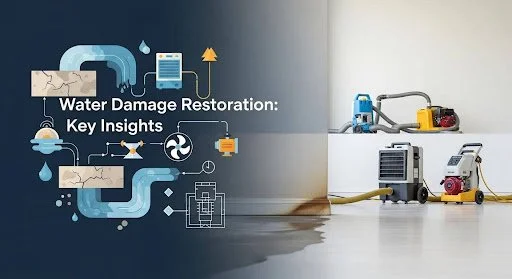
One of the most common questions homeowners ask after a flood or plumbing leak is how long the restoration process will take. Water damage restoration involves several steps including water removal, structural drying, moisture monitoring, and repairs.
The timeline for water damage restoration can vary depending on the amount of water involved and the materials affected. In many cases, restoration professionals can dry and restore homes within a few days, but larger flooding events may take longer.
The Steam Team has helped homeowners and businesses across Austin recover from water damage since 1983, providing professional water extraction, structural drying, and restoration services designed to restore properties safely.
Homes in areas like Mueller, Allandale, and South Austin may experience different restoration timelines depending on the construction of the home and the extent of damage.
The Steam Team serves Austin from two locations — our North Austin office specializes in water damage restoration, fire cleanup, and mold remediation, while our Central Austin office focuses on professional cleaning services such as carpet cleaning, tile and grout cleaning, area rug cleaning, upholstery cleaning, and air duct cleaning.
Quick Answer: Water Damage Restoration Timeline
Most residential water damage restoration projects in Austin follow this general timeline:
• Water extraction: several hours
• Structural drying: 2–5 days
• Cleaning and sanitizing: 1–2 days
• Repairs and restoration: several days to a few weeks
Small water damage incidents may be resolved in 3–5 days, while major flooding may require 1–3 weeks depending on the repairs needed.
What Affects Restoration Time?
Several factors determine how long the restoration process takes.
Amount of Water
The larger the amount of water that enters the property, the longer the drying process will take.
Flooding that affects multiple rooms or floors usually requires additional drying equipment and time.
Materials Affected
Different building materials absorb moisture differently.
For example:
• carpet may dry within a few days
• hardwood flooring may take longer
• drywall and insulation may need to be replaced if saturated
The type of materials affected can significantly influence restoration timelines.
How Quickly Cleanup Begins
The sooner restoration begins, the faster the property can dry.
If water sits inside a home for several days, materials may absorb deeper moisture and require longer drying times.
Rapid response helps prevent mold growth and reduces restoration time.
Humidity and Weather Conditions
Humidity levels can affect how quickly moisture evaporates during the drying process.
Homes in Austin, Round Rock, and Cedar Park may experience slower drying times during humid weather conditions.
Professional dehumidifiers help accelerate the drying process.
Typical Water Damage Restoration Timeline
Below is a general breakdown of how restoration projects usually progress.
Day 1: Inspection and Water Extraction
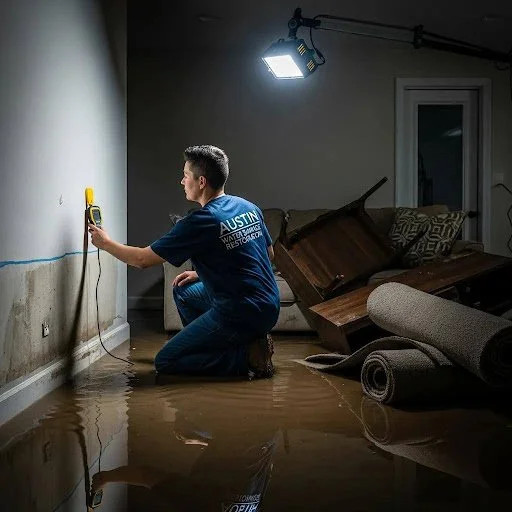
Restoration professionals inspect the damage, identify moisture locations, and begin removing standing water using industrial extraction equipment.
Days 2–4: Structural Drying
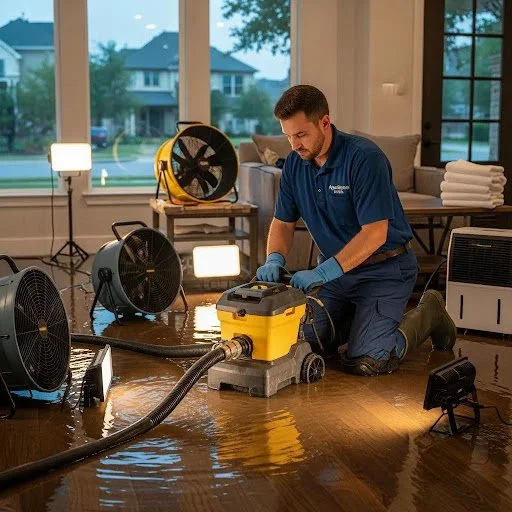
Air movers and dehumidifiers are placed throughout the affected areas to remove moisture from walls, floors, and other building materials.
Technicians monitor moisture levels daily.
Days 4–7: Cleaning and Final Drying
Once materials reach safe moisture levels, technicians clean and sanitize affected surfaces to eliminate bacteria and odors.
Repairs and Restoration
If structural materials were damaged, repairs may begin after drying is complete.
These repairs may include:
• replacing drywall
• installing new flooring
• repainting walls
• restoring damaged structures
Repair timelines vary depending on the extent of the damage.
Can Water Damage Be Restored Faster?
In many cases, professional restoration companies can speed up the drying process using specialized equipment.
Advanced restoration tools include:
• commercial dehumidifiers
• high-velocity air movers
• moisture detection equipment
• drying mats for hardwood flooring
These technologies allow technicians to dry materials much faster than natural air drying.
Risks of Delayed Water Damage Restoration
Waiting too long to begin restoration can lead to several problems.
Potential risks include:
• mold growth within 24–48 hours
• structural damage to wood framing
• warping of flooring materials
• unpleasant odors
• additional repair costs
Quick response helps reduce these risks and shorten the restoration timeline.
FAQ: Water Damage Restoration Timelines
How long does it take to dry a house after flooding?
Most homes take 2–5 days to dry using professional equipment.
Can water damage be repaired in a day?
Small leaks may be resolved quickly, but most restoration projects require several days for proper drying.
Why does structural drying take several days?
Building materials such as wood and drywall absorb moisture internally, which requires time to remove.
What happens if water damage is not dried properly?
Moisture left inside materials can lead to mold growth and structural damage.
Do restoration companies monitor drying progress?
Yes. Technicians use moisture meters and other tools to track drying progress daily.
Why The Steam Team?

• Austin-based since 1983
• Thousands of five-star reviews
• Certified restoration professionals
• Residential and commercial expertise
• Two Austin locations for fast response
• Trusted across Central Texas
Need Help Now? Call the Right Team
Central Austin Cleaning Office
1904 W Koenig Ln
Austin, TX 78756
Carpet Cleaning | Tile & Grout Cleaning | Area Rug Cleaning | Air Duct Cleaning
North Austin Restoration Office
9901 Burnet Rd
Austin, TX 78758
Water Restoration | Fire Cleanup | Mold Remediation | Emergency Extraction