How Moisture Damages Wood Framing
/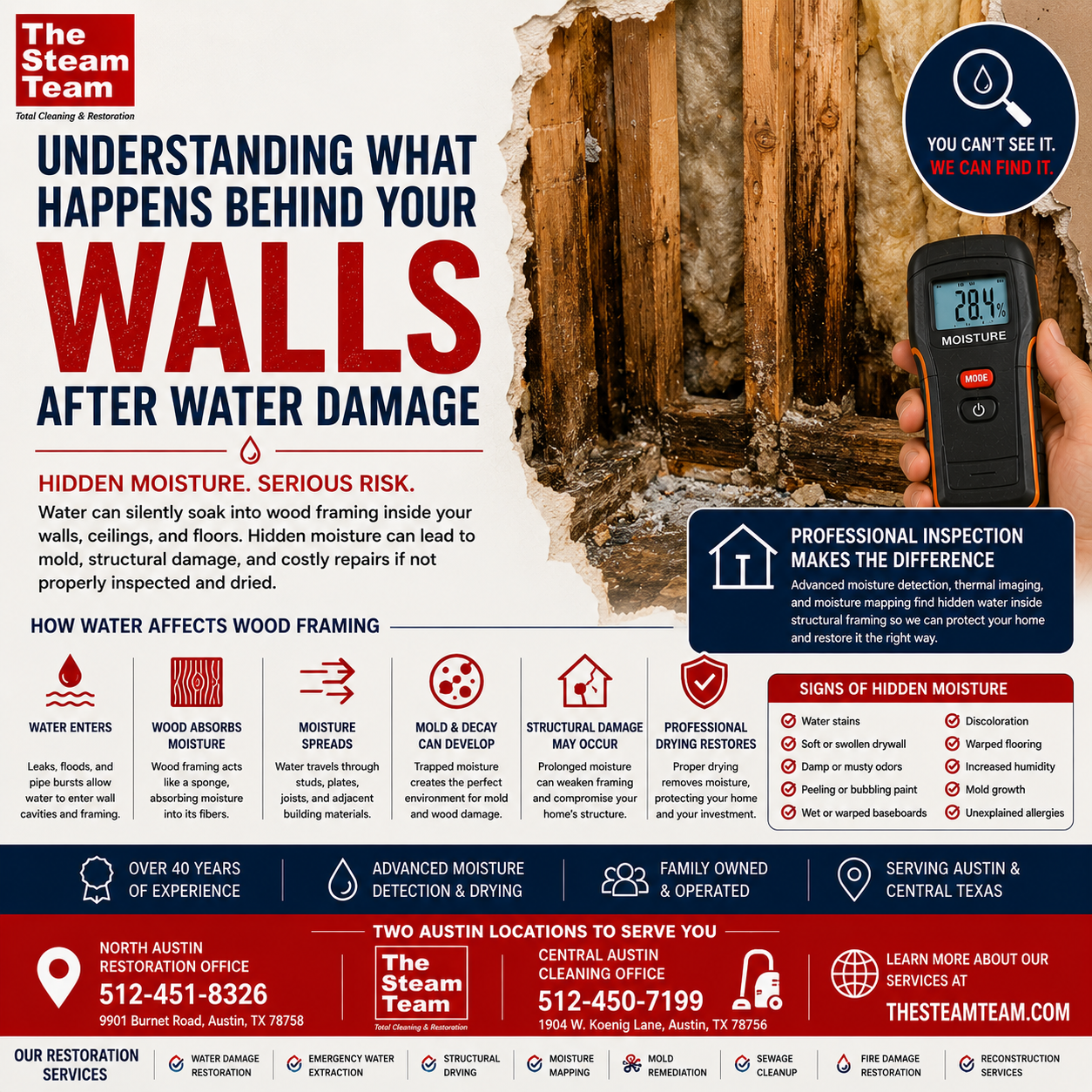
Learn how moisture affects wood framing after water damage, where hidden moisture collects, common warning signs, and how professional structural drying protects your home.
Read More
Explore expert tips on water damage restoration, carpet cleaning, rug cleaning, mold remediation, and air duct cleaning in Austin, TX. Trusted local insights from The Steam Team since 1983.
Learn how moisture affects wood framing after water damage, where hidden moisture collects, common warning signs, and how professional structural drying protects your home.
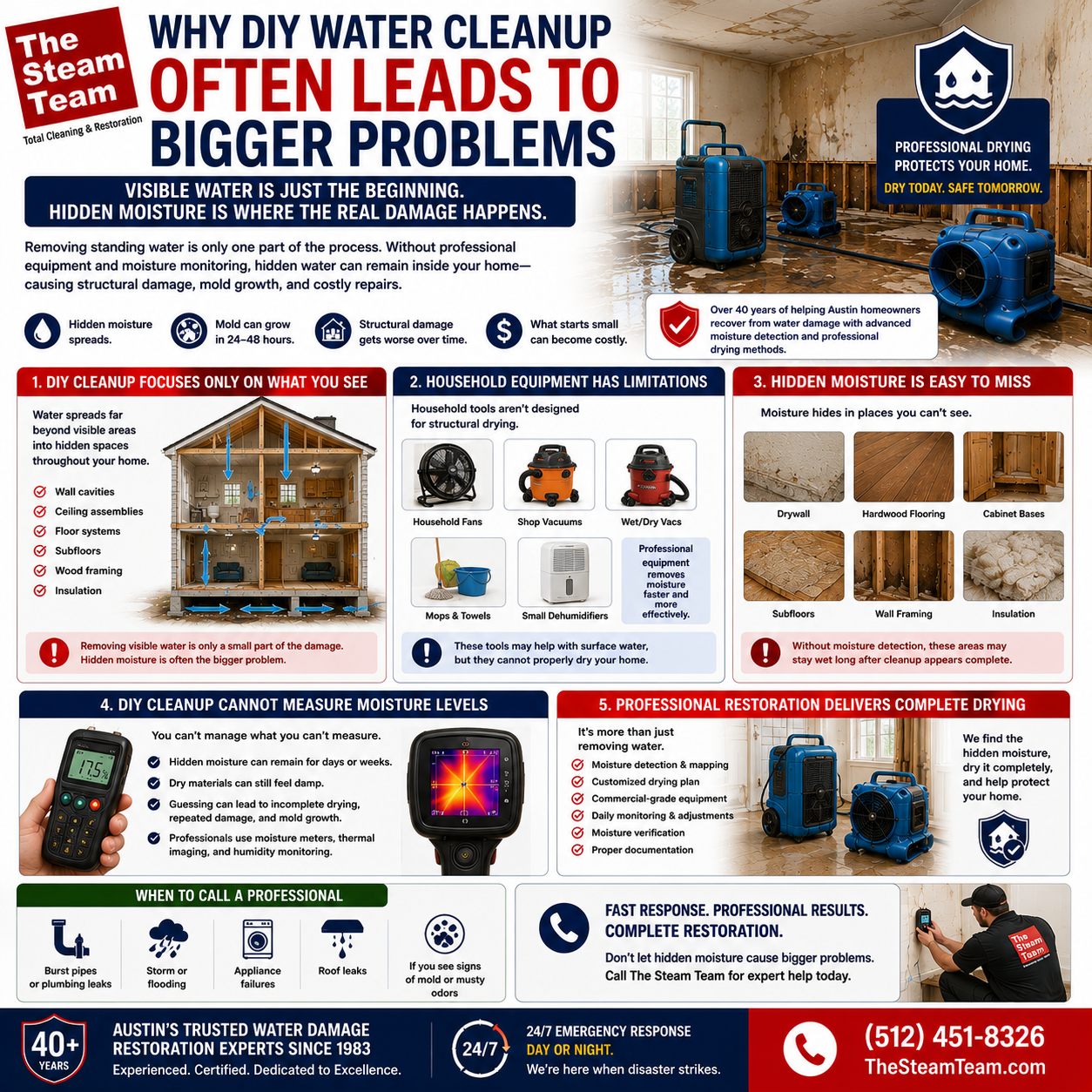
Read MoreLearn why DIY water cleanup often misses hidden moisture, delays structural drying, and increases restoration challenges. Discover when professional restoration is the better option.
Read MoreWondering how much water damage restoration costs in Austin? Learn average pricing, factors that affect restoration costs, insurance coverage, and how to avoid expensive repairs.
Read MoreCeiling water damage is a common problem for homeowners in Austin. Water stains, sagging drywall, and dripping ceilings can appear suddenly after plumbing leaks, roof damage, or severe storms.
Even small leaks can lead to significant structural damage if not addressed quickly. Moisture trapped above ceilings can weaken drywall, damage insulation, and create ideal conditions for mold growth.
Understanding the causes and repair options for ceiling water damage in Austin homes helps homeowners take quick action and prevent costly structural repairs.
The Steam Team has been helping Austin homeowners restore properties after water damage since 1983, providing professional water extraction, structural drying, and restoration services throughout Central Texas.
Ceiling damage usually occurs when water leaks from areas above the ceiling structure.
Common causes include:
• Roof leaks caused by storms or damaged shingles
• Burst or leaking pipes in upper floors
• Plumbing leaks from bathrooms or kitchens
• Overflowing bathtubs or sinks
• HVAC condensation issues
• Water heater leaks in attic spaces
Homes in Austin, Round Rock, and Cedar Park often experience roof-related leaks during heavy rainstorms, which can lead to ceiling water damage.
Water damage often begins with subtle warning signs.
Homeowners may notice:
• Yellow or brown water stains on ceilings
• Paint bubbling or peeling
• Damp spots near light fixtures
• Musty odors coming from ceiling areas
• Small cracks or discoloration
Identifying these early signs allows homeowners to repair the problem before the ceiling structure becomes weakened.
In some cases, ceiling water damage can create safety hazards.
Severe water damage may cause:
• Ceiling drywall to sag or collapse
• Electrical hazards near ceiling fixtures
• Mold growth in insulation and drywall
• Structural damage to ceiling joists
If the ceiling begins to sag or bulge, homeowners should avoid standing underneath the area and contact restoration professionals immediately.
Water entering the ceiling does not always stay in one location.
Moisture can spread through:
• Insulation above the ceiling
• Wooden framing and ceiling joists
• Drywall panels
• Electrical fixtures and wiring
This means the visible stain may not always represent the full extent of the damage.
Professional moisture detection tools help identify hidden moisture inside ceiling cavities.
The best repair approach depends on the severity of the damage.
If the damage is minimal and the water source is resolved quickly, repairs may involve:
• Drying the affected area
• Repainting stained surfaces
• Replacing small drywall sections
Proper drying is essential to prevent mold growth.
If drywall becomes saturated or begins weakening, repairs may include:
• Removing damaged drywall sections
• Drying structural framing and insulation
• Installing new drywall panels
• Repainting the repaired area
Professional drying equipment is often required to remove moisture trapped inside ceiling cavities.
In cases of major flooding or structural damage, larger repairs may be necessary.
These repairs may involve:
• Removing large sections of drywall
• Replacing insulation
• Repairing framing or support structures
• Full ceiling reconstruction
Restoration professionals can assess the extent of damage and recommend the best repair solution.
Ceiling leaks often create conditions where mold can develop quickly.
Mold may begin growing within 24–48 hours if moisture remains inside drywall or insulation.
Preventative steps include:
• Immediate water removal
• Professional structural drying
• Proper ventilation
• Removing saturated materials
Addressing moisture quickly helps reduce the risk of mold contamination.
If water stains or leaks appear on the ceiling, homeowners should take the following steps:
Identify the source of the leak if possible
Move furniture and belongings away from the area
Place containers under dripping water
Turn off electricity near affected areas if necessary
Contact a water damage restoration professional
Quick response helps prevent further damage to the home.
Water stains are usually caused by roof leaks, plumbing leaks, or overflowing fixtures from upper floors.
Yes. Minor damage may require drying and repainting, while severe damage may require drywall replacement.
Severe water damage can weaken ceiling materials and create collapse risks if not repaired.
Yes. Moisture trapped inside ceilings can lead to mold growth if not dried quickly.
Minor cosmetic repairs may be possible, but significant water damage often requires professional restoration.
• Serving Austin since 1983
• Certified water damage restoration technicians
• Advanced moisture detection equipment
• Professional structural drying services
• Trusted across Central Texas
Our team helps homeowners identify water leaks, dry structures, and repair damaged ceilings safely.
If your ceiling shows signs of water damage, addressing the issue quickly can prevent larger structural problems.
The Steam Team provides professional water damage restoration in Austin, helping homeowners locate leaks, dry structures, and repair damaged ceilings.
📞 Call 512-451-8326 for assistance
Serving Austin, Round Rock, Cedar Park, Georgetown, and surrounding Central Texas communities.
Drywall is one of the most common materials affected during water damage events. When pipes burst, ceilings leak, or flooding occurs, drywall quickly absorbs water and can become weakened or contaminated.
However, wet drywall does not always need to be replaced. In some cases, professional drying techniques can restore the material before permanent damage occurs.
Understanding when wet drywall can be saved and when it must be replaced helps homeowners make informed decisions after water damage in Austin homes.
The Steam Team has been helping Austin homeowners handle water damage restoration since 1983, providing professional structural drying, water extraction, and restoration services across Central Texas.
Drywall is made from gypsum sandwiched between paper layers. While this material works well for walls and ceilings, it is highly absorbent.
When exposed to water, drywall can:
• Absorb moisture quickly
• Lose structural strength
• Warp or swell
• Develop mold growth
The longer drywall remains wet, the more likely it will require replacement.
Homes in Austin, Round Rock, and Cedar Park often experience drywall damage from burst pipes, appliance leaks, and heavy storms.
In some situations, drywall can be dried successfully without replacement.
Drywall may be salvageable when:
• Water exposure is minimal
• The drywall was exposed to clean water (Category 1)
• The wall has not been wet for long
• No visible swelling or crumbling is present
• Mold growth has not started
Professional restoration companies use specialized drying equipment to remove moisture trapped inside wall cavities.
When addressed quickly, drying can often prevent permanent damage.
Unfortunately, wet drywall often requires replacement when damage is severe.
Replacement may be necessary when:
• Drywall has been saturated for extended periods
• The water source is contaminated
• The drywall has begun to crumble or warp
• Mold growth is present
• Structural integrity has been compromised
In these cases, damaged drywall is typically removed and replaced to prevent further issues.
Water damage is typically classified into three categories, which help determine whether drywall can be saved.
This includes water from sources like:
• Broken supply lines
• Sink overflows
• Appliance leaks
Drywall exposed to clean water may sometimes be dried successfully if addressed quickly.
Gray water may come from:
• Washing machines
• Dishwashers
• Toilet overflows (without waste)
This water may contain contaminants, and drywall may need replacement depending on exposure time.
Black water includes highly contaminated water from:
• Sewage backups
• Floodwater
• Storm runoff
Drywall exposed to Category 3 water must almost always be removed and replaced for health and safety reasons.
Professional restoration companies use specialized equipment designed to remove moisture trapped inside wall systems.
Drying techniques may include:
• High-powered air movers
• Industrial dehumidifiers
• Wall cavity drying systems
• Moisture monitoring tools
Technicians also use moisture meters and thermal imaging cameras to locate hidden moisture behind walls.
Proper structural drying helps prevent mold growth and structural damage.
Homeowners may notice warning signs that drywall has been damaged beyond repair.
Common signs include:
• Soft or spongy walls
• Bubbling paint
• Swollen or warped drywall
• Discoloration or staining
• Musty odors
If these signs appear, professional evaluation is recommended.
Water damage can spread quickly through building materials.
Within 24 hours, drywall begins absorbing moisture.
Within 48 hours, mold growth may begin developing inside wall cavities.
Prompt restoration helps prevent more extensive repairs.
One of the biggest risks of wet drywall is mold development.
To prevent mold:
• Begin drying immediately
• Reduce indoor humidity levels
• Remove severely saturated materials
• Use professional drying equipment
Proper moisture control is essential for maintaining a healthy indoor environment.
Drywall can begin deteriorating within 24–48 hours if not dried properly.
Yes, in some cases. If the water is clean and drying begins quickly, drywall may be salvageable.
Restoration technicians use moisture meters and infrared cameras to detect hidden moisture.
Not always, but prolonged moisture increases the risk of mold growth.
Drywall may dry slowly on its own, but professional drying equipment ensures proper moisture removal.
• Serving Austin since 1983
• 24/7 emergency water damage response
• Certified restoration technicians
• Advanced structural drying equipment
• Trusted across Central Texas
Our team helps homeowners restore damaged walls and prevent long-term structural problems.
If your home has experienced water damage, quick action can prevent major repairs.
The Steam Team provides 24/7 water damage restoration in Austin, helping homeowners remove water, dry structures, and repair damaged materials.
📞 Call 512-451-8326 for emergency service
Serving Austin, Round Rock, Cedar Park, Georgetown, and surrounding Central Texas communities.
Our mission is to provide you with the most outstanding service experience ever. Some of our most popular services include Carpet Cleaning, Tile Cleaning, Air Duct Cleaning, Water Damage, Fire Damage Restoration and Construction Services.
Quick Cleaning Quote
Email: info@thesteamteam.com
Georgetown: (512) 868-0358
Dallas: (214) 631-8326
Naples, FL: (239) 450-1936
Toll Free: (800) 880-7785