Common Causes of Water Damage in Austin (And How to Prevent Them)

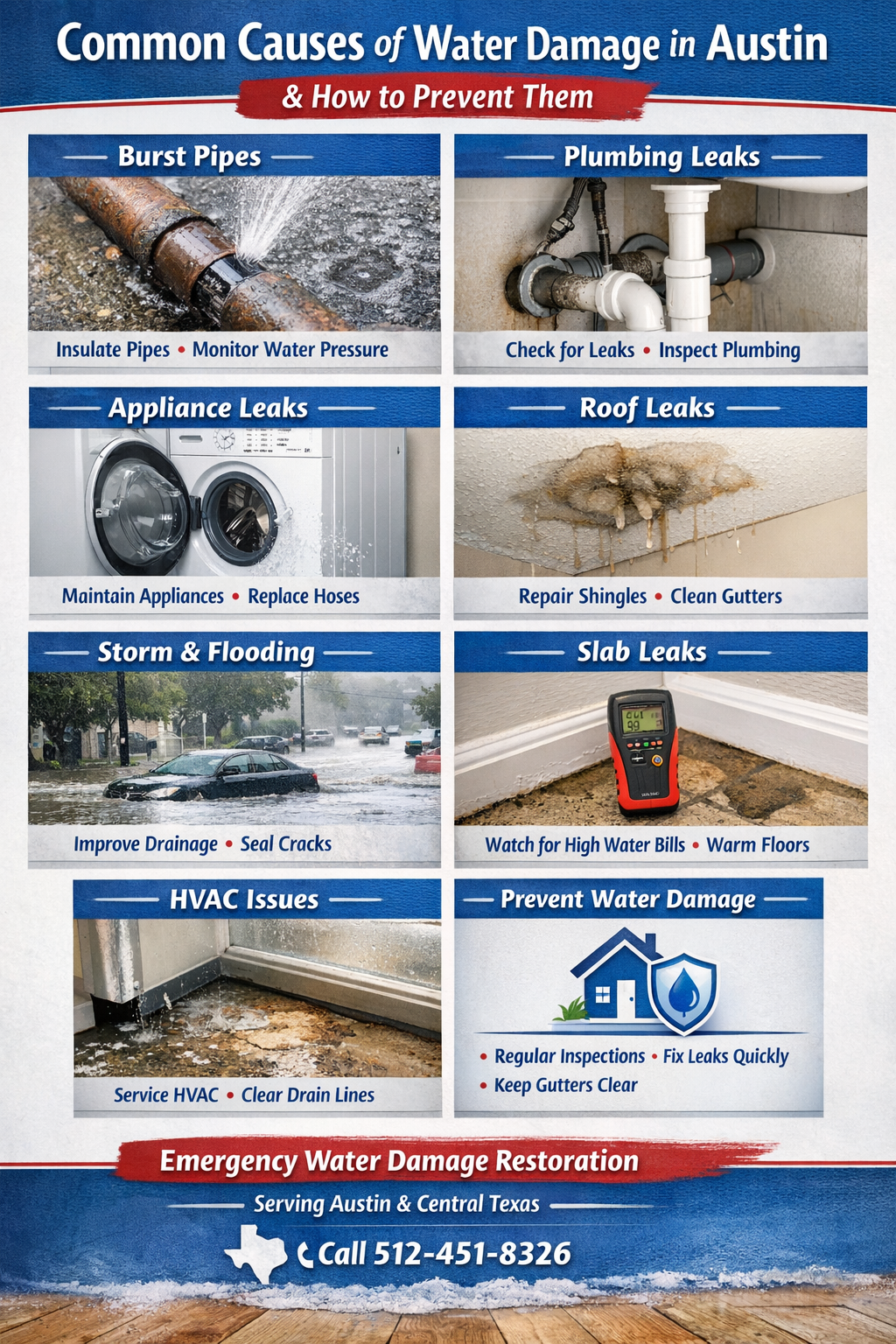
Common Causes of Water Damage in Austin (And How to Prevent Them)

Understanding the Most Frequent Water Damage Risks

Water damage is one of the most common property problems homeowners face. From plumbing leaks to severe storms, water can quickly damage floors, walls, ceilings, and personal belongings.

Understanding the most common causes of water damage in Austin homes helps homeowners take preventative steps to protect their property and reduce the risk of costly repairs.

The Steam Team has been helping homeowners address water damage emergencies in Austin since 1983, providing professional water damage restoration, structural drying, and cleanup services throughout Central Texas.

Burst Pipes

Burst pipes are one of the leading causes of residential water damage.

Pipes can burst due to:

β€’ Aging plumbing systems
β€’ Corrosion inside pipes
β€’ Freezing temperatures during winter storms
β€’ Sudden pressure changes

When a pipe bursts, large amounts of water can flood a home within minutes.

Prevention Tips

Homeowners can reduce the risk of burst pipes by:

β€’ Insulating exposed pipes during cold weather
β€’ Monitoring water pressure levels
β€’ Replacing aging plumbing components
β€’ Addressing small leaks before they worsen

Plumbing Leaks

Slow plumbing leaks often go unnoticed for long periods of time.

Leaks may occur in:

β€’ Supply lines beneath sinks
β€’ Pipes behind walls
β€’ Water heater connections
β€’ Toilets and bathroom fixtures

Even small leaks can cause serious water damage if they continue for weeks or months.

Prevention Tips

To prevent plumbing leak damage:

β€’ Inspect plumbing fixtures regularly
β€’ Watch for increases in water bills
β€’ Check under sinks for moisture or corrosion
β€’ Schedule professional plumbing inspections

Appliance Failures

Household appliances that use water can sometimes malfunction or leak.

Common appliances that cause water damage include:

β€’ Washing machines
β€’ Dishwashers
β€’ Refrigerators with water lines
β€’ Water heaters

Appliance hoses and connections can wear out over time and eventually fail.

Prevention Tips

To reduce appliance-related water damage:

β€’ Replace appliance hoses every few years
β€’ Inspect connections for leaks
β€’ Install water leak detectors near appliances

Roof Leaks

Roof damage can allow water to enter the home during storms.

Leaks may occur due to:

β€’ Missing or damaged shingles
β€’ Aging roofing materials
β€’ Clogged gutters
β€’ Storm damage from wind or hail

Water entering through the roof can damage ceilings, insulation, and walls.

Prevention Tips

Homeowners should:

β€’ Inspect roofs after severe storms
β€’ Clean gutters regularly
β€’ Repair damaged shingles promptly
β€’ Schedule professional roof inspections

Severe Storms and Flooding

Central Texas occasionally experiences severe storms that can lead to flooding.

Heavy rainfall can cause water to enter homes through:

β€’ Doors and windows
β€’ Foundation cracks
β€’ Basement or crawl spaces

Storm-related flooding can cause widespread damage to flooring, drywall, and personal belongings.

Prevention Tips

Flood prevention steps include:

β€’ Maintaining proper yard drainage
β€’ Sealing foundation cracks
β€’ Installing sump pumps where necessary
β€’ Keeping gutters and downspouts clear

HVAC System Issues

Heating and cooling systems can also contribute to water damage.

HVAC-related water issues may occur due to:

β€’ Clogged condensate drain lines
β€’ Frozen evaporator coils
β€’ Malfunctioning drain pans

When condensation systems fail, water may leak inside ceilings or walls.

Prevention Tips

Regular HVAC maintenance helps prevent moisture problems.

Homeowners should:

β€’ Schedule annual HVAC inspections
β€’ Clean condensate drain lines
β€’ Replace air filters regularly

Slab Leaks

Many homes in Austin are built on concrete slab foundations. Plumbing pipes running beneath the slab may develop leaks over time.

Slab leaks can lead to:

β€’ Moisture beneath flooring
β€’ Foundation damage
β€’ Mold growth

Because these leaks occur beneath the home, they can be difficult to detect.

Prevention Tips

Watch for warning signs such as:

β€’ Unexplained increases in water bills
β€’ Warm spots on floors
β€’ Sounds of running water when plumbing is not in use

The Importance of Early Detection

Early detection plays a major role in minimizing water damage.

Homeowners should watch for warning signs such as:

β€’ Water stains on ceilings or walls
β€’ Musty odors
β€’ Warped or buckling flooring
β€’ Increased humidity inside the home

Addressing water problems quickly helps reduce restoration costs and prevent mold growth.

What to Do If Water Damage Occurs

If water damage happens inside your home, taking quick action can reduce the extent of damage.

Homeowners should:

β€’ Shut off the water source if possible
β€’ Remove standing water when safe
β€’ Move valuables away from affected areas
β€’ Contact a water damage restoration professional

Professional restoration services help remove moisture and prevent further structural damage.

FAQ: Water Damage Causes

What is the most common cause of water damage in homes?

Plumbing leaks and burst pipes are among the most common causes of residential water damage.

Can small leaks cause serious damage?

Yes. Slow leaks can cause mold growth and structural damage over time.

Are storms a major cause of water damage in Austin?

Severe storms and heavy rainfall can sometimes lead to flooding and roof leaks.

How can homeowners prevent water damage?

Regular inspections of plumbing, appliances, and roofs can help identify problems early.

When should homeowners call a restoration company?

Professional restoration is recommended whenever water damage affects walls, flooring, or structural materials.

Why Austin Homeowners Trust The Steam Team

β€’ Serving Austin since 1983
β€’ Certified water damage restoration technicians
β€’ Advanced structural drying equipment
β€’ Professional moisture detection tools
β€’ Trusted across Central Texas

Our team helps homeowners recover quickly from water damage emergencies.

Need Water Damage Restoration in Austin?

If your home experiences water damage, fast professional response can help prevent mold growth and structural problems.

The Steam Team provides professional water damage restoration services in Austin, helping homeowners restore their properties quickly and safely.

πŸ“ž Call 512-451-8326 for assistance

Serving Austin, Round Rock, Cedar Park, Georgetown, and surrounding Central Texas communities.

Slab Leaks in Austin Homes | Warning Signs & Water Damage Risks

Slab Leaks in Austin Homes: What to Watch For

Hidden Plumbing Leaks That Can Cause Major Damage

Slab leaks are one of the most serious plumbing issues homeowners can face in Central Texas. These leaks occur when water pipes located beneath a home’s concrete foundation begin leaking or rupturing.

Because the plumbing lines are hidden under the slab, slab leaks often go unnoticed until significant water damage has already occurred.

Understanding the warning signs of slab leaks in Austin homes helps homeowners detect problems early and prevent costly structural damage.

The Steam Team has been helping homeowners address water damage caused by plumbing leaks since 1983, providing professional water damage restoration and moisture detection services throughout Austin and Central Texas.

What Is a Slab Leak?

A slab leak occurs when plumbing pipes located beneath a home’s concrete foundation develop a leak.

Most modern homes in Austin are built on concrete slab foundations, which means water supply lines often run directly beneath the home.

When one of these pipes leaks, water can seep upward into the structure or spread under the foundation.

Without early detection, slab leaks can cause serious problems such as:

β€’ Structural foundation damage
β€’ Flooring damage
β€’ Mold growth
β€’ Increased water bills

Why Slab Leaks Happen in Austin Homes

Several factors can cause plumbing pipes under foundations to fail.

Common causes include:

β€’ Pipe corrosion over time
β€’ High water pressure
β€’ Shifting soil beneath foundations
β€’ Poor plumbing installation
β€’ Abrasion between pipes and concrete

Austin’s soil composition, which includes clay and shifting ground conditions, can sometimes contribute to foundation movement that stresses plumbing lines.

Common Signs of a Slab Leak

Because slab leaks occur beneath the home, the warning signs may be subtle at first.

Homeowners should watch for the following indicators.

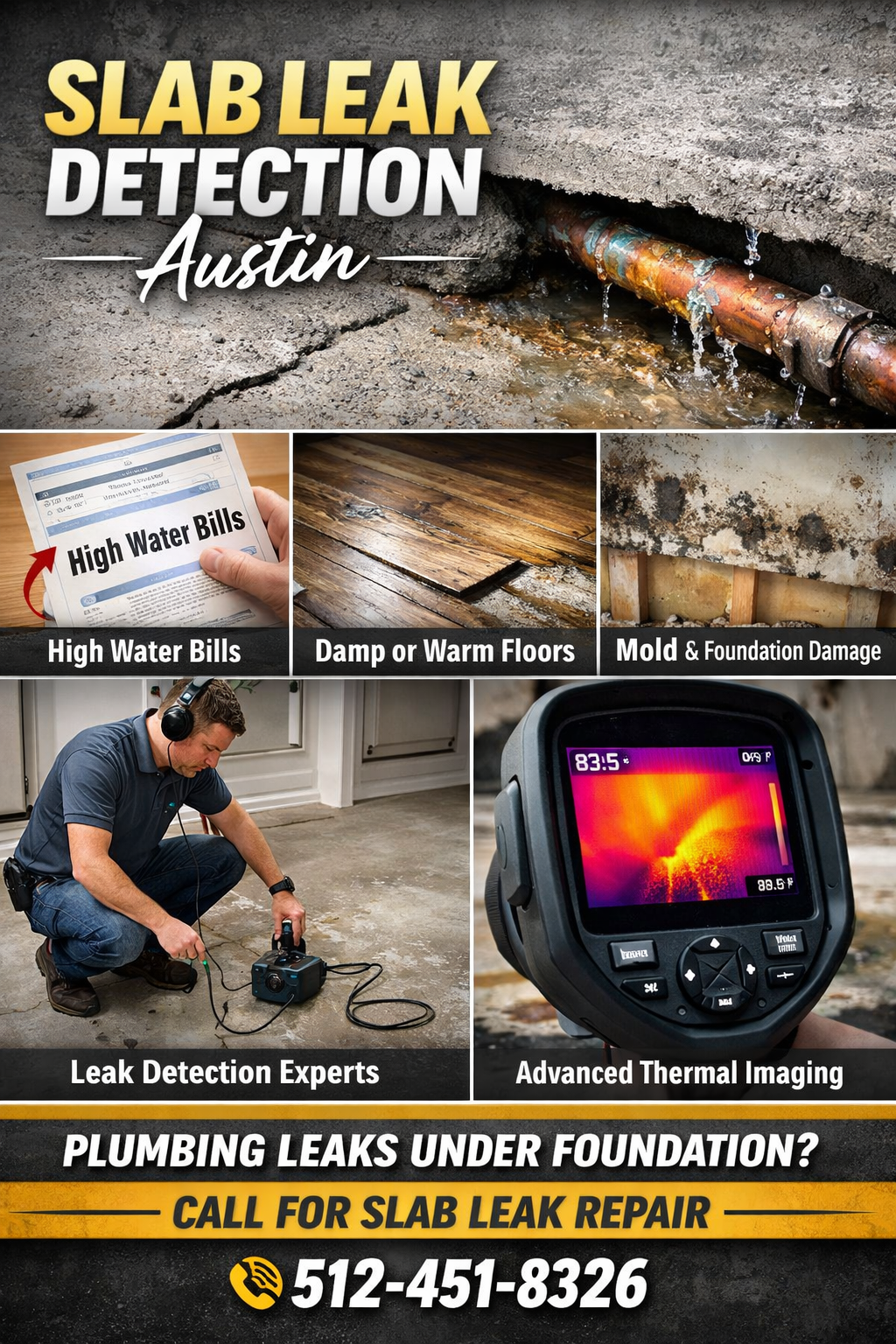
Unexpected Increase in Water Bills

One of the earliest signs of a slab leak is a sudden increase in water usage.

If water bills increase without changes in household water usage, it may indicate a hidden plumbing leak.

Warm or Damp Spots on Floors

Pipes carrying hot water may create warm areas on flooring surfaces.

Homeowners may notice:

β€’ Warm tiles or floors
β€’ Damp spots on carpet
β€’ Moist areas on hardwood flooring

These symptoms may indicate water leaking beneath the slab.

Sounds of Running Water

Hearing the sound of water running when no fixtures are in use can indicate a hidden plumbing leak beneath the foundation.

The sound may resemble water flowing through pipes or dripping beneath the floor.

Cracks in Floors or Walls

Excess moisture under the foundation can cause soil movement, which may lead to structural changes.

Homeowners may notice:

β€’ Cracks in flooring
β€’ Cracks in walls or ceilings
β€’ Uneven floors

These structural changes can sometimes be related to slab leaks.

Mold or Musty Odors

Moisture beneath flooring can create ideal conditions for mold growth.

Musty odors may appear if mold begins developing under carpets, baseboards, or flooring materials.

Damage Slab Leaks Can Cause

If left untreated, slab leaks can cause extensive property damage.

Possible consequences include:

β€’ Warped or buckled flooring
β€’ Mold growth inside walls and floors
β€’ Foundation weakening
β€’ Water damage to cabinets and baseboards
β€’ Structural instability

Early detection is essential to prevent major repairs.

How Professionals Detect Slab Leaks

Because slab leaks occur beneath the home, specialized equipment is required to locate them accurately.

Professional leak detection methods may include:

β€’ Electronic leak detection equipment
β€’ Thermal imaging cameras
β€’ Moisture meters
β€’ Pressure testing of plumbing systems

These tools help identify the exact location of the leak without unnecessary damage to flooring or foundations.

What Happens After a Slab Leak Is Found

Once the source of the leak is identified, plumbers typically repair or reroute the damaged pipe.

After the plumbing repair is completed, water damage restoration may be required.

Restoration may include:

β€’ Water extraction from affected areas
β€’ Structural drying
β€’ Moisture monitoring
β€’ Mold prevention treatments
β€’ Repair or replacement of damaged flooring

Professional restoration ensures the home is properly dried and protected from mold.

Preventing Slab Leaks

While not all slab leaks can be prevented, homeowners can take steps to reduce risk.

Helpful prevention tips include:

β€’ Monitoring water pressure levels
β€’ Scheduling regular plumbing inspections
β€’ Repairing minor plumbing leaks promptly
β€’ Watching for changes in water bills

Early detection can help minimize damage and repair costs.

FAQ: Slab Leaks

What causes slab leaks in Austin homes?

Slab leaks are often caused by pipe corrosion, foundation movement, high water pressure, or aging plumbing systems.

How serious is a slab leak?

Slab leaks can cause major structural damage if not detected early.

Can slab leaks cause mold?

Yes. Moisture beneath flooring can create conditions where mold develops.

How are slab leaks detected?

Professionals use specialized tools such as electronic leak detection equipment and thermal imaging cameras.

Who repairs slab leaks?

Licensed plumbers repair the pipe leak, while restoration companies handle water damage cleanup and drying.

Why Austin Homeowners Trust The Steam Team

β€’ Serving Austin since 1983
β€’ Advanced moisture detection technology
β€’ Certified water damage restoration technicians
β€’ Professional structural drying equipment
β€’ Trusted across Central Texas

Our team helps homeowners recover from water damage caused by plumbing leaks and foundation issues.

Need Water Damage Help After a Slab Leak?

If your home has experienced water damage caused by a slab leak, professional restoration can help prevent mold and structural damage.

The Steam Team provides water damage restoration and structural drying services in Austin, helping homeowners restore their property safely.

πŸ“ž Call 512-451-8326 for assistance

Serving Austin, Round Rock, Cedar Park, Georgetown, and surrounding Central Texas communities.