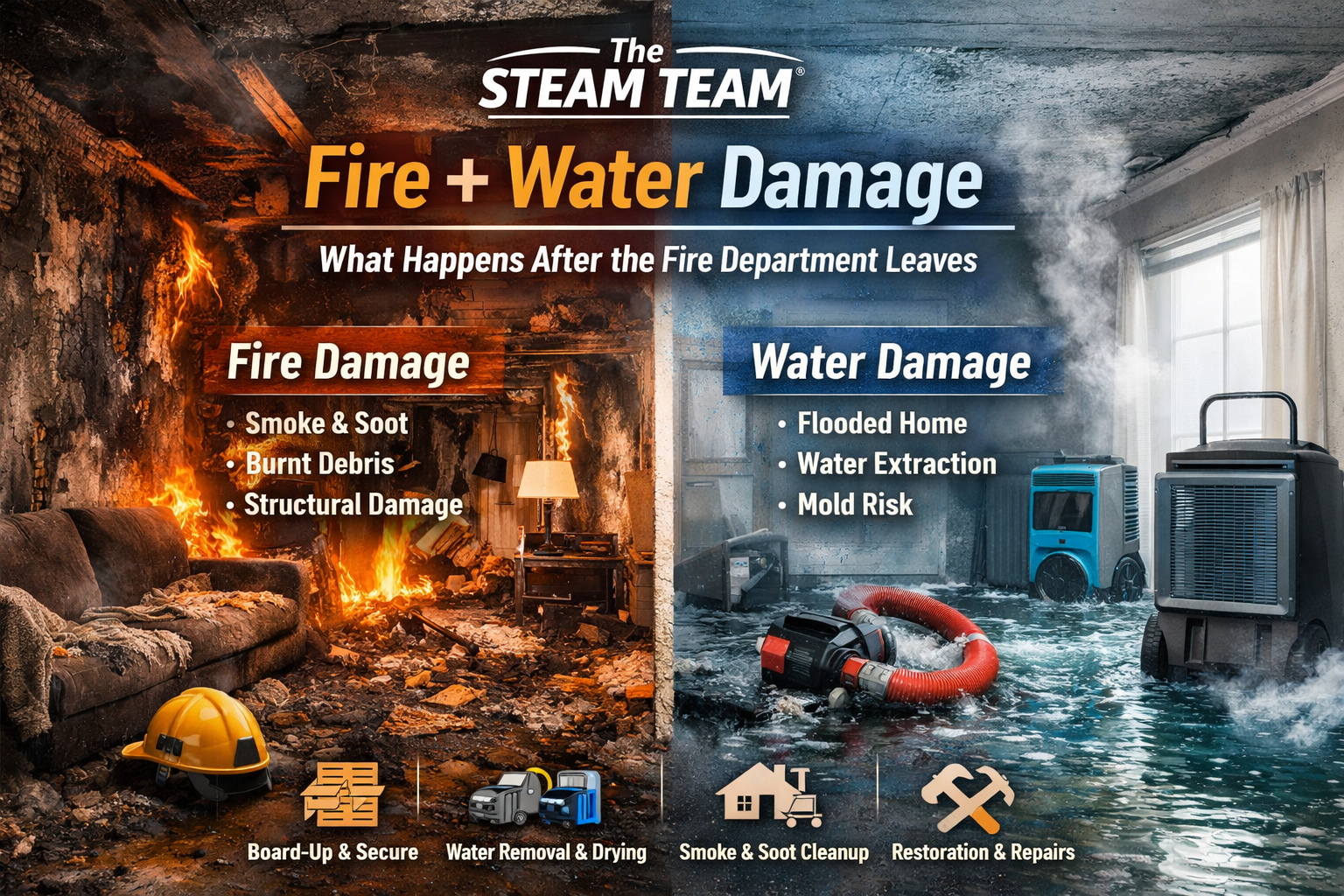
Fire + Water Damage β What Happens After the Fire Department Leaves
/Fire + Water Damage: What Happens After the Fire Department Leaves
The Hidden Damage After a House Fire
When a fire occurs in a home, the fire departmentβs primary goal is to extinguish the flames and ensure everyoneβs safety. While firefighters may successfully put out the fire, significant damage often remains after they leave.
In addition to fire and smoke damage, large amounts of water used to extinguish the fire can cause extensive flooding throughout the property.
Understanding what happens after firefighters leave and how fire and water damage restoration works in Austin helps homeowners begin the recovery process quickly and safely.
The Steam Team has been helping Austin homeowners recover from fire and water damage since 1983, providing professional restoration services that address both fire damage and the water damage left behind during firefighting efforts.
Why Water Damage Happens After a Fire
Firefighters use powerful hoses to extinguish flames quickly. While this is necessary to control the fire, it can leave large amounts of water inside the home.
This water may soak into:
β’ Floors and carpets
β’ Drywall and ceilings
β’ Furniture and personal belongings
β’ Insulation and structural materials
Without proper cleanup and drying, this moisture can lead to mold growth and additional structural damage.
Step 1: Emergency Property Stabilization
Once the fire department has finished their work, the first step in the restoration process is stabilizing the property.
This may include:
β’ Boarding up broken windows
β’ Securing damaged doors
β’ Covering roof openings
β’ Preventing additional weather exposure
Stabilizing the structure helps protect the home from further damage while restoration planning begins.
Step 2: Water Extraction and Drying
Because firefighting efforts often leave large amounts of water inside the home, restoration teams begin by removing standing water.
Professional water removal may involve:
β’ Industrial water extraction pumps
β’ Wet vacuums for carpets and flooring
β’ Structural drying equipment
β’ Commercial dehumidifiers
Drying the structure quickly helps prevent mold growth and additional material damage.
Homes in Austin, Round Rock, and Cedar Park often require rapid structural drying after fire suppression due to the large volumes of water used by fire departments.
Step 3: Smoke and Soot Cleanup
Even after the fire is extinguished, smoke and soot residue may remain throughout the home.
Smoke particles can settle on:
β’ Walls and ceilings
β’ Furniture
β’ HVAC systems
β’ Personal belongings
Professional smoke cleanup includes:
β’ Surface cleaning and deodorization
β’ Air filtration and odor removal
β’ Cleaning soot residue from walls and materials
This process helps remove smoke odors and restore indoor air quality.
Step 4: Damage Assessment and Restoration Planning
After initial cleanup, restoration professionals assess the full extent of damage.
This assessment determines:
β’ Which materials can be restored
β’ Which materials must be removed
β’ Structural repairs needed
β’ Estimated restoration timeline
This stage often involves coordination with insurance providers to ensure repairs are documented properly.
Step 5: Structural Repairs and Reconstruction
Once water damage and smoke damage are addressed, rebuilding and repairs may begin.
Common restoration repairs include:
β’ Replacing damaged drywall
β’ Repairing flooring
β’ Restoring ceilings
β’ Repainting walls
β’ Replacing insulation or cabinetry
The goal of the restoration process is to return the home to its original condition as safely and efficiently as possible.
The Risk of Mold After Fire Damage
Water used during firefighting can create conditions where mold begins developing.
If moisture remains trapped inside walls or flooring, mold can begin growing within 24β48 hours.
Professional drying equipment is essential to remove hidden moisture and prevent mold growth.
Why Professional Fire Damage Restoration Is Important
Fire damage restoration requires specialized expertise because multiple types of damage are involved.
Professional restoration teams address:
β’ Fire damage
β’ Smoke damage
β’ Water damage
β’ Structural repairs
β’ Odor removal
Handling all these issues properly helps ensure the home is safe and fully restored.
Working with Insurance After Fire Damage
Most homeowners insurance policies cover fire damage restoration.
The insurance claims process may include:
β’ Documenting fire and water damage
β’ Working with insurance adjusters
β’ Estimating repair costs
β’ Coordinating restoration services
Professional restoration companies often assist homeowners with the documentation required for insurance claims.
FAQ: Fire and Water Damage Restoration
Why is there water damage after a fire?
Firefighters use large amounts of water to extinguish flames, which can leave standing water inside the home.
How long does fire damage restoration take?
Restoration timelines vary depending on the severity of the fire and water damage, but many projects take several days to several weeks.
Can smoke damage be removed from a home?
Yes. Professional smoke cleanup techniques remove soot residue and eliminate odors.
Can water from firefighting cause mold?
Yes. If moisture is not removed quickly, mold can begin developing within 24β48 hours.
Should homeowners enter the property immediately after a fire?
It is best to wait for safety clearance and professional inspection before re-entering damaged areas.
Why Austin Homeowners Trust The Steam Team
β’ Serving Austin since 1983
β’ Certified fire and water damage restoration technicians
β’ Advanced water extraction and drying equipment
β’ Smoke and odor removal services
β’ Trusted across Central Texas
Our team helps homeowners recover from fire and water damage emergencies safely and efficiently.
Need Fire and Water Damage Restoration in Austin?
After a fire, fast professional restoration can help prevent additional damage and begin rebuilding your home.
The Steam Team provides professional fire and water damage restoration services in Austin, helping homeowners recover quickly after emergencies.
π Call 512-451-8326 for assistance
Serving Austin, Round Rock, Cedar Park, Georgetown, and surrounding Central Texas communities.