How Water Damage Affects Hardwood Floors
/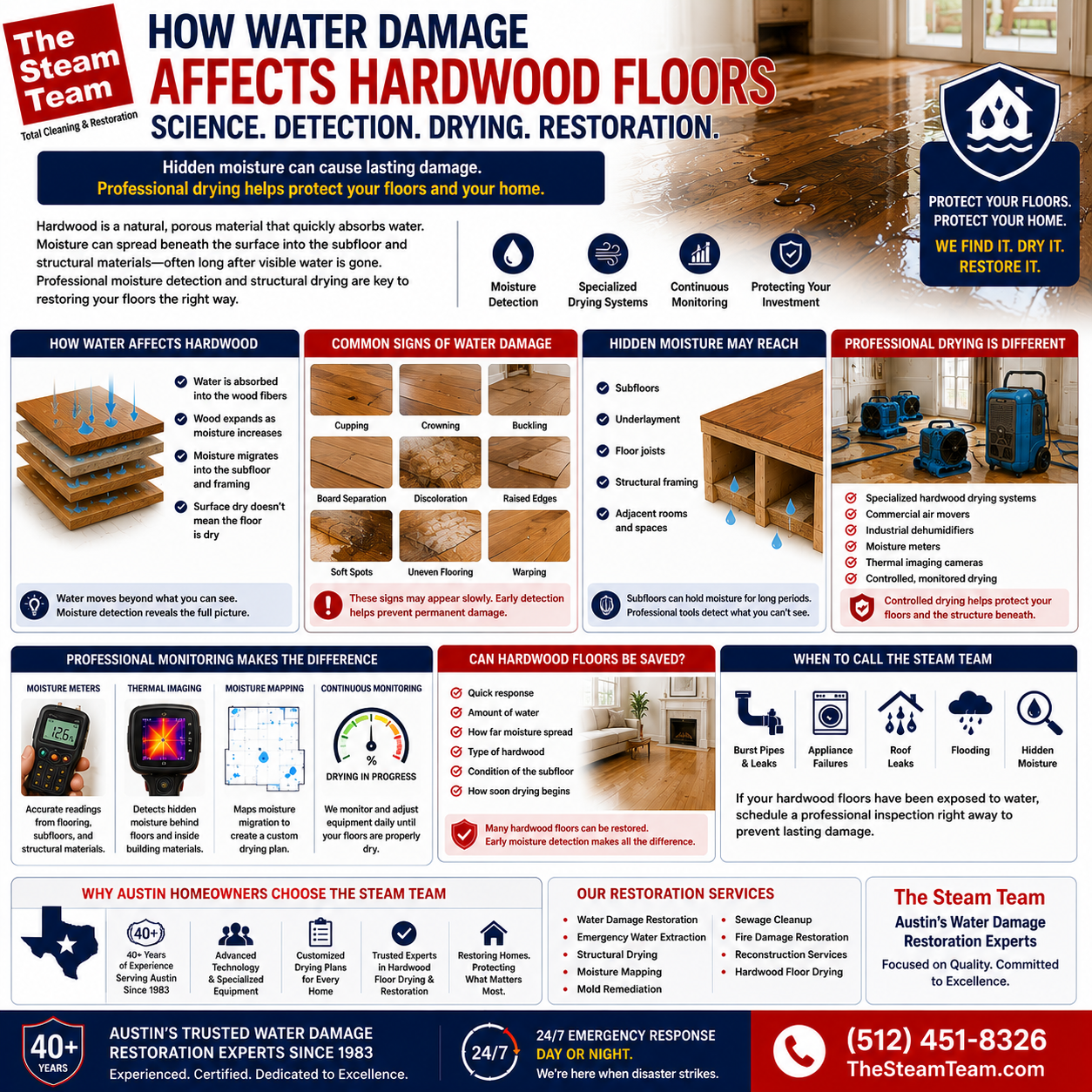
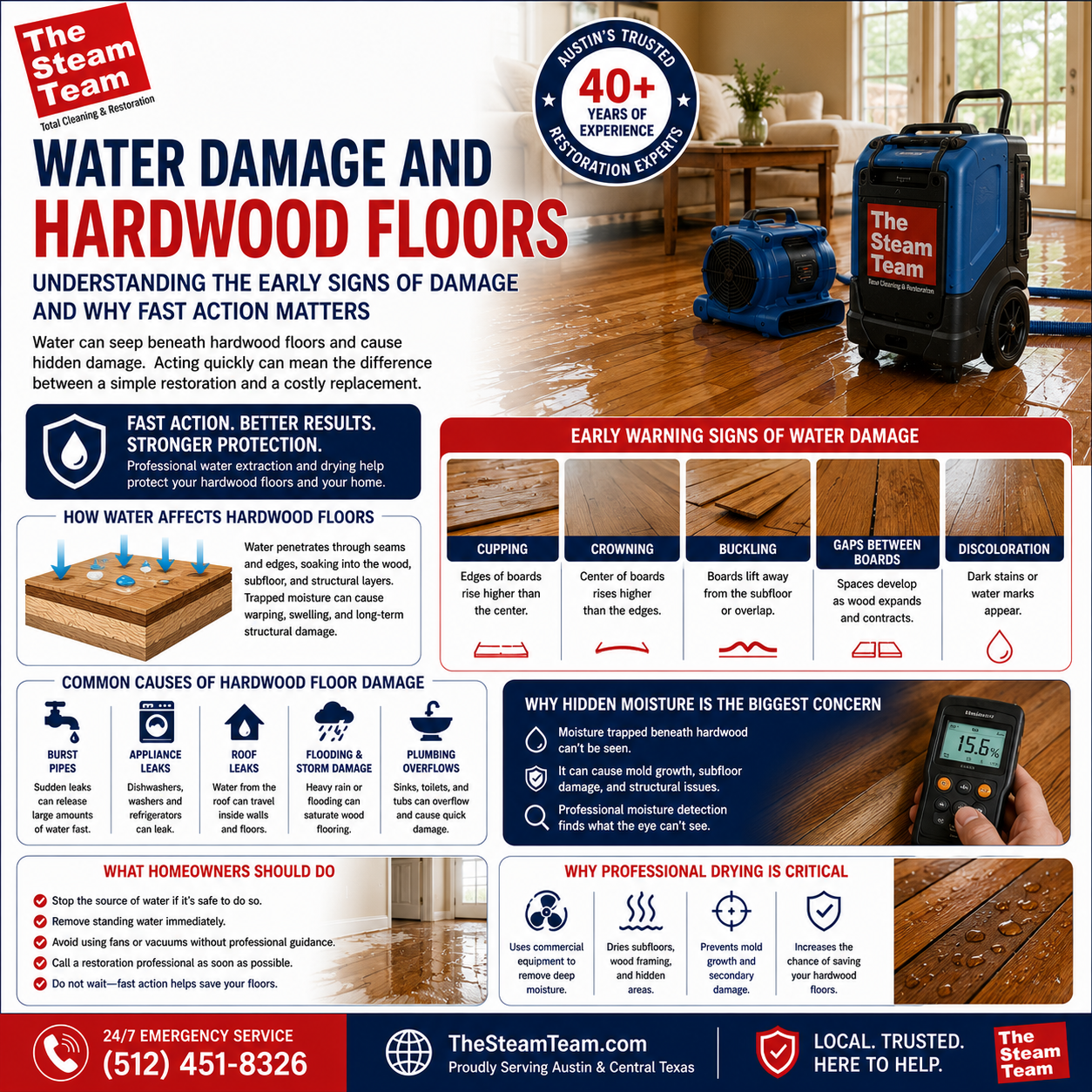
Learn how water damage affects hardwood floors, why wood expands and cups, signs of hidden moisture, and how professional hardwood floor drying helps protect your flooring.
Read More
Explore expert tips on water damage restoration, carpet cleaning, rug cleaning, mold remediation, and air duct cleaning in Austin, TX. Trusted local insights from The Steam Team since 1983.
Learn how water damage affects hardwood floors, why wood expands and cups, signs of hidden moisture, and how professional hardwood floor drying helps protect your flooring.
Read MoreLearn how water travels through walls, ceilings, floors, insulation, and structural framing after a leak. Discover why hidden moisture spreads farther than most homeowners expect.
Read MoreLearn how water damage affects hardwood floors, common warning signs, when restoration is possible, and why quick action can help protect your flooring after leaks or flooding.
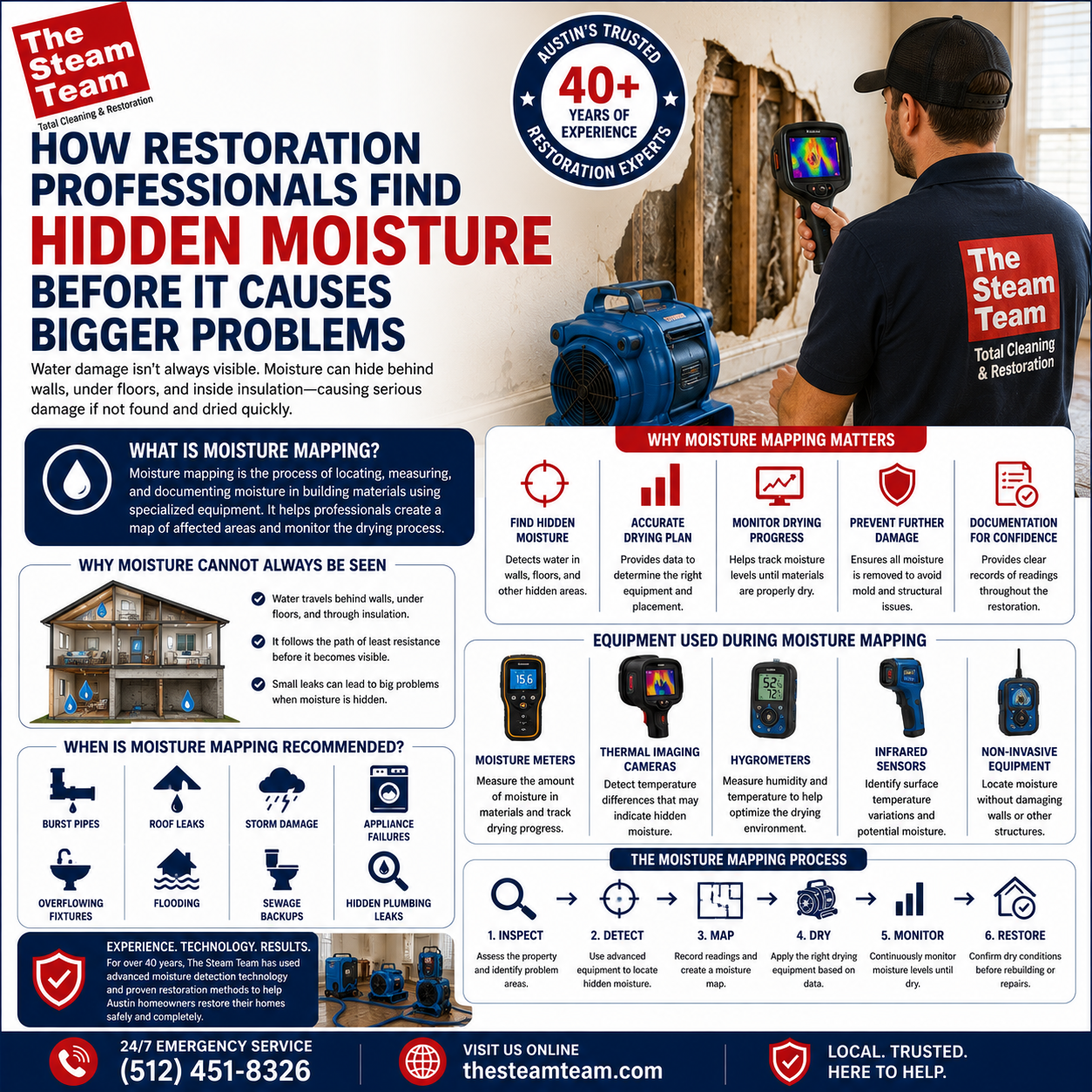
Read MoreLearn what moisture mapping is, how it works, and why it is essential after water damage. Discover how restoration professionals detect hidden moisture before repairs begin.
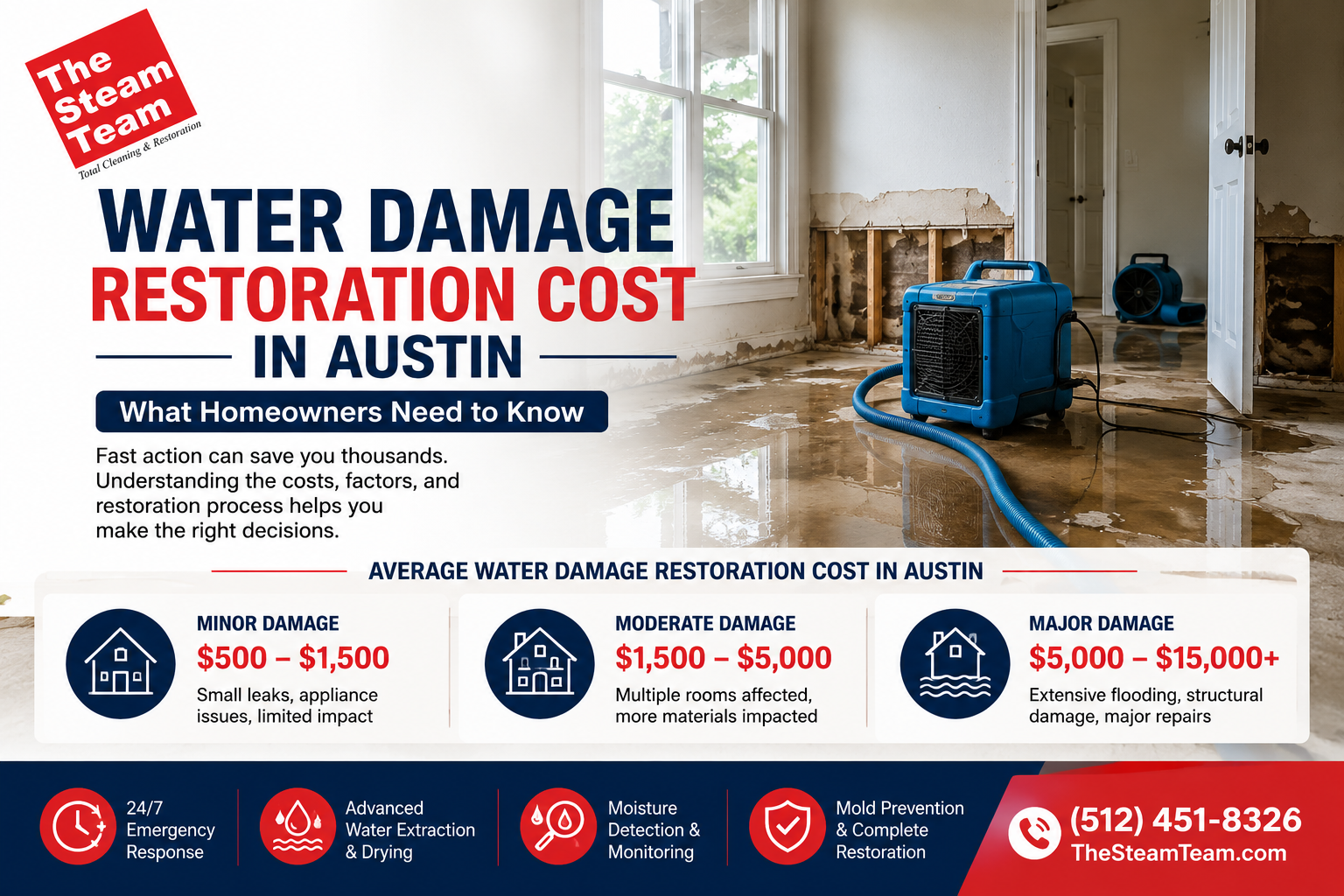
Read MoreWondering how much water damage restoration costs in Austin? Learn average pricing, factors that affect restoration costs, insurance coverage, and how to avoid expensive repairs.
Read MoreBurst pipes are one of the most common causes of sudden water damage in Austin homes. When a pipe ruptures, hundreds of gallons of water can quickly flood floors, walls, and ceilings within minutes.
Winter freezes, aging plumbing systems, and sudden pressure changes are common causes of pipe failures across Central Texas. Acting quickly after a pipe bursts can significantly reduce structural damage and restoration costs.
Understanding how to handle burst pipe cleanup in Austin helps homeowners protect their property and begin the restoration process safely.
The Steam Team has been helping Austin homeowners recover from burst pipe water damage since 1983, providing emergency water extraction, structural drying, and restoration services throughout the region.
Although Austin has a generally warm climate, pipes can still burst due to several factors.
Common causes include:
• Winter freeze events
• Aging or corroded plumbing lines
• High water pressure
• Pipe blockages or buildup
• Shifting foundations or slab movement
During sudden temperature drops, water inside pipes can freeze and expand, causing pipes to crack or rupture.
Homes in neighborhoods such as Round Rock, Cedar Park, and Pflugerville experienced significant burst pipe issues during past Texas freeze events.
The most important first step after discovering a burst pipe is to stop the water flow immediately.
Locate the main water shutoff valve for your home and turn it off.
Shutting off the water supply prevents additional flooding and limits the amount of damage inside the property.
If you are unsure where the valve is located, most homes have it near:
• The water meter outside
• The garage
• The utility room
If water has reached electrical outlets, appliances, or wiring, electricity should be turned off in the affected areas.
This helps prevent electrical hazards.
Never walk through standing water near outlets or electrical panels.
If there is uncertainty about safety, wait for professionals to inspect the property.
Once the main water supply is turned off, open faucets throughout the home to release remaining water inside the plumbing system.
This helps reduce pressure and prevents additional leaks.
Flush toilets and run faucets briefly until water stops flowing.
Water left on floors can quickly damage flooring materials such as:
• Hardwood floors
• Carpet and padding
• Laminate flooring
• Baseboards and drywall
Removing standing water as quickly as possible helps limit damage.
Methods may include:
• Wet/dry vacuums
• Mops and towels
• Portable pumps
For significant flooding, professional water extraction equipment is often required.
Items to move away from affected areas include:
• Electronics
• Important documents
• Furniture
• Area rugs and décor
Placing aluminum foil or blocks under furniture legs can help prevent further water absorption.
Once water is removed, drying the structure becomes the most critical step.
Moisture can remain trapped inside:
• Drywall
• Insulation
• Subfloors
• Cabinet bases
• Structural framing
Using fans and dehumidifiers can help begin the drying process.
However, professional restoration companies use specialized industrial drying equipment to remove hidden moisture more effectively.
Burst pipe damage often spreads further than homeowners initially realize.
Water can travel through walls, ceilings, and flooring systems quickly.
Professional restoration teams use advanced tools to detect hidden moisture and prevent long-term damage.
Professional services typically include:
• Water extraction
• Moisture mapping
• Structural drying
• Dehumidification
• Mold prevention treatments
Early professional intervention can significantly reduce restoration costs.
Many homeowners are surprised at how quickly mold can begin growing after water damage.
In warm environments like Austin, mold can begin developing within 24–48 hours after water exposure.
Proper structural drying and humidity control are essential for preventing mold growth.
Warning signs include:
• Warping or buckling floors
• Discolored drywall or ceilings
• Musty odors in rooms
• Peeling paint or bubbling walls
• Persistent humidity indoors
Professional moisture detection tools help locate hidden water before mold or structural damage occurs.
However, policies may vary depending on the cause of the pipe failure.
Homeowners should:
• Document all damage with photos
• Save receipts for emergency repairs
• Contact their insurance provider quickly
• Keep records of restoration services
Professional restoration companies often assist homeowners with documentation needed for insurance claims.
Preventative steps can reduce the risk of future pipe failures.
Helpful prevention tips include:
• Insulating exposed pipes during winter
• Maintaining consistent indoor heating during cold weather
• Allowing faucets to drip during freezing conditions
• Monitoring water pressure levels
• Scheduling regular plumbing inspections
Preparing for cold weather can help protect plumbing systems in Central Texas homes.
Shut off the main water supply, turn off electricity in affected areas, and begin removing water if safe to do so.
A burst pipe can release hundreds of gallons of water per hour, causing severe flooding if not stopped quickly.
Most restoration projects take 3–7 days, depending on the amount of water damage.
Yes. Mold can begin growing within 24–48 hours if moisture is not properly removed.
Many policies cover sudden pipe failures, but coverage varies depending on the cause and policy details.
Our team helps homeowners recover quickly after burst pipe emergencies.
If your home experiences a burst pipe, immediate action can prevent major structural damage.
The Steam Team provides 24/7 emergency water damage restoration in Austin, helping homeowners remove water, dry structures, and restore damaged areas safely.
📞 Call 512-451-8326 for emergency service
Serving Austin, Round Rock, Cedar Park, Georgetown, and surrounding Central Texas communities.
Water damage can happen suddenly and without warning. Whether caused by a burst pipe, storm flooding, appliance leak, or roof failure, water entering your home can quickly damage floors, walls, and belongings.
The first 24 hours after water damage are the most critical. Acting quickly can significantly reduce repair costs and prevent additional issues like mold growth.
Understanding what to do immediately after water damage in Austin can help homeowners protect their property and start the restoration process safely.
The Steam Team has been helping Austin homeowners respond to water damage emergencies since 1983, providing professional water damage restoration, structural drying, and mold remediation services throughout Central Texas.
The first priority is to stop the source of water if possible.
Common water sources include:
• Burst or leaking pipes
• Overflowing appliances
• Roof leaks during storms
• Plumbing failures
• Slab leaks
If the source is internal plumbing, turn off the main water shutoff valve immediately.
For storm-related flooding or external water intrusion, try to prevent additional water from entering the home if it is safe to do so.
Water and electricity are extremely dangerous together.
If water has reached electrical outlets, appliances, or wiring:
• Turn off electricity at the breaker panel
• Avoid walking through standing water near outlets
• Do not operate electrical appliances
If you are unsure whether it is safe, wait for professionals to inspect the area.
Before moving or removing damaged items, take photos or videos of the affected areas.
Important documentation includes:
• Damaged floors and carpets
• Wet walls or ceilings
• Furniture and belongings
• Standing water in rooms
These records can help support insurance claims for water damage in Austin.
Many insurance providers require visual documentation of damage before restoration work begins.
If the water level is manageable, removing standing water quickly can help reduce damage.
Common water removal methods include:
• Wet/dry vacuums
• Mops and towels
• Portable pumps
However, large water events should be handled by professional restoration companies with commercial water extraction equipment.
Homes in neighborhoods such as Round Rock, Cedar Park, and South Austin often experience flooding after heavy storms, making rapid water extraction essential.
Protecting personal belongings can prevent additional losses.
Items to move away from wet areas include:
• Electronics
• Important documents
• Area rugs and carpets
• Furniture and décor
Place aluminum foil or blocks under furniture legs to prevent water absorption from carpets.
After water removal, drying is the most important step in preventing structural damage and mold growth.
Basic drying methods may include:
• Opening windows if weather permits
• Using fans and dehumidifiers
• Removing wet rugs or cushions
However, residential fans often cannot remove moisture trapped inside walls or flooring.
Professional structural drying equipment is typically needed for full restoration.
Many homeowners underestimate how quickly water damage spreads.
Water can penetrate:
• Drywall
• Insulation
• Hardwood flooring
• Subfloor structures
• Cabinet bases
Professional restoration teams use specialized tools to detect hidden moisture and prevent long-term structural damage.
Professional services typically include:
• Water extraction
• Moisture mapping
• Structural drying
• Dehumidification
• Mold prevention treatments
Delaying cleanup can lead to serious problems within hours.
Within 24 hours:
• Materials begin absorbing water
• Carpets and drywall swell
• Mold growth may begin
Within 48–72 hours:
• Structural materials weaken
• Mold spreads quickly
• Odors develop
Fast action reduces restoration costs and prevents further damage.
Several issues commonly cause water damage in Central Texas homes.
These include:
• Burst pipes during winter freezes
• Heavy rainstorms and flash flooding
• Appliance failures (dishwashers, washing machines)
• Roof leaks
• Slab leaks under foundations
Understanding these risks can help homeowners prepare and respond quickly.
Emergency water damage restoration may be required when:
• Large areas are flooded
• Structural materials are saturated
• Electrical hazards are present
• Contaminated water is involved
• Mold risk is high
Professional restoration teams can respond quickly to stabilize the property and begin the drying process.
Water damage should be addressed within the first 24 hours to prevent mold growth and structural damage.
Yes. Mold can begin growing within 24–48 hours in damp environments.
Sometimes. Wet drywall may be salvageable if dried quickly, but severely saturated drywall often requires replacement.
Many policies cover sudden water damage such as burst pipes, but coverage varies by policy.
Most restoration projects take 3–7 days, depending on the severity of the damage.
• Serving Austin since 1983
• 24/7 emergency response
• Certified restoration technicians
• Advanced drying and extraction equipment
• Trusted throughout Central Texas
Our team helps homeowners recover quickly from water damage emergencies.
If your home experiences water damage, fast action is critical.
The Steam Team provides 24/7 emergency water damage restoration in Austin, helping homeowners remove water, dry structures, and restore damaged areas safely.
📞 Call 512-451-8326 for emergency water damage service
Serving Austin, Round Rock, Cedar Park, Georgetown, and surrounding Central Texas communities.
Water damage can strike unexpectedly, leaving homeowners in distress and uncertainty. Understanding emergency water restoration is crucial for effectively managing the aftermath of such incidents. This article will provide insights into the importance of immediate action, the processes involved in professional cleanup, and how to protect your health and property from mold growth. Additionally, we will discuss the costs associated with water damage repair and the role of insurance coverage. By the end of this guide, you will be equipped with essential knowledge to navigate water damage situations effectively.
Immediate emergency water extraction is vital to prevent further damage and mitigate health risks associated with water exposure. When water infiltrates a home, it can lead to structural damage, mold growth, and a host of other issues. Quick removal of water not only protects the integrity of the property but also safeguards the health of its occupants. The urgency of this process cannot be overstated, as delays can exacerbate the situation significantly.
Quick water removal is essential in preventing further damage and mold growth. When water is left standing, it creates an environment conducive to mold proliferation, which can begin to develop within 24 to 48 hours. Additionally, prolonged exposure to moisture can weaken structural components, leading to costly repairs. By utilizing specialized equipment such as water extractors and dehumidifiers, professionals can effectively remove water and reduce humidity levels, thus minimizing the risk of mold and structural damage.
Water Extractors: These powerful machines remove standing water quickly and efficiently.
Dehumidifiers: Essential for reducing humidity levels, preventing mold growth, and drying out affected areas.
Air Movers: These devices enhance airflow, facilitating faster drying of surfaces and materials.
Professional water damage cleanup involves a systematic approach to ensure thorough restoration. The process typically includes several key steps:
Initial Assessment: Professionals evaluate the extent of the damage and develop a tailored restoration plan.
Water Extraction: Using specialized equipment, standing water is removed promptly.
Drying and Dehumidification: A combination of air movers and dehumidifiers is employed to dry out affected areas.
Cleaning and Sanitization: Affected areas and salvageable items are cleaned and sanitized to prevent bacterial growth and odors.
Mold Remediation: If mold is detected, remediation procedures are initiated to eliminate health risks.
Restoration and Repairs: Repairing or replacing damaged structural elements and materials to restore the property to its pre-damage condition.
Understanding the category of water damage is crucial for determining the appropriate cleanup and safety protocols. Water damage is typically classified into three categories:
Category 1 (Clean Water): Originates from a sanitary source (e.g., burst pipes, overflowing sinks, appliance malfunctions). While not immediately hazardous, it can degrade to Category 2 if not addressed promptly.
Category 2 (Gray Water): Contains a significant level of chemical, biological, or physical contaminants (e.g., washing machine overflow, toilet overflow with urine but no feces). It can cause illness if ingested and requires professional handling.
Category 3 (Black Water): Highly contaminated and unsanitary, posing severe health risks (e.g., sewage backup, floodwaters from rivers or oceans). This water contains pathogenic agents and requires specialized remediation by trained professionals using personal protective equipment.
The Steam Team employs a comprehensive drying and dehumidification process to ensure that all moisture is removed from affected areas. This involves using high-capacity dehumidifiers to extract moisture from the air and specialized air movers to circulate air and promote evaporation. The team monitors humidity levels throughout the process to ensure optimal drying conditions, preventing mold growth and further damage.
While dehumidification is crucial for drying, studies suggest that combining it with HEPA filtration can further enhance mold spore reduction.
Effective Mold Spore Reduction: Dehumidification & HEPA Filtration
Meteorological factors such as relative humidity directly correlate with airborne fungal levels outdoors and indoors. While dehumidification alone is effective at reducing the moisture necessary for mold growth, it is inadequate as a single intervention, as it does not remove viable and non-viable fungal spores that are potentially allergenic. The purpose of this pilot study was to investigate whether dehumidification in combination with high-efficiency particulate arrestance (HEPA) filtration is effective at reducing airborne mold spore levels in day care centers.
A pilot study to investigate the effects of combined dehumidification and HEPA filtration on dew point and airborne mold spore counts in day care centers., 2005
Mold remediation becomes necessary when water damage has occurred, particularly if moisture is not addressed promptly. Mold can pose serious health risks, including respiratory issues, allergic reactions, and skin irritation. Additionally, mold can compromise the structural integrity of a home, leading to costly repairs and decreased property value. Professional mold remediation services are essential to safely remove mold and prevent its return, ensuring a healthy living environment and preserving your property.
The importance of proper mold remediation methods and indoor air quality assessment, especially in regions like Texas, is underscored by environmental studies.
Mold Remediation & Indoor Air Quality in Texas
Through months of on-site visual investigations and biological testing at site locations, concerning indoor air quality assessment and proper methods for mold remediation.
An environmental assessment of mold concentrations and potential mycotoxin exposures in the greater Southeast Texas area, 2003
Common signs of mold growth following water damage include:
Visible Mold Patches: Dark spots, fuzzy growth, or discoloration on walls, ceilings, floors, or personal belongings.
Musty Odors: A persistent damp, earthy smell often indicates hidden mold growth, even if not visible.
Increased Allergy Symptoms: Unexplained respiratory issues, coughing, sneezing, skin irritation, or allergic reactions among occupants, especially when indoors.
In Austin, several certified mold remediation services are available to assist homeowners in addressing mold issues. These services typically include:
Inspection and Assessment: Identifying the extent of mold growth, moisture sources, and the type of mold present.
Containment: Implementing barriers and negative air pressure to prevent the spread of mold spores to unaffected areas during remediation.
Air Filtration: Using HEPA air scrubbers to capture airborne mold spores.
Removal and Cleanup: Safely removing mold-infested materials, cleaning affected surfaces, and applying antimicrobial treatments.
Drying and Prevention: Ensuring the area is thoroughly dried and advising on measures to prevent future mold growth.
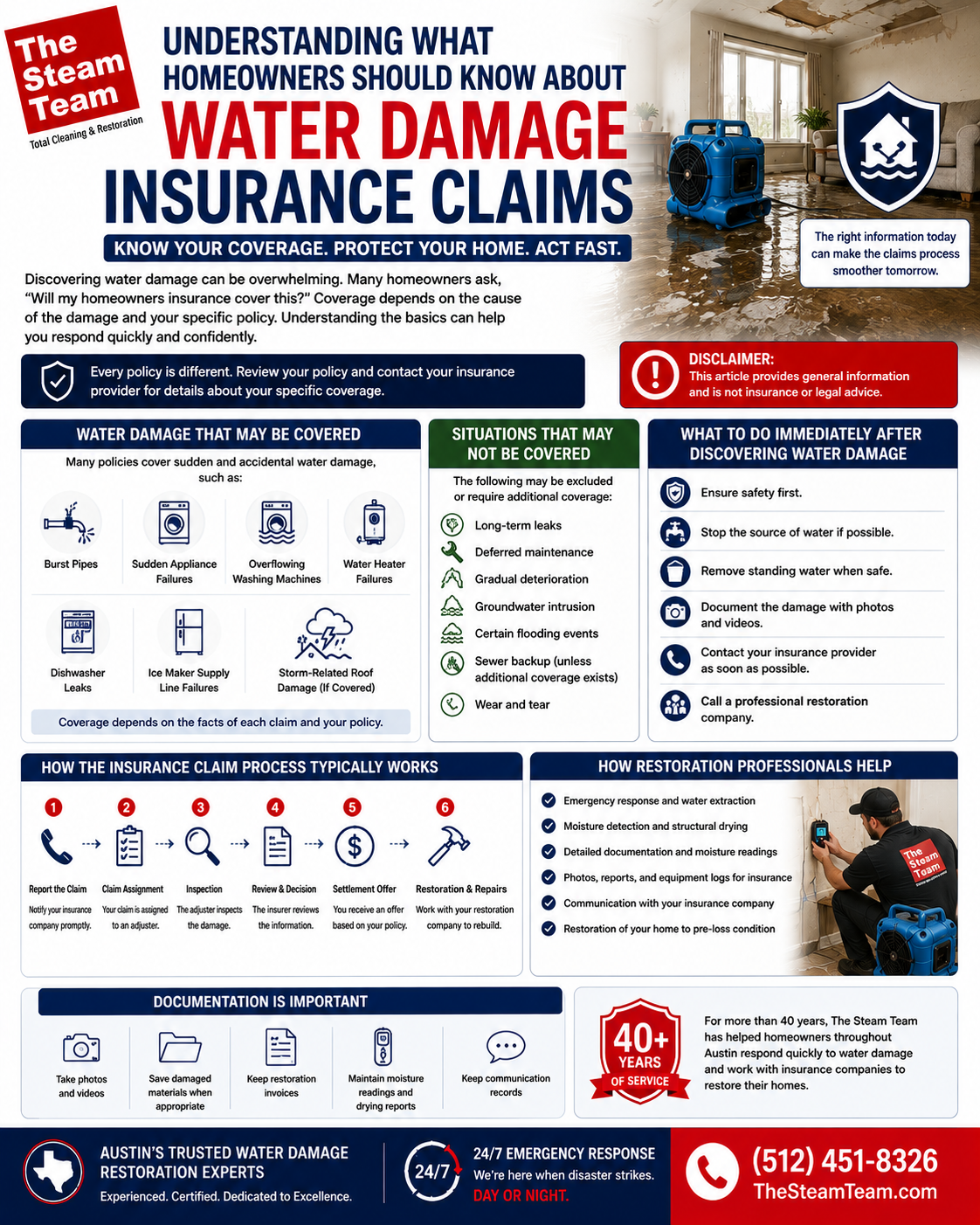
Understanding water damage repair costs and insurance coverage is essential for homeowners facing water damage incidents. Repair costs can vary significantly based on the extent of the damage, the category of water, the type of restoration required, and the materials involved. Homeowners should be aware of their insurance policies, as coverage for water damage can differ widely.
Insurance coverage for emergency water restoration services often depends on the specific policy and the cause of the water damage. Many homeowners' insurance policies cover sudden and accidental water damage, such as burst pipes, overflowing appliances, or vandalism. However, coverage may not extend to damage caused by flooding (which typically requires a separate flood insurance policy), gradual leaks, or lack of maintenance. It is crucial for homeowners to review their policies, understand the coverage limits, deductibles, and exclusions, and contact their provider immediately after discovering damage.
Understanding the specifics of your homeowners' insurance policy, particularly regarding wind and water damage, is vital for comprehensive coverage.
Homeowners Insurance for Wind & Water Damage
Specifically, if wind and water damage coverage were included in the policy, then damage was covered. To illustrate this point, suppose there is a 1-in-50 chance of suffering wind damage.
Several factors influence the cost of water damage repair in Austin, including:
Extent and Category of Damage: More extensive damage and higher water categories (e.g., black water) typically result in higher repair costs due to increased labor, specialized equipment, and disposal needs.
Type of Materials Affected: The cost to repair or replace drywall, flooring, insulation, and structural elements varies significantly.
Location Factors: Accessibility of the damaged area, local labor rates, and the urgency of the response can also impact pricing.
Mold Remediation Needs: If mold has developed, additional costs for remediation will be incurred.
Homeowners should obtain multiple quotes from reputable restoration companies to ensure they receive fair pricing for the necessary services.
Service
Coverage Type
Estimated Cost Range
Water Extraction
Homeowners Insurance
Varies by extent ($500 - $3,000+)
Drying & Dehumidification
Homeowners Insurance
Varies by extent ($1,000 - $5,000+)
Mold Remediation
Homeowners Insurance (if sudden/accidental)
$500 - $6,000+ (can be much higher for severe cases)
Structural Repairs
Homeowners Insurance
$1,000 - $10,000+ (depending on damage)
Content Restoration
Homeowners Insurance
Varies by items and damage
Preparation is key to minimizing the impact of water damage emergencies. Homeowners can take proactive steps to protect their property and ensure a swift response in the event of water damage.
Turn Off Utilities: Immediately shut off electricity and the main water supply to prevent further damage and hazards.
Elevate Valuables: Move furniture, electronics, and important documents to higher ground or off the floor.
Install Sump Pumps: These devices can help remove water from basements and low-lying areas, especially in flood-prone regions.
Clear Gutters and Drains: Ensure exterior drainage systems are clear to direct water away from your foundation.
Create an Emergency Plan: Have a plan in place for evacuation, communication, and a list of emergency contacts (e.g., restoration company, insurance agent).
Beyond immediate emergency responses, consistent maintenance can significantly reduce the risk of water damage:
Regularly Inspect Plumbing: Check pipes, faucets, and appliance hoses for leaks, corrosion, or wear. Replace old hoses on washing machines and dishwashers every 3-5 years.
Maintain Your Roof and Gutters: Repair damaged shingles promptly and keep gutters and downspouts clear of debris to ensure proper water diversion.
Check Your Foundation: Look for cracks or signs of moisture intrusion around your home's foundation. Ensure proper grading directs water away from the house.
Install Water Leak Detectors: Place smart leak detectors in areas prone to leaks (under sinks, near water heaters, in basements) to receive early warnings.
Understand Your Home's Water Shut-Off: Know where your main water shut-off valve is and how to use it in an emergency.
The Steam Team offers 24/7 emergency water restoration support to ensure that homeowners receive prompt assistance when water damage occurs. Their team of certified technicians is available around the clock to respond to emergencies, providing rapid water extraction, drying, and restoration services. This commitment to immediate response helps minimize damage and restore homes efficiently, giving you peace of mind during a stressful time.
Upon discovering water damage, prioritize safety. Turn off electricity in the affected area and, if possible, stop the water source. Document the damage with photos for insurance. Then, contact a professional water restoration service like The Steam Team immediately for prompt cleanup and mitigation.
To prevent mold, rapid drying is key. Use dehumidifiers and air movers to reduce moisture levels and ensure good ventilation. For significant water damage, professional restoration is crucial to ensure thorough drying and prevent mold proliferation.
Minor water damage (e.g., small spills) can be addressed with DIY methods like towels and fans. However, for extensive damage, professional intervention is highly recommended. Without proper equipment and expertise, incomplete drying can lead to hidden mold growth and further structural issues.
Mold exposure can cause various health issues, including respiratory problems, allergic reactions (coughing, sneezing, skin irritation), and exacerbated asthma symptoms. Individuals with compromised immune systems are particularly vulnerable. Professional mold remediation is essential to protect occupants' health.
The duration varies based on the extent and category of damage. Minor issues might take a few days, while extensive damage, especially with mold, could take a week or more. A professional assessment will provide a more accurate timeline.
Look for companies with IICRC certifications, extensive experience, positive customer reviews, and 24/7 emergency services. Ensure they provide clear communication, detailed estimates, and are properly insured. The Steam Team meets these criteria, offering reliable and certified services.
Don't let water damage compromise your home or health. Our certified experts are available 24/7 to provide rapid, effective water extraction, drying, and mold remediation services in Austin. Protect your property with The Steam Team.
Water damage occurs the moment water intrudes into building materials, and when left unaddressed, it rapidly degrades structure, drives mold growth, and raises health and financial risks. This article explains why acting quickly after a flood, burst pipe, or storm-related intrusion matters, outlining immediate hazards, health consequences, cost escalation, the professional restoration workflow, and prevention steps tailored to Austin and Central Texas conditions. Readers will learn how moisture attacks wood, drywall, insulation, and foundations; how mold and bacterial contaminants develop; and which mitigation steps reduce exposure and restore habitability. The guide maps the restoration process step-by-step, extraction, drying, remediation, contents care, and reconstruction, and shows how response time changes outcomes. Practical checklists, comparative EAV tables, and clear lists help homeowners and property managers prioritize actions and document damage for insurance. Practical, local considerations and certified-expert options are included to help you decide when to call professionals and what to expect from emergency water damage restoration.
Immediate risks begin as soon as water contacts building materials and escalate with time; the three primary early threats are structural weakening, biological growth, and electrical or safety hazards. Water saturates porous materials, reducing tensile strength in wood and drywall, and can compromise fasteners and adhesives within hours to days, which increases collapse risk in affected areas. Simultaneously, wet surfaces create ideal conditions for mold and bacterial colonization that can begin within 24–48 hours, increasing contamination and complicating cleanup. Finally, standing water and moisture accelerate corrosion of electrical systems and create slip, trip, and contamination hazards that make occupied spaces unsafe. The next subsections examine how different materials fail and how quickly mold takes hold, offering specific mitigation actions to halt progressive deterioration.
Water undermines structural elements by penetrating and saturating materials, which reduces load-bearing capacity and accelerates decay in wood, gypsum, and insulation. Wood framing and joists absorb moisture, which causes swelling, warping, and eventual rot if not dried; fasteners corrode, and connections weaken, creating hidden failures that become apparent later during reconstruction. Drywall and insulation quickly lose stiffness and thermal performance, often requiring removal once saturation and contamination exceed safe-drying thresholds, which increases project scope. Foundations and slabs can experience hydrostatic pressure and soil movement after prolonged exposure, potentially leading to cracks and settlement; early mitigation focuses on removing water and lowering moisture content to prevent long-term shifts. Understanding these material-specific failure modes guides targeted mitigation tactics such as temporary shoring, controlled drying, and selective demolition to preserve as much of the original structure as possible.
Mold growth typically begins within 24–48 hours on damp, nutrient-rich surfaces when temperature and humidity are favorable, and spores find organic material to colonize. Warm, dark environments and porous substrates like wood, paper-faced drywall, and insulation accelerate colonization and biofilm formation, turning localized moisture into broader contamination if left untreated. Early drying, HVAC isolation, and containment can arrest spore germination and limit spread; once visible growth appears, remediation requires removal or specialized cleaning depending on material and contamination class. Prompt actions such as extracting standing water and deploying air movers and dehumidifiers reduce the window for mold establishment and cut the eventual complexity and cost of remediation. The next section examines how timely restoration reduces health hazards associated with mold and bacteria in the home.
The Institute of Inspection, Cleaning and Restoration Certification (IICRC) provides essential frameworks for understanding and managing water damage, including how to classify water intrusion and establish drying goals.
IICRC Water Damage Classification for Structural Drying
The Institute of Inspection, Cleaning and Restoration Certification (IICRC) categorizes free water into three classes based on the estimated evaporation rate and the percentage of the structure's surface area that is affected. Understanding these categories is crucial for establishing appropriate in-place structural drying goals.
Establishing In-Place Structural Drying Goals: A Scientific Approach, 2015
Timely restoration reduces exposure to biological contaminants by removing moisture and contaminated materials before spores and pathogens amplify to hazardous levels. Drying and remediation interrupt the chain of events that leads from humidity to mold proliferation and bacterial growth, lowering airborne spore counts and limiting reservoirs of contamination in HVAC systems, carpets, and contents. Professional containment strategies and HEPA-grade filtration capture airborne particulates during cleanup, reducing respiratory exposures for occupants and workers alike and protecting vulnerable populations such as children, the elderly, and immunocompromised individuals. Table-based mapping of common contaminants to health impacts clarifies what to prioritize during mitigation and when to pursue specialized remediation or medical consultation. The following subsection lists common health issues tied to mold and bacteria and then explains how professional remediation reduces those risks.
Exposure to mold and waterborne bacteria commonly causes respiratory irritation, allergic responses, and exacerbation of asthma or chronic lung conditions in sensitive individuals. Symptoms can include coughing, nasal congestion, wheezing, eye irritation, and chronic sinus issues; those with compromised immune systems are at higher risk of opportunistic infections from certain pathogens present in contaminated water. Prolonged exposure to high indoor mold concentrations has been associated with persistent respiratory problems and reduced indoor air quality, which can impair daily functioning and increase healthcare interactions. Early mitigation lowers airborne and surface contamination, which in turn reduces symptom persistence and the chance of chronic issues developing in at-risk occupants. The next subsection explains specific professional remediation steps that protect occupants and limit re-exposure.
Research into indoor fungi and water damage highlights the critical need for adherence to established guidelines to protect occupants from adverse health effects.
Health Effects and Guidelines for Indoor Mold and Water Damage
Cedric holds a current IICRC certification for water damage restoration and applied microbial remediation and has also been involved in research on indoor fungi, mould remediation, cleaning, and indoor air. This paper reviews current research on health effects and accepted guidelines for the management of indoor mould and water damage in the built environment.
Literature review of current research on health effects and accepted guidelines for the management of indoor mould and water damage in the built environment, CD Cheong, 2013
Professional mold remediation protects occupants by combining containment, negative-pressure airflow, HEPA filtration, and methodical removal of contaminated materials to prevent cross-contamination. Remediation teams assess contamination levels, seal affected zones, and use negative air machines with HEPA filtration to keep spores from migrating to clean areas while technicians remove or clean affected components per industry standards. Specialized cleaning agents and antimicrobial treatments reduce surface-bound organisms, and post-remediation verification, including visual inspection and moisture readings, confirms that conditions are safe for reoccupation. When remediation follows rapid extraction and drying, the combined approach minimizes long-term occupant exposure and preserves as much of the home’s value and finishes as possible while preparing the property for reconstruction. The next section outlines how delaying these steps increases overall restoration costs.
Adhering to professional standards is paramount for ensuring that mold remediation is conducted safely and effectively, minimizing risks to both property and occupants.
IICRC Professional Mold Remediation Standards
The Institute of Inspection, Cleaning and Restoration Certification (IICRC) administers the process and establishes policies, procedures, and guidelines to ensure that mold remediation is performed safely and effectively. This guide provides a comprehensive overview of mold remediation issues.
Reference Guide for Professional Mold Remediation, 2003
Delaying repair multiplies costs by expanding the damage footprint, increasing demolition needs, and adding mold remediation and contents replacement to the bill. Immediate mitigation limits expenses to extraction and drying, while waiting 48 hours or more often requires removal of finishes, replacement of building materials, and more extensive labor hours. Insurers may categorize damage differently based on contamination class and mitigation timeliness, which affects coverage decisions and out-of-pocket expenses for homeowners; well-documented, prompt mitigation helps align expectations during the claims process.
Early mitigation narrows the scope of reconstruction and preserves finishes, lowering both direct repair costs and indirect costs such as temporary relocation or business interruption. Quick action preserves contents through proper pack-out and cleaning, which reduces replacement expenses and shortens downtime for occupants and businesses. The final subsection offers a stepwise approach to how delays amplify costs and what homeowners should document when filing claims in Austin.
Response Time
Impact Area
Typical Outcome
Immediate (0–24 hours)
Structural materials & contents
Mostly salvageable finishes; focused extraction and drying; limited demolition
Short delay (24–72 hours)
Mold & microbial growth
Increased likelihood of mold remediation, partial demolition, and higher labor hours
Extended delay (1 week+)
Structural integrity & reconstruction
Widespread demolition, structural repairs, and contents replacement, the highest cost and downtime
This table shows how faster responses preserve materials and reduce downstream reconstruction. Prioritizing immediate mitigation constrains project scope, while extended delays compound labor and replacement costs, underscoring the financial importance of rapid action.
Waiting increases restoration costs primarily by converting repairable items into replaceable ones and enlarging the zone of required remediation or demolition. Small, localized water incidents may be addressed with extraction and drying, but as moisture migrates into cavities and assemblies, remediation expands to include insulation, drywall, subflooring, and even structural members. Secondary damages such as mold colonization or corrosion require specialized remediation and longer project timelines, raising labor and project management costs and often necessitating contents replacement or advanced reconstruction. Quick mitigation limits these multipliers, preserving finishes and reducing the scope of reconstruction, which in turn shortens overall project duration and total expense.
Filing an insurance claim promptly requires organized documentation, immediate mitigation steps, and clear communication with adjusters to expedite coverage decisions and reduce disputes. Homeowners should photograph damage with timestamps, retain receipts for emergency mitigation work, and request written estimates from qualified restoration professionals to support claims.
Restoration companies frequently assist by providing detailed scope-of-loss reports, moisture mapping, and coordinated communication with insurance adjusters to streamline claim handling and avoid coverage delays. Maintaining these records and initiating mitigation quickly increases the probability that insurers will view the loss as properly managed, which can reduce contention and speed settlement; the next section maps the restoration workflow where rapid professional involvement matters most.
The professional restoration process unfolds in defined phases: emergency mitigation, structural drying, remediation/contents restoration, and reconstruction, and each phase relies on prompt initiation to prevent secondary damage. Emergency mitigation focuses on removing standing water and stabilizing the property to stop ongoing damage, followed immediately by controlled drying and dehumidification using industry-grade equipment and moisture monitoring. Remediation addresses contamination and mold via containment and specialized cleaning, while contents restoration and reconstruction return the property to pre-loss condition with coordinated scheduling to minimize downtime.
Prompt emergency response is especially critical because early extraction and drying reduce the time during which biological growth and material degradation occur; this trims remediation needs and limits reconstruction scope. The following subsection explains extraction and drying tools and monitoring protocols, while the subsequent subsection covers reconstruction’s role in full recovery and continuity benefits.
Phase
Typical Timeframe
Primary Goal
Extraction & Mitigation
Hours to 1 day
Remove standing water, secure utilities, protect contents
Drying & Monitoring
2–7 days (variable)
Reduce material moisture to acceptable levels; prevent mold
Remediation & Contents Care
1–10 days
Remove contaminated materials; clean and restore personal property
Reconstruction & Repair
Days to months
Rebuild affected areas to pre-loss condition; ensure code compliance
This process table demonstrates how each phase has time-sensitive objectives: delays in early phases amplify the workload and cost in later phases, which is why rapid, coordinated action is essential for effective restoration.
Emergency extraction and structural drying use high-capacity pumps, portable extractors, air movers, and commercial dehumidifiers to remove standing water and evaporate bound moisture from materials. Extraction equipment eliminates bulk water rapidly, while air movers increase evaporation rates and dehumidifiers remove moisture from the air to prevent re-saturation; technicians use moisture meters and thermal imaging to map wet zones and guide drying strategies. Continuous monitoring documents progress and ensures that moisture levels return to safe baselines before reconstruction begins, preventing concealed wet pockets that later drive mold or structural problems. Proper sequencing, extraction, containment, targeted drying, and documented verification are what reduce rework and preserve materials for restoration rather than replacement.
Full-service reconstruction completes recovery by repairing structural components, replacing finishes, and restoring systems to meet building standards and occupant needs, often coordinating with mitigation teams to streamline schedules. A single provider that manages mitigation through reconstruction can preserve institutional knowledge about the loss, expedite material procurement, and maintain quality control across trades to reduce coordination gaps. Reconstruction also addresses concealed damage uncovered during mitigation, integrates code-required repairs, and documents work for insurance reconciliation, which helps close claims efficiently. Choosing a provider that offers seamless continuity from extraction through rebuild shortens project timelines and reduces the administrative burden on homeowners and property managers.
After describing the restoration workflow and timelines, it is helpful to note how rapid professional deployment maps to these phases in practice.
Choosing a certified local expert matters because technicians familiar with Austin’s building stock, climate-driven risks, and common roofing and drainage patterns can act faster and make remediation choices that suit regional conditions. Certifications indicate adherence to industry methods and training: IICRC-aligned practices guide proper mitigation and drying protocols that reduce rework and encourage reliable outcomes. Local credentials, award recognition, and a strong business rating offer third-party signals that help homeowners evaluate providers; these credibility markers, combined with 24/7 availability, reduce decision friction during an emergency. The next subsections describe how rapid local response minimizes loss and which certifications and ratings are relevant when comparing providers.
Rapid dispatch shortens exposure time and prevents moisture from migrating into concealed assemblies, which reduces the need for demolition and speeds recovery to pre-loss condition. The Steam Team’s 24/7 emergency water damage restoration capability enables early extraction, targeted drying, and immediate containment steps that constrain mold growth and preserve finishes and contents. Prompt documentation and coordination with homeowners and insurers also accelerate claims processing, while local familiarity with Austin construction types informs targeted mitigation that prevents common regional failure modes. Early intervention by a responsive team, therefore, converts a potentially large reconstruction project into a more manageable restoration scope.
Industry certifications and independent ratings serve as objective trust signals that a provider follows accepted practices and maintains quality systems. IICRC certification demonstrates technician training in restoration standards and protocols, which improves the likelihood that drying, remediation, and contents restoration are performed according to recognized methods. Independent business ratings and local award acknowledgments provide additional evidence of reliable service and customer satisfaction in the community, which helps homeowners choose a partner for time-sensitive restoration work. When evaluating providers, ask about certifications, verification of procedures, and references to ensure that the team you select applies current standards and proven methodologies.
Preventing water damage combines seasonal maintenance, infrastructure checks, and readiness measures that reduce the probability and impact of water intrusion events. Regular inspections of gutters, roof penetrations, HVAC condensate lines, and plumbing fixtures catch small failures before they escalate into significant leaks. Installing or monitoring drainage improvements around foundations and using smart sensors for early leak detection can alert homeowners to problems while they are still manageable. The following subsections list common local causes of damage and provide a maintenance schedule to lower future risk and limit restoration needs.
In Austin, common causes of water damage include severe storms and flash flooding, burst or leaking pipes, clogged gutters and downspouts, and HVAC condensation failures. Stormwater infiltration can overwhelm grading and drainage systems, entering basements, crawlspaces, and low-lying rooms; plumbing failures range from pinhole leaks that silently soak assemblies to sudden pipe bursts that cause immediate standing water. Clogged gutters allow roof runoff to back up under shingles and into soffits, while neglected HVAC coils and drain lines create slow leaks that undermine ceilings and insulation over time. Addressing these failure modes through routine inspection and timely repair reduces the chance of emergency restoration.
A consistent inspection schedule and preventive maintenance program catch deterioration early and reduce both frequency and severity of water events, preserving property value and lowering insurance exposure. Quarterly checks of gutter systems, seasonal roof inspections before rainy periods, annual plumbing system reviews, and routine HVAC service prevent common failure points and allow homeowners to replace worn components proactively. Simple homeowner actions clearing gutters, monitoring crawlspace moisture, and watching for unexplained increases in water bills, provide early warning signs that prompt professional evaluation. Implementing these measures creates a pattern of care that limits the need for emergency restoration and keeps downtime and repair costs to a minimum.
Regular maintenance reduces the incidence and severity of water events by detecting issues early.
Seasonal inspections align resources with Austin’s weather patterns and protect vulnerable building elements.
Proactive repairs and monitoring preserve finishes and mitigate potential mold and structural damage.
Inspection Area
Recommended Frequency
Preventive Action
Gutters & Downspouts
Before the rainy season/quarterly
Clean debris; verify proper drainage away from the foundation
Roof & Flashings
Annually and after storms
Inspect for damaged shingles or penetrations; seal as needed
Plumbing & Valves
Annually
Check for leaks, corrosion, and pressure issues; service or replace aging components
Inspect gutters and downspouts at least twice a year to prevent overflow and foundation seepage.
Schedule seasonal HVAC maintenance to prevent condensate leaks and maintain proper airflow.
Monitor crawlspaces and basements with periodic visual checks and moisture meters if possible.
These checklist items help homeowners create a practical, repeatable prevention plan that reduces the likelihood and impact of water intrusion events and supports faster recovery when incidents occur.
Upon discovering water damage, the first step is to ensure safety by turning off electricity in affected areas and avoiding contact with standing water. Next, document the damage with photos for insurance purposes. If possible, remove any valuable items from the area to prevent further loss. Begin the drying process by using fans and dehumidifiers, and if the damage is extensive, contact a professional restoration service immediately to mitigate further risks and initiate the restoration process.
Hidden water damage can often be detected through signs such as water stains on walls or ceilings, a musty odor, or visible mold growth. Additionally, check for warped or buckled flooring and soft spots in walls or ceilings. Using moisture meters can help identify damp areas behind walls or under floors. Regular inspections of plumbing fixtures and appliances can also help catch leaks before they cause significant damage.
If your insurance claim for water damage is denied, first review the denial letter to understand the reasons. Common issues include a lack of documentation or failure to meet policy requirements. Gather all relevant evidence, including photos, repair estimates, and any communication with your insurer. You can appeal the decision by providing additional information or seeking assistance from a public adjuster who can advocate on your behalf to negotiate with the insurance company.
To prevent mold growth after water damage, it is crucial to dry the affected area within 24-48 hours. Use dehumidifiers and fans to reduce moisture levels and ensure proper ventilation. Remove any wet materials that cannot be dried, such as carpets or insulation. Regularly inspect areas prone to moisture, such as bathrooms and basements, and consider using mold-resistant products during repairs. If mold is already present, professional remediation may be necessary to ensure complete removal.
Long-term effects of water damage on property value can be significant. Properties with a history of water damage may face decreased marketability and lower appraisals. Structural issues, mold growth, and health concerns can deter potential buyers, leading to prolonged vacancies or reduced sale prices. Additionally, if repairs are not properly documented, it may complicate future transactions. Regular maintenance and prompt repairs can help mitigate these risks and preserve property value over time.
Yes, Austin has specific regulations and guidelines for water damage restoration that align with state and federal standards. Restoration companies must adhere to the Texas Department of Insurance regulations and follow IICRC standards for water damage restoration. Additionally, local building codes may dictate specific requirements for repairs and renovations following water damage. Homeowners should ensure that any restoration work is performed by licensed professionals familiar with these regulations to avoid potential legal issues.
Timely water damage repair is essential for preserving structural integrity, preventing mold growth, and minimizing health risks. By understanding the immediate dangers and the restoration process, homeowners can make informed decisions that protect their property and well-being. Don't wait for damage to escalate; take proactive steps to mitigate risks and ensure a safe living environment. Contact a certified local expert today to explore your options for effective water damage restoration.
Our mission is to provide you with the most outstanding service experience ever. Some of our most popular services include Carpet Cleaning, Tile Cleaning, Air Duct Cleaning, Water Damage, Fire Damage Restoration and Construction Services.
Quick Cleaning Quote
Email:
customerservice@thesteamteam.com
Georgetown: (512) 868-0358
Dallas: (214) 631-8326
Naples, FL: (239) 450-1936
Toll Free: (800) 880-7785
Professional cleaning and restoration services based in Austin, Texas. Serving homes and businesses since 1983 with certified technicians, advanced equipment, and 24/7 emergency response.
Cleaning Office – Central Austin
1904 W Koenig Ln
Austin, TX 78756
(512) 450-7199
customerservice@thesteamteam.com
Monday: 8am - 5pm
Tuesday: 8am - 5pm
Wednesday: 8am - 5pm
Thursday: 8am - 5pm
Friday: 8am - 5pm
Saturday: 8am - 5pm
Sunday: Closed
Restoration Office – North Austin
9901 Burnet Rd
Austin, TX 78758
(512) 451-8326
customerservice@thesteamteam.com
Monday: Open 24 hours
Tuesday: Open 24 hours
Wednesday: Open 24 hours
Thursday: Open 24 hours
Friday: Open 24 hours
Saturday: Open 24 hours
Sunday: Open 24 hours



© The Steam Team