Essential Water Damage Tips for Austin
Commercial water damage events can range from a burst pipe in a restaurant kitchen to floodwater in a warehouse, and each scenario creates immediate structural, operational, and health risks that demand fast, organized action. This article explains what constitutes a commercial water damage emergency, why rapid mitigation matters for business continuity, and how targeted steps, both immediate and professional, minimize repair costs and reduce downtime. You will learn clear, prioritized actions to protect people and property; how professional commercial water extraction and structural drying work; safety protocols for staff and customers; documentation and insurance guidance specific to Texas commercial claims; preventative maintenance strategies; and decision rules for when to contact emergency restorers. The guidance uses practical checklists, equipment comparisons, and documentation templates so facility managers and business owners can act decisively. Throughout, semantic insights link common restoration terms like structural drying, moisture mapping, and industrial dehumidification to actionable choices for offices, restaurants, hotels, warehouses, and retail spaces, helping you apply these recommendations to your Austin property immediately.
What Are the Immediate Steps to Take During a Commercial Water Damage Emergency?
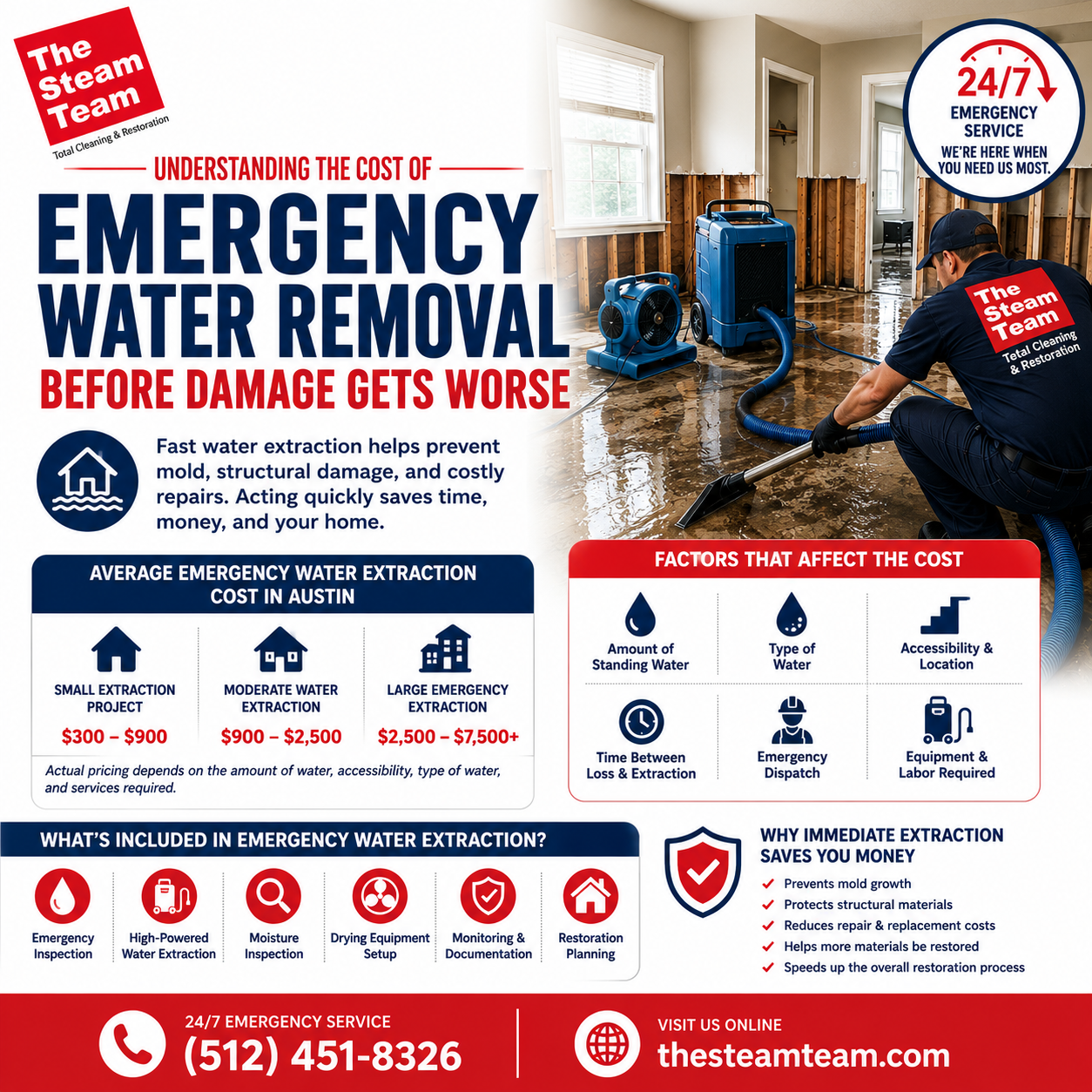
Immediate actions in a commercial water damage event focus on protecting life, stabilizing the property, and preserving evidence for insurance and restoration planning. The first priority is safety: assess occupant risk, shut down utilities if safe to do so, and establish exclusion zones to prevent injury. Simultaneously, begin documenting the incident with timestamped photos and notes to create a clear record for adjusters and contractors. Quick mitigation water extraction, containment, and removal of salvageable contents reduces the time moisture remains in assemblies and limits secondary damage like mold growth and delamination. These steps set the stage for professional assessment and structural drying, which determine the scope and timeline of full restoration.
Ensure occupant safety: Evacuate affected zones and account for staff and customers.
Isolate utilities: Shut off water sources and electricity only if trained personnel or facilities staff can do so safely.
Document the incident: Photograph all areas, equipment, and contents with timestamps and short descriptions.
Stabilize and contain: Use sandbags, temporary barriers, and tarps to limit water spread and protect undamaged zones.
These immediate actions protect people first while preserving physical and evidentiary conditions that professionals will use during mitigation and claims processing. The next subsection explains how to locate and operate shutoffs and when to hand control to licensed technicians.
How Do You Safely Shut Off Water and Electricity in a Commercial Building?
Knowing the location and operation method of main shutoffs and electrical disconnects is essential to stop active leaks and prevent electrical hazards during a commercial water event. Begin by consulting facility plans or posted utility maps to locate the main water valve, curb stop, and service disconnect; if those are inaccessible, contact building maintenance or your utility provider. For electricity, turn off branch circuits feeding wet zones and, when safe, use the main disconnect; however, if circuitry is submerged or sparking, evacuate and wait for licensed electricians. Always wear PPE if entering wet electrical rooms, and tag circuits with a lockout/notification system so others do not re-energize equipment during mitigation. Training facility staff on shutoff points and having clearly labeled access points reduces delay and risk, and that preparation naturally leads to methods for documenting damage for restoration and insurance purposes.
What Documentation Should You Collect Before Restoration Begins?
Collecting thorough documentation before major disturbance ensures restoration work is accurately scoped and supports timely insurance adjustments; focus on photos, inventories, and official logs. Take wide-angle and close-up photos of affected areas, note water levels and timestamps, and capture images of serial numbers, pre-loss condition if available, and any safety hazards. Prepare an inventory of damaged contents with estimated values and provenance where possible, log any immediate mitigation steps you perform, and retain receipts for emergency supplies or temporary repairs. Organize files using consistent naming conventions (date_location_photo#) and create both cloud and local backups to prevent data loss. Proper documentation streamlines adjuster reviews and expedites approvals, and it connects directly to professional mitigation plans that follow the initial assessment.
How Does Professional Commercial Water Extraction and Structural Drying Work?
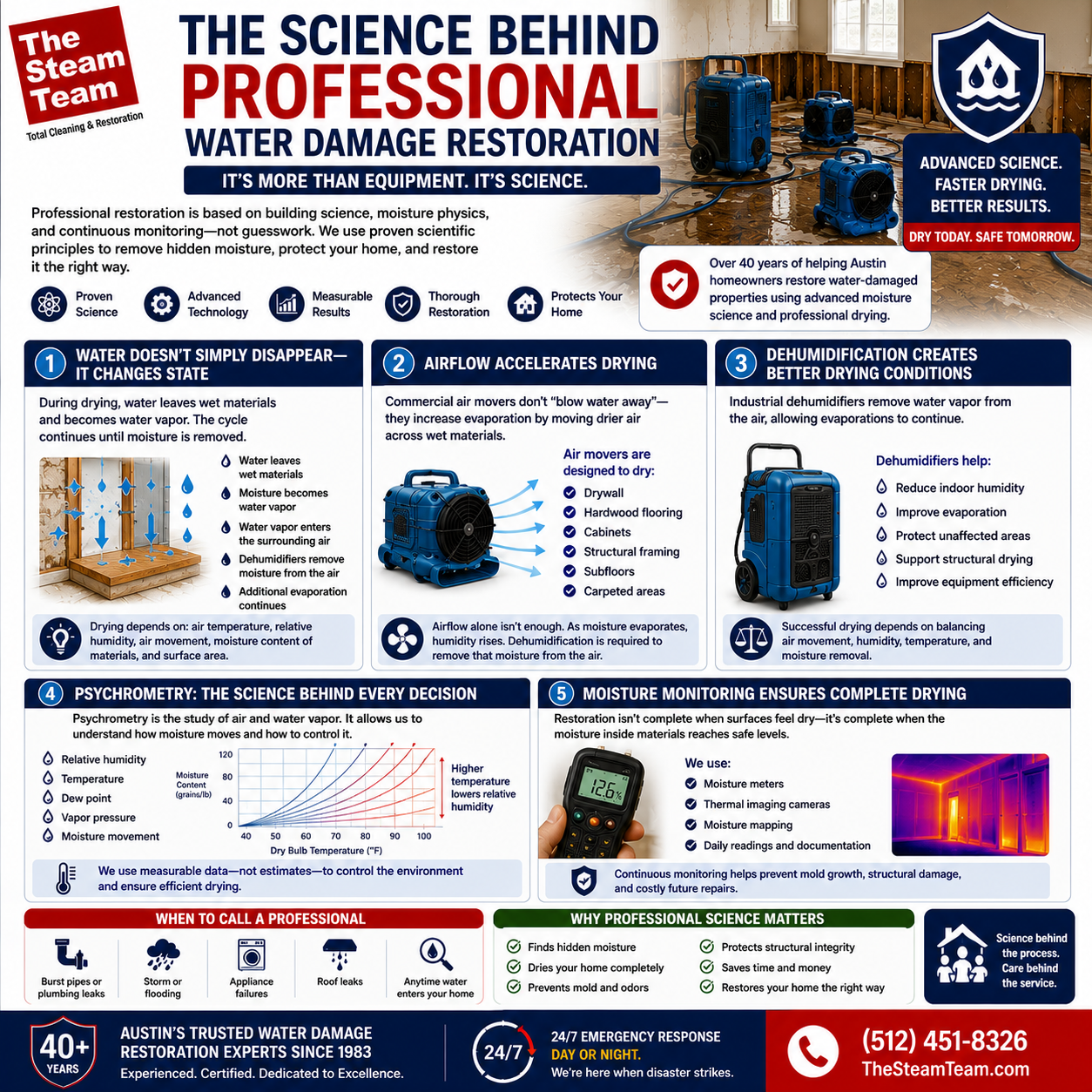
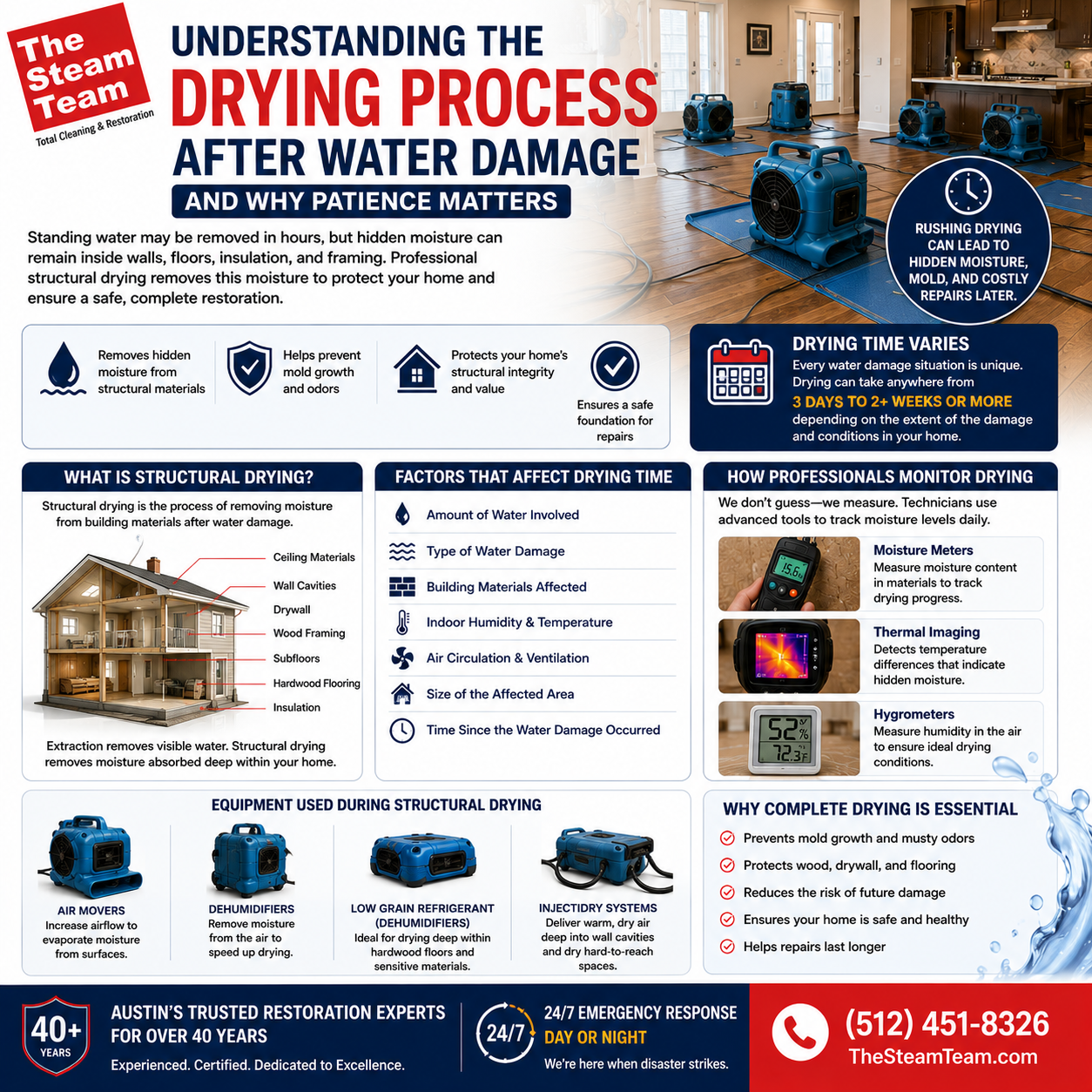
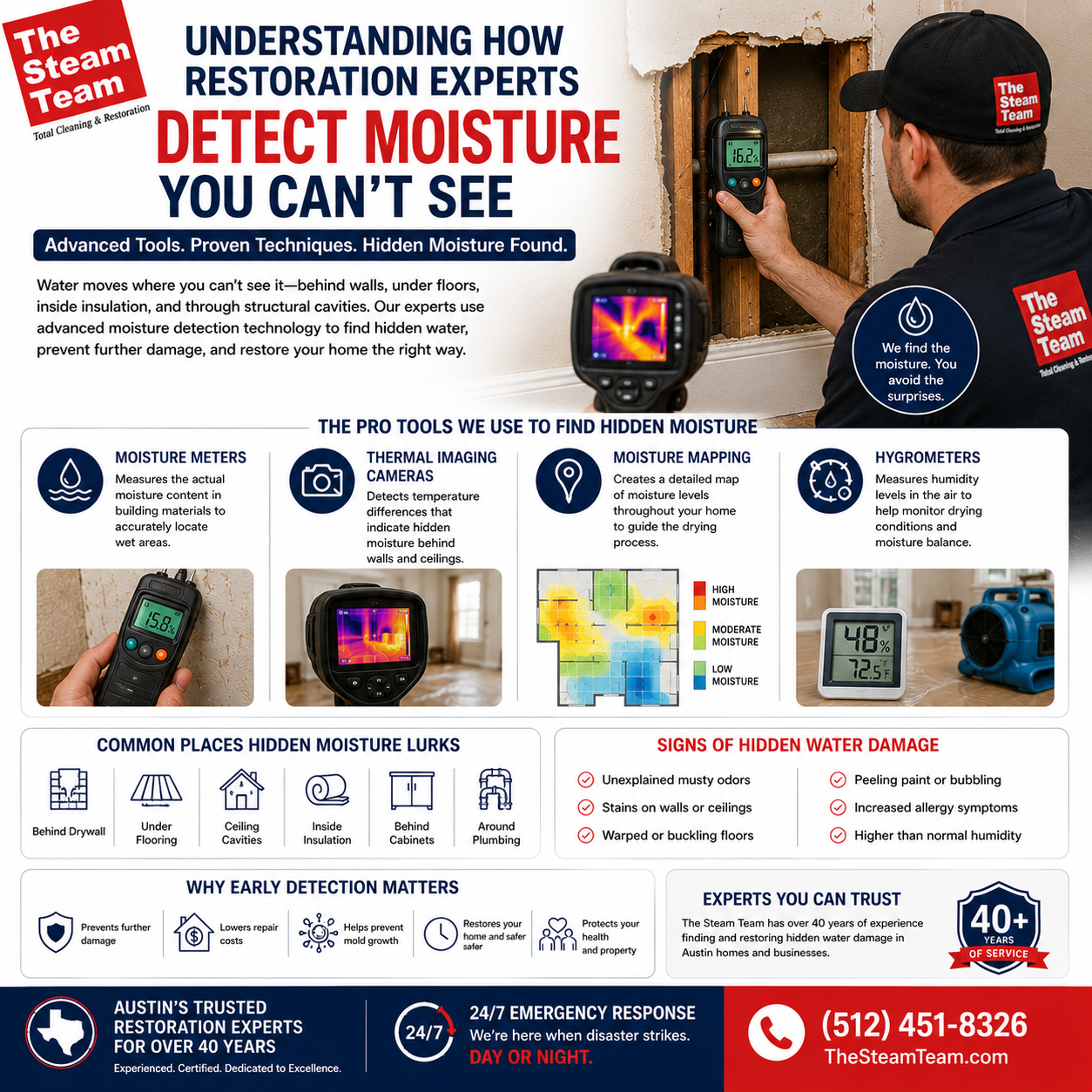
Professional commercial water extraction and structural drying follow a standards-based workflow: assessment and moisture mapping, targeted extraction, controlled drying with monitoring, and final verification. Technicians perform moisture mapping using surface and penetrating meters and infrared imaging to identify wet materials and hidden pockets of moisture; this diagnostic step determines extraction priorities and placement of drying equipment. Extraction uses industrial pumps and truck-mounted units to remove standing water quickly, after which air movers and dehumidifiers create controlled airflow and lower relative humidity to drive evaporation from wet assemblies. Continuous monitoring with moisture meters and documentation of drying progress ensures that drying goals measured as moisture content percentages or equilibrium relative humidity are met before reconstruction begins.
Different commercial property types require tailored approaches: warehouses need high-capacity truck-mounted extractors and desiccant dehumidifiers for large volumes, while offices and retail spaces often benefit from modular refrigerant dehumidifiers and distributed air movers to protect finishes and contents. Controlled drying interrupts microbial growth by keeping materials below mold-threshold moisture levels, which reduces remediation scope and long-term liability.
The global impact of water damage highlights the importance of proactive mitigation and professional restoration, as detailed in a comprehensive review of UK properties.
UK Water Damage Risks and Restoration for Commercial Properties
The UK has experienced significant levels of water damage in recent years, posing significant risks to both residential and commercial properties. Property owners can employ various methods to identify potential leaks within their properties and to mitigate the impact of water damage. Early detection and prompt remediation are crucial for minimizing structural damage, preventing mold growth, and reducing overall repair costs. Professional water damage restoration services offer specialized equipment and expertise to effectively address these issues, ensuring properties are returned to their pre-loss condition.
Water damage restoration, structural drying and remediation of damp issues in UK properties: A comprehensive review, 2024
Equipment
Characteristic
Typical Application
Truck-Mounted Extractor
High-flow pumping and vacuum capacity
Rapid removal of standing water from large open spaces and slab drains
Portable Submersible Pump
Submersible design for immediate water removal
Localized flooding in basements, pits, or equipment rooms
Air Mover
High-velocity directed airflow
Accelerates evaporation from floors, carpets, and wall assemblies
Refrigerant Dehumidifier
Condensation-based moisture removal
Moderate humidity control for offices and retail spaces
Desiccant Dehumidifier
Low-relative-humidity control at low temps
Warehouses, cold-storage areas, and fast drying under airflow constraints
This equipment comparison clarifies how meronyms like air movers and industrial dehumidifiers function within the broader water damage restoration hypernym of "property restoration services." Understanding equipment roles makes it possible to evaluate contractor plans; the next subsection explains how drying prevents mold and secondary damage.
In Austin and Central Texas, time-to-dry depends on temperature, humidity, and construction materials; planning should consider seasonal humidity spikes and long-term moisture migration.
What Advanced Equipment Is Used for Commercial Water Removal in Austin?
Commercial water removal relies on several classes of industrial equipment designed to match the scale and materials of the property involved. High-capacity truck-mounted extractors provide large-volume water removal and powerful vacuuming, making them suited for warehouses and large retail footprints, while portable submersible pumps address deeper, localized flooding in mechanical rooms. Air movers create focused airflow across wet surfaces to accelerate evaporation, and moisture meters, both contact and penetrating, provide quantitative data that guide drying placement. Dehumidifiers differ by technology: refrigerant units remove moisture efficiently at moderate temperatures, while desiccant systems perform better at lower temperatures or when achieving very low relative humidity is required. A clear plan aligns equipment selection to the property's construction and business continuity needs.
Truck-mounted extractors: Rapid removal for high-volume flooding.
Portable pumps: Targeted extraction in confined or deep areas.
Air movers and dehumidifiers: Coordinated airflow and humidity control to meet drying goals.
This equipment-focused overview informs decisions about scope and cost; the following subsection covers how structural drying stops mold growth and prevents further material failure.
How Does Structural Drying Prevent Mold and Secondary Damage?
Structural drying prevents mold and secondary damage by reducing moisture levels below biological and structural thresholds, halting microbial colonization, and limiting material breakdown. Mold spores require elevated moisture in porous materials to germinate; by maintaining relative humidity and reducing moisture content in wood, drywall, and insulation, drying interrupts that lifecycle and reduces the need for invasive mold remediation. Controlled drying also prevents delamination, corrosion, and swelling in laminates, metal components, and finishes, preserving asset value and shortening reconstruction timelines. Monitoring documents when assemblies reach equilibrium moisture content and supports clearance decisions, which protects occupant health and ensures restoration meets insurance and code expectations. Proper drying creates measurable outcomes that make subsequent reconstruction predictable and cost-effective.
What Safety Protocols Should Businesses Follow During Water Damage Events?
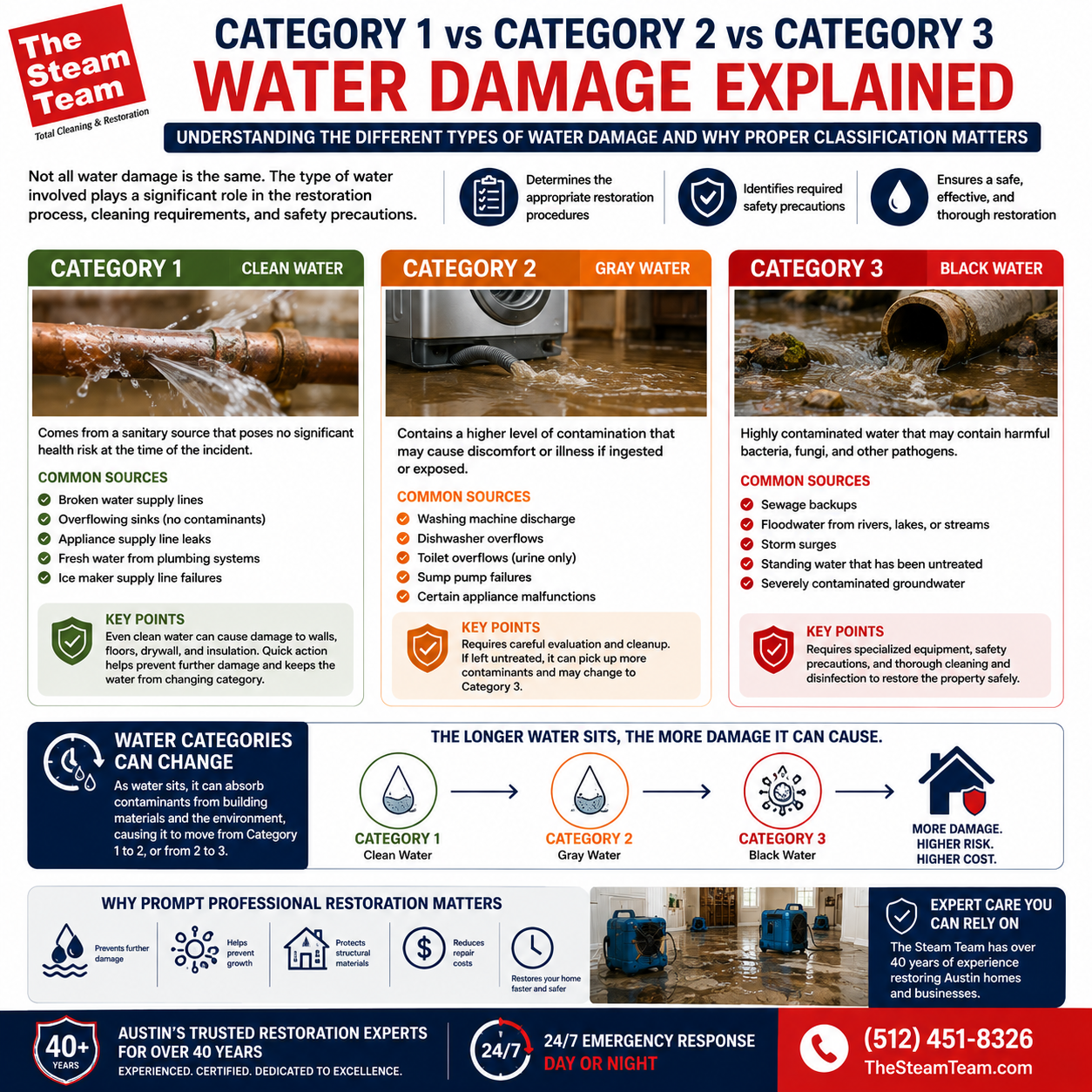
Safety protocols protect employees, customers, and restoration personnel from electrical hazards, contamination, and structural risks and should be part of every facility's emergency operations plan. On arrival to a flood or major leak, trained staff should assess for obvious electrical dangers sparking panels, hydrostatic pressure on electrical rooms, or appliances partially submerged, and isolate power only if safe. Contaminated water categories require different responses: clean water from supply lines poses different health risks than sewage or chemical-laden floodwaters, which necessitate PPE, restricted access, and hazardous-waste handling procedures. Establishing exclusion zones with clear signage and a re-entry clearance process reduces liability and ensures the safety of returning staff and customers. These safety measures align with standard disaster recovery protocols used by professional restorers and emergency responders.
Electrical hazard indicators: Sparks, buzzing, tripped breakers, or water near panels require immediate professional attention.
Contamination signs: Foul odors, visible sewage, or industrial chemicals indicate category 2/3 water and need specialized handling.
PPE recommendations: Gloves, boots, eye protection, and respirators for contaminated zones; training is essential.
Implementing these protocols prepares a facility for the professional mitigation phase and reduces risk during mitigation operations; the next subsection details how to identify hazards quickly.
How to Identify Electrical and Contamination Hazards in Flooded Commercial Properties?
Identifying hazards begins with visual and sensory checks performed from a safe distance; look for water contacting electrical panels, visible sparks, exposed wiring, and chemical odors that indicate hazardous materials. Electrical danger signs include frequent breaker trips, scorch marks, or arcing sounds; if any of these are present, evacuate immediately and notify licensed electricians rather than attempting shutoffs. Contaminated water is often discolored, odorous, or accompanied by debris; assume category 2/3 contamination for unknown flood sources and restrict access until trained restorers and environmental technicians evaluate the site. Document hazards with photographs and short notes for responders and insurers, and communicate clear "do not enter" instructions to staff. Recognizing these hazards quickly protects people and informs the PPE and disposal requirements for remediation teams.
What Are the Best Practices for Ensuring Employee and Customer Safety?
Establish exclusion zones using barriers and signage, and assign staff to communications roles to notify employees, customers, and emergency contacts about closures or restricted areas.
Maintain access logs of who enters affected zones, require PPE for authorized personnel, and coordinate with restoration teams to receive clearance criteria. such as moisture readings and air-quality test results before re-opening.
Prepare re-entry checklists that include mechanical system verification, electrical inspection sign-offs, and documented mitigation completion to ensure the environment is safe for normal operations.
Clear communication and documented verification reduce liability and speed safe reopening.
How Can Austin Businesses Navigate Commercial Water Damage Insurance Claims?
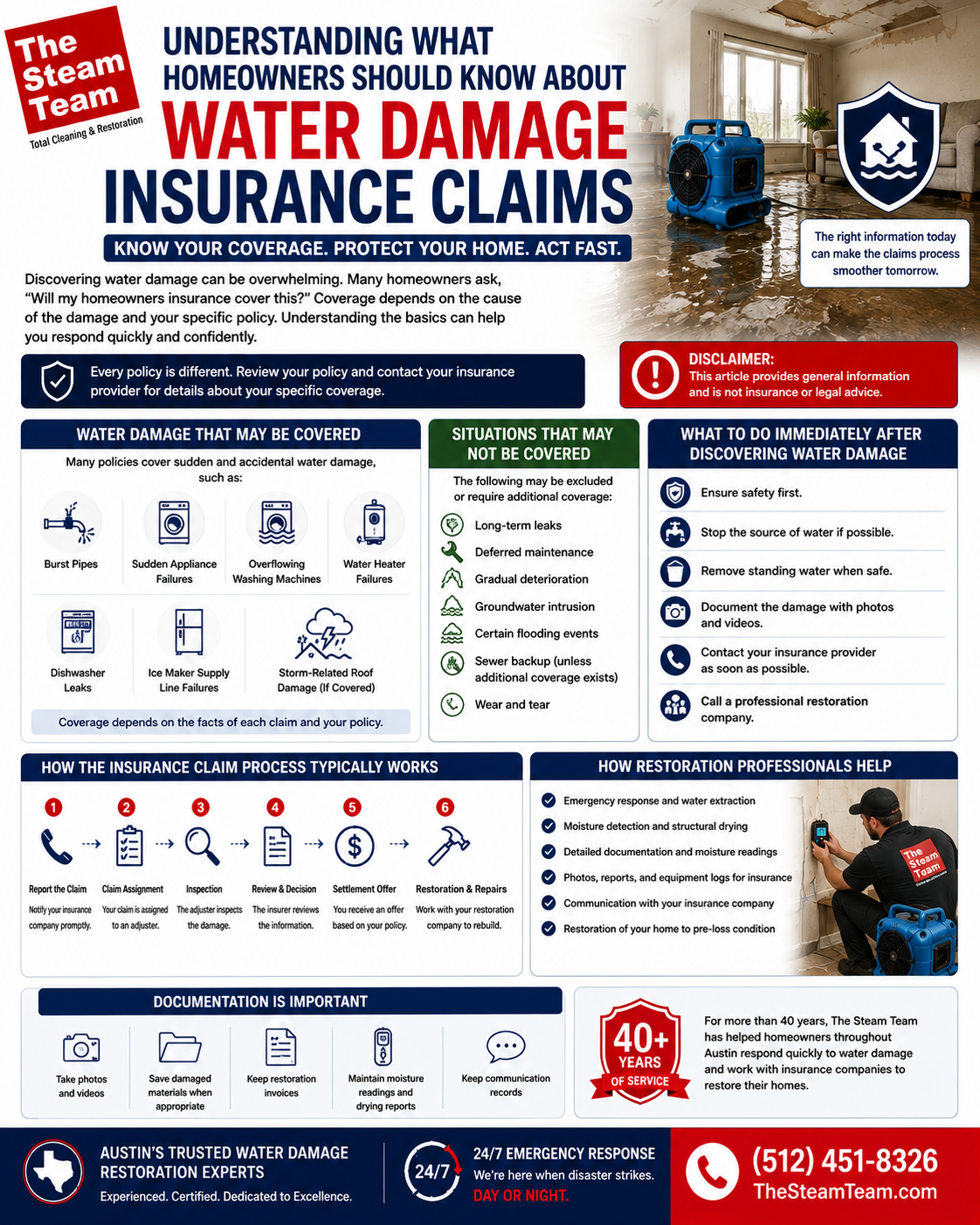
Navigating Texas commercial water damage claims requires methodical documentation, timely communication with carriers, and an understanding of how mitigation actions affect coverage and adjuster decisions. Start by notifying your insurer promptly and maintain an incident log with dates, times, actions taken, and all vendor communications. Provide organized photo and video evidence, inventories of damaged contents with estimated values, and mitigation logs including equipment usage and drying progress; these items create transparency and support reimbursement for emergency services and repairs. Keep copies of contractor estimates, invoices, and permit documentation if reconstruction is necessary, and follow insurer instructions for claims submission to avoid delays. Well-organized documentation and proactive communication materially shorten claim cycle times and reduce disputes.
Document Type
Why It's Needed
How to Prepare
Damage Photos & Video
Visual proof of loss condition and extent
Timestamped, wide, and close shots; organize by area
Inventory of Contents
Establishes value and priority for content restoration
Itemized list, serial numbers, and purchase receipts if available
Mitigation Logs
Shows steps taken to reduce loss and limit further damage
Daily equipment logs, moisture readings, technician notes
Vendor Estimates & Invoices
Supports repair and replacement costs claimed
Detailed line items and scope descriptions
Utility & Incident Reports
Corroborates cause and operations impact
Provide facility incident logs, utility shutdown records
Documenting these items in a consistent file structure reduces back-and-forth with adjusters and supports faster approvals. Next, understand how preferred vendors can further simplify interactions with insurance carriers.
What Documentation Is Required for Texas Commercial Water Damage Claims?
For Texas commercial claims, adjusters commonly require visual evidence, inventories, mitigation documentation, and contractor scopes to evaluate loss and authorize payments. Capture photos and videos immediately with timestamps and maintain an itemized contents inventory including estimated values, descriptions, and serial numbers where possible. Keep mitigation logs that record equipment used (pump hours, dehumidifier runtimes), drying goals, and moisture readings, and save vendor estimates and receipts as separate labeled files. Organize files by date and location, and provide a concise incident summary to the adjuster to reduce ambiguity. Consistent, well-labeled documentation speeds adjuster reviews and provides a defensible record in case of disputes.
How Does Working with Preferred Vendors Simplify the Insurance Process?
Working with preferred vendors often streamlines approvals because insurers recognize their documentation standards and operational procedures, enabling faster scopes and more predictable billing workflows. Preferred vendors typically provide standardized mitigation logs, moisture documentation, and restoration scopes that align with carrier expectations, reducing the need for repeated clarifications. This relationship can enable direct communication channels between the vendor and adjuster, which accelerates authorization for necessary work and helps coordinate contents restoration or temporary repairs. For businesses seeking practical assistance, a trusted local restoration partner with preferred-vendor relationships can reduce administrative friction and support efficient claim resolution.
If you need assistance compiling documentation or initiating an emergency claim workflow, The Steam Team provides 24/7 emergency response and works with major carriers as a preferred vendor to support documentation and mitigation efforts. Contact The Steam Team by phone at 512-451-8326 for emergency assistance or to request a quote; their technicians can assist with mitigation documentation and insurance coordination while you focus on operations.
What Preventive Measures Can Commercial Properties Take to Avoid Water Damage?
Preventative maintenance reduces the probability and impact of water events through scheduled inspections, investment in detection systems, and targeted risk mitigation for high-vulnerability systems. Regular roof inspections, seasonal gutter and drainage maintenance, and routine plumbing checks reduce the chance of catastrophic leaks. Installing leak detection and automatic shutoff systems in mechanical rooms, kitchens, and under critical equipment provides early alerts and can stop water flow before flooding occurs. HVAC and drainage maintenance prevent overflows and backup events, and facility managers should prioritize inspections before monsoon season or heavy rain periods common in Central Texas.
Roof maintenance: Inspect flashing, membranes, and drains quarterly and after major storms.
Plumbing routines: Schedule inspections for pressure zones, backflow devices, and grease traps in food-service operations.
Leak detection: Place sensors near water heaters, main supply lines, and under equipment with automatic shutoff capability.
These preventive actions form a layered defense that reduces downtime and lowers long-term repair costs. The next subsection compares detection systems and inspection schedules to help prioritize investments.
Understanding the economic implications of flood damage and the cost-effectiveness of mitigation strategies is crucial for businesses, especially in flood-prone regions.
Economic Analysis of Flood-Proofing Commercial Buildings
Floods are among the costliest natural disasters worldwide. Integrated flood risk management approaches involving both public and private measures have been proposed to cope with trends in flood risk. These approaches are hampered by a lack of information about the cost-effectiveness of private flood damage mitigation measures. This study examines the economic desirability of flood-proofing different types of commercial buildings in Umbria, which is a flood-prone region in Europe. A cost–benefit analysis (CBA) is applied, which uses empirical information on flood damages to a variety of commercial activities. The CBA accounts for a diversity of uncertainties, including those of flood damage statistics and related flood-proofing benefits derived from bootstrap methods. Results show that, on average, dry flood-proofing is economically attractive for certain categories of commercial buildings. The flood probability and uncertainty of damage are key factors driving CBA results. Implications of our findings for policymakers and insurers are discussed.
Economic assessment of mitigating damage of flood events: Cost–benefit analysis of flood-proofing commercial buildings in Umbria, Italy, WJW Botzen, 2017
Preventive Action
Frequency
Risk Reduction
Roof Maintenance
Quarterly and post-storm
High - reduces the chance of roof leaks and interior flooding
Plumbing Inspections
Semi-annual
Medium - identifies early failures and prevents burst pipes
Leak Detection Systems
Continuous monitoring
High - early alerts limit volume and duration of water exposure
HVAC & Drain Cleaning
Seasonal (pre-summer/pre-monsoon)
Medium - prevents condensate and overflow failures
Automatic Shutoff Valves
As-installed testing quarterly
High - stops active leaks and minimizes spread
Comparing these preventive measures helps prioritize budget and risk mitigation for different commercial property types. Effective prevention reduces reliance on emergency response and supports uninterrupted operations.
How Do Leak Detection and Regular Inspections Reduce Flood Risks?
Leak detection systems and regular inspections work together: sensors provide continuous monitoring and immediate alerts, while inspections verify system integrity and catch issues sensors might not detect. Sensor systems placed near mechanical equipment, under sinks, and around water-using appliances detect early leaks and can trigger automatic shut-offs or alerts to on-call staff, reducing the volume of water released. Regular inspections by maintenance staff identify wear, corrosion, and early signs of failure in plumbing and roof systems before leaks escalate. Combining both approaches delivers the best return on investment by preventing large losses and minimizing business interruption.
What Role Does Roof and Plumbing Maintenance Play in Water Damage Prevention?
Roof and plumbing maintenance address the most common commercial water intrusion pathways and should be scheduled based on seasonal risk and building use. Roof inspections focus on membrane integrity, flashing, and drain functionality to prevent ponding water and infiltration during heavy rains; addressing issues early prevents interior damage. Plumbing maintenance identifies pressure anomalies, worn seals, and compromised joints that can lead to sudden bursts; proactively replacing at-risk components avoids emergency replacements. Seasonal preparedness, particularly in a climate with summer storms, ensures systems are resilient and reduces the probability of urgent mitigation needs.
When Should Austin Businesses Contact Emergency Commercial Water Damage Restoration Services?
Contact professional emergency restoration services immediately when standing water is present, structural elements are compromised, there's evidence of contaminated water, or business operations face significant interruption; these thresholds determine when DIY measures are insufficient. Standing water that cannot be removed quickly with in-house equipment, visible structural movement or sagging, sewage or chemical contamination, and situations where downtime threatens revenue are all triggers for emergency vendor engagement. Rapid professional response limits secondary damage such as mold growth, corrosion, or delamination, and provides documented mitigation that supports insurance claims. Knowing these decision rules enables facility managers to balance immediate action with timely professional intervention.
Immediate contact: Standing water, sewage contamination, structural instability, or critical area flooding.
Within hours: Moderate leaks affecting multiple rooms or HVAC/mechanical systems.
Scheduled: Minor leaks contained to a single area with no contamination and minimal operational impact.
Understanding response thresholds helps preserve assets and supports continuity planning; the following subsections explain response timing expectations and why certifications matter.
How Quickly Can The Steam Team Respond to Commercial Water Emergencies?
The Steam Team provides 24/7 emergency services across Austin and Central Texas, deploying technicians to triage commercial water emergencies and begin mitigation promptly upon notification. Typical on-site arrival and assessment windows vary by location and event scale, but emergency response focuses on rapid extraction, containment, and stabilization to limit secondary damage while preparing documentation for insurance. On arrival, crews perform a prioritized assessment, begin water removal with appropriate extractors, place drying equipment, and document moisture readings and mitigation actions. For immediate assistance and rapid mobilization, contact The Steam Team at 512-451-8326 to request emergency service or a prompt quote; their local teams specialize in commercial water extraction, drying, and contents protection to restore operations quickly.
What Are the Benefits of Choosing Certified Professionals for Water Damage Cleanup?
Choosing certified professionals ensures standards-based drying, safe handling of contaminated materials, and thorough documentation that supports insurance claims and reconstruction planning. Certifications indicate adherence to industry protocols such as systematic moisture mapping, monitored drying endpoints, and correct disposal of contaminated materials, which reduce the risk of recurring problems. Certified teams provide measurable outcomes through moisture metrics and documented mitigation logs that support adjuster approvals and minimize long-term liability. Ultimately, professional restorers protect occupants, preserve more of your assets through proper techniques, and create a defensible record for insurers and stakeholders.
Frequently Asked Questions
What are the long-term effects of water damage on commercial properties?
Long-term effects of water damage can be severe, leading to structural issues, mold growth, and deterioration of building materials. Prolonged exposure to moisture can weaken foundations, walls, and ceilings, resulting in costly repairs. Additionally, mold can pose health risks to occupants, leading to potential liability issues for business owners. It is crucial to address water damage promptly to mitigate these risks and ensure the safety and longevity of the property.
How can businesses prepare for potential water damage emergencies?
Businesses can prepare for potential water damage emergencies by implementing a comprehensive emergency response plan. This includes regular inspections of plumbing and roofing systems, installing leak detection devices, and training staff on emergency procedures. Additionally, maintaining an updated inventory of critical equipment and establishing relationships with local restoration services can expedite response times. Proactive measures can significantly reduce the impact of water damage and ensure business continuity.
What types of insurance coverage are available for water damage?
Insurance coverage for water damage typically falls under property insurance policies, which may include coverage for sudden and accidental water damage, such as burst pipes. However, coverage for flood damage often requires a separate flood insurance policy. It's essential for business owners to review their policies carefully, understand exclusions, and consider additional coverage options to protect against various water damage scenarios, including natural disasters and plumbing failures.
What role does employee training play in water damage response?
Employee training is vital in water damage response as it equips staff with the knowledge to act quickly and effectively during emergencies. Training should cover safety protocols, emergency shutoff procedures, and documentation practices. Well-trained employees can help minimize damage by initiating immediate response actions, ensuring safety, and preserving evidence for insurance claims. Regular drills and updates on procedures can enhance preparedness and reduce response times during actual events.
How can businesses assess the effectiveness of their water damage prevention measures?
Businesses can assess the effectiveness of their water damage prevention measures through regular audits and inspections of their facilities. This includes reviewing maintenance logs, evaluating the performance of leak detection systems, and analyzing incident reports for any recurring issues. Additionally, soliciting feedback from employees about potential vulnerabilities can provide insights. By continuously monitoring and adjusting prevention strategies, businesses can enhance their resilience against water damage.
What should businesses do if they suspect hidden water damage?
If businesses suspect hidden water damage, they should conduct a thorough inspection using moisture meters and infrared cameras to identify affected areas. It’s advisable to consult with professional restoration services for a comprehensive assessment. Prompt action is crucial to prevent further damage and mold growth. If hidden damage is confirmed, initiating a mitigation plan with certified professionals can help restore the property and ensure safety for occupants.
Conclusion
Addressing commercial water damage effectively is crucial for maintaining business continuity and protecting assets. By implementing immediate safety measures, thorough documentation, and professional restoration services, businesses can minimize downtime and repair costs. Understanding preventative strategies further enhances resilience against future incidents. For expert assistance in navigating water damage challenges, contact The Steam Team today.