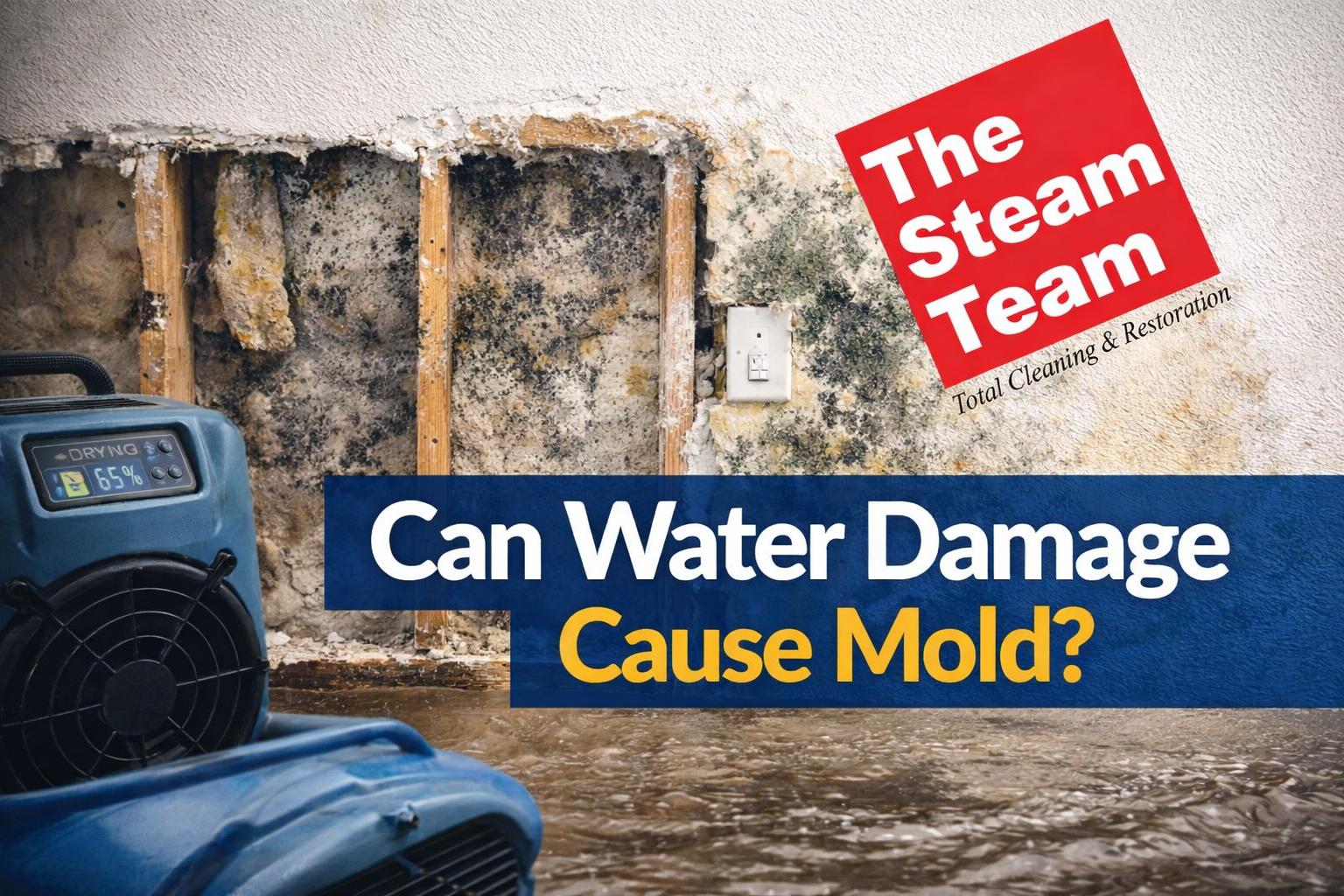
Can Water Damage Cause Mold? Here’s the Truth

Can Water Damage Cause Mold? Here’s the Truth

Why Water Damage and Mold Often Go Hand in Hand

Water damage and mold growth are closely connected. When water enters a home due to leaks, flooding, or plumbing failures, moisture can remain trapped inside building materials. If that moisture is not removed quickly, mold can begin developing within a short period of time.

Many homeowners in Austin are surprised to learn that mold can start forming within 24–48 hours after water damage occurs.

Understanding how water damage leads to mold growth in Austin homes can help homeowners take quick action and prevent serious indoor air quality issues.

The Steam Team has been helping Austin homeowners address water damage and mold concerns since 1983, providing professional water extraction, structural drying, and mold remediation services across Central Texas.

How Mold Develops After Water Damage

Mold spores exist naturally in the air and are present in nearly every environment. However, mold needs specific conditions to grow.

Mold growth occurs when three key factors are present:

β€’ Moisture
β€’ Organic materials (such as wood, drywall, or dust)
β€’ Warm temperatures

When water damage introduces moisture into a home, materials like drywall, wood framing, and insulation can become ideal environments for mold growth.

Austin’s warm and humid climate can make mold development occur even faster if moisture is not properly removed.

How Quickly Mold Can Appear

Many homeowners underestimate how quickly mold can develop.

Typical mold growth timeline:

0–24 Hours
Water soaks into porous materials such as drywall and carpet.

24–48 Hours
Mold spores may begin developing in damp areas.

48–72 Hours
Visible mold growth may begin appearing on surfaces.

3–7 Days
Mold colonies may spread rapidly throughout affected areas.

Because of this rapid timeline, professional drying after water damage is extremely important.

Common Areas Where Mold Forms After Water Damage

After a leak or flood, mold often develops in areas where moisture remains trapped.

Common locations include:

β€’ Behind drywall
β€’ Under carpets and padding
β€’ Inside insulation
β€’ Around air ducts and vents
β€’ Beneath flooring or subfloors

These hidden areas allow mold to grow undetected for long periods if the moisture problem is not addressed.

Signs Mold May Be Developing After Water Damage

Homeowners should watch for warning signs that mold may be forming after water damage.

Common signs include:

β€’ Musty or earthy odors
β€’ Visible mold spots on walls or ceilings
β€’ Increased allergy or respiratory symptoms
β€’ Discoloration on surfaces
β€’ Persistent humidity or dampness indoors

If these signs appear after a water damage event, professional inspection is recommended.

Health Concerns Associated with Mold

Mold exposure may affect indoor air quality and comfort inside the home.

Some individuals may experience symptoms such as:

β€’ Sneezing or coughing
β€’ Eye irritation
β€’ Sinus congestion
β€’ Headaches
β€’ Respiratory irritation

People with allergies, asthma, or weakened immune systems may be more sensitive to mold exposure.

Maintaining a dry and well-ventilated home environment helps reduce these risks.

How Professional Drying Prevents Mold

One of the most effective ways to prevent mold growth is rapid structural drying after water damage.

Professional restoration companies use specialized drying equipment to remove moisture from building materials.

Drying equipment may include:

β€’ High-powered air movers
β€’ Industrial dehumidifiers
β€’ Moisture detection tools
β€’ Temperature and humidity monitoring systems

These tools help remove moisture trapped behind walls, under flooring, and inside structural components.

Why DIY Drying Is Often Not Enough

Many homeowners attempt to dry flooded areas using household fans or basic dehumidifiers.

While these methods may help dry visible surfaces, they often cannot remove moisture trapped inside walls, floors, or insulation.

Hidden moisture can allow mold to develop even when surfaces appear dry.

Professional restoration services use equipment designed to remove moisture deep within structural materials.

Steps to Prevent Mold After Water Damage

Homeowners can reduce the risk of mold growth by taking quick action after water damage occurs.

Helpful prevention steps include:

β€’ Removing standing water immediately
β€’ Beginning structural drying quickly
β€’ Increasing ventilation where possible
β€’ Removing severely damaged materials
β€’ Monitoring humidity levels indoors

The faster moisture is removed, the lower the risk of mold development.

When Mold Remediation May Be Necessary

If mold has already begun developing, professional mold remediation may be required.

Mold remediation typically involves:

β€’ Identifying the moisture source
β€’ Containing affected areas
β€’ Removing contaminated materials
β€’ Cleaning and sanitizing surfaces
β€’ Restoring affected areas

Professional remediation ensures mold is safely removed without spreading spores throughout the home.

FAQ: Water Damage and Mold

Can mold grow after water damage?

Yes. Mold can begin growing within 24–48 hours when moisture remains in building materials.

Does all water damage cause mold?

Not always. If water is removed quickly and materials are dried properly, mold may be prevented.

How can mold be prevented after water damage?

Rapid water removal, structural drying, and humidity control help prevent mold growth.

Can mold grow behind walls?

Yes. Mold often develops in hidden areas such as wall cavities, insulation, and subfloors.

Should homeowners test for mold after flooding?

If musty odors or visible mold appear after flooding, professional inspection may be recommended.

Why Austin Homeowners Trust The Steam Team

β€’ Serving Austin since 1983
β€’ Certified water damage restoration technicians
β€’ Professional structural drying equipment
β€’ Mold remediation and prevention services
β€’ Trusted across Central Texas

Our team helps homeowners prevent mold growth and restore their homes after water damage.

Need Water Damage or Mold Help in Austin?

If your home has experienced water damage, acting quickly can prevent mold growth and structural damage.

The Steam Team provides professional water damage restoration and mold remediation in Austin, helping homeowners remove moisture and restore healthy indoor environments.

πŸ“ž Call 512-451-8326 for assistance

Serving Austin, Round Rock, Cedar Park, Georgetown, and surrounding Central Texas communities.