Common Causes of Water Damage in Austin (And How to Prevent Them)

Common Causes of Water Damage in Austin (And How to Prevent Them)

Understanding the Most Frequent Water Damage Risks

Water damage is one of the most common property problems homeowners face. From plumbing leaks to severe storms, water can quickly damage floors, walls, ceilings, and personal belongings.

Understanding the most common causes of water damage in Austin homes helps homeowners take preventative steps to protect their property and reduce the risk of costly repairs.

The Steam Team has been helping homeowners address water damage emergencies in Austin since 1983, providing professional water damage restoration, structural drying, and cleanup services throughout Central Texas.

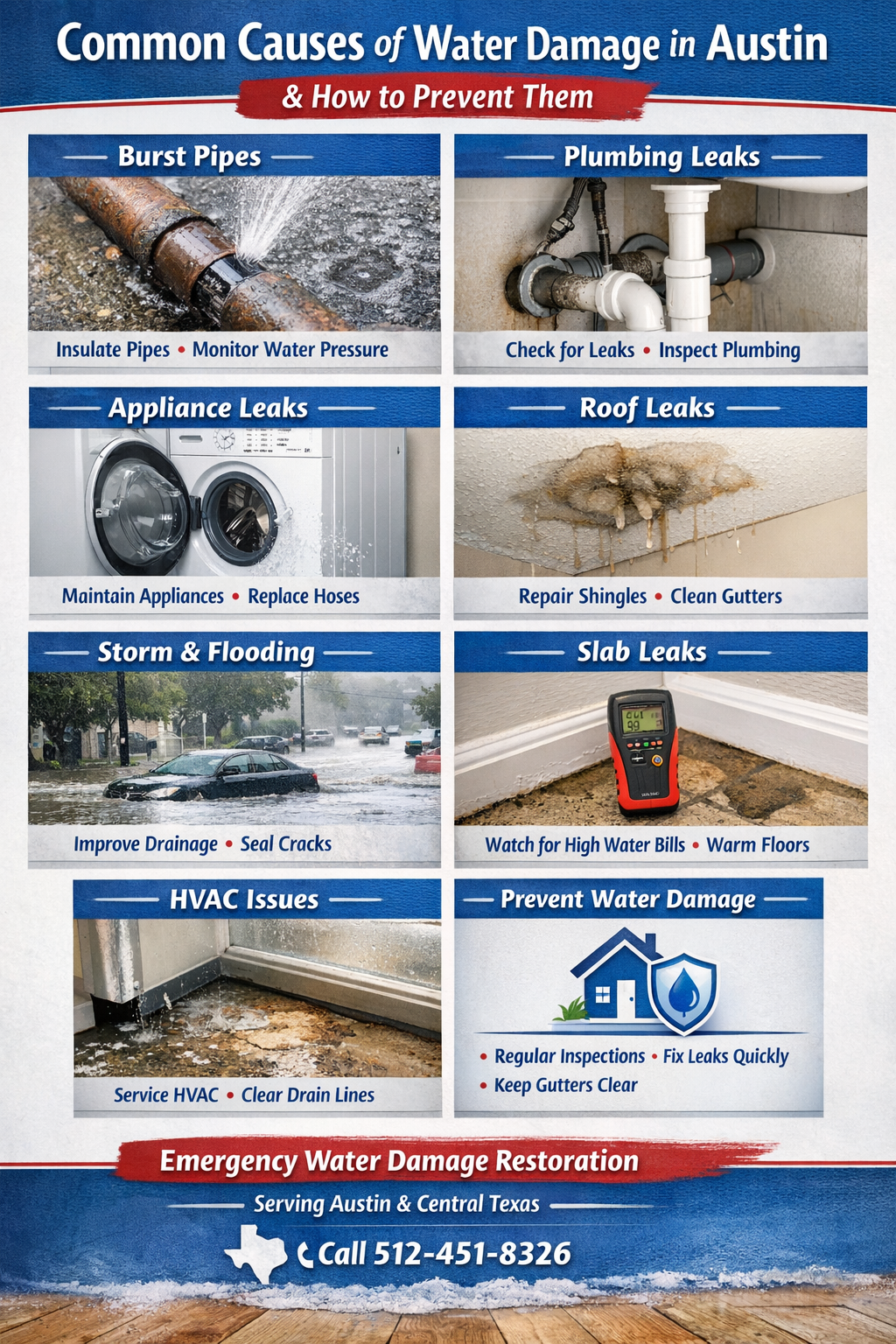
Burst Pipes

Burst pipes are one of the leading causes of residential water damage.

Pipes can burst due to:

β€’ Aging plumbing systems
β€’ Corrosion inside pipes
β€’ Freezing temperatures during winter storms
β€’ Sudden pressure changes

When a pipe bursts, large amounts of water can flood a home within minutes.

Prevention Tips

Homeowners can reduce the risk of burst pipes by:

β€’ Insulating exposed pipes during cold weather
β€’ Monitoring water pressure levels
β€’ Replacing aging plumbing components
β€’ Addressing small leaks before they worsen

Plumbing Leaks

Slow plumbing leaks often go unnoticed for long periods of time.

Leaks may occur in:

β€’ Supply lines beneath sinks
β€’ Pipes behind walls
β€’ Water heater connections
β€’ Toilets and bathroom fixtures

Even small leaks can cause serious water damage if they continue for weeks or months.

Prevention Tips

To prevent plumbing leak damage:

β€’ Inspect plumbing fixtures regularly
β€’ Watch for increases in water bills
β€’ Check under sinks for moisture or corrosion
β€’ Schedule professional plumbing inspections

Appliance Failures

Household appliances that use water can sometimes malfunction or leak.

Common appliances that cause water damage include:

β€’ Washing machines
β€’ Dishwashers
β€’ Refrigerators with water lines
β€’ Water heaters

Appliance hoses and connections can wear out over time and eventually fail.

Prevention Tips

To reduce appliance-related water damage:

β€’ Replace appliance hoses every few years
β€’ Inspect connections for leaks
β€’ Install water leak detectors near appliances

Roof Leaks

Roof damage can allow water to enter the home during storms.

Leaks may occur due to:

β€’ Missing or damaged shingles
β€’ Aging roofing materials
β€’ Clogged gutters
β€’ Storm damage from wind or hail

Water entering through the roof can damage ceilings, insulation, and walls.

Prevention Tips

Homeowners should:

β€’ Inspect roofs after severe storms
β€’ Clean gutters regularly
β€’ Repair damaged shingles promptly
β€’ Schedule professional roof inspections

Severe Storms and Flooding

Central Texas occasionally experiences severe storms that can lead to flooding.

Heavy rainfall can cause water to enter homes through:

β€’ Doors and windows
β€’ Foundation cracks
β€’ Basement or crawl spaces

Storm-related flooding can cause widespread damage to flooring, drywall, and personal belongings.

Prevention Tips

Flood prevention steps include:

β€’ Maintaining proper yard drainage
β€’ Sealing foundation cracks
β€’ Installing sump pumps where necessary
β€’ Keeping gutters and downspouts clear

HVAC System Issues

Heating and cooling systems can also contribute to water damage.

HVAC-related water issues may occur due to:

β€’ Clogged condensate drain lines
β€’ Frozen evaporator coils
β€’ Malfunctioning drain pans

When condensation systems fail, water may leak inside ceilings or walls.

Prevention Tips

Regular HVAC maintenance helps prevent moisture problems.

Homeowners should:

β€’ Schedule annual HVAC inspections
β€’ Clean condensate drain lines
β€’ Replace air filters regularly

Slab Leaks

Many homes in Austin are built on concrete slab foundations. Plumbing pipes running beneath the slab may develop leaks over time.

Slab leaks can lead to:

β€’ Moisture beneath flooring
β€’ Foundation damage
β€’ Mold growth

Because these leaks occur beneath the home, they can be difficult to detect.

Prevention Tips

Watch for warning signs such as:

β€’ Unexplained increases in water bills
β€’ Warm spots on floors
β€’ Sounds of running water when plumbing is not in use

The Importance of Early Detection

Early detection plays a major role in minimizing water damage.

Homeowners should watch for warning signs such as:

β€’ Water stains on ceilings or walls
β€’ Musty odors
β€’ Warped or buckling flooring
β€’ Increased humidity inside the home

Addressing water problems quickly helps reduce restoration costs and prevent mold growth.

What to Do If Water Damage Occurs

If water damage happens inside your home, taking quick action can reduce the extent of damage.

Homeowners should:

β€’ Shut off the water source if possible
β€’ Remove standing water when safe
β€’ Move valuables away from affected areas
β€’ Contact a water damage restoration professional

Professional restoration services help remove moisture and prevent further structural damage.

FAQ: Water Damage Causes

What is the most common cause of water damage in homes?

Plumbing leaks and burst pipes are among the most common causes of residential water damage.

Can small leaks cause serious damage?

Yes. Slow leaks can cause mold growth and structural damage over time.

Are storms a major cause of water damage in Austin?

Severe storms and heavy rainfall can sometimes lead to flooding and roof leaks.

How can homeowners prevent water damage?

Regular inspections of plumbing, appliances, and roofs can help identify problems early.

When should homeowners call a restoration company?

Professional restoration is recommended whenever water damage affects walls, flooring, or structural materials.

Why Austin Homeowners Trust The Steam Team

β€’ Serving Austin since 1983
β€’ Certified water damage restoration technicians
β€’ Advanced structural drying equipment
β€’ Professional moisture detection tools
β€’ Trusted across Central Texas

Our team helps homeowners recover quickly from water damage emergencies.

Need Water Damage Restoration in Austin?

If your home experiences water damage, fast professional response can help prevent mold growth and structural problems.

The Steam Team provides professional water damage restoration services in Austin, helping homeowners restore their properties quickly and safely.

πŸ“ž Call 512-451-8326 for assistance

Serving Austin, Round Rock, Cedar Park, Georgetown, and surrounding Central Texas communities.

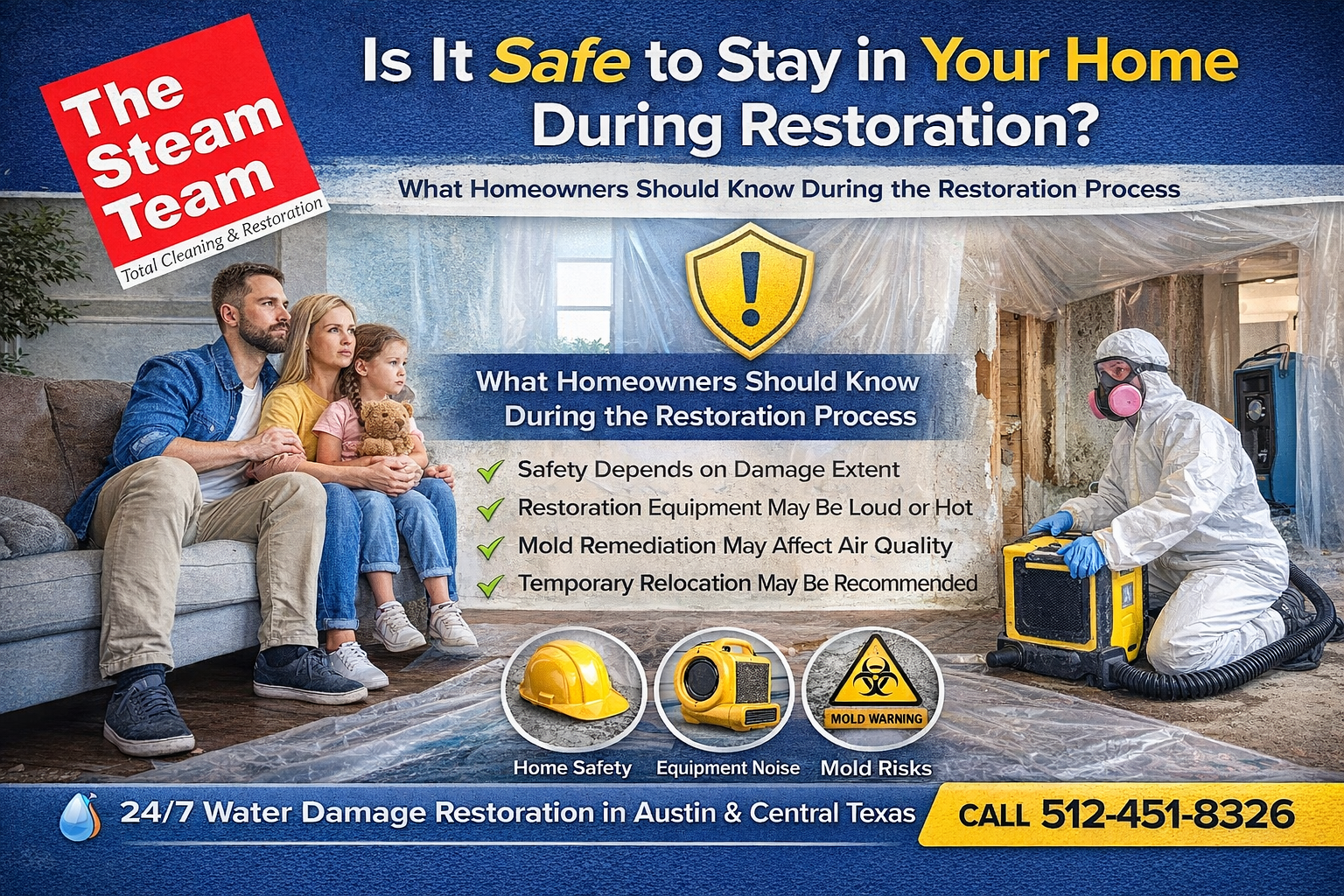
Is It Safe to Stay in Your Home During Restoration?

Is It Safe to Stay in Your Home During Restoration?

What Homeowners Should Know During the Restoration Process

When water damage occurs in a home, restoration work often begins quickly to prevent additional structural damage and mold growth. During this process, homeowners frequently ask whether it is safe to remain inside the property while restoration work is underway.

The answer depends on several factors, including the extent of the damage, the areas affected, and the type of restoration work required.

Understanding whether it is safe to stay in your home during restoration in Austin helps homeowners make informed decisions during the recovery process.

The Steam Team has been helping Austin homeowners restore properties after water damage since 1983, providing professional water damage restoration, structural drying, and mold remediation services throughout Central Texas.

When It May Be Safe to Stay in Your Home

In many cases, homeowners can safely remain in their homes during restoration, especially when the damage is limited to a small area.

It may be safe to stay when:

β€’ Water damage is confined to one room or area
β€’ Restoration equipment can operate without affecting daily living spaces
β€’ There are no structural safety concerns
β€’ The water damage involves clean water sources

Professional restoration teams often isolate affected areas to allow homeowners to continue living in other parts of the home.

Situations Where Temporary Relocation May Be Recommended

In some cases, restoration professionals may recommend temporarily leaving the home.

This may occur when:

β€’ Large areas of the home are affected by water damage
β€’ Mold remediation is required
β€’ Contaminated water (Category 3) is present
β€’ Structural repairs are necessary
β€’ Electrical systems are compromised

Temporary relocation helps ensure the safety of occupants while restoration work is completed.

Why Restoration Equipment Can Affect Living Conditions

Water damage restoration requires specialized equipment that may run continuously during the drying process.

Common equipment used during restoration includes:

β€’ High-powered air movers
β€’ Industrial dehumidifiers
β€’ Air filtration systems
β€’ Moisture monitoring devices

These machines are designed to remove moisture quickly but can produce noise and heat while operating.

Some homeowners may find it uncomfortable to remain in the home during this process.

Mold Remediation and Indoor Air Quality

If mold develops after water damage, professional remediation may be required.

During mold remediation, technicians often set up containment barriers and air filtration systems to prevent mold spores from spreading.

Because mold spores can affect indoor air quality, temporary relocation may be recommended while remediation work is performed.

Homes in Austin, Round Rock, and Cedar Park sometimes require mold remediation following flooding or plumbing leaks.

Safety Considerations During Restoration

Several safety factors should be considered during restoration work.

These include:

β€’ Electrical hazards from water exposure
β€’ Structural damage to floors or ceilings
β€’ Exposure to contaminated water
β€’ Airborne particles during demolition or drying

Professional restoration teams evaluate these risks before recommending whether occupants can remain in the home.

How Restoration Teams Protect Occupants

Professional restoration companies take steps to minimize disruption and maintain safety during the restoration process.

Protective measures may include:

β€’ Containing affected areas with plastic barriers
β€’ Using air filtration equipment
β€’ Monitoring humidity and air quality
β€’ Removing hazardous materials safely

These measures help protect both occupants and restoration technicians.

How Long Restoration Usually Takes

Restoration timelines depend on the severity of the damage.

Typical timelines include:

β€’ Water extraction: several hours
β€’ Structural drying: 2–4 days
β€’ Repairs and restoration: several days to weeks depending on damage

In minor cases, homeowners may remain in the home throughout the process.

Tips for Homeowners During Restoration

If restoration work is being performed in your home, the following tips may help make the process easier.

Homeowners should:

β€’ Follow safety instructions provided by restoration technicians
β€’ Avoid entering contained work areas
β€’ Keep children and pets away from restoration equipment
β€’ Maintain ventilation where possible

Communication with the restoration team helps ensure the process runs smoothly.

FAQ: Staying Home During Restoration

Is it safe to stay in a house during water damage restoration?

In many cases it is safe if the damage is limited and restoration work does not create safety risks.

When should homeowners leave during restoration?

Temporary relocation may be recommended when mold remediation, contaminated water cleanup, or structural repairs are required.

Is restoration equipment dangerous?

Restoration equipment is generally safe but may produce noise, heat, and airflow that can be uncomfortable.

How long does restoration equipment stay in the home?

Drying equipment typically runs for 2–4 days, depending on moisture levels.

Can mold remediation affect indoor air quality?

Yes. Mold remediation may temporarily affect air quality, which is why containment systems and air filtration are used.

Why Austin Homeowners Trust The Steam Team

β€’ Serving Austin since 1983
β€’ Certified water damage restoration technicians
β€’ Advanced structural drying equipment
β€’ Professional mold remediation services
β€’ Trusted across Central Texas

Our team works closely with homeowners to ensure safe and efficient restoration.

Need Water Damage Restoration in Austin?

If your home has experienced water damage, professional restoration can help protect your property and prevent further damage.

The Steam Team provides water damage restoration, structural drying, and mold remediation services in Austin, helping homeowners restore their homes safely.

πŸ“ž Call 512-451-8326 for assistance

Serving Austin, Round Rock, Cedar Park, Georgetown, and surrounding Central Texas communities.

Emergency Flood Cleanup – What Happens in the First 24 Hours

Emergency Flood Cleanup: What Happens in the First 24 Hours

Why the First Day After Flooding Is Critical

Flooding can cause serious damage to homes and businesses within minutes. Whether caused by severe storms, burst pipes, appliance failures, or plumbing issues, floodwater spreads quickly and can affect flooring, drywall, furniture, and structural materials.

The first 24 hours after flooding are the most important for preventing additional damage. Immediate response can reduce repair costs, prevent mold growth, and protect structural components of the home.

Understanding what happens during emergency flood cleanup in Austin helps homeowners respond quickly and begin the restoration process safely.

The Steam Team has been providing emergency flood cleanup and water damage restoration in Austin since 1983, helping homeowners and businesses recover from water damage quickly and efficiently.

The First Hour: Stop the Water Source

When flooding occurs inside a home, the first step is identifying and stopping the source of water if possible.

Common causes of indoor flooding include:

β€’ Burst pipes
β€’ Overflowing appliances
β€’ Water heater failures
β€’ Roof leaks during storms
β€’ Plumbing system failures

Turning off the main water shutoff valve can prevent additional water from entering the home.

If flooding is caused by storms or external water sources, professional help may be required to safely remove the water.

Hours 1–3: Initial Inspection and Damage Assessment

After the water source is controlled, the next step is assessing the damage.

Professional restoration teams typically perform:

β€’ Property inspection
β€’ Identification of water source
β€’ Moisture mapping of affected areas
β€’ Safety evaluation of electrical systems

This inspection helps determine the extent of damage and the best approach for water removal and drying.

Homes in Austin, Round Rock, and Cedar Park often experience flash flooding after heavy storms, making early inspection essential.

Hours 3–6: Water Extraction

Once the inspection is complete, the next priority is removing standing water.

Professional restoration companies use commercial-grade equipment such as:

β€’ High-capacity water pumps
β€’ Industrial wet vacuums
β€’ Extraction tools for carpets and flooring

Water extraction must be performed quickly to prevent water from spreading deeper into building materials.

The faster water is removed, the easier it is to restore affected materials.

Hours 6–12: Removing Wet Materials

During major flooding events, some materials may already be too saturated to salvage.

Common materials removed during flood cleanup include:

β€’ Carpet and carpet padding
β€’ Severely soaked drywall
β€’ Damaged insulation
β€’ Waterlogged furniture

Removing saturated materials helps speed up the drying process and reduces the risk of mold growth.

Hours 12–24: Structural Drying Begins

Once standing water is removed and damaged materials are addressed, the structural drying phase begins.

Professional drying equipment may include:

β€’ High-powered air movers
β€’ Commercial dehumidifiers
β€’ Moisture monitoring devices
β€’ Temperature and humidity controls

These tools help remove moisture trapped inside walls, flooring, and structural materials.

Proper drying is essential for preventing mold and long-term structural damage.

Why Mold Prevention Is Critical in the First 24 Hours

One of the biggest risks after flooding is mold growth.

In warm climates like Austin and Central Texas, mold can begin growing within 24–48 hours after water exposure.

Professional restoration teams focus on rapid drying and humidity control to reduce the risk of mold contamination.

Safety Risks After Flooding

Floodwater can create several safety hazards inside the home.

Potential risks include:

β€’ Electrical hazards
β€’ Structural weakening of floors or ceilings
β€’ Contaminated water exposure
β€’ Slip and fall hazards

For safety reasons, homeowners should avoid entering heavily flooded areas until professionals assess the property.

Signs You Need Professional Flood Cleanup

While minor water spills can sometimes be handled by homeowners, large flood events require professional restoration.

Signs professional help is needed include:

β€’ Standing water covering large areas
β€’ Water reaching walls or ceilings
β€’ Floodwater entering multiple rooms
β€’ Electrical systems exposed to water
β€’ Persistent moisture or odors

Professional equipment ensures water is removed completely and drying is performed properly.

What Happens After the First 24 Hours

After the initial emergency response, restoration continues with:

β€’ Ongoing structural drying
β€’ Daily moisture monitoring
β€’ Cleaning and sanitizing affected areas
β€’ Repairing or replacing damaged materials

Depending on the severity of flooding, full restoration may take several days to several weeks.

Tips for Homeowners During Flood Cleanup

If flooding occurs in your home, these tips may help minimize damage:

β€’ Shut off water supply if possible
β€’ Avoid electrical hazards
β€’ Document damage for insurance claims
β€’ Remove valuables from affected areas
β€’ Contact a professional restoration company quickly

Fast action is the most important factor in reducing water damage.

FAQ: Emergency Flood Cleanup

How quickly should floodwater be removed?

Floodwater should be removed as soon as possible, ideally within the first few hours.

Can floodwater damage walls and floors?

Yes. Floodwater can soak into drywall, flooring, insulation, and structural materials.

How long does flood cleanup take?

Initial water removal may take several hours, while full restoration can take 3–7 days or longer.

Can flooding cause mold?

Yes. Mold can begin growing within 24–48 hours if moisture is not properly removed.

Does homeowners insurance cover flooding?

Coverage depends on the cause of flooding and the homeowner’s insurance policy.

Why Austin Homeowners Trust The Steam Team

β€’ Serving Austin since 1983
β€’ 24/7 emergency flood cleanup services
β€’ Certified restoration technicians
β€’ Advanced water extraction and drying equipment
β€’ Trusted across Central Texas

Our team responds quickly to minimize damage and restore homes safely.

Need Emergency Flood Cleanup in Austin?

Flood damage requires immediate attention.

The Steam Team provides 24/7 emergency flood cleanup in Austin, helping homeowners remove water, dry structures, and restore their homes quickly.

πŸ“ž Call 512-451-8326 for emergency service

Serving Austin, Round Rock, Cedar Park, Georgetown, and surrounding Central Texas communities.