Why Choose Professional Water Damage Restoration in Austin?

Why Choose Professional Water Damage Restoration in Austin for Fast, Reliable Emergency Service

Water intrusion incidents in Austin surge with seasonal flash floods and aging plumbing, leaving properties vulnerable to structural harm and health hazards. Professional water damage restoration in Austin delivers rapid, expert intervention that halts moisture migration, inhibits mold growth, and safeguards your investment. This article explores the key benefits of hiring certified technicians, outlines the complete restoration process, examines common damage scenarios, breaks down cost drivers and insurance considerations, highlights The Steam Team’s proven local expertise, and explains mold‐prevention strategies and urgent response triggers. By understanding each facet of water damage restoration process Austin, homeowners and businesses can make informed choices and secure peace of mind when disaster strikes.

What Are the Key Benefits of Professional Water Damage Restoration in Austin?

Professional water damage restoration in Austin refers to specialized mitigation and repair services designed to remove excess water, dry affected structures, and restore properties to pre‐loss condition. This approach prevents secondary issues such as mold infestation and structural weakening, ensures health‐safe environments through antimicrobial treatments, and speeds up recovery with advanced equipment. For example, same‐day water extraction can reduce moisture levels below mold‐growth thresholds within hours, protecting wood framing and drywall.

To illustrate these advantages, consider the following primary benefits:

  1. Mold Prevention and Health Safety – Rapid drying and antimicrobial barriers inhibit fungal spores.

  2. Structural Integrity Preservation – Industrial dehumidifiers and moisture mapping protect beams and subfloors.

  3. Cost Savings Over Time – Early professional intervention minimizes repair scope and insurance claim complications.

These advantages establish why prompt, expert restoration is essential in Austin’s climate and set the stage for understanding the precise processes involved.

How Does Professional Restoration Prevent Mold and Structural Damage?

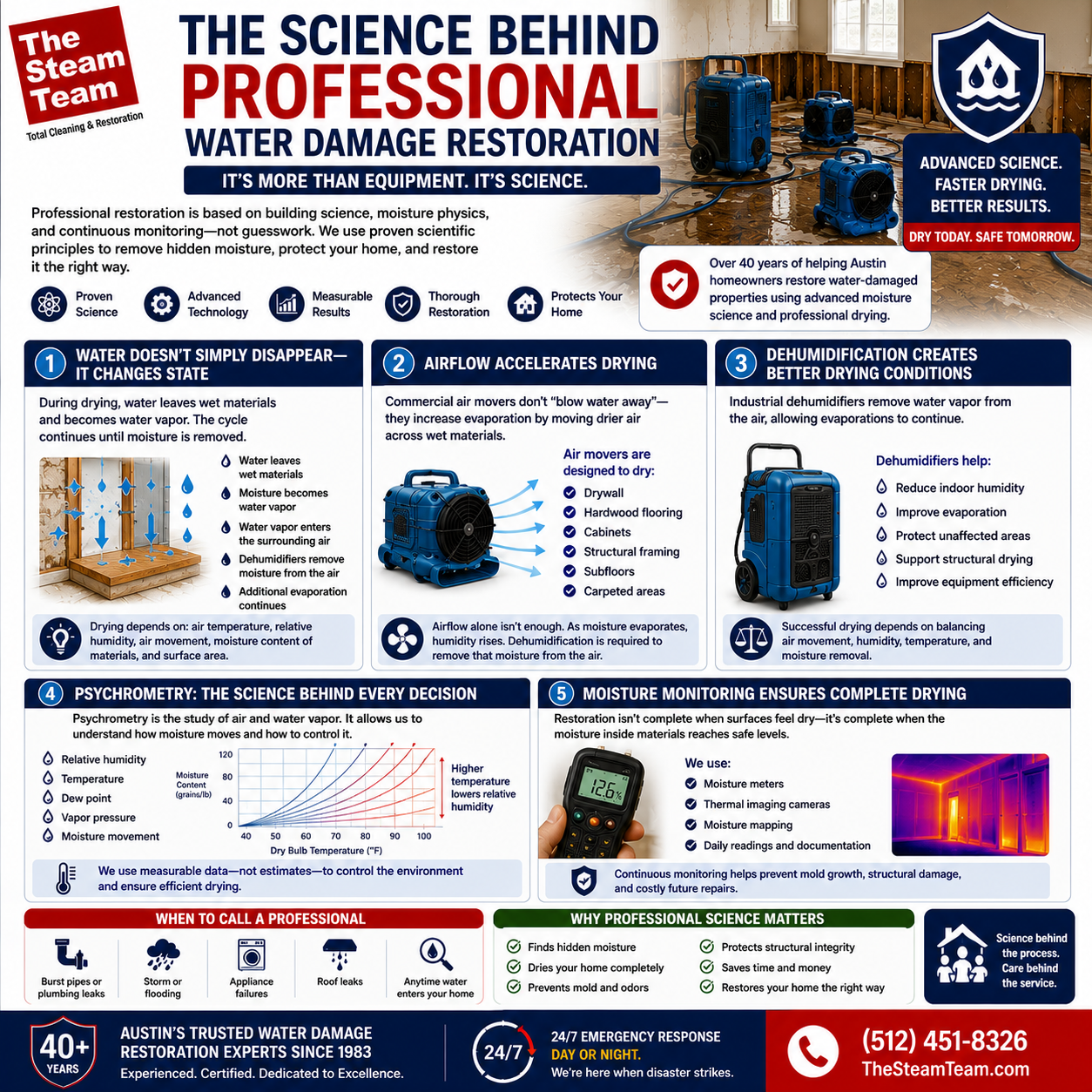
Professional restoration prevents mold and structural damage by combining targeted water extraction with real-time moisture monitoring and high-capacity drying systems. Technicians deploy truck-mounted pumps to remove standing water, then use thermal imaging cameras to locate hidden moisture behind walls and beneath floors. Industrial dehumidifiers and air movers follow, reducing humidity to safe levels and arresting mold spore development. This coordinated strategy maintains material strength, prevents wood rot, and preserves drywall integrity, ensuring buildings remain safe and stable.

Why Is 24/7 Emergency Water Damage Cleanup Essential in Austin?

Yes, 24/7 emergency water damage cleanup is essential in Austin because even a few hours’ delay can allow moisture to penetrate structural cavities, leading to costly deterioration. On‐call restoration crews mobilize immediately upon notification, deploying extraction pumps and drying equipment day or night. Rapid response accelerates water removal, reduces microbial proliferation, and limits insurance claim complications. This continual availability ensures your property receives immediate attention, reducing downtime and health risks.

How Can Professional Services Reduce Overall Restoration Costs?

Professional services reduce overall restoration costs by minimizing the duration and extent of damage through swift action and efficient workflows. Certified technicians document moisture levels, produce detailed repair estimates, and negotiate with insurance adjusters to maximize coverage. By preventing secondary issuesβ€”such as widespread mold remediation and structural repairsβ€”experts lower material and labor expenses. This proactive methodology ultimately saves homeowners and businesses significant out‐of‐pocket expenses while delivering comprehensive restoration.

What Is the Comprehensive Water Damage Restoration Process in Austin?

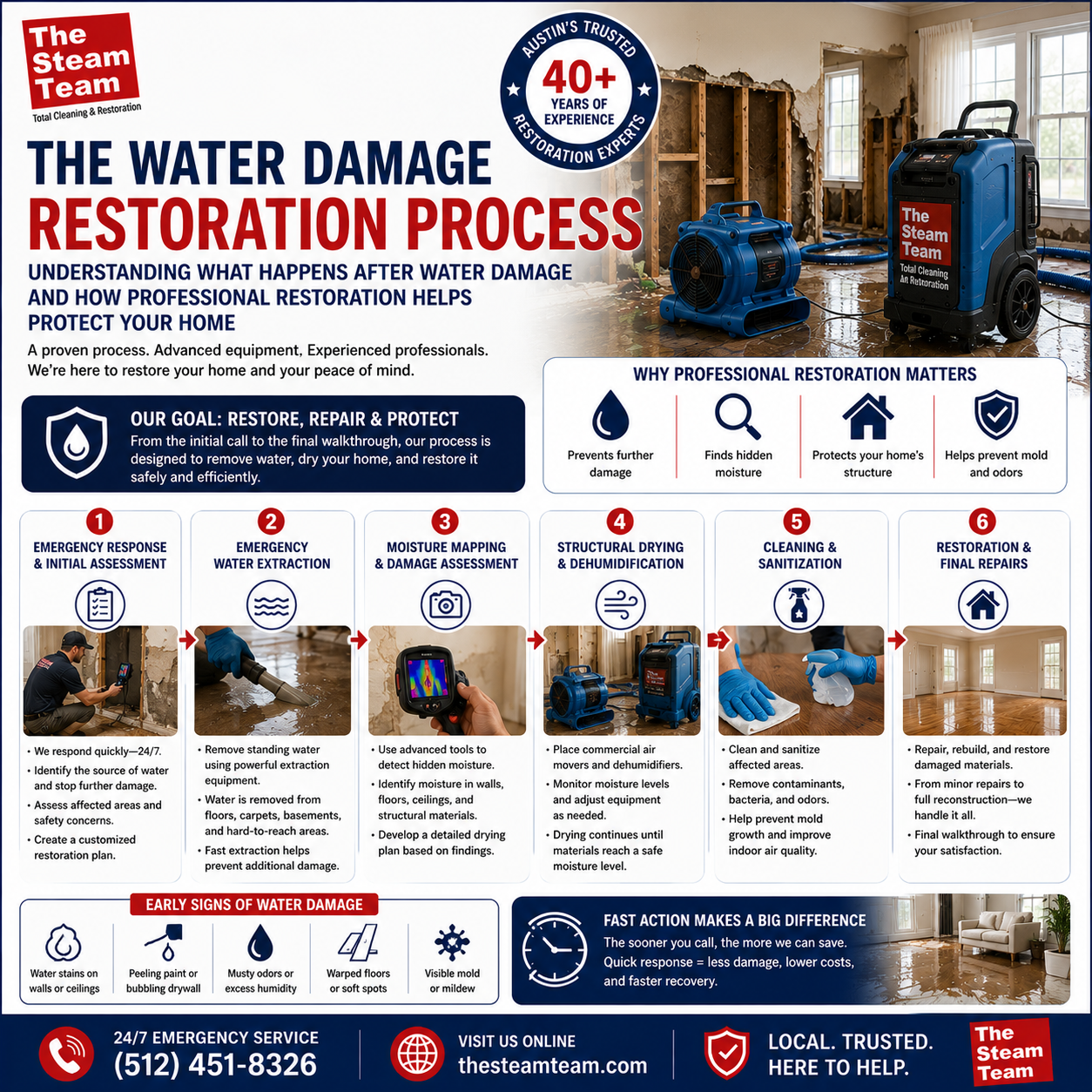
The comprehensive water damage restoration process in Austin encompasses a structured sequence of steps that remove water, dry structural elements, sanitize surfaces, and restore contents. This methodical approach ensures complete remediation, addresses health concerns, and returns properties to safe, habitable condition.

Key steps in this restoration sequence include:

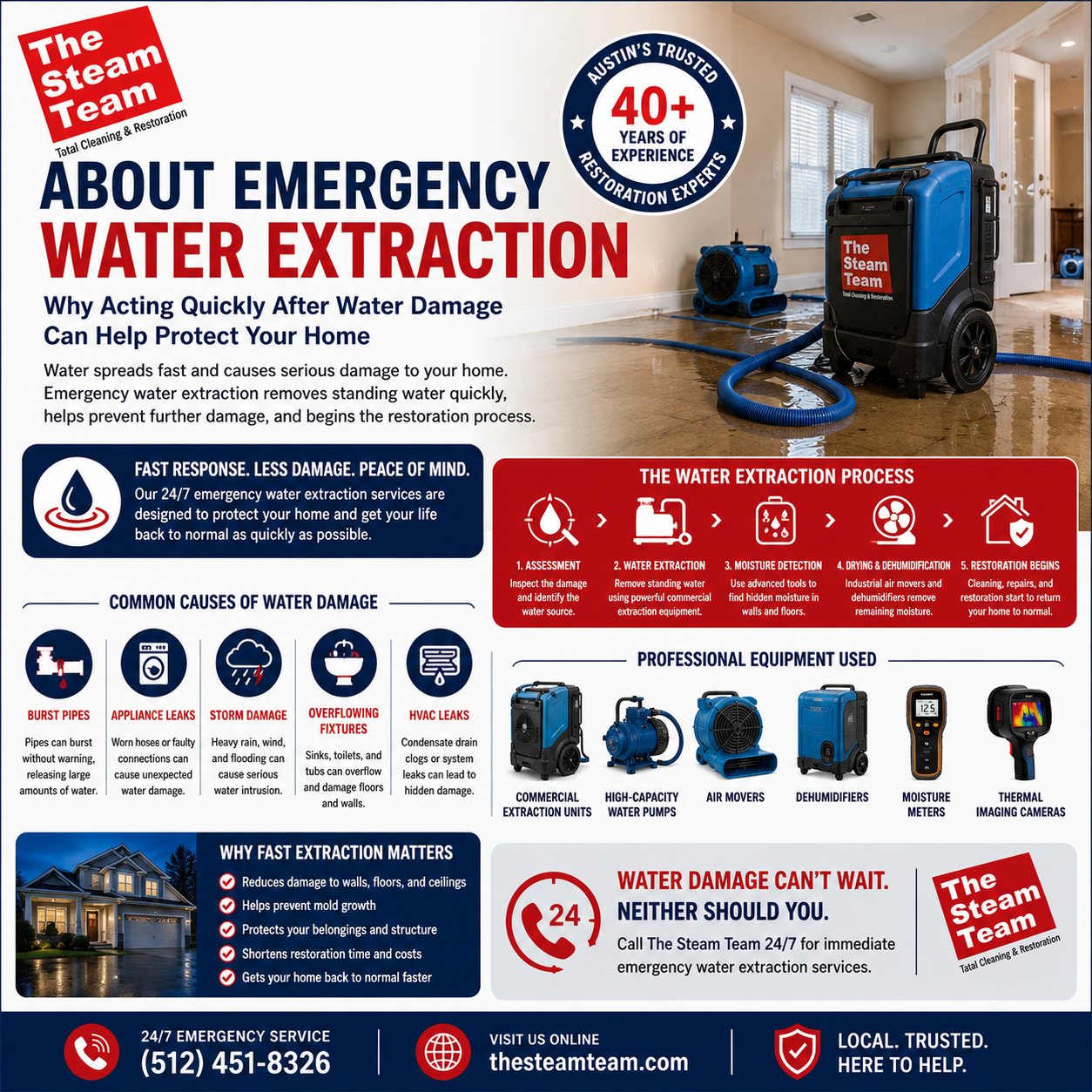
  1. Emergency Water Extraction – Deploy high-power pumps to eliminate standing water.

  2. Structural Drying and Dehumidification – Use moisture mapping, air movers, and dehumidifiers to reduce humidity.

  3. Anti-Microbial Treatment – Apply EPA-registered sanitizers to inhibit mold and bacteria.

  4. Contents Cleaning and Restoration – Clean, deodorize, and repair furniture, textiles, and personal items.

Each phase employs specialized equipment and industry-certified protocols to ensure thorough recovery and prepare the property for final repairs and rebuild.

What Happens During Emergency Water Extraction?

During emergency water extraction, technicians rapidly remove standing water to prevent further damage and mold proliferation. Industrial-grade pumps and vacuums evacuate large water volumes, while moisture meters and thermal imaging detect residual dampness in hidden spaces. Immediate extraction lowers moisture content in structural materials below risk levels, setting the foundation for effective drying and restoration.

How Does Structural Drying and Dehumidification Work?

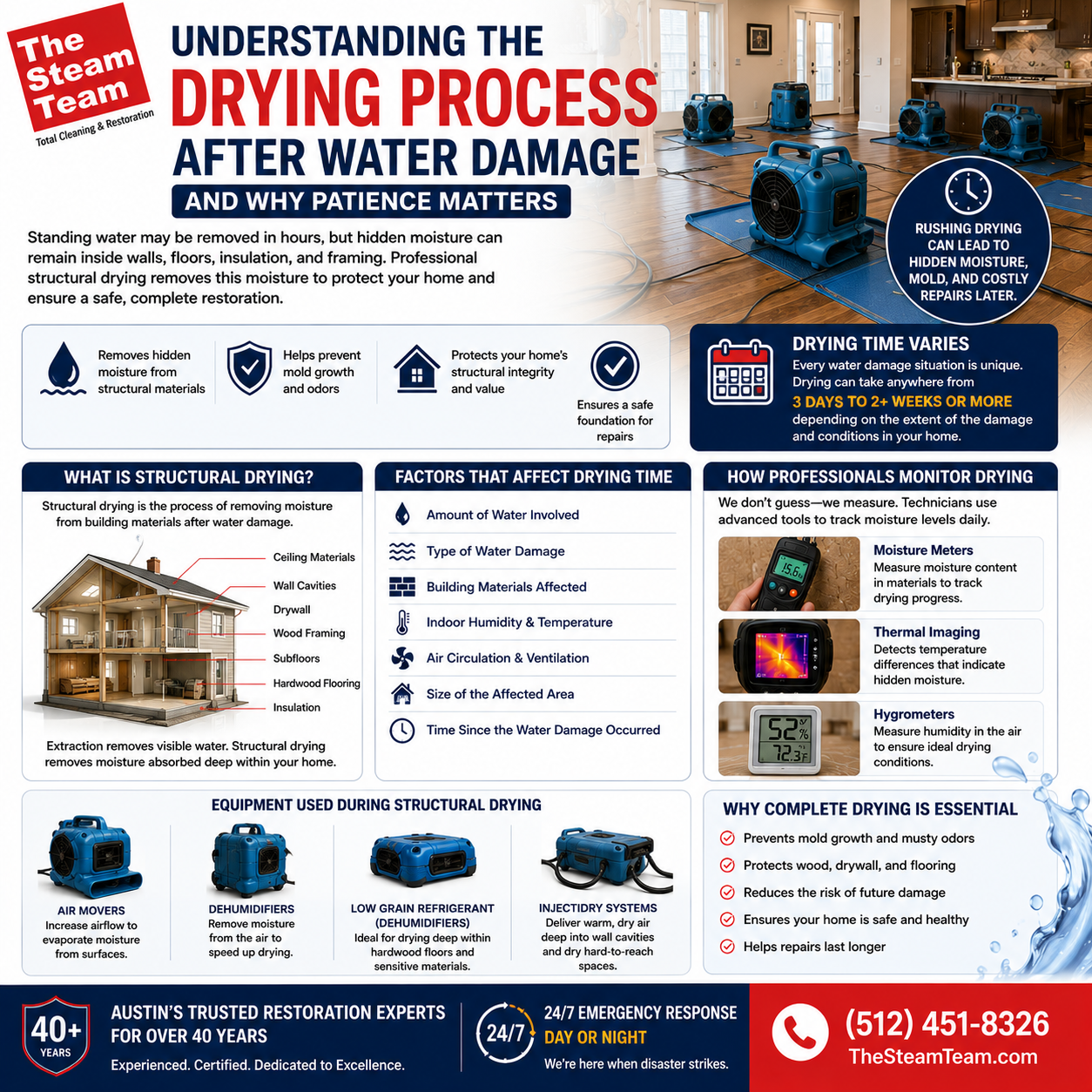
Structural drying and dehumidification use a combination of high-velocity air movers and commercial dehumidifiers to evaporate trapped moisture and extract it from the air. Technicians continuously monitor relative humidity and material moisture levels, adjusting equipment placement and output to achieve optimal drying rates. This controlled environment halts water migration and preserves the strength of wood, concrete, and drywall components.

Why Is Anti-Microbial Treatment Important After Water Damage?

Anti-microbial treatment is crucial after water damage because standing moisture fosters pathogenic bacteria and mold growth, posing health risks and structural compromise. EPA-approved antimicrobial solutions are sprayed onto walls, floors, and concealed cavities to create protective barriers that neutralize spores and inhibit regrowth. This sanitation step restores a safe, hygienic environment and prevents costly remediation down the line.

How Are Contents Cleaned and Restored Professionally?

Contents cleaning and restoration involve carefully cataloging, cleaning, and deodorizing personal belongings with specialized methods tailored to each material. Porous items, such as upholstery and textiles, undergo controlled drying and microbial treatment. Hard surfaces receive ultrasonic cleaning or pack-out services to off-site facilities when necessary. Reassembly and placement complete the process, ensuring personal property is returned in pre-loss condition.

Which Types of Water Damage Require Professional Restoration in Austin?

Professional restoration is required whenever water intrusion presents risks beyond homeowner mitigation methods, including contaminated water, structural threats, and large-scale flooding. The following scenarios demand expert intervention to ensure health, safety, and complete remediation.

Damage Scenario Challenge Professional Solution
Burst Pipe Rapid flooding, hidden moisture voids Targeted extraction, moisture mapping, structural drying
Flood Damage High water volume, sediment deposits High-capacity pumps, sediment removal, full structural drying
Sewage Backup Hazardous contaminants, odors Sanitization, anti-microbial application, safe waste disposal

Each scenario carries unique hazardsβ€”from microbial contamination in sewage to subfloor saturation after floodsβ€”making professional services indispensable for thorough, safe restoration.

How Much Does Water Damage Restoration Cost in Austin and What Affects Pricing?

Water damage restoration cost in Austin varies based on project scope, water category, property size, and required techniques. Understanding the primary cost drivers helps property owners anticipate expenses and secure accurate estimates before work begins.

Key factors influencing restoration pricing include:

  • Extent of water intrusion and affected square footage

  • Water category (clean, gray, or black water) and contamination level

  • Structural complexity and accessibility for equipment placement

  • Required services (extraction, drying, anti-microbial treatment, repairs)

  • Urgency of emergency response and after-hours mobilization

These variables form the basis for a comprehensive quote and guide customers in budgeting for professional services.

How Can You Get a Free Water Damage Estimate in Austin?

To obtain a free water damage estimate in Austin, contact The Steam Team by calling (512) 451-8326 or visiting the website address provided in plain text. A qualified estimator will schedule an on-site assessment, evaluate damage severity, and deliver a detailed, no-obligation quote outlining necessary restoration steps and associated costs.

Does Insurance Cover Water Damage Restoration in Austin?

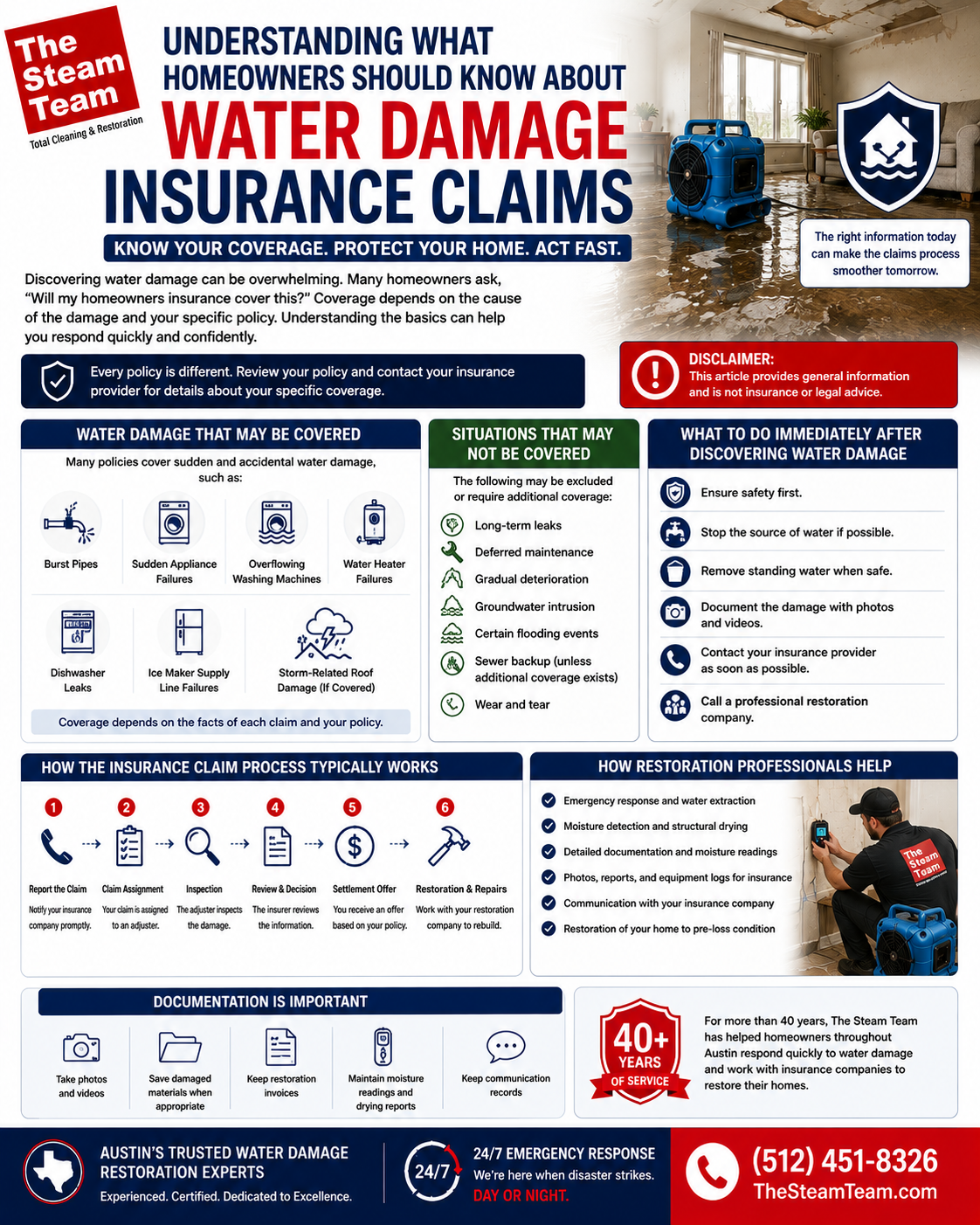
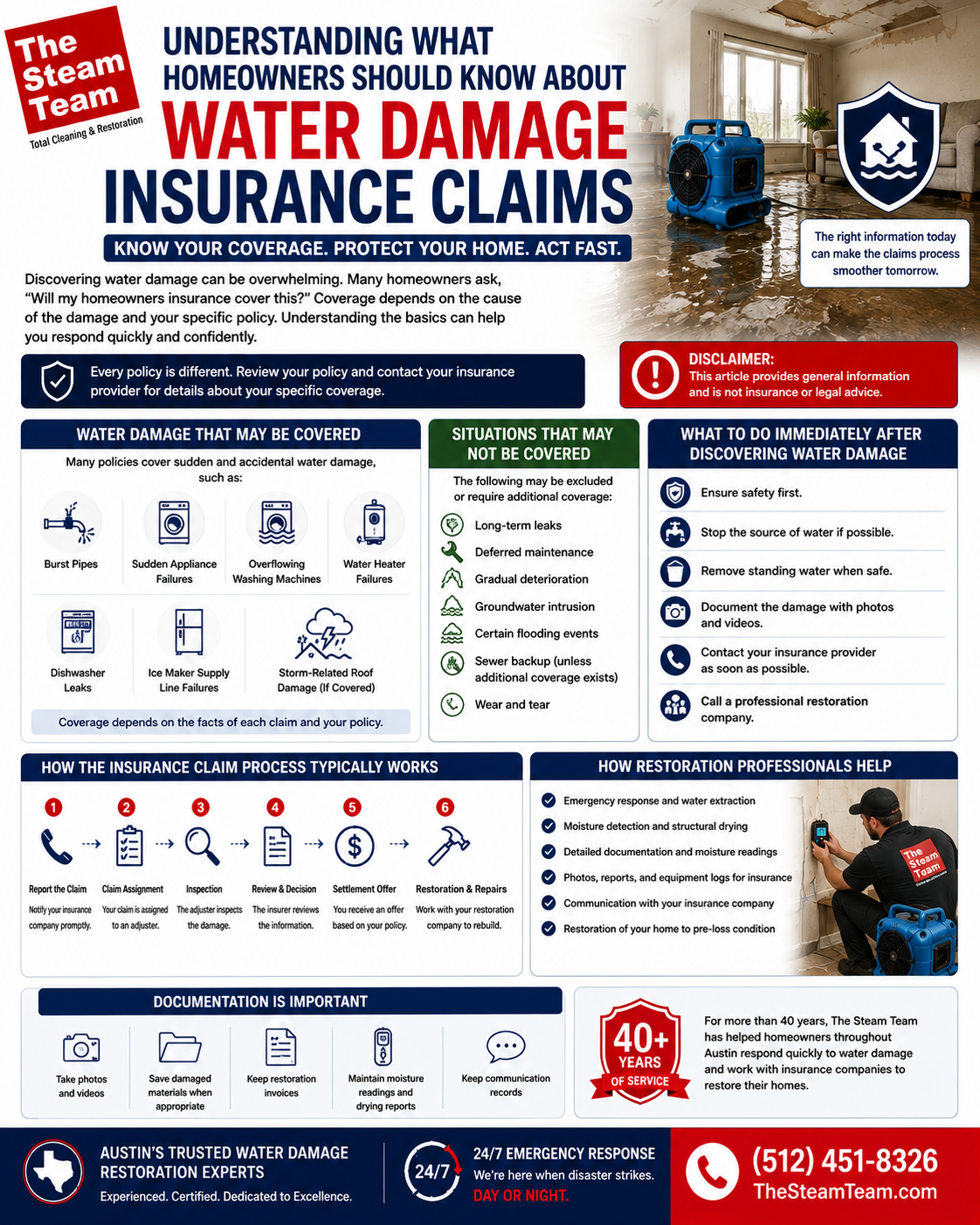
Insurance coverage for water damage restoration in Austin depends on policy details and the cause of loss. Most homeowners insurance policies cover sudden, accidental water eventsβ€”such as burst pipesβ€”but standard policies exclude gradual leaks or flood damage. Proper documentation of moisture readings, photographs of damage, and detailed restoration estimates enhance claim approval and minimize out-of-pocket expenses.

How Does The Steam Team Assist with Insurance Claims?

Step Action Benefit
Documentation Create photo logs, moisture maps, and reports Provides clear evidence for adjusters
Claim Submission Liaise directly with insurance representatives Accelerates review and approval processes
Coverage Maximization Provide detailed, line-item restoration estimates Ensures clients receive full entitled benefits

This structured approach reduces administrative burden on property owners and helps secure maximum policy reimbursement.

Why Choose The Steam Team for Water Damage Restoration in Austin?

The Steam Team is a locally owned and operated restoration company serving Central Texas since 1983. With over 40 years of experience, fully licensed, insured, and bonded teams deliver reliable, honest workmanship. The Steam Team’s mission is to provide the most outstanding service experience ever through accountability, quality craftsmanship, and transparent communication.

What Makes The Steam Team Austin’s Trusted Restoration Experts?

Austin homeowners and businesses trust The Steam Team for their comprehensive skill set and industry certifications. IICRC-certified technicians use state-of-the-art moisture detection, thermal imaging, and drying equipment to deliver precise and efficient restoration. Local ownership ensures personalized service, swift decision-making, and dedication to community satisfaction.

How Does The Steam Team Provide 24/7 Emergency Water Damage Services?

The Steam Team maintains on-call crews around the clock, ready to respond within minutes to emergency calls. Rapid mobilization of extraction pumps, air movers, and dehumidifiers restores properties immediately, curbing secondary damage and mold onset. This unwavering availability reflects the team’s commitment to minimizing disruption and expediting recovery.

What Do Austin Customers Say About The Steam Team?

Austin customers consistently highlight The Steam Team’s prompt communication, respectful professionalism, and thorough cleanup. Businesses praise minimal operational downtime, while homeowners commend clear updates and empathetic project management. These expressions of trust and satisfaction underscore the team’s local authority and dedication to exceptional service.

How Can You Prevent Mold Growth After Water Damage in Austin?

Effective mold prevention post–water damage combines diligent drying, humidity control, and antimicrobial safeguards. Following professional restoration, ongoing vigilance ensures lasting protection against fungal proliferation and indoor air quality issues.

Key steps for mold prevention include:

  1. Maintain Low Indoor Humidity – Keep relative humidity below 50 percent with air conditioning or dehumidifiers.

  2. Ensure Proper Ventilation – Use exhaust fans in kitchens and bathrooms to expel moisture.

  3. Inspect Hidden Areas – Regularly check behind appliances, under sinks, and in crawlspaces for signs of dampness.

  4. Employ Professional Mold Remediation – Engage certified specialists for any suspected mold colonies to guarantee safe removal.

These practices reinforce restoration efforts and secure a healthy environment for years to come.

How Does Professional Mold Remediation Integrate with Water Damage Restoration?

Professional mold remediation integrates seamlessly with water damage restoration by employing the same moisture detection and containment strategies used during initial mitigation. Technicians apply EPA-registered antimicrobials to affected surfaces, use HEPA-filtered vacuums for spore removal, and seal work areas to prevent cross-contamination. This cohesive approach restores structural materials and indoor air quality, delivering a comprehensive, health-focused solution.

When Should You Call a Professional for Water Damage Repair Services in Austin?

Recognizing early signs of water damage ensures timely professional intervention, preventing extensive repairs and health risks. Calling experts as soon as symptoms appear preserves property value and occupant safety.

What Are the Signs That Require Immediate Water Damage Restoration?

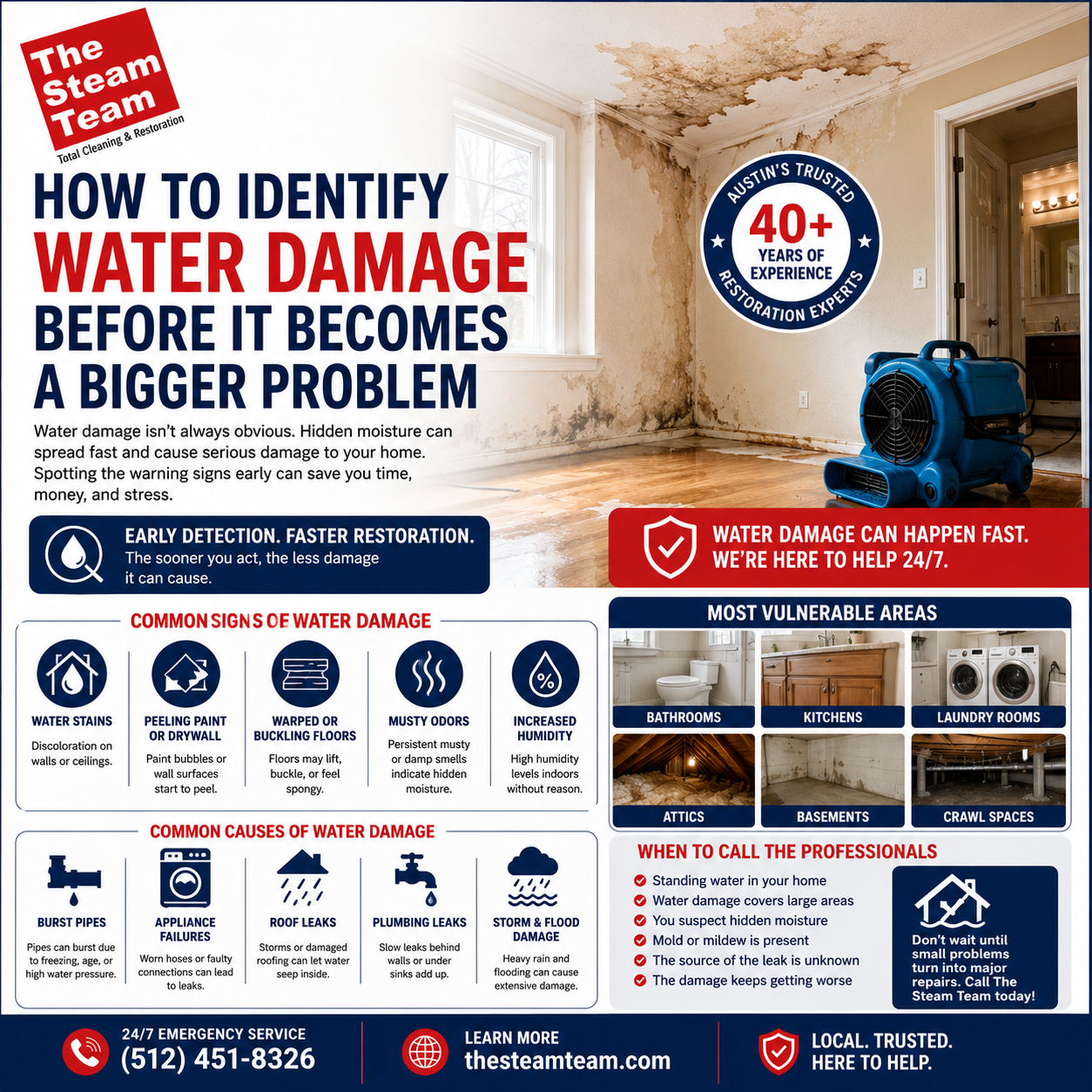
Visible indicators demanding prompt professional response include:

  • Standing water or persistent pooling on floors

  • Musty odors emanating from walls or carpets

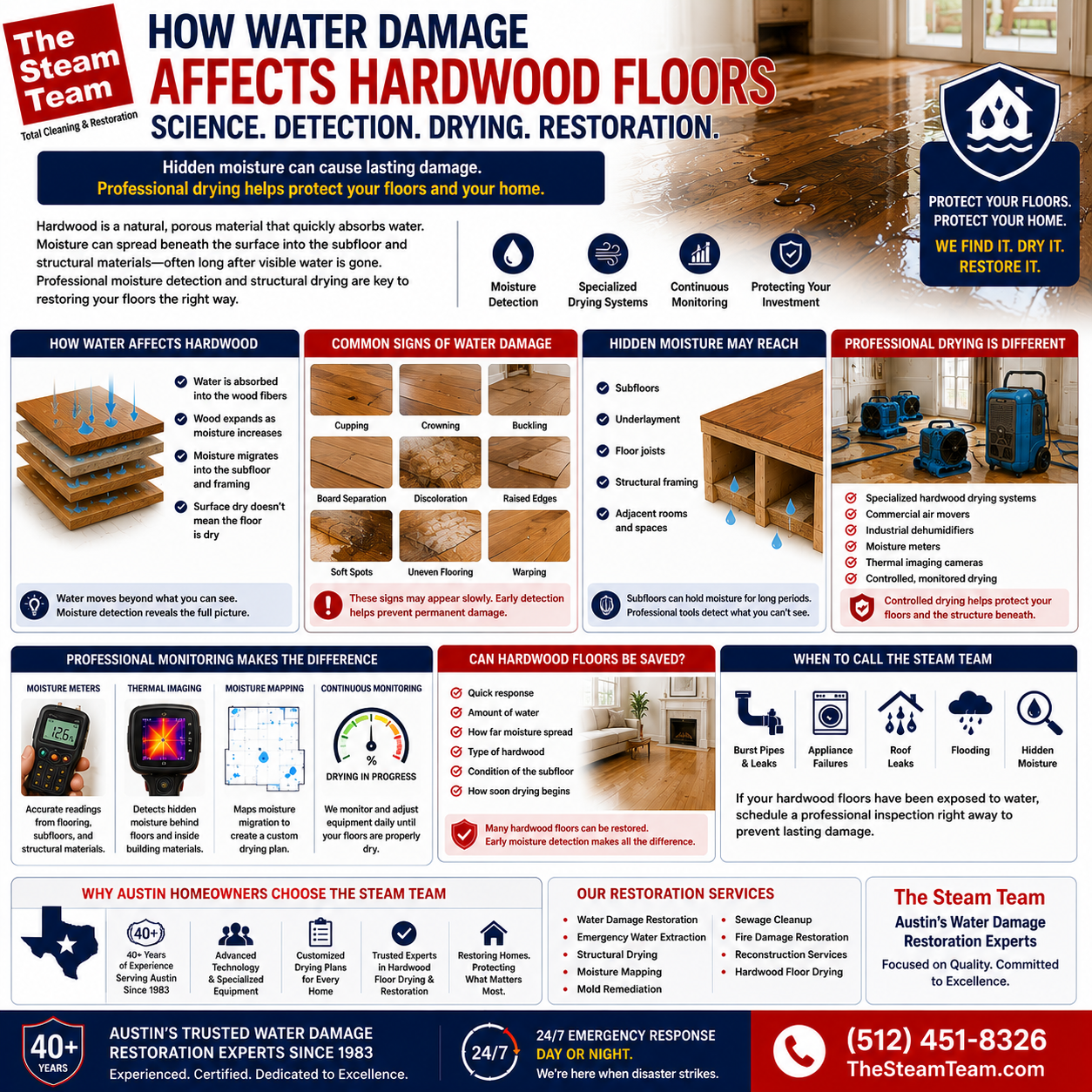
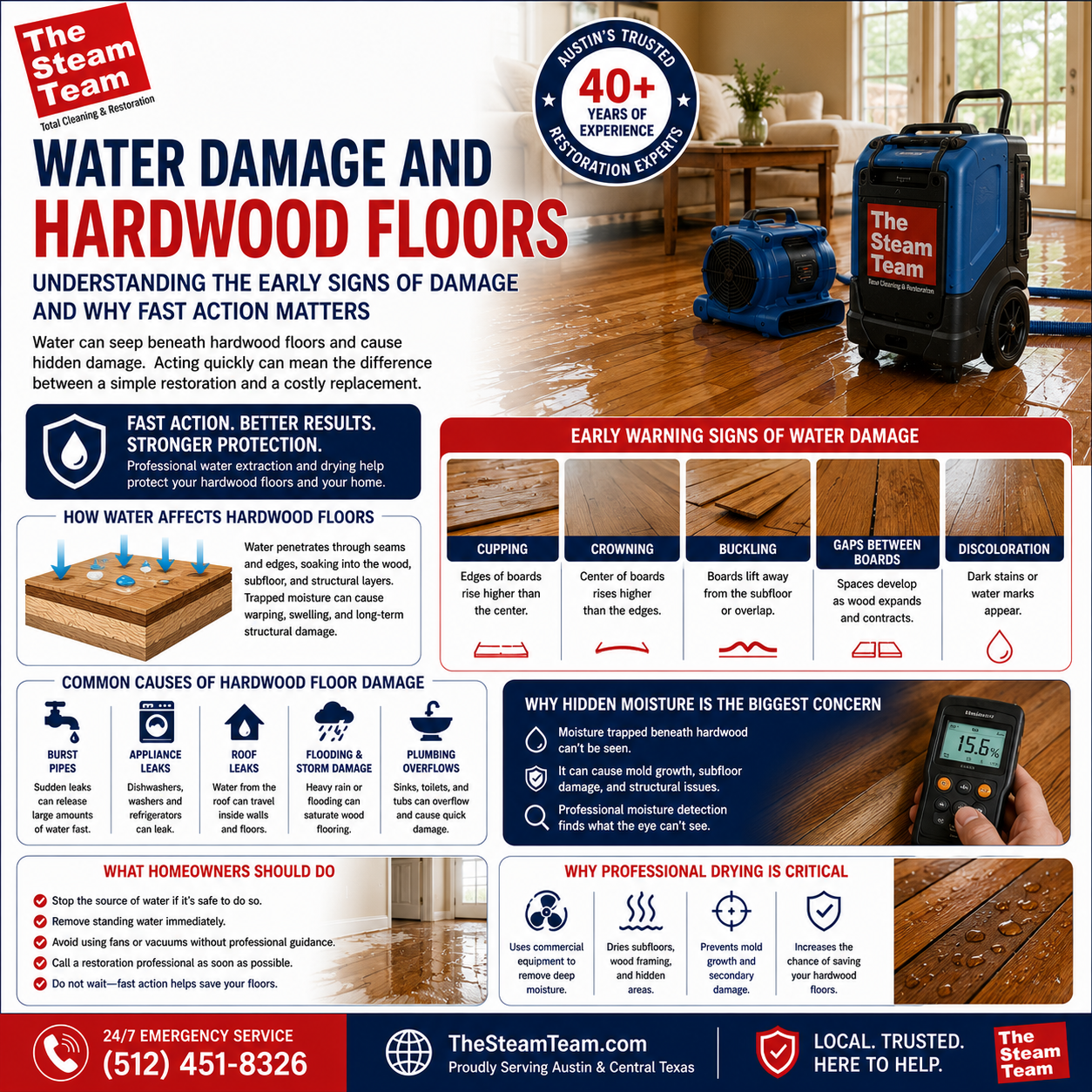
  • Warped or buckling hardwood floors and baseboards

  • Stains, discoloration, or bubbling on drywall and ceilings

These warning signs signal hidden moisture and potential mold growth, necessitating certified restoration services.

How Quickly Should Water Damage Be Addressed to Avoid Further Issues?

Water damage should be addressed within 24 to 48 hours to minimize structural compromise, mold colonization, and escalating repair costs. Rapid action by professional crews halts moisture migration, preserves material integrity, and reduces health hazards. Immediate scheduling with a 24/7 provider like The Steam Team ensures swift remediation and peace of mind.

Water intrusion in Austin demands a combination of expert intervention, advanced equipment, and local knowledge to achieve safe, thorough restoration. The Steam Team’s decades of experience, round-the-clock response capability, and commitment to honesty and quality workmanship make professional water damage restoration the most reliable solution for homeowners and businesses. For urgent service or a free estimate, call (512) 451-8326 or visit The Steam Team’s website for detailed information and next-day scheduling. Their trusted technicians stand ready to restore your property and safeguard your health.

Frequently Asked Questions

What should I do immediately after experiencing water damage?

Immediately after experiencing water damage, prioritize safety by turning off electricity and gas in affected areas. If safe, remove valuables and personal items from the water's path. Document the damage with photos for insurance purposes. Avoid using household vacuums or fans, as they can worsen the situation. Contact a professional water damage restoration service like The Steam Team as soon as possible to initiate emergency response and minimize further damage.

How long does the water damage restoration process typically take?

The duration of the water damage restoration process can vary significantly based on the extent of the damage and the size of the affected area. Generally, minor water damage can be addressed within a few days, while more extensive damage may take a week or longer. Factors influencing the timeline include the type of water involved, the complexity of repairs, and the drying time required for materials. A professional assessment will provide a more accurate estimate.

Can I handle water damage restoration myself?

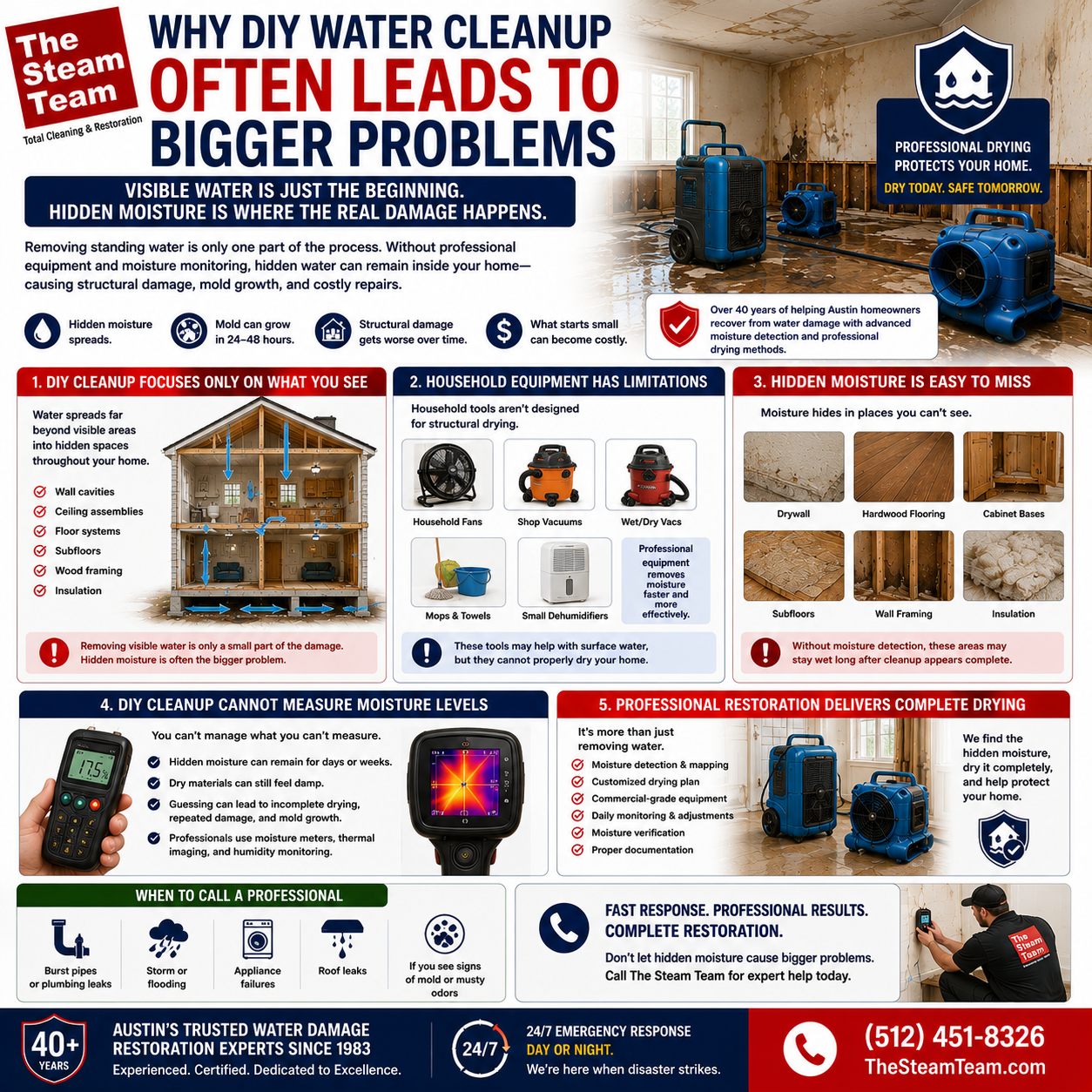
While some minor water damage can be managed by homeowners, it is generally advisable to seek professional help for significant incidents. DIY efforts may overlook hidden moisture, leading to mold growth and structural issues. Professionals have the necessary equipment, expertise, and safety protocols to ensure thorough restoration. Engaging experts not only guarantees effective remediation but also protects your property and health in the long run.

What types of water damage are considered emergencies?

Emergency water damage situations typically include incidents involving contaminated water, such as sewage backups, flooding from natural disasters, or burst pipes. These scenarios pose immediate health risks and require swift professional intervention. Additionally, any situation where water is rapidly accumulating and threatening structural integrity or personal safety should be treated as an emergency. Prompt action can prevent extensive damage and costly repairs.

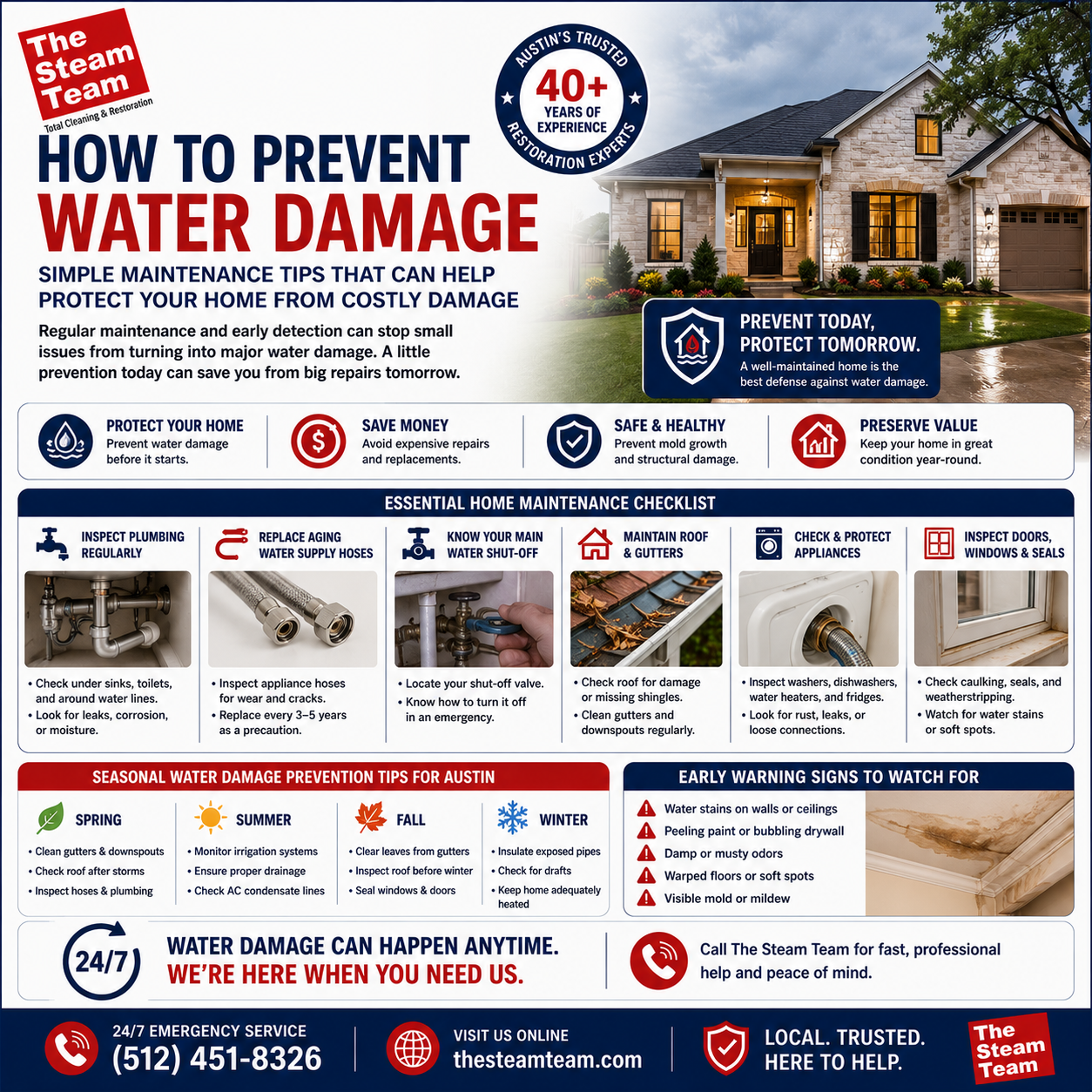
How can I prevent future water damage in my home?

Preventing future water damage involves regular maintenance and proactive measures. Ensure that gutters and downspouts are clear to direct water away from your foundation. Inspect plumbing for leaks and replace aging pipes. Install sump pumps in basements and consider waterproofing your home. Additionally, monitor humidity levels and use dehumidifiers in damp areas. Regularly check appliances and fixtures for signs of wear to catch potential issues early.

What should I look for when choosing a water damage restoration company?

When selecting a water damage restoration company, consider their experience, certifications, and customer reviews. Look for IICRC certification, which indicates adherence to industry standards. Evaluate their response time and availability, especially for emergency services. Transparency in pricing and a detailed restoration plan are also crucial. A reputable company should provide clear communication and support throughout the restoration process, ensuring you feel informed and confident in their services.

Conclusion

Professional water damage restoration in Austin is essential for safeguarding your property from the devastating effects of water intrusion. By choosing experienced technicians, you benefit from rapid response, effective mold prevention, and long-term cost savings. Understanding the importance of timely intervention empowers homeowners and businesses to make informed decisions during emergencies. For immediate assistance or to receive a free estimate, contact The Steam Team today.

Comprehensive Guide to Water Damage Restoration in AustinWhat Are the Average Cost Ranges for Water Damage Cleanup in Austin?

Mastering Water Damage Restoration Steps for Austin Residents: Your Complete Guide to Fast and Effective Recovery

Water damage restoration in Austin demands swift, professional intervention to protect homes and businesses from escalating harm and health hazards. When water intrudesβ€”whether from storms, burst pipes, or appliance leaksβ€”standing moisture can weaken structures, foster mold growth, and inflate repair costs exponentially. In this guide, you will discover why immediate action is essential for Austin properties, how The Steam Team’s seven-step restoration protocol restores your space safely, what factors drive local cost estimates, strategies for navigating insurance claims, common damage scenarios in Central Texas, the integration of mold remediation, and the reasons Austin residents trust The Steam Team’s 24/7 expertise. By following these clear, actionable steps, you can minimize disruption, protect your investment, and secure a fully dried, sanitized, and restored environment.

Why Is Immediate Action Essential for Water Damage Restoration in Austin?

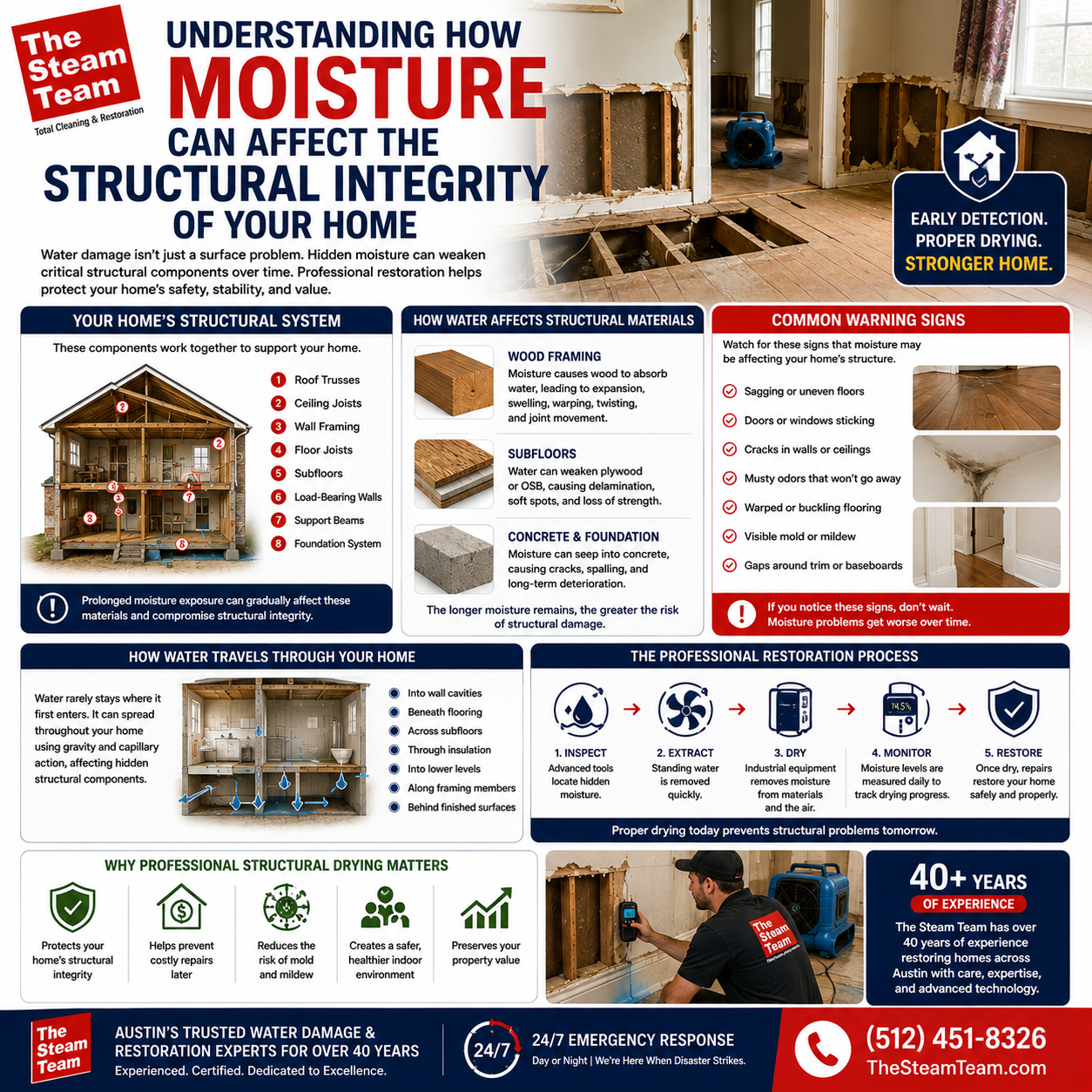
Acting within the first 24 to 48 hours after water intrusion dramatically reduces structural compromise and microbial proliferation. Rapid extraction and drying prevent wood framing from warping, drywall from delaminating, and electrical systems from corroding.

Damage that persists beyond 48 hours typically costs three times more to remediate and invites mold that can jeopardize indoor air quality and occupant health. Early mitigation also preserves finishes, carpets, and personal belongings by halting moisture migration into hidden cavities.

Austin’s combination of high humidity and periodic flash floods creates an environment where standing water can linger and accelerate deterioration. Understanding these local factors underscores why homeowners and business owners must engage a professional response team immediately to secure effective, long-term recovery.

What Are the Risks of Delaying Water Damage Cleanup?

Delaying water removal allows moisture to penetrate building materials, leading to:

  • Structural degradation of floor joists, studs, and plaster.

  • Rapid mold colonization that poses respiratory and allergic risks.

  • Corrosion of metal fasteners, wiring, and HVAC components.

Unchecked moisture intrusion also undermines insulation performance, inviting pests and increasing energy costs. Recognizing these dangers highlights the necessity of a prompt, systematic cleanup protocol.

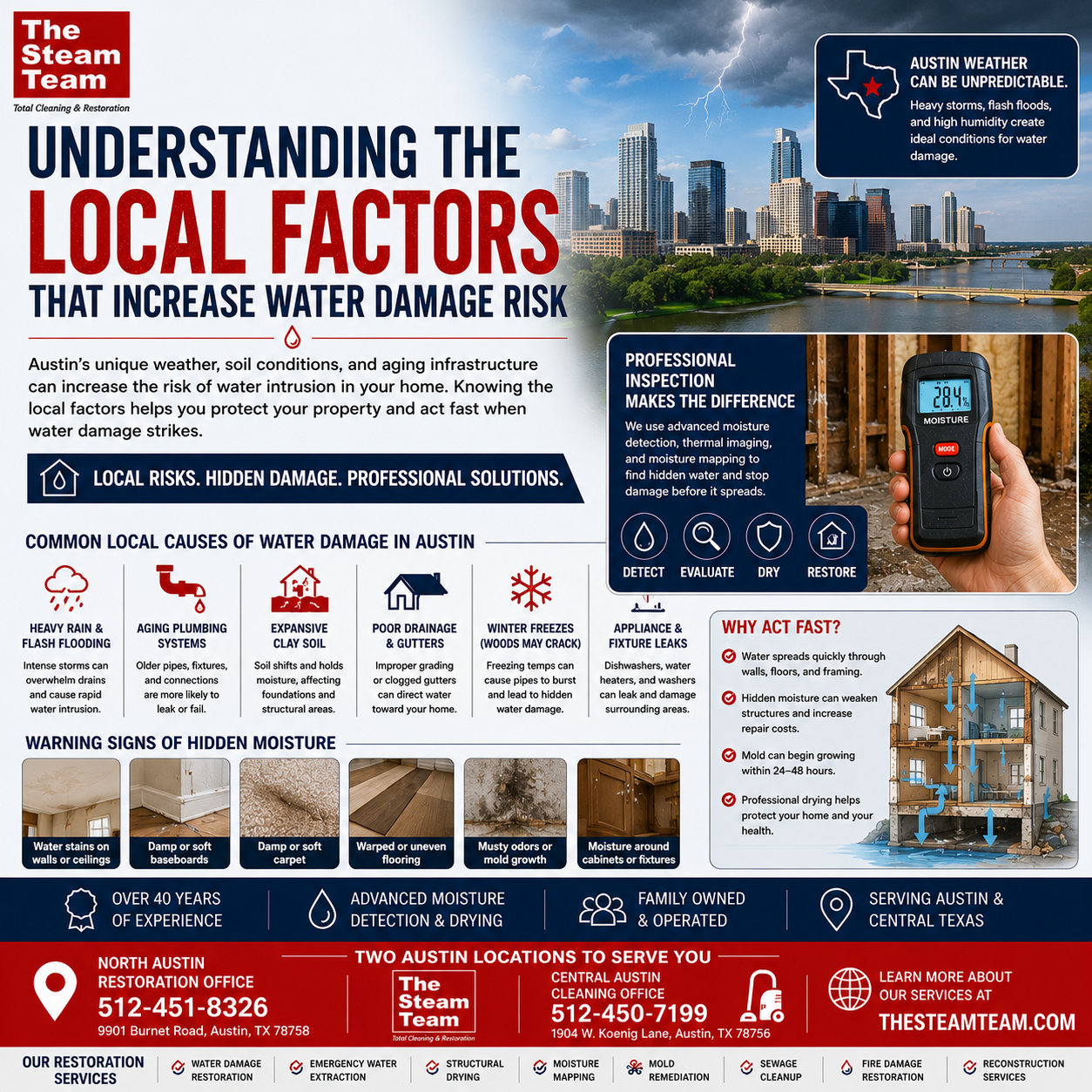
How Do Austin’s Unique Climate and Flood Risks Impact Water Damage?

Austin lies within β€œFlash Flood Alley,” where sudden downpours can inundate properties and overwhelm drainage systems. Combined with average summer humidity above 60 percent, residual moisture can persist behind walls and under flooring. Seasonal storms also introduce contaminated runoff that elevates health concerns. This climate profile demands robust dehumidification and thorough moisture mapping to ensure complete drying and prevent hidden pockets of dampness that could trigger future damage or mold outbreaks.

Austin Flood Hazard Mitigation: Citizen Awareness and Satisfaction

This paper describes citizen awareness of and satisfaction with flood hazard mitigation strategies implemented by the municipal government of Austin, Texas. Nearly four thousand self-administered questionnaires were mailed to two samples of randomly-selected addresses, one representing Austin residents as a whole and one representing Austin residents in the floodplain. The questionnaire focuses on four categories of flood mitigation strategies that affect the general public: (1) floodplain maps (and associated regulations), (2) stormwater control structures, (3) awareness campaigns, and (4) flood warning systems. The results suggest that Austin residents are generally unconcerned about flooding and unaware of many of the Cityβ€˜s flood hazard mitigation strategies. The results also indicate that Austin residents are relatively satisfied with the Cityβ€˜s efforts, although most have no strong opinion.

Living in" Flash Flood Alley": Describing Citizen Awareness and Satisfaction Regarding Flood Hazard Mitigation Programs in Austin, Texas, 2013

What Are the Key Steps in The Steam Team’s Water Damage Restoration Process?

The Steam Team’s restoration process integrates structured assessment, targeted extraction, advanced drying, and professional sanitization to return your property to pre-loss condition. Each of the seven steps is aligned with industry best practices and local building codes to ensure safety, efficiency, and compliance with IICRC guidelines.

Step 1: How Does Emergency Water Removal and 24/7 Rapid Response Work?

Emergency water removal begins with your call, after which a certified technician is dispatched around the clock. Specialized pumps and extraction units remove standing water within hours, preventing water from migrating into subfloors or wall cavities. This rapid response eliminates most free water and stabilizes humidity levels, setting the stage for detailed assessment and structural drying.

Step 2: What Happens During Water Damage Inspection and Assessment?

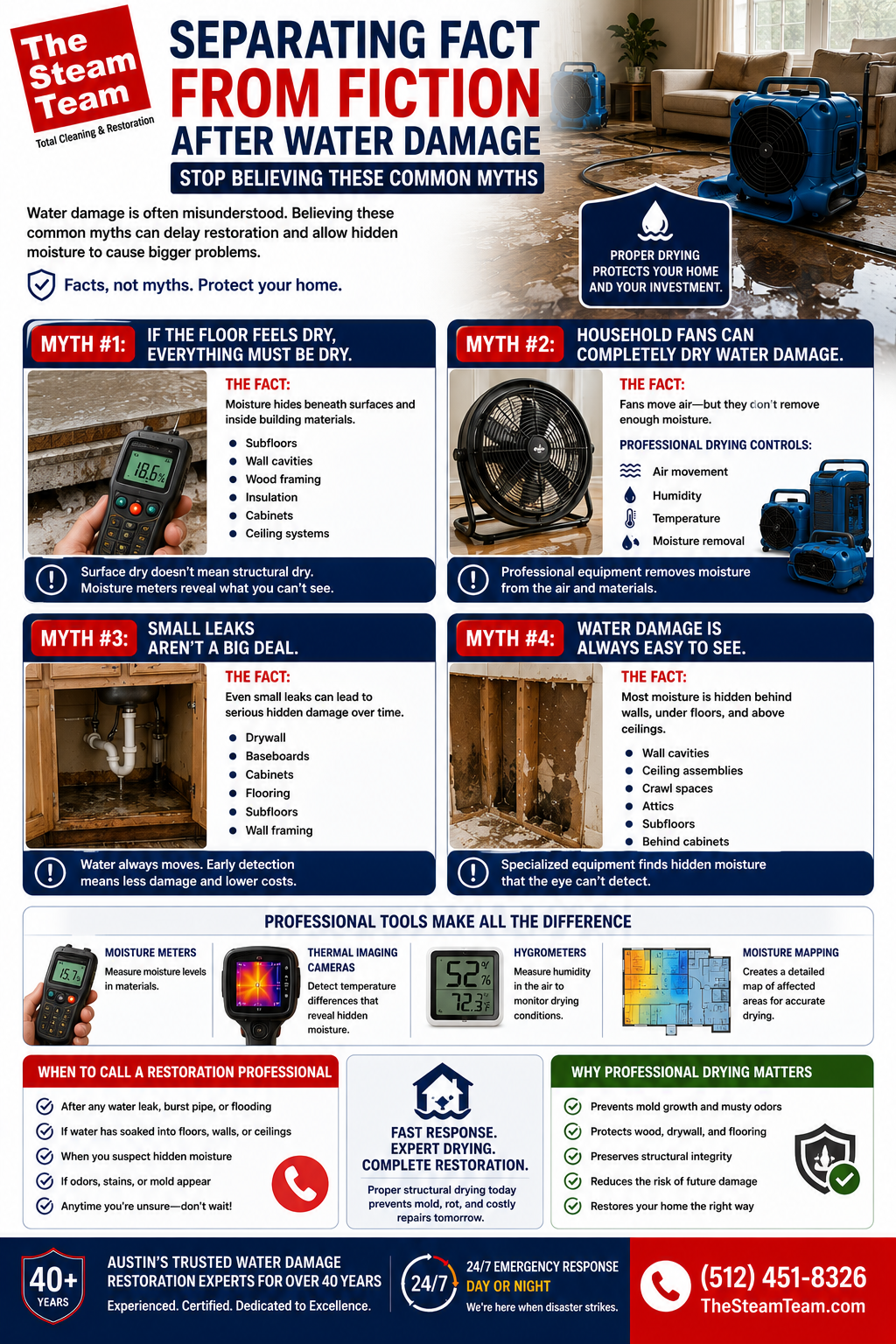
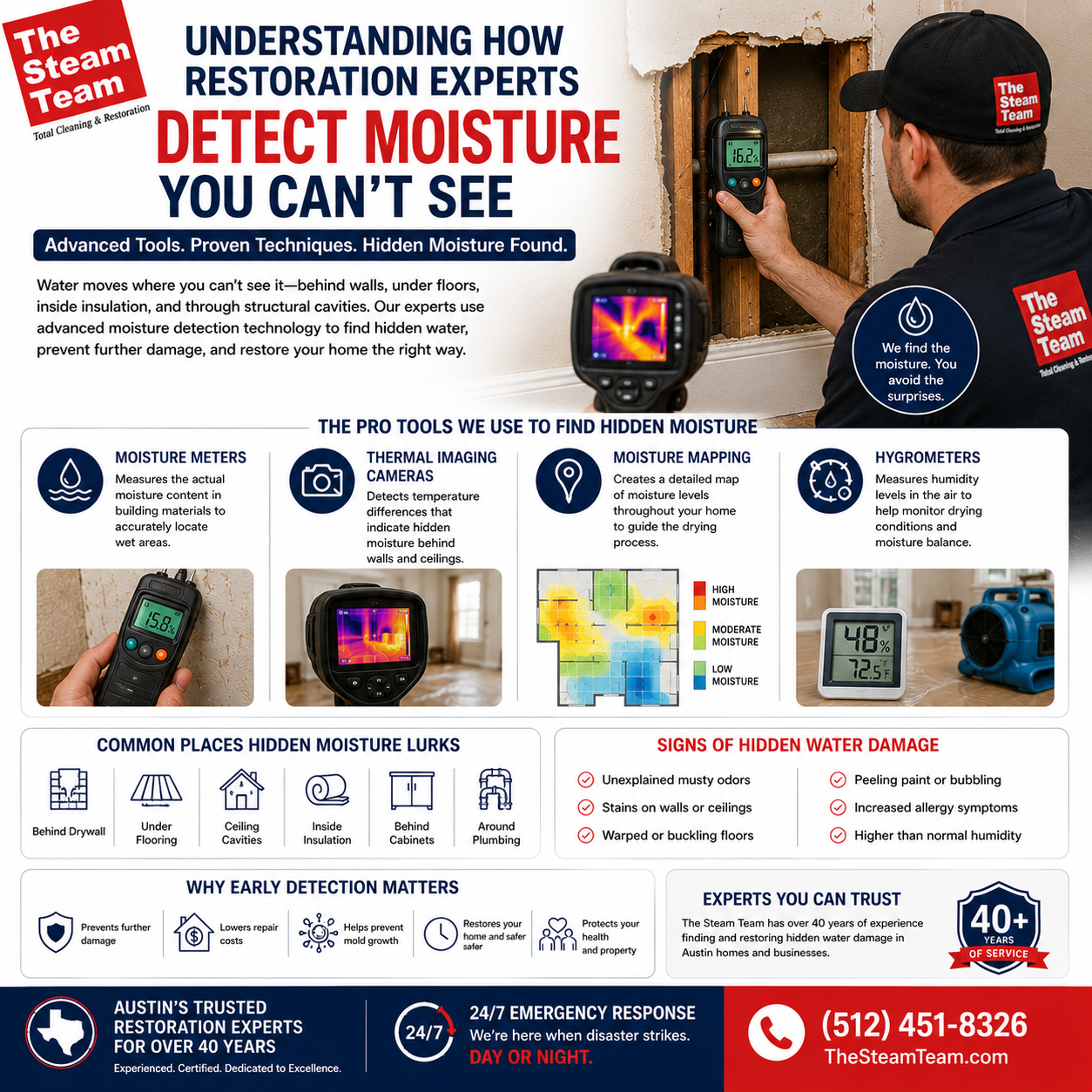
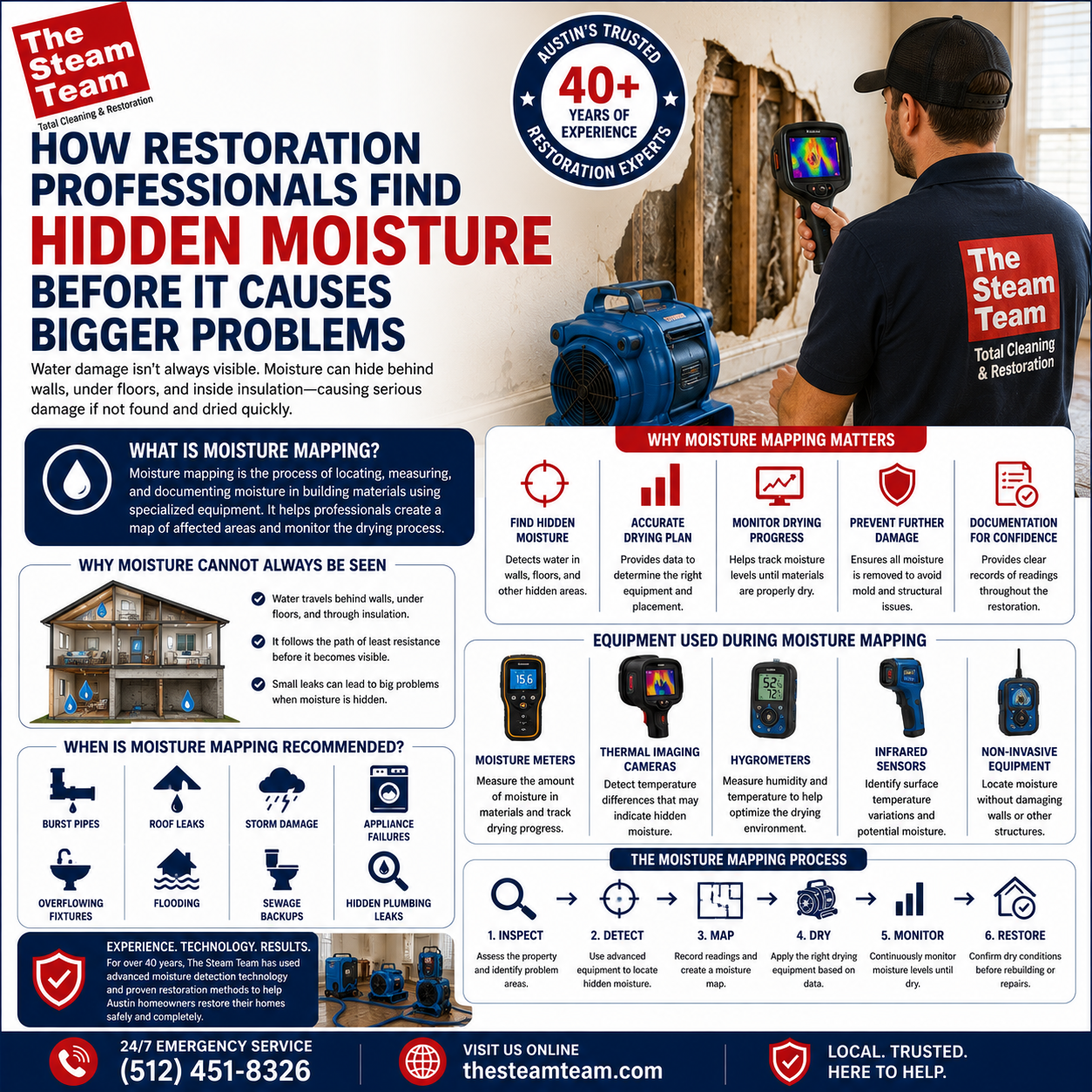
In the inspection phase, technicians employ moisture meters, thermal imaging cameras, and hygrometers to map affected areas and quantify moisture content. They identify hidden saturation zones behind walls and under flooring to develop a targeted drying plan. Documenting the extent of damage also provides an accurate baseline for insurance documentation and repair estimates.

  • Moisture meters detect water presence in wood and drywall.

  • Thermal cameras reveal temperature anomalies that indicate wet insulation.

  • Hygrometers track ambient humidity to guide dehumidifier settings.

This precise assessment ensures efficient resource allocation and minimizes unnecessary demolition.

Step 3: How Is Professional Water Extraction Performed for Different Water Types?

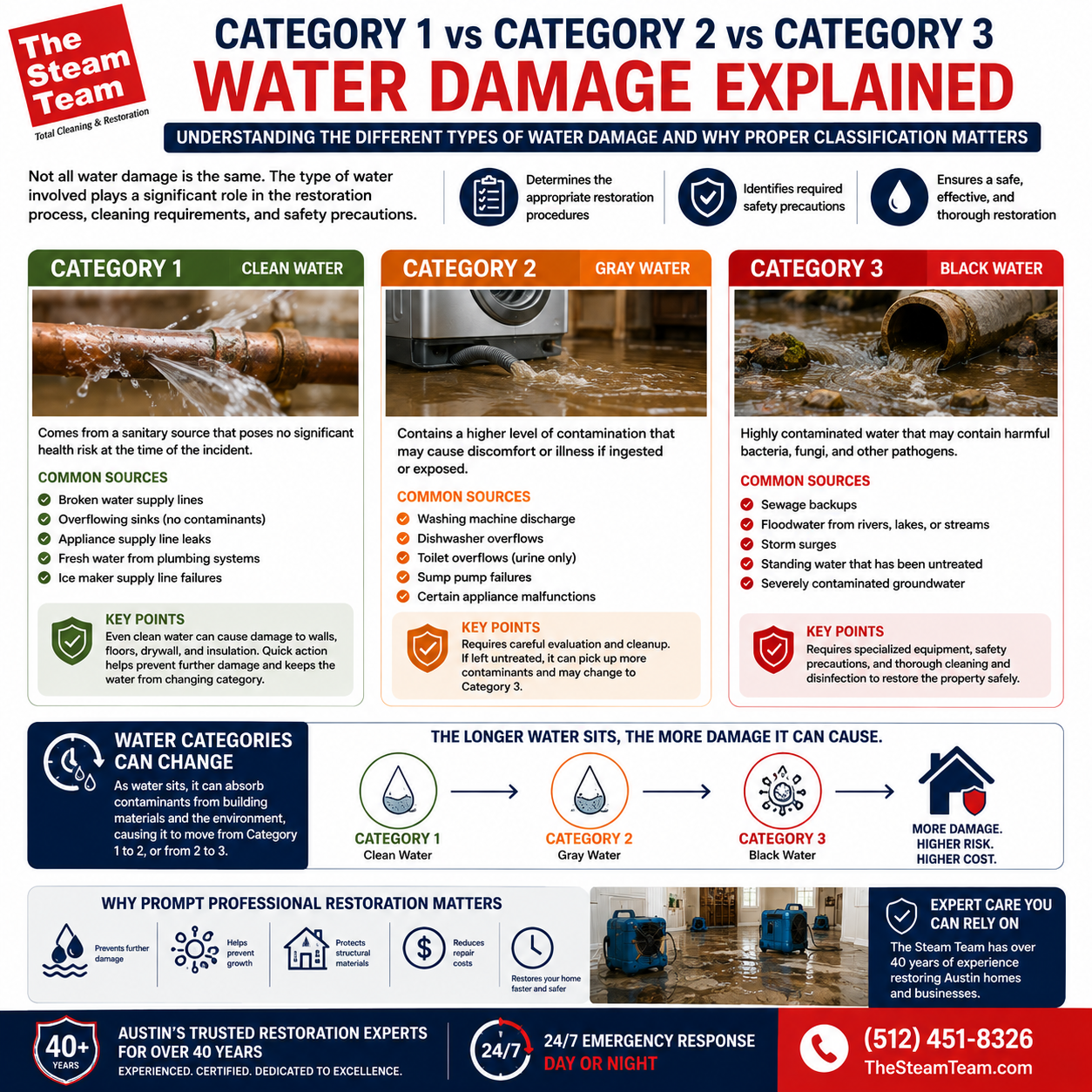
Professional extraction addresses three water categoriesβ€”clean, gray, and blackβ€”each requiring specific handling protocols:

Water Category Source Examples Contamination Risk
Clean Water Leaking faucets, rainwater Low; minimal bacteria
Gray Water Dishwasher or washing machine overflow Moderate; chemical residues possible
Black Water Sewage backup, flood runoff High; pathogens and toxins present

Handling black water triggers protective containment measures and specialized disposal to safeguard occupants. Categorization guides equipment selection and sanitation protocols.

Step 4: What Are Advanced Drying and Dehumidification Techniques?

Advanced drying uses high-velocity air movers placed strategically to create airflow beneath carpets, between studs, and across wet surfaces. Industrial dehumidifiers extract excess water vapor from air, while structural drying mats or injecti-dry systems target trapped moisture. Ongoing digital monitoring adjusts equipment placement and operating parameters until moisture readings return to acceptable levels under IICRC standards.

Step 5: How Does Cleaning, Sanitizing, and Anti-microbial Application Prevent Mold?

After moisture levels stabilize, surfaces receive thorough cleaning with professional-grade detergents and EPA-registered sanitizers. Anti-microbial coatings are applied to inhibit mold spores and bacteria. This sanitization step not only restores aesthetics and eliminates odors but also protects structural components and contents from future microbial colonization.

Step 6: Why Is Monitoring and Final Verification Critical for Complete Drying?

Daily moisture checks using calibrated probes confirm progress and validate that walls, floors, and structural elements are fully dry. Final verification involves recording and comparing moisture readings against baseline values. This documentation ensures compliance with industry standards and gives homeowners confidence that hidden moisture pockets will not compromise restoration integrity.

Step 7: When and How Is Restoration and Repair Completed?

Once drying and sanitization are certified, optional reconstruction or cosmetic repairs restore walls, floors, and fixtures. Coordination with licensed contractors covers drywall repair, painting, trim replacement, and content restoration. This comprehensive handoff returns properties to full functionality and aesthetic quality under one managed project.

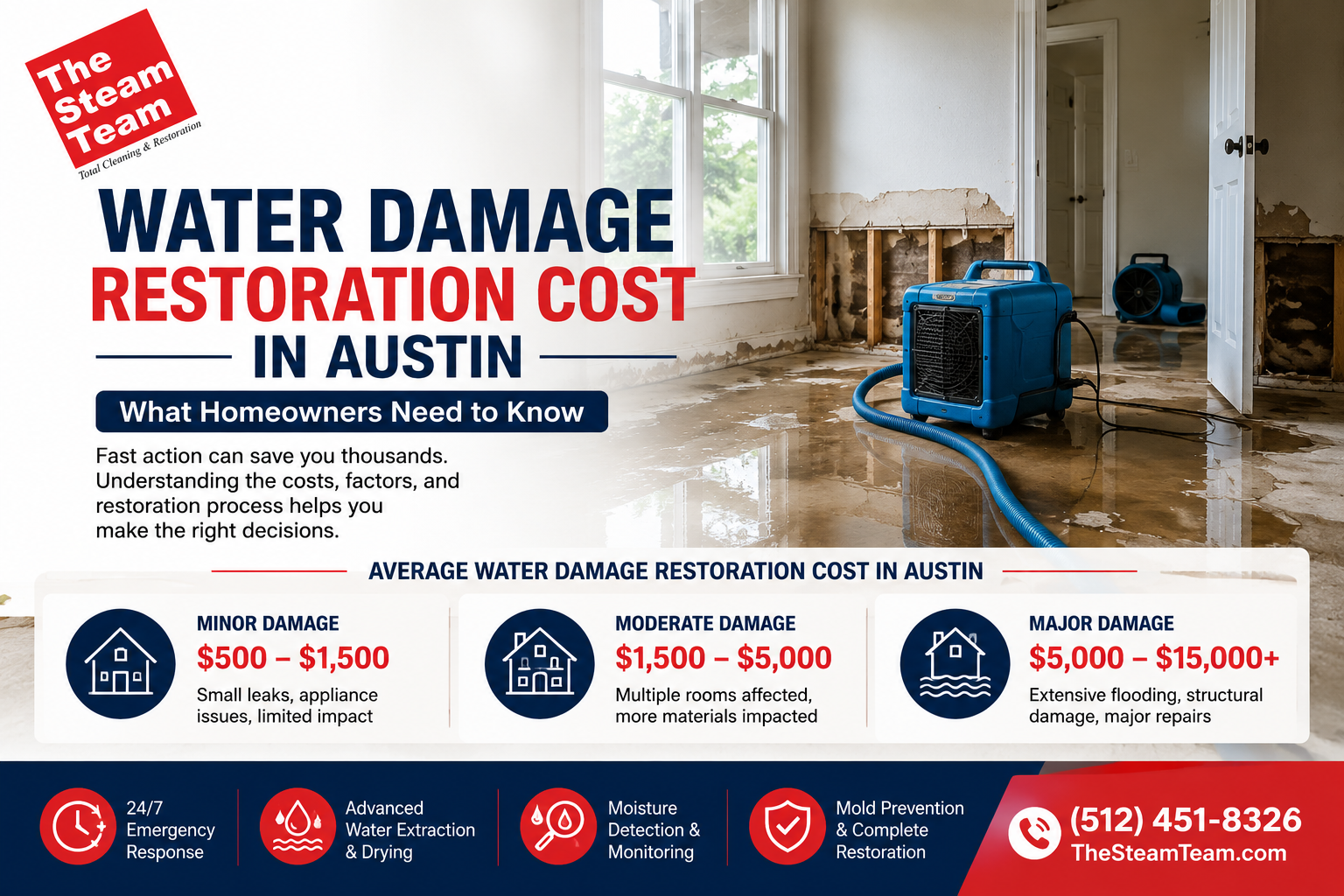
How Much Does Water Damage Restoration Cost in Austin, TX?

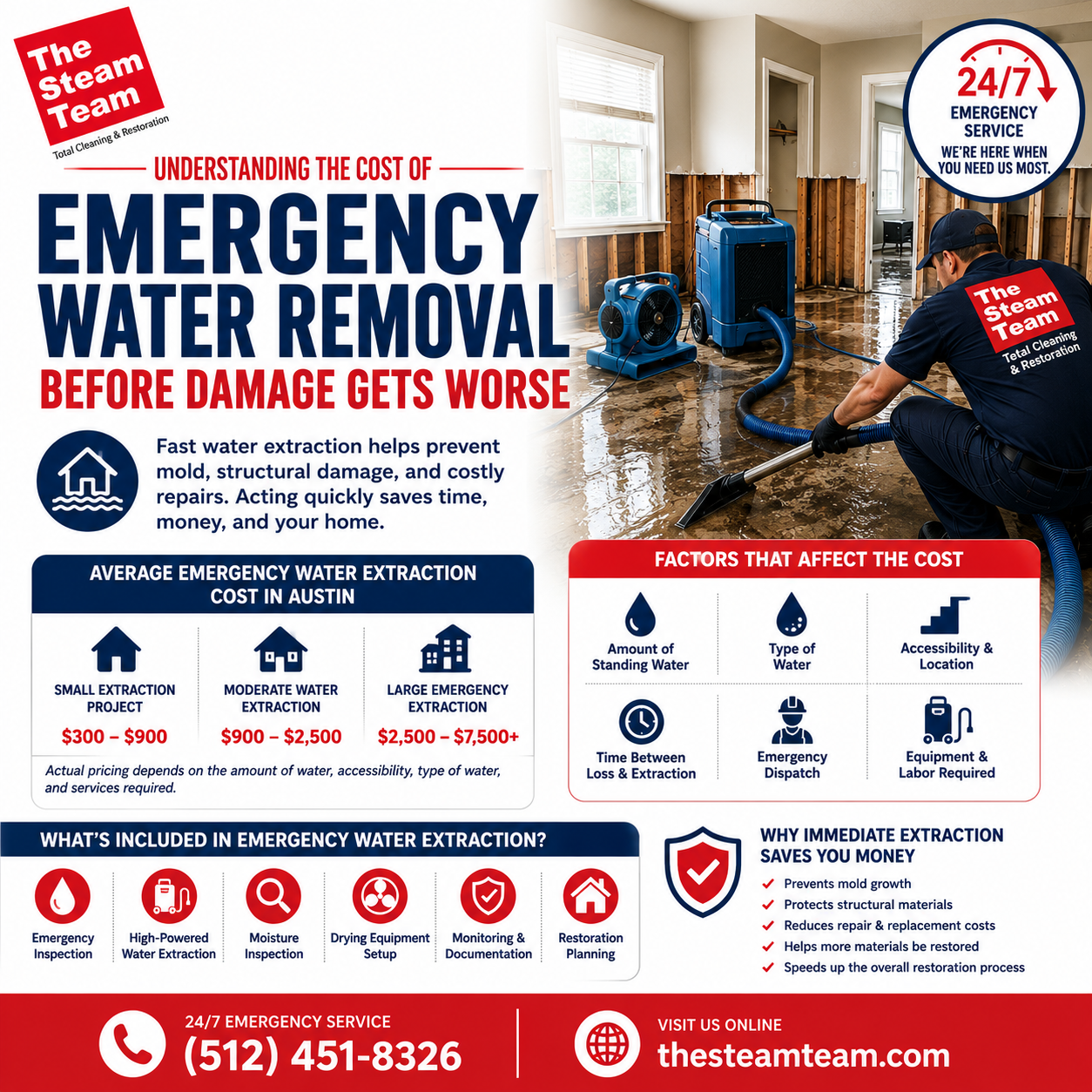
Restoration costs reflect the type of water, square footage affected, material sensitivity, and response time. Early mitigation typically reduces labor and material expenses, while extensive saturation and contamination escalate project scope. Homeowners should budget for equipment deployment, skilled labor, sanitization products, and potential rebuild costs when structural elements require replacement.

What Factors Influence Water Damage Repair Costs?

Several variables drive restoration pricing:

  • Category of water (clean, gray, black).

  • Size and accessibility of affected zones.

  • Type of building materials damaged.

  • Duration between damage occurrence and intervention.

  • Required level of dehumidification and sanitization.

Timely intervention often cuts both labor hours and equipment rental fees, delivering cost savings and a safer environment.

What Are the Average Cost Ranges for Water Damage Cleanup in Austin?

Typical mitigation rates per square foot in 2025:

Damage Category Cost per Square Foot Notes
Clean Water $3.00 – $4.00 Minimal material replacement risk
Gray Water $4.00 – $6.50 Potential sanitization needed
Black Water $7.00 – $7.50 Includes disposal and containment

These ranges exclude major reconstruction costs, which vary widely based on materials and finishes.

How Can Prompt Restoration Save You Money?

By extracting water and initiating structural drying within 24–48 hours, you prevent secondary damage such as warped flooring, mold remediation expenses, and long-term indoor air-quality issues. Early action curtails labor hours, limits equipment runtime, and reduces the likelihood of expensive demolition and rebuild cycles.

How Can Austin Residents Navigate Water Damage Insurance Claims?

Working with insurance adjusters requires detailed documentation, clear communication, and professional validation of damage extent. Understanding policy coverage, exclusions, and claim timelines empowers homeowners to secure appropriate compensation for mitigation, repairs, and replacement of damaged items.

What Documentation Is Needed for Water Damage Insurance Claims?

To streamline claims, assemble:

  1. Photographic evidence of all affected areas before cleanup begins.

  2. Moisture readings and inspection reports from certified technicians.

  3. Itemized lists of damaged personal property with approximate values.

  4. Official restoration invoices detailing labor, equipment, and materials.

  5. Copies of communication with your insurance representative.

Comprehensive records expedite claim approval and reduce disputes.

How Does The Steam Team Assist with Insurance Adjusters and Claims?

The Steam Team’s technicians prepare detailed scope-of-work reports, moisture logs, and damage assessments to support your claim. They liaise with adjusters, provide onsite demonstrations of affected areas, and offer direct billing options where policy permits. This professional backing helps ensure accurate coverage determinations and efficient settlement.

What Are Common Insurance Coverage Questions for Water Damage in Austin?

Policyholders often ask:

  • β€œDoes my policy cover flood versus pipe leaks?”

  • β€œAre mold remediation and structural drying included?”

  • β€œWhat depreciation applies to damaged materials?”

  • β€œWill additional living expenses be reimbursed during repairs?”

Understanding these common inquiries helps you prepare and negotiate coverage that aligns with your restoration needs.

What Are the Most Common Causes and Types of Water Damage in Austin?

Austin properties experience diverse water intrusion scenarios, each requiring tailored mitigation. Recognizing typical sources and damage categories enhances preparedness and informs appropriate response strategies.

What Are the Differences Between Clean, Gray, and Black Water Damage?

Water damage classifications hinge on contamination level and health risk:

Category Definition Health Concern
Clean Water From sanitary sources Low bacterial risk
Gray Water Contains chemical or organic waste Moderate microbial concern
Black Water Sewage or flood runoff High pathogen and toxin risk

This classification dictates PPE requirements, disposal methods, and sanitization protocols to protect occupants and technicians.

How Do Burst Pipes, Appliance Leaks, and Storms Cause Water Damage?

Key scenarios include:

  • Burst pipes that release large volumes of pressurized water.

  • Leaking dishwashers, washing machines, or water heaters that create hidden damp spots.

  • Heavy rain and flash floods that overwhelm gutters and foundation drainage.

Each scenario demands rapid detection and targeted extraction to prevent pooling and material saturation.

How Does Austin’s Flash Flood Alley Affect Local Properties?

Flash Flood Alley subjects many neighborhoods to abrupt inundation from heavy storms. The clay-rich soils common in Central Texas slow absorption, causing surface runoff to breach basements, crawlspaces, and landscape grading. Effective mitigation combines timely removal with grading improvements and foundation sealants to reduce recurrence risk.

How Does Mold Remediation Integrate with Water Damage Restoration?

Mold remediation is an integral component of any comprehensive water damage response because microbial colonies can develop within 24–48 hours on damp materials. By combining extraction, drying, and targeted anti-microbial treatments, restoration professionals eradicate existing mold and inhibit regrowth, safeguarding both structure and occupant health.

Why Is Mold Prevention Critical After Water Damage?

Mold spores are ubiquitous and only require moisture to thrive on cellulose-based materials. Preventing mold growth preserves indoor air quality, avoids costly removal services, and eliminates allergy or asthma triggers. A comprehensive drying and sanitization regimen halts fungal proliferation before it undermines building integrity.

What Are The Steam Team’s Mold Remediation and Prevention Methods?

The Steam Team employs these core strategies:

  • Containment of affected zones using negative-air chambers.

  • HEPA-filtered air scrubbers to capture airborne spores.

  • Surface cleaning with EPA-registered anti-microbial agents.

  • Structural drying to reduce humidity below mold-growth thresholds.

These coordinated methods ensure thorough mold removal and lasting protection.

How Can Homeowners Identify Signs of Mold Growth Early?

Early indicators include:

  • Musty or earthy odors in enclosed areas.

  • Discolored patches on drywall, wood trim, or insulation.

  • Allergy-like symptoms such as sneezing or respiratory irritation indoors.

  • Visible fungal webbing or fuzzy spots around water intrusion sites.

Prompt professional evaluation prevents concealed mold from spreading behind walls and under flooring.

Why Choose The Steam Team for Water Damage Restoration in Austin?

The Steam Team combines four decades of local expertise with a proven, full-service restoration methodology. Their 24/7 emergency response, advanced equipment, and commitment to industry standards deliver rapid, reliable recovery that safeguards property value and occupant well-being.

What Local Expertise and Experience Does The Steam Team Offer?

Drawing on over 40 years of service in Austin and Central Texas, The Steam Team:

  • Understands regional climate patterns and flood behaviors.

  • Maintains relationships with licensed contractors for seamless repairs.

  • Continuously updates protocols to adhere to IICRC guidelines.

This deep local insight ensures efficient, code-compliant restoration.

How Does 24/7 Emergency Service Benefit Austin Residents?

Round-the-clock availability means that standing water never sits untreated. Rapid deployment reduces material saturation, limits secondary damage, and minimizes health risks. Immediate action also aligns with insurance guidelines for mitigation within 48 hours, improving claim outcomes and cost control.

What Certifications and Professional Standards Does The Steam Team Follow?

Technicians adhere to these standards and practices:

  • IICRC water damage restoration and mold remediation certifications.

  • EPA-approved sanitation and anti-microbial applications.

  • OSHA compliance for worker safety and containment protocols.

Rigorous training and adherence to professional benchmarks deliver consistent, high-quality results.

How Can You Request a Quote or Schedule Water Damage Restoration?

Contact The Steam Team’s customer care line any hour for an on-site evaluation and detailed restoration estimate. Their staff guides you through the mitigation process, insurance documentation, and project scheduling to restore your property quickly and effectively.

Four decades of local service, coupled with advanced extraction, drying, and sanitization techniques, make The Steam Team the preferred partner for Austin water damage recovery. By prioritizing rapid response, thorough assessment, and professional standards, they ensure a safer, healthier environment and restore peace of mind after any water intrusion. Contact The Steam Team today to secure expert assistance and protect your most valuable assets.

Frequently Asked Questions

What should I do immediately after discovering water damage?

Upon discovering water damage, your first step should be to ensure safety by turning off electricity in affected areas. If possible, stop the source of water intrusion, such as shutting off the main water supply. Next, document the damage with photos for insurance purposes. Avoid using household fans or heaters, as they can spread moisture. Contact a professional water damage restoration service like The Steam Team to initiate emergency response and prevent further damage.

How can I prevent water damage in my home?

Preventing water damage involves regular maintenance and proactive measures. Inspect your plumbing for leaks, and ensure that appliances like washing machines and dishwashers are in good condition. Clean gutters and downspouts to prevent overflow, and consider installing a sump pump in basements prone to flooding. Additionally, ensure proper grading around your home to direct water away from the foundation. Regularly check for signs of moisture or mold to catch issues early.

What are the long-term effects of water damage on a property?

Long-term effects of water damage can be severe and costly. Prolonged exposure to moisture can lead to structural damage, including weakened foundations and compromised framing. Mold growth can develop within 24-48 hours, posing health risks and necessitating expensive remediation. Additionally, water damage can lead to persistent odors, damage to personal belongings, and increased energy costs due to compromised insulation. Addressing water damage promptly is crucial to mitigate these long-term consequences.

How can I identify hidden water damage in my home?

Identifying hidden water damage requires vigilance and attention to detail. Look for signs such as water stains on walls or ceilings, peeling paint, or warped flooring. Musty odors can indicate mold growth, while increased humidity levels may suggest hidden leaks. Use a moisture meter to check for elevated moisture levels in walls and floors. If you suspect hidden damage, consider hiring a professional to conduct a thorough inspection using specialized equipment.

What role does insurance play in water damage restoration?

Insurance plays a critical role in water damage restoration by providing financial coverage for repairs and mitigation efforts. Homeowners should review their policies to understand what types of water damage are covered, such as sudden leaks versus gradual damage. Proper documentation of the damage and restoration process is essential for filing claims. Working with a restoration company can help streamline the claims process, ensuring that all necessary documentation is provided to the insurance adjuster.

Are DIY water damage repairs effective?

While some minor water damage repairs can be handled DIY, such as drying out small areas or replacing minor fixtures, most situations require professional intervention. DIY efforts may not adequately address underlying issues, such as hidden moisture or mold growth, leading to further damage. Professionals have the expertise and equipment to ensure thorough drying, sanitization, and restoration, which is crucial for preventing long-term problems. It's often more cost-effective to hire experts than to risk inadequate repairs.

How can I ensure my restoration service is reputable?

To ensure your restoration service is reputable, look for certifications from recognized organizations like the IICRC. Check online reviews and testimonials from previous clients to gauge their experiences. Ask for references and verify their insurance and licensing. A reputable company should provide a clear outline of their services, pricing, and timelines. Additionally, inquire about their experience with similar water damage situations to ensure they have the necessary expertise to handle your specific needs.

Conclusion

Swift and professional water damage restoration is crucial for Austin residents to mitigate risks and protect property value. By understanding the unique challenges posed by local climate and employing a structured restoration process, homeowners can ensure a safe and healthy environment. Trusting The Steam Team for expert assistance not only expedites recovery but also enhances peace of mind during a stressful time. Reach out today to schedule your evaluation and safeguard your home from future water damage.