Is It Safe to Stay in Your Home During Restoration?
/Is It Safe to Stay in Your Home During Restoration?
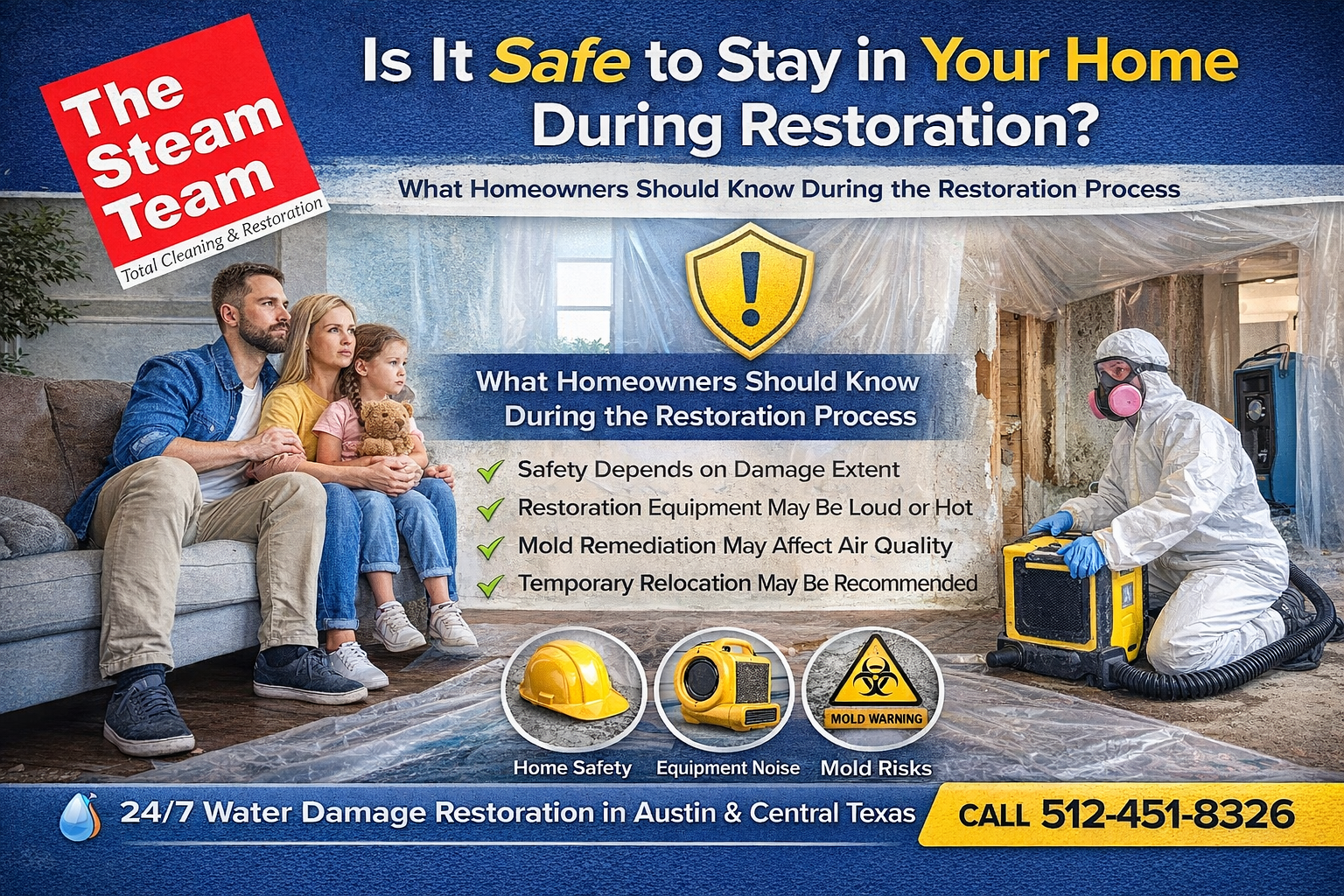
What Homeowners Should Know During the Restoration Process
When water damage occurs in a home, restoration work often begins quickly to prevent additional structural damage and mold growth. During this process, homeowners frequently ask whether it is safe to remain inside the property while restoration work is underway.
The answer depends on several factors, including the extent of the damage, the areas affected, and the type of restoration work required.
Understanding whether it is safe to stay in your home during restoration in Austin helps homeowners make informed decisions during the recovery process.
The Steam Team has been helping Austin homeowners restore properties after water damage since 1983, providing professional water damage restoration, structural drying, and mold remediation services throughout Central Texas.
When It May Be Safe to Stay in Your Home
In many cases, homeowners can safely remain in their homes during restoration, especially when the damage is limited to a small area.
It may be safe to stay when:
β’ Water damage is confined to one room or area
β’ Restoration equipment can operate without affecting daily living spaces
β’ There are no structural safety concerns
β’ The water damage involves clean water sources
Professional restoration teams often isolate affected areas to allow homeowners to continue living in other parts of the home.
Situations Where Temporary Relocation May Be Recommended
In some cases, restoration professionals may recommend temporarily leaving the home.
This may occur when:
β’ Large areas of the home are affected by water damage
β’ Mold remediation is required
β’ Contaminated water (Category 3) is present
β’ Structural repairs are necessary
β’ Electrical systems are compromised
Temporary relocation helps ensure the safety of occupants while restoration work is completed.
Why Restoration Equipment Can Affect Living Conditions
Water damage restoration requires specialized equipment that may run continuously during the drying process.
Common equipment used during restoration includes:
β’ High-powered air movers
β’ Industrial dehumidifiers
β’ Air filtration systems
β’ Moisture monitoring devices
These machines are designed to remove moisture quickly but can produce noise and heat while operating.
Some homeowners may find it uncomfortable to remain in the home during this process.
Mold Remediation and Indoor Air Quality
If mold develops after water damage, professional remediation may be required.
During mold remediation, technicians often set up containment barriers and air filtration systems to prevent mold spores from spreading.
Because mold spores can affect indoor air quality, temporary relocation may be recommended while remediation work is performed.
Homes in Austin, Round Rock, and Cedar Park sometimes require mold remediation following flooding or plumbing leaks.
Safety Considerations During Restoration
Several safety factors should be considered during restoration work.
These include:
β’ Electrical hazards from water exposure
β’ Structural damage to floors or ceilings
β’ Exposure to contaminated water
β’ Airborne particles during demolition or drying
Professional restoration teams evaluate these risks before recommending whether occupants can remain in the home.
How Restoration Teams Protect Occupants
Professional restoration companies take steps to minimize disruption and maintain safety during the restoration process.
Protective measures may include:
β’ Containing affected areas with plastic barriers
β’ Using air filtration equipment
β’ Monitoring humidity and air quality
β’ Removing hazardous materials safely
These measures help protect both occupants and restoration technicians.
How Long Restoration Usually Takes
Restoration timelines depend on the severity of the damage.
Typical timelines include:
β’ Water extraction: several hours
β’ Structural drying: 2β4 days
β’ Repairs and restoration: several days to weeks depending on damage
In minor cases, homeowners may remain in the home throughout the process.
Tips for Homeowners During Restoration
If restoration work is being performed in your home, the following tips may help make the process easier.
Homeowners should:
β’ Follow safety instructions provided by restoration technicians
β’ Avoid entering contained work areas
β’ Keep children and pets away from restoration equipment
β’ Maintain ventilation where possible
Communication with the restoration team helps ensure the process runs smoothly.
FAQ: Staying Home During Restoration
Is it safe to stay in a house during water damage restoration?
In many cases it is safe if the damage is limited and restoration work does not create safety risks.
When should homeowners leave during restoration?
Temporary relocation may be recommended when mold remediation, contaminated water cleanup, or structural repairs are required.
Is restoration equipment dangerous?
Restoration equipment is generally safe but may produce noise, heat, and airflow that can be uncomfortable.
How long does restoration equipment stay in the home?
Drying equipment typically runs for 2β4 days, depending on moisture levels.
Can mold remediation affect indoor air quality?
Yes. Mold remediation may temporarily affect air quality, which is why containment systems and air filtration are used.
Why Austin Homeowners Trust The Steam Team
β’ Serving Austin since 1983
β’ Certified water damage restoration technicians
β’ Advanced structural drying equipment
β’ Professional mold remediation services
β’ Trusted across Central Texas
Our team works closely with homeowners to ensure safe and efficient restoration.
Need Water Damage Restoration in Austin?
If your home has experienced water damage, professional restoration can help protect your property and prevent further damage.
The Steam Team provides water damage restoration, structural drying, and mold remediation services in Austin, helping homeowners restore their homes safely.
π Call 512-451-8326 for assistance
Serving Austin, Round Rock, Cedar Park, Georgetown, and surrounding Central Texas communities.