Ceiling Water Damage β€” Causes, Risks, and Repair Options

Ceiling Water Damage: Causes, Risks, and Repair Options

Understanding Ceiling Leaks and Water Damage

Ceiling water damage is a common problem for homeowners in Austin. Water stains, sagging drywall, and dripping ceilings can appear suddenly after plumbing leaks, roof damage, or severe storms.

Even small leaks can lead to significant structural damage if not addressed quickly. Moisture trapped above ceilings can weaken drywall, damage insulation, and create ideal conditions for mold growth.

Understanding the causes and repair options for ceiling water damage in Austin homes helps homeowners take quick action and prevent costly structural repairs.

The Steam Team has been helping Austin homeowners restore properties after water damage since 1983, providing professional water extraction, structural drying, and restoration services throughout Central Texas.

Common Causes of Ceiling Water Damage

Ceiling damage usually occurs when water leaks from areas above the ceiling structure.

Common causes include:

β€’ Roof leaks caused by storms or damaged shingles
β€’ Burst or leaking pipes in upper floors
β€’ Plumbing leaks from bathrooms or kitchens
β€’ Overflowing bathtubs or sinks
β€’ HVAC condensation issues
β€’ Water heater leaks in attic spaces

Homes in Austin, Round Rock, and Cedar Park often experience roof-related leaks during heavy rainstorms, which can lead to ceiling water damage.

Early Signs of Ceiling Water Damage

Water damage often begins with subtle warning signs.

Homeowners may notice:

β€’ Yellow or brown water stains on ceilings
β€’ Paint bubbling or peeling
β€’ Damp spots near light fixtures
β€’ Musty odors coming from ceiling areas
β€’ Small cracks or discoloration

Identifying these early signs allows homeowners to repair the problem before the ceiling structure becomes weakened.

When Ceiling Water Damage Becomes Dangerous

In some cases, ceiling water damage can create safety hazards.

Severe water damage may cause:

β€’ Ceiling drywall to sag or collapse
β€’ Electrical hazards near ceiling fixtures
β€’ Mold growth in insulation and drywall
β€’ Structural damage to ceiling joists

If the ceiling begins to sag or bulge, homeowners should avoid standing underneath the area and contact restoration professionals immediately.

How Water Spreads Through Ceiling Structures

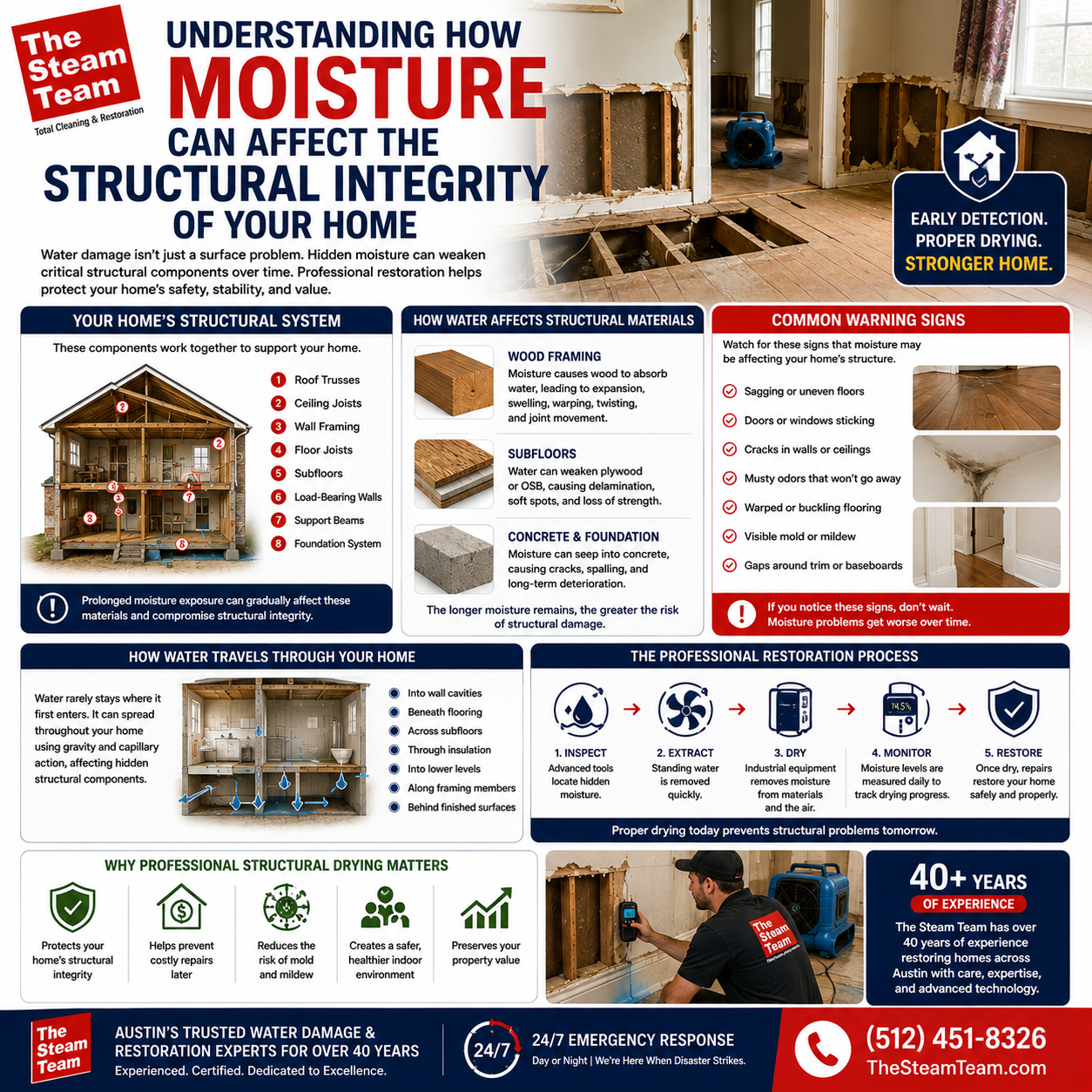
Water entering the ceiling does not always stay in one location.

Moisture can spread through:

β€’ Insulation above the ceiling
β€’ Wooden framing and ceiling joists
β€’ Drywall panels
β€’ Electrical fixtures and wiring

This means the visible stain may not always represent the full extent of the damage.

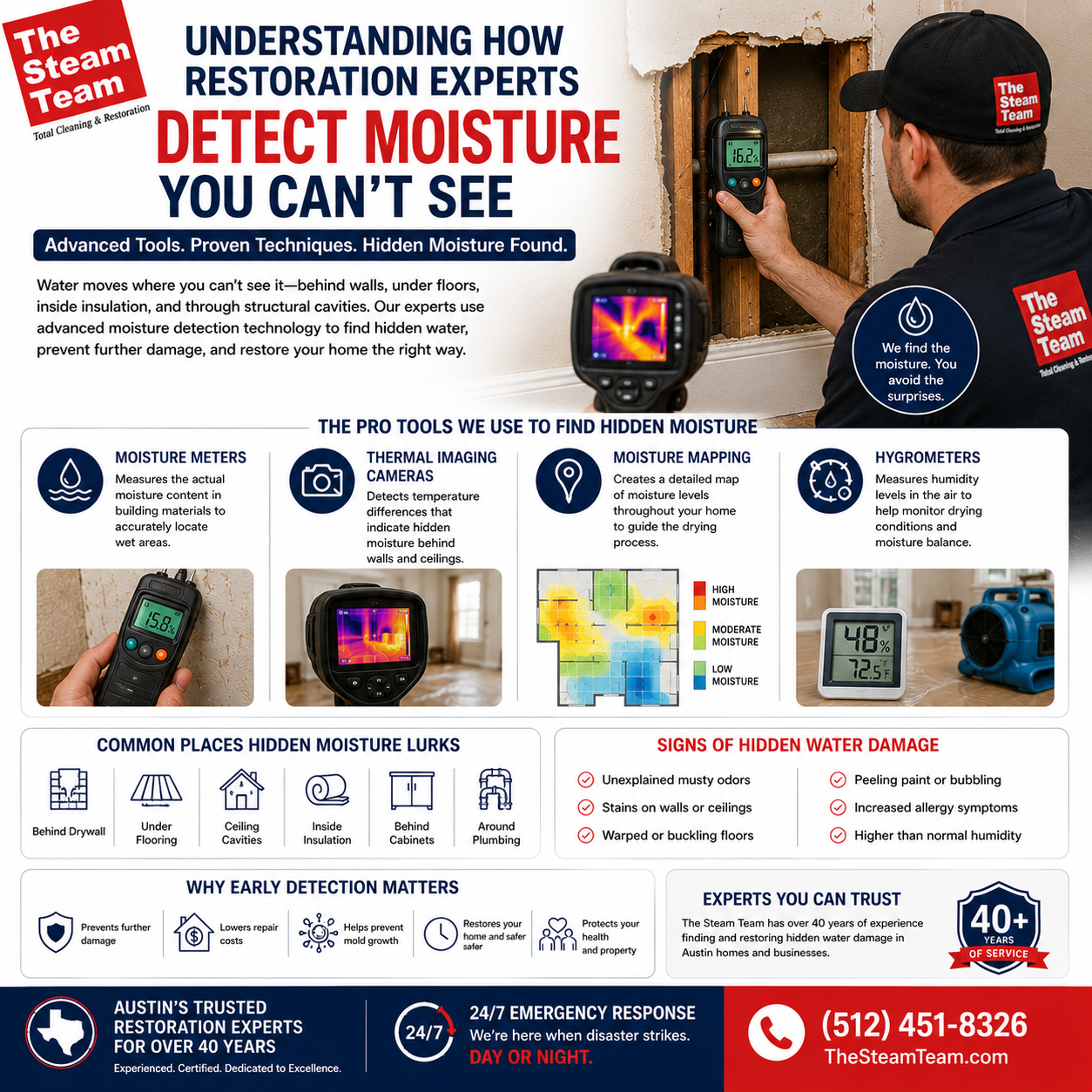
Professional moisture detection tools help identify hidden moisture inside ceiling cavities.

Repair Options for Ceiling Water Damage

The best repair approach depends on the severity of the damage.

Minor Ceiling Water Damage

If the damage is minimal and the water source is resolved quickly, repairs may involve:

β€’ Drying the affected area
β€’ Repainting stained surfaces
β€’ Replacing small drywall sections

Proper drying is essential to prevent mold growth.

Moderate Ceiling Damage

If drywall becomes saturated or begins weakening, repairs may include:

β€’ Removing damaged drywall sections
β€’ Drying structural framing and insulation
β€’ Installing new drywall panels
β€’ Repainting the repaired area

Professional drying equipment is often required to remove moisture trapped inside ceiling cavities.

Severe Ceiling Damage

In cases of major flooding or structural damage, larger repairs may be necessary.

These repairs may involve:

β€’ Removing large sections of drywall
β€’ Replacing insulation
β€’ Repairing framing or support structures
β€’ Full ceiling reconstruction

Restoration professionals can assess the extent of damage and recommend the best repair solution.

Preventing Mold After Ceiling Water Damage

Ceiling leaks often create conditions where mold can develop quickly.

Mold may begin growing within 24–48 hours if moisture remains inside drywall or insulation.

Preventative steps include:

β€’ Immediate water removal
β€’ Professional structural drying
β€’ Proper ventilation
β€’ Removing saturated materials

Addressing moisture quickly helps reduce the risk of mold contamination.

What to Do If You Notice a Ceiling Leak

If water stains or leaks appear on the ceiling, homeowners should take the following steps:

  1. Identify the source of the leak if possible

  2. Move furniture and belongings away from the area

  3. Place containers under dripping water

  4. Turn off electricity near affected areas if necessary

  5. Contact a water damage restoration professional

Quick response helps prevent further damage to the home.

FAQ: Ceiling Water Damage

What causes water stains on ceilings?

Water stains are usually caused by roof leaks, plumbing leaks, or overflowing fixtures from upper floors.

Can ceiling water damage be repaired?

Yes. Minor damage may require drying and repainting, while severe damage may require drywall replacement.

Is ceiling water damage dangerous?

Severe water damage can weaken ceiling materials and create collapse risks if not repaired.

Can ceiling leaks cause mold?

Yes. Moisture trapped inside ceilings can lead to mold growth if not dried quickly.

Should homeowners repair ceiling water damage themselves?

Minor cosmetic repairs may be possible, but significant water damage often requires professional restoration.

Why Austin Homeowners Trust The Steam Team

β€’ Serving Austin since 1983
β€’ Certified water damage restoration technicians
β€’ Advanced moisture detection equipment
β€’ Professional structural drying services
β€’ Trusted across Central Texas

Our team helps homeowners identify water leaks, dry structures, and repair damaged ceilings safely.

Need Ceiling Water Damage Repair in Austin?

If your ceiling shows signs of water damage, addressing the issue quickly can prevent larger structural problems.

The Steam Team provides professional water damage restoration in Austin, helping homeowners locate leaks, dry structures, and repair damaged ceilings.

πŸ“ž Call 512-451-8326 for assistance

Serving Austin, Round Rock, Cedar Park, Georgetown, and surrounding Central Texas communities.

How Insurance Claims Work for Water Damage in Austin

How Insurance Claims Work for Water Damage in Austin

Understanding the Water Damage Insurance Process

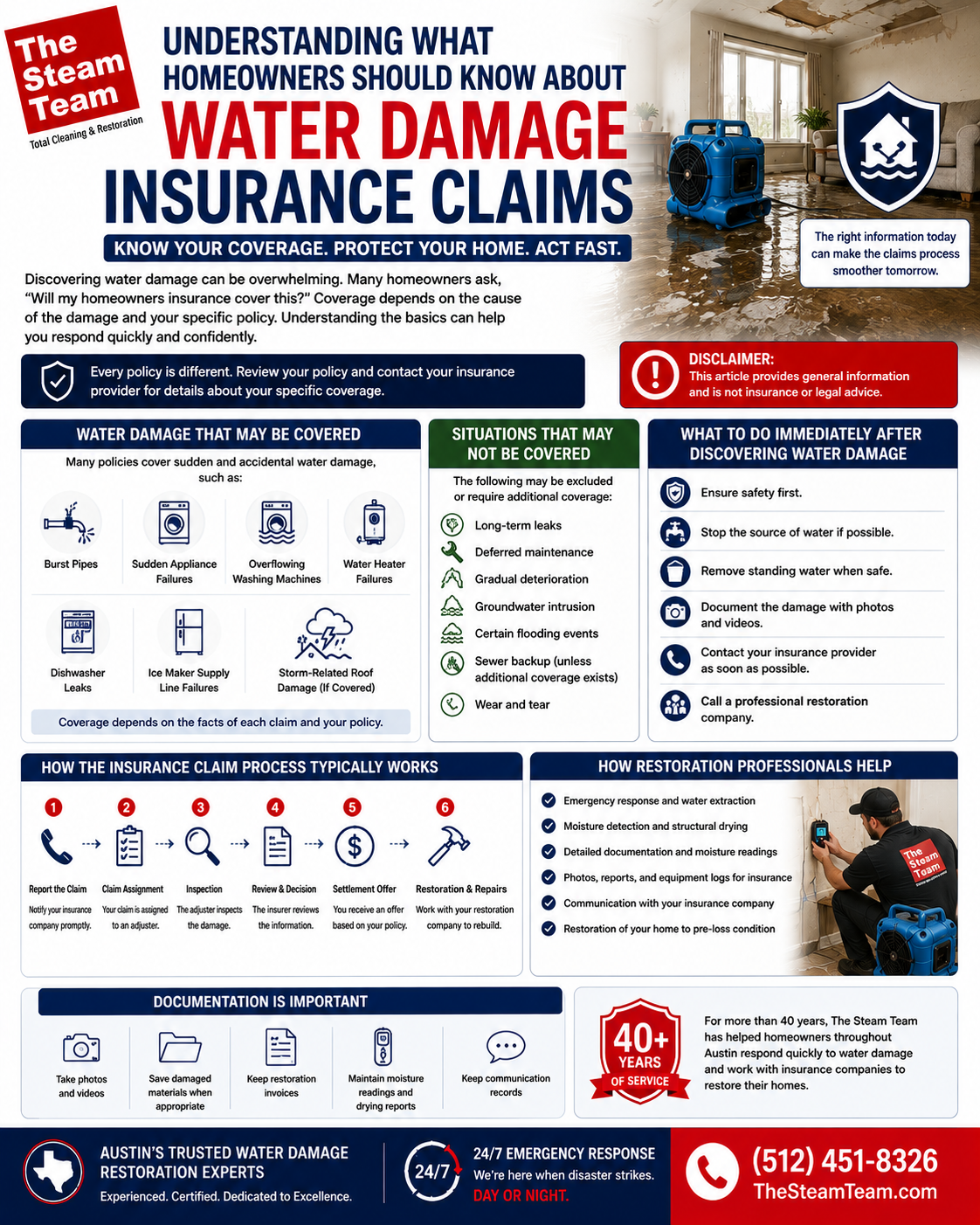
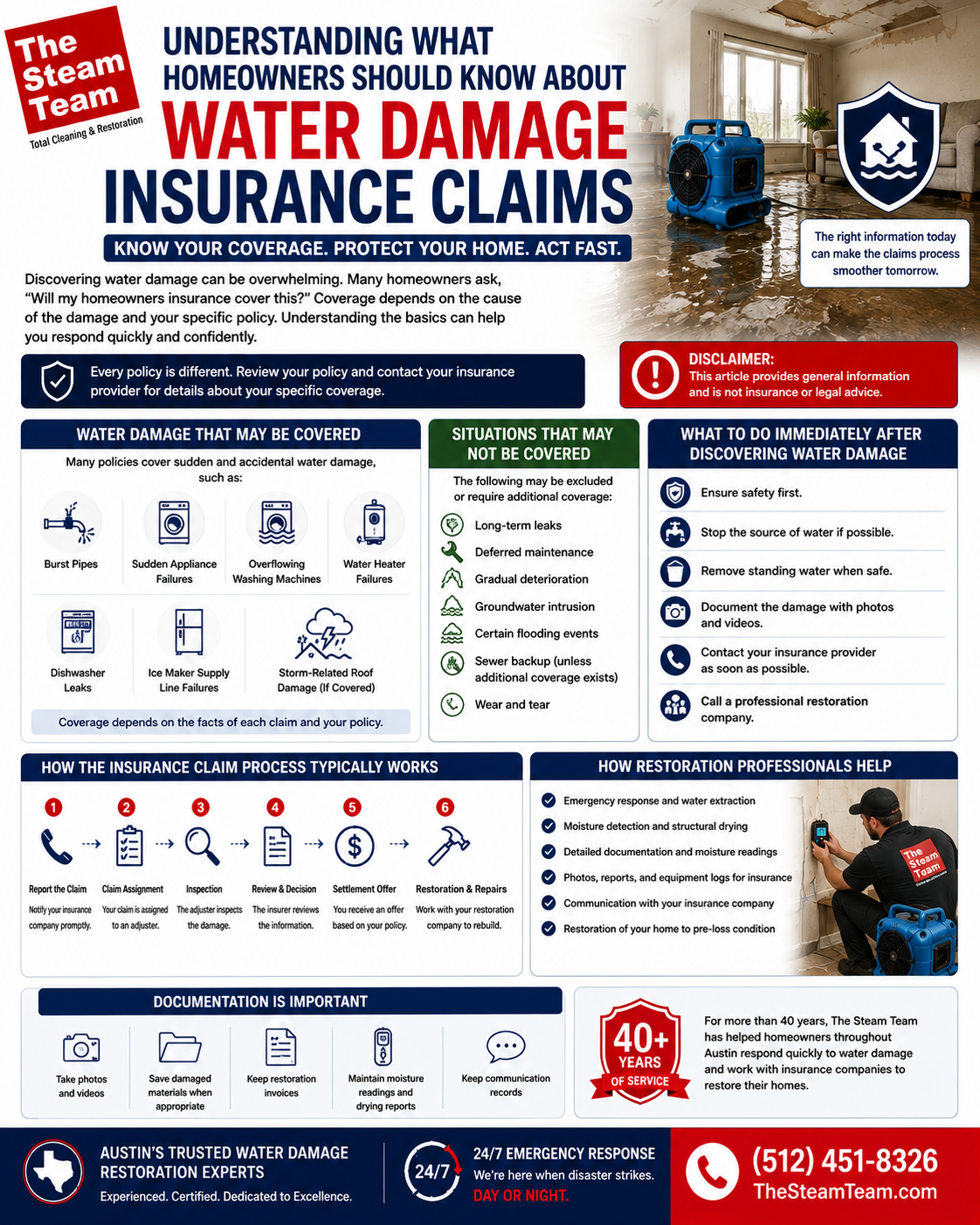
Water damage can be stressful for homeowners, especially when dealing with unexpected repairs and restoration costs. One of the most common questions homeowners ask after a flood, leak, or burst pipe is whether their insurance will cover the damage.

While many homeowner insurance policies cover certain types of water damage, the claims process can sometimes feel complicated.

Understanding how water damage insurance claims work in Austin helps homeowners navigate the process more smoothly and avoid costly mistakes.

The Steam Team has been helping Austin homeowners restore properties after water damage since 1983, and our team frequently works with insurance providers to help simplify the restoration and claims process.

What Types of Water Damage Are Usually Covered

Homeowners insurance typically covers sudden and accidental water damage.

Common covered events may include:

β€’ Burst pipes
β€’ Plumbing leaks
β€’ Water heater failures
β€’ Appliance leaks (washing machines, dishwashers)
β€’ Roof leaks caused by storms

If the damage occurs suddenly and was not preventable, it is often covered by insurance policies.

However, coverage details may vary depending on the homeowner’s specific insurance plan.

What Types of Water Damage Are Usually Not Covered

Some types of water damage are usually excluded from standard homeowners insurance policies.

Examples may include:

β€’ Long-term leaks caused by neglect
β€’ Flooding from natural disasters (unless flood insurance is purchased)
β€’ Sewer backups without additional coverage
β€’ Maintenance-related plumbing issues

Homeowners should review their policy details to understand their coverage limits.

In flood-prone areas of Central Texas, separate flood insurance may be required for certain situations.

The First Step: Document the Damage

If water damage occurs in your home, documenting the damage is extremely important for insurance claims.

Homeowners should take photos or videos of:

β€’ Standing water in rooms
β€’ Damaged flooring or carpets
β€’ Wet drywall or ceilings
β€’ Damaged furniture or belongings
β€’ The source of the water leak

Detailed documentation helps insurance adjusters evaluate the extent of the damage.

Contacting Your Insurance Provider

After documenting the damage, the next step is contacting your insurance company.

When filing a claim, homeowners should provide:

β€’ Policy information
β€’ Description of the incident
β€’ Photos or videos of the damage
β€’ Date and time the damage occurred

The insurance provider will typically assign an insurance adjuster to inspect the property.

The Role of the Insurance Adjuster

Insurance adjusters are responsible for evaluating damage and determining coverage under the homeowner’s policy.

During their inspection, adjusters may:

β€’ Assess the extent of water damage
β€’ Identify the cause of the damage
β€’ Estimate repair costs
β€’ Review documentation provided by the homeowner

Based on this evaluation, the insurance company decides how much of the restoration cost will be covered.

How Restoration Companies Help with Insurance Claims

Professional water damage restoration companies often assist homeowners throughout the claims process.

Restoration professionals may help with:

β€’ Documenting damage for insurance reports
β€’ Providing detailed restoration estimates
β€’ Communicating with insurance adjusters
β€’ Performing emergency mitigation services
β€’ Helping ensure repairs meet insurance requirements

Working with experienced restoration professionals can help streamline the claims process.

Emergency Water Damage Mitigation

Most insurance providers require homeowners to take immediate action to prevent further damage.

Emergency mitigation services may include:

β€’ Water extraction
β€’ Structural drying
β€’ Moisture monitoring
β€’ Temporary repairs

Prompt restoration helps reduce additional damage and may help support the insurance claim.

Common Mistakes Homeowners Make During Insurance Claims

Some homeowners unintentionally delay or complicate the claims process.

Common mistakes include:

β€’ Waiting too long to report the damage
β€’ Failing to document the damage properly
β€’ Attempting repairs before adjuster inspection
β€’ Not addressing moisture quickly

Taking quick action and maintaining proper documentation helps ensure smoother claims processing.

How Long Water Damage Claims Usually Take

The timeline for insurance claims can vary depending on the severity of the damage.

Typical claim timelines may include:

β€’ Initial claim filing within 24 hours
β€’ Adjuster inspection within a few days
β€’ Restoration estimate approval
β€’ Repair and restoration process

Many restoration companies begin emergency mitigation work while insurance claims are being processed.

Water Damage Insurance Tips for Austin Homeowners

Homeowners can prepare for potential water damage claims by taking a few proactive steps.

Helpful tips include:

β€’ Reviewing your homeowner insurance policy annually
β€’ Understanding coverage limits and exclusions
β€’ Keeping records of home maintenance
β€’ Knowing the location of the main water shutoff valve

Preparation can help homeowners respond quickly if water damage occurs.

FAQ: Water Damage Insurance Claims

Does homeowners insurance cover water damage?

Most policies cover sudden and accidental water damage, such as burst pipes or appliance leaks.

Does insurance cover flooding?

Standard policies usually do not cover natural flooding. Flood insurance may be required for that coverage.

Should I start cleanup before the adjuster arrives?

Emergency mitigation may begin immediately to prevent further damage, but major repairs are usually documented first.

How long does an insurance claim take?

The claims process can take several days to several weeks, depending on the complexity of the damage.

Can restoration companies work with insurance providers?

Yes. Many restoration companies regularly coordinate with insurance providers during the restoration process.

Why Austin Homeowners Trust The Steam Team

β€’ Serving Austin since 1983
β€’ Experienced with insurance restoration projects
β€’ Certified water damage restoration technicians
β€’ Advanced drying and extraction equipment
β€’ Trusted across Central Texas

Our team works with homeowners and insurance providers to help restore properties after water damage.

Need Water Damage Restoration in Austin?

If your home has experienced water damage, quick action can prevent further structural problems.

The Steam Team provides 24/7 emergency water damage restoration in Austin, helping homeowners remove water, dry structures, and restore their property safely.

πŸ“ž Call 512-451-8326 for emergency service

Serving Austin, Round Rock, Cedar Park, Georgetown, and surrounding Central Texas communities.

Can Water Damage Cause Mold? Here’s the Truth

Can Water Damage Cause Mold? Here’s the Truth

Why Water Damage and Mold Often Go Hand in Hand

Water damage and mold growth are closely connected. When water enters a home due to leaks, flooding, or plumbing failures, moisture can remain trapped inside building materials. If that moisture is not removed quickly, mold can begin developing within a short period of time.

Many homeowners in Austin are surprised to learn that mold can start forming within 24–48 hours after water damage occurs.

Understanding how water damage leads to mold growth in Austin homes can help homeowners take quick action and prevent serious indoor air quality issues.

The Steam Team has been helping Austin homeowners address water damage and mold concerns since 1983, providing professional water extraction, structural drying, and mold remediation services across Central Texas.

How Mold Develops After Water Damage

Mold spores exist naturally in the air and are present in nearly every environment. However, mold needs specific conditions to grow.

Mold growth occurs when three key factors are present:

β€’ Moisture
β€’ Organic materials (such as wood, drywall, or dust)
β€’ Warm temperatures

When water damage introduces moisture into a home, materials like drywall, wood framing, and insulation can become ideal environments for mold growth.

Austin’s warm and humid climate can make mold development occur even faster if moisture is not properly removed.

How Quickly Mold Can Appear

Many homeowners underestimate how quickly mold can develop.

Typical mold growth timeline:

0–24 Hours
Water soaks into porous materials such as drywall and carpet.

24–48 Hours
Mold spores may begin developing in damp areas.

48–72 Hours
Visible mold growth may begin appearing on surfaces.

3–7 Days
Mold colonies may spread rapidly throughout affected areas.

Because of this rapid timeline, professional drying after water damage is extremely important.

Common Areas Where Mold Forms After Water Damage

After a leak or flood, mold often develops in areas where moisture remains trapped.

Common locations include:

β€’ Behind drywall
β€’ Under carpets and padding
β€’ Inside insulation
β€’ Around air ducts and vents
β€’ Beneath flooring or subfloors

These hidden areas allow mold to grow undetected for long periods if the moisture problem is not addressed.

Signs Mold May Be Developing After Water Damage

Homeowners should watch for warning signs that mold may be forming after water damage.

Common signs include:

β€’ Musty or earthy odors
β€’ Visible mold spots on walls or ceilings
β€’ Increased allergy or respiratory symptoms
β€’ Discoloration on surfaces
β€’ Persistent humidity or dampness indoors

If these signs appear after a water damage event, professional inspection is recommended.

Health Concerns Associated with Mold

Mold exposure may affect indoor air quality and comfort inside the home.

Some individuals may experience symptoms such as:

β€’ Sneezing or coughing
β€’ Eye irritation
β€’ Sinus congestion
β€’ Headaches
β€’ Respiratory irritation

People with allergies, asthma, or weakened immune systems may be more sensitive to mold exposure.

Maintaining a dry and well-ventilated home environment helps reduce these risks.

How Professional Drying Prevents Mold

One of the most effective ways to prevent mold growth is rapid structural drying after water damage.

Professional restoration companies use specialized drying equipment to remove moisture from building materials.

Drying equipment may include:

β€’ High-powered air movers
β€’ Industrial dehumidifiers
β€’ Moisture detection tools
β€’ Temperature and humidity monitoring systems

These tools help remove moisture trapped behind walls, under flooring, and inside structural components.

Why DIY Drying Is Often Not Enough

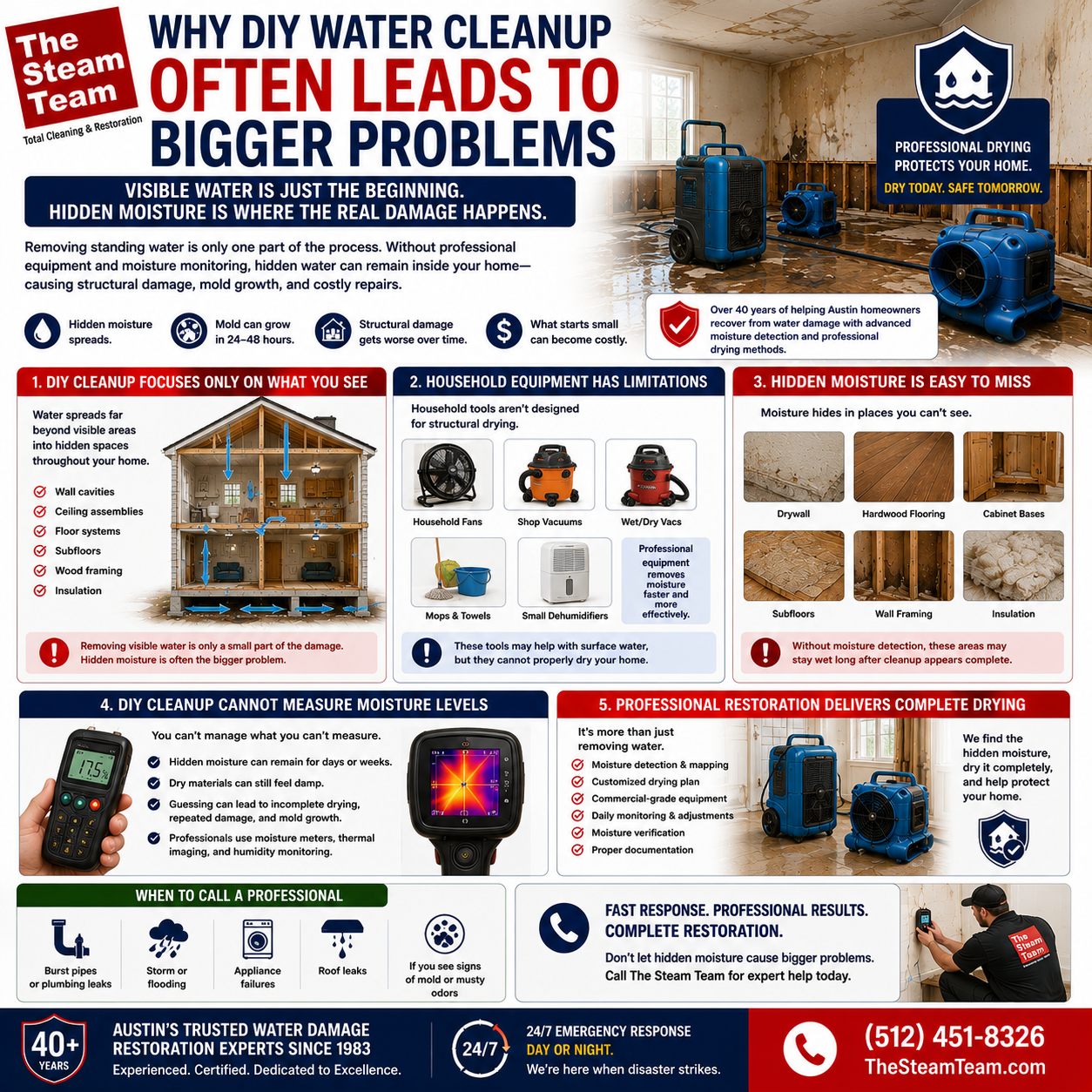
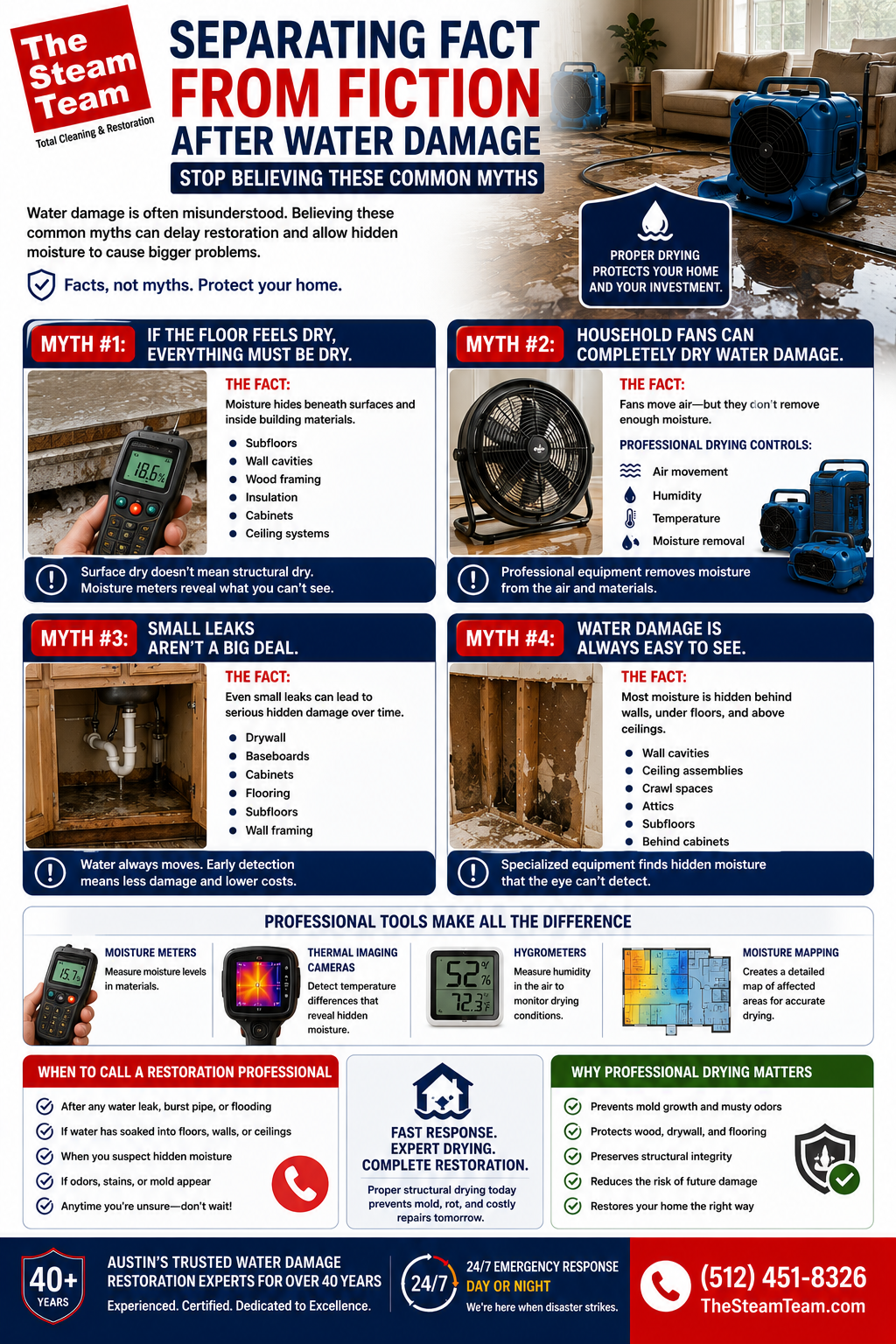
Many homeowners attempt to dry flooded areas using household fans or basic dehumidifiers.

While these methods may help dry visible surfaces, they often cannot remove moisture trapped inside walls, floors, or insulation.

Hidden moisture can allow mold to develop even when surfaces appear dry.

Professional restoration services use equipment designed to remove moisture deep within structural materials.

Steps to Prevent Mold After Water Damage

Homeowners can reduce the risk of mold growth by taking quick action after water damage occurs.

Helpful prevention steps include:

β€’ Removing standing water immediately
β€’ Beginning structural drying quickly
β€’ Increasing ventilation where possible
β€’ Removing severely damaged materials
β€’ Monitoring humidity levels indoors

The faster moisture is removed, the lower the risk of mold development.

When Mold Remediation May Be Necessary

If mold has already begun developing, professional mold remediation may be required.

Mold remediation typically involves:

β€’ Identifying the moisture source
β€’ Containing affected areas
β€’ Removing contaminated materials
β€’ Cleaning and sanitizing surfaces
β€’ Restoring affected areas

Professional remediation ensures mold is safely removed without spreading spores throughout the home.

FAQ: Water Damage and Mold

Can mold grow after water damage?

Yes. Mold can begin growing within 24–48 hours when moisture remains in building materials.

Does all water damage cause mold?

Not always. If water is removed quickly and materials are dried properly, mold may be prevented.

How can mold be prevented after water damage?

Rapid water removal, structural drying, and humidity control help prevent mold growth.

Can mold grow behind walls?

Yes. Mold often develops in hidden areas such as wall cavities, insulation, and subfloors.

Should homeowners test for mold after flooding?

If musty odors or visible mold appear after flooding, professional inspection may be recommended.

Why Austin Homeowners Trust The Steam Team

β€’ Serving Austin since 1983
β€’ Certified water damage restoration technicians
β€’ Professional structural drying equipment
β€’ Mold remediation and prevention services
β€’ Trusted across Central Texas

Our team helps homeowners prevent mold growth and restore their homes after water damage.

Need Water Damage or Mold Help in Austin?

If your home has experienced water damage, acting quickly can prevent mold growth and structural damage.

The Steam Team provides professional water damage restoration and mold remediation in Austin, helping homeowners remove moisture and restore healthy indoor environments.

πŸ“ž Call 512-451-8326 for assistance

Serving Austin, Round Rock, Cedar Park, Georgetown, and surrounding Central Texas communities.

Signs of Hidden Water Damage in Central Texas Homes

Signs of Hidden Water Damage in Central Texas Homes

Detecting Water Damage Before It Becomes a Major Problem

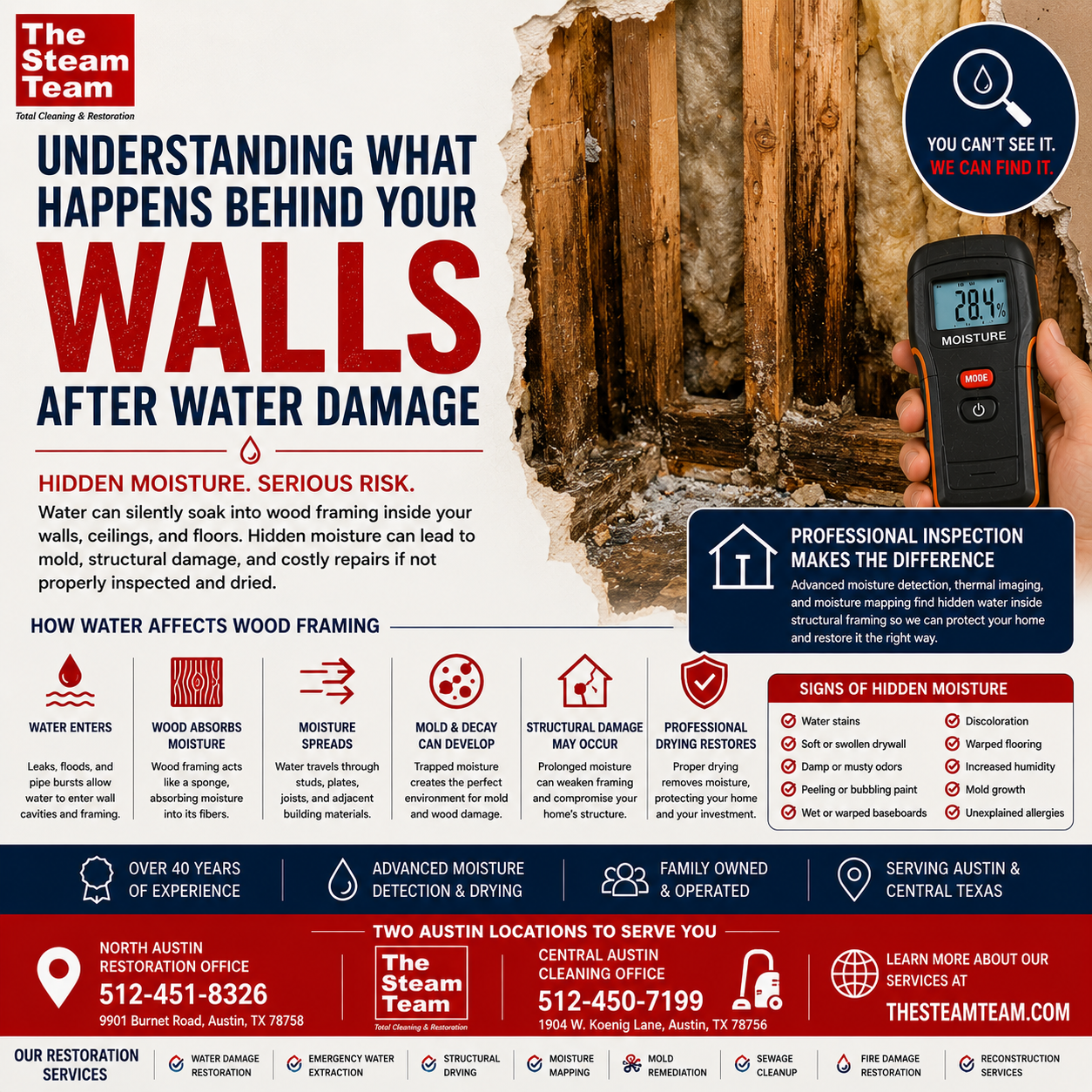
Water damage doesn’t always appear immediately. In many cases, moisture spreads quietly behind walls, under floors, or inside ceilings long before homeowners notice visible damage.

Hidden water damage can lead to structural deterioration, mold growth, and costly repairs if not addressed quickly. Learning how to identify early warning signs can help homeowners protect their property and prevent larger restoration issues.

Understanding the signs of hidden water damage in Austin homes allows homeowners to catch problems early and respond before serious damage occurs.

The Steam Team has been helping homeowners detect and repair water damage in Austin since 1983, using advanced moisture detection technology and professional restoration services throughout Central Texas.

Why Hidden Water Damage Is Common in Homes

Water often travels through building materials in ways that are difficult to see.

Leaks may begin in places such as:

β€’ Inside walls
β€’ Under flooring
β€’ Above ceilings
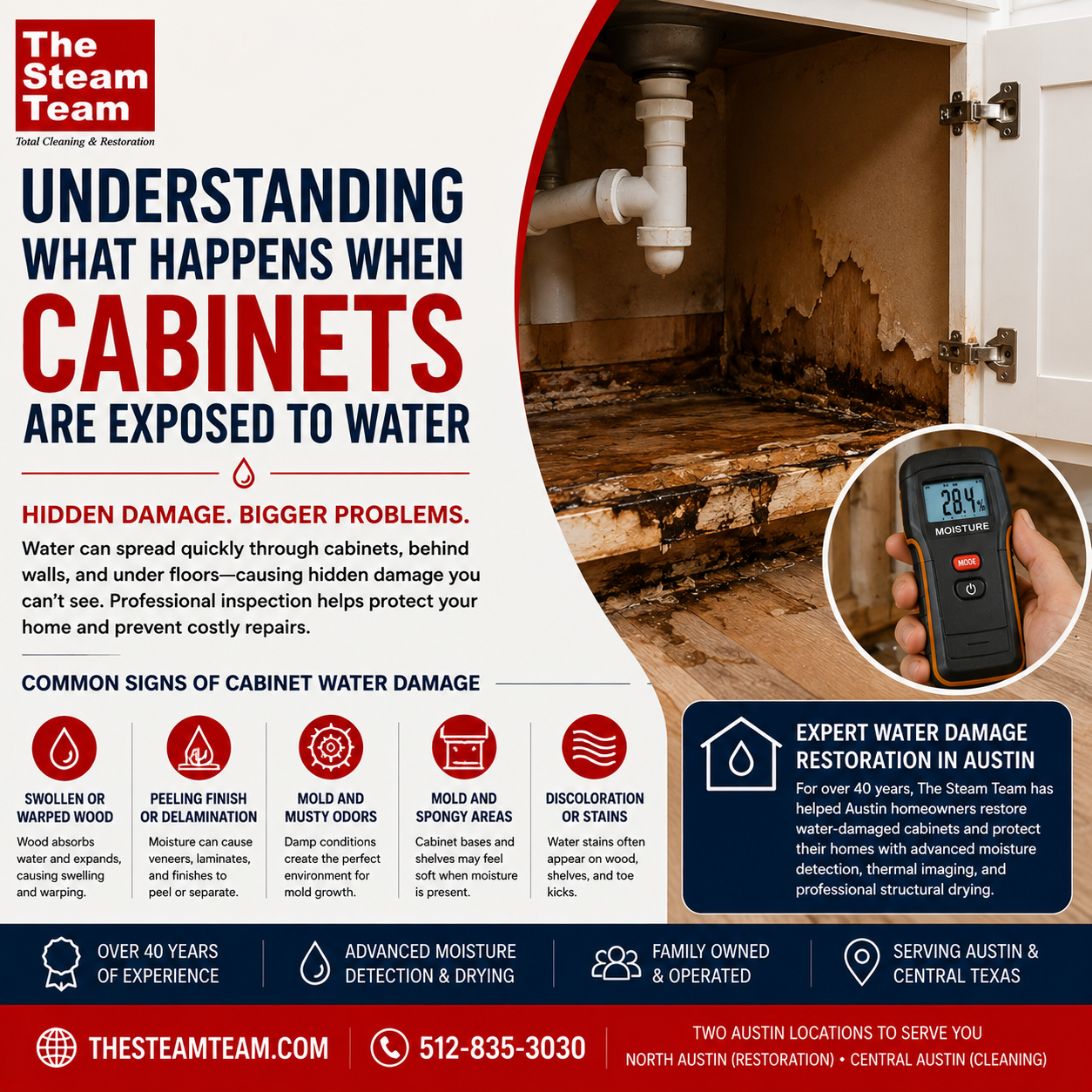
β€’ Around plumbing fixtures
β€’ Beneath appliances

Because moisture can spread slowly through drywall, wood framing, and insulation, visible damage may not appear until the problem has already worsened.

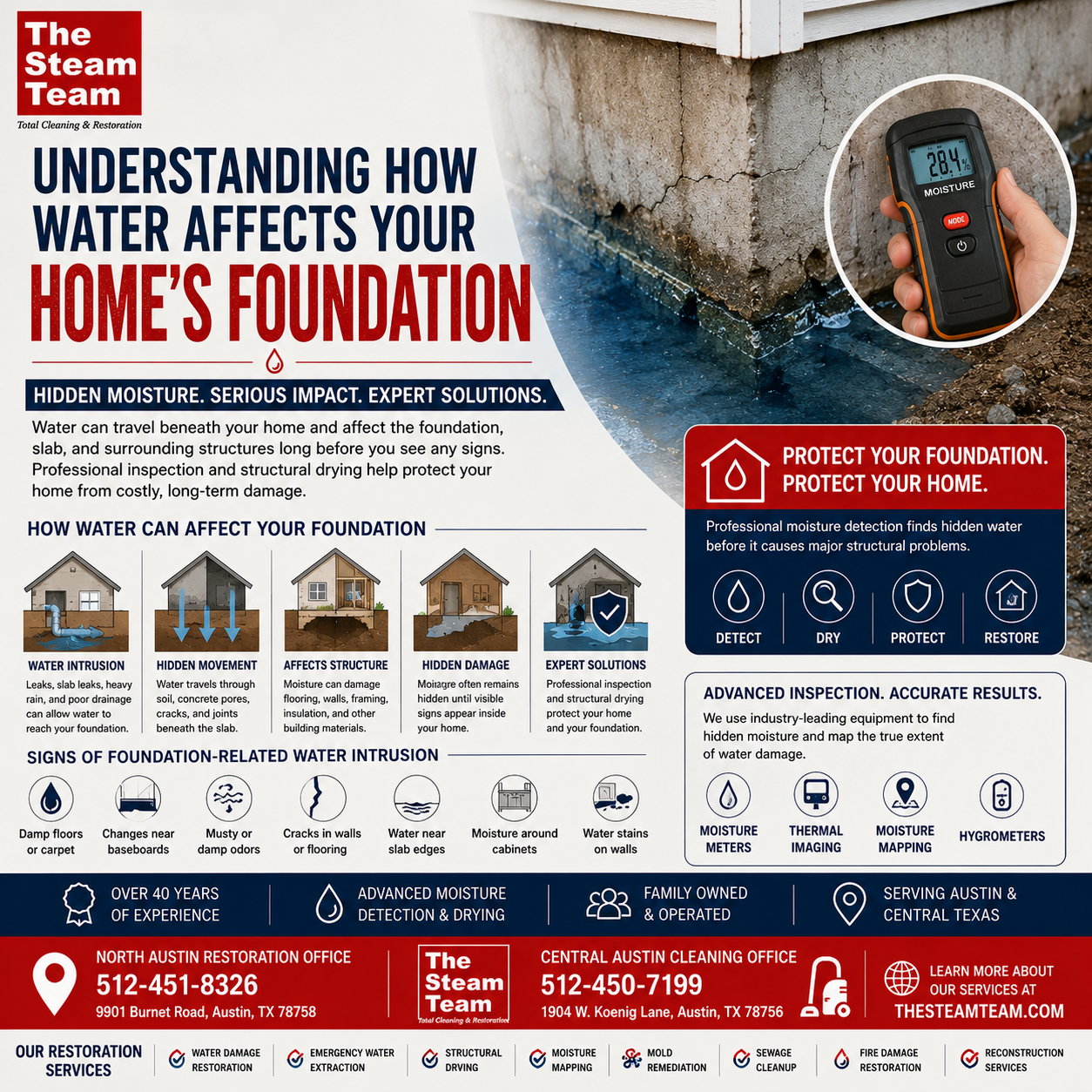
Homes in Austin, Round Rock, and Cedar Park may experience hidden leaks from plumbing systems, slab leaks, or roof damage during storms.

Musty or Damp Odors

One of the most common indicators of hidden moisture is a persistent musty smell.

These odors often develop when moisture becomes trapped in materials such as:

β€’ Drywall
β€’ Carpet padding
β€’ Wooden subfloors
β€’ Insulation

Musty odors may become stronger when HVAC systems run or when humidity levels increase.

This is often an early warning sign that moisture is present somewhere in the home.

Stains or Discoloration on Walls and Ceilings

Water damage often appears as stains on painted surfaces.

Common signs include:

β€’ Yellow or brown ceiling stains
β€’ Discolored drywall patches
β€’ Water rings around light fixtures
β€’ Streaks running down walls

These stains may indicate water leaks from pipes, roof damage, or condensation issues.

Peeling Paint or Bubbling Drywall

When moisture accumulates inside walls, it can cause paint and drywall surfaces to deteriorate.

Signs may include:

β€’ Paint peeling or cracking
β€’ Bubbling or blistering walls
β€’ Wallpaper separating from the wall

These symptoms often occur when moisture becomes trapped behind wall surfaces.

Warped or Buckling Floors

Flooring materials are highly sensitive to moisture.

Hidden water damage may cause:

β€’ Hardwood floors to warp or cup
β€’ Laminate flooring to swell
β€’ Tile grout to loosen
β€’ Carpet padding to remain damp

Floor damage may occur even if water is not visible on the surface.

Sudden Increase in Utility Bills

Unexpected increases in water bills can sometimes indicate hidden plumbing leaks.

Leaks inside walls, under foundations, or around fixtures may allow water to escape continuously without being noticed.

Monitoring utility bills can help homeowners identify plumbing issues early.

Mold Growth in Unusual Areas

Mold often develops in damp environments caused by hidden water damage.

Common areas where mold may appear include:

β€’ Around air vents
β€’ Behind furniture
β€’ Along baseboards
β€’ Inside closets
β€’ Near plumbing fixtures

Mold growth may indicate an ongoing moisture problem inside the structure.

Soft or Spongy Walls

Walls affected by hidden moisture may feel soft when touched.

This can occur when drywall absorbs water and begins losing structural strength.

Spongy walls may indicate:

β€’ Pipe leaks inside walls
β€’ Roof leaks above ceilings
β€’ Long-term moisture exposure

Professional inspection may be required to locate the exact source of the problem.

How Professionals Detect Hidden Water Damage

Water damage restoration professionals use specialized tools to locate moisture that cannot be seen.

These tools may include:

β€’ Moisture meters
β€’ Thermal imaging cameras
β€’ Hygrometers for humidity monitoring
β€’ Moisture mapping technology

These devices help restoration technicians locate hidden water pockets before they cause major damage.

Common Causes of Hidden Water Damage in Austin Homes

Several issues commonly cause hidden water damage in Central Texas homes.

These include:

β€’ Slab leaks beneath foundations
β€’ Roof leaks during storms
β€’ Appliance leaks from washing machines or dishwashers
β€’ Plumbing failures inside walls
β€’ Condensation around HVAC systems

Regular inspections can help identify these issues early.

Why Early Detection Is Important

The longer hidden water damage goes undetected, the more expensive repairs can become.

Early detection helps prevent:

β€’ Mold contamination
β€’ Structural weakening
β€’ Damage to flooring and drywall
β€’ Expensive reconstruction projects

Quick response allows restoration professionals to remove moisture before permanent damage occurs.

When to Call a Water Damage Professional

Professional help may be needed when homeowners notice:

β€’ Persistent musty odors
β€’ Unexplained stains on ceilings or walls
β€’ Warping floors or soft drywall
β€’ Mold growth inside the home
β€’ Sudden increases in water bills

Restoration professionals can identify the source of moisture and begin the drying process.

FAQ: Hidden Water Damage

Can water damage exist without visible signs?

Yes. Water damage can develop behind walls, under flooring, or inside ceilings before visible signs appear.

How do professionals detect hidden water damage?

Restoration technicians use moisture meters and thermal imaging cameras to locate hidden moisture.

Can hidden water damage cause mold?

Yes. Mold can begin growing within 24–48 hours in damp environments.

What should I do if I suspect hidden water damage?

Homeowners should contact a professional restoration company to inspect the property and locate the source of moisture.

Is hidden water damage covered by insurance?

Coverage depends on the cause of the damage and the homeowner’s insurance policy.

Why Austin Homeowners Trust The Steam Team

β€’ Serving Austin since 1983
β€’ Advanced moisture detection technology
β€’ Certified restoration technicians
β€’ 24/7 emergency water damage services
β€’ Trusted across Central Texas

Our team helps homeowners identify hidden moisture problems and restore their homes safely.

Need Water Damage Inspection in Austin?

If you suspect hidden water damage in your home, early detection can prevent costly repairs.

The Steam Team provides professional water damage inspection and restoration in Austin, helping homeowners locate moisture, dry structures, and restore their property.

πŸ“ž Call 512-451-8326 for assistance

Serving Austin, Round Rock, Cedar Park, Georgetown, and surrounding Central Texas communities.