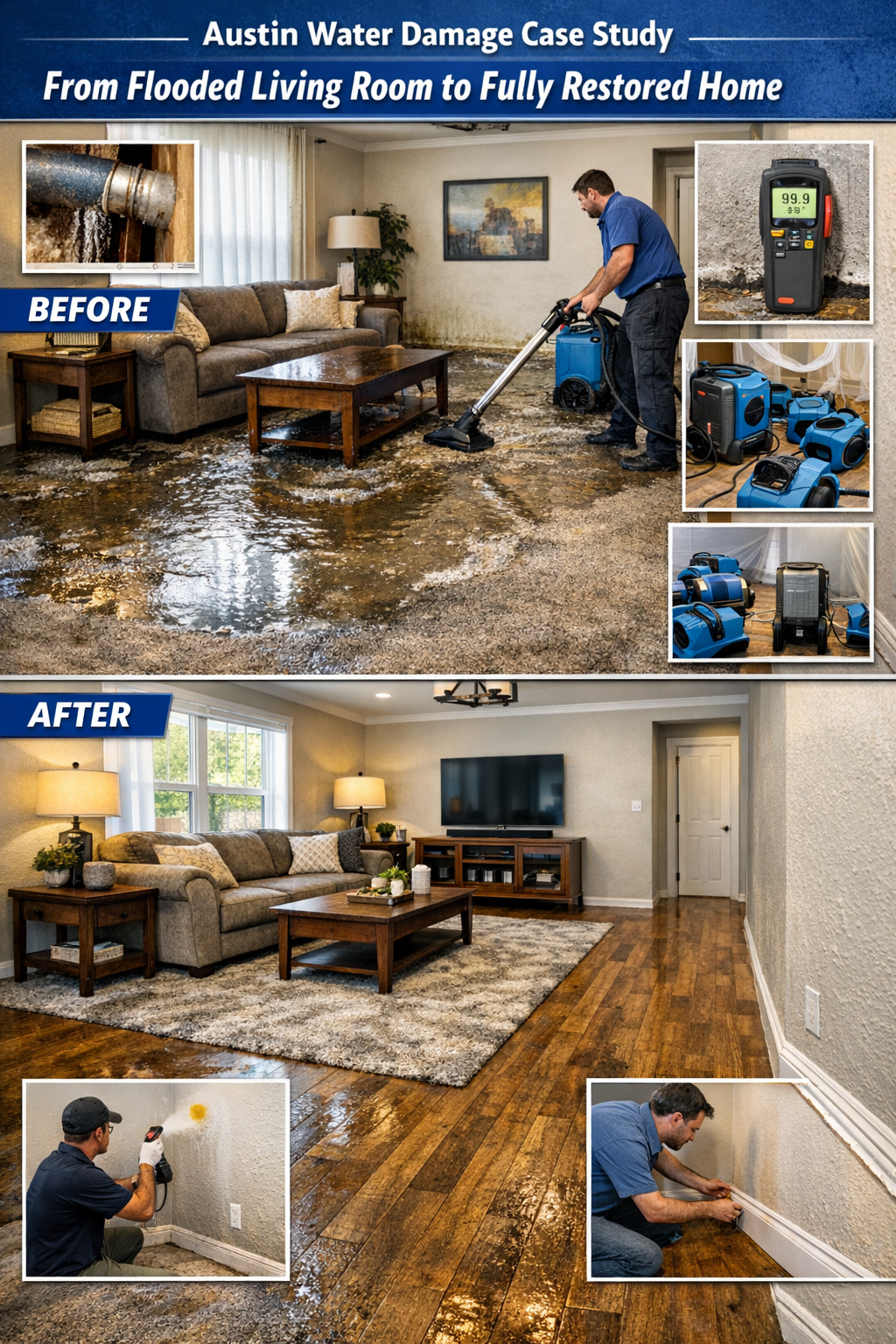
Real Austin Case Study β€” From Flooded Living Room to Fully Restored Home

Real Austin Case Study: From Flooded Living Room to Fully Restored Home

A Real Example of Water Damage Restoration in Austin

Water damage can happen suddenly and cause significant disruption for homeowners. Whether caused by a burst pipe, appliance leak, or severe storm, flooding inside a home requires immediate action to prevent structural damage and mold growth.

This real Austin restoration example demonstrates how a professional water damage restoration team can take a home from severe flooding to full recovery.

The Steam Team has been helping homeowners restore properties after water damage since 1983, providing professional emergency response, water extraction, structural drying, and restoration services across Austin and Central Texas.

The Initial Emergency

In this case, the homeowner discovered water pooling throughout the living room early in the morning. A pipe inside the wall behind a kitchen cabinet had burst overnight, allowing water to spread across the floor and into nearby rooms.

By the time the problem was discovered, water had affected:

β€’ Living room carpet and padding
β€’ Baseboards and drywall
β€’ Wood flooring in adjacent areas
β€’ Furniture and personal belongings

The homeowner immediately shut off the water supply and contacted a professional restoration company.

Step 1: Emergency Water Extraction

When restoration technicians arrived, the first priority was removing standing water from the home.

Industrial water extraction equipment was used to quickly remove water from:

β€’ Carpeted areas
β€’ Hardwood flooring
β€’ Low points where water had accumulated

Rapid water extraction is essential because it helps prevent water from soaking deeper into structural materials.

Step 2: Moisture Inspection and Damage Assessment

Once standing water was removed, technicians performed a full inspection of the affected areas.

Using moisture detection equipment, they identified moisture inside:

β€’ Wall cavities
β€’ Subfloor materials
β€’ Baseboards
β€’ Insulation behind drywall

Moisture mapping allowed the restoration team to identify the full extent of the damage and develop a drying plan.

Step 3: Structural Drying

Professional drying equipment was installed throughout the affected areas.

The drying setup included:

β€’ High-powered air movers
β€’ Commercial dehumidifiers
β€’ Moisture monitoring tools

These machines ran continuously to remove moisture from building materials.

Over the next three days, technicians monitored moisture levels and adjusted equipment placement to ensure proper drying.

Step 4: Preventing Mold Growth

Because mold can begin developing within 24–48 hours after water damage, preventing microbial growth was a priority.

Technicians applied antimicrobial treatments to affected areas and ensured that all materials were completely dried.

Proper structural drying significantly reduces the risk of mold developing inside walls and flooring.

Step 5: Restoration and Repairs

Once drying was complete, restoration repairs began.

These repairs included:

β€’ Replacing damaged drywall sections
β€’ Installing new baseboards
β€’ Repairing affected flooring areas
β€’ Repainting walls

The goal of the restoration process was to return the home to its original condition.

The Final Result

Within several days, the homeowner’s living room and surrounding areas were fully restored.

The flooring was repaired, walls were refinished, and the home was safe to occupy again.

Because the homeowner acted quickly and professional restoration services began immediately, extensive structural damage and mold growth were avoided.

Lessons from This Water Damage Case

This case highlights several important lessons for homeowners dealing with water damage.

Key takeaways include:

β€’ Immediate response helps reduce damage
β€’ Professional moisture detection identifies hidden water
β€’ Structural drying prevents mold growth
β€’ Restoration repairs can restore damaged areas

Prompt action and professional restoration can significantly reduce the long-term impact of water damage.

Common Water Damage Situations in Austin Homes

Many homes across Austin experience similar water damage situations caused by:

β€’ Burst pipes
β€’ Appliance failures
β€’ Plumbing leaks
β€’ Storm flooding
β€’ Roof leaks

Regardless of the cause, quick response is essential to protect the structure of the home.

FAQ: Water Damage Restoration

How quickly should water damage be addressed?

Water damage should be addressed immediately. Mold can begin developing within 24–48 hours.

How long does water damage restoration take?

Minor restoration projects may take a few days, while larger repairs may take several weeks depending on the damage.

Can flooded carpet be saved?

In some cases carpet can be restored if drying begins quickly and the water is not contaminated.

Do restoration companies repair walls and flooring?

Yes. Many restoration companies provide both cleanup and repair services.

Should homeowners attempt cleanup themselves?

Minor spills can be handled at home, but significant flooding usually requires professional restoration equipment.

Why Austin Homeowners Trust The Steam Team

β€’ Serving Austin since 1983
β€’ 24/7 emergency water damage response
β€’ Advanced water extraction and drying equipment
β€’ Certified restoration technicians
β€’ Trusted across Central Texas

Our team helps homeowners recover quickly from water damage emergencies and restore their homes safely.

Need Water Damage Restoration in Austin?

If your home experiences flooding or water damage, quick professional response can prevent further structural damage and mold growth.

The Steam Team provides 24/7 water damage restoration services in Austin, helping homeowners restore their homes after leaks, floods, and plumbing emergencies.

πŸ“ž Call 512-451-8326 for emergency service

Serving Austin, Round Rock, Cedar Park, Georgetown, and surrounding Central Texas communities.