Mold Remediation vs Mold Removal — What’s the Difference?
/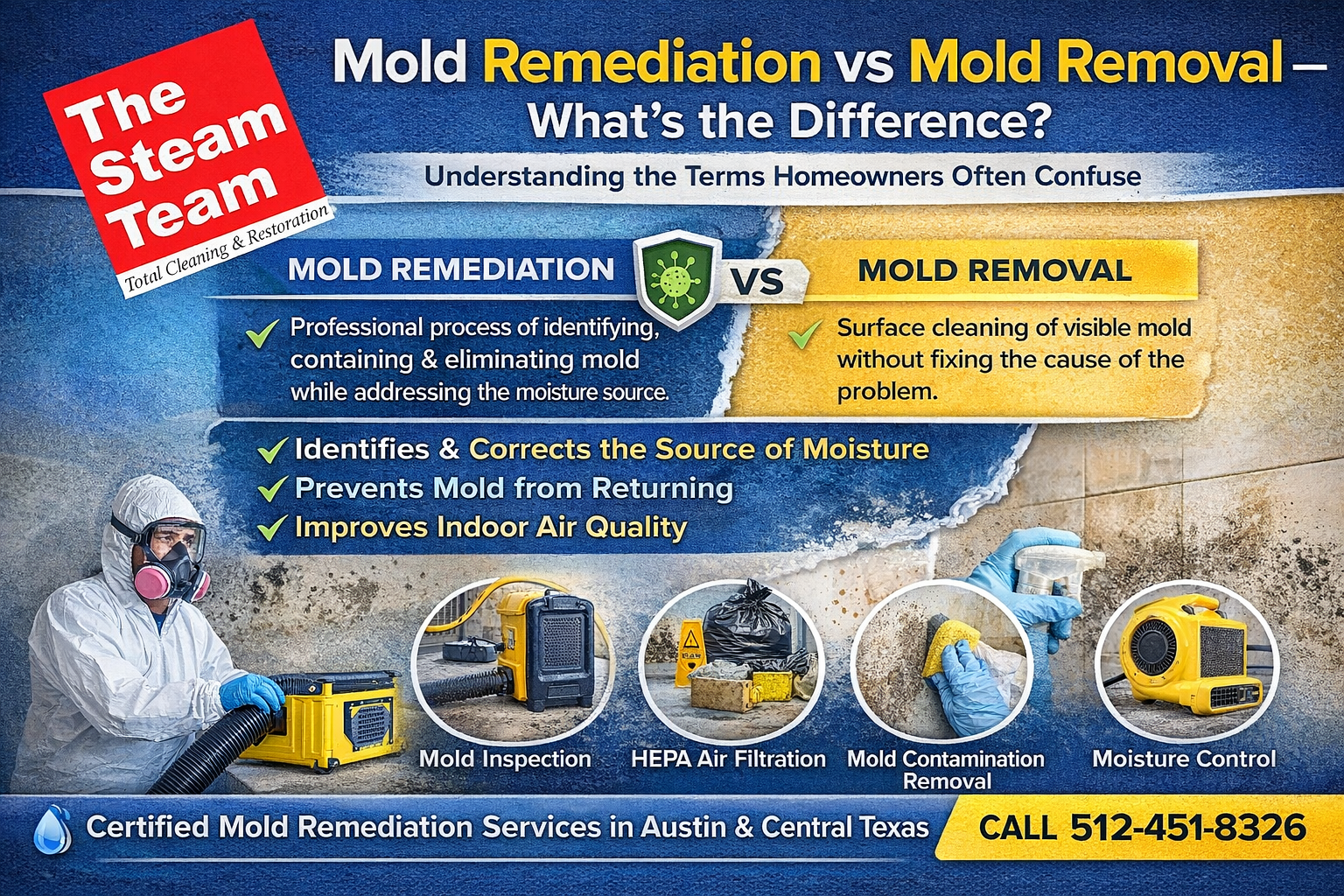
When homeowners discover mold in their homes, they often hear the terms mold removal and mold remediation used interchangeably.
Read More
Explore expert tips on water damage restoration, carpet cleaning, rug cleaning, mold remediation, and air duct cleaning in Austin, TX. Trusted local insights from The Steam Team since 1983.
When homeowners discover mold in their homes, they often hear the terms mold removal and mold remediation used interchangeably.
Read MoreMold can be a hidden menace in many homes, often going unnoticed until it has caused significant damage or health issues. This comprehensive guide aims to equip Austin homeowners with the knowledge to effectively identify mold, understand its types, recognize associated health risks, and take proactive measures to protect their homes and families. We will explore common signs, types prevalent in Central Texas, methods for detecting hidden mold, health risks of exposure, professional inspection costs, and effective prevention tips to ensure a safe living environment.
Identifying mold in your home begins with recognizing its common signs. Mold can manifest in various forms, and being aware of these indicators can help you take timely action.
Visible mold can appear in various colors, including black, green, white, and sometimes orange or brown, and often has a fuzzy or slimy texture. Common locations for mold growth include damp areas such as bathrooms, kitchens, basements, and areas with water leaks or poor ventilation. Mold thrives in environments with high humidity and moisture, making these areas particularly susceptible. Regularly inspecting these locations can help you catch mold growth early, preventing further spread and damage.
A musty or earthy odor in your home is often a telltale sign of mold presence. This smell is caused by the release of microbial volatile organic compounds (mVOCs) from mold spores. If you notice such odors, it is essential to investigate further, as they can indicate hidden mold growth behind walls, under carpets, or in HVAC systems. Addressing the source of the odor promptly can help mitigate potential health risks associated with mold exposure.
Toxic black mold, known scientifically as Stachybotrys chartarum, is one of the most concerning types of mold due to its potential health effects. It typically appears as a dark greenish-black patch and thrives in damp, cellulose-rich materials with consistent moisture. Other common varieties found in Central Texas include Aspergillus, Penicillium, and Cladosporium, which can also pose health risks. Identifying these molds early is crucial for effective remediation.
The color of mold can provide some insights into its type but is not a definitive indicator of toxicity or safety. For instance, green mold may indicate Aspergillus, while white mold can be a variety of species, some of which may be harmless or allergenic. However, any mold growth should be treated seriously, as even non-toxic molds can cause allergic reactions and respiratory issues. Homeowners should seek professional help if they encounter significant mold growth, regardless of color.
Mold often hides in areas that are not easily visible, such as behind walls, under carpets, inside wall cavities, and within HVAC systems. These locations provide the moisture and darkness that mold needs to thrive. Regular inspections of these areas, especially after water damage or leaks, can help identify hidden mold before it becomes a more significant problem.
Using moisture meters can be an effective way to detect hidden mold. These devices measure the moisture levels in various materials, helping you identify areas at risk for mold growth. If you suspect significant mold issues, notice persistent moisture problems, or if moisture levels are consistently high, it is advisable to call professionals for a thorough inspection. Professional mold inspectors have the expertise and tools necessary to identify and remediate mold effectively.
Common symptoms of mold exposure include allergic reactions such as sneezing, runny nose, nasal congestion, and itchy or watery eyes. Additionally, respiratory issues like coughing, wheezing, and difficulty breathing can occur, especially in individuals with asthma or other respiratory conditions. Prolonged exposure may also exacerbate chronic respiratory diseases. If you or your family members experience these symptoms, it may be time to investigate potential mold issues in your home.
Research consistently highlights the significant health implications of mold exposure, particularly concerning respiratory and allergic conditions.
Mold & Dampness: Respiratory & Allergic Health Risks
Many studies have shown consistent associations between evident indoor dampness or mold and respiratory or allergic health effects, but causal links remain unclear. Findings on measured microbiologic factors have received little review. We conducted an updated, comprehensive review of these topics.
Respiratory and allergic health effects of dampness, mold, and dampness-related agents: a review of the epidemiologic evidence, MJ Mendell, 2011
Who Is Most Vulnerable to Mold-Related Health Issues?
Certain groups are more vulnerable to mold-related health issues, including children, the elderly, pregnant women, and individuals with compromised immune systems or pre-existing respiratory conditions. These populations may experience more severe reactions to mold exposure, making it crucial for homeowners to ensure a mold-free environment. Regular inspections and prompt remediation can help protect these vulnerable individuals.
Discovering mold in your home can be concerning, but knowing the right steps to take can prevent further spread and protect your family's health. Your immediate actions depend on the size and location of the mold growth.
Small Mold Growth (less than 10 square feet): For minor mold patches, often caused by a recent, contained leak, DIY removal might be possible. Ensure you wear appropriate personal protective equipment (PPE), including gloves, eye protection, and an N95 respirator. Use a scrub brush with a solution of water and detergent, or a specialized mold cleaner. Always address the moisture source immediately to prevent recurrence.
Large Mold Infestations (more than 10 square feet) or Hidden Mold: If mold covers a significant area, appears after major water damage, or is suspected behind walls or in HVAC systems, professional remediation is highly recommended. Attempting to clean large infestations without proper containment can spread spores and worsen the problem.
It's crucial to contact a professional mold remediation service if:
The mold covers an area larger than 10 square feet.
You suspect mold is hidden behind walls, under flooring, or within your HVAC system.
You or family members are experiencing significant health issues related to mold exposure.
The mold growth is due to contaminated water (e.g., sewage backup).
You are unsure about the type of mold or the extent of the problem.
Professionals have the expertise, equipment, and safety protocols to effectively contain, remove, and prevent mold recurrence, ensuring your home is safe and healthy.
Several factors influence the cost of mold inspection and testing, including the size of the property, the extent of mold damage, the type of inspection required, and the number of samples collected. On average, homeowners in Austin can expect to pay between $300 and $600 for a comprehensive mold inspection. Larger properties or those with significant mold issues may incur higher costs.
This table outlines the costs associated with various mold inspection services, highlighting the importance of professional assessments in maintaining a safe home environment.
Service
Cost
Benefits
Mold Inspection
$300 - $600
Comprehensive assessment of mold presence and type
Mold Testing
$150 - $500
Laboratory analysis of mold samples for accurate identification
Mold Remediation
$500 - $6,000+
Professional removal of mold and prevention of future growth
While DIY testing kits are available, professional assessments are often recommended due to their accuracy and thoroughness. Professionals have the training and experience to identify mold types and assess the extent of the problem effectively. Additionally, they can provide remediation recommendations or services, ensuring that the mold is removed safely and completely.
Controlling moisture levels is crucial in preventing mold growth. Homeowners should ensure proper ventilation in areas prone to humidity, such as bathrooms, kitchens, and laundry rooms. Using exhaust fans, dehumidifiers, and fixing leaks promptly can also help maintain optimal moisture levels, reducing the risk of mold development.
Emphasizing the critical role of moisture management, experts consistently point to effective moisture control as the primary defense against mold proliferation.
Moisture Control: Key to Mold Prevention
Details and Practice discusses design details suitable for preventing moisture issues in factory-built housing, including moisture management.
Moisture control in buildings: the key factor in mold prevention, 2009
When to Schedule Regular Mold Inspections to Protect Your Home
Scheduling regular mold inspections can help catch potential issues before they escalate. Homeowners should consider inspections every 1-2 years, especially after significant weather events, flooding, or water damage. Proactive measures can save time and money in the long run by preventing extensive mold remediation efforts.
Monitor Humidity: Austin's humid climate makes homes particularly susceptible to mold. Use a hygrometer to monitor indoor humidity levels and aim to keep them below 60%, ideally between 30-50%.
Improve Air Circulation: Open windows and doors when outdoor humidity is low, or use fans to improve air movement, especially in areas that feel damp or stuffy.
Clean Gutters Regularly: Ensure gutters are clear and direct water away from your home's foundation to prevent water intrusion that can lead to mold.
Inspect Roof and Foundation: Periodically check your roof for damaged shingles and your foundation for cracks, as these can be entry points for moisture.
Properly Seal Windows and Doors: Ensure all windows and doors are properly sealed to prevent moisture from seeping in during rain or high humidity.
Long-term mold exposure can lead to chronic respiratory issues, including asthma, bronchitis, and other lung diseases. Individuals may also experience persistent allergic reactions, which can worsen over time. In some cases, prolonged exposure to toxic molds, such as Stachybotrys chartarum, can lead to more severe health complications, including neurological symptoms. It's essential to address mold issues promptly to minimize these risks and protect your family's health.
Indicators of poor indoor air quality due to mold include persistent musty odors, increased allergy symptoms, and respiratory issues among occupants. You may also notice visible mold growth or water damage in your home. Conducting air quality tests can provide a clearer picture of mold spores in the air. If you suspect mold is affecting your indoor air quality, consider consulting a professional for a thorough assessment and remediation plan.
If you discover mold in your home, the first step is to assess the extent of the problem. For small areas, you may be able to clean them yourself using appropriate protective gear and cleaning solutions. However, for larger infestations or toxic mold, it's best to contact a professional mold remediation service. Additionally, address any moisture issues to prevent future growth and ensure proper ventilation in affected areas.
Yes, mold can grow in HVAC systems, particularly if there is moisture present. Condensation, dust, and organic materials can create an ideal environment for mold growth within ducts and filters. Regular maintenance, including cleaning and inspections, is crucial to prevent mold from spreading through your home's air supply. If you suspect mold in your HVAC system, it's advisable to have it professionally inspected and cleaned.
To prevent mold from returning after remediation, focus on controlling moisture levels in your home. Ensure proper ventilation in high-humidity areas, fix leaks promptly, and use dehumidifiers if necessary. Regularly inspect areas prone to mold growth, such as bathrooms and basements, and maintain a clean environment to reduce organic material that mold can feed on. Implementing these strategies can significantly reduce the risk of mold recurrence.
Yes, there are several mold-resistant products available that can help protect your home. Mold-resistant paints, drywall, and insulation are designed to inhibit mold growth. Additionally, using mold-resistant caulk and sealants in areas prone to moisture can provide extra protection. When renovating or building, consider incorporating these materials to create a safer, mold-free environment in your home.
Identifying and addressing mold in your home is essential for safeguarding your family's health and maintaining a safe living environment. By recognizing the signs of mold, understanding its types, and knowing when to seek professional help, you can effectively mitigate risks associated with mold exposure. Regular inspections and proactive moisture control are key strategies for prevention and remediation. Take the first step towards a mold-free home by exploring our expert resources and services today.
Don't let mold compromise your family's health and your home's integrity. Take proactive steps today!
Mold growth in homes and businesses can lead to serious health issues and property damage, making professional mold remediation essential. This article explores the numerous benefits of hiring expert mold specialists, particularly in Austin, where humidity levels can exacerbate mold problems. Readers will learn about the health risks associated with mold exposure, the financial implications of mold damage, and the step-by-step process of professional remediation. Understanding these aspects can help homeowners make informed decisions about mold management and prevention.
Austin's unique climate, characterized by high humidity and occasional heavy rainfall, creates an ideal environment for mold to thrive. This makes professional intervention even more critical for residents and business owners in the area. Without proper and timely remediation, mold can quickly spread, leading to more extensive damage and increased health risks.
Mold exposure can lead to respiratory issues and allergies, while effective remediation can significantly improve indoor air quality. Additionally, professional services protect property value by preventing structural damage and costly repairs. This article will cover the key health benefits of professional mold removal, the financial protection it offers, the remediation process, and why choosing a reputable company like The Steam Team is crucial for effective mold management.
Professional mold removal provides several health benefits that are crucial for maintaining a safe living environment. Mold exposure can lead to various health issues, particularly affecting respiratory health and allergies. By removing mold, individuals can significantly reduce their risk of developing these health problems.
Mold exposure can trigger a range of respiratory issues, including asthma attacks, chronic cough, and allergic reactions. Individuals with pre-existing conditions, such as asthma or allergies, are particularly vulnerable to mold-related effects. Symptoms may include sneezing, nasal congestion, and skin irritation. Long-term exposure can lead to more severe health complications, making it essential to address mold issues promptly.
The Centers for Disease Control and Prevention (CDC) offers comprehensive guidelines on mold prevention and health effects, especially after significant water damage.
Mold Prevention & Health Effects: CDC Clean-up Guidelines
Extensive water damage after major hurricanes and floods increases the likelihood of mold contamination in buildings. This report provides information on how to limit exposure to mold and how to identify and prevent mold-related health effects. Where uncertainties in scientific knowledge exist, practical applications designed to be protective of a person's health are presented. Evidence is included about assessing exposure, clean-up and prevention, personal protective equipment, health effects, and public health strategies and recommendations.
While mold can affect anyone, certain populations are more susceptible to its adverse health effects. Young children, the elderly, and individuals with compromised immune systems or pre-existing respiratory conditions (like asthma or chronic obstructive pulmonary disease) are at higher risk. Pregnant women and those with severe allergies can also experience more pronounced symptoms. Professional mold remediation is crucial for these vulnerable groups to ensure a safe and healthy indoor environment.
Yes, professional mold remediation can significantly enhance indoor air quality. By removing mold spores and contaminants, remediation services help create a healthier living environment. Techniques such as air scrubbing and dehumidification are employed to eliminate mold and prevent its return. Improved indoor air quality can lead to better overall health and well-being for occupants, reducing the risk of respiratory issues and allergies.
Investing in professional mold remediation not only safeguards health but also protects property value. Mold damage can compromise the structural integrity of a building, leading to costly repairs and decreased resale value. Understanding the financial implications of mold is crucial for homeowners.
Mold can cause significant damage to a property's structure, including wood rot and deterioration of building materials. This damage can weaken the foundation and compromise safety. Homeowners may face expensive repairs if mold is not addressed promptly, making professional remediation a wise investment to protect property value.
Research further emphasizes the critical link between toxic mold and its detrimental impact on real estate values.
Mold doesn't just look unsightly; it actively degrades building materials. It can cause drywall to crumble, wood to rot, and insulation to lose its effectiveness. Carpets, upholstery, and even personal belongings can become permanently stained and damaged, often requiring costly replacement. Addressing mold promptly prevents this progressive deterioration, preserving the integrity and aesthetic appeal of your property.
By addressing mold issues early, homeowners can prevent extensive damage that leads to costly repairs. Professional remediation not only removes existing mold but also implements preventative measures to avoid future growth. This proactive approach helps maintain the property's market value, ensuring that homeowners do not suffer financial losses when selling their homes.
Understanding the mold remediation process can help homeowners appreciate the value of hiring certified specialists. The process typically involves several key steps to ensure thorough removal and prevention of mold.
Mold inspections in Austin begin with a thorough assessment of the property to identify areas of mold growth and moisture sources. Certified specialists use advanced equipment to detect hidden mold and assess the extent of the problem. This initial inspection is crucial for developing an effective remediation plan tailored to the specific needs of the property.
Professional mold remediation employs advanced equipment such as air scrubbers, dehumidifiers, and HEPA vacuums to ensure effective removal of mold spores. Techniques such as containment and negative air pressure are used to prevent mold from spreading during remediation. These methods ensure a comprehensive approach to mold removal, minimizing the risk of recurrence.
After the physical removal of mold, a critical step is post-remediation verification. Certified specialists conduct thorough inspections and often perform air quality testing to ensure that mold spore counts have returned to normal, healthy levels. This final assessment provides peace of mind, confirming that the remediation was successful and the indoor environment is safe for occupants.
Choosing the right company for mold remediation is essential for effective results. The Steam Team stands out as a reputable provider in Austin, offering expertise and reliability.
The Steam Team is a locally owned and operated cleaning and restoration company with over 44 years of experience in the industry. They hold IICRC certifications for their technicians and a State of Texas Mold Remediation Contractor license (MRC# RCO1264). This expertise ensures that customers receive high-quality service tailored to local conditions.
The Steam Team offers 24/7 emergency response services, providing peace of mind for customers facing mold emergencies. Their team works closely with insurance companies to facilitate claims, ensuring that customers receive the support they need during stressful situations. This commitment to customer service sets The Steam Team apart in the mold remediation industry.
Don't let mold compromise your health or property. Our certified specialists are ready to provide fast, effective, and reliable mold remediation services. Contact The Steam Team today for a comprehensive assessment and a tailored solution.
Understanding the costs associated with mold remediation is essential for homeowners considering professional services. While the initial investment may seem significant, the long-term value is often greater.
The cost of mold remediation varies based on several factors, including the extent of the mold problem, the size of the affected area, and the methods used for removal. On average, homeowners can expect to pay between $500 and $6,000 for professional services, depending on the severity of the issue. Investing in professional remediation can save homeowners money in the long run by preventing further damage.
While DIY methods may seem cost-effective, they often fail to address the root cause of mold growth. Professional mold remediation ensures thorough removal and prevention, providing better long-term results. Homeowners who choose professional services often find that the investment pays off through improved health, property value, and peace of mind.
Feature
DIY Mold Removal
Professional Mold Remediation
Effectiveness
Often superficial, may not address root cause or hidden mold.
Thorough removal, addresses source, prevents recurrence.
Safety
Risk of exposure to mold spores and harsh chemicals.
Specialized PPE, containment, and safe disposal.
Equipment
Basic cleaning supplies, limited detection tools.
Advanced air scrubbers, HEPA vacuums, moisture meters.
Long-term Prevention
Minimal or no preventative measures.
Identifies and mitigates moisture sources, offers prevention advice.
Cost
Lower initial cost, but potential for recurring problems and higher future expenses.
Higher initial investment, but long-term savings from preventing damage and health issues.
Peace of Mind
Uncertainty about complete removal and future growth.
Guaranteed results, post-remediation testing, and expert assurance.
Addressing common questions about mold remediation can help homeowners make informed decisions about their options.
Preventing mold from returning involves addressing moisture issues and maintaining proper ventilation. Homeowners should regularly inspect areas prone to dampness, such as basements and bathrooms, and use dehumidifiers in humid climates. Regular maintenance and prompt repairs can significantly reduce the risk of mold recurrence.
Homeowners should call mold specialists if they notice visible mold growth, experience unexplained health issues, or detect a musty odor in their home. Early intervention is key to preventing extensive damage and health risks associated with mold exposure.
Common signs of a mold problem include visible mold growth on walls, ceilings, or floors, a musty odor, and water stains or discoloration. Additionally, if you or your family members experience unexplained respiratory issues, allergies, or skin irritations, it may indicate mold presence. Regular inspections in areas prone to moisture, such as bathrooms and basements, can help identify mold issues early. If you suspect mold, it's advisable to contact a professional for a thorough inspection.
The duration of the mold remediation process can vary significantly based on the extent of the mold problem and the size of the affected area. Generally, a small mold remediation job may take a few hours to a day, while larger infestations can take several days. Factors such as the complexity of the situation, the need for repairs, and drying time after remediation can also influence the timeline. A professional service will provide a more accurate estimate after assessing the situation.
Yes, mold remediation can pose health risks, particularly if proper safety precautions are not taken. During the process, mold spores can become airborne, potentially leading to respiratory issues for those present. Professional mold remediation specialists use protective gear, such as masks and suits, and employ containment measures to minimize exposure. It's crucial to hire certified professionals who follow safety protocols to protect both themselves and the occupants of the property during the remediation process.
If you discover mold in your home, the first step is to assess the extent of the problem. Avoid disturbing the mold, as this can release spores into the air. If the affected area is small, you may consider cleaning it with appropriate cleaning solutions. However, for larger infestations or if you have health concerns, it's best to contact a professional mold remediation service. They can conduct a thorough inspection and implement effective removal strategies to ensure your home is safe.
When selecting a mold remediation company, consider their certifications, experience, and customer reviews. Look for companies that are licensed and insured, as this indicates professionalism and accountability. Ask about their remediation process, the equipment they use, and their approach to preventing future mold growth. Additionally, obtaining multiple quotes can help you compare services and costs. A reputable company will provide a detailed assessment and a clear plan for remediation tailored to your specific needs.
Professional mold remediation offers several long-term benefits, including improved indoor air quality, enhanced health for occupants, and protection of property value. By effectively removing mold and addressing moisture issues, homeowners can prevent future mold growth and associated health risks. Additionally, maintaining a mold-free environment can lead to lower maintenance costs and increased property appeal, which is particularly important if you plan to sell your home in the future. Investing in professional services ultimately pays off in the long run.
Don't wait for mold problems to escalate. The Steam Team offers comprehensive, certified mold remediation services in Austin, ensuring your home is safe, healthy, and protected. Contact us for a professional assessment and peace of mind.
Engaging professional mold remediation services in Austin not only safeguards your health but also protects your property value from the detrimental effects of mold. By ensuring thorough removal and prevention, expert specialists help maintain a safe and healthy living environment, ultimately enhancing indoor air quality. Choosing a reputable company like The Steam Team guarantees effective solutions tailored to your specific needs. Take the first step towards a mold-free home by contacting our team today.
Our mission is to provide you with the most outstanding service experience ever. Some of our most popular services include Carpet Cleaning, Tile Cleaning, Air Duct Cleaning, Water Damage, Fire Damage Restoration and Construction Services.
Quick Cleaning Quote
Email: info@thesteamteam.com
Georgetown: (512) 868-0358
Dallas: (214) 631-8326
Naples, FL: (239) 450-1936
Toll Free: (800) 880-7785
