What Is Structural Drying and Why It Matters
/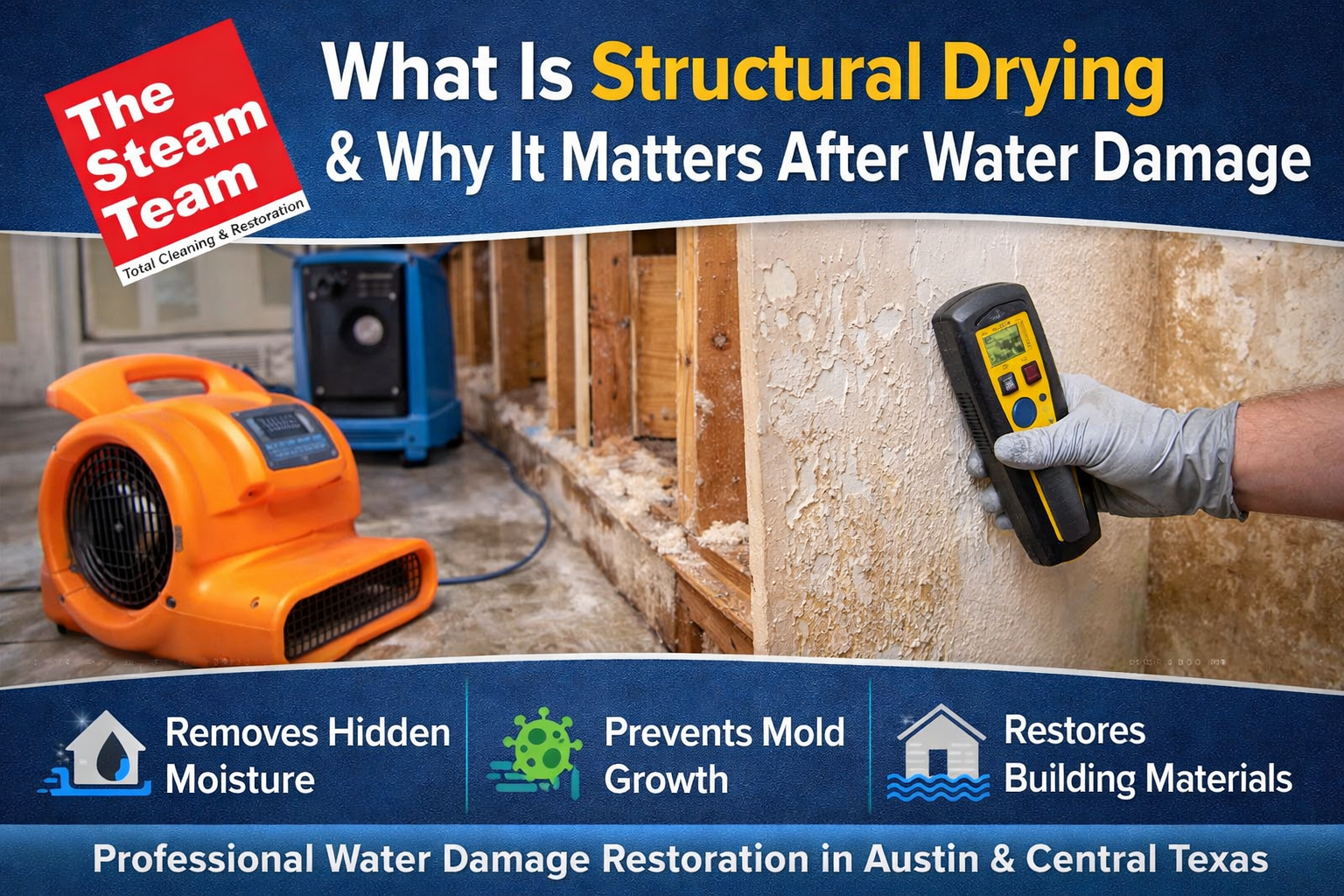
When water damage occurs in a home or building, removing standing water is only the beginning of the restoration process.
Read More
Explore expert tips on water damage restoration, carpet cleaning, rug cleaning, mold remediation, and air duct cleaning in Austin, TX. Trusted local insights from The Steam Team since 1983.
When water damage occurs in a home or building, removing standing water is only the beginning of the restoration process.
Read MoreWater damage can happen suddenly and without warning. Whether caused by a burst pipe, storm flooding, appliance leak, or roof failure, water entering your home can quickly damage floors, walls, and belongings.
The first 24 hours after water damage are the most critical. Acting quickly can significantly reduce repair costs and prevent additional issues like mold growth.
Understanding what to do immediately after water damage in Austin can help homeowners protect their property and start the restoration process safely.
The Steam Team has been helping Austin homeowners respond to water damage emergencies since 1983, providing professional water damage restoration, structural drying, and mold remediation services throughout Central Texas.
The first priority is to stop the source of water if possible.
Common water sources include:
• Burst or leaking pipes
• Overflowing appliances
• Roof leaks during storms
• Plumbing failures
• Slab leaks
If the source is internal plumbing, turn off the main water shutoff valve immediately.
For storm-related flooding or external water intrusion, try to prevent additional water from entering the home if it is safe to do so.
Water and electricity are extremely dangerous together.
If water has reached electrical outlets, appliances, or wiring:
• Turn off electricity at the breaker panel
• Avoid walking through standing water near outlets
• Do not operate electrical appliances
If you are unsure whether it is safe, wait for professionals to inspect the area.
Before moving or removing damaged items, take photos or videos of the affected areas.
Important documentation includes:
• Damaged floors and carpets
• Wet walls or ceilings
• Furniture and belongings
• Standing water in rooms
These records can help support insurance claims for water damage in Austin.
Many insurance providers require visual documentation of damage before restoration work begins.
If the water level is manageable, removing standing water quickly can help reduce damage.
Common water removal methods include:
• Wet/dry vacuums
• Mops and towels
• Portable pumps
However, large water events should be handled by professional restoration companies with commercial water extraction equipment.
Homes in neighborhoods such as Round Rock, Cedar Park, and South Austin often experience flooding after heavy storms, making rapid water extraction essential.
Protecting personal belongings can prevent additional losses.
Items to move away from wet areas include:
• Electronics
• Important documents
• Area rugs and carpets
• Furniture and décor
Place aluminum foil or blocks under furniture legs to prevent water absorption from carpets.
After water removal, drying is the most important step in preventing structural damage and mold growth.
Basic drying methods may include:
• Opening windows if weather permits
• Using fans and dehumidifiers
• Removing wet rugs or cushions
However, residential fans often cannot remove moisture trapped inside walls or flooring.
Professional structural drying equipment is typically needed for full restoration.
Many homeowners underestimate how quickly water damage spreads.
Water can penetrate:
• Drywall
• Insulation
• Hardwood flooring
• Subfloor structures
• Cabinet bases
Professional restoration teams use specialized tools to detect hidden moisture and prevent long-term structural damage.
Professional services typically include:
• Water extraction
• Moisture mapping
• Structural drying
• Dehumidification
• Mold prevention treatments
Delaying cleanup can lead to serious problems within hours.
Within 24 hours:
• Materials begin absorbing water
• Carpets and drywall swell
• Mold growth may begin
Within 48–72 hours:
• Structural materials weaken
• Mold spreads quickly
• Odors develop
Fast action reduces restoration costs and prevents further damage.
Several issues commonly cause water damage in Central Texas homes.
These include:
• Burst pipes during winter freezes
• Heavy rainstorms and flash flooding
• Appliance failures (dishwashers, washing machines)
• Roof leaks
• Slab leaks under foundations
Understanding these risks can help homeowners prepare and respond quickly.
Emergency water damage restoration may be required when:
• Large areas are flooded
• Structural materials are saturated
• Electrical hazards are present
• Contaminated water is involved
• Mold risk is high
Professional restoration teams can respond quickly to stabilize the property and begin the drying process.
Water damage should be addressed within the first 24 hours to prevent mold growth and structural damage.
Yes. Mold can begin growing within 24–48 hours in damp environments.
Sometimes. Wet drywall may be salvageable if dried quickly, but severely saturated drywall often requires replacement.
Many policies cover sudden water damage such as burst pipes, but coverage varies by policy.
Most restoration projects take 3–7 days, depending on the severity of the damage.
• Serving Austin since 1983
• 24/7 emergency response
• Certified restoration technicians
• Advanced drying and extraction equipment
• Trusted throughout Central Texas
Our team helps homeowners recover quickly from water damage emergencies.
If your home experiences water damage, fast action is critical.
The Steam Team provides 24/7 emergency water damage restoration in Austin, helping homeowners remove water, dry structures, and restore damaged areas safely.
📞 Call 512-451-8326 for emergency water damage service
Serving Austin, Round Rock, Cedar Park, Georgetown, and surrounding Central Texas communities.
Emergency water removal is the immediate response to uncontrolled water intrusion that threatens a property’s structure, contents, and occupant safety. This guide explains why fast action matters, the core mitigation steps used by professionals, and how homeowners and businesses in Austin can limit secondary damage like mold and structural decay. You will learn how emergency water extraction differs from routine cleanup, what equipment and monitoring techniques ensure a safe drying goal, and how to prepare documentation for insurance claims. Early in an emergency it helps to know who to call; The Steam Team provides 24/7 emergency response across Austin with IICRC-certified technicians, an A+ BBB rating, and free estimates—call 512-532-0500 for dispatch. The sections below map the urgency of response, a step-by-step restoration process, water damage categories, common local causes, mold-prevention tactics, insurance assistance, residential vs. commercial workflows, equipment explanations, FAQs, and the neighborhoods served.
Emergency water removal is the rapid extraction and mitigation work performed to stop water from causing progressive damage to a property and its contents. The mechanism is straightforward: remove the standing water, control moisture in materials and air, and limit microbial growth; doing so preserves building systems and reduces repair scope. In Austin, sudden storms, aging plumbing, and heavy seasonal rain events increase the likelihood of rapid water intrusion, making time-to-action a key local variable. Rapid, professional mitigation reduces restoration cost, limits contents loss, and shortens displacement time for occupants; the next subsection explains the extraction tasks technicians perform on arrival.
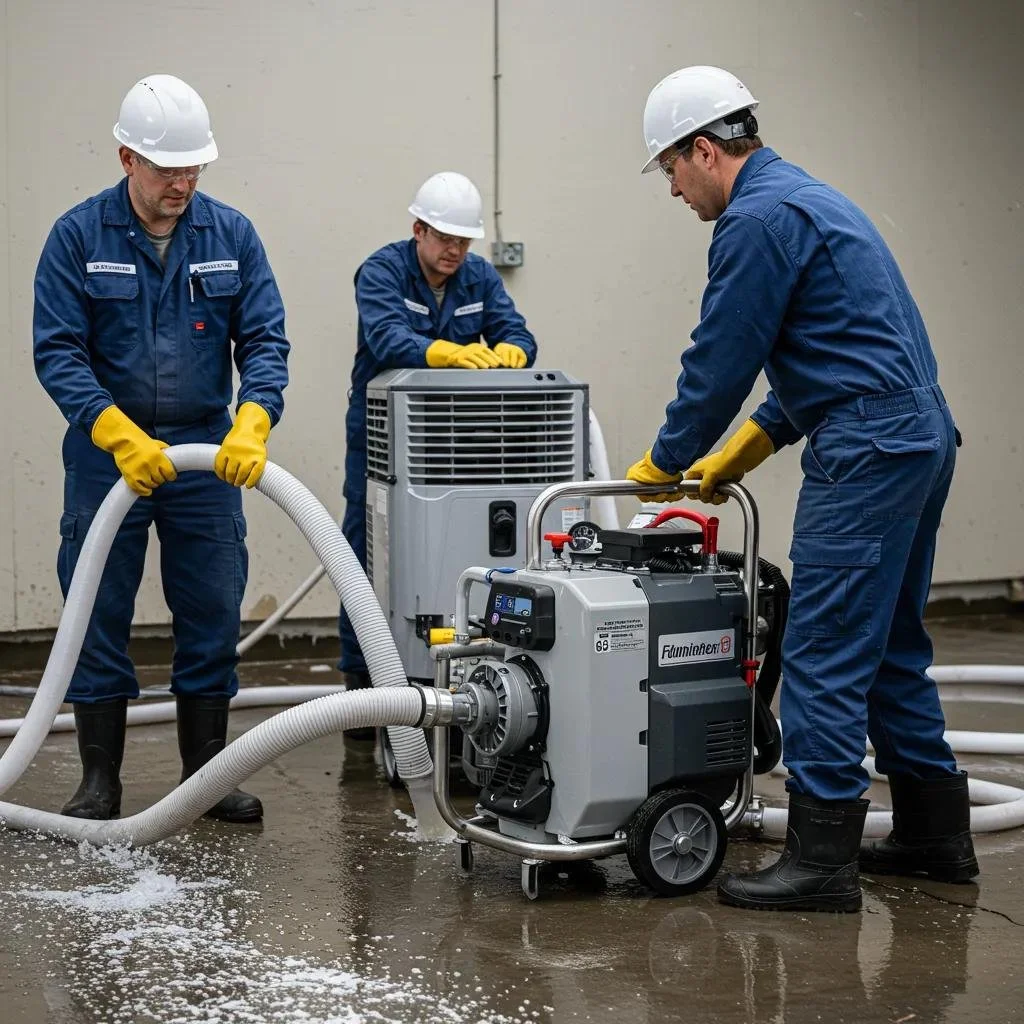
Emergency water extraction begins with rapid containment and removal of pooled water using high-capacity pumps and portable extractors to minimize saturation of flooring and lower structural loads. Technicians establish safety zones, shut off electricity where necessary, and remove salvageable contents for drying or pack-out; these actions protect occupants and speed restoration.
Extraction is followed immediately by layout of air movers and dehumidifiers to drive evaporation and remove moisture from the air, which prevents further absorption by building materials.
Initial client steps include shutting off water sources if safe, moving valuables to a dry area, and documenting damage with photos; these actions support both mitigation and later insurance documentation.
Water removal services should aim to be on-site and begin mitigation work within 24 hours of a reported emergency, with immediate dispatch for active flooding or sewage events to prevent rapid mold colonization. Industry guidance shows mold can begin developing within 24–48 hours, so a response measured in hours rather than days materially changes outcomes.
Rapid arrival allows technicians to triage the event, prioritize extraction, and implement drying plans that keep moisture below target thresholds within days rather than weeks.
Expect arrival procedures to include safety assessment, moisture mapping, and a brief scope review before work begins.
Delaying water removal increases the likelihood of microbial growth, structural deterioration, and irreversible content damage, and it often converts a remediation job into a reconstruction project. Mold spores proliferate in damp environments, adhesives and finishes delaminate, and wood framing can experience compromised strength if moisture remains elevated for extended periods. Insurance implications also escalate with delay because adjusters document progressive damage and may challenge the adequacy of mitigation efforts. Quick mitigation reduces these risks and limits out-of-pocket costs and business interruption.
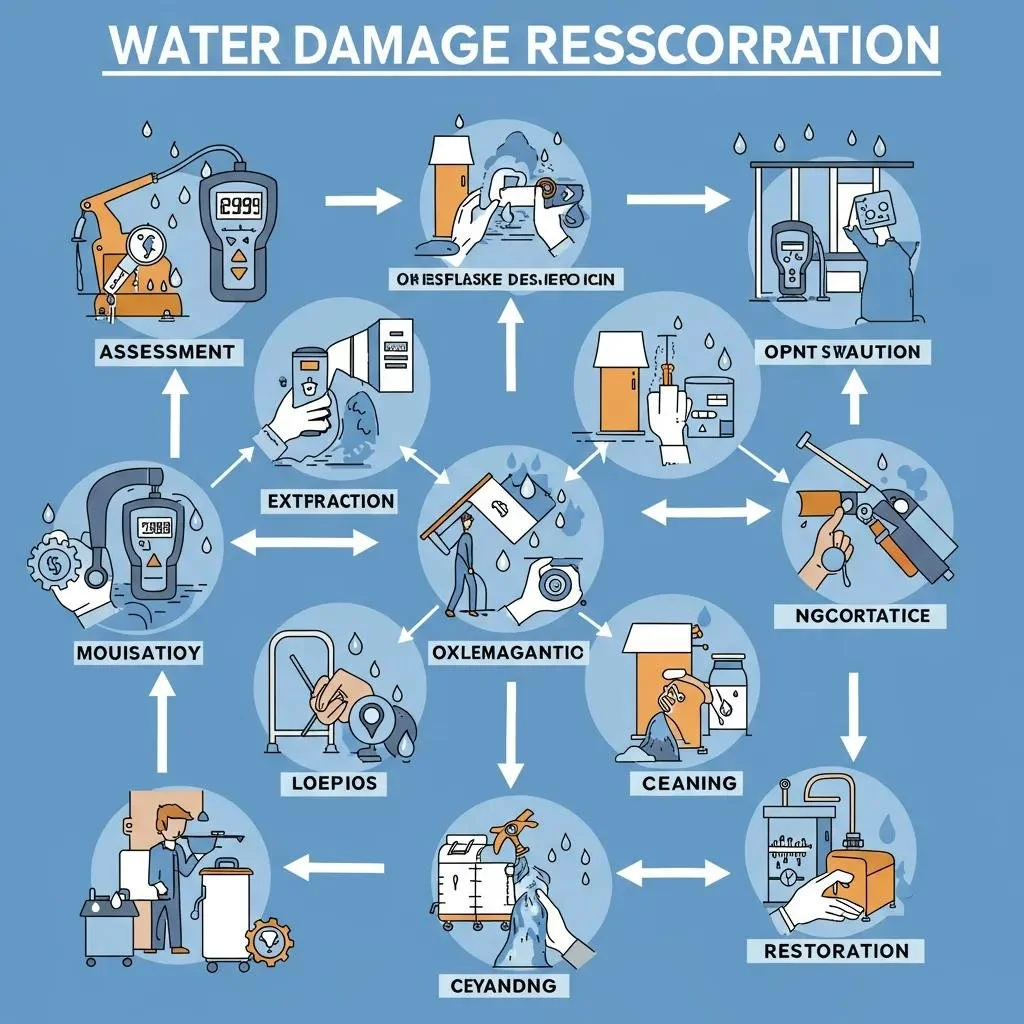
The Steam Team implements a structured six-step restoration process designed to move an Austin property from emergency condition to verified dryness and repair planning. This process aligns inspection and documentation with fast extraction, antimicrobial control, staged drying (air movement and dehumidification), and data-driven monitoring to confirm restoration goals. The certified technicians use moisture meters, thermal imaging, and clear scopes so clients and insurers can see progress and next steps, which shortens the overall timeline. Below are the step-level explanations mapped to client benefits and common timeframes.
Inspection and damage assessment begin with a documented walkthrough to identify water sources, affected materials, and immediate safety hazards, creating a scope of work for mitigation and restoration. Technicians perform moisture mapping using pin and non–pin meters and thermal imaging to locate hidden moisture and plan equipment placement. Documentation typically includes photos, moisture readings, and an initial work plan that supports insurance claims and sets drying endpoints. This step clarifies whether mitigation suffices or reconstruction will be required, and it prepares the client for the subsequent extraction phase.
Water extraction is scaled to the property and severity: residential jobs often use portable high–flow extractors and truck–mounted vacuums for heavier floods, while commercial losses can require multiple truck–mounted pumps and rapid mobilization of crew and equipment. Containment and access strategies differ by building type; technicians prioritize safety, minimize downtime, and protect finishes and inventory in businesses. Extraction throughput and immediate removal of water–damaged materials directly impact drying time and restoration cost. Choosing the right extractor and containment approach accelerates the drying phase and reduces secondary damage.
Anti-microbial application targets residual microbial contamination after water removal, lowering the risk of mold colonization and reducing odors that indicate unresolved moisture. The decision to apply antimicrobial agents depends on the water category and exposure duration; gray or black water events typically require more aggressive treatments and containment. Proper application follows safety protocols for occupants and contents, and it complements structural drying rather than replacing it. Applied correctly, antimicrobial treatment reduces the need for more extensive remediation later and supports a healthier indoor environment.
Advanced drying uses coordinated air movers and industrial dehumidifiers to accelerate evaporation and remove moisture from the air, which in turn draws moisture out of building materials toward controlled drying points. Drying is a science: technicians conp airflow patterns, measure humidity and vapor pressure, and adjust equipment placement to create efficient moisture transport. Complex assemblies—like layered flooring or HVAC systems—require tailored drying plans executed over days with periodic adjustments. Effective dehumidification reduces condensation risk and creates measurable progress toward material dryness goals.
Drying progress is monitored with moisture meters, relative humidity sensors, and periodic photographic and written documentation to ensure materials reach their documented dry standards. Data-driven verification uses baseline readings, scheduled rechecks, and client-facing reports that show trends and justify next steps such as content return or reconstruction. Thermal imaging can reveal hidden pockets of moisture that need targeted drying or removal. Clear monitoring reduces uncertainties in claim settlements and provides objective evidence that drying goals have been met.
| Process Step | Actions Performed | Client Benefit / Typical Timeframe |
|---|---|---|
| Inspection & Assessment | Moisture mapping, safety check, scope creation | Clear plan within hours; supports insurance documentation |
| Water Extraction | High–flow pumps, portable extractors, containment | Rapid reduction of standing water; days accelerated |
| Anti-microbial Application | Surface treatment, odor control, microbial reduction | Lower mold risk; prepares surfaces for drying |
| Air Movement | Air movers, airflow balancing | Accelerates evaporation; shortens drying time |
| Dehumidification | Industrial dehumidifiers, humidity control | Removes vapor; stabilizes structure within days to a week |
| Monitoring & Verification | Meters, reports, sign-off | Objective completion evidence; supports claim closure |
This table clarifies each step’s role and expected client outcomes during a typical mitigation timeline.
Water damage is classified into three categories—clean, gray, and black water—each requiring distinct safety protocols, treatment steps, and cost considerations. Clean water comes from supply lines or rain and generally allows for standard extraction and drying measures, while gray water contains contaminants that elevate health risk and often calls for antimicrobial treatment. Black water—sewage or floodwater—poses serious hazards, requires containment, removal of porous materials, and often reconstruction of affected areas. The table below summarizes categories, sources, and typical treatment approaches to help homeowners and businesses understand expected actions and timelines.
| Water Category | Common Sources / Risk Level | Required Treatment / Typical Time-to-Dry |
|---|---|---|
| Clean Water | Supply line breaks, rain ingress; low contamination | Extraction + drying; 2–5 days for most materials |
| Gray Water | Appliance overflows, dishwasher, sump pump discharge; moderate contamination | Extraction + antimicrobial and controlled disposal; 3–7 days plus cleaning |
| Black Water | Sewage backups, river or storm floodwaters; high contamination | Containment, removal of porous materials, disinfection; reconstruction often required, variable timeline |
Clean water damage originates from potable sources like supply lines or rain and is lower in contamination risk, enabling swift extraction, structural drying, and content salvage when addressed quickly. Treatment focuses on removing standing water, drying materials, and monitoring until moisture reaches manufacturer or industry dry standards. While less hazardous, clean water can degrade into gray or black water if it remains untreated or contacts contaminants. Timely action and documentation preserve finishes and contents and avoid escalation to more intrusive remediation.
Gray water contains moderate contaminants—examples include appliance overflows or water from washing machines—and carries higher microbial risk than clean water, requiring antimicrobial treatment and careful disposal practices. Personnel use appropriate PPE and follow protocols to clean and sanitize affected surfaces, and porous materials may require removal depending on exposure duration. Gray water events demand timely documentation and more thorough cleaning to protect occupants’ health. Proper handling reduces the likelihood of mold and lingering odors that complicate restoration.
Black water includes sewage and floodwater contaminated with pathogens and chemicals, requiring strict containment, removal of porous materials, and professional disinfection to protect occupant health. Black water events commonly necessitate demolition of affected finishes, controlled disposal of materials, and coordination with environmental regulations. Reconstruction is often part of the recovery, increasing cost and timeline compared with cleaner water types. Because of the hazards, only trained professionals should handle black water mitigation to ensure safety and regulatory compliance.
Local Austin factors—seasonal storms, hill-country runoff, older home plumbing, and urban drainage patterns—shape the frequency and type of water incidents seen by homeowners and businesses. Neighborhoods with older infrastructure may see more supply-line failures, while low-lying or poorly drained areas experience higher flood-related black water incidents during heavy rains. Seasonal preparation and property-specific mitigation lower risk and guide response priorities. Understanding local patterns helps prioritize preventive maintenance and informs how quickly to call for professional help when water loss occurs.
Water damage in Austin arises from several repeatable causes: burst pipes, heavy storms and flash floods, appliance failures, and roof or envelope breaches that allow steady intrusion. Each cause has distinct mechanics and warning signs that inform immediate mitigation and longer-term repairs. By recognizing patterns and performing seasonal checks, property owners can reduce the frequency and severity of incidents. The list below summarizes common causes with short mitigation tips for fast action.
Burst pipes: Shut off main water and call for emergency extraction; insulate vulnerable pipes.
Floods and storms: Elevate valuables, use sandbags when forecasted, and evacuate if necessary.
Appliance leaks: Regularly inspect hoses and install automatic shutoff valves where possible.
Roof leaks and intrusion: Monitor ceilings for stains and schedule prompt repairs to flashing and seals.
Burst pipes produce high-pressure, rapid water release that overwhelms plumbing systems and flooring, quickly saturating materials and increasing structural load and mold risk. Immediate mitigation focuses on isolating the water source, extracting standing water, and drying affected materials to prevent ongoing absorption. Preventive measures include pressure monitoring and seasonal inspections, while emergency actions prioritize safety and quick extraction. For property owners, a fast shutoff and a prompt professional response limit damage and restoration scope.
Floods and storms introduce large volumes of water, often contaminated, that enter through foundation gaps, doorways, or overrun storm systems, causing broad-area saturation and sometimes structural undermining. Recovery from storm events typically requires large-scale extraction, contents handling, and possibly reconstruction in affected areas, with priority on occupant safety and documentation for claims. Preparation—such as clearing drains and elevating critical systems—reduces vulnerability, while post-event mitigation focuses on drying and microbial control. Storm-related incidents often increase demand for emergency services, affecting response times.
Appliance failures—from dishwashers, refrigerators, or washing machines—produce steady leaks that slowly saturate floors and cabinetry and can go unnoticed until damage is advanced. Small leaks escalate over time, compromising finishes and creating mold-friendly conditions. Regular inspection of supply lines, timely replacement of worn hoses, and use of water-detection alarms reduce risk. When leaks occur, quick shutoff, documentation, and professional drying minimize content loss and structural repairs.
Visible signs of roof leaks and structural intrusion include ceiling stains, peeling paint, musty odors, surface blistering, and increased indoor humidity; hidden signs include warped trim and elevated moisture readings in walls. Roof and envelope breaches allow repeated water entry, so immediate temporary containment followed by professional assessment is recommended to avoid progressive decay. Short-term fixes such as tarping and interior buckets limit damage until permanent repairs are made. Regular inspections and timely maintenance reduce the chance of emergency water removal needs from roof failures.
Preventing mold after water intrusion requires a coordinated strategy: rapid water removal, controlled drying with air movement and dehumidification, and, where appropriate, targeted antimicrobial treatment. Mold spores are always present, but colonization requires moisture; keeping moisture below critical thresholds and completing drying within 24–72 hours is essential to prevention. Monitoring and verification provide evidence of successful drying and peace of mind for occupants and insurers alike. The checklist below summarizes actionable steps to prevent mold growth after an event.
Immediate Extraction: Remove standing water within hours to stop material saturation.
Targeted Drying: Use air movers and dehumidifiers to reach material-specific dryness goals.
Anti-microbial Treatment: Apply when contamination risk is present, especially for gray/black water events.
Following these steps reduces microbial risk and shortens restoration timelines; the next subsection explains why drying speed is so important.
Rapid drying interrupts the moisture cycle that allows mold spores to germinate and form colonies, with the highest risk window occurring within the first 24–48 hours after water exposure. Faster evaporation and humidity control reduce nutrient availability for microbes on porous surfaces like drywall and wood. Targeted airflow and dehumidification maintain drying gradients that pull moisture out of materials rather than trapping it in assemblies. Consistent monitoring ensures goals are met and minimizes the likelihood of later mold remediation.
Anti-microbial treatments act as both preventive and corrective measures: they reduce microbial load on surfaces after contamination and limit regrowth while drying proceeds, especially in gray and black water scenarios. Application follows industry protocols to ensure safe use and compatibility with materials and finishes. Anti-microbials do not replace the need for structural drying or removal of unsalvageable materials, but they significantly reduce odor and visible microbial staining when used appropriately. Documentation of treatments also helps insurers understand the scope of mitigation.
The Steam Team combines prompt mitigation, data-driven drying, and follow-up verification to reduce the chance of recurrent mold problems, providing clients with monitoring records and guidance on structural repairs that prevent future intrusion. Technicians educate homeowners and facility managers about moisture-prone assemblies and recommend targeted repairs—such as improving drainage or replacing compromised materials—when needed. Follow-up inspections and clear reporting support long-term outcomes and help clients track maintenance tasks to minimize recurrence. This approach pairs technical controls with client education for sustained protection.
The Steam Team supports customers through the insurance claims process by documenting damage, providing inspection and monitoring reports, and coordinating communications that make claim handling more straightforward for homeowners and businesses. As a preferred vendor for major insurance carriers in Texas, the company often has streamlined billing procedures and established communication channels that can reduce administrative friction. Technicians produce clear evidence—photos, moisture logs, and scope documents—that help adjusters assess the event. Below is a practical checklist clients can use to simplify claims submission.
Photograph all damage before and during mitigation.
Save inspection reports and moisture readings for adjusters.
Keep an itemized list of damaged contents and any temporary repair receipts.
Preferred-vendor status indicates the company meets certain operational, credentialing, and performance standards that insurers recognize, which can lead to coordinated response and streamlined billing. This designation typically means technicians follow carrier workflows, provide standardized documentation, and can collaborate directly with adjusters to clarify scopes and expedite approvals. Clients benefit from a smoother administrative experience while retaining control over contractor selection and work quality. Verifying vendor status with an insurer remains a recommended step for clients who want transparency.
Homeowners and businesses simplify claims by documenting the event thoroughly, notifying their insurer promptly, and retaining all mitigation reports and receipts for submission. Clear photos of damage, a dated timeline of events, and professional inspection reports with moisture readings make it easier for adjusters to understand loss extent. Prompt mitigation also demonstrates reasonable steps taken to reduce loss, an important factor in claim evaluation. Coordinating with a preferred vendor who provides standardized reports can further reduce administrative delays.
Insurers typically request inspection reports, moisture readings, before-and-after photos, inventory lists of damaged contents, and invoices for mitigation work to evaluate a claim accurately. Technicians should provide clear, timestamped documentation showing initial conditions, equipment placement, and drying progress, which supports repair estimates and claim approval. Retain copies of all temporary repair receipts and correspondence with the contractor and insurer. High-quality documentation mitigates disputes and helps close claims more quickly.
| Equipment | What it Does | When / Why It's Used / Expected Result |
|---|---|---|
| High–powered water extractor | Removes standing and trapped water rapidly | Used immediately after assessment; reduces saturation and shortens drying time |
| Industrial dehumidifier | Lowers air humidity to promote evaporation | Runs throughout drying phase; prevents condensation and mold growth |
| Air mover | Creates directed airflow over wet surfaces | Accelerates evaporation from floors, walls, and cavities |
| Moisture meter | Measures moisture in materials (pin and non–pin) | Guides drying goals and documents progress for sign-off |
Services differ by residential and commercial requirements but share common mitigation principles: rapid extraction, drying, antimicrobial control, contents handling, and documentation. Residential work emphasizes personal property protection and client communication, including pack-out options and careful handling of heirlooms. Commercial responses prioritize continuity, rapid mobilization, and large-loss equipment to minimize downtime for businesses and facilities. Below is a short comparison list highlighting key service differences.
Residential: Personalized contents protection, pack-out, and homeowner communication.
Commercial: Large-scale extraction, shift crews, and coordination with facility managers.
Both: 24/7 emergency response, documented scopes, and monitoring reports.
Residential restoration tailors content handling, scheduling flexibility, and communication to the homeowner’s needs, often offering pack-out and storage for salvageable items to protect valuables during drying. Technicians prioritize minimizing disruption to daily life while ensuring durable drying and clear explanations of each step. Household finishes and built-in systems require nuanced drying plans to preserve finishes and limit reconstruction. Clear timelines and monitoring reports help homeowners plan temporary relocation if needed.
Commercial solutions focus on minimizing business interruption using large-capacity equipment, shift-based crews, and rapid mobilization to stabilize operations quickly. Coordination with facility managers and insurers on scope and phasing is key to keeping critical areas operational. For large losses, logistical planning for inventory protection and staged re-entries ensures continuity. The commercial approach emphasizes speed, scalability, and coordinated documentation.
Round-the-clock emergency service reduces the window in which mold and structural deterioration can begin, supports faster claim initiation, and provides immediate mitigation that limits content and property loss. For businesses, immediate response preserves operations and revenue; for homeowners, it reduces displacement and emotional stress. Prompt action also improves the quality of restoration outcomes and can reduce total restoration cost. Fast dispatch combined with experienced crews is central to better long-term results.
Advanced equipment and techniques include truck-mounted extractors, high-capacity portable extractors, industrial dehumidifiers, air movers, moisture meters, and thermal imaging to create tailored drying plans. Each tool plays a role in moving moisture from materials into the air and then removing that vapor from the structure. Selecting the right equipment and configuring it for each space shortens drying time and limits material loss. The equipment table earlier clarifies functions and expected results; the following subsections explain key devices and monitoring methods.
High-powered water extractors operate by combining suction and agitation to lift water from carpet, padding, and flooring systems rapidly, and truck-mounted units provide greater throughput for severe floods. Flow rates and head pressure determine suitability for large-volume events versus smaller residential losses where portable extractors suffice. Efficient extraction reduces residual moisture that must be removed by dehumidification, shaving days off the overall drying timeline. Proper extractor selection and technique are essential to limit secondary damage.
Industrial dehumidifiers remove moisture from the air by condensing vapor or using desiccant media, lowering relative humidity so air movers can draw moisture out of materials into the airstream. Air movers create directed airflow across wet surfaces to speed evaporation, while dehumidifiers capture the resulting vapor and export it from the controlled space. Equipment sizing is determined by room volume, material types, and measured moisture loads. Correct placement and balance between airflow and dehumidification optimize drying efficiency.
Moisture meters—both pin and non–pin—provide objective readings of moisture content in wood, drywall, and other substrates, guiding when to reduce or remove equipment and when reconstruction is appropriate. Technicians log baseline readings, set drying goals based on material standards, and track trends to validate progress for clients and insurers. Consistent monitoring reduces guesswork and provides defensible evidence that drying endpoints were met. Clients receive reports showing readings over time and the resulting sign-off when targets are achieved.
| Neighborhood / Area | Typical Water-Damage Challenges | Service Notes / Response Considerations |
|---|---|---|
| Downtown Austin & Zilker | Older buildings, urban runoff, basement and lower-level ingress | Quick response to interior flooding and content protection |
| Surrounding suburbs (Round Rock, Cedar Park) | Storm runoff, foundation seepage in low areas | Mobilization may require staging; response times vary slightly |
| Central Austin neighborhoods | Mixed building stock, aging plumbing issues | Emphasis on rapid inspection and moisture mapping |
Upon discovering water damage, the first step is to ensure your safety by shutting off the main water supply if it's safe to do so. Next, move any valuables or important items to a dry area to prevent further damage. Document the situation with photos for insurance purposes. If the water is from a clean source, you may begin to remove standing water using towels or a wet/dry vacuum. However, for significant flooding or contaminated water, it's best to call a professional water removal service immediately.
Hidden water damage can manifest in various ways, including musty odors, discoloration on walls or ceilings, and warped or buckled flooring. You may also notice increased humidity levels or mold growth in corners and behind furniture. Using a moisture meter can help detect elevated moisture levels in walls and floors. If you suspect hidden damage, it's advisable to consult a professional who can perform a thorough inspection and moisture mapping to identify affected areas.
If water damage is not addressed quickly, it can lead to severe long-term consequences, including structural damage, mold growth, and compromised indoor air quality. Prolonged exposure to moisture can weaken building materials, leading to costly repairs and potential safety hazards. Additionally, mold can cause health issues for occupants, including respiratory problems and allergic reactions. Therefore, timely intervention is crucial to mitigate these risks and preserve the integrity of your property.
When it comes to water damage, homeowners should consider specific coverages such as flood insurance, which is often not included in standard homeowners policies. Additionally, look for coverage that addresses water damage from burst pipes or appliance failures. It's essential to review your policy details and discuss with your insurance agent to ensure you have adequate protection against various water damage scenarios, including both sudden and gradual incidents.
To prevent future water damage, conduct regular inspections of your plumbing, roof, and drainage systems. Install water detection alarms near high-risk appliances and ensure proper drainage away from your foundation. Regularly clean gutters and downspouts to prevent overflow during heavy rains. Additionally, consider upgrading old plumbing and sealing any cracks in your foundation or walls. These proactive steps can significantly reduce the risk of water intrusion and associated damage.
The water removal process for residential properties typically focuses on personal property protection and minimizing disruption to the homeowner's daily life. In contrast, commercial water removal prioritizes rapid mobilization and large-scale extraction to minimize business downtime. Commercial services often involve more extensive equipment and crew coordination, while residential services may include personalized communication and pack-out options for valuables. Both processes, however, adhere to the same core principles of rapid extraction and thorough drying.
A professional water-damage company should mobilize and begin mitigation within 24 hours, with immediate dispatch for active flooding or sewage exposure to reduce mold risk; response time depends on call volume and location. Rapid dispatch allows technicians to contain hazards, begin extraction, and set drying equipment before damage escalates. Peak storm events can affect arrival time, so early notification and clear information about access speed up deployment. Clients should expect initial triage and documentation at arrival.
Whether you can remain in your home depends on the severity of contamination, the extent of demolition needed, and safety considerations like electrical hazards and air quality; many minor extractions do allow occupants to stay with minimal disruption. If black water, structural compromise, or extensive demolition is required, temporary relocation may be recommended for safety and comfort. Technicians will advise based on contamination category and planned work scope. Insurance policies often cover temporary housing if displacement is necessary.
The most frequent causes are aging plumbing failures, appliance malfunctions, roof and envelope leaks, and storm-related flooding, each requiring different mitigation approaches and preventive maintenance routines. Understanding the dominant local causes helps prioritize inspections and upgrades that reduce risk. Regular maintenance of appliances, roofs, and drainage systems is the most effective prevention. When incidents occur, prompt documentation and professional mitigation limit escalation.
Preventive strategies include routine inspections of supply lines and roof systems, installing water detection alarms near high-risk appliances, ensuring proper drainage away from foundations, and scheduling seasonal maintenance before peak storm periods. Simple actions—like replacing aging hoses, cleaning gutters, and monitoring interior humidity—reduce vulnerability significantly. For high-risk properties, professional assessments identify weak points and recommend targeted interventions. Consistent preventive care lowers both incident frequency and repair costs.
Restoration costs vary widely by water category, affected area size, materials involved, and whether reconstruction is needed; mitigation-only jobs might range modestly while black water events or reconstruction increase total cost substantially. Important cost drivers include the volume of standing water, the need to remove porous materials, equipment needs, and the time required to reach drying endpoints. The best way to determine cost is an on-site estimate that documents scope and remediation steps; many providers offer free estimates and work with preferred vendors to support claims.
Service coverage typically includes downtown Austin, central neighborhoods, and surrounding Central Texas cities, with operational logistics adapted to each area’s unique access and drainage patterns. Local technicians understand neighborhood-specific risks—such as hill–country runoff or older building stock—and stage equipment accordingly. Response times in surrounding suburbs may vary slightly due to travel distance but providers maintain dispatch models for broad coverage. The following subsections describe neighborhood nuances and how service is provided across the region.
Downtown Austin and Zilker face challenges tied to older mixed-use buildings, limited street drainage in heavy storms, and sometimes constrained access for large equipment, which influences containment and extraction strategies. Historic finishes and tight spaces require careful pack-out and content protection methods to preserve value. Technicians coordinate with building managers and follow special access requirements when needed. Local knowledge speeds recovery and helps protect historic materials during mitigation.
The Steam Team mobilizes crews to surrounding cities using staged equipment and regional dispatch procedures that maintain quick response capability, with slight variations in arrival times due to distance and call volume. For outlying areas, advance staging or coordination with local facility managers ensures crews can begin mitigation promptly. Service logistics prioritize rapid containment and clear client communication regardless of location. Clients in outlying areas receive the same documented reports and monitoring that city customers expect.
For 24/7 emergency response, have your location, a brief description of the event, and any safety concerns ready when calling so dispatch can assign the right equipment and crew without delay; The Steam Team offers a dedicated emergency hotline for rapid dispatch. Expect the dispatcher to ask about water source, extent of visible standing water, presence of contaminants, and access instructions to prioritize response. Keep photo documentation for claims and follow dispatcher guidance until technicians arrive. Calling early accelerates mitigation and lowers restoration scope.
Prepare key information: Address, access details, and source description when you call.
Document and photograph: Before mitigation begins to support insurance claims.
Follow safety guidance: Avoid electrical hazards and do not attempt sewage cleanup without professional gear.
These steps help ensure an efficient, safe response and reduce long-term costs.
Emergency water removal services in Austin provide critical support to mitigate damage and restore properties swiftly, ensuring safety and preserving valuable assets. By understanding the urgency of response and the structured restoration process, homeowners and businesses can effectively navigate water damage situations. The Steam Team's expertise and commitment to quality service make them a reliable partner in these emergencies. Contact us today to learn more about our services and how we can assist you in your time of need.
Water damage happens fast and the consequences compound faster: standing moisture, damaged materials, and mold can begin to develop within 24–48 hours, making immediate, informed action essential for limiting loss and long-term costs. This guide explains step-by-step what to do the moment you discover water intrusion, how different water types affect safety and cleanup, and what professional restoration involves so you can prioritize human safety, preserve evidence for insurance, and reduce structural damage. You will learn how to triage risks, safely stop water and electrical hazards, document damage for claims, and what to expect from a professional restoration workflow including extraction, drying, sanitizing, and reconstruction. Practical checklists and short how-to lists are included for the first 1–48 hours, plus concise explanations of mold timelines and insurance documentation that are designed to be clear for homeowners and small-business owners in Austin and Central Texas. After the immediate steps and technical background, the guide describes how working with a preferred vendor and certified technicians can simplify claims and speed repairs, and it finishes with trusted contact options for urgent response.
Water is classified into categories that determine contamination risk and cleanup requirements; understanding these categories helps you choose the right safety precautions and remediation approach. Category 1 water is clean and comes from a sanitary source, Category 2 (gray water) contains contamination and chemicals, and Category 3 (black water) is grossly contaminated by sewage, floodwater, or hazardous runoff. Each category raises different health and structural concerns—Category 1 may allow limited DIY mitigation, while Category 3 usually requires full professional remediation and containment to protect occupants. Recognizing the category quickly guides PPE selection, disposal decisions for porous materials, and whether to call emergency services or remediation specialists.
Category 1 is clear, potable water from sources such as a supply line or appliance overflow and typically poses the lowest immediate health risk, but it can become contaminated if left untreated. Category 2, or gray water, includes wastewater from appliances, dishwashers, or washing machines and contains chemicals or biological matter that can cause illness and requires more aggressive cleanup and disinfection. Category 3, or black water, includes sewage, storm floodwater, or standing water that has been stagnant and is unsafe to handle without full protective gear and professional protocols. Knowing the category informs whether you can use household cleaners and fans or must rely on certified remediation teams to remove contaminated materials and perform sanitization.
The water category drives PPE, cleaning agents, and disposal rules: clean water may require gloves and rapid drying, gray water needs antimicrobial cleaning and discarding of some porous items, while black water requires full PPE, controlled removal, and specialized waste handling. For porous materials like drywall, insulation, and carpeting exposed to Category 2 or 3 water, removal is often necessary because contaminants can penetrate beyond surface cleaning. Containment procedures—such as sealing off affected rooms and using negative pressure during remediation—reduce cross-contamination and protect unaffected areas. Understanding these distinctions helps you assess immediate risks and decide whether to perform limited mitigation actions or to wait for professional containment and removal.
Immediately after discovering water damage, prioritize life-safety, then stop the source if safe, reduce further water spread, and document the scene for insurance—acting quickly within the first 24–48 hours materially reduces mold risk and repair costs. Start by ensuring everyone is safe, moving people and pets away from standing water and wet electrical sources, then consider shutting off water and power only if it can be done without exposing anyone to live electrical hazards. Document the damage with time-stamped photos and video before moving items; this record supports insurance claims and helps technicians scope work accurately. Limited DIY mitigation—like removing small rugs, elevating furniture, or using towels to limit spread—can be helpful but avoid any extraction or cleanup of contaminated water and never enter areas with standing water if electricity might be live.
Turn off electricity and stop the water source if it is safe to do so, prioritizing human safety and keeping clear of standing water that may contact live circuits.
Document the damage with photos and video, making sure to capture timestamps, room-by-room overviews, and close-ups of affected belongings and structural elements.
Remove or elevate undamaged valuables and move pets and people to dry areas; avoid handling contaminated materials and seal them off for professionals to evaluate.
These immediate steps prevent additional damage and preserve evidence for insurance, and they also prepare the property for faster professional mitigation once technicians arrive.
Shutting off electricity and stopping the water source are high-priority safety actions, but they carry risk—always avoid touching electrical panels while standing in water and call professionals if you suspect live circuits are exposed. Locate the main water shutoff (often near the meter, in a utility area, or near the street-facing wall) and turn it off to stop inflow; if in doubt, contact a plumber or emergency responder to avoid making the situation worse. For electrical shutoff, move people away from wet areas and, if safe and dry, flip the main breaker; otherwise wait for a qualified electrician or remediation team. If you cannot safely access shutoffs or find electrical arcing, leave the area and contact emergency services and a professional restoration provider for immediate support.
Documenting damage thoroughly and prioritizing movable valuables reduces loss and simplifies claims—start with wide-angle photos, then close-ups and videos showing timestamps and any identifying serial numbers or paperwork. Place salvageable small items in dry plastic bins or elevated surfaces, and avoid wiping or drying items that may have forensic value for claims; make a simple inventory list that notes condition and location. For high-value items, photograph both front and back and keep receipts or appraisals handy for insurers; secure items in a dry, climate-controlled area if possible. Clear documentation and careful handling maintain chain-of-evidence for adjusters and speed decision-making during mitigation.
Limited DIY attention is appropriate for small, clean-water incidents: blotting, mopping, and using household fans for surface evaporation can reduce short-term damage, but these actions must be time-limited and focused on preventing spread rather than full restoration. Avoid attempting large-scale extraction, carpet removal, or cleaning of contaminated water (Category 2/3), which require commercial pumps, dehumidifiers, and certified technicians to handle disposal and sanitization. Preserve evidence for your insurer by photographing wet areas before extensive DIY work and keep receipts for any temporary mitigation supplies purchased. If conditions suggest contamination or structural compromise, pause DIY efforts and wait for professional assessment and mitigation.
Professional restoration follows a systematic, five-step process—contact and triage, extraction, drying and dehumidification, cleaning/sanitizing, and reconstruction—to restore safety and habitability while preventing secondary damage such as mold. The initial contact gathers triage information (water source, category, affected areas) to determine rapid response needs and equipment staging, and on-site assessment establishes scope and a mitigation plan. Extraction uses industry-grade pumps and vacuums to remove standing water quickly; drying employs air movers and industrial dehumidifiers while monitoring moisture metrics to verify progress. Cleaning and sanitizing remove contaminants and odors according to water category, and final reconstruction repairs or replaces damaged structural elements, coordinating with insurers and other trades as needed.
When you place an emergency call, intake staff collect vital details—location, access, source of water, and any immediate safety concerns—to prioritize response and dispatch technicians with appropriate equipment. On arrival, technicians conduct a moisture mapping and structural assessment using moisture meters and infrared imaging where needed, documenting findings and creating an initial scope of work with mitigation priorities. Immediate mitigation steps such as containment, temporary tarping, and prioritized extraction may occur to stabilize conditions before a full scope is agreed upon. This rapid assessment reduces uncertainty for homeowners and establishes a clear path to drying and restoration, which in turn helps with insurance documentation and scheduling.
Extraction equipment selection depends on the volume and contamination of water; effective extraction reduces drying time and lowers repair costs by removing bulk water before dehumidification begins. Below is a comparison of common extraction tools, their attributes, and typical uses to clarify selection criteria during mitigation.
| Extraction Tool | Key Attribute | Typical Use Case |
| Submersible Pump | High flow rate for deep standing water | Best for basements or large-volume intrusions where rapid bulk removal is required |
| Wet/Dry Vacuum | Portable, versatile suction for low-to-moderate water | Useful for small rooms, surface water, and controlled indoor spaces |
| Truck-Mounted Pump | Large capacity and continuous operation | Ideal for major floods and commercial jobs with significant volume and logistics |
These extraction options are part of a professional toolkit; technicians choose based on water depth, contamination level, and structural constraints to maximize removal speed and safety.
Drying couples directed airflow from air movers with dehumidification to remove both free water and moisture from building materials; professionals monitor progress using hygrometers and moisture meters to hit validated targets. Industrial dehumidifiers—often low-grain refrigerant (LGR) units—reduce relative humidity and support evaporation, while air movers speed surface moisture removal and prevent stratification. Technicians set target relative humidity and moisture content levels and perform daily readings to adjust equipment placement and runtime until readings indicate dryness. This measured approach minimizes the risk of mold proliferation and verifies when reconstruction can safely begin, ensuring remediation meets industry standards.
Preventing mold centers on rapid drying, controlling humidity, and removing contaminated porous materials; because mold can begin within 24–48 hours, speed and appropriate technique determine success. The core prevention strategies are drying to safe moisture levels, using dehumidification to maintain relative humidity below target thresholds, and cleaning or removing materials that retain moisture or are contaminated. Early detection—watching for musty odors, staining, or visible growth—triggers targeted remediation or testing. When professional remediation is required, containment and HEPA filtration are commonly used to remove spores and prevent cross-contamination during removal of affected materials.
| Drying/Prevention Action | Typical Time-to-Complete | Effectiveness / Notes |
| Drying (air movers + monitoring) | 24–72+ hours depending on volume | Highly effective when paired with dehumidification and daily moisture readings |
| Dehumidification (LGR units) | Continuous during drying period | Keeps RH below recommended target (40–50%), critical for preventing mold growth |
| Cleaning/Sanitizing (antimicrobials) | 1–2 days for accessible surfaces | Required for Category 2/3 contamination; porous materials may still need removal |
These comparisons show that combining drying with professional dehumidification and appropriate cleaning gives the best chance to prevent mold; when contamination is significant, removal of affected materials remains the most reliable option.
Early mold signs include visible discoloration or fuzzy growth on surfaces, persistent musty odors, and ongoing dampness or condensation despite drying efforts; occupants may also notice increased allergy-like symptoms or respiratory irritation. Visual inspection of hidden areas—behind baseboards, under carpets, and in wall cavities—helps detect early growth, while moisture mapping can reveal pockets of trapped moisture that promote mold. If you observe these signs or if drying isn’t progressing toward target metrics, professional testing or remediation is warranted to quantify the issue and plan containment. Early detection and decisive action limit both health impacts and restoration costs, restoring a safer indoor environment more quickly.
Effective remediation begins with containment to isolate affected zones and prevent spore migration, followed by removal of contaminated porous materials, HEPA vacuuming, and targeted antimicrobial application where appropriate. HEPA-filtered air scrubbers and negative-pressure setups remove airborne spores during remediation, while physical removal of drywall, insulation, and carpeting eliminates reservoirs for regrowth. For non-porous surfaces, professional cleaning with EPA-registered antimicrobial agents combined with mechanical agitation removes residual contamination. Certified remediators follow documented protocols for clearance testing and verify moisture targets before reconstruction, ensuring the area is safe for reoccupation.
Drying reduces moisture content in materials, while ventilation exchanges humid indoor air with drier outside air; together they lower relative humidity to levels that inhibit fungal growth. Aim for target indoor relative humidity in the 40–50% range during remediation and ensure continuous monitoring until readings stabilize at or below targets. Simple ventilation—opening windows when outdoor conditions permit—can assist initially, but professional dehumidification is necessary for sustained control in humid climates or serious water events. When natural ventilation is insufficient, industrial dehumidifiers and strategically placed air movers deliver the controlled environment required to prevent mold proliferation and support safe reconstruction.
Insurance claims for water damage hinge on timely documentation, mitigation, and clear communication with adjusters; following a structured process reduces delays and improves claim outcomes. Document the incident with photos, videos, and estimates; keep receipts for temporary mitigation expenses and any emergency services used. Adjusters evaluate damage, verify coverage, and authorize scopes of work; prompt mitigation can reduce the overall cost and complexity of claims by limiting secondary damage. Choosing a restoration provider that works with insurers and understands claim workflows can streamline approvals and scheduling, reducing friction during a stressful recovery period.
Insurers typically expect photo and video evidence with timestamps, a room-by-room inventory of damaged items, receipts for emergency mitigation and temporary repairs, and contractor estimates or scopes of work to support the claim’s cost basis. Documentation should demonstrate cause, timing, and the steps taken to mitigate further damage; include photos of shutoffs or point-of-origin evidence when available. Keep copies of correspondence and the mitigation provider’s daily logs or equipment readings if available, as these help justify the necessity and timing of interventions. Accurate, chronological documentation accelerates adjuster review and helps prevent disputes over the scope of covered work.
| Document Type | Why It's Needed | Example / Notes |
| Photos & Video | Establish extent and timing of damage | Wide shots + close-ups with timestamps |
| Receipts & Mitigation Logs | Verify emergency actions and expenses | Receipts for pumps, fans, or temporary repairs |
| Contractor Estimates | Support scope and cost justification | Written estimate outlining extraction, drying, and repair phases |
Why It's Needed
Example / Notes
Photos & Video
Establish extent and timing of damage
Wide shots + close-ups with timestamps
Receipts & Mitigation Logs
Verify emergency actions and expenses
Receipts for pumps, fans, or temporary repairs
Contractor Estimates
Support scope and cost justification
Written estimate outlining extraction, drying, and repair phases
This checklist clarifies focus areas when preparing a claim and helps homeowners present a complete record that insurers can review quickly.
Adjusters verify losses and determine coverage, and when restoration professionals coordinate directly with adjusters they can expedite scope approvals and reduce back-and-forth for documentation. Detailed mitigation reports, daily monitoring logs, and moisture readings allow adjusters to see objective progress and justify approved work. Providers who are familiar with common carrier requirements can present organized documentation that mirrors insurer expectations, making approvals faster and reducing scheduling delays. Clear communication and access to professional estimates also helps homeowners understand any deductibles or coverage limitations, letting restoration work proceed with minimal administrative hold-ups.
As a preferred vendor for top insurance carriers in Texas, The Steam Team can assist homeowners by coordinating with adjusters and helping streamline scheduling and scope approvals during the claims process. Preferred-vendor relationships often translate into more predictable communication paths and faster authorization for mitigation and reconstruction work, reducing elapsed time between claim filing and actual repairs. When you engage a preferred provider, they can offer direct documentation support—such as mitigation logs and moisture readings—that insurers commonly require, which lowers friction in approvals. If you prefer assistance with a claims consultation, contacting a restoration partner experienced with insurance workflows can simplify next steps and keep restoration moving efficiently.
For urgent water events in Austin and Central Texas, selecting a local restoration partner with emergency response capability and certified technicians helps accelerate mitigation and protect your property from secondary damage. The Steam Team provides 24/7 emergency response and positions trained technicians quickly to perform assessment, extraction, and drying while documenting work for insurance. Their team includes technicians trained to industry standards, and the company’s standing as a preferred vendor for insurers helps coordinate claims and scheduling for customers. Local recognition and quality assurances create trust that the response will be fast, documented, and aligned with professional standards—helping homeowners return to normal sooner.
The Steam Team maintains a 24/7 emergency intake and dispatch protocol designed to triage calls, prioritize life-safety issues, and mobilize technicians with appropriate equipment for immediate mitigation. Call intake gathers source, category, and access details so the on-site crew arrives prepared with pumps, dehumidifiers, and containment supplies, enabling faster stabilization of the property. Rapid arrival and documented initial mitigation—such as temporary water shutoff support, bulk extraction, and containment—reduce the window for mold growth and structural damage. This predictable emergency workflow keeps homeowners informed and provides documented action logs that support timely insurance processing.
Certified technicians apply industry-standard methods—such as moisture mapping, controlled drying, and documented clearance checks—to ensure restoration meets established safety and performance criteria. Certifications indicate formal training in techniques for structural drying, microbial control, and equipment operation, which translates into faster, safer remediation and more reliable restoration outcomes. Quality assurance steps include daily monitoring reports, moisture verification before reconstruction, and final walkthroughs to confirm the work meets both technical and homeowner expectations. These systematic practices reduce the likelihood of missed pockets of moisture and help ensure restoration decisions are evidence-based and verifiable.
Local recognition and accreditation signal a provider’s commitment to professional standards and customer service; The Steam Team’s credentials and local awards provide added assurance for homeowners selecting a restoration partner. Accreditations and positive community recognition support confidence in response capabilities and technical competence, while customer-focused guarantees define expectations for workmanship and follow-up. These assurances, combined with documented processes and clear communication during emergency response, help homeowners feel secure that remediation will be thorough and that the vendor will work constructively with insurers and contractors. Choosing a trusted local partner reduces uncertainty during the critical initial recovery phase.
People often ask about timelines, DIY viability, costs, drying methods, and future prevention; clear, concise answers help set expectations and encourage the right next steps for safety and claims. Restoration timelines depend on severity—mitigation may take 1–7 days while full reconstruction can extend to weeks—so early action shortens the overall schedule. DIY is appropriate for small, clean-water incidents but not for contaminated events or structural damage. Costs vary with scope and coverage; fast mitigation reduces total expense. Safe drying relies on correct equipment, monitoring, and humidity control to prevent mold and structural issues.
Mitigation—removing standing water, setting up drying equipment, and stabilizing the structure—commonly completes within 1–7 days for residential incidents, while full reconstruction may take several weeks depending on material replacement and permit timelines. Drying time varies with building materials, volume of water, the extent of saturation, and ambient humidity; wood framing and heavy insulation can extend timelines. Rapid initial extraction reduces drying time, and documented moisture targets guide when reconstruction begins safely. Realistic expectations and ongoing communication with your restoration provider keep scheduling predictable and transparent.
Small-scale clean-water spills may be manageable with towels, mops, and household fans, but any significant intrusion, contaminated water, or structural involvement requires professional remediation to address hidden moisture and health risks. Red flags that require professionals include standing water deeper than a few inches, water from outdoors or sewage, soaked structural elements, or any sign of contamination. Improper DIY efforts can trap moisture and increase mold risk, and they may complicate insurance claims if mitigation is not documented. When in doubt, perform minimal temporary mitigation, document the scene, and call a qualified restoration provider.
Costs depend on severity, materials impacted, the water category, and whether reconstruction is required; early mitigation typically reduces overall expense by avoiding extensive demolition and mold remediation. Rather than providing a generic price, restoration professionals assess the scope and provide written estimates based on extraction needs, drying duration, and reconstruction work. Insurance coverage and deductibles influence out-of-pocket costs, and meticulous documentation of mitigation actions helps substantiate claims. Prompt action to remove water and begin drying is the most reliable way to manage costs and limit long-term damage.
Safe drying begins with rapid removal of standing water, followed by strategically placed air movers and commercial dehumidifiers while monitoring moisture content daily until target levels are reached. Target indoor relative humidity during remediation is generally in the 40–50% range; technicians use hygrometers and moisture meters to verify progress and adjust equipment placement as needed. Avoid using only household fans in large or contaminated events; professional equipment provides higher airflow and continuous dehumidification to prevent re-saturation. Final verification of dryness before reconstruction prevents hidden moisture pockets and reduces mold risk.
Regular maintenance and preparedness reduce the likelihood and impact of future water events: inspect and clear gutters, test sump pumps, insulate vulnerable pipes, and maintain appliance hoses and seals to catch failures early. Seasonal checks—before heavy rains or freezes—help identify weak points in drainage and plumbing that could lead to intrusion. Install water alarms in basements and near high-risk appliances to gain early notice of leaks, and consider routine professional inspections for commercial properties to detect slow leaks or drainage problems. Proactive maintenance and early detection minimize the chance of catastrophic water events and limit the scope of future repairs.
Maintain drainage and gutters: Clean debris and ensure downspouts direct water away from the foundation.
Inspect plumbing and appliances: Check hoses, seals, and visible pipes for wear and leaks.
Install alarms and backups: Use water detection alarms and maintain sump pump backups where applicable.
These preventive actions reduce the frequency and severity of water incidents and simplify recovery should an event occur, connecting preparedness to lower repair costs and shorter restoration timelines.
If you face an active water emergency or need a mitigation assessment, contact a local emergency restoration provider with 24/7 response and insurance coordination experience to reduce damage and begin documented mitigation immediately. For urgent response in Austin and Central Texas, The Steam Team offers round-the-clock emergency dispatch, certified technicians, and preferred-vendor coordination with insurance carriers to help streamline claims and repairs. When calling for help, be prepared to describe the source, water category if known, and any immediate safety concerns so the response team can arrive equipped for efficient mitigation.
The Steam Team · Water damage restoration service · 4.8 (334 reviews)1904 W Koenig Ln, Austin, TX 78756Offers 24/7 emergency water damage restoration services with certified technicians and preferred-vendor coordination with insurance carriers.
If you suspect mold growth after experiencing water damage, it's crucial to act quickly. Look for visible signs such as discoloration, fuzzy growth, or musty odors. Conduct a thorough inspection of hidden areas like behind walls and under carpets. If you notice any signs, consider contacting a professional mold remediation service. They can perform testing to confirm mold presence and provide safe removal. Early detection is key to preventing health issues and further property damage.
When selecting a water damage restoration company, consider their certifications, experience, and customer reviews. Look for companies that are IICRC certified, as this indicates they follow industry standards. Check their response time, especially for emergency services, and inquire about their insurance coordination capabilities. A reputable company should provide clear estimates and a detailed plan for the restoration process. Additionally, ask for references to gauge their reliability and quality of service.
Health risks vary significantly based on the water category involved in the damage. Category 1 water is generally safe, but if left untreated, it can become contaminated. Category 2 (gray water) may contain harmful bacteria and chemicals, posing health risks if ingested or if it comes into contact with skin. Category 3 (black water) is highly contaminated and can cause serious health issues, including infections and gastrointestinal problems. Always prioritize safety and consult professionals for cleanup of contaminated water.
To prevent future water damage, conduct regular maintenance on your plumbing and appliances. Inspect hoses, seals, and pipes for wear and tear, and replace them as needed. Ensure gutters and downspouts are clear and direct water away from your foundation. Consider installing water alarms in high-risk areas like basements and near appliances. Additionally, keep an eye on weather forecasts and take proactive measures during heavy rain or storms to minimize risks.
For a successful insurance claim, document the damage thoroughly. Include time-stamped photos and videos of the affected areas, a detailed inventory of damaged items, and receipts for any emergency mitigation efforts. Make sure to note the cause of the water damage and the steps taken to mitigate further issues. Keeping a chronological record of communications with your insurance adjuster can also help streamline the claims process and ensure all necessary information is provided.
Signs that you need professional help include persistent standing water, visible mold growth, or water damage affecting structural elements like walls and ceilings. If you notice a musty odor or if the water source is contaminated (Category 2 or 3), it's essential to call in professionals. Additionally, if you feel overwhelmed by the extent of the damage or if DIY efforts are not yielding results, seeking expert assistance can ensure proper remediation and prevent further complications.
Understanding the critical steps for effective water damage cleanup empowers homeowners to act swiftly and minimize long-term damage. By recognizing the different water categories and their implications, you can make informed decisions that prioritize safety and preserve property value. Engaging with certified professionals ensures a thorough restoration process, streamlining insurance claims and expediting recovery. For immediate assistance, reach out to a trusted local restoration provider today.
Water removal and professional water damage restoration are the controlled processes that stop active water intrusion, remove standing water, dry building assemblies, and restore safe occupancy. In Austin, flash floods, heavy storms, and aging plumbing create frequent needs for emergency water removal services, so timely, professional mitigation reduces health risks, structural loss, and long-term repair costs. This article explains why professional intervention matters for both homes and businesses in Central Texas, detailing immediate hazards, the tangible benefits of expert cleanup, and a clear step-by-step restoration workflow. You will also find practical cost guidance tailored to Austin, an insurance-claims playbook to speed settlements, and an actionable checklist of what to do before professionals arrive. Finally, the piece outlines local climate and plumbing factors that raise risk and shows how certified, equipment-driven approaches protect property value and occupant health while minimizing overall expense.
Professional water removal is the rapid, equipment-driven response that reduces exposure, contamination, and structural degradation by removing water, controlling humidity, and documenting damage for repair and insurance. Rapid mitigation interrupts the cascade from moisture to mold to structural failure, which is why response time and proper categorization of water (clean, gray, black) are central to effective outcomes. In Austin’s environment—where heavy storms and older homes are common—professionals also assess electrical hazards and contamination risks that homeowners might miss. The next sections break down immediate dangers, how water undermines structural value, and the urgent health risks from mold that make professional action essential.
Immediate water incidents bring electrical shock risk, slip-and-fall hazards, and contamination that can turn a minor leak into a major health and safety event. Standing water can contact energized circuits, saturate insulation, and hide structural weaknesses, while gray or black water introduces pathogens and requires containment and specialized handling. Rapid assessment identifies live electrical concerns and water category, and safe mitigation prioritizes powering down circuits and isolating contaminated zones. Understanding these acute dangers explains why homeowners should avoid DIY extraction and prioritize a professional emergency response.
Moisture infiltration weakens building materials—wood framing can swell and rot, drywall loses stiffness, and subfloors delaminate—leading to progressive structural compromise if left untreated. Over weeks to months, untreated moisture accelerates decay, increases repair complexity, and reduces resale value as visible and hidden damage accumulates. Professionals perform moisture mapping and targeted material removal to preserve load-bearing elements and minimize replacement scope. That preservation of structure and documentation for insurers directly affects repair decisions and long-term property valuation.
Mold can begin growing within 24–48 hours on damp organic materials, and spores released into the air can trigger respiratory symptoms, allergies, and infections in vulnerable populations. Mold remediation combines containment, removal of affected materials, and HEPA-filtered air cleaning to reduce airborne spores and prevent regrowth. Professionals document conditions and apply antimicrobial protocols to break the moisture–mold cycle. Recognizing rapid mold timelines clarifies why early extraction and drying are critical to protect occupant health and limit remediation costs.
Professional cleanup delivers measurable benefits: faster water removal reduces repair scope, calibrated drying prevents mold, specialized equipment accesses hidden moisture, and expert documentation smooths insurance claims. These advantages rest on trained technicians using industrial extractors, air movers, and dehumidifiers, combined with moisture mapping and remediation protocols that homeowners rarely replicate.
Professional cleanup limits the physical spread of damage by prioritizing standing water removal and containment.
Certified technicians use advanced moisture detection and industrial drying to prevent hidden deterioration.
Thorough documentation and insurer communication reduce disputes and accelerate claim resolution.
This comparison table shows key benefit entities, the attribute that matters, and the measurable value they deliver for Austin properties.
| Benefit Area | Key Attribute | Typical Impact |
| Rapid Extraction | Time-to-action (hours) | Reduces secondary damage and repairs by limiting moisture penetration |
| Drying & Dehumidification | Moisture removal rate | Lowers mold growth risk by achieving target relative humidity quickly |
| Expert Documentation | Photo and report quality | Speeds insurer review and reduces claim disputes |
| Contamination Control | Water category handling | Ensures safe removal of gray/black water and protects occupants |
This EAV comparison clarifies how each professional capability maps to reduced damage and faster restoration. Next, we examine specific benefit mechanisms such as extraction timeliness, equipment types, and how those steps translate into long-term savings.
Rapid emergency extraction removes standing water and reduces capillary wicking into walls and flooring, limiting the scope of demolition and repair necessary later. Acting within the critical 24–48 hour window minimizes mold colonization and often preserves carpets, pads, and personal property that salvageable professionals can clean. Fast extraction also lowers moisture load for dehumidifiers, shortening total drying time and reducing equipment costs. Because time-to-action affects both health and repair budgets, immediate extraction is the difference between minor repair and major reconstruction.
Professionals deploy industrial truck-mounted extractors, high-capacity air movers, low-grain refrigerant and desiccant dehumidifiers, moisture meters, and thermal imaging to locate hidden moisture. Certified technicians trained to IICRC and NADCA standards interpret readings and adjust equipment placement to reach target moisture levels efficiently. This equipment-and-skill combination removes moisture from assemblies rather than just surface drying, which prevents hidden secondary damage. Understanding the tools and training clarifies why conventional approaches often leave pockets of moisture that later cause mold or structural problems.
Drying and dehumidification reduce relative humidity, extract moisture from materials, and stabilize structures so that finish repairs can proceed without risk of rewetting. Technicians set target moisture thresholds and verify results with calibrated moisture meters and ongoing monitoring, ensuring drying is complete before reconstruction. Controlled drying prevents shrinkage, warping, and microbial growth that would otherwise necessitate greater material replacement. Confirming dryness through objective measurements also strengthens insurance claims by documenting that restoration met industry standards.
Professional mitigation interrupts mold growth by rapidly removing water, applying antimicrobial treatments where appropriate, and isolating contaminated zones to prevent spore spread. Containment strategies, HEPA filtration, and controlled demolition of non-salvageable materials reduce the reservoir of organic substrate mold needs to grow. Follow-up inspections and moisture verification ensure conditions do not favor regrowth. Since mold remediation is typically costlier than initial mitigation, preventing mold is both a health and an economic imperative.
Restoration focuses on stabilizing and repairing load-bearing elements and assembly systems rather than cosmetic fixes alone, using targeted replacements where necessary and retaining intact materials when possible. Structural assessments prioritize framing, subfloors, and foundational components to ensure safety and avoid hidden failures. Documentation of repairs and materials used supports future resale and insurance claims. This targeted approach reduces unnecessary replacements and retains architectural value while ensuring long-term durability.
Professionals document damage with standardized reports, detailed photographs, and itemized estimates that align with insurer expectations, which helps prevent disputes and expedites approvals. Insurer-preferred vendor relationships and clear documentation practices reduce back-and-forth and clarify scope for adjusters. Technicians can prepare scope-of-work documents that translate technical findings into insurer-friendly language to speed settlements. This assistance reduces stress for property owners and facilitates more predictable financial outcomes.
Early mitigation reduces repair volume, avoids costly mold remediation, and shortens downtime for businesses, producing clear savings over delayed or DIY approaches. Professionals limit unnecessary demolition by using moisture mapping to identify only affected materials and thereby preserve intact finishes. Faster insurance settlements due to better documentation can lower out-of-pocket expenses and accelerate restoration. These cost-saving dynamics explain why investing in certified professional mitigation often yields net savings compared with incremental or delayed repairs.
After outlining these benefits generally, a practical example helps ground expectations: in Austin, prompt response, industrial drying, and insurer-oriented documentation together minimize both health risks and long-term repair costs. For readers seeking a real-world provider example, The Steam Team offers comprehensive water damage restoration services—illustrating how these benefits look in practice; see the dedicated Why Choose The Steam Team section below for company-specific details and contact calls-to-action.
A transparent workflow helps owners understand what to expect: assessment and categorization, water extraction, drying and dehumidification, cleaning and sanitizing, then repair and restoration. Each step uses data, equipment, and documentation so decisions are defensible for insurers and durable for property owners. The numbered steps that follow explain the primary actions professionals take and the rationale behind them.
Assessment and Documentation: Inspect the site, classify water type and damage class, and begin photographic records.
Water Extraction: Use pumps and truck-mounted extractors to remove standing water and prioritize egress paths.
Drying and Dehumidification: Deploy air movers and dehumidifiers and monitor moisture until targets are met.
Cleaning and Sanitizing: Apply antimicrobial treatments and HEPA air filtration and clean salvageable contents.
Restoration and Repair: Repair or replace damaged materials and perform a final walkthrough with documentation.
This stepwise sequence clarifies responsibilities at each stage and sets expectations for timing and outcomes. Below is a compact EAV table mapping process steps to equipment and typical outcomes.
| Process Phase | Equipment Used | Expected Outcome |
| Assessment | Moisture meters, thermal imaging | Defined scope and damage categorization |
| Extraction | Truck-mounted extractors, pumps | Rapid removal of standing water |
| Drying | Air movers, dehumidifiers | Achieve target moisture levels for reconstruction |
| Cleaning | HEPA air scrubbers, antimicrobials | Reduced biological risk and odors |
| Restoration | Carpentry, finish trades | Return to safe, finished condition |
This mapping shows how each technical phase contributes to measurable restoration milestones. To illustrate professional workflow in practice, many experienced providers follow the same broad sequence—assessment → extraction → drying → sanitizing → restoration—ensuring transparency and predictable timelines for property owners. The next sections detail each phase in turn, starting with how assessments guide remediation scope.
Assessment begins with a visual inspection, moisture readings with meters, and thermal imaging to reveal concealed moisture behind assemblies. Technicians then classify the water as clean, gray, or black and assign a damage class to inform drying targets and containment needs. Documentation includes photographs, moisture maps, and an initial scope that guides extraction and drying equipment choices. Clear assessment reduces guessing during remediation and supports insurance claims by establishing objective baseline conditions.
Extraction uses progressive equipment—from submersible pumps for deep standing water to truck-mounted extractors for faster throughput—to remove bulk water quickly and prioritize drainage from affected areas. Technicians also establish containment for contaminated water, protect unaffected zones, and remove saturated contents that block airflow. Proper extraction reduces the moisture load sent to dehumidifiers and shortens the total drying timeline. Safety protocols during extraction address electrical cutoff and contamination control to protect occupants and crews.
Drying plans place air movers to direct airflow across wet surfaces while dehumidifiers lower ambient moisture so evaporation continues efficiently from materials. Technicians set humidity and moisture content targets for different substrates and use moisture meters to track progress daily. Variables such as material porosity, outdoor humidity, and HVAC operation affect drying time, which professionals adjust for by relocating equipment and adding capacity. Monitoring until targets are reached ensures hidden moisture does not remain trapped in assemblies.
Cleaning begins with content triage: salvageable items receive restorative cleaning while unsalvageable porous materials are removed. Antimicrobial treatments and HEPA filtration control biological contaminants and airborne particulates, especially important when water category indicates contamination. Specialized content-restoration techniques may be used for textiles, documents, and electronics to maximize salvage and reduce replacement costs. Proper cleaning reduces odor, health risks, and the likelihood of future mold growth.
Restoration ranges from minor finish repairs—reinstalling baseboards and paint—to larger reconstruction tasks like subfloor replacement and carpentry work to restore structural integrity. Professionals coordinate trades or provide in-house repairs following moisture verification to ensure finished materials do not trap residual dampness. A final walkthrough and documentation packet confirms completed work and supports final insurance settlement. This closure step verifies that the property is safe, dry, and returned to its pre-loss condition where possible.
The Steam Team is a local Austin provider of water damage restoration and emergency services with a long-standing presence in Central Texas and a suite of certifications and vendor relationships that support reliable outcomes. The company offers 24-hour emergency water damage services, water extraction, drying, and mold remediation, delivered by IICRC and NADCA certified technicians. As an insurance carrier preferred vendor with experience coordinating with major carriers, The Steam Team emphasizes documentation, rapid response, and community-focused service. If you need a provider-oriented example of how professional standards translate into practice, the attributes below summarize key reasons homeowners and businesses choose a certified local team.
The Steam Team provides 24/7 emergency water damage response to contain and mitigate losses quickly.
Certified technicians follow industry standards for assessment, drying, and remediation to protect health and structure.
Preferred-vendor relationships and thorough documentation help streamline insurer communications.
Longstanding local operation builds institutional knowledge of Austin’s weather patterns, common building types, and supply chain nuances that improve response efficiency. Experienced crews refine staging and equipment deployment for local conditions, which reduces setup time and speeds drying. Local knowledge also informs decisions about materials likely to fail and effective containment strategies for Central Texas homes. That contextual familiarity supports faster, more informed mitigation and restoration outcomes for customers.
The Steam Team’s technicians hold IICRC and NADCA certifications that indicate adherence to industry-standard training and procedures for water and mold work. An A+ rating with the Better Business Bureau and recognition as an award-winning local business reflect verified service quality and community standing. These credentials signal to property owners and insurers that remediation follows accepted technical protocols and quality assurance practices. Choosing certified providers reduces the risk of improper drying or inadequate remediation that can create future liability.
Around-the-clock availability shortens response times, which directly reduces the window for mold growth and structural soaking that expands repair scope. Immediate mitigation limits water migration, lowers salvage losses, and reduces total drying and repair duration. Continuous response capability also supports businesses by minimizing downtime and accelerating return-to-service. The direct link between faster response and better outcomes is why emergency availability is a critical service attribute for Austin properties.
Public reviews and profile interactions offer social proof of consistent performance without reproducing individual testimonials here; owners should consult verified review sources to compare experiences. Reading multiple independent reviews helps prospective clients assess responsiveness, transparency, and follow-through on documentation and repairs. Review trends often highlight punctuality, communication quality, and clarity of scope—factors that matter when selecting a restoration partner. This practice informs realistic expectations before engaging a restoration provider.
As an insurer-preferred vendor, The Steam Team prepares detailed damage reports, organized photographic records, and estimates aligned with industry standards to streamline adjuster review. Working directly with carriers reduces administrative friction and helps clarify repair scope and pricing. Thorough documentation and vendor status can shorten settlement cycles and reduce disagreements that delay reconstruction. This insurer-facing expertise helps owners focus on recovery while professionals handle technical documentation and communication.
Restoration costs vary by water category, damage class, square footage affected, and materials involved—factors that determine labor, equipment hours, and replacement needs. While every job is unique, localized ranges and transparent drivers help homeowners anticipate financial exposure and prepare insurance documentation. Below is a direct summary of cost influences followed by an EAV table breaking down common pricing drivers and their typical impact.
Cost depends on water contamination level, extent of saturation, and whether structural elements require replacement.
Time to response significantly affects overall price by limiting or expanding repair needs.
Material types—hardwood, carpet, drywall—determine restoration complexity and cost variance.
| Cost Factor | Attribute | Example Impact |
| Water Category | Clean vs. gray vs. black water | Black water raises safety protocols and disposal costs |
| Damage Extent | Square footage and depth | Larger affected areas increase extraction and drying hours |
| Materials Affected | Porous vs. non-porous | Porous materials often require removal and replacement |
| Time to Response | Hours before mitigation | Delays increase mold risk and overall repair scope |
This table clarifies how each cost driver translates to restoration tasks and expenses. Next, practical guidance covers how emergency removal affects costs and ways homeowners can limit expenses.
Pricing drivers include water contamination category, the class of damage (surface vs. structural), affected square footage, and the type of materials involved. Access and logistics—such as multiple-floor jobs or remote attic spaces—also raise labor and equipment needs. Insurance involvement, scope disagreements, and required demolition or content restoration add further variability. Clear documentation of these factors helps clients obtain accurate estimates and reduces surprises during claims.
Emergency removal generally lowers total restoration expense by limiting secondary damage and reducing the need for extensive demolition or mold remediation. Early extraction decreases the time dehumidifiers and air movers must run and often preserves more contents and finish materials. Conversely, delayed mitigation increases biological remediation requirements and structural repairs, which drive costs higher. Investing in timely removal often yields net savings compared with waiting.
Homeowners can reduce costs by taking safe, immediate mitigation steps—like shutting off utilities, documenting damage with photos, and moving undamaged belongings off floors—then calling professionals for extraction and drying. Working with insurer-preferred vendors and providing complete documentation speeds settlements and reduces out-of-pocket expenses. Regular maintenance of plumbing systems and flood-prone areas lowers future incident risk. Knowing which tasks are safe for homeowners and which require professionals prevents costly mistakes and ensures efficient recovery.
Safety-first, short-term mitigation can limit losses while professionals mobilize, but actions must avoid exposing occupants to electrical or contamination hazards. The checklist below prioritizes immediate safety and damage-reduction steps that are typically safe for non-professionals, followed by guidance on when to wait for crews.
Before the list, take photos and prioritize human safety and electrical shutdown if you can do so without entering hazardous areas. These actions preserve claim evidence and reduce exposure while professionals prepare equipment and a mitigation plan.
Turn off electricity to affected areas if it is safe to do so and you can reach the main breaker without standing in water.
Move unaffected furniture and valuables to dry areas to prevent avoidable losses.
Avoid contact with standing water that may be contaminated and keep children and pets away.
Take photos of damage from multiple angles before moving items to document the loss for insurance.
Open windows to promote airflow only if outside conditions do not introduce more humidity or contaminants.
These immediate steps help contain damage while protecting occupants; next, learn how to prioritize actions and when full professional intervention is mandatory.
Prioritize safety and documentation first, then reduce further water migration by blocking paths and elevating contents where practical. Use towels or mops to limit surface pooling only in non-contaminated water situations, and avoid powered equipment in wet areas. Keep a log of actions taken and maintain photographic evidence to support claims. These mitigation steps reduce salvage losses and provide useful documentation for the arrival of restoration crews.
Call professionals immediately for standing water, presence of gray or black water, visible structural compromise, or when exposure approaches 24–48 hours. If electrical hazards exist or the source of water is unknown and persistent, professional intervention is required to ensure safety and proper remediation. Businesses should also call promptly to minimize downtime and protect inventory and operations. Timely calls preserve safety and limit long-term restoration costs.
Avoid entering flooded areas with potential electrical hazards and wear protective gear if brief contact with contaminated water is unavoidable. Evacuate if there are strong odors of sewage, gas, or if structural movement is observed. Use proper PPE—gloves, boots, and masks—only for brief mitigation, and defer complex cleanup to trained professionals. These precautions protect health and prevent actions that could increase liability or contamination.
Austin’s seasonal storm patterns, urban runoff, and older housing stock create a distinct risk profile that shapes restoration strategies and equipment choices. Understanding when and why incidents spike helps owners prepare and choose providers who know local conditions. The following subsections detail seasonal drivers, plumbing-age risks, and the specific reasons local expertise matters.
Flash floods and heavy summer storms can produce rapid water intrusion and urban runoff that overwhelms older drainage systems, increasing demand for emergency flood cleanup services. Intense storms compress mitigation response windows and often create simultaneous multi-call events that stretch local resources. Preparations during high-risk seasons—such as clearing gutters and having a response plan—reduce damage and speed recovery. Awareness of seasonal patterns helps owners prioritize readiness and provider availability.
Older homes commonly have corroded pipes, outdated fittings, and hidden leaks that gradually degrade until they cause sudden failures. Hidden leaks behind walls produce slow, insidious damage that may go unnoticed until mold or rot appears. Regular inspections and early repairs limit catastrophic events and make mitigation simpler when incidents occur. Recognizing plumbing age as a risk factor guides preventive maintenance that reduces restoration frequency and cost.
Central Texas combines unpredictable storms, aging housing stock, and varied building assemblies that demand flexible, equipment-driven mitigation strategies. Local professionals understand city-specific drainage, common construction methods, and the seasonal patterns that influence drying times and equipment selection. That localized expertise ensures both efficient mitigation and repair approaches tailored to Austin’s climate and building types. Choosing a provider familiar with regional conditions increases the likelihood of a durable, cost-effective restoration.
Upon discovering water damage, prioritize safety by turning off electricity to affected areas if it's safe to do so. Move any unaffected furniture and valuables to dry areas to prevent further loss. Document the damage with photos from multiple angles for insurance purposes. Avoid contact with standing water, especially if it may be contaminated, and keep children and pets away. Opening windows can help with airflow, but only if outside conditions are favorable.
If you notice standing water, the presence of gray or black water, or visible structural damage, it's critical to call professionals immediately. Additionally, if the water exposure has lasted 24–48 hours or if there are electrical hazards, professional intervention is necessary to ensure safety and proper remediation. Businesses should also act quickly to minimize downtime and protect inventory.
Untreated water damage can lead to severe structural issues, including rotting wood, weakened foundations, and mold growth, which can pose health risks. Over time, moisture can compromise building materials, leading to costly repairs and decreased property value. Mold can trigger respiratory issues and allergies, making early intervention crucial to prevent these long-term consequences.
To prepare for heavy storms, ensure that gutters and downspouts are clear to facilitate proper drainage. Inspect your roof for leaks and repair any damaged shingles. Consider installing sump pumps in basements or low-lying areas to manage excess water. Additionally, create an emergency plan that includes contact information for local water damage restoration services to ensure a quick response if needed.
Homeowners insurance often covers water damage from sudden incidents, such as burst pipes or storm-related flooding, but may exclude damage from gradual leaks or lack of maintenance. Flood insurance is a separate policy that covers damage from rising water. It's essential to review your policy details and consult with your insurance agent to understand your coverage options and any necessary endorsements for water damage.
When selecting a water damage restoration company, look for certified professionals with experience in your area. Check for IICRC or NADCA certifications, as these indicate adherence to industry standards. Read customer reviews to gauge their reputation and responsiveness. Additionally, inquire about their documentation practices and insurance claim assistance, as these factors can significantly impact your restoration experience.
Regular maintenance is key to preventing water damage. Inspect plumbing systems for leaks, replace old pipes, and ensure proper drainage around your property. Install water alarms and sump pumps in vulnerable areas. Additionally, consider waterproofing basements and crawl spaces. Keeping gutters clean and ensuring proper grading around your home can also help divert water away from your foundation, reducing the risk of future incidents.
Engaging professional water removal services in Austin ensures rapid response to mitigate damage, protect health, and preserve property value. By leveraging advanced equipment and expert knowledge, these services effectively reduce the risk of mold and structural compromise, ultimately saving homeowners from costly repairs. Understanding the critical role of timely intervention reinforces the importance of choosing certified professionals for water damage restoration. For immediate assistance, contact our team today to safeguard your property and ensure a thorough recovery process.
Our mission is to provide you with the most outstanding service experience ever. Some of our most popular services include Carpet Cleaning, Tile Cleaning, Air Duct Cleaning, Water Damage, Fire Damage Restoration and Construction Services.
Quick Cleaning Quote
Email: info@thesteamteam.com
Georgetown: (512) 868-0358
Dallas: (214) 631-8326
Naples, FL: (239) 450-1936
Toll Free: (800) 880-7785