Essential Safety Tips Post-Water Damage
Water damage occurs when unwanted water intrudes into a building and creates immediate risks to health, electrical systems, and structural integrity, and quick, safe actions reduce those risks and long-term costs. This guide explains exactly what to do in the first 24 hours, how to protect family members during cleanup, the fastest ways to prevent mold, how to spot structural problems, the health hazards tied to different contamination levels, and when professional restoration is the safest option. You will learn prioritized, practical steps for stopping water sources, shutting utilities safely, documenting damage for insurance, and using personal protective equipment during cleanup. The article also maps drying timelines, compares drying methods, and summarizes contamination categories so you can make informed decisions about DIY mitigation versus calling trained responders. Read on for step-by-step checklists, EAV comparison tables, safety-first lists, and clear guidance that targets common queries like electrical safety, water damage home, mold prevention tips after a flood, and emergency water cleanup safety.
What Are the Immediate Safety Steps to Take After Water Damage?
Immediate safety steps after water intrusion are actions that stop additional damage, reduce health and electrical risks, and create a safe baseline for recovery; these steps prioritize stopping the source, isolating hazards, documenting loss, and containing wet areas. Acting quickly minimizes mold risk and structural worsening, and the first decisions determine whether you can safely begin cleanup or should wait for professionals. The practical priorities in the first minutes to hours are straightforward and can be followed by most homeowners; the next paragraphs explain how to stop the water source, why to cut utilities, and how to document and contain the scene for insurance and safety. Follow these prioritized actions to reduce overall damage and keep occupants safe while preparing for the next mitigation steps.
Follow these immediate actions in order; they address the most urgent threats and create a safer environment for occupants and responders.
Shut off the water source if safe: turn off the appliance valve or the home’s main shutoff to stop ongoing flooding.
Cut the electricity only if water is not near the breaker and you can do so safely; otherwise, evacuate and wait for an electrician.
Evacuate occupants if there are visible structural failures, strong sewage smells, or electrical sparking.
Photograph and document damage before moving items; record dates, times, and conditions for insurance.
These rapid steps stabilize the scene and make subsequent drying and remediation safer; the following table summarizes actions, the risks they address, and timing notes for quick reference.
Immediate action comparison: what to do, what risk it reduces, and when to act.
Action
Risk addressed
When / Safety note
Shut off the water at the main valve
Continued flooding and progressive structural damage
Do immediately if the valve is accessible and the area is safe
Turn off the electricity at the main breaker
Electrical shock, short circuits, fire
Only if the breaker area is dry and you can access it safely; otherwise, evacuate
Photograph and document damage
Insurance evidence and mitigation planning
As soon as it’s safe, take wide and close-up photos before moving items
Contain and remove valuables
Prevent irreparable loss and secondary damage
Move items to a dry area if safe; avoid moving items that risk collapse
This quick-reference table helps homeowners prioritize actions under stress; after stabilizing the scene, the next critical step is stopping the water source safely.
How Do You Safely Stop the Water Source and Prevent Further Damage?
Stopping the water source begins by identifying whether the leak is from a visible appliance, a fixture, or the main supply, and then using the closest shutoff valve if it is safe to do so. Locate appliance shutoffs (under sinks, near water heaters), then the building’s main shutoff (often in a utility area or near the water meter), and close valves firmly while wearing gloves and boots to reduce contamination risks. If the source is a burst pipe within a wall or ceiling, minimize movement under the wet area and call a plumber or emergency restoration team if you cannot access the valve safely. Temporary containment using towels, buckets, and redirects reduces spread while you arrange repair or professional extraction; this prepares the property for fast drying and reduces mold risk. These containment measures lead directly to the next urgent consideration: electrical and gas safety, since utilities intersect with wet environments and change the evacuation calculus.
Why Is Turning Off Electricity and Gas Critical After Water Damage?
Electricity and gas present immediate, life-threatening hazards when they interact with water; water can conduct electricity, leading to shock risk, and wet systems can produce shorts or fires that worsen damage. If water is near outlets, junction boxes, or the electrical panel, do not touch switches or attempt local fixes. Evacuate and call a qualified electrician or utility company to de-energize circuits safely. Turning off the main breaker is appropriate only if you can reach the panel without standing in water and without exposing yourself to live contacts; gas should only be shut off by trained technicians unless you know the location of the main gas valve and can do so safely. When in doubt, evacuate, keep people away from the wet area, and wait for professionals to cut utilities; prioritizing human safety prevents tragic outcomes and informs the timeline for restoration. After utilities are stabilized, the focus shifts to personal safety during any cleanup, which includes proper PPE and evacuation criteria.
How Can You Protect Yourself and Your Family During Water Damage Cleanup?
Protecting people during cleanup means reducing exposure to contaminants, avoiding electrical and structural hazards, and using appropriate personal protective equipment to limit infection or respiratory risks. Clear household roles, keep children and pets away from affected zones, and establish a clean staging area where dry supplies and first-aid items are stored. The health risks vary by water contamination category, so tailor PPE to the scenario; the next subsections explain recommended PPE and when evacuation is necessary. Maintaining hygiene after handling wet materials, washing hands, laundering clothing separately, and disinfecting exposed skin reduces secondary exposure and protects vulnerable household members.
Use the following PPE guidance and evacuation indicators to decide whether to proceed with DIY cleanup or to pause and seek professional assistance.
Nitrile or heavy-duty rubber gloves for handling contaminated materials and preventing skin exposure.
Waterproof boots with good traction to prevent slips and avoid skin contact with contaminated water.
N95 or higher respirators when airborne mold or contaminated aerosols are possible.
Eye protection and long sleeves to prevent splashes to the mucous membranes.
These PPE items help reduce immediate exposure; the next section explains how to choose PPE by contamination level and what to do with contaminated equipment after use.
What Personal Protective Equipment Is Recommended for Water Damage Cleanup?
PPE selection follows the contamination level: for clean water, basic gloves and boots may suffice, while gray or black water requires respirators, disposable coveralls, and more rigorous hygiene practices to avoid pathogens. Proper fit for respirators and the use of disposable or easily sanitized boots and gloves reduces cross-contamination between wet and dry areas; always remove PPE carefully and wash hands immediately after. Disposable PPE should be bagged and sealed for proper disposal; reusable items must be disinfected with appropriate products and allowed to dry fully before reuse. Procurement options include safety suppliers and local hardware stores, but prioritize certified respirators and impermeable gloves when facing sewage or chemical-contaminated water.
Understanding PPE needs naturally leads to recognizing when conditions meet thresholds for evacuation and professional intervention to protect household health.
When Should You Evacuate Due to Structural or Contamination Risks?
Evacuate immediately if you observe sparking electrical fixtures, rapidly advancing water, visible structural collapse, or strong sewage and chemical odors; these signs indicate risks beyond safe DIY response. Evacuation steps include shutting utilities if safe, taking essential documents and medications, and moving to a clean location; notify household members and keep a log of actions for insurers. If occupants include young children, elderly people, or anyone with respiratory vulnerabilities, err on the side of evacuation sooner, because contaminated water and mold spores pose higher risks to those groups. Once evacuated, secure the property at safe distances and contact emergency restoration providers or emergency services as appropriate.
Knowing evacuation thresholds informs whether to attempt immediate drying or to wait for trained teams with containment and remediation expertise.
What Are the Best Mold Prevention Practices After Flood or Water Damage?
Preventing mold hinges on controlling moisture quickly drying wet materials within the critical 24–48 hour window, removing saturated porous items, and maintaining airflow and reduced relative humidity with dehumidification and air movement. Mold colonization often becomes visible within 24–72 hours under favorable conditions, so early mitigation interrupts growth and reduces health impacts and remediation costs. Effective prevention combines prompt removal of wet carpets and drywall as needed, continuous air movement with fans and air movers, and the use of dehumidifiers to bring relative humidity below 60 percent; monitoring moisture is essential to verify success. The following table compares common drying methods, their best-use scenarios, and expected effectiveness and timeframes.
Drying method comparison: choose the right approach for the situation and timeline.
Drying method
Best for
Timeframe / Effectiveness
Air movers + dehumidifier
Open, carpeted, and wood-floored areas
24–72 hours when used continuously
Structural drying (walls, cavities)
Behind-wall moisture and insulation
48–120 hours with targeted equipment
Ventilation (windows, natural airflow)
Mild moisture with low humidity and no contamination
Short-term; limited in humid climates
HVAC-assisted drying
When HVAC is safe to run and uncontaminated
Effective if ducts are clean and containment is used
This comparison helps homeowners select the right drying strategy based on location and contamination; the next sections describe mold growth timelines and specific techniques to stop colonization.
How Quickly Does Mold Grow and How Can You Stop It?
Mold can begin to colonize moist materials within 24–48 hours, with visible growth commonly appearing in the second to third day if moisture and organic material are present. Stopping mold growth requires interrupting moisture availability by drying or removing wet porous materials, increasing airflow, and maintaining low indoor humidity; these steps deprive mold of the conditions it needs to reproduce. For items soaked by clean water, thorough drying may salvage them, but porous materials exposed to gray or black water should be removed and discarded due to contamination and health risks. When mold growth is extensive, widespread, or involves HVAC systems, professional remediation is recommended to contain spores and remediate without spreading contamination.
These containment and removal steps lead naturally to the equipment and ventilation choices that optimize drying and prevent recurrence.
What Are Effective Drying and Ventilation Techniques to Prevent Mold?
Effective drying combines continuous air movement, dehumidification, and targeted structural drying; use professional-grade air movers positioned to create cross-flow and dehumidifiers sized to the affected volume for the fastest results. Moisture detection tools, moisture meters, and thermal imaging identify hidden damp pockets in walls, floors, and ceilings, so drying is focused where needed; sensors can monitor progress until materials reach safe moisture content. In basements or attics, isolate the area and control HVAC usage to prevent spreading spores; in humid climates, running dehumidifiers continuously and sealing off external moisture sources improves outcomes. Proper monitoring and a systematic drying plan reduce mold risk and provide documentation useful for insurance claims and any later remediation steps. Having addressed mold and moisture, homeowners also need to assess structural impacts to protect safety and value; the next section covers clear signs of instability and safe handling of valuables.
How Do You Assess and Manage Structural Damage Safely After Water Intrusion?
Assessing structural damage after water intrusion involves identifying visible signs of instability, avoiding entry into compromised areas, and deciding whether temporary bracing or professional structural assessment is required to prevent collapse. Early visual indicators sagging floors, bulging walls, large cracks, and doors that no longer fit their frames, signal that load-bearing elements may be compromised and that occupants should keep clear until an expert evaluates the site. When moving valuables and furniture, prioritize irreplaceable items and documents, use proper lifting techniques, and avoid moving heavy items that could exacerbate structural stress; documenting photographs before moving items helps with claims. The following bulleted checklist highlights immediate structural red flags that warrant urgent professional inspection.
Structural warning signs if you see any of these, restrict access and call professionals.
Sagging or bulging ceilings and floors that feel soft underfoot.
Large diagonal or stair-step cracks in foundations or load-bearing walls.
Doors and windows that bind or no longer close properly after drying.
Exposed or saturated insulation and drywall showing severe deformation.
These red flags guide decisions about safe entry and whether to proceed with salvage actions or wait for trained contractors.
What Signs Indicate Structural Instability After Water Damage?
Structural instability shows as deformation of building elements, such as sagging floors, bowed walls, cracking at seams, and separation of trim from framing, and these signs indicate compromised load paths and potential collapse risk. Visible movement or new cracks near load-bearing points, rapidly spreading splitting or bulging drywall, and strong, unusual creaking when walking indicate urgent risk and the need to evacuate and secure the area. Temporary shoring or bracing may prevent further collapse, but should be performed by qualified professionals who understand load distribution and building codes. Documenting each observation with timestamps and photos aids later assessment by engineers and supports insurance communications. Understanding structural risks informs safe salvage priorities, which the next section addresses through practical handling and packing guidance.
How Should You Handle Moving Valuables and Furniture to Minimize Risk?
When moving valuables after water damage, prioritize small, irreplaceable items, documents, medications, and electronics. Place them in waterproof containers, and photograph each item before and after transportation to preserve a documented chain of custody. Use two-person lifts and appropriate equipment (dollies, straps) for heavy items to prevent injury and avoid bending walls or floors that may be weakened; lift with knees, not back, to reduce strain. Cover items with clean plastic sheeting during transit to prevent cross-contamination, and avoid moving items from structurally unsound areas until an expert deems it safe. If the salvage involves large-scale pack-outs or storage, consider professional pack-out services that document and inventory items to streamline insurance recovery. Packing and inventory practices transition naturally to the health risks associated with different water contamination categories and recommended sanitation protocols.
What Health Risks Are Associated with Contaminated Water After Flooding?
Health risks from contaminated water vary by category, clean, gray, and black water, with black water (sewage, floodwaters with runoff) posing the highest risk due to pathogens and chemical contaminants that can cause gastrointestinal illness, skin infections, and respiratory problems. Recognizing the contamination category determines PPE and sanitation protocols; exposure to black water requires hazmat-level precautions and likely professional cleanup, while clean water incidents may be safely handled with standard PPE and disinfection. The table below summarizes water categories, common contaminants, and recommended protective measures to help homeowners triage risk and choose appropriate actions.
Water contamination categories include contaminants, associated health risks, and PPE guidance.
Water Category
Typical contaminants
Health risks / Recommended PPE
Clean water
Supply leaks, rainwater
Low pathogen risk; gloves and boots recommended
Gray water
Appliance discharge, sink overflow
Bacterial load possible; gloves, boots, and respirator for aerosols
Black water
Sewage, flood runoff, and chemical contamination
High pathogen/chemical risk; respirator, full PPE, and professional remediation advised
This summary helps homeowners assess exposure risks and select the correct PPE and cleanup protocols; the next subsections detail contaminants and safe sanitation steps.
What Types of Contaminated Water Pose the Greatest Health Hazards?
Black water, containing sewage, industrial runoff, or floodwater mixed with soil and chemicals, poses the greatest health hazards because it often contains bacteria, viruses, parasites, and toxic substances that can cause serious illness on contact or ingestion. Gray water from dishwashers or washing machines has lower but non-negligible contamination, with bacterial growth and detergent residues that can irritate skin and mucous membranes. Clean water incidents carry the least immediate pathogen risk but can become contaminated quickly if left standing; all categories can foster mold growth that affects respiratory health. Vulnerable populations children, the elderly, pregnant people, and immunocompromised individuals, face a higher risk and should avoid exposure to contaminated water altogether. Recognizing the contamination type directly influences the cleaning, disinfection, and disposal steps that follow to protect health.
How Can You Safely Clean and Sanitize Areas Exposed to Contaminated Water?
Cleaning and sanitizing contaminated areas follows a three-step protocol: remove gross contamination and porous materials, clean surfaces with detergent to remove soils, then apply an EPA-registered disinfectant with the manufacturer’s required contact time, and finally dry thoroughly while monitoring moisture levels. Porous items soaked by gray or black water, carpet padding, upholstered furniture, and certain drywall should be removed and discarded because pathogens can infiltrate and persist; bagging and sealing these materials prevents cross-contamination. Disinfection requires correct dilution and contact time; always follow product instructions and ventilate treated areas when safe to do so. When contamination includes hazardous chemicals or extensive sewage, professional hazmat-level cleaning is recommended to protect occupants and ensure proper disposal.
These sanitation principles point directly to when professionals should be engaged, since complex contamination and structural involvement exceed DIY safety thresholds.
When and Why Should You Call Professional Water Damage Restoration Services?
Call professional water damage restoration services when flooding is extensive, contamination is black water or unknown, structural elements are affected, or when HVAC and insulation are involved, because professionals apply protocols that protect health, stabilize structures, and document work for insurance. Professionals offer calibrated moisture detection, industrial extraction equipment, targeted structural drying, and containment practices that prevent cross-contamination and secondary damage; their work shortens drying timelines and reduces mold and structural risk. Using trained, certified technicians also supports insurance documentation through detailed scopes of work and evidence collection, easing claims processes and improving outcomes. For urgent or complex incidents, consider immediate professional intervention to reduce long-term repair costs, protect occupant health, and ensure mitigation follows industry standards. Professional teams bring specific benefits that DIY efforts cannot match; the following subsection explains certification advantages and what to expect from certified technicians.
What Are the Benefits of Using IICRC Certified Technicians for Restoration?
IICRC-certified technicians follow established standards that ensure consistent, safety-focused restoration standards that defining proper drying protocols, contamination handling, and documentation practices to minimize risk and improve repair outcomes. Certified teams employ moisture meters, thermal imaging, professional-grade air movers and dehumidifiers, and calibrated instruments to measure progress and certify that materials have reached safe moisture content. Certification indicates technicians are trained in recognized procedures that support thorough drying, mold prevention, and safe sewage cleanup, which helps homeowners and insurers trust the remediation approach. The consistent methods and documentation produced by certified professionals streamline communication with adjusters and can reduce disputes during claims settlement. Knowing these benefits makes it easier to decide when a call for professional help is the right safety-first choice; the next subsection describes how a local provider supports emergency needs.
How Does The Steam Team Support Emergency Water Damage Safety in Austin?
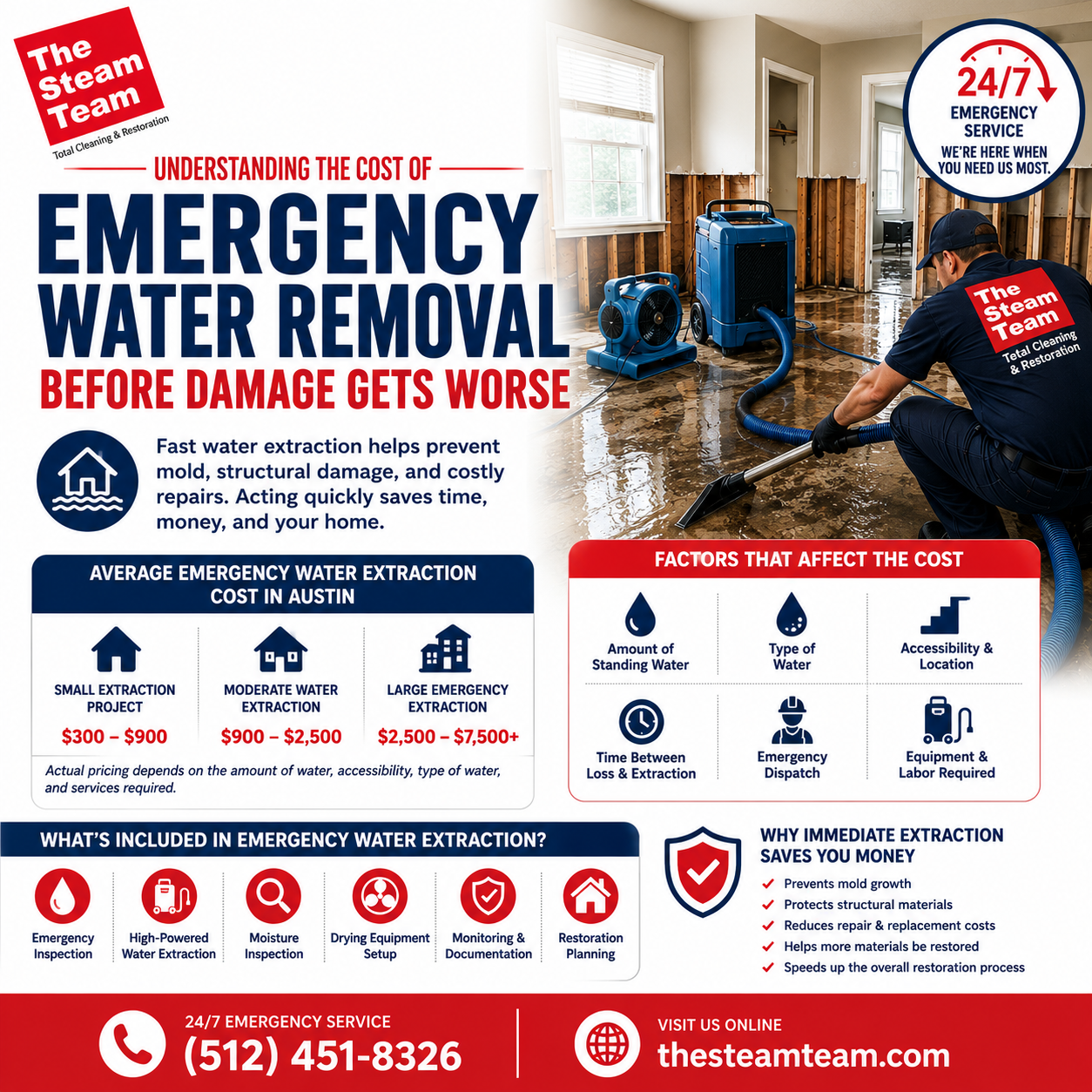
The Steam Team provides local emergency water damage restoration support in Austin with 24/7 emergency response, IICRC-certified technicians, and services including emergency water removal, flood damage restoration, structural and material drying, mold mitigation and sanitation, and sewage and hazard cleanup. Their teams deploy professional extraction equipment, moisture detection tools, and targeted drying plans to stop mold growth and stabilize structures while documenting work to assist with insurance claims. For urgent situations, the Steam Team emphasizes rapid response to reduce secondary damage and offers local knowledge of Austin conditions to prioritize effective drying strategies. If you need emergency assistance, the Steam Team is reachable by phone at 512-451-8326 and can provide guidance on immediate safety steps and next-stage mitigation.
This local, certified support is the safe escalation when conditions exceed DIY capabilities and when documentation and insurance support are required for recovery.
Health Hazards and Prevention After Water Damage: Mold and Recovery
During remediation and demolition work, the airborne concentrations of such microbes and their by-products can rise significantly and result in an exposure risk. Symptoms reported by unprotected workers and volunteers may relate to reactions of the airways, skin, mucous membranes, or internal organs. Dampness-related fungi are primarily associated with allergies, respiratory symptoms or diseases such as dermatitis, rhinosinusitis, bronchitis, and asthma, as well as changes of the immunological system. Also, cognitive, endocrine, or rheumatological changes have been reported. Based on the consensus among experts at a recent scientific conference and a literature review, it is generally recommended to avoid and minimize unnecessary fungal exposure and use appropriate personal protective equipment (PPE) in disaster response and recovery work. Mycologists recommend addressing any moisture or water intrusion rapidly, since significant mold growth can occur within 48 h. Systematic source removal, cleaning with “soap and water,” and “bulk removal” followed by high-efficiency particulate air vacuuming is recommended in most cases; use of “biocides” should be avoided in occupied areas. Public health agencies recommend use of adequate respiratory, skin, and eye protection. Workers can be protected against these diseases by use of dust control measures and appropriate personal protective equipment. At a minimum, a facial dust mask such as the National Institute for Occupational Safety and Health (NIOSH)-approved N95 respirator shoul
Mold Prevention and Health Effects After Floods and Water Damage
Extensive water damage after major hurricanes and floods increases the likelihood of mold contamination in buildings. This report provides information on how to limit exposure to mold and how to identify and prevent mold-related health effects. Where uncertainties in scientific knowledge exist, practical applications designed to be protective of a person's health are presented. Evidence is included about assessing exposure, clean-up and prevention, personal protective equipment, health effects, and public health strategies and recommendations. The recommendations assume that, in the aftermath of major hurricanes or floods, "
Frequently Asked Questions
What should I do if I suspect mold growth after water damage?
If you suspect mold growth after water damage, it's crucial to act quickly. First, identify and eliminate the source of moisture, as mold thrives in damp environments. Inspect areas that were affected by water, especially hidden spots like behind walls or under carpets. If you see visible mold, it's best to avoid disturbing it, as this can release spores into the air. Consider hiring a professional mold remediation service, especially if the affected area is large or if you have health concerns. They can safely remove the mold and prevent future growth.
How can I document water damage for insurance claims?
Documenting water damage for insurance claims involves taking detailed photographs and videos of the affected areas before any cleanup begins. Capture wide shots to show the extent of the damage and close-ups of specific issues, such as mold or structural damage. Make sure to note the date and time of the incident, as well as any actions taken immediately after the damage occurred. Keep receipts for any emergency repairs or mitigation efforts, as these can support your claim. Finally, create a written account of the events leading to the damage for your insurance adjuster.
What are the long-term effects of water damage on a home?
Long-term effects of water damage can be severe and include structural issues, mold growth, and compromised indoor air quality. If not addressed promptly, water can weaken the foundation, walls, and ceilings, leading to costly repairs. Mold can develop within 24-48 hours, posing health risks to occupants, especially those with respiratory issues. Additionally, persistent moisture can lead to wood rot and damage to electrical systems. Regular inspections and maintenance are essential to prevent these long-term consequences and ensure the safety and integrity of your home.
How can I prevent future water damage in my home?
Preventing future water damage involves several proactive measures. Start by regularly inspecting your home for leaks, especially around appliances, pipes, and the roof. Ensure gutters and downspouts are clear and direct water away from the foundation. Consider installing a sump pump in basements prone to flooding and use water alarms to detect leaks early. Additionally, maintain proper ventilation in areas like bathrooms and kitchens to reduce humidity. Finally, consider waterproofing your basement and using sealants on walls to create a barrier against moisture intrusion.
What should I do if I experience a sewage backup?
If you experience a sewage backup, prioritize safety by evacuating the area and avoiding contact with the contaminated water. Sewage can contain harmful pathogens that pose serious health risks. Turn off electricity in the affected area if it is safe to do so, and contact a professional sewage cleanup service immediately. They have the necessary equipment and expertise to handle hazardous materials safely. Document the damage for insurance purposes, but do not attempt to clean it up yourself, as improper handling can lead to further contamination and health issues.
Are there any health risks associated with mold exposure after water damage?
Yes, mold exposure after water damage can lead to various health risks, particularly for sensitive individuals. Common symptoms include respiratory issues, allergic reactions, skin irritation, and sinus problems. Prolonged exposure can exacerbate asthma and other chronic respiratory conditions. Vulnerable populations, such as children, the elderly, and those with weakened immune systems, are at higher risk. If you suspect mold growth, it’s essential to address it promptly and consider professional remediation to ensure a safe living environment.
Conclusion
Implementing effective safety practices after water damage is crucial for protecting your home and health. By following the outlined steps, you can minimize risks, prevent mold growth, and ensure a safer environment for your family. For comprehensive support and expert assistance, consider reaching out to professional restoration services. Take proactive measures today to safeguard your property and well-being.