Steam or Dry Cleaning: Best for Austin?
Choosing between steam cleaning and dry cleaning for carpets and upholstery can feel technical, but the right method comes down to soil type, fabric sensitivity, drying time needs, and indoor air quality concerns. This article explains what steam cleaning (hot water extraction) and dry/low-moisture methods are, how each works, and the practical benefits and trade-offs for Austin homes and businesses. You will learn the cleaning mechanisms, expected drying ranges, fabric suitability, stain-specific recommendations, and health and environmental impacts so you can decide with confidence. The guide also compares methods side-by-side, maps common Austin scenarios to the recommended approach, and outlines when to call a professional for restoration or specialized cleaning. By the end, you’ll have clear decision rules for pets, allergies, delicate upholstery, commercial turnarounds, and when to seek an on-site assessment from a local provider.
What Is Steam Cleaning and How Does Hot Water Extraction Work?
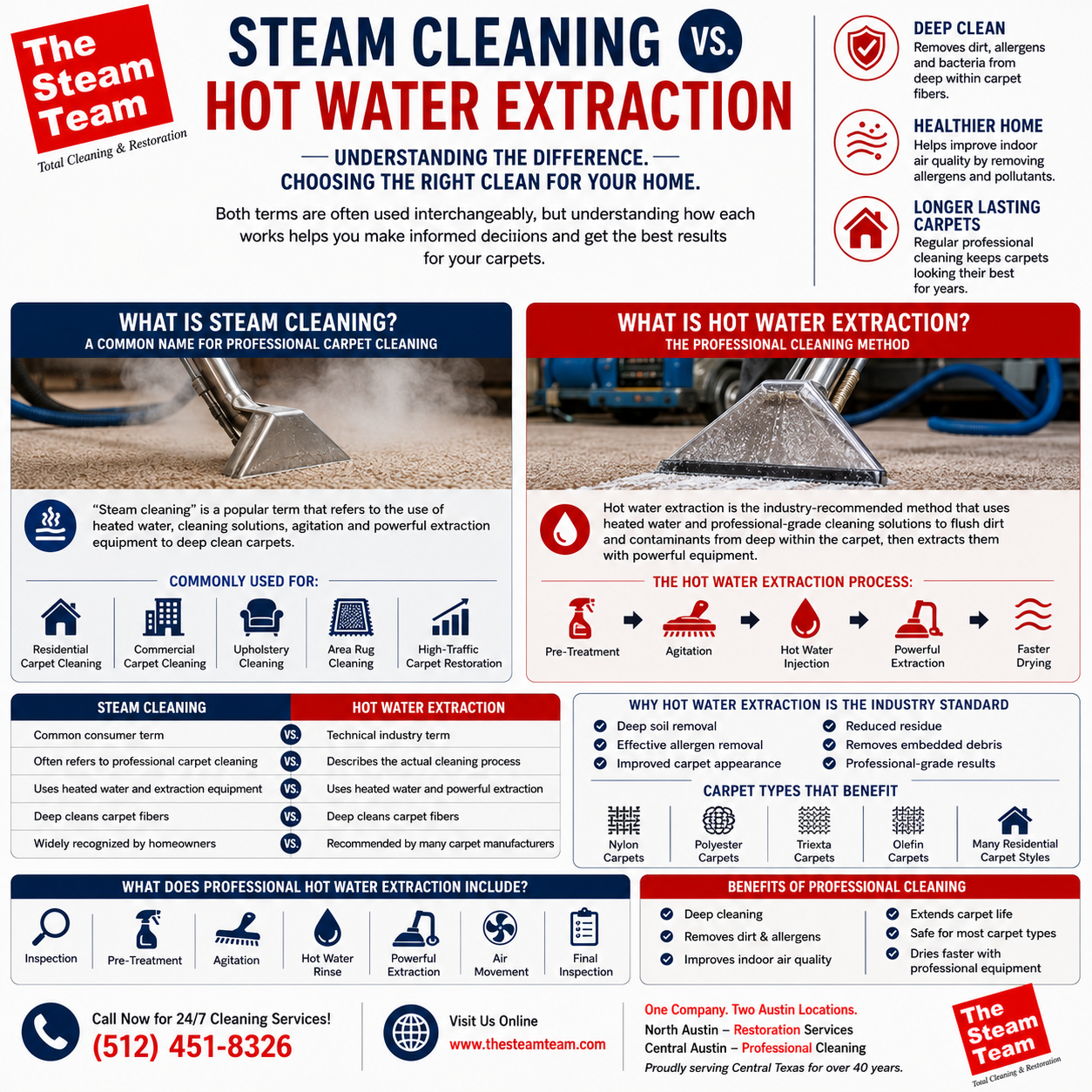
Steam cleaning, commonly called hot water extraction, uses pressurized hot water and cleaning solution injected into fibers and immediately extracted to remove suspended soil and contaminants. The mechanism relies on heat and agitation to loosen embedded dirt, while a high-powered extraction wand pulls water, soil, and residues into recovery tanks; this process sanitizes surfaces by reducing biological contaminants. Professional equipment, hot water injection units, extraction wands, and drying fans differ from consumer machines in pressure, temperature control, and recovery capacity, producing deeper cleaning in one service. Understanding these equipment and process differences clarifies why hot water extraction is widely recommended for heavily soiled carpets and upholstery needing allergen and odor removal.
What Are the Key Benefits of Steam Cleaning for Carpets and Upholstery?
This subsection lists the principal advantages of hot water extraction and explains how each benefit affects home and business environments. The focus is on deep cleaning, allergen reduction, odor control, and fabric care outcomes that improve indoor air quality and longevity of textile surfaces. Recent professional guidance and industry standards emphasize the role of hot water extraction in mitigating biological contaminants after water intrusion or regular heavy use.
Deep cleaning: Hot water extraction removes embedded soil and fine particulates from deep within fibers, restoring pile and appearance.
Allergen reduction: The combination of heat, agitation, and extraction reduces dust mite fragments, pet dander, and pollen that aggravate allergies.
Odor elimination: Removal of organic residues and trapped odors addresses persistent pet and household smells rather than masking them.
These benefits make steam cleaning a go-to choice when deep sanitation, allergen control, and long-term fabric health are priorities, which leads to the technical and practical drawbacks that follow.
What Are the Potential Drawbacks of Steam Cleaning?
Steam cleaning delivers deep results but has trade-offs users should weigh before scheduling service. The primary considerations are extended drying time compared to low-moisture methods, potential sensitivity of certain fabrics to heat and moisture, and the risk of overwetting when performed by inexperienced operators. Proper professional technique controlled injection pressure, efficient extraction, and use of drying fans mitigates most risks and shorten dry time, but delicate textiles usually require pre-testing or alternative approaches.
Drying time: Expect longer drying windows that typically range from 6 to 12 hours, depending on humidity and ventilation.
Fabric sensitivity: Natural fibers like some silks or vintage textiles may need specialist treatment to avoid shrinkage or dye migration.
Overwetting risk: Improper equipment or technique can lead to excessive moisture retention, which increases the potential for secondary issues like mold if not addressed promptly.
Recognizing these limitations helps homeowners and managers choose the right method or request hybrid protocols when deep cleaning must coexist with fabric protection and quick reuse.
What Is Dry Cleaning and How Do Low-Moisture Methods Clean Fabrics?
Dry cleaning and low-moisture methods remove soil using solvents, encapsulation polymers, or dry compounds rather than large volumes of water; the mechanism focuses on dissolving or encapsulating soil and then removing it with minimal wetting. Common professional options include solvent-based dry cleaning for delicate upholstery, encapsulation chemistry for carpets, and dry compound systems that agitate absorbent powders into fibers and vacuum them out. These methods prioritize rapid drying and reduced moisture exposure, making them suitable for water-sensitive fabrics and fast turnarounds in commercial spaces.
What Are the Advantages of Dry Cleaning for Delicate and Quick-Dry Needs?
Dry and low-moisture approaches provide distinct operational advantages that meet specific fabric and scheduling requirements. Key strengths include minimal moisture contact that preserves water-sensitive fibers, much faster return-to-service times suited for retail or hospitality settings, and strong performance on oil-based and hydrocarbon stains that solvents target effectively. These benefits make dry methods preferable when fabrics are at risk from moisture or when spaces must be reused quickly.
Fast drying: Low-moisture methods typically leave textiles dry within one to four hours, enabling rapid reuse.
Fabric safety: Solvent or encapsulation techniques limit swelling or distortion in delicate fibers like wool or some upholstery textiles.
Oil-stain performance: Solvent-based cleaning dissolves grease and oily residues more effectively than water alone.
Understanding these advantages highlights why facility managers and owners of delicate upholstered pieces often choose dry methods, while still considering trade-offs in depth of cleaning.
What Are the Considerations and Disadvantages of Dry Cleaning?
Low-moisture systems trade off deep-extraction capability for speed and fabric safety, and that creates several important considerations for owners and facility managers. Primary limitations are reduced effectiveness on deeply embedded soil and biological contamination, potential chemical residues depending on solvent choice, and variable environmental profiles across different technologies. Modern low-toxicity solvents and encapsulation chemistries reduce health and environmental concerns, but professional selection and precise application remain critical to minimize residues and achieve consistent results.
Reduced deep-cleaning power: Dry methods may not remove heavy, compacted soil or ground-in allergens as thoroughly as hot water extraction.
Chemical residue potential: Some solvents can leave trace residues that affect indoor air quality unless properly rinsed or extracted.
Stain scope limits: Biological stains and heavy protein soils often respond better to hot water extraction with enzymatic pre-treatment.
These trade-offs mean dry cleaning is often best used selectively for delicate items or tight schedules, with hybrid plans recommended when deep sanitization is also required.
How Do Steam Cleaning and Dry Cleaning Compare Side-by-Side?
This section presents a focused comparison of the main attributes that influence method selection, cleaning depth, drying time, fabric suitability, stain removal, eco-friendliness, and relative cost and explains practical implications for residential and commercial decisions in Austin. The table below summarizes typical outcomes by attribute to support quick decision-making for homeowners and facilities managers.
Method
Attribute
Typical Outcome
Hot Water Extraction (Steam)
Cleaning depth
Deep removal of embedded soil, allergens, and organic residues
Hot Water Extraction (Steam)
Drying time
Moderate to long (6–12 hours depending on conditions)
Hot Water Extraction (Steam)
Fabric suitability
Broadly effective; requires testing for delicate fibers
Low-Moisture / Dry Methods
Cleaning depth
Surface to moderate cleaning; best for light to moderate soil
Low-Moisture / Dry Methods
Drying time
Very fast (under 1–4 hours)
Low-Moisture / Dry Methods
Fabric suitability
Ideal for water-sensitive textiles and quick reuse
How Do Cleaning Depth, Drying Time, and Fabric Suitability Differ?
Cleaning depth, drying time, and fabric compatibility form the core decision criteria when comparing methods, and each factor has quantifiable expectations. Hot water extraction delivers deep cleaning that addresses dust mites and biological residues but typically requires 6–12 hours to dry in typical Austin conditions; low-moisture methods dry in under 1–4 hours and are safer for water-sensitive upholstery. Choosing correctly involves assessing fabric labels, expected soil loads, and operational needs to balance restoration-grade cleaning against the need for quick reuse.
Drying time specifics: Steam cleaning commonly requires half a day to a day; low-moisture options restore usability within hours.
Fabric recommendations: Use steam for durable synthetic and blended carpets, and choose dry methods for delicate natural fibers unless specialist treatment is available.
Practical mitigation: When deep cleaning is necessary but downtime is limited, work in zones or schedule after-hours service with professional drying equipment.
These distinctions clarify how to align cleaning methods to specific textile types and schedule constraints.
What Are the Differences in Stain Removal, Eco-Friendliness, and Cost?
Stain chemistry, environmental impact, and price are related considerations that influence method selection, with each method performing unevenly across stain classes and sustainability measures. Oil-based and solvent-soluble stains often respond more quickly to dry/solvent methods, whereas protein stains, biological soils, and heavy particulate soils generally yield to hot water extraction combined with enzymatic or alkaline pre-sprays. Environmentally, hot water extraction typically reduces reliance on harsh solvents but increases water and wastewater handling needs; low-moisture encapsulation and modern low-toxicity solvents can lower water use but require careful product selection to limit residues.
Stain guidance: Use dry methods for grease and oil; choose steam for protein, organic, and heavy particulate stains.
Environmental trade-offs: Steam relies on water but minimizes solvent use; dry systems conserve water but may use solvents that vary in toxicity.
Cost scale: Pricing depends on service scope, but steam may cost more for large-scale deep cleaning due to equipment and drying needs, while dry methods can be more economical for fast-turnaround jobs.
These practical differences help homeowners and managers choose an approach that balances effectiveness, sustainability goals, and budget constraints.
Which Cleaning Method Is Best for Your Austin Home or Business?
Deciding the best cleaning method begins with a short decision rule: if embedded soil, allergens, pet urine, or biological contamination are present, prefer hot water extraction; if fabrics are water-sensitive or space needs immediate reuse, choose dry/low-moisture methods. Austin’s climate and common housing profiles pets, seasonal allergens, and occasional water intrusion make allergen reduction and mold-aware cleaning protocols especially relevant when selecting a service. This section maps typical local scenarios to recommended methods and explains why each choice fits particular needs.
Scenario/Need
Recommended Method
Rationale
Homes with allergies or pets
Hot water extraction
Deep extraction removes dander, dust mite fragments, and odors linked to allergies
Delicate upholstery or antique textiles
Low-moisture/solvent methods
Minimizes water exposure and reduces the risk of shrinkage or dye migration
Commercial spaces needing rapid turnover
Low-moisture/encapsulation
Fast drying supports minimal downtime and frequent use
Recent water damage or mold risk
Hot water extraction and restoration protocols
Hot water extraction with restoration expertise helps sanitize and reduce mold risk
High-traffic stained carpet
Combined approach (spot solvent + steam)
Targeted solvent for oils, followed by extraction for overall clean-up
This scenario table helps Austin property owners quickly match their most pressing needs to a cleaning strategy that balances health, fabric care, and operational demands. For most Austin residential and commercial situations, especially where deep allergen removal, pet odor elimination, or post-water-damage sanitization is required, hot water extraction is the recommended baseline cleaning method. When fast drying or delicate fabric protection is the priority, low-moisture methods are preferable; professionals often combine approaches for optimal results, addressing oil stains with targeted solvent work followed by hot water extraction for overall cleanliness. These decision rules make it straightforward to plan an effective cleaning visit or restoration assessment.
For local on-site assessments and service requests, The Steam Team recommends an initial inspection to confirm fabric types and soil levels and to determine whether hot water extraction, low-moisture methods, or a hybrid approach best meets the client's needs. The Steam Team is based in Austin and serves Central Texas, offering professional carpet and upholstery cleaning where hot water extraction is a core offering; their local expertise supports practical scheduling and follow-up drying plans to suit Central Texas homes and businesses.
What Health and Environmental Benefits Do Steam and Dry Cleaning Offer?
Both steam cleaning and modern dry-cleaning techniques can contribute to healthier indoor environments, but they do so through different mechanisms and trade-offs. Hot water extraction reduces allergens and biological contaminants through heat-assisted extraction, improving indoor air quality for occupants with respiratory sensitivities. Dry and encapsulation systems reduce moisture exposure and can lower water consumption, but environmental and health outcomes depend on the specific solvents or polymers used. This section details the comparative health and environmental impacts to help readers prioritize outcomes aligned with family or business needs.
Health/Environmental Concern
Steam Cleaning Impact
Dry Cleaning Impact
Allergen reduction
High removes dust mites, pollen, and dander through extraction
Moderate surface allergens may be reduced, but deep particulates can remain
Bacteria and mold mitigation
High when combined with sanitizing agents and thorough extraction
Low to moderate; solvents may not fully eliminate biological contaminants
Chemical usage
Lower dependency on solvents; uses water and targeted detergents
Variable; modern low-toxicity solvents reduce concerns, but residue management is important
Water and wastewater
Higher water use requires responsible recovery and disposal
Lower water use; less wastewater, but potential chemical disposal considerations
This table clarifies how method selection affects occupant health and environmental footprint and supports evidence-based choices for sensitive households.
How Does Steam Cleaning Improve Indoor Air Quality and Allergen Removal?
Steam cleaning improves indoor air quality by physically extracting particulate allergens and reducing the biological load on carpet and upholstery fibers, which lowers airborne resuspension after cleaning. Professional hot water extraction includes pre-vacuuming, targeted pre-treatment, controlled hot water injection, and high-volume recovery, producing measurable reductions in dust mite allergens and pet dander. For families with children, asthma, or significant pet presence, professional steam cleaning is a key component of an indoor air quality strategy because it addresses both visible soils and microscopic biological triggers that conventional vacuuming often leaves behind.
Mechanism summary: Hot water and agitation loosen allergens; extraction removes the particles rather than moving them to another area.
Practical outcome: Reduced odor and lower incidence of allergen-triggered symptoms in many households after professional treatments.
Professional advantage: Trained technicians and certified processes improve consistency and reduce the chance of overwetting that could negatively affect IAQ.
These benefits demonstrate why deep extraction is often recommended as part of regular maintenance for allergy-prone environments.
Dry Steam Cleaning for Carpet Allergen and PAH Reduction
Dry steam cleaning, which has gained recent attention as an effective method to reduce house dust mite (HDM) allergen concentration and loading in carpets, was evaluated in this study for its efficacy in lowering levels of polycyclic aromatichydrocarbons(PAHs) as well as HDM allergens. Fifty urban homes with wall-to-wall carpets, mostly low-income and with known lead contamination, were studied in 2003 and 2004. Two carpet-cleaning interventions were compared: Repeated HEPA (High Efficiency Particulate Air filtered) vacuuming alone and repeated HEPA vacuuming supplemented with dry steam cleaning. Vacuum samples were collected to measure carpet loading of dust and contaminants immediately before and after cleaning. Paired comparisons were conducted to evaluate the effectiveness of the cleaning protocols in reducing the levels of PAHs and HDM allergens in carpets. The results indicated that both cleaning methods substantially reduced the loading of PAHs and HDM allergens as well
What Are the Environmental Impacts of Steam vs Dry Cleaning?
Environmental impact depends on water use, chemical profiles, and waste management practices, and contemporary choices can minimize negative effects for both approaches. Steam cleaning uses water but can rely on biodegradable detergents and careful wastewater handling to reduce environmental footprint, while low-moisture encapsulation and modern solvent systems conserve water but require attention to solvent toxicity and disposal. Choosing eco-friendly formulations, ensuring technicians follow disposal regulations, and preferring providers who use low-toxicity chemistries balances cleaning effectiveness with environmental responsibility.
Steam: Greater water use but potential for lower solvent reliance and easier control of residue.
Dry methods: Lower water consumption but variable chemical profiles that demand careful selection and handling.
Recommended practice: Ask about product safety data, disposal practices, and options for low-toxicity or green chemistries when comparing providers.
These considerations allow property owners to select a method that aligns with both health priorities and environmental values.
Why Trust The Steam Team for Professional Steam and Dry Cleaning in Austin?
The Steam Team combines local Central Texas expertise with a broad set of cleaning and restoration services to deliver reliable outcomes for carpet and upholstery care. Based in Austin and serving Central Texas, The Steam Team offers water damage restoration, fire damage restoration, mold mitigation, and cleaning services, including carpet, rug, tile, air duct, and upholstery cleaning. Their primary product/service alignment for this topic is professional carpet and upholstery cleaning, with hot water extraction as a core offering for deep cleaning and restoration work. This local, restoration-capable approach helps homeowners and businesses address both everyday maintenance and post-incident remediation with consistent standards.
How Do The Steam Team’s IICRC Certifications and Experience Ensure Quality?
IICRC-certified technicians follow industry-standard protocols that guide proper pre-treatment, soil removal, extraction pressure, and drying practices, which reduce risks like overwetting and fabric damage. The Steam Team’s validated mention of IICRC certification indicates training in cleaning and restoration best practices, which translates to safer cleaning choices for delicate fabrics and more reliable results for heavy-soil or post-loss situations. Experienced technicians apply appropriate hyponyms of cleaning, such as hot water extraction and encapsulation, based on fabric type and contamination profile, ensuring the selected method matches the problem rather than applying a one-size-fits-all solution.
What Customer Satisfaction Guarantees and Awards Support Our Service?
The Steam Team highlights award-winning service recognition, including "Best of the Best," maintains an A+ BBB rating, and offers a customer satisfaction guarantee as part of its service promises; these trust signals support confidence when selecting a local provider. Their comprehensive cleaning and restoration solutions mean clients can access water damage restoration, mold mitigation, and specialized upholstery treatments from the same team, reducing coordination and improving accountability. For example, anonymized local case work showed an integrated cleaning and restoration response that resolved a pet odor and moisture incident through combined hot water extraction and mitigation protocols, illustrating practical outcomes from certified processes.
Local expertise: The Steam Team serves Central Texas and tailors drying and remediation strategies to Austin’s climate and building types.
Certified practice: IICRC-certified technicians apply standardized processes to improve consistency and safety.
Service coverage: A broad service offering restoration and cleaning helps manage complex jobs involving both contamination and structural moisture.
These points show why choosing a certified local provider matters for both routine cleaning and restoration-grade work.
This article has outlined the mechanisms, benefits, trade-offs, and scenario-specific recommendations for steam versus dry cleaning to help Austin homeowners and businesses decide. For professional assessments, quote requests, or to schedule an appointment with a local team experienced in hot water extraction and restoration services, consider contacting The Steam Team or requesting an on-site evaluation to determine the optimal cleaning plan for your carpets and upholstery.
Frequently Asked Questions
1. How often should I steam clean my carpets and upholstery?
For optimal maintenance, it is generally recommended to steam clean carpets and upholstery every 6 to 12 months, depending on usage and environmental factors. Homes with pets, children, or high foot traffic may require more frequent cleaning to manage allergens and stains effectively. Additionally, if you notice persistent odors or visible dirt, it may be time to schedule a cleaning. Regular maintenance not only enhances the appearance of your textiles but also prolongs their lifespan and improves indoor air quality.
2. Can I perform steam cleaning myself, or should I hire a professional?
While there are consumer-grade steam cleaning machines available, hiring a professional is often recommended for the best results. Professionals use high-powered equipment that can achieve deeper cleaning and better extraction of dirt and allergens. They also have the expertise to handle different fabric types and stains effectively, reducing the risk of damage. If you choose to DIY, ensure you follow the manufacturer's instructions carefully and test a small area first to avoid any adverse effects on your upholstery or carpets.
3. What types of fabrics are suitable for steam cleaning?
Steam cleaning is generally safe for synthetic and blended fabrics, such as nylon and polyester, which can withstand heat and moisture. However, delicate fabrics like silk, wool, or vintage textiles may require special care or alternative cleaning methods to prevent damage. Always check the care label on your upholstery or carpet before proceeding with steam cleaning, and consider consulting a professional if you're unsure about the fabric's compatibility with this method.
4. Are there any health risks associated with dry cleaning methods?
While modern dry cleaning methods use low-toxicity solvents, there can still be health risks if chemical residues are not properly managed. Some solvents may emit volatile organic compounds (VOCs) that can affect indoor air quality. To minimize risks, choose a dry cleaning service that uses eco-friendly products and follows best practices for solvent disposal. Additionally, ensure proper ventilation during and after the cleaning process to help dissipate any lingering odors or chemicals.
5. How can I prepare my home for a professional cleaning service?
To prepare for a professional cleaning service, start by clearing the area of any furniture, personal items, and obstacles that may hinder access to the carpets or upholstery. Vacuum the surfaces to remove loose dirt and debris, which can enhance the effectiveness of the cleaning process. If there are specific stains or areas of concern, inform the cleaning technician beforehand so they can address them appropriately. Lastly, ensure that pets and children are kept away from the cleaning area during the service.
6. What should I do if my carpets or upholstery are still stained after cleaning?
If stains persist after cleaning, it may be due to the type of stain or the cleaning method used. Some stains, particularly those that are old or set in, may require specialized treatments or additional cleaning steps. Contact your cleaning service to discuss the issue; they may recommend a follow-up treatment or a different cleaning method to effectively address the stain. In some cases, professional stain removal products may be necessary to achieve the desired results.
7. How can I maintain my carpets and upholstery between cleanings?
To maintain your carpets and upholstery between professional cleanings, regularly vacuum to remove dirt and debris, which can prevent soil buildup. Address spills and stains immediately by blotting with a clean cloth and using appropriate cleaning solutions for the specific type of stain. Consider using area rugs in high-traffic areas to protect your carpets and rotate furniture occasionally to avoid uneven wear. Additionally, implementing a no-shoes policy indoors can significantly reduce dirt and allergens brought into your home.
Conclusion
Choosing the right cleaning method for your carpets and upholstery can significantly enhance the longevity and appearance of your textiles while improving indoor air quality. Understanding the benefits and trade-offs of steam cleaning versus dry cleaning empowers you to make informed decisions tailored to your specific needs. For personalized recommendations and professional service, consider reaching out to The Steam Team for an on-site assessment. Experience the difference that expert cleaning can make in your home or business today.