Extend Your Carpet's Life Today
Commercial carpet longevity means keeping carpet fibers, backing, and padding functional and appearance-ready for as long as possible through targeted maintenance, timely restoration, and informed purchasing decisions. Premature carpet failure is usually driven by soil abrasion, concentrated foot traffic, and moisture incidents that degrade fibers and backing; addressing these causes requires a mix of daily routines and periodic professional interventions. This guide explains practical daily maintenance, the role of professional deep cleaning, preventative strategies for wear and moisture, and restoration triage for water, mold, and tough stains, all tailored for facility managers and business owners. Early detection and disciplined upkeep save replacement costs and preserve indoor air quality, while proper environmental controls reduce microscopic soil adhesion and mold risk. You will find step-by-step how-to lists, EAV comparison tables of cleaning methods and protective measures, and clear vendor selection criteria to help you implement a program that extends carpet life. A brief local note: The Steam Team, an Austin-based cleaning and restoration company, provides commercial cleaning, restoration, and IICRC-certified technician services that illustrate how professional programs integrate with daily maintenance. With that context, let’s begin with the everyday actions that prevent most damage.
What Are the Best Daily Commercial Carpet Maintenance Tips?
Daily maintenance minimizes abrasive soil, prevents early wear, and reduces the frequency of deep cleaning by addressing contaminants before they embed. A disciplined program focuses on vacuuming, immediate spot response, entryway matting, and visual inspections that prioritize high-traffic routes and service corridors. Implementing these controls lowers particulate load that abrades the pile and reduces the chance of dye migration from unnoticed spills, which preserves both appearance and warranty compliance. The next section breaks down vacuuming mechanics and spot-treatment steps so staff can apply consistent, effective techniques that feed into scheduled professional maintenance.
Daily actions that keep carpets functional and attractive include:
Use commercial-grade vacuums with appropriate filtration and adjustable suction for pile depth at least once per day in medium-traffic areas.
Place multi-stage entryway matting to capture tracked-in soil and change or clean mats on a scheduled cycle.
Institute immediate blot-and-treat spot protocols for spills, using neutral-pH, eco-friendly solutions and avoiding aggressive rubbing.
Perform brief visual inspections each shift to identify stains, seam issues, or wet spots that need escalation.
These practical steps reduce embedded soils and prolong the interval between professional deep-clean cycles, making scheduled extraction and restoration more effective.
How Does Regular Vacuuming Protect Commercial Carpets?
Regular vacuuming removes dry, abrasive soil that acts like sandpaper against carpet fibers and is the single most cost-effective preventive measure facility managers can deploy. Proper vacuuming uses commercial-grade equipment with brush-roll adjustment for pile type and HEPA or high-efficiency filtration to reduce airborne particulates that settle back into the carpet; executed correctly, vacuuming can remove the majority of loose soil before it abrades fibers. Frequency should match traffic: high-traffic aisles require multiple passes per day, medium-traffic areas daily, and low-traffic zones several times per week. Training staff on technique, slow, overlapping strokes, edge cleaning, and scheduled bag/filter maintenance boosts performance and ensures vacuuming contributes to overall lifespan extension rather than merely cosmetic upkeep. Routine vacuuming also primes carpets for deeper interventions by limiting soil load; that connection leads to effective spot-cleaning protocols that stop stains from setting.
What Are Effective Spot Cleaning Techniques for Commercial Carpets?
Effective spot cleaning starts with immediate containment and a sequence that protects fiber dyes and backing while removing the contaminant; the first steps are to blot excess liquid, identify stain type, and apply the correct cleaning chemistry. For protein-based spills (coffee, food), use a neutral enzymatic or protein-friendly solution and blot from the outside in; for oil/grease, use a solvent-based pre-spray followed by emulsification and blotting; avoid aggressive scrubbing that frays tufts or forces stain deeper. Use eco-friendly, neutral-pH cleaners where possible to protect colorfastness and warranty conditions, and escalate to professional intervention if a spot threatens dye migration or if backing appears darkened. Training on a simple decision tree identifies, contains, chooses chemistry, blot, and monitor empowers frontline staff to limit permanent damage while preserving fiber integrity. Consistent spot practices reduce stain escalation and feed into when and how often to schedule professional deep cleaning, which we’ll explore next.
Why Is Professional Deep Cleaning Essential for Commercial Carpet Longevity?
Professional deep cleaning removes embedded soils and residues that routine vacuuming and spot treatments cannot reach, restoring pile loft and slowing fiber abrasion. Deep methods extract contaminants from the pile and backing, reduce allergen load, and can remove sticky residues that trap more dirt, thereby prolonging the effective life of the carpet system. Properly executed professional cleaning follows industry standards (IICRC/CRI principles), uses appropriate chemistry for fiber types, and targets recommended frequencies based on traffic and local conditions. Below is a concise comparison of common professional approaches, their key attributes, and how each benefits carpet longevity.
Cleaning Method
Key Attribute
Benefit for Carpet Longevity
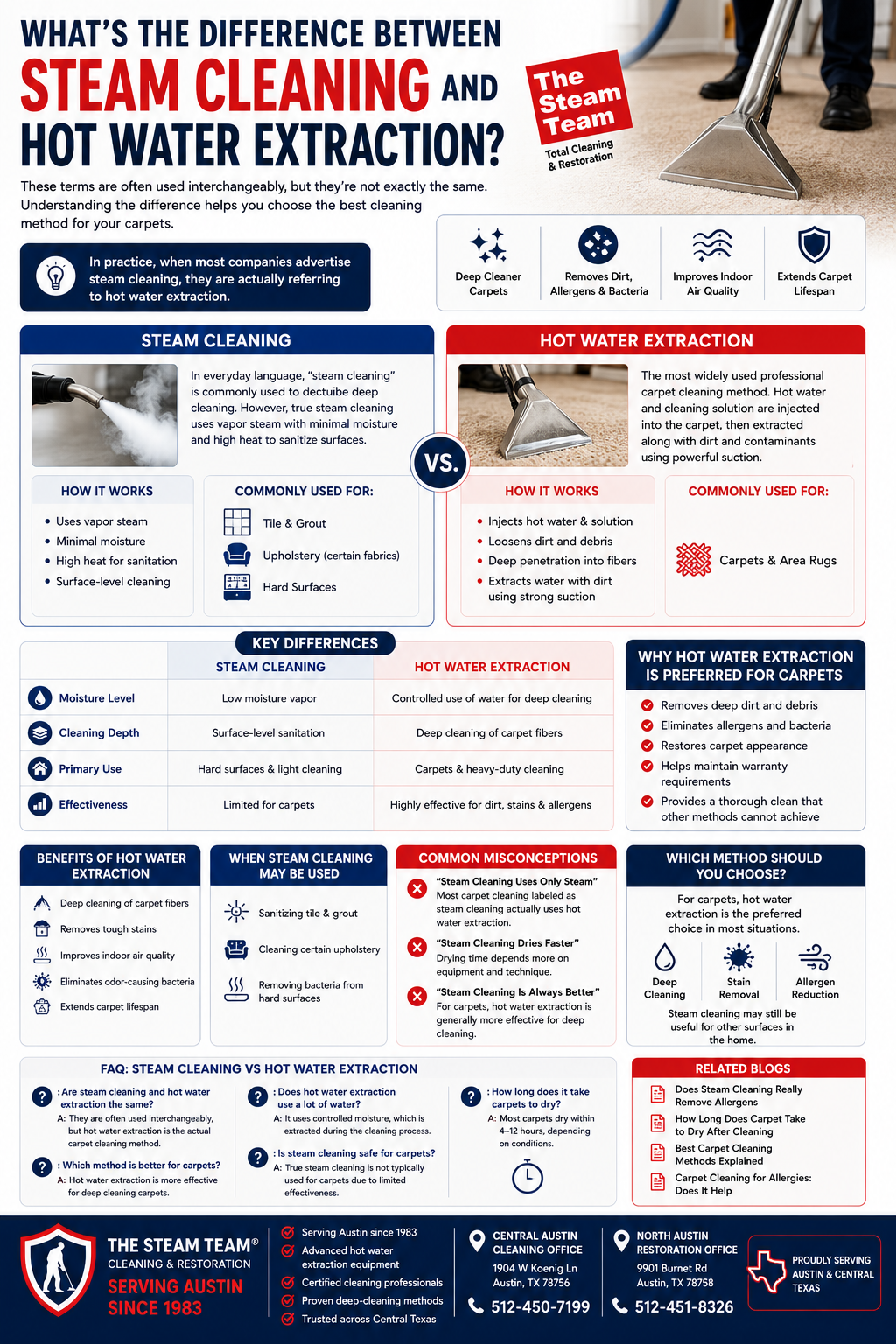
Steam cleaning (hot water extraction)
Deep extraction of embedded soils
Restores pile loft and removes residues that accelerate wear
Dry/low-moisture (encapsulation)
Fast drying, less downtime
Good for light-soil maintenance and frequent scheduling
Bonnet cleaning
Surface agitation for appearance
Interim maintenance for surface soils, not a deep-clean substitute
This comparison shows why a mixed program regular extraction cycles combined with low-moisture interim treatments often delivers the best lifespan outcomes by balancing deep soil removal and operational downtime. As an example of professional standards in practice, The Steam Team uses IICRC-trained technicians and method selection tailored to traffic and downtime constraints; facility managers can request a tailored quote or schedule an assessment to align frequency with business needs. The next subsection outlines specific methods and use cases so you can match objectives to the right professional approach.
What Commercial Carpet Cleaning Methods Extend Carpet Life?
Steam cleaning, also called hot water extraction, is the hyponym that best represents deep cleaning for most commercial carpets because it flushes and extracts soil from pile and backing, reducing abrasive particles that shorten service life. Encapsulation and low-moisture systems polymerize soil and allow rapid vacuum removal, minimizing downtime and supporting more frequent maintenance cycles in operational environments. Bonnet cleaning addresses surface oils and appearance but leaves deeper soils intact; it’s useful for interim appearance management but should not replace periodic extraction. Choosing the right method depends on traffic patterns, fiber composition, and operational constraints: use hot water extraction for heavy-soil conditions, encapsulation for quick turnarounds, and bonnet cleaning only for interim cosmetic care. Matching method to use-case increases cleaning efficacy and protects warranties, which guides recommended professional frequencies discussed next.
How Often Should Commercial Carpets Be Professionally Cleaned in Austin?
Professional cleaning frequency depends on traffic intensity, environmental factors like seasonal pollen or humidity, and the facility’s tolerance for downtime; a simple traffic-based schedule helps standardize planning. For low-traffic office areas, plan extraction at least once per year; medium-traffic spaces benefit from semiannual to quarterly extraction depending on observed soiling; high-traffic corridors and public lobbies often require quarterly or more frequent deep cleaning to prevent pile compression and abrasive wear. Austin’s seasonal pollen and humidity can increase soil load and moisture-related risks during certain months, so adjust schedules around peak seasons and monitor carpets for accelerated soiling between services. Set benchmarks and track visible soil and fiber recovery post-cleaning to refine intervals; this operational rhythm supports a longer carpet service life and reduces premature replacement expenses.
How Can You Protect Commercial Carpets from Wear, Stains, and Moisture?
Protective measures combine physical products, policies, and environmental controls to limit the forces that shorten carpet life. Entryway systems, traffic zoning, runners, and furniture rotation reduce concentrated abrasion while well-defined spill procedures and dehumidification limit moisture-related degradation. Implementing preventive controls removes or reduces causes of damage before they require restoration, and integrating these measures with scheduled cleaning amplifies their value. The following table compares common preventative measures by cost, downtime, and estimated value for lifespan extension so managers can prioritize investments.
Preventative Measure
Attribute (cost/downtime/efficacy)
Value (lifespan extension / soil reduction %)
Entryway mats
Low cost, minimal downtime
Up to 60–80% of tracked-in soil captured
Protective runners
Moderate cost, low downtime
Extends high-traffic area life by 20–40%
Traffic zoning & rotation
Low-cost, operational planning
Reduces concentrated wear and evens out usage
Staff spill training
Minimal cost, training time
Lowers permanent stain incidents and repair needs
This comparison helps prioritize quick wins like matting and training, which often deliver outsized returns relative to cost.
To operationalize prevention, start with clear policies and a simple implementation checklist.
Place multi-step matting at all main entrances and maintain mats on a scheduled cycle.
Deploy runners in aisles and high-traffic transit areas, replacing or cleaning as part of floor care.
Establish staff protocols for immediate spill response and routine visual inspections.
Monitor indoor humidity and use dehumidification in wet seasons to reduce backing and adhesive failures.
These measures reduce soil ingress and moisture incidents, making professional cleaning more effective and extending the carpet’s functional life.
What Are the Best Strategies to Prevent Wear in High-Traffic Areas?
Preventing wear in high-traffic zones starts with traffic zoning, durable material selection, and surface protections like runners that absorb abrasion before it reaches carpet fibers. Specify higher-density pile or commercial-grade fibers in primary corridors and complement them with removable runners or modular carpet tiles to allow targeted replacement rather than whole-floor replacement. Rotate furniture and rethink layouts to disperse footfall concentrations when possible; routine interim cleaning (low-moisture encapsulation) reduces surface soil that accelerates fiber collapse. Evaluate ROI by comparing runner and targeted replacement costs to full carpet replacement timelines. Often, small protective investments delay large capital outlays. These tactics, combined with daily maintenance and scheduled deep cleaning, establish a layered defense that preserves appearance and performance.
How Do Moisture and Spills Affect Commercial Carpet Health?
Moisture and spills lead to a cascade of problems: rapid soil migration into backing, adhesive degradation, odors, and mold growth if not addressed quickly; within 24–48 hours microbial growth can begin under warm, humid conditions. Immediate extraction, controlled drying, and humidity management are essential triage steps to prevent structural backing failure and reduce salvage costs. For small spills, rapid blotting and targeted cleaning suffice; for larger wetting events or contamination with gray/black water, emergency extraction and professional restoration are necessary. Monitoring drying progress with moisture meters and maintaining HVAC performance ensures carpets return to target moisture thresholds to prevent residual damage. Understanding the timeline from spill to structural damage helps facilities decide when to escalate to restoration specialists.
How Do You Address Commercial Carpet Damage: Water, Mold, and Stain Restoration?
Restoration combines immediate triage, appropriate cleaning or remediation methods, and verification to ensure the carpet system returns to service without health or structural issues. Early identification and extraction prevent backing delamination and mold colonization, while specialized stain and fiber repair techniques can restore appearance for many incidents. A clear triage table helps facility managers act quickly and decide whether on-site cleaning suffices or if 24/7 emergency restoration is required. Below is a triage reference to speed decision-making during incidents.
Damage Type
Early Signs
Recommended Immediate Action
Fresh water spill
Wet surface, no odor
Extract water, circulate air, dehumidify
Contaminated water (gray/black)
Odor, visible contamination
Isolate area, PPE, call professional restoration
Mold growth
Musty odor, discoloration
Contain area, test, and remediate with specialists
The paragraphs below describe signs and practical next steps for water and mold incidents and when to escalate.
What Are the Signs and Solutions for Water Damage in Commercial Carpets?
Signs of water damage include visible wetting, rapidly darkening backing or seams, persistent musty odors, and elevated moisture readings with probes; these indicators point to hidden saturation that can compromise adhesives and subfloors. Immediate actions are extraction, high-capacity drying with airflow and dehumidification, and monitoring moisture content until target thresholds are met; aim to complete drying within 24–72 hours to avoid mold growth. If contamination is suspected or drying cannot be achieved quickly, involve emergency restoration services that use industry-grade extraction and drying equipment. Document interventions and moisture readings to support insurance and maintenance records and to improve future response planning. Prompt triage reduces the need for full replacement and shortens downtime, leading to how mold remediation is managed when contamination is present.
How Is Mold Remediation Performed on Commercial Carpets?
Mold remediation begins with a scope assessment to identify affected areas, containment to prevent spore spread, and appropriate cleaning or removal depending on carpet system construction and contamination level. Surface mold on low-porosity materials may be cleaned and treated with antimicrobial agents, while extensive mold in padding, adhesives, or seams often requires removal and replacement of the affected components. Post-remediation verification using visual inspection and moisture testing confirms that conditions have returned to acceptable ranges, and follow-up measures focus on fixing the moisture source and improving ventilation. Work by trained remediation teams reduces cross-contamination risk and restores safe occupancy faster than ad hoc approaches.
How to Choose the Right Commercial Carpet Cleaning Service in Austin?
Selecting a vendor requires evaluating certifications, local experience, service scope (cleaning plus restoration), response times, and transparent pricing and guarantees to match your facility’s risk tolerance. Ask for proof of technician training, equipment lists, insurance coverage, and documented case examples of similar projects to your facility type. Prefer providers who integrate cleaning schedules with restoration capabilities, HVAC/duct coordination, and preventive-mat programs to deliver holistic floor system care. The next subsection explains why IICRC certification matters and how those credentials reduce operational risk in commercial settings. When comparing providers, use a checklist that includes certification, local reputation, service range, and emergency response capability:
Verify technician training and adherence to industry standards like IICRC.
Confirm the provider handles both routine cleaning and restoration to streamline escalation.
Check local reputation indicators such as BBB ratings and awards where available.
Request references or case descriptions for similar commercial projects.
This evaluation approach helps you choose a partner whose practices align with your maintenance and lifespan goals.
Why Choose IICRC Certified Technicians for Commercial Carpet Cleaning?
IICRC certification indicates technicians have been trained in standardized procedures for cleaning, water damage restoration, and microbial remediation, which improves the predictability of outcomes and reduces the risk of fiber damage or improper drying. Certified personnel are more likely to follow documented protocols for soil removal, chemical application, and drying targets practices that protect warranties and extend carpet life. Certification also signals ongoing education and adherence to industry best practices, which matter for complex incidents like contaminated water or mold remediation. Prioritizing certified technicians reduces unforeseen repair costs and supports consistent, evidence-based service delivery. Certified teams form part of a risk-managed strategy that ties daily maintenance to professional cleaning and restoration cycles.
What Makes The Steam Team the Trusted Choice for Austin Businesses?
As an example of a qualified local vendor, The Steam Team offers both commercial cleaning and restoration services with IICRC-certified technicians, an A+ rating with the Better Business Bureau, and a variety of facility services including water damage restoration, mold remediation, carpet cleaning, tile and upholstery care, and air duct cleaning. This breadth allows a single provider to coordinate cleaning schedules, emergency response, and environmental controls for more efficient restoration and maintenance workflows. Facility managers seeking local expertise often evaluate these credentials: technician certification, documented service scope, and local reputation when requesting quotes or scheduling an assessment. For businesses in Austin, asking prospective vendors about these specific qualifications helps ensure you select a partner aligned with longevity-focused carpet care. If you want a professional assessment or a tailored maintenance plan, request a quote or schedule an appointment with a qualified local provider that can demonstrate these credentials.
What Are the Most Effective Tools and Accessories to Extend Commercial Carpet Life?
The right tools and accessories, from high-performance vacuums to multi-stage entry mats and environmental monitoring devices, create measurable reductions in soil and moisture-related damage. Investing in commercial vacuums with adjustable suction, dedicated spot-treatment kits, extractors for periodic deep cleaning, and humidity monitors yields operational control that makes maintenance more effective. Combining equipment purchases with service agreements for periodic professional extraction and HVAC/air-duct maintenance integrates sibling services that influence carpet performance and indoor air quality. The following list highlights practical tools and why they matter so you can prioritize procurement and placement.
Essential tools and accessories for carpet longevity include:
Commercial upright or backpack vacuums with HEPA or high-efficiency filtration and adjustable brush height.
Walk-off matting systems with a multi-stage approach at all major entrances to capture up to 80% of tracked-in debris.
Portable extractors and low-moisture encapsulation units for targeted interim cleaning and quick response to spills.
Humidity monitors and portable dehumidifiers to control indoor moisture and speed drying after wet events.
Selecting and maintaining these tools reduces cleaning labor, cuts replacement frequency, and supports a comprehensive maintenance program.
How Do Entryway Mats Help Prevent Dirt and Debris Damage?
Entryway mats are a high-impact, low-cost defense that captures the majority of tracked-in soil before it reaches carpeted areas, and a multi-stage matting strategy at exterior and interior thresholds significantly improves capture rates. Materials like textured scraper mats outside and absorbent, low-profile mats inside form a hyponymic sequence of defenses that reduce overall soil load by as much as 60–80% when maintained regularly. Best practice is scheduled cleaning or replacement of mats and ensuring mat length accommodates several strides so footwear makes multiple contacts; this operational detail multiplies the matting’s efficacy. Proper mat selection and maintenance directly lowers vacuuming frequency and extends deep-cleaning intervals.
What Environmental Controls Support Commercial Carpet Longevity?
Environmental controls, such as humidity regulation, HVAC filtration, and duct cleaning, reduce moisture-related failures and airborne particulate deposition that contribute to carpet soiling and mold risk. Maintain indoor relative humidity in a recommended operational band (typically 30–60%) and service HVAC filters on a predictable schedule to minimize dust and biological growth; where wet events occur, use dehumidification and increased airflow to meet drying targets. Air-duct cleaning as part of a coordinated maintenance plan reduces redistribution of particulate matter onto carpets and complements surface cleaning efforts. Monitoring systems that alert facility teams to humidity spikes or HVAC performance drops enable faster triage and reduce the chance of long-term carpet system degradation. Integrating environmental controls with cleaning and restoration forms a systems approach that preserves carpet integrity and indoor air quality over time.
Frequently Asked Questions
What are the benefits of using eco-friendly cleaning solutions for commercial carpets?
Using eco-friendly cleaning solutions for commercial carpets offers several advantages. These products are typically formulated with biodegradable ingredients that are less harmful to the environment and indoor air quality. They reduce the risk of chemical exposure for both staff and customers, making the workplace safer. Additionally, eco-friendly cleaners often maintain the integrity of carpet fibers better than harsh chemicals, which can lead to longer carpet life. By choosing these solutions, businesses can demonstrate their commitment to sustainability while effectively maintaining their carpets.
How can humidity control impact the maintenance of commercial carpets?
Humidity control is crucial for maintaining commercial carpets as excessive moisture can lead to mold growth, odors, and degradation of carpet backing and adhesives. Keeping indoor humidity levels between 30-60% helps prevent these issues, ensuring carpets remain in good condition. Dehumidifiers can be used in high-moisture environments, especially during wet seasons, to manage humidity levels effectively. Regular monitoring of humidity can also help facility managers respond quickly to potential moisture problems, thereby extending the life of the carpets and improving indoor air quality.
What role does staff training play in carpet maintenance?
Staff training is essential for effective carpet maintenance as it empowers employees to recognize and address issues promptly. Training programs should cover daily maintenance tasks, such as proper vacuuming techniques and immediate spill response protocols. Educated staff can prevent minor issues from escalating into major problems, such as permanent stains or mold growth. Additionally, training fosters a culture of care and responsibility, ensuring that everyone understands the importance of maintaining the carpets, which ultimately contributes to the longevity and appearance of the flooring.
How can traffic zoning help in extending carpet life?
Traffic zoning is a strategic approach to managing foot traffic in commercial spaces, which can significantly extend carpet life. By designating specific pathways for high-traffic areas and using protective runners or mats, businesses can reduce wear and tear on carpets. This method helps distribute foot traffic more evenly, minimizing concentrated abrasion in certain areas. Additionally, traffic zoning can inform cleaning schedules, allowing for more frequent maintenance in high-use zones while reducing wear in less-trafficked areas, ultimately preserving the carpet's appearance and functionality.
What are the signs that a commercial carpet needs professional cleaning?
Several signs indicate that a commercial carpet requires professional cleaning. Visible stains, persistent odors, and a dull appearance are primary indicators. Additionally, if carpets feel matted or compressed, or if there is an increase in allergy symptoms among occupants, it may signal that embedded dirt and allergens are present. Regular visual inspections can help identify these issues early. If routine vacuuming and spot cleaning are no longer effective, it’s time to schedule a professional deep cleaning to restore the carpet’s condition and extend its lifespan.
How can businesses assess the effectiveness of their carpet maintenance program?
Businesses can assess the effectiveness of their carpet maintenance program through several methods. Regularly tracking visible soil levels, monitoring the frequency of professional cleanings, and evaluating the carpet's overall appearance can provide insights into maintenance success. Additionally, conducting periodic inspections and gathering feedback from staff about carpet conditions can highlight areas needing improvement. Establishing benchmarks for cleaning frequency based on traffic patterns and environmental factors also helps refine the program, ensuring it meets the needs of the facility while extending carpet life.
Conclusion
Implementing a comprehensive maintenance program for commercial carpets significantly enhances their longevity and appearance, ultimately saving costs associated with premature replacement. By combining daily upkeep, professional cleaning, and preventative measures, facility managers can effectively mitigate wear and moisture-related damage. Understanding the importance of these strategies empowers businesses to maintain a healthier indoor environment and improve overall aesthetics. For tailored solutions and expert assistance, consider reaching out to a qualified local provider today.