The Complete Austin Home Cleaning & Maintenance Checklist
/
Use this complete Austin home cleaning and maintenance checklist to stay ahead of carpet, rugs, upholstery, tile, ducts, dryer vents, and other home-care needs.
Read More
Explore expert tips on water damage restoration, carpet cleaning, rug cleaning, mold remediation, and air duct cleaning in Austin, TX. Trusted local insights from The Steam Team since 1983.
Use this complete Austin home cleaning and maintenance checklist to stay ahead of carpet, rugs, upholstery, tile, ducts, dryer vents, and other home-care needs.
Read MoreArea rugs are more than just decorative pieces, they are often valuable investments that add comfort, style, and character to a home
Read MoreArea rugs are often one of the most valuable and delicate items in a home. Whether it’s a handmade wool rug, an oriental piece,
Read MoreChoosing the right area rug cleaning services in Austin means matching rug materials with certified methods and transparent pricing to protect both investment and indoor air quality. Area rugs vary from heavy-pile wool to delicate silks and antique Persian pieces, each demanding a tailored process that removes embedded soils, neutralizes odors, and preserves dyes. This guide defines professional cleaning triggers, compares immersion, steam, dry, and hand-wash techniques, outlines must-have certifications, highlights facility advantages like The Steam Team’s dedicated plant, clarifies cost drivers, and shares upkeep tips to extend rug life. By the end, homeowners and businesses will know how to evaluate expertise, equipment, and price structures to secure trustworthy service in Central Texas.
Professional cleaning is essential for area rugs when routine vacuuming cannot remove deep soils, allergens, or stains that compromise fiber integrity and appearance. Rugs made from natural fibers, high-pile constructions, and bespoke antiques trap grit and oils that abrade yarns over time, so expert intervention restores cleanliness without damage. Recognizing these categories ensures timely service that maintains color vibrancy and structural strength.
Area rugs commonly feature wool, silk, synthetic fibers (nylon, polyester), and blends, each with distinct cleaning tolerances and soil-retention properties.
Wool: Naturally resilient and soil-resistant, wool rugs benefit from immersion or steam extraction that lifts dirt and restores loft.
Silk: Delicate and prone to water-soluble dye migration, silk requires gentle hand washing and humidity-controlled drying to prevent color bleeding.
Synthetic: Nylon and polyester tolerate higher temperatures and stronger agitation, making steam cleaning ideal for effective sanitation.
Blends and specialty fibers: Jute, sisal, and bamboo silk need minimal moisture and rapid fresh-air drying to avoid mildew.
Blending materials in a rug influences solution strength, mechanical action, and drying controls to achieve safe renewal without fiber distortion. Understanding material attributes lays the groundwork for selecting methods that follow.
Delicate or antique rugs often feature vegetable-dyed fibers and fragile foundations that degrade under harsh chemicals or high heat. Professional cleaners first perform a patina and fiber integrity inspection, then apply low-impact dusting and pH-balanced solutions.
For example, a 100-year-old Oriental rug undergoes gentle immersion in soft water, with manual agitation around worn fringe areas and hand drying on elevated racks to preserve mounting threads. Specialized finishing includes edge binding repair when needed and archival-grade padding during drying. These precautions safeguard heritage pieces and ensure structural stability for future use.
Pet accidents saturate backing materials and introduce ammonia compounds that attract repeat soiling and microbial growth. Without enzyme-based treatments and deep-penetration rinses, residual proteins continue producing odors and rigid fibers. Similarly, fine dust mites and pollen embed within rug piles, triggering allergic reactions unless removed through centrifugal dust extraction and hot water extraction.
Successful pet odor removal depends on:
Enzyme Pretreatment – Breaks down urine crystals at the molecular level.
Dual-stage Rinse – Flushes loosened soils and neutralizes pH.
Controlled Drying – Prevents mold or mildew during moisture release.
Addressing biological contaminants early prevents progressive deterioration and health risks, preparing rugs for longer intervals between professional visits.
Professional rug cleaning methods vary by application, but the most effective combine deep soil removal with gentle fiber care to restore brightness and texture. Understanding immersion, steam, dry, and hand-wash processes helps homeowners choose a service that aligns with rug type and condition, balancing cleaning power with safety.
| Cleaning Method | Best For | Key Benefit |
| Immersion Cleaning | Wool, cotton, indoor/outdoor rugs | Thorough soil suspension and rinse |
| Steam Cleaning | Synthetics, heavily soiled rugs | High-temperature sanitation and deodorizing |
| Dry Cleaning | Silk, antique, moisture-sensitive | Minimal moisture exposure |
| Hand Washing | Delicate, fringe-tender pieces | Precise fiber handling and dye preservation |
Each method relies on equipment calibrated to pressure, temperature, and solution concentration, ensuring fibers regain softness and color fidelity.
Immersion cleaning submerges the rug in a large tank filled with controlled detergent solution and gently agitates it to dislodge deep-seated soils. Wool and cotton rugs benefit most, as submersion evenly treats both face and back, eliminating trapped grit that abrasion can embed further. After a thorough soak, centrifugal rinsing removes residual detergents, and fresh-air drying stabilizes fibers. This holistic approach restores loft and ensures complete soil extraction from intricate weaves.
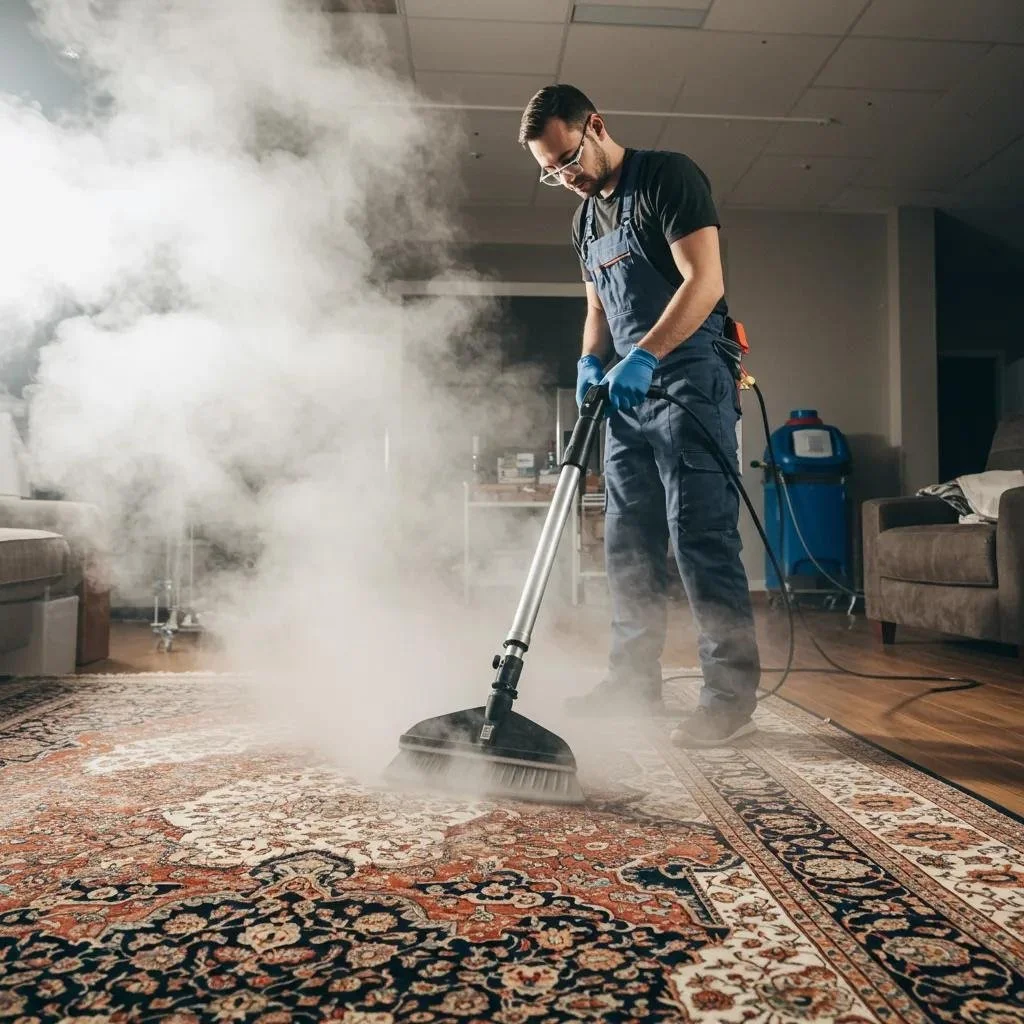
Steam cleaning, or hot water extraction, injects heated water and detergent under pressure, then vacuums out the solution along with suspended dirt and allergens. Synthetic rugs, resilient to temperature and agitation, respond well to this process, which also sanitizes and neutralizes pet odors. When rapid dry times and disinfectant action are priorities—such as in commercial lobbies—steam cleaning offers a balance of efficiency and fiber protection.
Dry cleaning or specialized hand washing suits moisture-intolerant fibers like silk, antique Moroccan weaves, and rugs with natural backings that can warp under wet conditions. In dry cleaning, low-residue solvents separate oils and embedded debris without water, while hand washing applies pH-balanced shampoos by brush in localized areas. Controlled air circulation then evaporates solvents safely, preserving dyes and pile integrity.
Specialized enzyme treatments target protein bonds in pet urine and organic spills, converting ammonia compounds into soluble fragments. Once bonded, dual-stage rinsing with odor-neutralizing agents flushes particles and prevents re-soiling. For persistent red wine or coffee stains, spot-bleaching protocols use oxidizing agents applied precisely to discolored zones, followed by thorough rinsing and color-fastness checks. Combined with controlled drying, these treatments restore appearance and hygiene.
Choosing a certified and experienced rug cleaner ensures that complex processes follow industry standards, protecting fiber quality and customer investment. Certifications like IICRC accreditation signify formal training in restoration and cleaning, while positive customer reviews reflect real-world performance. Insurance coverage and satisfaction guarantees further reduce risk, allowing rug owners to entrust valuable pieces to qualified professionals.
IICRC certification demonstrates that technicians have passed rigorous exams on cleaning science, fiber types, and equipment operation. This credential ensures adherence to approved standards for pH levels, solution dwell time, and mechanical action. For instance, an IICRC-certified cleaner uses calibrated hot water extraction protocols that remove soils without overdosing detergents, preserving rug hand and color.
Technicians with decades of field experience have encountered diverse rug constructions and stain challenges, honing their diagnostic skills. Reviewing online testimonials reveals patterns in punctuality, care level, and post-service follow-through. Seek providers noted for handling antiques, resolving pet-odor issues, and delivering on promises—social proof that expertise translates into consistent, high-quality results.
Insurance coverage protects against accidental damage during transit or cleaning, offering peace of mind when entrusting precious rugs. A satisfaction guarantee binds the cleaner to revisit and resolve any concerns at no extra charge. This commitment underscores customer-centric values and ensures that final outcomes align with expectations.
Facility quality and advanced equipment directly impact cleaning effectiveness and fiber preservation. A dedicated rug cleaning plant offers controlled environments for dusting, immersion, and precision drying that mobile units cannot match. On-site machinery, from centrifugal extractors to humidity-regulated chambers, ensures complete soil removal and uniform moisture release, safeguarding pile resilience.
A dedicated plant provides specialized dusting machines that shake out embedded debris without fiber distortion, large immersion tanks for balanced cleaning, and segregated zones for pre-treatments and rinsing. Unlike in-home services, which are limited by space and power, an in-plant facility maintains strict process controls that protect delicate edges and backing materials.
High-capacity centrifuges remove 95% of moisture after rinsing, dramatically cutting overall drying time. Humidity-controlled drying rooms then gently circulate fresh air around rugs, preventing microbial growth and pile matting. Advanced dust separators and HEPA filtration systems extract allergens before rinse, ensuring that finished rugs arrive clean and ready for use.
Pickup and delivery services streamline the cleaning experience by handling logistics from doorstep to facility. For Central Texas clients, coordinated scheduling and insured transport prevent damage or loss in transit. Receiving freshly cleaned rugs back within days means minimal disruption to home or office décor and confidence in professional handling at every stage.
Professional area rug cleaning cost in Austin typically ranges from $1.50 to $4.00 per square foot, reflecting material type, condition, size, and additional treatments. Understanding these cost drivers helps homeowners budget accurately and compare transparent pricing models that outline per-foot rates, stain removal fees, and protectant options.
| Cost Factor | Impact on Price | Example |
| Rug Material | Natural fibers command higher cleaning complexity | Silk rugs often cost 50% more per sqft |
| Size and Shape | Custom or oversized pieces require more labor | A 9×12 wool rug vs. 5×8 throws yield different rates |
| Condition and Soil Level | Heavy soiling or pet damage needs extra treatments | Enzyme treatment adds $0.50 per sqft |
| Special Treatments and Protectants | Stain barrier or moth-repellent adds to cost | Protectant application may add $0.25 per sqft |
Several elements shape quotes for professional cleaning:
Fiber composition – Delicate fibers need controlled solutions.
Rug size and pattern – Intricate designs require extra handling time.
Soil load and damage – Pet urine or mildew necessitates specialized pretreatments.
Additional services – Padding replacement, fringe restoration, and protectant coatings incur separate fees.
Assessing these factors ensures that price quotes align with required care levels.
The Steam Team provides clear, per-square-foot rates differentiated by synthetic and natural fiber categories, with separate line items for pet-odor treatment, protective coatings, and optional pad installation. This transparent structure eliminates hidden fees, enabling clients to tailor services to budget and rug requirements. Detailed estimates outline each cost component before work begins.
Affordable quality arises from service bundles and periodic promotions rather than cutting process steps.
Routine Maintenance Plans – Scheduled cleanings at reduced rates prevent heavy soil buildup.
Bundle Discounts – Combining upholstery or carpet cleaning with area rugs lowers per-item costs.
Off-Peak Scheduling – Midweek drop-offs often attract promotional pricing without extending turnaround time.
These approaches maintain professional standards while recognizing budget constraints.
The Steam Team leverages over four decades of specialized experience, a state-of-the-art plant, and a guaranteed satisfaction promise to deliver superior rug restoration. Certified technicians apply a proven 10-step process that addresses soil, biological contaminants, and fiber preservation. Combined with eco-friendly solutions, insured transport, and local awards like “Best Austin Rug Cleaning,” the company upholds trust, transparency, and technical excellence.
Inspection and Documentation – Identify fiber type, damage, and soiling.
Precise Measurement – Record dimensions for consistent handling.
Dry Dusting – Remove loose debris via specialized dusting machines.
Enzyme Pretreatment – Treat biological stains and odors.
Immersion Washing – Submerge rugs in calibrated cleaning solution.
Centrifugal Extracting – Spin out excess moisture efficiently.
Fresh Air Drying – Circulate air in humidity-controlled rooms.
Fiber Grooming – Realign pile and restore loft.
Quality Inspection – Confirm stain removal and color retention.
Packaging and Delivery Prep – Protect rugs for safe return transit.
The Steam Team uses plant-grade enzyme systems that break down urine compounds at the molecular level, followed by dual rinses with odor-neutralizing solutions. Technicians verify pH balance post-treatment and employ accelerated drying to prevent mildew. This protocol restores freshness and fiber resilience after pet accidents.
By choosing biodegradable detergents and reclaiming rinse water for reuse in pre-treatments, the facility minimizes environmental impact. Low-temperature immersion cycles conserve energy, while HEPA-filtered dust extraction protects indoor air. These measures reduce chemical load and water usage without compromising cleaning performance.
Voted “Best Austin Rug Cleaning” by a leading magazine and holding an A+ rating with the local business bureau, The Steam Team maintains consistent praise for punctual pickups, meticulous attention to fiber detail, and rapid turnaround. Positive reviews underscore the company’s commitment to satisfaction guarantees and transparent communication throughout the cleaning process.
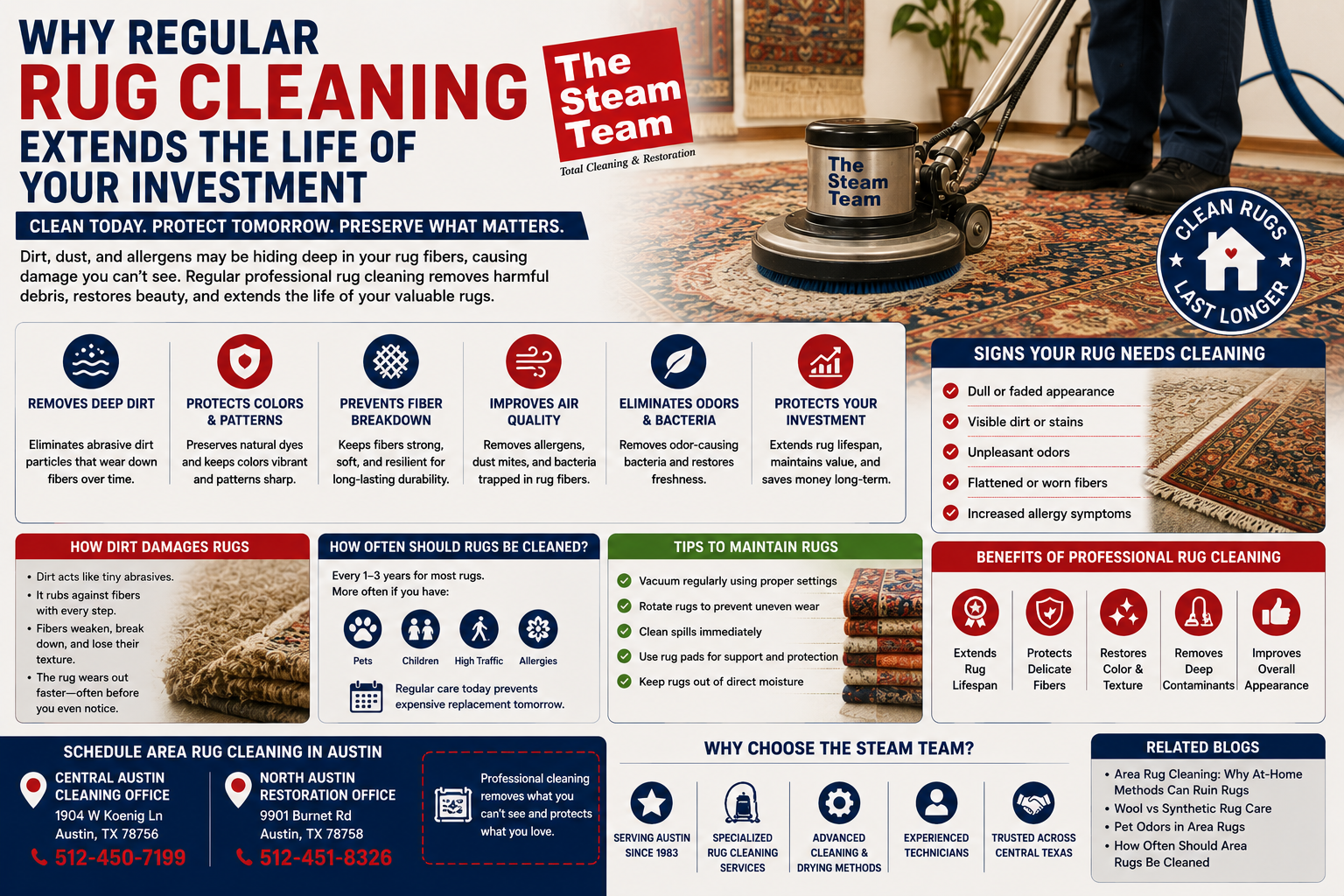
Regular at-home care extends the interval between professional services by preventing soil compaction and dye fading. Simple routines like correct vacuuming, immediate spot response, rotation, and pad usage protect fibers and maintain rug appearance over time.
Adjust vacuum settings to match pile height and fiber strength:
Low-Pile Synthetics – Use a turbo brush at moderate suction to remove grit.
High-Pile Wool – Employ a gentle upholstery attachment to lift debris without crushing fibers.
Delicate Silk – Opt for brushless suction only, gliding the nozzle over the surface.
Consistent twice-weekly vacuuming prevents soil from settling, preserving color and pile structure.
Prompt action prevents stains from setting into fibers and backing.
Blot Excess Liquid – Use a white cloth to absorb spills without rubbing.
Dilute with Water – Lightly mist the area and continue blotting.
Apply Mild Detergent – Test on an inconspicuous corner, then work outward.
Rinse and Blot – Flush with clean water and absorb residual moisture.
Immediate intervention minimizes the need for intensive professional spot treatments.
Rotating rugs every three months ensures even wear and prevents sun-fade streaks in high-traffic zones. A quality rug pad cushions fibers, reduces slippage, and provides protective support under foot traffic. Combined, these measures maintain pile resilience and structural integrity until the next professional cleaning cycle. Maintaining professional standards and using informed selection criteria ensures that area rugs remain beautiful, hygienic, and durable. By understanding material needs, verifying certifications, evaluating facility capabilities, and budgeting for quality service, Austin residents and businesses can keep treasured rugs in peak condition year after year.
When choosing a rug cleaning service, consider the company's experience, certifications, and customer reviews. Look for IICRC certification, which indicates that technicians are trained in proper cleaning methods. Additionally, inquire about the specific cleaning techniques they use for different rug materials, as well as their facility's capabilities. Transparency in pricing and service options is also crucial, so ensure you understand the cost structure and any additional fees for specialized treatments.
The frequency of professional cleaning depends on several factors, including the rug's material, foot traffic, and exposure to pets or allergens. Generally, it's recommended to have rugs cleaned every 1 to 3 years. However, high-traffic areas or homes with pets may require more frequent cleanings, possibly every 6 to 12 months. Regular maintenance, such as vacuuming and immediate stain response, can also help extend the time between professional cleanings.
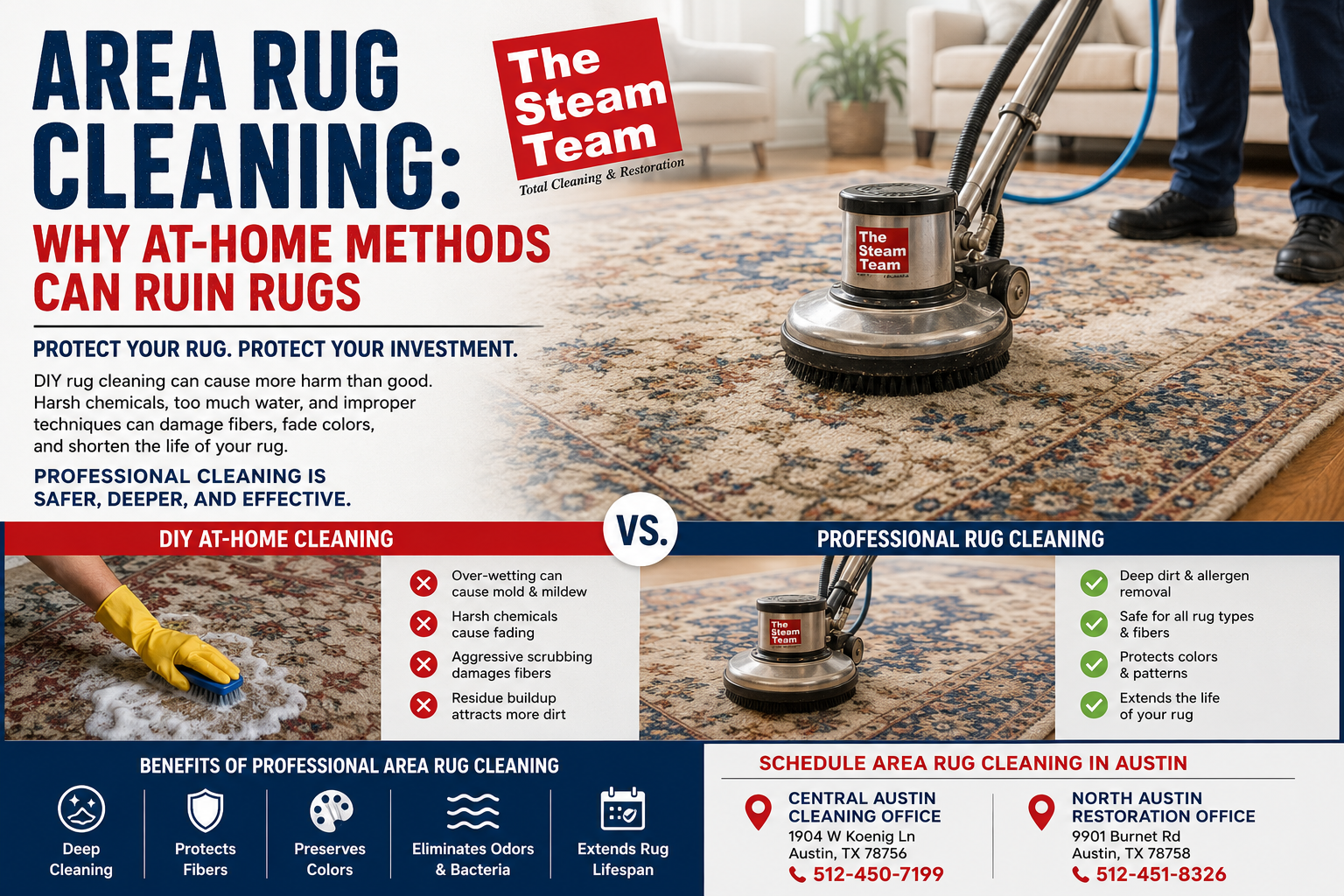
While some basic maintenance can be done at home, such as vacuuming and spot cleaning, professional cleaning is essential for deep cleaning and preserving the integrity of the fibers. Home cleaning methods may not effectively remove embedded dirt, allergens, or stains, especially for delicate materials like silk or antique rugs. Professionals have the expertise and equipment to clean without damaging the rug, ensuring a thorough and safe cleaning process.
Signs that your area rug needs professional cleaning include visible stains, persistent odors, or a dull appearance. If routine vacuuming fails to remove dirt or allergens, or if the rug feels rough or matted, it's time for a professional service. Additionally, if you notice increased allergy symptoms in your home, it may indicate that dust mites and other allergens are trapped in the rug fibers, necessitating a deep clean.
To protect your area rugs, implement regular maintenance practices such as vacuuming at least twice a week and addressing spills immediately. Use rug pads to prevent slipping and reduce wear from foot traffic. Rotating rugs every few months helps ensure even wear and prevents fading from sunlight. Additionally, consider applying a protective coating after professional cleaning to guard against stains and dirt accumulation.
If your rug has a persistent stain, avoid scrubbing, as this can damage the fibers. Instead, blot the area with a clean, white cloth to absorb excess liquid. For organic stains, use a mild detergent solution, testing it on an inconspicuous area first. If the stain persists, it's best to consult a professional cleaner who can use specialized treatments to effectively remove the stain without harming the rug.
Yes, many professional rug cleaning services offer eco-friendly cleaning options. These methods typically use biodegradable detergents and low-water processes to minimize environmental impact. Additionally, some companies implement water reclamation systems to reuse rinse water, further reducing waste. When selecting a service, inquire about their eco-friendly practices to ensure that your rug is cleaned safely for both your home and the environment.
Maintaining professional standards and informed selection criteria ensures that area rugs remain beautiful, hygienic, and durable. By understanding material needs, verifying certifications, evaluating facility capabilities, and budgeting for quality service, Austin residents and businesses can keep treasured rugs in peak condition year after year. Explore our expert rug cleaning services to experience the difference that specialized care can make. Contact us today to schedule your consultation and give your rugs the care they deserve.
Our mission is to provide you with the most outstanding service experience ever. Some of our most popular services include Carpet Cleaning, Tile Cleaning, Air Duct Cleaning, Water Damage, Fire Damage Restoration and Construction Services.
Quick Cleaning Quote
Email:
customerservice@thesteamteam.com
Georgetown: (512) 868-0358
Dallas: (214) 631-8326
Naples, FL: (239) 450-1936
Toll Free: (800) 880-7785
Professional cleaning and restoration services based in Austin, Texas. Serving homes and businesses since 1983 with certified technicians, advanced equipment, and 24/7 emergency response.
Cleaning Office – Central Austin
1904 W Koenig Ln
Austin, TX 78756
(512) 450-7199
customerservice@thesteamteam.com
Monday: 8am - 5pm
Tuesday: 8am - 5pm
Wednesday: 8am - 5pm
Thursday: 8am - 5pm
Friday: 8am - 5pm
Saturday: 8am - 5pm
Sunday: Closed
Restoration Office – North Austin
9901 Burnet Rd
Austin, TX 78758
(512) 451-8326
customerservice@thesteamteam.com
Monday: Open 24 hours
Tuesday: Open 24 hours
Wednesday: Open 24 hours
Thursday: Open 24 hours
Friday: Open 24 hours
Saturday: Open 24 hours
Sunday: Open 24 hours



© The Steam Team