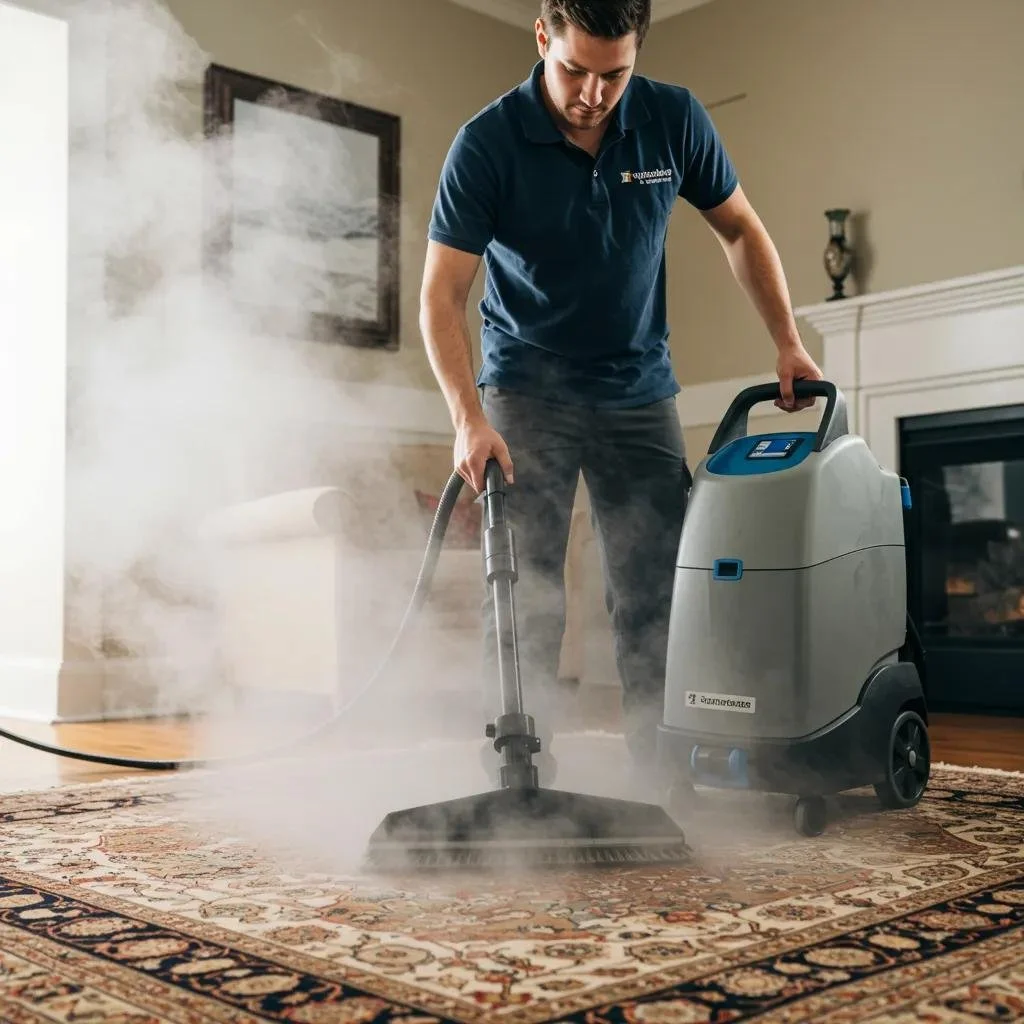
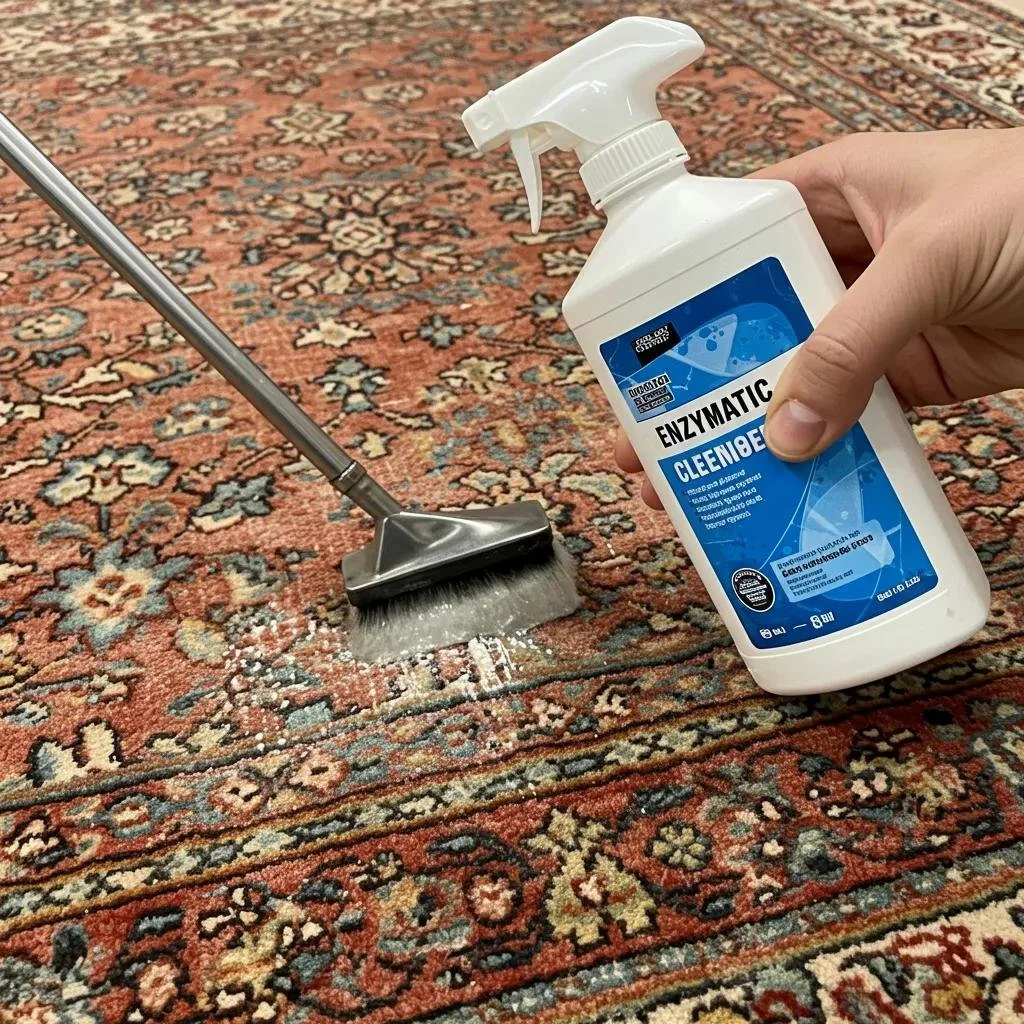
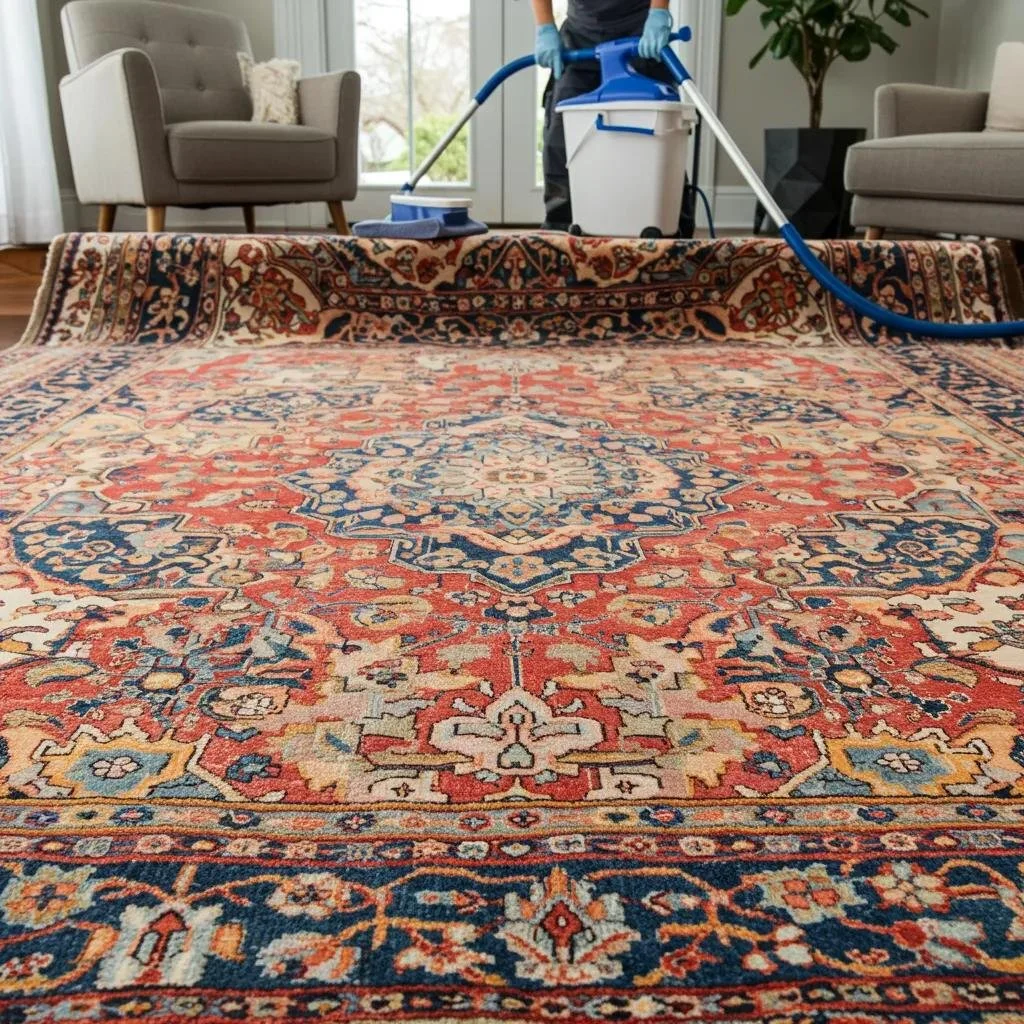
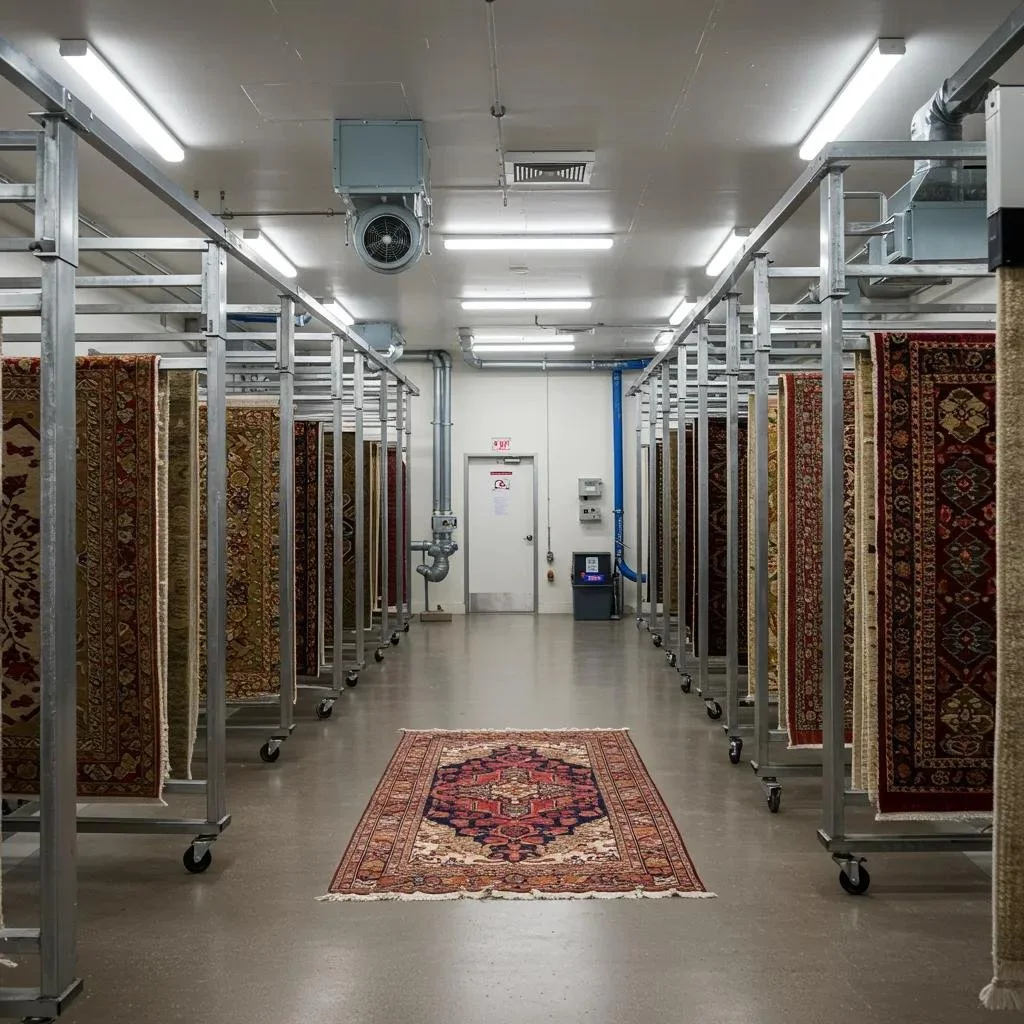
Pet stains combine protein soils and organic odor molecules; professionals use enzymatic cleaners that break down proteins and organic residues, followed by deep rinsing and hot water extraction to flush out residues that harbor bacteria and odor. Technicians will also apply neutralizers designed to bind and eliminate volatile odor compounds rather than mask them, and may repeat treatment cycles if urine has penetrated foundation layers. Post-cleaning moisture monitoring and prompt drying are essential to prevent microbial regrowth and lingering smells. For persistent or structural contamination, facility-grade immersion and restoration approaches are sometimes necessary.
What Techniques Remove Wine, Coffee, and Oil-Based Stains?
Tannin-based stains like wine and coffee respond best to pH-controlled aqueous cleaners and oxidizing boosters applied quickly to prevent dye fixation, whereas oil-based stains require solvent pre-treatment to dissolve hydrophobic residues before surfactant extraction. Professionals avoid rubbing or heat, which can spread or set stains, instead using blotting, localized chemistry, and controlled extraction. After treatment, neutralization and gentle pile grooming restore appearance and minimize residual discoloration. Understanding the underlying chemistry of the stain informs whether solvent-first or water-first protocols are appropriate.
How Does Professional Cleaning Prevent Mold and Mildew in Rugs?
Professional mold prevention focuses on achieving rapid, uniform drying and ensuring residual moisture is below critical thresholds; technicians use moisture meters, high-volume airflow, dehumidification, and antimicrobial treatments when necessary to stop spores from proliferating. Industry drying targets and moisture monitoring guide the process: technicians measure backing and pile moisture before release and may recommend additional drying or storage changes for humid conditions. In climates with high relative humidity, such as Austin’s humid months, these measures are essential to prevent post-cleaning microbial problems and to protect indoor air quality.
What Are the Risks of DIY Stain Removal on Area Rugs?
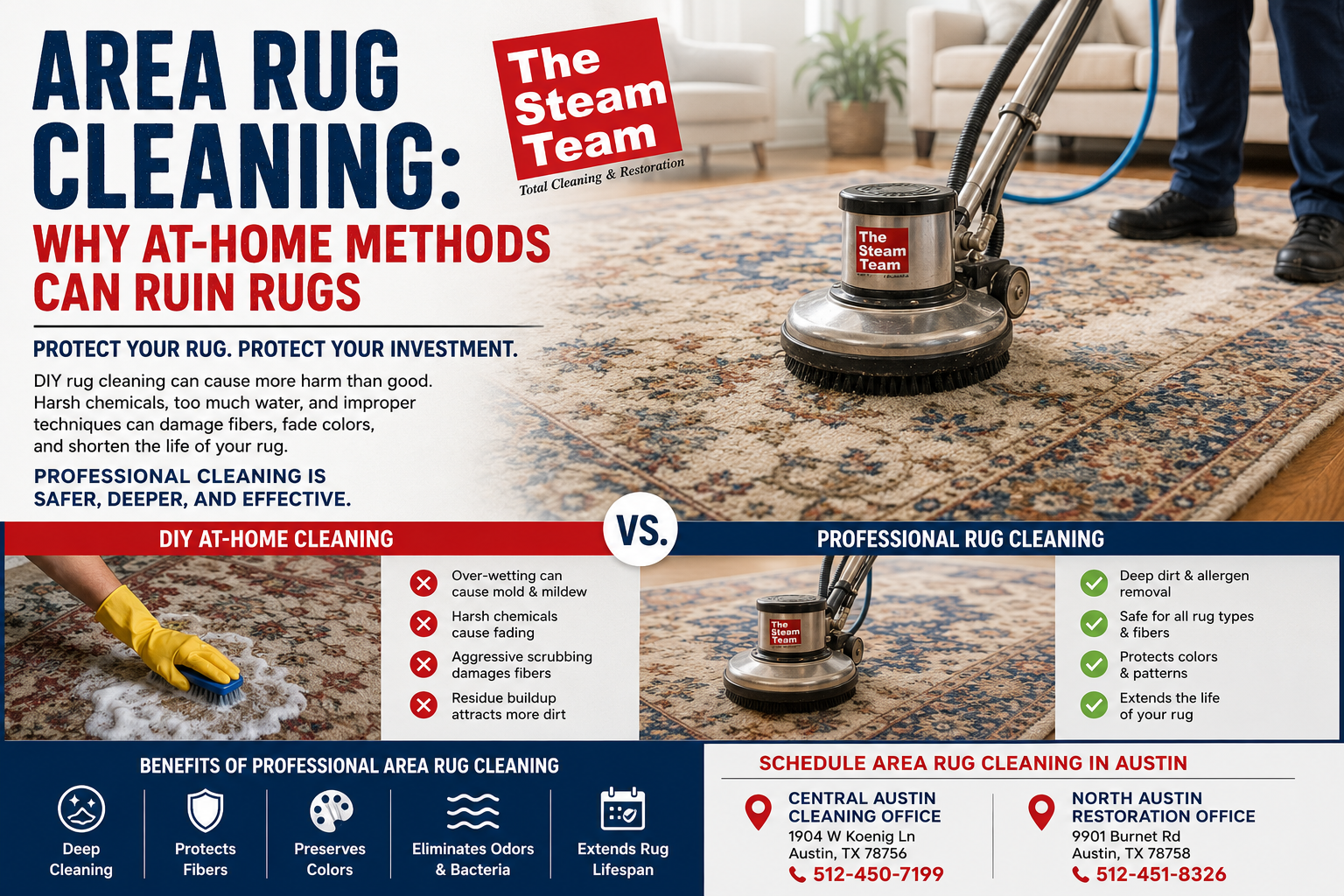
DIY stain removal often introduces risk factors that professionals avoid: over-wetting, using high heat (which can set protein or dye stains), and applying inappropriate solvents that dissolve dyes or backings; these mistakes can cause dye bleed, shrinkage, pile distortion, and permanent set stains. Rubbing a stain can mechanically embed soil deeper into the pile, and common household cleaners can leave residues that attract more soil over time. Homeowners should follow immediate containment steps (blotting, containment) and limit DIY chemistry to mild, pH-appropriate cleaners while calling professionals for persistent, antique, or complex stains. The final section covers how to decide when to escalate to a professional service.
When Should You Choose Professional Rug Cleaning Over DIY Methods?
Deciding between DIY and professional rug cleaning depends on rug value, material sensitivity, scale of soiling or odor, presence of water damage, and health concerns like allergies or mold risk. Professional intervention is strongly advised for antiques, silk rugs, heavy pet contamination, persistent odors, large-scale water incidents, or when prior DIY attempts have failed or caused damage. The advantages include trained technicians who perform fiber/dye testing, access to immersion and facility-grade equipment, and protocols for moisture monitoring that reduce long-term risk. Below is a checklist summarizing key indicators that you should contact a pro rather than attempt further DIY work.
Antique, hand-knotted, or silk rug: High conservation risk with DIY methods.
Persistent pet odors or urine: Requires enzymatic and deep extraction treatment.
Large stains or set dye: DIY may set stains or damage fibers further.
Water damage or mold risk: Rapid professional moisture remediation needed.
Extensive soiling across the rug: Immersion or facility-grade cleaning is more effective.
This checklist ties directly into the benefits of certified technicians and the practical frequency guidance in the next subsections.
What Are the Benefits of Hiring IICRC Certified Technicians?
IICRC certification indicates technicians have formal training in standards for cleaning, restoration, and moisture control, which translates into methodical inspection routines, standardized cleaning protocols, and systematic moisture measurement practices that protect rugs and homes. Certified technicians are trained to perform dye and fiber tests, select appropriate chemistries, and document results—practices that reduce the risk of accidental damage and improve predictability of outcomes. Certification also signals commitment to ongoing education and adherence to industry best practices, which gives homeowners stronger confidence when choosing a provider. Understanding these procedural benefits clarifies why certification matters when dealing with valuable or sensitive rugs.
What Are the Risks and Limitations of DIY Rug Cleaning?
DIY cleaning can be cost-effective for light, recent spills and routine maintenance, but it is limited when dealing with structural damage, deep-set odors, or delicate fibers; common DIY errors include over-wetting, using inappropriate pH cleaners, and applying heat that can set stains. When DIY causes dye bleed or shrinkage, corrective restoration becomes more complex and expensive than professional prevention would have been. Homeowners should stop DIY attempts if stains do not respond quickly or if the rug shows signs of structural change, and they should contact a professional to avoid compounding the issue. The next subsection outlines recommended professional cleaning intervals tailored to local climate factors.
How Often Should Area Rugs Be Professionally Cleaned in Austin’s Climate?
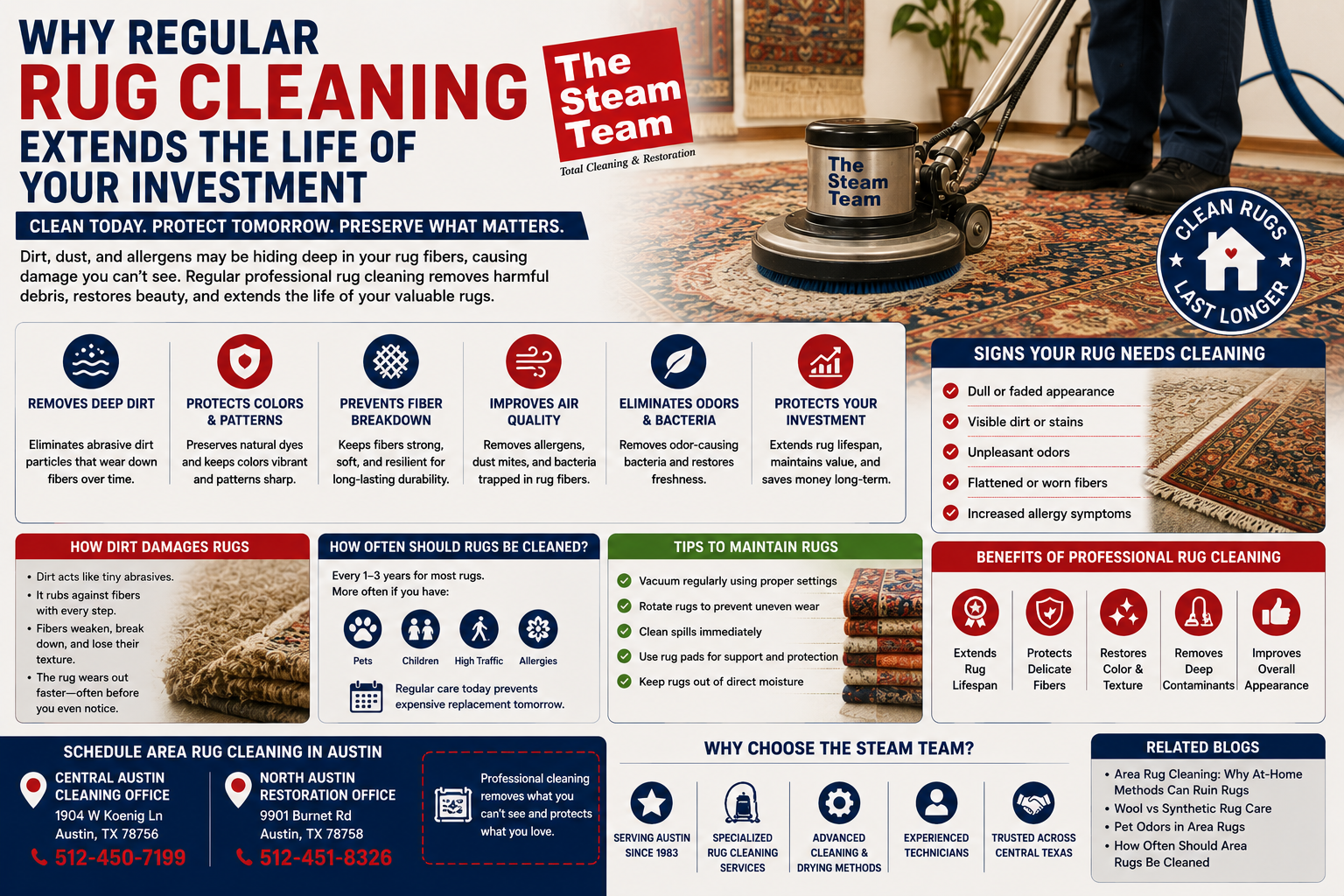
Standard guidance recommends professional cleaning every 12–18 months for average-traffic rugs, but frequency increases with pets, children, high foot traffic, or pronounced indoor humidity; in Austin’s humid months, more frequent professional cleanings help manage allergen loads and reduce mold risk by ensuring thorough extraction and controlled drying. High-traffic areas may need deep cleaning every 6–12 months, while low-traffic or decorative rugs may remain on a 18–36 month schedule with regular vacuuming. Technicians factor traffic patterns, indoor environmental conditions, and visible soil levels when setting a customized plan that balances rug preservation and indoor air quality.
How Does Professional Cleaning Improve Rug Longevity and Indoor Air Quality?
Professional deep cleaning removes embedded particulate, allergenic dust mites, and soils that abrade fibers, thereby preserving pile resilience and color vibrancy while reducing airborne allergen reservoirs that degrade indoor air quality. By combining appropriate chemistry with complete extraction and monitored drying, professionals minimize residue that would otherwise attract more soil and accelerate wear. The long-term cost-benefit is clear: regular professional service extends the useful life of valuable rugs and contributes measurably to a healthier indoor environment, particularly important for homes with allergy sufferers or pets. The next section explains how a local professional process typically operates to deliver these outcomes.
How Does The Steam Team’s Professional Area Rug Cleaning Process Work in Austin?
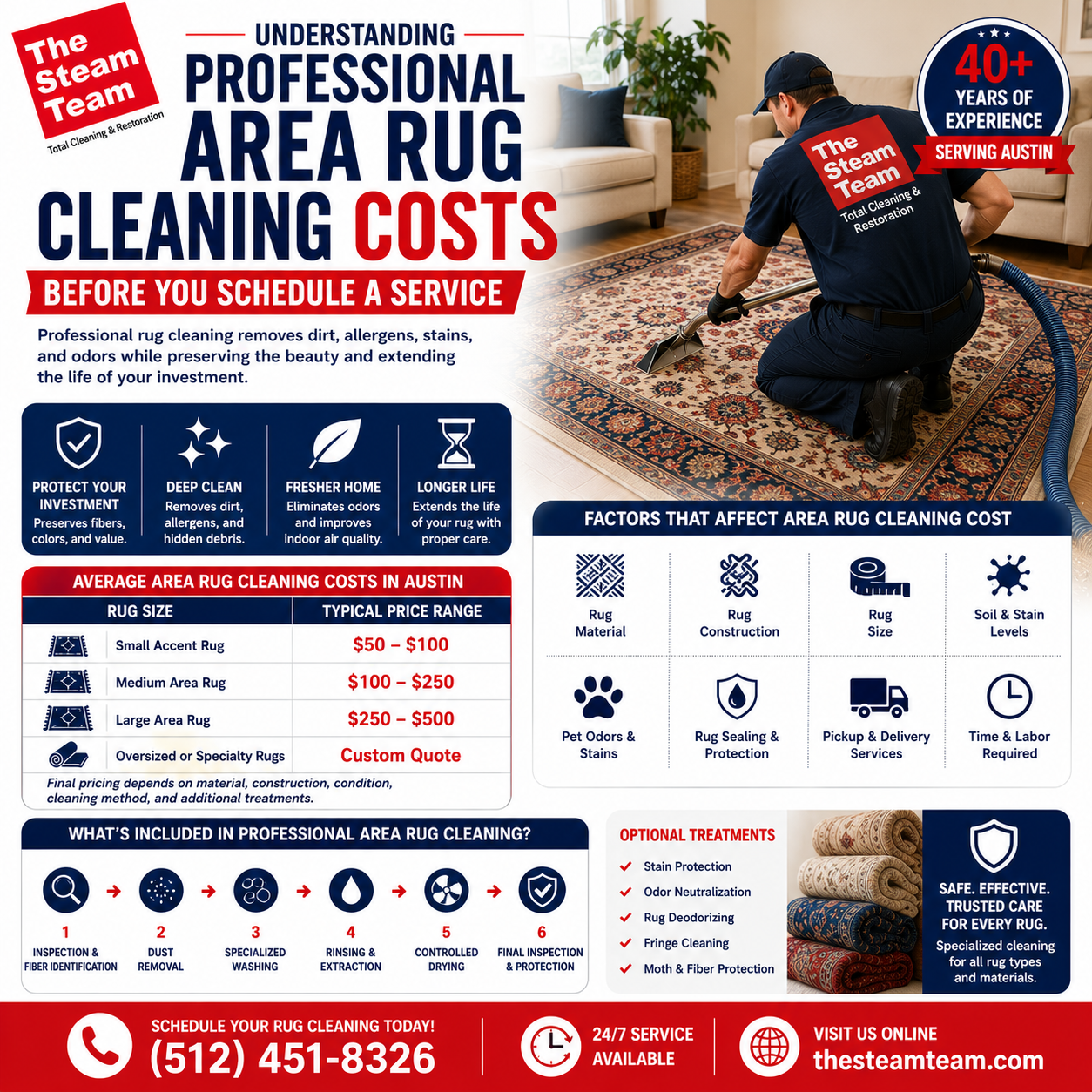
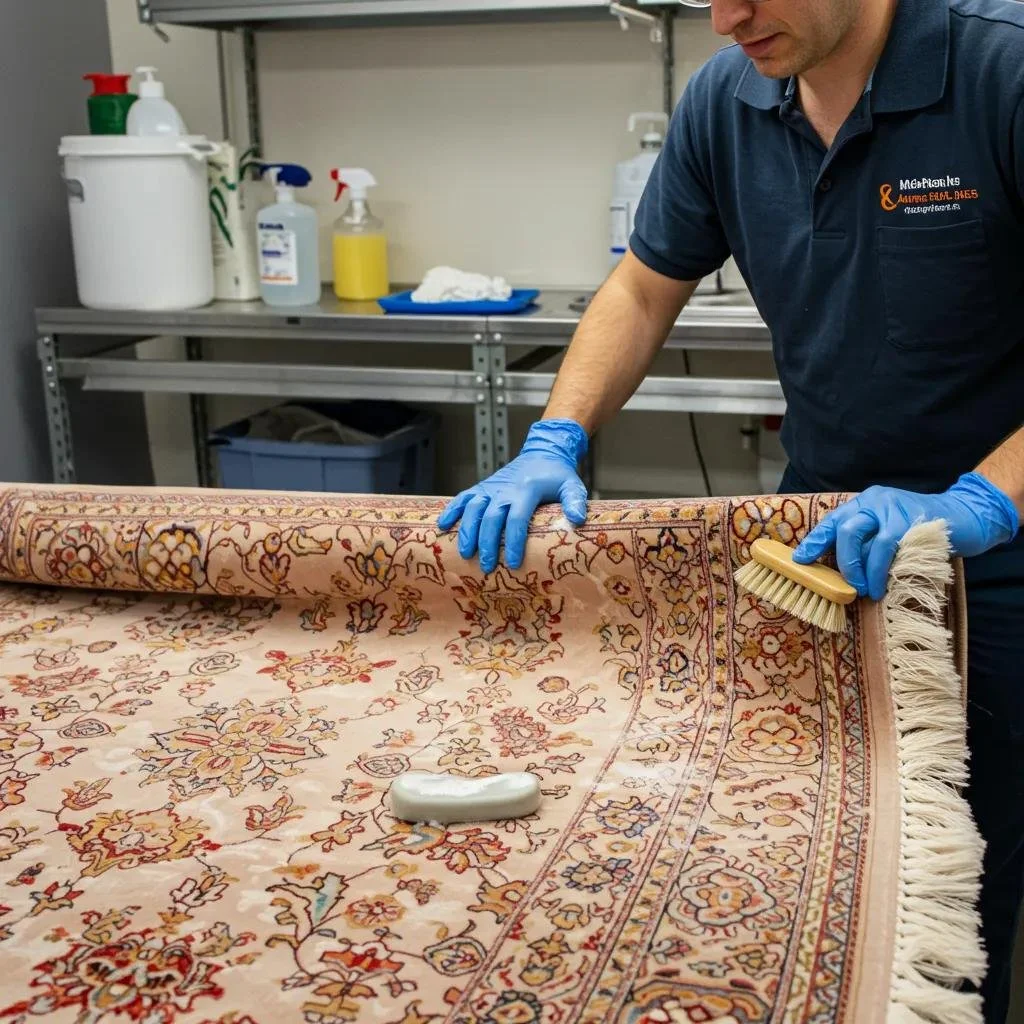
Inspection and testing: Fiber/dye tests and condition assessment.
Pre-cleaning prep: Dusting and pretreatment of stains and odors.
Cleaning method: Facility immersion, hand wash, dry clean, or hot water extraction as appropriate.
Rinsing and neutralization: Remove residues and balance pH.
Drying and moisture monitoring: Dehumidification and moisture meter verification.
Final inspection and grooming: Quality checks and customer notification.
This stepwise outline reflects standard professional controls that protect rugs during cleaning and supports the company’s quality assurance approach detailed next.
What Steps Are Included in Our Rug Cleaning Process?
The Steam Team follows a documented sequence: intake inspection, comprehensive dust removal, pre-treatment tailored to stain chemistry, application of the selected cleaning method, thorough rinsing and neutralization, mechanical or air-assisted drying to manufacturer moisture targets, and a final quality inspection before delivery. Timeframes vary with method and load—routine steam cleans may return faster, while immersion and restoration work require longer facility drying and closer monitoring. Technicians also record moisture readings and condition notes so customers understand the work performed and any recommended follow-up. This transparent workflow helps homeowners anticipate outcomes and schedules.
How Do Our IICRC Certified Technicians Ensure Quality Cleaning?
IICRC certified technicians on staff bring standardized training in cleaning and restoration practices, including fiber identification, dye testing, and moisture control procedures that reduce the risk of shrinkage, dye bleed, or mold. Certification ensures technicians follow industry protocols for pre-clean dusting, pretreatment selection, extraction pressure and temperature control, and post-cleaning moisture verification—measures that improve reliability and protect rug value. Ongoing training, quality checklists, and documented inspections form the QA backbone that homeowners can rely on to produce consistent results and clear communication throughout the process.
What Eco-Friendly Solutions and Advanced Technologies Do We Use?
The Steam Team balances cleaning efficacy with environmental considerations by using low-VOC detergents, biodegradable surfactants, and efficient extraction equipment that reduces water use while maintaining deep-clean performance. Advanced drying technologies—high-volume air movers paired with dehumidification—shorten drying times and lower mold risk, and low-moisture systems are available when appropriate to speed return-to-use. These choices support indoor air quality and are especially helpful for sensitive households, offering effective cleaning without unnecessary chemical exposure. The next subsection explains logistics and convenience benefits of pickup and delivery.
How Do Our Pickup and Delivery Services Add Convenience?
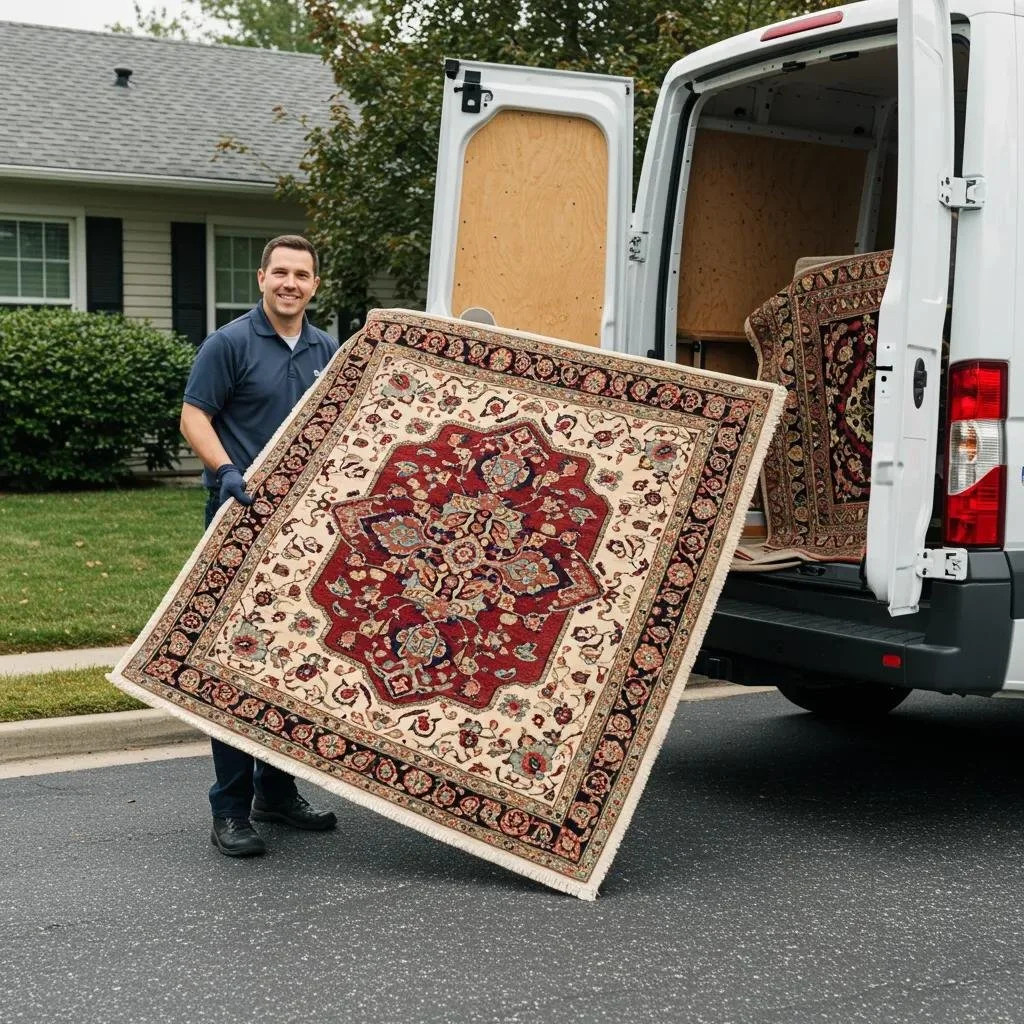
Pickup and delivery services reduce customer burden by handling transport logistics, with an alternative option to drop off rugs at the Burnet Road facility when preferred for direct handoff; scheduling is coordinated to match customer availability and turnaround requirements. The logistics workflow includes safe handling protocols, condition documentation at pickup, and secure transport to and from the cleaning facility, which streamlines the customer experience and minimizes disruption in the home. For homeowners balancing schedules or dealing with large or heavy rugs, these convenience options make professional care more accessible and predictable.
What Are the Best Practices for Maintaining and Caring for Area Rugs Between Cleanings?
Consistent maintenance preserves rug appearance and reduces the need for frequent deep cleaning; best practices include scheduled vacuuming tailored to traffic, immediate spill response that minimizes dye migration, regular rotation to even wear, and appropriate rug pad selection to protect backing and floor. Seasonal and environmental awareness—such as extra drying after humid months, and more frequent cleaning during pollen season—helps prevent mold and soil accumulation. The lists and guidance below provide actionable steps homeowners can implement easily to extend rug life and keep indoor air quality high.
Vacuum weekly in high-traffic areas to remove abrasive particulates.
Blot spills immediately and avoid rubbing to prevent dye spread.
Rotate rugs every 3–6 months to even wear and sun fade.
Use a proper rug pad to reduce friction and protect backing.
Schedule professional cleaning according to traffic and pet presence.
These steps reduce cumulative damage and make professional cleanings more effective when they are performed.
How Often Should You Vacuum and Rotate Your Area Rugs?
Vacuum frequency depends on traffic: weekly for high-traffic areas, biweekly for moderate traffic, and monthly for low-traffic zones; delicate rugs may require suction-only attachments to protect fringe and pile. Rotation every three to six months evens out wear patterns and sun exposure, preserving pile height and color uniformity. Use vacuums with adjustable height and beater-bar control to avoid excessive agitation on fragile fibers; for antiques, specialized suction-only equipment is preferable. These habits both reduce the need for deep cleaning and support rug longevity.
What Immediate Actions Should You Take After Spills or Stains?
When a spill occurs, act quickly: blot excess liquid with an absorbent cloth, avoid rubbing, test any cleaning reagent in an inconspicuous area, and contact a professional if the rug is antique, silk, or heavily soiled. Do not apply heat, and avoid household solvents that may dissolve dyes or leave residues. If you must use a home remedy, stick to pH-neutral cleaners and cold water; otherwise, preserve the area and seek professional assessment to prevent compounding damage. Prompt containment directly improves the success rate of later professional treatments.
How Do Rug Pads Protect Your Rugs and Floors?
Rug pads provide cushion, reduce abrasion between rug backing and floor, prevent slippage, and promote airflow that aids drying—benefits that extend rug life and protect underlying flooring. Recommended pad materials vary by rug type and floor surface; thin felt or rubber-backed pads work well under heavy rugs, while breathable pads help with drying and moisture control. Pads also raise pile slightly, reducing direct traffic wear on fibers and making vacuuming more effective. Proper pad selection is a low-cost investment that reduces long-term maintenance needs.
What Seasonal or Environmental Factors Affect Rug Care in Austin?
Austin’s seasonal humidity and pollen cycles influence cleaning frequency and drying strategies: humid months increase mold and mildew risk after wet cleaning, so professionals emphasize rapid drying and moisture monitoring; pollen season increases surface soils and may require more frequent vacuuming. During storm or flood risk, rugs exposed to contaminated water need professional restoration protocols rather than home washing to address biological contaminants and structural moisture. Storage during off-seasons should be dry, ventilated, and free of pests to prevent damage. These local considerations help homeowners time cleanings and choose methods that minimize environmental risk.
Why Choose The Steam Team for Area Rug Cleaning Services in Austin?
The Steam Team positions itself as a local professional resource that combines certified technicians, convenient logistics, and quality assurances to serve Austin homeowners and businesses seeking reliable rug cleaning and restoration. The company employs IICRC certified technicians who follow industry-standard inspection, testing, and moisture-control practices, offers pickup and delivery or a drop-off option at a Burnet Road facility, and emphasizes customer satisfaction with follow-up adjustments when clients are not completely satisfied. Trust signals include an A+ rating with the Better Business Bureau and recognition in local press as a top Austin rug cleaning provider, which underline the company’s community reputation and service orientation.
Certified technicians ensure standardized cleaning and moisture control practices.
Convenience options: pickup/delivery and local drop-off reduce customer burden.
Local recognition and BBB rating support credibility and service reliability.
Satisfaction commitment provides clear next steps if results fall short.
What Awards and Certifications Highlight Our Expertise?
The Steam Team’s team includes IICRC certified technicians, a recognized credential that signals formal training in cleaning and restoration standards and adherence to industry protocols for inspection, cleaning, and moisture control. Local recognition from regional publications and an A+ Better Business Bureau rating also serve as external indicators of community reputation and adherence to service expectations. These credentials matter because they align with documented processes—testing, method selection, moisture verification—that protect rug value and improve cleaning outcomes. The next subsection addresses how customer feedback reflects service quality.
How Do Customer Testimonials Reflect Our Service Quality?
Customer feedback, available through public review channels, commonly emphasizes responsiveness, thoroughness, and the convenience of pickup and delivery or drop-off options; these themes align with the company’s operational focus on certified technicians and documented cleaning processes. Prospective clients can consult live reviews to validate performance claims and learn about typical turnaround times and results for similar rug types. Positive review themes reinforce the value of standardized inspection, method selection, and moisture monitoring in achieving consistent cleaning outcomes.
What Guarantees and Customer Satisfaction Policies Do We Offer?
The Steam Team conveys a satisfaction commitment: if customers are not completely satisfied, the company works to rectify issues through follow-up services or adjustments until expectations are met. This policy typically involves documented condition notes, a review of the original service, and targeted corrective steps when necessary. Clear communication channels and documented quality checks expedite resolution and reinforce customer confidence in professional restoration and cleaning work. The next subsection explains how to request service.
How Can You Request a Quote or Schedule Your Rug Cleaning?
To request a quote or schedule rug cleaning, homeowners should prepare basic details—rug material, approximate size, visible issues (stains, odors, water exposure), and preferred logistics (pickup/delivery or drop-off at the Burnet Road facility)—so technicians can assess method options and estimate turnaround. Providing this information up front facilitates accurate pre-assessment and helps align expectations for timing, method selection, and any required restoration work. Scheduling typically begins with an intake inspection and testing to confirm the safest, most effective treatment plan tailored to the rug’s condition.
This completes the procedural and technical guidance to help Austin homeowners choose methods, protect rug value, and understand how professional services bring measurable benefits to cleanliness, longevity, and indoor air quality.
Frequently Asked Questions
What should I do if my area rug gets a stain?
If your area rug gets stained, act quickly to minimize damage. Blot the stain gently with a clean, absorbent cloth to soak up excess liquid without rubbing, which can spread the stain. Avoid using heat or harsh chemicals, as these can set the stain or damage the fibers. If the stain persists, consider contacting a professional cleaner who can assess the situation and apply the appropriate treatment based on the stain type and rug material.
How can I tell if my rug needs professional cleaning?
Signs that your rug may need professional cleaning include visible stains, persistent odors, or a noticeable buildup of dirt and allergens. If your rug feels rough or looks dull, it may also benefit from a deep clean. Additionally, if you have pets or children, more frequent cleanings may be necessary. Regular maintenance, such as vacuuming, can help, but professional cleaning is recommended every 12-18 months or sooner if the rug shows significant wear.
Are there any DIY methods that are safe for cleaning area rugs?
While some DIY methods can be safe for cleaning area rugs, caution is essential. Use pH-neutral cleaners and avoid excessive moisture to prevent damage. Blotting spills with a clean cloth and using a vacuum with a suction-only attachment can help maintain cleanliness. However, for delicate materials like silk or antique rugs, it’s best to consult a professional to avoid potential damage from improper cleaning techniques.
What factors should I consider when choosing a rug cleaning service?
When selecting a rug cleaning service, consider the company’s certifications, such as IICRC, which indicate trained professionals. Look for reviews and testimonials to gauge customer satisfaction. Additionally, inquire about their cleaning methods to ensure they are suitable for your rug’s material. Transparency in pricing and services offered, as well as guarantees for satisfaction, are also important factors to consider before making a decision.
How can I maintain my area rug between professional cleanings?
To maintain your area rug between professional cleanings, vacuum regularly to remove dirt and debris, especially in high-traffic areas. Rotate your rug every few months to ensure even wear and prevent fading from sunlight. Address spills immediately by blotting and using mild, pH-neutral cleaners. Additionally, consider using a rug pad to protect the backing and floor, and schedule professional cleanings based on traffic and usage to keep your rug in optimal condition.
What are the risks of using household cleaners on area rugs?
Using household cleaners on area rugs can pose several risks, including dye bleed, fiber damage, and residue buildup that attracts more dirt. Many household products contain harsh chemicals that can weaken fibers or alter colors, especially in delicate materials like silk or wool. Additionally, excessive moisture from DIY cleaning can lead to mold growth or backing damage. It’s advisable to use only pH-neutral cleaners and consult professionals for significant stains or delicate rugs.
How does climate affect the cleaning and maintenance of area rugs?
Climate plays a significant role in the cleaning and maintenance of area rugs. In humid environments, like Austin, rugs are more susceptible to mold and mildew, especially if not dried properly after cleaning. Increased pollen during certain seasons can lead to more frequent vacuuming needs. Homeowners should adjust their cleaning schedules based on humidity levels and seasonal changes, ensuring rugs are cleaned and dried thoroughly to prevent moisture-related issues.
Conclusion
Choosing the right area rug cleaning method can significantly enhance the longevity and appearance of your rugs while improving indoor air quality. By understanding the various professional techniques and their suitability for different materials, homeowners can make informed decisions that protect their investments. Regular professional cleaning not only addresses deep-set stains and odors but also contributes to a healthier living environment. Contact us today to explore our expert rug cleaning services tailored to your needs.