Wool vs Synthetic Rugs: Which Is Easier to Clean and Maintain?
/
Wool vs synthetic rugs: learn how fiber type affects cleaning, stain resistance, durability, maintenance, and professional rug care.
Read More
Explore expert tips on water damage restoration, carpet cleaning, rug cleaning, mold remediation, and air duct cleaning in Austin, TX. Trusted local insights from The Steam Team since 1983.
Wool vs synthetic rugs: learn how fiber type affects cleaning, stain resistance, durability, maintenance, and professional rug care.
Read MoreArea rugs are more than just decorative pieces, they are often valuable investments that add comfort, style, and character to a home
Read MoreArea rugs are often one of the most valuable and delicate items in a home. Whether it’s a handmade wool rug, an oriental piece,
Read MoreArea rug cleaning methods encompass a range of professional and DIY techniques designed to remove soil, stains, and odors while protecting fibers, dyes, and backing. Different approaches work by changing one or more variables—mechanical agitation, solvent chemistry, temperature, and moisture control—to loosen, suspend, and extract contaminants from rug pile and foundation. This guide explains how major professional methods operate, matches techniques to common rug materials, and gives step-by-step stain and odor protocols so homeowners can make informed choices that preserve rug appearance and indoor air quality. You will learn how steam (hot water extraction), dry cleaning, hand washing, immersion systems, and vacuuming compare; how material properties like fiber type and dye stability dictate method selection; what professionals do for pet stains, wine, oil, and mold prevention; and when Austin climate factors make professional services the safer option. Practical maintenance tips, an overview of a certified provider’s process, and clear decision checklists are included to help you act confidently when a rug needs deep cleaning or restorative care.
Professional area rug cleaning methods fall into five primary approaches—steam (hot water extraction), dry cleaning, hand washing/spot work, immersion cleaning, and specialized vacuuming/dusting—each using different mechanisms to remove soil and preserve rug structure. Choosing among these methods depends on rug fiber, dye stability, soil load, and the risk of shrinkage or color bleed; the following sections define each method, explain how it works mechanically and chemically, and indicate when pros prefer one over another. Understanding the mechanics—heat and surfactants for hot water extraction, solvents and low-moisture chemistry for dry cleaning, gentle agitation for hand washing, and full immersion for deep soil removal—lets homeowners evaluate trade-offs: cleaning power versus moisture exposure and drying time. The table below compares these methods by material suitability and highlights typical pros and cons to aid selection.
The following comparison helps homeowners and technicians pick the most effective treatment for a given rug type and condition, and it sets up practical selection criteria explained in later sections.
| Cleaning Method | Best For (Material / Condition) | Pros / Cons |
|---|---|---|
| Steam cleaning (hot water extraction) | Durable synthetics, low-shrink wool blends, high-traffic rugs | Pros: strong soil removal, sanitizing; Cons: high moisture, longer drying time |
| Dry cleaning (solvent / low-moisture) | Delicate fibers, antiques, silk, fragile dyes | Pros: minimal wetting and fast return; Cons: less deep-extraction for heavy soils |
| Hand washing / spot cleaning | Hand-knotted wool, silk accents, localized stains | Pros: controlled agitation and pH management; Cons: labor-intensive, limited for full rugs |
| Immersion cleaning (full wash) | Heavily soiled rugs, pet-odor restoration, washable foundations | Pros: thorough soil removal and rinsing; Cons: requires facility drying and reassembly |
| Professional vacuuming / dry dusting | Routine maintenance, particulate removal, pre-clean prep | Pros: protects fibers and improves IAQ; Cons: not a substitute for deep cleaning |
This table clarifies how method mechanics map to outcomes and sets the stage for the deeper technical descriptions in the next subsections.
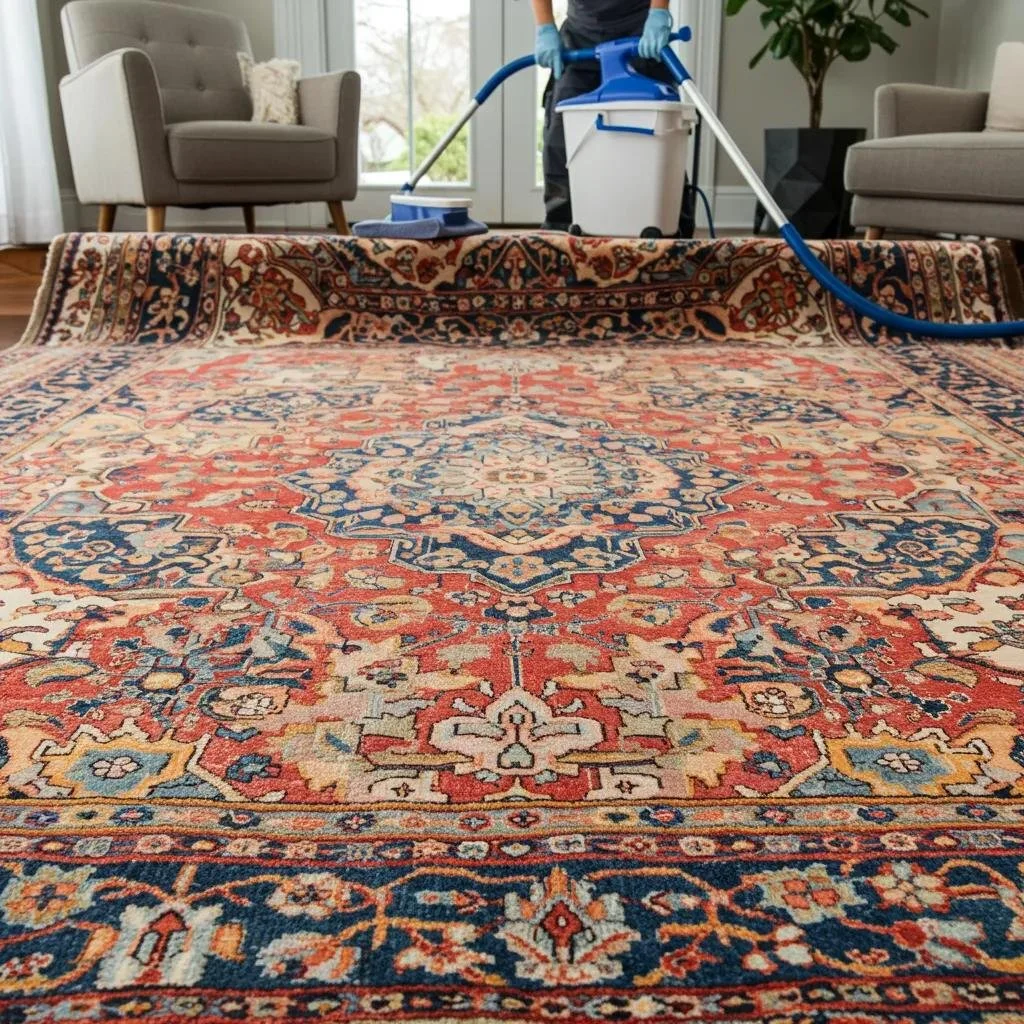
Steam cleaning, technically hot water extraction, uses heated water mixed with surfactants to loosen oils and particulate soil, then powerful suction extracts the resulting slurry from the pile and backing. The combination of temperature, agitation, and detergent chemistry emulsifies oily contaminants and suspends fine particles so they can be removed rather than redistributed. For many synthetic rugs and durable wool blends, hot water extraction provides deep cleaning and sanitization, but it requires careful moisture control and follow-up drying to prevent shrinkage, backing damage, or mold in humid environments. In Austin's climate, technicians monitor moisture levels and use rapid airflow and dehumidification to meet drying targets and reduce mildew risk, which connects directly to mold-prevention practices covered later.
Dry cleaning uses solvent-based or low-moisture systems that dissolve oily soils and lift surface contaminants without saturating fibers, making it suitable for rugs with unstable dyes, delicate silk fibers, or antique constructions where water exposure risks shrinkage. The method relies on specialized solvents and low-moisture pre-spray agents that break bonds between soil and fiber, followed by agitation and solvent recovery or absorbent compound extraction; this minimizes dimensional change and dye migration. Dry cleaning is the preferred route when labels or dye tests indicate risk with hot water extraction, and it often allows quicker return to use because drying time is minimal. Understanding dye stability and fiber tolerance—which we cover in material-specific sections—helps decide when a solvent approach outweighs steam cleaning.
Hand washing and professional spot treatment let technicians apply precise chemistry and controlled agitation to sensitive areas, preserving pile integrity and color while addressing localized damage or stubborn stains. Professionals perform dye-fastness testing, select pH-appropriate detergents, and use soft brushes or low-speed agitation to lift soils without overworking fibers; neutralization and careful drying follow to lock results. For delicate hand-knotted or antique rugs, hand washing in a controlled facility or targeted spot protocols often yield the best balance between cleanliness and conservation. The next section explains immersion systems that expand on hand-wash techniques for whole-rug restoration.
Immersion cleaning submerges the entire rug in a wash tank or controlled wash area where mechanical agitation, detergent circulation, and thorough rinsing remove embedded soils and allergens from both pile and foundation. This method is particularly effective for rugs with heavy pet soils, persistent odors, or accumulated particulate trapped deep in the backing, because immersion ensures complete rinsing of surfactants and contaminants. After washing, technicians follow strict drying and reassembly protocols—including moisture checks and pile reorientation—to avoid distortion or odor development. Immersion’s thoroughness makes it a go-to for deep restorations, but it requires facility-grade drying and quality assurance to prevent post-cleaning issues, which is why it’s often paired with professional moisture monitoring.
Proper vacuuming techniques form the foundation of rug maintenance; suction-only vacuums, intermittent beater-bar use, and professional dry-dusting remove loose particulate and delay soiling, extending the interval between deep cleans. High-efficiency suction-only systems are recommended for delicate fringes and antique rugs, while adjustable beater bars help agitate pile in durable synthetic or shag rugs to lift embedded dirt. Professional pre-clean dusting—using dedicated dusting machines or enclosed systems—extracts fine particulate before wet cleaning, improving extraction efficiency and protecting indoor air quality. Regular vacuuming frequency and method selection depend on traffic, pets, and material, which we address in the maintenance section to help homeowners create a practical care schedule.
Rug material dictates cleaning chemistry, moisture tolerance, agitation limits, and acceptable temperature ranges; fibers like wool, silk, jute, synthetics, and hand-knotted foundations each have characteristic vulnerabilities that shape method selection. The main determining factors are fiber protein or polymer composition, dye types, pile height, foundation strength, and backing materials—these aspects influence whether steam extraction, dry cleaning, hand washing, or immersion is safest and most effective. Below is a quick reference table linking common materials to recommended professional methods and the techniques to avoid so homeowners can match rug fiber characteristics to appropriate treatments.
| Rug Material | Recommended Methods | Methods to Avoid / Risks |
|---|---|---|
| Wool | Hand washing, controlled immersion, low-temp steam | High-temp extraction, strong alkalines (cause shrinkage/color loss) |
| Synthetic (nylon, polyester) | Steam cleaning, low-moisture methods | Strong solvents that strip finishes (may affect stain-resistance) |
| Oriental / Antique | Hand washing, low-moisture/dry cleaning by specialists | Machine agitation, high-moisture immersion without conservation plan |
| Jute / Sisal / Cotton | Low-moisture spot cleaning, careful dry cleaning | Heavy water exposure (swelling, distortion) |
| Silk | Solvent-based dry cleaning, minimal wetting | Hot water extraction, aggressive agitation |
This material-method mapping highlights why pre-inspection and fiber testing are critical; the next subsections break down the practices for each material and cautionary steps for sensitive fibers.
Wool requires gentle handling because its protein structure is sensitive to alkaline pH, heat, and excessive agitation; professional practice favors cold-to-lukewarm water, neutral pH detergents, and controlled mechanical action to avoid felted shrinkage and dye migration. Technicians often choose hand washing or controlled immersion with careful rinsing and neutralization, followed by monitored drying and humidity control to preserve pile loft and color. Pre-treatment testing for dye stability guides reagent choice, and follow-up protective treatments can restore fiber resilience. Understanding these constraints explains why some wool rugs that appear suitable for steam cleaning instead receive hand wash or immersion care to preserve value.
Synthetic fibers like nylon and polyester tolerate higher temperatures and more aggressive hot water extraction, making steam cleaning highly effective at removing oils and embedded soils from these rugs. Professionals use surfactants formulated to emulsify oily residues and apply higher extraction temperatures while monitoring for heat-sensitive backing adhesives. Low-moisture cleaning options are also viable for routine maintenance to speed return-to-use in busy homes. Because synthetics often have stain-resistant finishes, technicians balance cleaning power with preserving factory treatments to avoid stripping protective coatings that aid long-term performance.
Oriental and antique rugs typically feature natural dyes, hand-knotted foundations, and delicate fringe connections; these qualities necessitate conservation-oriented approaches that prioritize dye testing, minimal wetting, and gentle hand washing by experienced technicians. Dry cleaning or targeted hand treatments prevent dye bleed and foundation stress, and restoration-level services may include structural repair before or after cleaning to maintain weave integrity. Museum-grade handling principles apply when the rug has provenance or significant value, which is why specialists often limit machine processes for these pieces and emphasize documentation and condition reporting.
Plant-fiber rugs such as jute and sisal absorb water readily and can distort, shrink, or delaminate when over-wetted; professionals therefore prefer low-moisture cleaning, careful spot treatment, and mechanical soil removal over full immersion. When surface soils are heavy, dry-cleaning compounds or encapsulating polymers can lift dirt without saturating fibers, and any wet work is performed with minimal water and immediate, controlled drying. Technicians also recommend protective measures—like using rug pads—to minimize direct traffic abrasion that accelerates plant-fiber breakdown. These limitations explain why replacement is sometimes recommended when structural damage exists.
Silk rugs demand the most conservative approach: solvent-based dry cleaning or ultra-gentle hand washing with minimal agitation and careful neutralization to avoid fiber weakening and color loss. Professionals assess dye stability and often decline aggressive methods if conservation risks outweigh cleaning benefits; when wet work is undertaken, it’s limited, carefully controlled, and followed by immediate drying under tension to stabilize the weave. Because water can cause irreversible changes in silk’s luster and tensile strength, skilled technicians use specialized solvents and test areas extensively before full treatment. This conservative stance prevents long-term damage and preserves aesthetic qualities.
Effective stain and odor remediation pairs the right chemistry with mechanical extraction and appropriate moisture control; professionals classify stains by chemistry—protein, tannin, oil/grease, dye—and select enzymes, solvents, or surfactants accordingly, followed by deep extraction and neutralization. Odor work often requires enzymatic digestion of organic sources and thorough rinsing to remove residual nutrients that can fuel repeat odors, while oil-based stains need solvent pre-treatment before aqueous extraction. The table below maps common stain types to professional treatments and realistic outcomes to help homeowners set expectations and choose interventions.
| Stain Type | Professional Treatment | Expected Outcome / Notes |
|---|---|---|
| Pet urine (protein + odor) | Enzymatic pretreatment, hot water extraction, odor neutralizers | High success with full removal when treated promptly; repeated treatment may be needed for set stains |
| Wine / coffee (tannin/dye) | pH-controlled aqueous detergent, oxygen-based boosters, targeted extraction | Good outcomes if treated quickly; heat and rubbing can set dye |
| Oil / grease | Solvent pre-spray, emulsification, followed by extraction | Solvent-first approach prevents spreading; full removal depends on penetration |
| Mold / mildew | Antimicrobial treatment, moisture remediation, thorough drying | Requires moisture control and possible restoration if fibers are damaged |
These protocols reflect how professionals select chemistries to address stain chemistry rather than relying on one-size-fits-all remedies, and the following subsections explain steps for the most common problem types.
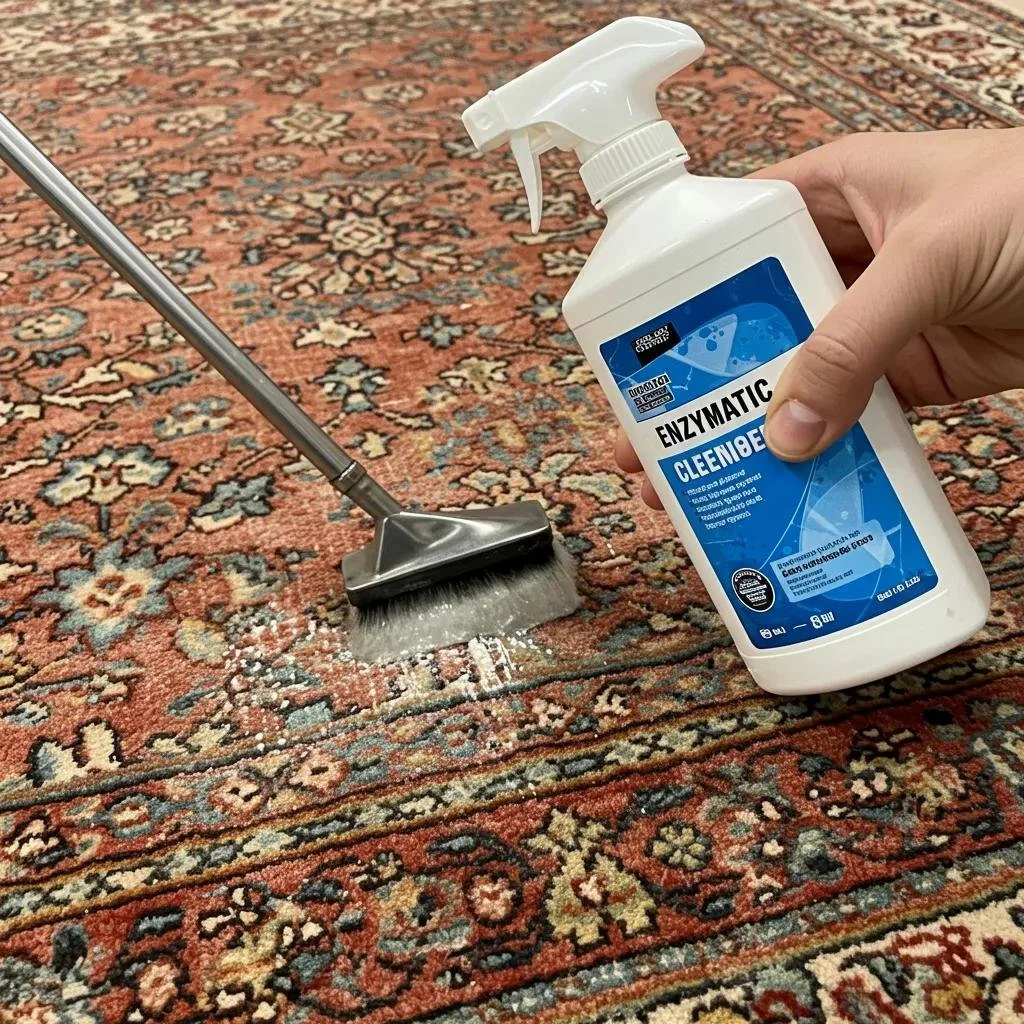
Pet stains combine protein soils and organic odor molecules; professionals use enzymatic cleaners that break down proteins and organic residues, followed by deep rinsing and hot water extraction to flush out residues that harbor bacteria and odor. Technicians will also apply neutralizers designed to bind and eliminate volatile odor compounds rather than mask them, and may repeat treatment cycles if urine has penetrated foundation layers. Post-cleaning moisture monitoring and prompt drying are essential to prevent microbial regrowth and lingering smells. For persistent or structural contamination, facility-grade immersion and restoration approaches are sometimes necessary.
Tannin-based stains like wine and coffee respond best to pH-controlled aqueous cleaners and oxidizing boosters applied quickly to prevent dye fixation, whereas oil-based stains require solvent pre-treatment to dissolve hydrophobic residues before surfactant extraction. Professionals avoid rubbing or heat, which can spread or set stains, instead using blotting, localized chemistry, and controlled extraction. After treatment, neutralization and gentle pile grooming restore appearance and minimize residual discoloration. Understanding the underlying chemistry of the stain informs whether solvent-first or water-first protocols are appropriate.
Professional mold prevention focuses on achieving rapid, uniform drying and ensuring residual moisture is below critical thresholds; technicians use moisture meters, high-volume airflow, dehumidification, and antimicrobial treatments when necessary to stop spores from proliferating. Industry drying targets and moisture monitoring guide the process: technicians measure backing and pile moisture before release and may recommend additional drying or storage changes for humid conditions. In climates with high relative humidity, such as Austin’s humid months, these measures are essential to prevent post-cleaning microbial problems and to protect indoor air quality.
DIY stain removal often introduces risk factors that professionals avoid: over-wetting, using high heat (which can set protein or dye stains), and applying inappropriate solvents that dissolve dyes or backings; these mistakes can cause dye bleed, shrinkage, pile distortion, and permanent set stains. Rubbing a stain can mechanically embed soil deeper into the pile, and common household cleaners can leave residues that attract more soil over time. Homeowners should follow immediate containment steps (blotting, containment) and limit DIY chemistry to mild, pH-appropriate cleaners while calling professionals for persistent, antique, or complex stains. The final section covers how to decide when to escalate to a professional service.
Deciding between DIY and professional rug cleaning depends on rug value, material sensitivity, scale of soiling or odor, presence of water damage, and health concerns like allergies or mold risk. Professional intervention is strongly advised for antiques, silk rugs, heavy pet contamination, persistent odors, large-scale water incidents, or when prior DIY attempts have failed or caused damage. The advantages include trained technicians who perform fiber/dye testing, access to immersion and facility-grade equipment, and protocols for moisture monitoring that reduce long-term risk. Below is a checklist summarizing key indicators that you should contact a pro rather than attempt further DIY work.
Antique, hand-knotted, or silk rug: High conservation risk with DIY methods.
Persistent pet odors or urine: Requires enzymatic and deep extraction treatment.
Large stains or set dye: DIY may set stains or damage fibers further.
Water damage or mold risk: Rapid professional moisture remediation needed.
Extensive soiling across the rug: Immersion or facility-grade cleaning is more effective.
This checklist ties directly into the benefits of certified technicians and the practical frequency guidance in the next subsections.
IICRC certification indicates technicians have formal training in standards for cleaning, restoration, and moisture control, which translates into methodical inspection routines, standardized cleaning protocols, and systematic moisture measurement practices that protect rugs and homes. Certified technicians are trained to perform dye and fiber tests, select appropriate chemistries, and document results—practices that reduce the risk of accidental damage and improve predictability of outcomes. Certification also signals commitment to ongoing education and adherence to industry best practices, which gives homeowners stronger confidence when choosing a provider. Understanding these procedural benefits clarifies why certification matters when dealing with valuable or sensitive rugs.
DIY cleaning can be cost-effective for light, recent spills and routine maintenance, but it is limited when dealing with structural damage, deep-set odors, or delicate fibers; common DIY errors include over-wetting, using inappropriate pH cleaners, and applying heat that can set stains. When DIY causes dye bleed or shrinkage, corrective restoration becomes more complex and expensive than professional prevention would have been. Homeowners should stop DIY attempts if stains do not respond quickly or if the rug shows signs of structural change, and they should contact a professional to avoid compounding the issue. The next subsection outlines recommended professional cleaning intervals tailored to local climate factors.
Standard guidance recommends professional cleaning every 12–18 months for average-traffic rugs, but frequency increases with pets, children, high foot traffic, or pronounced indoor humidity; in Austin’s humid months, more frequent professional cleanings help manage allergen loads and reduce mold risk by ensuring thorough extraction and controlled drying. High-traffic areas may need deep cleaning every 6–12 months, while low-traffic or decorative rugs may remain on a 18–36 month schedule with regular vacuuming. Technicians factor traffic patterns, indoor environmental conditions, and visible soil levels when setting a customized plan that balances rug preservation and indoor air quality.
Professional deep cleaning removes embedded particulate, allergenic dust mites, and soils that abrade fibers, thereby preserving pile resilience and color vibrancy while reducing airborne allergen reservoirs that degrade indoor air quality. By combining appropriate chemistry with complete extraction and monitored drying, professionals minimize residue that would otherwise attract more soil and accelerate wear. The long-term cost-benefit is clear: regular professional service extends the useful life of valuable rugs and contributes measurably to a healthier indoor environment, particularly important for homes with allergy sufferers or pets. The next section explains how a local professional process typically operates to deliver these outcomes.
Inspection and testing: Fiber/dye tests and condition assessment.
Pre-cleaning prep: Dusting and pretreatment of stains and odors.
Cleaning method: Facility immersion, hand wash, dry clean, or hot water extraction as appropriate.
Rinsing and neutralization: Remove residues and balance pH.
Drying and moisture monitoring: Dehumidification and moisture meter verification.
Final inspection and grooming: Quality checks and customer notification.
This stepwise outline reflects standard professional controls that protect rugs during cleaning and supports the company’s quality assurance approach detailed next.
The Steam Team follows a documented sequence: intake inspection, comprehensive dust removal, pre-treatment tailored to stain chemistry, application of the selected cleaning method, thorough rinsing and neutralization, mechanical or air-assisted drying to manufacturer moisture targets, and a final quality inspection before delivery. Timeframes vary with method and load—routine steam cleans may return faster, while immersion and restoration work require longer facility drying and closer monitoring. Technicians also record moisture readings and condition notes so customers understand the work performed and any recommended follow-up. This transparent workflow helps homeowners anticipate outcomes and schedules.
IICRC certified technicians on staff bring standardized training in cleaning and restoration practices, including fiber identification, dye testing, and moisture control procedures that reduce the risk of shrinkage, dye bleed, or mold. Certification ensures technicians follow industry protocols for pre-clean dusting, pretreatment selection, extraction pressure and temperature control, and post-cleaning moisture verification—measures that improve reliability and protect rug value. Ongoing training, quality checklists, and documented inspections form the QA backbone that homeowners can rely on to produce consistent results and clear communication throughout the process.
The Steam Team balances cleaning efficacy with environmental considerations by using low-VOC detergents, biodegradable surfactants, and efficient extraction equipment that reduces water use while maintaining deep-clean performance. Advanced drying technologies—high-volume air movers paired with dehumidification—shorten drying times and lower mold risk, and low-moisture systems are available when appropriate to speed return-to-use. These choices support indoor air quality and are especially helpful for sensitive households, offering effective cleaning without unnecessary chemical exposure. The next subsection explains logistics and convenience benefits of pickup and delivery.
Pickup and delivery services reduce customer burden by handling transport logistics, with an alternative option to drop off rugs at the Burnet Road facility when preferred for direct handoff; scheduling is coordinated to match customer availability and turnaround requirements. The logistics workflow includes safe handling protocols, condition documentation at pickup, and secure transport to and from the cleaning facility, which streamlines the customer experience and minimizes disruption in the home. For homeowners balancing schedules or dealing with large or heavy rugs, these convenience options make professional care more accessible and predictable.
Consistent maintenance preserves rug appearance and reduces the need for frequent deep cleaning; best practices include scheduled vacuuming tailored to traffic, immediate spill response that minimizes dye migration, regular rotation to even wear, and appropriate rug pad selection to protect backing and floor. Seasonal and environmental awareness—such as extra drying after humid months, and more frequent cleaning during pollen season—helps prevent mold and soil accumulation. The lists and guidance below provide actionable steps homeowners can implement easily to extend rug life and keep indoor air quality high.
Vacuum weekly in high-traffic areas to remove abrasive particulates.
Blot spills immediately and avoid rubbing to prevent dye spread.
Rotate rugs every 3–6 months to even wear and sun fade.
Use a proper rug pad to reduce friction and protect backing.
Schedule professional cleaning according to traffic and pet presence.
These steps reduce cumulative damage and make professional cleanings more effective when they are performed.
Vacuum frequency depends on traffic: weekly for high-traffic areas, biweekly for moderate traffic, and monthly for low-traffic zones; delicate rugs may require suction-only attachments to protect fringe and pile. Rotation every three to six months evens out wear patterns and sun exposure, preserving pile height and color uniformity. Use vacuums with adjustable height and beater-bar control to avoid excessive agitation on fragile fibers; for antiques, specialized suction-only equipment is preferable. These habits both reduce the need for deep cleaning and support rug longevity.
When a spill occurs, act quickly: blot excess liquid with an absorbent cloth, avoid rubbing, test any cleaning reagent in an inconspicuous area, and contact a professional if the rug is antique, silk, or heavily soiled. Do not apply heat, and avoid household solvents that may dissolve dyes or leave residues. If you must use a home remedy, stick to pH-neutral cleaners and cold water; otherwise, preserve the area and seek professional assessment to prevent compounding damage. Prompt containment directly improves the success rate of later professional treatments.
Rug pads provide cushion, reduce abrasion between rug backing and floor, prevent slippage, and promote airflow that aids drying—benefits that extend rug life and protect underlying flooring. Recommended pad materials vary by rug type and floor surface; thin felt or rubber-backed pads work well under heavy rugs, while breathable pads help with drying and moisture control. Pads also raise pile slightly, reducing direct traffic wear on fibers and making vacuuming more effective. Proper pad selection is a low-cost investment that reduces long-term maintenance needs.
Austin’s seasonal humidity and pollen cycles influence cleaning frequency and drying strategies: humid months increase mold and mildew risk after wet cleaning, so professionals emphasize rapid drying and moisture monitoring; pollen season increases surface soils and may require more frequent vacuuming. During storm or flood risk, rugs exposed to contaminated water need professional restoration protocols rather than home washing to address biological contaminants and structural moisture. Storage during off-seasons should be dry, ventilated, and free of pests to prevent damage. These local considerations help homeowners time cleanings and choose methods that minimize environmental risk.
The Steam Team positions itself as a local professional resource that combines certified technicians, convenient logistics, and quality assurances to serve Austin homeowners and businesses seeking reliable rug cleaning and restoration. The company employs IICRC certified technicians who follow industry-standard inspection, testing, and moisture-control practices, offers pickup and delivery or a drop-off option at a Burnet Road facility, and emphasizes customer satisfaction with follow-up adjustments when clients are not completely satisfied. Trust signals include an A+ rating with the Better Business Bureau and recognition in local press as a top Austin rug cleaning provider, which underline the company’s community reputation and service orientation.
Certified technicians ensure standardized cleaning and moisture control practices.
Convenience options: pickup/delivery and local drop-off reduce customer burden.
Local recognition and BBB rating support credibility and service reliability.
Satisfaction commitment provides clear next steps if results fall short.
The Steam Team’s team includes IICRC certified technicians, a recognized credential that signals formal training in cleaning and restoration standards and adherence to industry protocols for inspection, cleaning, and moisture control. Local recognition from regional publications and an A+ Better Business Bureau rating also serve as external indicators of community reputation and adherence to service expectations. These credentials matter because they align with documented processes—testing, method selection, moisture verification—that protect rug value and improve cleaning outcomes. The next subsection addresses how customer feedback reflects service quality.
Customer feedback, available through public review channels, commonly emphasizes responsiveness, thoroughness, and the convenience of pickup and delivery or drop-off options; these themes align with the company’s operational focus on certified technicians and documented cleaning processes. Prospective clients can consult live reviews to validate performance claims and learn about typical turnaround times and results for similar rug types. Positive review themes reinforce the value of standardized inspection, method selection, and moisture monitoring in achieving consistent cleaning outcomes.
The Steam Team conveys a satisfaction commitment: if customers are not completely satisfied, the company works to rectify issues through follow-up services or adjustments until expectations are met. This policy typically involves documented condition notes, a review of the original service, and targeted corrective steps when necessary. Clear communication channels and documented quality checks expedite resolution and reinforce customer confidence in professional restoration and cleaning work. The next subsection explains how to request service.
To request a quote or schedule rug cleaning, homeowners should prepare basic details—rug material, approximate size, visible issues (stains, odors, water exposure), and preferred logistics (pickup/delivery or drop-off at the Burnet Road facility)—so technicians can assess method options and estimate turnaround. Providing this information up front facilitates accurate pre-assessment and helps align expectations for timing, method selection, and any required restoration work. Scheduling typically begins with an intake inspection and testing to confirm the safest, most effective treatment plan tailored to the rug’s condition.
This completes the procedural and technical guidance to help Austin homeowners choose methods, protect rug value, and understand how professional services bring measurable benefits to cleanliness, longevity, and indoor air quality.
If your area rug gets stained, act quickly to minimize damage. Blot the stain gently with a clean, absorbent cloth to soak up excess liquid without rubbing, which can spread the stain. Avoid using heat or harsh chemicals, as these can set the stain or damage the fibers. If the stain persists, consider contacting a professional cleaner who can assess the situation and apply the appropriate treatment based on the stain type and rug material.
Signs that your rug may need professional cleaning include visible stains, persistent odors, or a noticeable buildup of dirt and allergens. If your rug feels rough or looks dull, it may also benefit from a deep clean. Additionally, if you have pets or children, more frequent cleanings may be necessary. Regular maintenance, such as vacuuming, can help, but professional cleaning is recommended every 12-18 months or sooner if the rug shows significant wear.
While some DIY methods can be safe for cleaning area rugs, caution is essential. Use pH-neutral cleaners and avoid excessive moisture to prevent damage. Blotting spills with a clean cloth and using a vacuum with a suction-only attachment can help maintain cleanliness. However, for delicate materials like silk or antique rugs, it’s best to consult a professional to avoid potential damage from improper cleaning techniques.
When selecting a rug cleaning service, consider the company’s certifications, such as IICRC, which indicate trained professionals. Look for reviews and testimonials to gauge customer satisfaction. Additionally, inquire about their cleaning methods to ensure they are suitable for your rug’s material. Transparency in pricing and services offered, as well as guarantees for satisfaction, are also important factors to consider before making a decision.
To maintain your area rug between professional cleanings, vacuum regularly to remove dirt and debris, especially in high-traffic areas. Rotate your rug every few months to ensure even wear and prevent fading from sunlight. Address spills immediately by blotting and using mild, pH-neutral cleaners. Additionally, consider using a rug pad to protect the backing and floor, and schedule professional cleanings based on traffic and usage to keep your rug in optimal condition.
Using household cleaners on area rugs can pose several risks, including dye bleed, fiber damage, and residue buildup that attracts more dirt. Many household products contain harsh chemicals that can weaken fibers or alter colors, especially in delicate materials like silk or wool. Additionally, excessive moisture from DIY cleaning can lead to mold growth or backing damage. It’s advisable to use only pH-neutral cleaners and consult professionals for significant stains or delicate rugs.
Climate plays a significant role in the cleaning and maintenance of area rugs. In humid environments, like Austin, rugs are more susceptible to mold and mildew, especially if not dried properly after cleaning. Increased pollen during certain seasons can lead to more frequent vacuuming needs. Homeowners should adjust their cleaning schedules based on humidity levels and seasonal changes, ensuring rugs are cleaned and dried thoroughly to prevent moisture-related issues.
Choosing the right area rug cleaning method can significantly enhance the longevity and appearance of your rugs while improving indoor air quality. By understanding the various professional techniques and their suitability for different materials, homeowners can make informed decisions that protect their investments. Regular professional cleaning not only addresses deep-set stains and odors but also contributes to a healthier living environment. Contact us today to explore our expert rug cleaning services tailored to your needs.
Professional area rug cleaning removes embedded soils, allergens, pet contaminants, and cleaning residues using facility-grade techniques that protect fiber integrity and color. This article explains how professional area rug cleaning works, why it matters for rug longevity and indoor air quality, and what to expect when arranging service in Austin. Readers will learn a certified 10-step cleaning workflow, specialized methods for Oriental, wool, silk, antique and synthetic rugs, and practical timelines and decision points for restoration versus routine maintenance. The piece also covers evidence-based treatments for pet urine and mold, transparent cost drivers and the inspection-based quote process, plus targeted FAQs to answer common homeowner concerns. Throughout, content integrates local service details where relevant—credential signals, eco-friendly chemistry, pickup and delivery logistics—so readers can move from understanding to requesting a quote or scheduling an inspection with confidence.
The 10-step area rug cleaning process is a sequence of inspection, mechanical dry-soil removal, dye testing, gentle washing, controlled rinsing, extraction, advanced drying, fringe care, protectant application, and final packaging designed to restore appearance while preserving structure. The sequence works by removing abrasive soils first, then applying targeted solutions and controlled water to avoid dye migration or fiber damage, which results in cleaner, safer rugs and improved indoor air quality. This method reduces fiber abrasion and limits repeated soiling by eliminating residues that attract dirt, producing measurable improvements in hand-feel and odor control. The section below lists the steps in a concise HowTo format so you can see what technicians will do and why each stage matters.
Initial inspection and documentation.
Pickup and transit to the facility.
High-pressure air dusting to remove dry soils.
Colorfastness testing and dye assessment.
Hand washing or controlled machine washing.
Controlled rinsing to remove detergents and residues.
Mechanical extraction to reduce moisture.
Advanced drying with airflow and temperature control.
Fringe cleaning, grooming, and repair triage.
Final inspection, protectant application, packaging, and delivery.
The numbered workflow above summarizes each phase and the expected benefit: deeper soil removal, safer dye handling, and stable drying that reduces shrinkage and mold risk. For local credibility, The Steam Team performs these processes in a dedicated Austin facility with IICRC-certified technicians, uses biodegradable solutions where appropriate, and offers pickup and delivery to reduce customer burden and streamline logistics. Understanding the 10-step flow helps homeowners know what to expect at inspection, why certain tests or repairs are recommended, and when a restoration estimate will be required.
The initial inspection defines size, fiber content, visible stains, fringe condition, and any prior repairs so technicians can select appropriate cleaning protocols. Inspectors record these attributes, photograph key problem areas, and note special handling needs like delicate dyes or antique construction, which informs downstream testing and cleaning choices. Pickup logistics include scheduling a convenient window and documenting pre-pickup condition; homeowners are advised to clear pathways and flag any fragile items near the rug. This inspection-to-pickup bridge establishes the baseline for quotes and any restoration recommendations that may follow.
At the facility, a secondary inspection uses dye tests, fiber strength checks, and microscopy where necessary to determine colorfastness and structural integrity before water exposure. Technicians compare pre- and post-test observations, photographing results and deciding whether hand washing, conservation-grade treatment, or referral to restoration is required. This step reduces the risk of color migration and identifies issues like backing breakdown or foundation weakness that simple cleaning cannot safely resolve. The detailed facility inspection ensures the chosen cleaning path aligns with the rug’s material and value.
High-pressure air dusting mechanically dislodges dry, embedded soils and grit that abrade fibers during foot traffic and vacuuming, and it’s particularly effective on wool and Oriental rugs. The process uses calibrated air jets and containment to lift and remove particulate matter without water exposure, protecting dyes and fragile structures from premature wear. Removing this dry soil before wet cleaning prevents re-deposition and enhances detergent efficacy during washing. Because air dusting reduces abrasive action, it extends rug life and improves appearance without chemical stress.
Colorfastness testing identifies unstable dyes that could bleed during washing, using small, controlled solvent and wet tests to simulate cleaning conditions before full washing occurs. When dyes prove stable, hand washing or low-impact immersion with pH-appropriate, biodegradable detergents becomes the preferred method for delicate fibers like silk and many hand-knotted Orientals. Hand washing offers controlled agitation and targeted rinsing that minimizes dye migration and fiber stress compared with aggressive machine methods. This intentional approach protects pattern integrity and preserves the original hand-feel of valuable rugs.
Research indicates that using disinfectants, proper cleaning, and timely drying significantly reduces microbial loads on contaminated rugs.
Disinfectant Effectiveness on Contaminated Oriental Rugs
Oriental rugs contaminated with Category 3 floodwater potentially harbor environmental bacteria known to be human pathogens. River water inoculated with three species of gram positive and gram negative environmental bacteria (Escherichia coli, Enterococcus faecalis, Pseudomonas aeruginosa) were used to assess the effectiveness of disinfectant type, cleaning methodology and drying practices by examining the survival rates of bacteria. Rug sections were immersed for one hour in contaminated water, saturated in one of three EPA registered disinfectant products (Phenol, Quaternary chloride, and Thyme oil) or tap water as a control, followed by cleaning and drying. The results showed that all disinfectants reduced the overall microbial load better than tap water. Two applications of disinfectants were slightly more effective than one application, which, in combination with drying in 24 hours or less, produced an effect that notably reduced microbial counts.
The Effect of Disinfectants, Cleaning, and Drying Practices on Oriental Rugs Flooded with Contaminated River Water: Public Health and Policy Implications, 2012
What Are Controlled Rinsing and Extraction Techniques?
Controlled rinsing applies measured water volumes and gentle pressure to remove detergent and loosened soils without forcing dyes to migrate or oversaturating foundations. Extraction tools then remove residual moisture to shorten drying times and limit microbial growth, using calibrated suction and multiple passes for even water removal. Together, rinsing and extraction reduce residue that attracts new soil and improve final texture and color clarity. Effective extraction shortens downtime and supports the subsequent advanced drying phase.
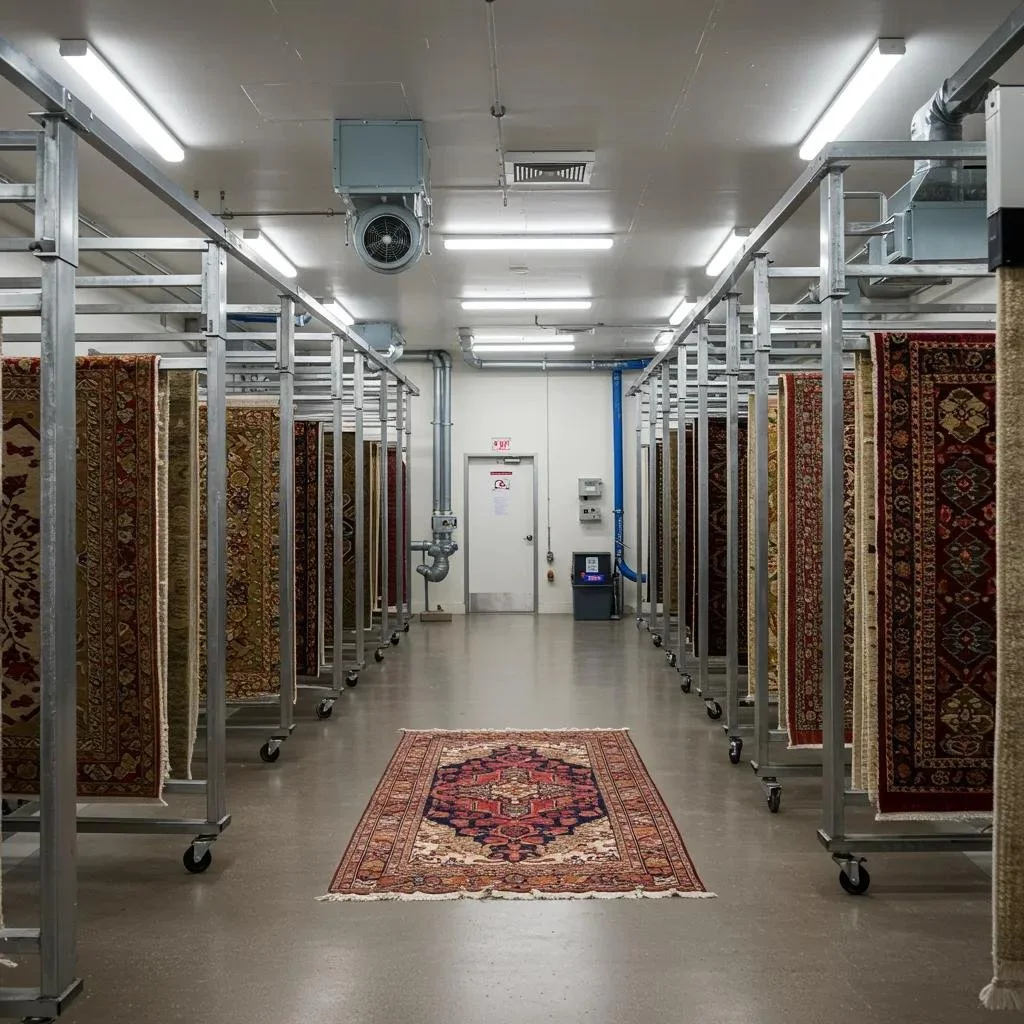
Advanced drying combines directional airflow, low-temperature heat, and controlled humidity to dry rugs evenly without shrinkage, backing distortion, or dye movement. Techniques vary by material—flat drying for delicate silks, elevated racks for wool—and environmental controls prevent condensation and mold formation. Typical drying timelines depend on fiber, pile, and foundation, but careful monitoring ensures rugs are returned at safe moisture levels that won't cause post-delivery issues. Proper drying is a key step that transforms a cleaned rug into a stable, ready-for-use item.
Fringe cleaning begins with gentle detangling, low-impact washing, and targeted stain treatment, followed by grooming to realign fibers and restore a neat finish without compromising knots. Technicians triage fringes for repair versus cosmetic grooming, documenting any required reweaving or reinforcement for customer approval. Because fringes are often the most fragile area, minimal mechanical action and appropriate detergents are essential to avoid fraying or loss. Proper fringe care improves overall appearance and reduces future deterioration.
The final inspection verifies odor removal, color fidelity, moisture levels, fringe condition, and absence of residues, with photos and notes recorded for client communication. Any remaining concerns trigger remediation steps—additional spot treatments, drying adjustments, or restoration referrals—before packaging and delivery. This quality check ties back to the initial records to ensure agreed-upon outcomes were achieved and documents exceptions requiring follow-up. Clear communication at this stage sets expectations and supports satisfaction.
Protectants are applied post-clean to repel common household spills and slow re-soiling, forming a thin barrier that helps liquids bead for quicker spot cleanup and reduces permanent staining. Technicians consider rug material and anticipated use before recommending protectants because some treatments can alter hand-feel or require special maintenance. While not permanent, protectants extend intervals between deep cleanings and improve stain manageability for active households. Clients receive care guidance so protectants deliver practical, long-term benefits without compromising fiber health.
Rugs are wrapped in protective materials, labeled with condition notes, and transported with padding and secure handling to prevent transit damage and soiling. Delivery teams follow installation best practices—orienting pile and smoothing seams—and conduct a brief post-install inspection with the homeowner to confirm satisfaction and document condition. Scheduling windows are communicated during quote and pickup phases to align expectations, and packaging methods are chosen to protect the rug until it reaches its final location. Secure packaging and careful delivery complete the cleaning lifecycle and reduce risk during transit.
Professional rug cleaners handle a broad range of rug types—Oriental, Persian, wool, silk, antique, and synthetics—each requiring specific chemistry, mechanical action, and drying controls to avoid damage. The cleaning method depends on fiber protein content, dye stability, foundation construction, and historical repairs; understanding material characteristics determines whether hand washing, low-impact immersion, or specialized restoration is needed. The table below compares common rug types, their material characteristics, and recommended professional cleaning methods to help owners set realistic expectations prior to inspection.
Different rug materials demand matched cleaning strategies for safety and effectiveness.
| Rug Type | Material Characteristics | Recommended Cleaning Method |
| Oriental / Persian | Natural fibers, vegetable dyes, hand-knotted foundation | Hand washing, air dusting, careful colorfast testing |
| Wool rugs | Protein-based fibers, resilient pile | pH-neutral detergents, controlled rinsing, advanced drying |
| Silk rugs | Extremely delicate fibers, sensitive dyes | Conservation-grade hand cleaning, minimal agitation |
| Antique rugs | Fragile foundations, historical repairs | Conservation-first restoration, documentation, limited cleaning |
| Synthetic rugs | Polypropylene/nylon, robust construction | Machine-assisted washing, higher agitation tolerance |
This comparison clarifies why a tailored approach preserves value and appearance: fiber chemistry informs detergent choice, mechanical action, and drying protocol. After assessing the rug type and condition, technicians recommend either routine facility cleaning or specialized restoration when structural or dye risks exist.
Oriental and Persian rugs often use natural fibers and traditional dyes that need air dusting, colorfast testing, and hand washing to protect intricate patterns and knot structure. The process emphasizes gentle mechanical action, controlled water exposure, and neutral detergents that remove soils without stripping natural oils or fading colors. Detailed inspection identifies weak foundation areas that might need reinforcement before full washing, lowering the chance of post-cleaning damage. Conservatively applied techniques preserve both aesthetic and structural integrity.
Wool responds well to pH-neutral cleaners and moderate agitation, while silk requires low-temperature, low-agitation hand treatments to avoid fiber weakening and dye migration. Temperature control and carefully selected biodegradable detergents are critical: the wrong pH or heat can cause shrinkage, felted pile, or color change. Drying methods differ too—wool tolerates more airflow and moderate warmth, silk benefits from flat, shaded drying with minimal tension. Matching chemistry and drying to protein-based fibers prevents common cleaning failures.
Antique rugs warrant a conservation-first approach: documentation, minimal intervention, and selective cleaning to avoid removing historical patina or destabilizing foundations. Restoration decisions hinge on dye stability, pile loss, and foundation integrity; technicians often recommend staged work—stabilize foundation, clean safe areas, then address repairs with reversible methods. Photographic documentation supports provenance and informs future conservation. When in doubt, restoration-grade handling reduces irreversible loss.
Synthetic rugs like polypropylene and nylon are more tolerant of mechanical action and a wider range of detergents, making them simpler to restore to near-original appearance through deep cleaning. Professional services focus on removing embedded oil-based stains and allergens while ensuring quick drying to prevent mildew in dense backings. Some synthetics accept higher-temperature rinses and more vigorous extraction, shortening turnaround time. Even so, correct detergent selection and drying remain essential to avoid residue and flattening.
Addressing pet odors, stains, mold, discoloration, and fringe wear requires problem-specific protocols: enzymatic decontamination for urine, anti-microbial drying and filtration for mold, color-matching and reweaving for discoloration, and fringe rework for wear. Each treatment begins with diagnosis to determine penetration depth, foundational involvement, and dye stability so remediation is evidence-driven rather than guesswork. The EAV table below clarifies common issues, professional treatments, and realistic outcomes or limitations to set homeowner expectations before quoting restoration work.
Common rug problems require targeted professional treatments with realistic outcome expectations.
| Issue | Professional Treatment | Expected Outcome / Limitations |
| Pet urine odor | Enzymatic decontamination, extraction, padding assessment | Significant odor reduction; deep-set backing odors may persist |
| Mold / mildew | Thorough drying, anti-microbial treatment, HEPA filtration | Removes active growth; severe fiber damage may remain |
| Stains / discoloration | Spot testing, controlled bleaching or color correction | Many stains improve; permanent dye loss possible |
| Worn fringe | Grooming, reweaving, reinforcement | Cosmetic improvement; full restoration may be needed for severe loss |
This table illustrates that remediation can be highly effective when matched to cause and condition, but limitations exist when damage is structural or long-term. Clear diagnostics reduce surprises and improve satisfaction.
Pet urine treatment starts with isolation, enzymatic decontamination to break down urine proteins, and aggressive extraction to remove residual moisture and odors from pile and foundation. Technicians may also recommend padding inspection because odors trapped in underlay can recontaminate cleaned rugs; full odor elimination depends on penetration and duration of exposure. Spot-specific stain chemistry—protein, tannin, dye—guides which cleaners and neutralizers are used to avoid dye damage. Customers should expect substantial odor reduction in most cases, with transparency about scenarios that may require padding replacement.
Mold and mildew remediation requires rapid drying, physical soil removal, and anti-microbial treatments applied under controlled conditions to prevent spore spread and re-colonization. HEPA-grade filtration during agitation and drying reduces airborne allergen release and protects facility air quality; combined vacuuming and washing reduces allergen load substantially. Timeline for remediation depends on moisture history and foundation condition, and severe structural fiber loss may not be reversible. Proper drying and storage protocols complete remediation and reduce recurrence.
Discoloration treatments range from pH-adjusted spot cleaners and localized detergent application to pigment matching and limited dye restoration where structural integrity allows. Fringe repairs include selective reweaving, knot stabilization, and cosmetic grooming to restore balance and reduce further unraveling. Technicians document repair options and expected longevity so homeowners can weigh cost versus aesthetic benefit. Some discoloration caused by irreversible dye fade cannot be fully restored, so realistic outcome assessment is part of the diagnostic process.
Choosing a professional service hinges on verified credentials, facility capability, material-safe chemistry, and convenient logistics; these factors together determine cleaning quality and risk mitigation. The Steam Team provides credibility signals—IICRC-certified technicians, an A+ BBB rating, local industry recognition, and a purpose-built facility—each of which supports consistent, traceable processes for sensitive rugs. Eco-friendly, biodegradable cleaning options help households with children and pets reduce exposure to harsh chemicals while maintaining cleaning efficacy. Pickup and delivery reduce logistical friction for busy homeowners and protect rugs during transit; combined with a satisfaction-oriented service process, these factors form a practical value proposition for Austin residents.
Core credibility signals that reassure homeowners: Certified Technicians: IICRC certification denotes standardized training and protocols. Facility Processing: Dedicated plant enables specialized drying and conservation workflows. Pickup & Delivery: Convenience and secure transit reduce homeowner handling risks.
The Steam Team lists IICRC-certified technicians and an A+ rating with the Better Business Bureau among its professional credentials, which indicate adherence to industry cleaning and service standards. Recognition from local outlets and awards further signals community trust, while facility capabilities reflect investment in proper equipment for rug cleaning and restoration. These credentials link directly to predictable cleaning outcomes because trained technicians follow established protocols for testing and treatment. When evaluating providers, customers should look for such verifiable signals that align with the complexity of their rugs.
Biodegradable, eco-friendly detergents reduce household exposure to volatile residues while delivering effective soil and stain removal when used at correct concentrations and pH. For homes with children and pets, reduced toxicity and quicker off-gassing improve indoor air quality after cleaning and lower the risk of irritant reactions. Eco choices still require appropriate formulation and application—stronger chemistries remain necessary for some deep contamination cases—so technicians select products based on diagnostics. Overall, green chemistry supports safer living environments without sacrificing cleaning performance for most routine and moderate remediation needs.
Pickup and delivery save homeowner time and limit the chance of transit damage by using trained handlers and protective packaging tailored for rugs. Scheduling windows and transit documentation help set expectations and make the process predictable, and protective wrapping prevents soiling during transport. This convenience is especially valuable for large or heavy rugs that are difficult to move and for owners who prefer contactless handoffs. The pickup-and-delivery workflow also integrates with inspection-based quoting so that restoration needs can be assessed in a single facility visit.
A clear satisfaction process documents initial condition, treatment performed, and follow-up options if expectations are not met, typically including re-cleaning, adjustment of protectant applications, or referral for restoration when necessary. Customers receive condition notes and photos after service, and any unresolved issues are routed through a documented remediation path to achieve an acceptable outcome. This structured response reduces ambiguity and ensures that service commitments are actionable. Transparent communication and documented corrective steps form the backbone of a reliable satisfaction workflow.
Professional cleaning frequency depends on rug type, household traffic, pets, and indoor air quality needs; correctly timed cleanings remove abrasive soils that shorten rug life and reduce allergens that affect occupants. Below is guidance linking rug material and use-case to recommended intervals, plus signs that indicate an earlier cleaning is required. Regular maintenance extends lifespan by reducing fiber abrasion and by keeping foundation and fringe clear of soils that trap moisture and encourage damage. Use this guidance to set a practical cleaning schedule that balances cost and preservation.
Recommended intervals vary by use and material; homeowners should adjust for pets, allergies, and heavy traffic.
Low-traffic wool or silk: Every 12–24 months for preventative care.
High-traffic or pet households: Yearly or more often, plus targeted spot treatments.
Antique or fragile rugs: On-demand, based on inspection and conservation needs.
Regular cleaning reduces fiber wear, addresses hidden soiling, and improves indoor air quality, making scheduled cleanings an investment in preservation rather than a discretionary expense.
Look for persistent odors, allergy flare-ups, visible matting or pile crushing, fixed stains that do not lift with spot cleaning, and darkened pathways that vacuuming cannot remove. These indicators suggest embedded soils and biological contaminants that require facility-grade equipment and chemical treatment to resolve. Immediate actions before service include limiting foot traffic, isolating pet access, and taking photos for documentation to aid diagnostics. Early intervention often reduces the need for restoration and improves final results.
Regular cleaning removes abrasive particles that wear fibers, reducing pile loss and structural strain so rugs retain appearance longer and require fewer restorations. Removing allergens and microbial residues improves indoor air quality by lowering airborne particulate load and reducing triggers for sensitive occupants. Mechanically removing dry soils before wet cleaning reduces detergent consumption and prevents residue buildup that accelerates re-soiling. Together, these effects translate into longer usable life for rugs and healthier indoor environments.
Recommended intervals vary but can be summarized as baseline guidelines: high-traffic synthetic rugs may need annual deep cleaning, wool rugs benefit from cleaning every 12–18 months, silk and antique rugs require inspection-driven care, and homes with pets or allergies should increase frequency. Adjust intervals based on observed wear, staining, and occupant sensitivity, and use inspections to convert guidelines into an actionable schedule. Setting reminders and documenting each cleaning helps maintain a consistent preservation plan.
Costs for professional area rug cleaning depend on primary drivers—size, material, condition, restoration needs, and pickup/delivery requirements—and providers typically offer inspection-based quotes to accurately reflect those variables. An inspection identifies restoration needs, dye issues, and structural repairs that materially affect price, so transparent quoting begins with measurement and condition notes rather than fixed flat rates. Below is a table that clarifies common cost factors, what they mean, and how they typically impact price to help homeowners understand estimates before scheduling service.
Transparent cost drivers help homeowners compare quotes and prepare for inspection-based pricing.
| Cost Factor | What It Means | Typical Impact on Price |
| Size / Square Foot | Rug dimensions determine labor and chemical use | Significant — larger rugs cost more |
| Material / Fiber | Silk/antique cleaning requires conservation methods | Moderate to high — delicate fibers raise price |
| Condition / Soiling | Heavy soiling, pet contamination, mold | High — remediation increases labor/time |
| Restoration Needs | Reweaving, fringe repair, color correction | Very high — specialized labor and materials |
| Pickup & Delivery | Transport and handling logistics | Moderate — adds convenience cost |
Size sets baseline labor; material determines detergent choice and handling complexity; condition influences time and remediation steps; restoration adds specialist labor; and pickup/delivery introduce handling and transport charges. Combined, these elements produce bespoke estimates rather than one-size-fits-all pricing, and transparent providers document how each factor contributes to the final quote. Examples—small wool runner with light soil versus a large antique needing partial restoration—illustrate how cost drivers compound. Clear communication during quoting avoids misunderstandings about scope and expectations.
To request a quote, provide rug dimensions, photos of both faces and fringe, a brief description of stains or odors, and preferred pickup windows so technicians can pre-assess scope prior to formal inspection. Expect an inspection-based estimate after pickup or an on-site measurement appointment when necessary; response times vary with workload and restoration complexity. The Steam Team’s process includes condition documentation and a facility inspection to finalize pricing and scheduling; customers receive an explanation of recommended treatments before any work begins. Supplying clear photos and notes speeds the quoting and scheduling workflow.
Offers and discounts can vary over time, so confirm current promotions directly with the provider before scheduling; many companies run seasonal promotions or bundle discounts for multiple rugs. Asking about package deals during the quote request can reveal value options for recurrent cleaning or multiple-item pickups. Avoid relying on assumed discounts; request written confirmation of any promotional pricing to prevent later confusion. Verifying offers at booking ensures transparent expectations.
This FAQ-style section answers frequent homeowner queries concisely and directly to support PAA-style search results and rapid decision-making. Questions address safety across rug types, color bleed prevention, pickup/delivery expectations, pet urine odor outcomes, and total process timelines. Short, evidence-focused answers help users understand when professional cleaning will meet needs and when restoration or replacement is a more realistic option.
Most rugs can be professionally cleaned if properly inspected and tested; safety derives from matched chemistry, controlled water exposure, and experienced handling to avoid shrinkage or dye migration. Fragile antiques or rugs with unstable dyes may receive conservation-grade treatment or limited cleaning to minimize risk. Technicians use colorfastness tests and structural checks to determine the safest path, and when cleaning is inadvisable, restoration or referral is the conservative option. This risk-aware approach maximizes preservation while minimizing unintended harm.
Preventing color bleed begins with pre-wash colorfastness testing, pH-controlled detergents, and controlled rinsing to avoid forcing unstable dyes to migrate; low-agitation hand washing is used when necessary. If dyes destabilize during testing, technicians recommend restricted cleaning areas, partial treatments, or restoration techniques rather than blanket washing. Communication about dye risks happens before work begins so clients understand contingency plans and possible limitations. These safeguards reduce the chance of unintended color transfer.
Expect a scheduled pickup window, an initial condition check and documentation, secure transit packaging, and a delivery appointment with post-install inspection; technicians typically note any preexisting conditions at pickup. Protective wrapping and labeling minimize handling damage, and delivery teams orient pile and smooth rugs during installation to restore visual consistency. After delivery, homeowners should inspect the rug with the technician and report any discrepancies promptly. This process protects the rug and formalizes condition records.
Professional enzymatic and decontamination treatments significantly reduce most urine odors by breaking down proteins and extracting residues, but complete elimination depends on penetration depth, duration since soiling, and whether padding or subfloor absorbed contaminants. When backing or padding retains urine chemicals, odor can re-emerge unless those materials are also addressed or replaced. Technicians will diagnose penetration and recommend appropriate remediation levels, including padding replacement when necessary. Clear expectations help homeowners choose the most effective path.
Turnaround for standard facility cleaning typically spans several days to a week, accounting for pickup, inspection, washing, controlled drying, and delivery; timelines extend to multiple weeks when restoration, reweaving, or dye correction is required. Factors that lengthen time include repair needs, dye stabilization steps, and capacity for advanced drying in peak seasons. Customers receive estimated timelines during the quote process so scheduling aligns with expectations. Allowing adequate time ensures quality drying and repair outcomes.
If you’re ready to request a quote or schedule an inspection, prepare rug dimensions, clear photos, and notes about stains or odors to streamline the inspection-based estimate process; The Steam Team documents condition and provides transparent recommendations including pickup and delivery logistics. The company’s local facility, IICRC-certified technicians, eco-friendly product options, and satisfaction-oriented remediation process support confident service selection—call or request a quote to start the documented workflow and receive a tailored plan for your rug’s needs.
Before your area rug cleaning appointment, it's essential to prepare your home to ensure a smooth process. Clear the area around the rug of any furniture or fragile items to provide easy access for technicians. Additionally, if your rug is large or heavy, consider marking pathways for safe transport. Document any pre-existing conditions or stains with photos, as this can help technicians assess the rug's condition more accurately during the initial inspection.
To maintain your area rug between professional cleanings, regularly vacuum it to remove dirt and debris that can cause wear. For spills, blot the area immediately with a clean, dry cloth to absorb moisture, avoiding rubbing which can spread the stain. Rotate your rug periodically to ensure even wear, and consider using a rug pad to provide cushioning and prevent slipping. These simple steps can help prolong the life of your rug and keep it looking fresh.
Some of the most challenging stains to remove from rugs include red wine, pet urine, and ink. Red wine can cause permanent discoloration if not treated quickly, while pet urine can penetrate deep into the fibers and backing, leading to lingering odors. Ink stains can be particularly tricky due to their chemical composition, which can set quickly. For these types of stains, professional cleaning is often necessary to achieve the best results without damaging the rug.
Yes, different rug materials require specific care instructions to maintain their appearance and longevity. For example, wool rugs benefit from pH-neutral cleaners and moderate agitation, while silk rugs require gentle hand washing with minimal agitation to prevent damage. Antique rugs often need conservation-grade cleaning methods to preserve their historical value. Always consult with a professional cleaner for tailored care instructions based on your rug's material to avoid common cleaning pitfalls.
Signs that your rug may need professional cleaning include persistent odors, visible stains that do not lift with regular cleaning, and darkened areas from foot traffic. Additionally, if you notice matting or crushing of the pile, or if allergy symptoms increase in your home, it may be time for a professional cleaning. Regular inspections can help identify these issues early, ensuring your rug remains in good condition and contributes positively to your indoor air quality.
The typical turnaround time for rug cleaning services can vary based on several factors, including the size of the rug, its material, and the extent of cleaning required. Generally, standard cleaning can take anywhere from a few days to a week. However, if restoration or extensive repairs are needed, the process may extend to several weeks. It's best to discuss timelines with your cleaning service during the initial consultation to set clear expectations.
While some minor maintenance tasks can be performed at home, such as vacuuming and spot cleaning, hiring a professional is recommended for deep cleaning. Professionals have access to specialized equipment and cleaning solutions that can effectively remove embedded dirt, allergens, and stains without damaging the rug. Additionally, they can assess the rug's condition and apply appropriate cleaning methods tailored to its specific material and construction, ensuring optimal care and longevity.
Investing in professional area rug cleaning not only enhances the aesthetic appeal of your rugs but also extends their lifespan and improves indoor air quality. By utilizing specialized techniques and eco-friendly products, The Steam Team ensures that your rugs receive the care they deserve while safeguarding your home environment. Don't wait for visible signs of wear; schedule your inspection today to experience the transformative benefits of expert cleaning. Reach out now to discover how we can help maintain the beauty and integrity of your cherished rugs.
Area Rug Cleaning Near me
Area rugs are a centerpiece in many rooms, providing warmth, style, and personality to your home or office. However, with daily wear and tear, these rugs can accumulate dirt, stains, allergens, and odors, diminishing their beauty and longevity. For residents of Austin, Texas, we offer premier area rug cleaning services designed to keep your rugs looking vibrant and fresh. Whether you prefer the convenience of dropping off your rug at our centrally located facility or need pick-up and delivery, we have you covered.
Our drop-off location at 9901 Burnet Rd. is strategically located in the heart of Austin, making it easily accessible from all parts of the city. Situated in a vibrant area with plenty of parking, our facility is perfect for those who want to drop off their rugs at their convenience.
When you arrive, our team will greet you and carefully assess your rug’s condition, noting any areas of concern such as stains, pet damage, or wear. We’ll explain our cleaning process and provide a timeline so you know when your rug will be ready. With our professional service and transparent approach, you can trust that your rug is in good hands.
We specialize in cleaning all types of area rugs, from everyday pieces to luxurious, hand-crafted treasures. Each rug is unique, and our cleaning process is customized to suit the material, age, and specific needs of your rug. Some of the rugs we service include:
Wool Rugs: Natural and durable, wool rugs are prone to holding dust and allergens. Our gentle cleaning methods preserve the fibers while thoroughly removing dirt.
Silk Rugs: These delicate rugs require specialized care to prevent damage to their soft texture and vibrant colors.
Persian and Oriental Rugs: Often heirlooms, these hand-knotted rugs need expert attention to maintain their intricate patterns and dyes.
Synthetic Rugs: Popular for their durability, these rugs still benefit from deep cleaning to remove grime and refresh their appearance.
Antique Rugs: These valuable pieces demand meticulous cleaning techniques to protect their structure and historical value.
We use advanced cleaning methods, eco-friendly solutions, and state-of-the-art equipment to ensure your rug is restored to its best condition without compromising its integrity.
Life in Austin is bustling, and we understand that not everyone has the time or means to transport large area rugs. That’s why we offer convenient pick-up and delivery services throughout the local area. Whether you live in a downtown apartment, a suburban home, or manage a business in need of rug cleaning, our team will come to you. Call us now for area rug cleaning drop off appointments.
Here’s how it works:
Scheduling: Call or book online to arrange a pick-up at a time that suits your schedule.
Assessment: Upon arrival, our team will inspect your rug, discuss any specific concerns, and provide a clear outline of our cleaning process.
Delivery: Once your rug is cleaned and dried, we’ll return it to your doorstep, ensuring it arrives in pristine condition.
Our pick-up and delivery service eliminates the hassle of transporting bulky rugs, giving you more time to focus on what matters most.
Expertise: With years of experience, our technicians are trained to handle rugs of all types, ensuring the best care for your investment.
State-of-the-Art Facility: At our Burnet Rd. location, we use industry-leading equipment and eco-friendly cleaning solutions to achieve exceptional results.
Convenience: Whether you choose drop-off or pick-up/delivery, our flexible options are designed to fit your lifestyle.
Customer Satisfaction: We’re committed to providing outstanding service, keeping you informed at every step and ensuring your rug looks and feels its best.
Central Location: Our facility at 9901 Burnet Rd. is perfectly situated for easy access from anywhere in Austin.
Inspection: We start by examining your rug to identify stains, damage, or special cleaning requirements.
Dust Removal: Using advanced equipment, we remove embedded dust and debris that vacuuming can’t reach.
Washing: Depending on the rug type, we employ gentle hand-washing techniques or machine cleaning to lift dirt and stains.
Drying: Rugs are carefully dried to prevent shrinking or damage, ensuring they retain their original shape and texture.
Final Inspection: Before returning your rug, we perform a detailed inspection to ensure it meets our high standards.
Don’t let dirt, stains, or allergens detract from the beauty of your area rug. At our central location at 9901 Burnet Rd. in Austin, Texas, we’re ready to provide professional cleaning services that extend the life of your rug and enhance your space.
Whether you prefer to drop off your rug or take advantage of our convenient pick-up and delivery services, we’re here to make the process as seamless as possible. Call us today to schedule your service or visit our Burnet Rd. location to see why so many Austinites trust us with their area rugs!
area rug cleaning in austin texas by professionals
In the heart of Austin, Texas, maintaining the cleanliness and longevity of your area rugs is a priority for many homeowners and businesses. As one of the leading cleaning service providers in the area, The Steam Team, located at 9901 Burnet Road, stands out for its exceptional area rug cleaning services. In this comprehensive exploration, we delve into the art and science of area rug cleaning, examining the importance of professional services, the distinctive approach of The Steam Team, and the benefits it brings to the vibrant community of Austin.
The Significance of Professional Area Rug Cleaning:
Preserving Aesthetic Appeal: Area rugs contribute significantly to the aesthetics of a space, adding warmth, texture, and style. Over time, however, they accumulate dirt, allergens, and stains that can detract from their original beauty. Professional area rug cleaning not only restores the visual appeal of rugs but also enhances the overall ambiance of a room.
Extending Longevity: Area rugs are often significant investments, and their lifespan can be prolonged with proper care. Professional cleaning removes embedded dirt and debris that, if left untreated, can lead to fiber deterioration and wear. By entrusting the cleaning process to professionals, homeowners and businesses can ensure that their rugs remain in excellent condition for years to come.
Eliminating Allergens and Bacteria: Area rugs, especially in high-traffic areas, can harbor allergens, dust mites, and bacteria. These microscopic particles are not only detrimental to the rug's fibers but also pose health risks to occupants. Professional area rug cleaning services, such as those offered by The Steam Team, utilize advanced techniques to eliminate allergens and bacteria, promoting a healthier indoor environment.
The Steam Team's Approach to Area Rug Cleaning:
Experience and Expertise: The Steam Team, situated at 9901 Burnet Road in Austin, boasts a wealth of experience and expertise in the field of cleaning services. Their dedicated team of professionals understands the unique characteristics of different rug materials, allowing them to tailor their approach to each rug's specific needs.
State-of-the-Art Equipment: The Steam Team takes pride in utilizing state-of-the-art equipment designed for optimal efficiency and effectiveness. Advanced cleaning tools, combined with industry-leading techniques, enable them to achieve thorough cleaning without compromising the integrity of delicate rug fibers.
Customized Cleaning Solutions: Recognizing that not all rugs are created equal, The Steam Team offers customized cleaning solutions. Whether dealing with synthetic fibers, natural materials like wool or silk, or intricate patterns and dyes, their team tailors their approach to ensure the best possible results without causing damage or color bleeding.
Environmentally Friendly Practices: As responsible stewards of the environment, The Steam Team prioritizes eco-friendly cleaning practices. Their commitment to using non-toxic and environmentally safe cleaning solutions aligns with the growing demand for sustainable services. This approach not only benefits the environment but also ensures a safe and healthy living space for clients.
Comprehensive Stain Removal: Stains on area rugs can be particularly challenging, requiring specialized knowledge and techniques for effective removal. The Steam Team excels in comprehensive stain removal, addressing common issues such as pet stains, wine spills, and stubborn marks. Their expertise extends to identifying the nature of stains and applying appropriate treatments for successful elimination.
Benefits of Choosing The Steam Team for Area Rug Cleaning:
Restoration of Vibrancy: The Steam Team's meticulous cleaning process rejuvenates area rugs, restoring their original vibrancy and luster. By lifting away dirt, stains, and allergens, they bring out the true colors and patterns of the rugs, enhancing the overall aesthetic appeal of the space.
Prolonged Rug Longevity: Professional cleaning by The Steam Team contributes to the prolonged longevity of area rugs. The removal of abrasive particles, coupled with gentle yet effective cleaning methods, ensures that the fibers remain intact, preventing premature wear and tear. This investment in regular cleaning pays dividends in the form of extended rug lifespan.
Healthier Indoor Environment: The thorough removal of allergens, dust mites, and bacteria during The Steam Team's cleaning process results in a healthier indoor environment. This is particularly beneficial for households with individuals who suffer from allergies or respiratory issues. Clean rugs contribute to better indoor air quality and overall well-being.
Preservation of Rug Value: Area rugs are often cherished possessions, and their value can be preserved through professional cleaning. The Steam Team's expertise in handling various rug materials ensures that the cleaning process enhances, rather than compromises, the value of these assets. This is especially crucial for antique or high-value rugs.
Convenient and Efficient Service: Recognizing the busy lifestyles of Austin residents, The Steam Team offers convenient and efficient services. Their commitment to punctuality and streamlined processes ensures that clients experience minimal disruption to their daily routines. The convenience of scheduling and efficient service delivery are hallmarks of The Steam Team's commitment to customer satisfaction.
Conclusion:
In the vibrant community of Austin, Texas, where residents and businesses take pride in their homes and spaces, the care and maintenance of area rugs are essential. The Steam Team, located at 9901 Burnet Road, stands as a beacon of excellence in the realm of area rug cleaning. Their dedication to preserving the beauty, longevity, and hygiene of area rugs reflects a commitment to enhancing the overall quality of indoor spaces in Austin. Through a combination of experience, advanced technology, and eco-friendly practices, The Steam Team has become a trusted partner for those seeking not just a cleaning service, but a comprehensive solution that elevates the value of their cherished area rugs.
Area Rug CLeaning Austin TExas
Owning a home is a lot of work, and when you’re cleaning, it can be difficult to clean every little area of your Austin, Texas home. One of the frequently overlooked places to clean are area rugs. So if you’ve neglected to clean your oriental area rugs for a while, you might be wondering, what is the right way to clean your area rugs in Austin?
Don’t Do This
A lot of people think they just shouldn’t have to area rugs their drapes at all, and they’ll just keep them for a couple years or so until they get old, and then throw them out. But there’s a significant fact that some people overlook; the cost of area rugs cleaning is far less than the cost of replacing the area rugs altogether. Every two to four years, depending on various conditions in the home, drapery will start to show signs of soil. Having the drapes properly cleaned instead can double, or even triple, the lifespan of your drapes, saving you money in the long run.
Do This Instead
Now how does proper cleaning work? You can’t just throw your area rugs in the laundry machine unfortunately, due to the fabric most area rugs are made with. But when you call in The Steam Team of Austin, our professional and highly trained technicians will inspect the oriental area rugs to determine the exact cleaning method appropriate for your specific material. They may use either a dry cleaning process or a low moisture hot water extraction method to completely clean your oriental area rugs. Even the most delicate of fabrics will receive the proper care from our technicians. At the end of the process, all dirt, stains and debris will be fully removed from the drapes, and they’ll be left to dry. We have an area rug cleaning facility located at 9901 Burnet Rd. Austin, Texas.
Steam Team Cleaning Professionals
Hopefully we’ve shown you that you can save that old fabric rather than having to throw it out. Our professional technicians are always ready for your call. For more information on our many other services, visit The Steam Team website. We are Austin’s cleaning service experts. since 1983! 40 years of cleaning in Austin, Texas makes us the leader in the cleaning and restoration industry.
Rug Cleanig Since 1983 in Austin, Texas
Pets are lovable members of our family, but they can often be a lot to handle, especially when they’re leaving stains and bad odors in your rug. You might be spending lots of money over and over to buy products advertised to clean up the stains and eliminate the odor, or maybe you have to remove the furniture or rugs from your home entirely to get rid of the odor. Here at The Steam Team, we have another solution. Our professional technicians will eliminate the stain and the odor, and you won’t have to get rid of your rugs or furniture.
Tips For Stains and Odors
First and foremost, when it comes to eliminating stains, it's important to do so as soon as possible, while the stain is still fresh. If you wait, it will become much harder to eliminate the stain and the odor that comes with it. But if you can’t take care of it quick enough, our technicians will help
When our technicians arrive at your home, they’ll start by inspecting the carpet or furniture to find the stained and odor-filled areas and determine the best method. We have several different solutions for different kinds of stains and odors on different materials, so we’ll be able to fix your pet odor problem no matter where it is. In extreme cases when it comes to carpet, the carpet, padding and even subfloor may need to be removed to eliminate the odor.
Our Complete Stain and Odor Removal Method
Here is our complete, professional method for stain and odor removal in your carpet::
(Depending on the situation, some steps may be left out)
Pulling up the carpet.
Removing the stained padding.
Cleaning the back of the carpet.
Using specialized enzyme treatment on the floor.
Using an odor barrier to seal the floor.
Applying enzyme treatment to the back of the carpet.
Installing new tack strip.
Installing new padding.
Re-installing carpet.
Completely cleaning carpet.
Topically apply enzyme treatment.
For more information, please visit The Steam Team website.
Professional Cleaning in Austin
Mopping is one of the most common methods people use to clean their floors every day. But is mopping always the most effective way of cleaning floors? There are some parts of your floor that might just seem to stay dirty or stained no matter how much you mop, and mopping also requires quite a bit of manual labor. You might have to keep refilling a bucket with clean water and soap, otherwise you’ll just end up spreading the dirt around. There’s got to be a better way.
A Better, Cleaner Alternative
When it comes to cleaning floors, nothing works quite like a steam cleaner. They’re getting more and more popular in recent years, and it's easy to see why. One reason is that steam cleaning is a cleaner alternative. Whereas mopping usually involves mixing some kind of chemical cleaner with the water, steam cleaning is just water and heat, but achieves an even better clean! This also means that steam cleaners can be used on a wide variety of surfaces, even things like upholstery and curtains. They’re also great for getting rid of fat and grease, cleaning tiled floors and walls, and even cleaning the inside of your car!
Combating Mold
Another clear benefit of carpet cleaning in austin over mopping is how effective each method is against mold. Many people use bleach with a mop to get rid of mold, but in fact, bleach only turns the mold white so that it blends in with the surface. The high temperature of steam cleaning kills the mold while the bristles help remove it from those hard to reach places.
Safe For Your Home
Steam cleaners only use heat and water to get the job done, so your home or place of business will remain free from the chemical residue or pollution that some cleaners may leave behind. This will make the environment much safer for you and those around you.
Fighting Off Allergies
Since these machines use all natural steam for cleaning, they’re much safer for people with allergies and asthma. Cleaning with a steam cleaner won’t aggravate any allergies or cause respiratory issues.
Professional Steam Cleaning
With all this in mind, it's clear that steam cleaning is much better than mopping when it comes to cleaning your floors safely and effectively. However, steam cleaners are expensive, and you may not want to go through the work of buying one and doing the cleaning yourself. But don’t worry, that’s why The Steam Team is here. Our professional technicians will use top-of-the-line steam cleaners and other methods to rejuvenate your home. For more information on the services we offer, visit The Steam Team website.
Area Rug CLeaning Austin TX
We at The Steam Team are now one of a select few companies that have been certified as “Master Rug Cleaners”, a distinguished certification that requires extensive training and expertise. So what is it that makes The Steam Team so different when it comes to cleaning valuable Oriental and Persian rugs?
Steam Team: Rug Experts
The first thing that sets The Steam Team apart when it comes to rugs is that we understand the value of your Oriental rug. We understand that for many people it's more than just a gorgeous decoration, it’s an investment. Oriental rugs, if they’re kept up well enough, increase in value over time. Because of this, we only use technology, tools, and equipment designed specifically for a gentle and safe cleaning of your oriental rugs. This is one reason we’re the best carpet and rug cleaning service in the Austin area!
Our Rug Process
The Steam Team’s rug cleaning process will begin with a thorough inspection of your fine textile to determine the best cleaning method for your specific type of rug. After inspection, our professional technicians will use pressurized air to carefully remove all loose dirt particles from the rug. Then, a pile lifter and vacuum is used to carefully remove the remaining dirt.
When all dirt has been removed, it’s time for the real cleaning to begin. The rug will be sprayed with a preconditioning agent and shampooed with area rug cleaning agents. The next step will be to completely rinse away all contaminants along with the cleaning solution. The rug will then be hand groomed to insure perfect lay of the fibers and to promote even drying.
With the cleaning finished, it’s time for drying and finishing touches. Your rug will be hung up to dry in our controlled atmosphere drying room to ensure the best conditions possible. When drying is complete, your rug will be inspected again to ensure it has been fully cleaned and dried, then our technicians will hand-comb all fringes and use specialized tools to brighten them to their original color.
Now you know why you should choose The Steam Team for your fine rug cleaning needs. For more information, be sure to call or visit The Steam Team website.
carpet cleaners
You might already know that carpet cleaning is more natural and often far more effective than other forms of cleaning. But how far do the benefits of carpet cleaning really go? Can you use a carpet cleaner on just any surface? If you’re wondering these things yourself, The Steam Team can help.
Because carpet cleaning only uses water and heat, you don’t have to worry about any of the risks that chemical cleaners might bring. Nearly all household surfaces are properly sanitized with carpet cleaners, more than just the percentage of clean that most chemical cleaners offer. Because the steam evaporates, surfaces will dry faster when cleaned with carpet cleaners. Carpet cleaners are also excellent at cleaning those tough to reach spots and removing hardened substances like wax or glue.
Carpet Cleaning Limits
Carpet cleaning works wonders on nearly every surface of a home, but for some materials you may need to pay attention and think of the effect that water and heat may have. For example, steam cleaning is great for carpets, upholstery, area rugs , and even curtains, but for all of these surfaces you need to make sure you’re using an upholstery attachment.
For floors, tiles, ceramic and metal fixtures steam cleaning works great to kill germs, mold, and fungus, so long as a floor attachment is used. With a window attachment, you can easily clean glass and windows. Even kitchen appliances can be cleaned with handheld steam cleaners.
The only materials that can’t be steam cleaned are paper and cardboard products, delicate fabrics and anything covered in water-based paint.
Professional Cleaning
Now that you’ve heard all about the power and capabilities of carpet cleaners, you need the right team of technicians to get the job done. The Steam Team professionals are trained at handling high-powered steam cleaners and other cleaning equipment. If your home or business is in need of restoration or cleaning, call The Steam Team today.
Commercial Cleaning Professionals Austin, Texas
More and more people seem to be interested in getting concrete floors installed in their homes or patios, largely due to the fact that with proper staining a concrete floor can have it’s look drastically changed! But, is concrete staining really worth it? And how should you go about doing it? Here’s some expert advice from us here at The Steam Team:
Things To Consider For Concrete Staining
Staining your concrete can be a great idea, and a stained concrete floor can be much easier to maintain than many other flooring options. In fact, stained concrete floors are the longest-lasting flooring option you can choose. That’s because unlike other floors, stained concrete does not crack, chip or peel. Besides occasionally wiping it with a damp cloth, your floor won’t require much upkeep.
Do you like the sleek look of natural stone? Or what about the homely look of a wood floor? Or stone tile? Whatever your preference, concrete staining can create the appearance of any of these options, and many more! It also just happens to be much cheaper than these other flooring options. That means you get the ideal look for a fraction of the price!
The Steam Team Staining Experts
Quite a bit of work goes into staining concrete, and it may take you hours to do on your own, not to mention the time it takes to purchase all the products and equipment needed for the job, and the hours spent researching to make sure you’re doing it right. For many people who want to stain their concrete floors, professional help is the way to go.
Here at The Steam Team, we have a dedicated team of professional technicians ready for any concrete staining job. They’ll utilize only the most effective and powerful equipment to get the job done in a small fraction of the time it would take the average homeowner to do alone. For more information on our concrete staining service and our many other services, visit The Steam Team website.
Is your office looking a little dusty? Over time, we neglect certain areas of our offices and they become pretty dirty! So let’s take a quick glance at five ways you can help your office look cleaner and more inviting this summer! Maybe you need some professional rug cleaning to make your commercial building look fresh.
Declutter Desks
Don’t you hate it when your desk is too cluttered? Working in a cluttered environment is never fun, and can even cause you to be less productive! So first, get to cleaning out your desk. Later on, The Steam Team can actually steam clean its entire surface so that it looks like new!
Clean Up Carpeting
Your carpeting could probably use your attention. Carpet is a magnet for dust mites, allergens, and other unwanted substances! Vacuuming may not be enough, but we certainly suggest it. We also suggest having your carpet steam cleaned from time to time to make sure it’s properly taken care of!
Wipe Down Surfaces
Wipe down all end tables and desks in your office. It’ll do wonders for your office’s overall appearance! Not to mention, cleaning the surfaces in your office will eliminate all of those pesky germs and bacteria!
Clean Beneath Furniture
Check beneath furniture for misplaced items, and better yet- move it away from its spot so you can thoroughly clean beneath it! Who knows when the last time anyone cleaned beneath that couch?
Dust Window Blinds
Window blinds are often neglected when it comes to cleaning. The Steam Team can clean your window blinds without even removing them from where they hang. It’s a super simple process that saves you a ton of work!
And as always, we must remind you that The Steam Team has your back! If you need help cleaning out your office this summer, don’t hesitate to give The Steam Team a call! We can help with everything listed above, and then some! So don’t wait. Give us a call today.
If your home experiences a ton of foot traffic (do you have children, pets?), then you probably are very familiar with the plight of keeping carpet looking clean and pristine. Luckily, The Steam Team is here to step in and lend you a hand. So without further ado, here are three basic rules to keeping your carpet in tip top shape!
Leave Your Shoes at the Door
Try finding a large basket or shoe organizer for everyone’s shoes! Then ask all family members and guests to remove their shoes at the front door. Our shoes carry so much dirt and mud in from the outside; not allowing them to touch the carpet does wonders for keeping it clean!
Learn the Tricks to Stain Removal
Next, learn a few tricks to stuff up your sleeve. You never know when you might need them. Accidents happen all of the time, and there are few things we can do to prevent them! Make sure your cleaning supplies cabinet is always stocked and ready! And remember: never rub a stain, only blot!
Vacuum Frequently
Vacuuming is the best, most simple thing you can do keep your carpet in good condition. Not only does it pick up dirt, dust, dander, pet hair and other unsightly things, but it also keeps your carpet from becoming matted down. In other words, vacuuming keeps your carpet clean, and looking like new!
Of course, there are several things you can do to keep your carpet in pristine condition. Another great idea is to call in the professionals every once in a while! Your carpet will occasionally need a deep cleaning, and who’s better for the job than The Steam Team? The Steam Team is a team of trained experts who specialize in not only carpet maintenance and cleaning, but also a wide array of cleaning and restoration projects! Don’t hesitate to give us a call today!
With all of the holidays around the corner, there’s no doubt that many of us will be sharing our homes with guests whether they’re family, neighbors, or friends. While all of the time we get to spend together is joyous and celebratory, it involves a lot of preparation and a lot of clean up both before and after.
Decide What’s ‘Essential’ and ‘Non-Essential’
Before you begin cleaning, the best way to prioritize your home is to decide what’s essential and what’s non-essential. If you have a buildup of clutter, that may be on your ‘essential’ list as clutter usually makes a space feel smaller and is more difficult to clean. On the other hand, if you haven’t checked your air ducts in a while, that may fall on your ‘non-essential’ list. In other words; don’t stress about your air ducts if you’re not able to get to them before company is coming over.
Allow Yourself Enough Time
This may mean different things for different people. For some, you may want to allow yourself enough time to hammer out your cleaning schedule; something different on each day. For others, this may mean you’re allowing yourself enough time to hire the professionals to come in and thoroughly clean your home top to bottom.
Take a Load Off, Put Your Feet Up
It’s the holidays- don’t stress yourself out about cleaning for your house guests. Instead spend that time planning your meals for the big day, picking out decorations or games, and of course- on the day of- spending quality time with your people. The most relaxing choice for you is to call in the professionals and let them take care of the rest!
Here at The Steam Team, we’ve got you covered with all of your cleaning needs. From steam cleaning carpet, tile and grout, and even window treatments- we can make your house sparkle and shine just in time for your guests.
It’s inevitable- over time, our area rugs collect enough grime to nearly drive us crazy! But luckily there are very effective ways to clean and care for it so that said grime doesn’t make us lose our minds. So without further adieu, here are three great and useful guidelines for taking excellent care of your rugs! Voted best best rug cleaning company in Austin by Austin Monthly Magazine.
Blot Stains, Don’t Rub Them
When a stain occurs, it’s best to tackle it on the spot. It’s also best to blot the stain clean, instead of rubbing it! Rubbing a rug stain can cause it to spread or further imbed into your carpet, and you certainly don’t want that to happen!
Vacuum on the Regular
Vacuuming not only helps to remove dust, dirt, dander, and other materials and messes from our carpet, but it also pulls at the carpet fibers to prevent them from becoming matted down. Be sure to vacuum on the regular to keep your carpet look great, and in tip top shape!
Learn the Ropes of Stain Removal
Sometimes, all it takes is dishwashing detergent. Sometimes we’re freezing hard candy to peel it off the fibers of our rugs. And sometimes, we’re throwing our hands in the air and calling the professionals! Whatever it is, learn the ropes of stain removal! The first rule of stain removal, of course, is to catch it on the spot and tackle it immediately. For older stains, professional help may be needed. That’s where The Steam Team comes in! Austin rug cleaning experts. We are the professionals so give us a call today at 512-451-8326 now.
If your area rug is need of a deep cleaning, don’t wait- call The Steam Team today! Our team of experts has plenty of knowledge and experience to complete just about any cleaning job! Whether it’s your carpet, hardwood flooring, tile, or upholstered furniture- we can handle it. Just log onto our website to view our services, or give us a call today!
Rug Cleaning Cedar Park
Oriental rugs can really stick around for awhile if we take a few precautions when taking care of them! Follow these five guidelines for your Oriental rugs and you’re bound to see improvement, and elongate their lifespan. The Steam Team has over ten years of taking extraordinary care of oriental rugs, so we want to help you help your rugs, too!
Rotate Regularly
For rugs in high traffic areas, it’s best to rotate them periodically. Try doing it once every two to three months. Doing so will help distribute the wear and tear more evenly, which will keep your rug looking more uniform and aesthetically appealing! Rug cleaning plant located at 9901 Burnet Rd. Austin, Texas 78758 .
Avoid Sunny Areas
The sun is notorious for causing fading and discoloration in oriental rugs and carpets. To prevent this from happening, rotate your rugs on the regular like we mentioned before, or place them in areas where the sunlight won’t be an issue! You can also hang blinds and shades to help with blocking out the sun.
Vacuum, Vacuum, Vacuum
We’re sorry to say it, but, you’re not going to get out of this one, friends! Excess traffic can cause the carpet fibers in a rug to become matted down, but vacuuming can help with this! Vacuum once a week to pick up dirt, dust mites, dander, allergens, and more.
Utilize Carpet Padding
If you place padding underneath your oriental rug, you can help to reduce wrinkling, preserve its shape, and keep it stabilized!
Call The Steam Team!
Call The Steam Team for all of your carpet needs! We have tons of experience taking care of both carpet and rugs alike- area or oriental, it doesn’t matter. We can do it all. Just give us a call today or go online to read about how exactly we can help you!
Rug and Carpet Cleaning
Carpet makes a fantastic option for your home! It’s cushiony, comfy, and cozy! It’s available in a variety of colors and textures, and is generally easy to clean. In fact, today we’re talking about how to remove dirt and grime from your carpet, so it can be as clean as it was the day it was installed! From dusting, to steam cleaning, there are many ways to keep your carpet clean. Call The Steam Team of Austin, Texas for professional rug cleaning today.
Vacuum on a Routine Basis
Dusting, sweeping, and vacuuming your floor is essential! Do it on the regular, and you’ll be set. It’ll also make chore day that much easier on you- since you’ll have kept up with it the entire time. And don’t forget about those baseboards; they collect so much dust over time.
Occasional Steam Cleaning
Steam cleaning is a way of cleaning that helps to eradicate dirt, grime, allergens, and other nasty substances from deep within the fibers of carpet. It uses nothing but pressurized water and high temperatures! No leftover residue, no chemicals, nothing. If you’re going to have your carpet deep cleaned, this is the way you want to go. Our location at 9901 Burnet Rd. Austin, Texas has a state-of-the art rug cleaning facility.
Develop Helpful Habits
Sometimes, we just have to change the way we do things! Try developing helpful habits for your carpet like removing your shoes at the door, or putting a mat at the entrances to your home! Door mats help to pick up the dirt and dust we bring in, and if we aren’t wearing our shoes around the house, then we aren’t tracking dirt around!
Keep dirt and grime away from your carpet by keeping up these habits, and of course by steam cleaning every so often. Call The Steam Team today for any of your carpet cleaning needs! Your carpet will be so clean by the time we’re finished, you’ll be amazed at the results of our professional carpet cleaning.
Grout Cleaning
It’s summertime, and we sure can feel it! Temperatures are rising (along with humidity), and we’re trying our best to keep our homes clean. The door is constantly opening and children and pets are running through the house at random, causing dirt to pile up in the corners of our kitchens and living rooms. But don’t sweat it! We’re going to review a few tips for what not to do this summer while cleaning. And if worse comes to worst, The Steam Team is always standing by to help you out! The best cleaning company in Austin, Texas for grout cleaning.
Mistake # 1: Cleaning in the Incorrect Order
So, when you set out to clean, where do you start? Most people feel tempted to start with the floor- maybe because it bugs us so much. But this is actually a mistake. Start cleaning upward and work your way down; this way, the dust and debris will settle onto the floor, and you can clean it up last.
Mistake # 2: Relying on General Cleaning Products - For Everything
It’s important to read labels on cleaning products to ensure you’re not going to damage your leather sofa, or your carpet, or the countertops, etc! For example, steam cleaning is great for a variety of surfaces, but not hardwood flooring! Know the rules before you begin cleaning.
Mistake # 3: Setting the Wrong Expectations for Time Spent Cleaning
It could take time. A lot of time. And it’s important that you’re aware of this so that you you’re able to thoroughly clean, instead of having to rush toward the end of your allotted time.
Mistake # 4: Clogging Up the Vacuum Cleaner
Be sure to change the vacuum cleaner filter often, or else your vacuuming will be futile. There’s nothing worse than having to redo a cleaning job!
Mistake # 5: Not Taking Your Time
Lastly, take your time while cleaning. Catch every nook and cranny. You’ll be thankful in the long run- we promise!
For expert cleaning or advice, contact The Steam Team. We’ll thoroughly clean your home- without all of the hassle! The Steam Team 222 West Ave. Austin, Texas 78701
Our mission is to provide you with the most outstanding service experience ever. Some of our most popular services include Carpet Cleaning, Tile Cleaning, Air Duct Cleaning, Water Damage, Fire Damage Restoration and Construction Services.
Quick Cleaning Quote
Email:
customerservice@thesteamteam.com
Georgetown: (512) 868-0358
Dallas: (214) 631-8326
Naples, FL: (239) 450-1936
Toll Free: (800) 880-7785
Professional cleaning and restoration services based in Austin, Texas. Serving homes and businesses since 1983 with certified technicians, advanced equipment, and 24/7 emergency response.
Cleaning Office – Central Austin
1904 W Koenig Ln
Austin, TX 78756
(512) 450-7199
customerservice@thesteamteam.com
Monday: 8am - 5pm
Tuesday: 8am - 5pm
Wednesday: 8am - 5pm
Thursday: 8am - 5pm
Friday: 8am - 5pm
Saturday: 8am - 5pm
Sunday: Closed
Restoration Office – North Austin
9901 Burnet Rd
Austin, TX 78758
(512) 451-8326
customerservice@thesteamteam.com
Monday: Open 24 hours
Tuesday: Open 24 hours
Wednesday: Open 24 hours
Thursday: Open 24 hours
Friday: Open 24 hours
Saturday: Open 24 hours
Sunday: Open 24 hours



© The Steam Team