Air Duct Cleaning Frequency Guide
Air duct cleaning frequency answers combine industry standards with local environmental realities; NADCA’s baseline and Austin’s unique allergen and humidity profile together determine the right interval. This guide explains recommended schedules, local adjustments driven by cedar pollen, ragweed, seasonal dust events, and humidity-related mold risk, and how those factors translate into practical cleaning timelines for both residential air duct cleaning and commercial duct cleaning in Austin. Readers will learn observable signs that warrant earlier service, the health and efficiency benefits of professional cleaning, transparent cost drivers, and a clear path to request an inspection or personalized quote. The article also covers NADCA and EPA guidance, actionable DIY checks, and why a NADCA-certified provider matters when remediation or mold concerns arise. Throughout, you’ll find localized advice for Austin homes and businesses, plus practical next steps for scheduling service with a trusted local provider.
What Are the General Air Duct Cleaning Recommendations and NADCA Guidelines?
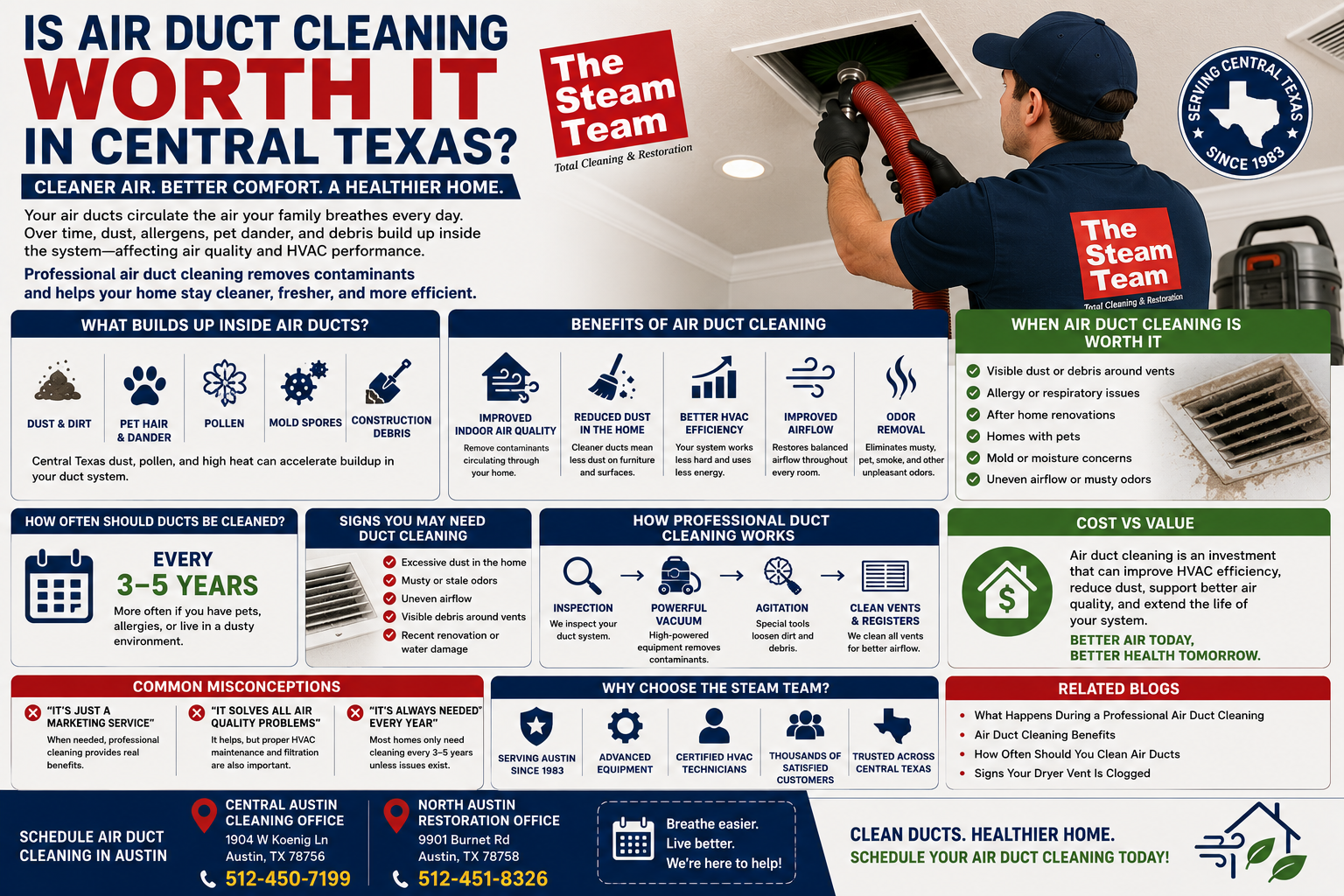
Industry guidance frames cleaning frequency by condition rather than fixed calendar rules: NADCA recommends typical cleaning cycles every 3–5 years as a baseline, while EPA guidance emphasizes condition-based assessment for indoor air quality. These baseline recommendations exist because contamination rates vary widely by occupancy, activity, and environmental exposure, and professionals use inspection to determine whether ducts need service sooner. For Austin air duct cleaning frequency, local factors often compress that baseline toward more frequent inspection and cleaning. The next paragraphs explore NADCA’s specific phrasing and how EPA and industry standards combine into practical scheduling.
What Does NADCA Recommend for Air Duct Cleaning Frequency?
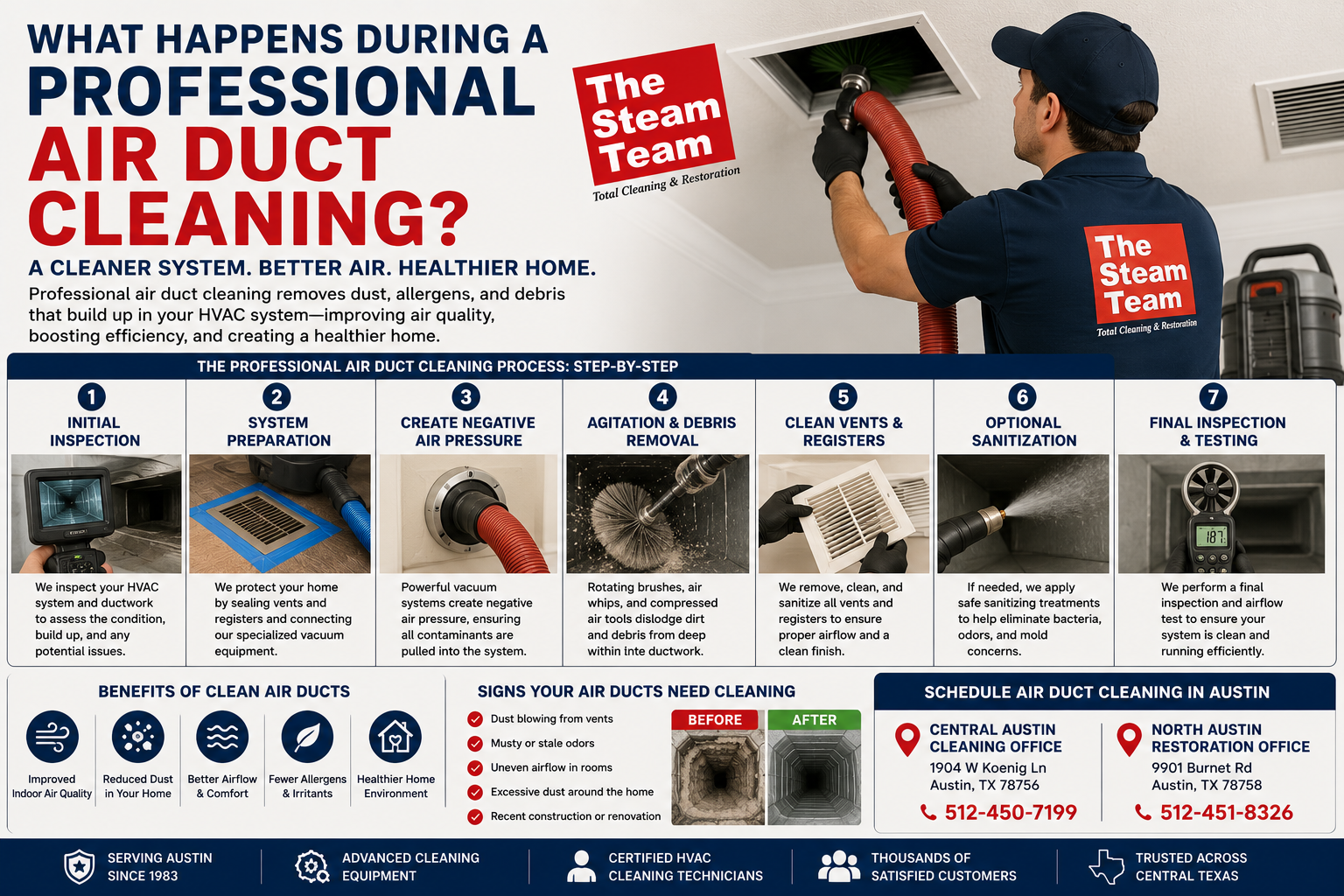
NADCA’s guidance centers on inspection-driven intervals, recommending cleaning every 3–5 years for typical systems while specifying immediate cleaning when visible contamination, active mold, or vermin presence exists. The rationale is that contaminants accumulate at different rates depending on components of the HVAC system supply vents, return vents, duct trunks, registers, and filters, which means a one-size-fits-all interval is unreliable. Technicians follow NADCA procedural standards for containment, agitation, and verification to ensure cleaning is effective and safe. Understanding NADCA’s baseline helps homeowners see why local adjustments for Austin are often necessary.
Residential Air Duct Cleaning and IAQ: A Field Study
A nine-home field study was conducted to investigate the impact of mechanical air duct cleaning (ADC) methods on indoor air quality (IAQ) and system performance. ADC services were provided by the National Air Duct Cleaners Association (NADCA). Only mechanical ADC methods were evaluated. Surface treatments, such as biocides or encapsulants, were not part of the study. Pre- and post-ADC measurements were used to evaluate impacts. These included deposited duct dust measurements, airborne particle and fiber concentrations, microbial bioaerosol and surface sampling, and system performance factors such as temperature, relative humidity air flow rates, and static pressure. Surface sampling in ducts indicated that mechanical ADC is effective in removing adhered dust and dirt. The particle measurement data could not offer a clear indication that indoor levels can be reduced using mechanical ADC because there was an apparent strong influence from outdoor particle mass concentrations. Mechanical ADC did not significantly reduce bioaerosol or microbial density in the houses studied. Measurements of system performance factors suggest that ADC may have a positive effect. Supply air rates increased between 4 and 32% in eight of the houses and return air flow rates increased 14 and 38% in two of the houses.
Evaluating residential air duct cleaning and IAQ: results of a field study conducted in nine single family dwellings., 1997
How Do EPA and Industry Standards Influence Cleaning Intervals?
The EPA frames air duct cleaning as part of broader indoor air quality services rather than issuing fixed timing rules, encouraging homeowners to consider cleaning when contamination affects indoor air or system performance. Industry standards and NADCA protocols complement EPA direction by providing procedural steps for inspection, testing, and certified cleaning techniques that technicians use to verify results. Together, these standards form a decision pathway: inspect, identify contaminants (dust, mold, pet dander), evaluate access and HVAC maintenance history, then schedule cleaning if contamination exceeds acceptable thresholds. This combined approach reduces unnecessary service while ensuring polluted systems receive timely intervention.
Why Do Austin Homes and Businesses Need More Frequent Air Duct Cleaning?
Austin’s climate and seasonal allergen profile often accelerate duct contamination compared with many other regions, making more frequent inspection and cleaning a prudent strategy for indoor air quality. High seasonal pollen events, particularly cedar and ragweed, deposit airborne particulates through returns and accumulate in duct trunks and registers, while periodic wind-driven dust events add fine particulate load to systems. Additionally, local humidity spikes and occasional flooding or moisture intrusion create conditions that favor microbial growth in ductwork and plenums, increasing mold risk. The following subsections break down allergens, humidity, and behavioral triggers that warrant tighter cleaning intervals in Austin.
How Does Austin’s Allergen Profile Affect Air Duct Contamination?
Austin’s cedar season and late-summer ragweed peaks inject abundant allergenic particles into indoor air, which then collect on filters, inside ducts, and at supply vents, reducing indoor air quality and exacerbating allergy symptoms. These types of airborne allergens, cedar pollen, grass pollens, and ragweed, have distinct seasonal timelines and particle sizes that influence where they deposit within the HVAC system. Residents who track local pollen calendars can pair peak seasons with pre- and post-season inspections to reduce recirculation of allergens. Proactive cleaning timed around high-pollen windows helps lower indoor allergen loads and offers measurable symptom relief for sensitive occupants.
What Role Does Austin’s High Humidity Play in Mold Growth in Air Ducts?
Austin’s intermittent high humidity increases the probability of condensation on duct surfaces and in plenums, creating microenvironments where mold and bacterial colonies can establish. Condensation tends to occur on metal duct trunks and in poorly insulated runs, particularly where cool return air meets warm, humid attic or crawlspace conditions; these components, duct trunks and flex ducts, are common mold hotspots. When occupants detect persistent musty odors or visible microbial growth at registers, mold remediation (not just cleaning) may be needed; testing and containment per NADCA standards guide that decision. Addressing humidity sources and insulating vulnerable duct runs reduces recurrence after remediation.
How Do Pets, Smokers, and Home Renovations Increase Cleaning Frequency?
Household activities and events raise contamination rates significantly; pet dander and hair shed into the return airstream, smoking deposits sticky residues inside ducts, and remodeling generates dense construction dust that infiltrates the system. These behaviors create accumulations that degrade indoor air quality and obstruct airflow, and each is a trigger for earlier cleaning, often within 1–2 years or immediately after renovation. For homes with multiple pets or indoor smoking, scheduling inspections more frequently helps prevent long-term buildup and potential odor issues. Planning a cleaning shortly after renovations ensures plaster, drywall dust, and adhesives don’t become long-term contaminants.
What Are the Clear Signs That Your Air Ducts Need Cleaning in Austin?
Visible dust, persistent musty odors, unexplained allergy spikes, and declining HVAC performance are the primary observable signals that ducts require professional attention; these signs link directly to specific causes and recommended actions. Homeowners can perform simple diagnostic checks, flashlight inspections at registers, monitoring odor persistence after HVAC cycles, and tracking sudden HVAC efficiency losses to determine whether to call a pro. The following subsections explain what to look for, how to interpret common odors, and when allergy or performance symptoms indicate cleaning is needed. An EAV table below maps signs to causes and next steps for clarity.
Different signs indicate particular problems and require targeted responses.
Sign Observed
Probable Cause
Recommended Next Step
Thick dust is visible at the registers
High particulate deposition from pollen, pets, or dust storms
Schedule inspection and professional cleaning; upgrade filters temporarily
Persistent musty or “dirty sock” odor
Microbial growth due to moisture or condensation
Request microbial assessment and possible mold remediation following NADCA protocols
Sudden allergy spike indoors
Increased allergen recirculation (cedar, ragweed, pet dander)
Clean ducts, replace filters, and clean around pollen season
Reduced airflow and higher utility bills
Duct clogs or collapsed flex ducts reduce HVAC efficiency
Inspect duct trunks and registers, clear obstructions, and evaluate for repairs
This mapping helps owners prioritize actions: visible buildup and odors usually require prompt professional intervention, while isolated dust at a single register may first be addressed with filters and spot cleaning.
What Are the Benefits of Professional Air Duct Cleaning for Austin Residents and Businesses?
Professional air duct cleaning improves indoor air quality, reduces allergen recirculation, and can restore HVAC efficiency benefits that are particularly relevant in Austin’s allergenic and humid environment. Mechanistically, cleaning removes accumulated particulates and biological contaminants from supply vents, return vents, and duct trunks, which lowers airborne particulate concentrations and reduces exposure for occupants. From a maintenance perspective, removing obstructive deposits reduces blower workload and can lead to measurable energy performance improvements over time. The following subsections examine air quality, efficiency, and allergen reduction benefits with practical outcomes.
How Does Air Duct Cleaning Improve Indoor Air Quality and Health?
Cleaning removes settled particulates and biofilm that otherwise re-entrain into indoor air during HVAC cycles, directly lowering exposure to allergens and irritants associated with cedar pollen, ragweed, and pet dander. Reduced particulate load often correlates with fewer allergy flare-ups and improved comfort for sensitive individuals, although complete elimination of symptoms depends on multiple factors, including filtration and source control. Professionals use containment and agitation methods to dislodge deposits from duct trunks and registers, followed by high-efficiency capture to prevent redistribution. Improved IAQ supports occupant health and complements other interventions like HEPA filtration and humidity control.
How Can Cleaning Enhance HVAC Efficiency and Reduce Energy Costs?
When ducts are free of heavy deposits, airflow improves, and the HVAC system achieves design airflow rates with less blower energy, translating to reduced runtime and potentially lower energy consumption. Industry estimates vary, but targeted cleaning and addressing restrictive obstructions can reduce strain on compressors and blowers, contributing to modest operational savings over the following seasons. These maintenance savings come from the mechanical principle that airflow resistance decreases when components like flex ducts and registers are cleared, improving heat transfer and reducing cycle frequency. Routine cleaning combined with filter maintenance helps extend system service life and stabilize efficiency gains.
How Does Cleaning Reduce Allergens and Irritants Specific to Austin’s Environment?
Targeted cleaning reduces the reservoir of local allergens, cedar pollen, ragweed, and windblown dust contained within ductwork, which lessens the amount of allergen recirculation during HVAC operation. While cleaning cannot remove outdoor pollutant sources or eliminate all exposures, removing built-up pollen and dander from duct trunks and registers provides a meaningful drop in indoor particulate counts. Cleaning is most effective when paired with source-control measures such as sealing entry points, improving filtration, and scheduling cleanings around high-pollen seasons for maximum impact on occupant symptoms.
Why Choose The Steam Team for NADCA Certified Air Duct Cleaning in Austin?
Choosing a provider with local expertise and NADCA-certified technicians helps ensure procedures follow industry best practices for safety, containment, and verification. The Steam Team positions itself as a local Austin service provider that adheres to those standards. The company background emphasizes lead generation and serving as an information hub for cleaning and restoration in Austin and Central Texas, and the business reports employing NADCA-certified air duct cleaning technicians and offering a service guarantee, elements that matter when addressing microbial risks or complex contamination. For readers wanting both technical rigor and local knowledge, the next subsections unpack what local experience and certification translate to in practice.
What Does 42 Years of Austin Experience Mean for Your Air Duct Cleaning?
Long-term local experience brings accumulated knowledge about Austin-specific issues, seasonal allergen cycles, humidity patterns, and common construction types that help technicians anticipate problem areas and recommend optimal timing for cleaning and maintenance. Experienced teams can identify neighborhood- or building-type tendencies (for example, certain attic configurations that encourage duct condensation) and tailor interventions to reduce recurrence. That local perspective shortens diagnostic time and improves remediation success, especially when combined with NADCA protocols. Practical advantages include quicker identification of mold-prone runs and more efficient scheduling around pollen and renovation cycles.
How Does NADCA Certification Ensure Professional and Safe Cleaning?
NADCA certification indicates that technicians have training in standardized inspection, containment, and cleaning methods designed to minimize cross-contamination and verify results; this reduces risk to occupants during treatment. Certified technicians follow protocols for agitation, negative-pressure containment, and post-cleaning verification that target components such as supply vents, return vents, and duct trunks to achieve thorough cleaning. Certification also signals adherence to inspection and quality measures that help customers understand what to expect from service and how outcomes are measured. Choosing a certified team supports both safety and performance outcomes for indoor air quality projects.
What Awards and Local Testimonials Support The Steam Team’s Reputation?
Local recognition and customer feedback are cited as trust indicators reflecting quality and consistent service delivery in Austin and Central Texas, and The Steam Team’s reported local awards help prospective customers evaluate reputation. Testimonials and local awards emphasize responsiveness, comprehensive service offerings, and a service guarantee that reassures homeowners and commercial clients. When selecting a provider, potential customers should look for evidence of consistent local performance and documented procedural rigor elements that inform reliable expectations for outcomes and satisfaction.
How Much Does Air Duct Cleaning Cost in Austin and What Should You Expect?
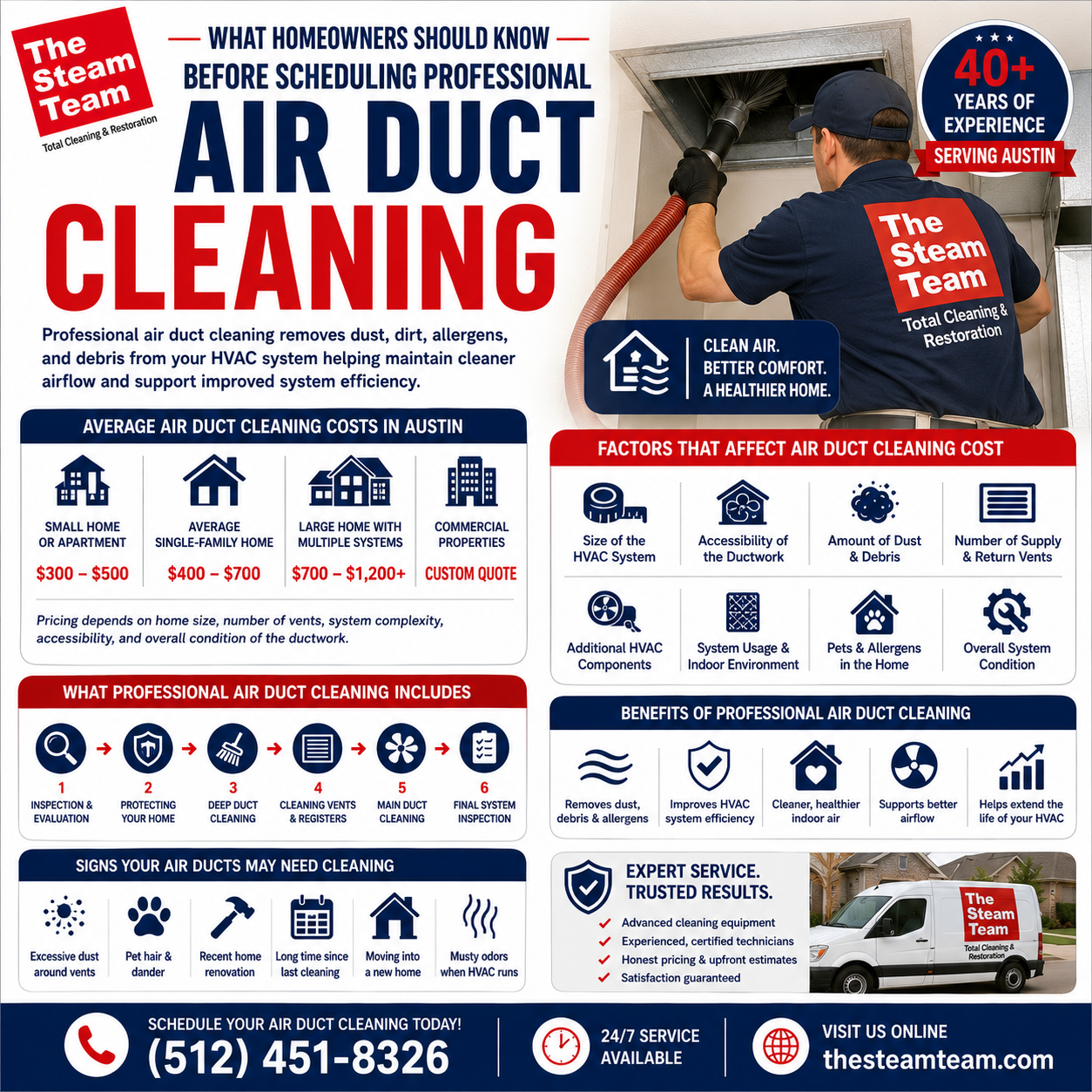
Air duct cleaning cost in Austin varies with system size, contamination level, presence of mold, accessibility, and whether additional services (like mold remediation) are required; a realistic range depends on these drivers, and providers typically offer personalized quotes after inspection. Transparent cost conversations focus on the primary price influencers: system complexity, contamination severity, and required containment measures, so customers understand why estimates differ. The table below compares common cost drivers and their typical impact to clarify price variability and what to expect when requesting a personalized estimate.
Cost Driver
How It Affects Price
Typical Impact
System size (number of vents/duct runs)
Larger systems require more labor and equipment time
Moderate to High
Contamination level (heavy dust, mold, smoke residue)
Requires deeper cleaning, testing, or remediation
High
Accessibility and duct type
Difficult access or extensive flex ducts increase labo costsr
Moderate
Additional services (mold remediation, repairs)
Adds specialized containment and treatment steps
High
Commercial vs residential scope
Commercial systems are larger and may need off-hours work
Moderate to High
What Factors Influence Air Duct Cleaning Prices in Austin?
Prices depend on system size, contamination severity, mold presence, accessibility issues, and whether the job is residential or commercial; each factor alters labor, containment, and equipment needs. For instance, mold remediation adds testing and specialized treatments that significantly increase cost compared with routine particulate cleaning, while inaccessible duct runs or compromised registers require extra diagnostic time and potential repair. Commercial duct cleaning often involves larger trunk lines and extended service windows, which increases logistical complexity. Understanding these drivers empowers customers to evaluate quotes and prioritize services that address the root causes of poor indoor air quality.
How Can You Get a Personalized Quote from The Steam Team?
To obtain an accurate estimate, provide details about home or building size, number of HVAC units, visible symptoms (odors, dust), recent renovations, and any known mold history; a professional will then inspect the system and deliver a tailored quote. The typical process includes a remote screening followed by an on-site inspection where technicians assess supply vents, return vents, duct trunks, filter condition, and accessibility before producing a detailed estimate. Expect the inspector to recommend targeted services and explain trade-offs between basic cleaning and more involved remediation when required. Customers seeking transparency should ask providers for written scopes and verification steps aligned with NADCA standards.
Frequently Asked Questions
What Are the Health Benefits of Regular Air Duct Cleaning?
Regular air duct cleaning significantly improves indoor air quality, which can lead to better health outcomes for residents. By removing dust, allergens, and microbial contaminants, cleaning helps reduce respiratory issues, allergy symptoms, and other health problems associated with poor air quality. This is particularly important in areas like Austin, where high pollen counts and humidity can exacerbate these issues. Improved air quality not only enhances comfort but also supports overall well-being, especially for sensitive individuals.
Can I Perform Air Duct Cleaning Myself?
While some basic maintenance, like changing filters, can be done by homeowners, professional air duct cleaning is recommended for thoroughness and safety. DIY methods may not effectively remove deep-seated contaminants or mold, and improper techniques can lead to cross-contamination or damage to the HVAC system. Certified professionals use specialized equipment and follow NADCA guidelines to ensure a comprehensive clean, which is crucial for maintaining air quality and system efficiency.
How Do I Know If My Air Ducts Are Contaminated?
Signs of contamination in air ducts include visible dust buildup at vents, persistent musty odors, unexplained allergy flare-ups, and reduced HVAC performance. If you notice any of these symptoms, it may indicate that your ducts require professional cleaning. Regular inspections can help identify issues before they escalate, ensuring that your indoor air quality remains high and your HVAC system operates efficiently.
What Should I Expect During a Professional Air Duct Cleaning?
During a professional air duct cleaning, technicians will first inspect your system to assess its condition. They will then use specialized equipment to remove dust, debris, and contaminants from the ducts. This process typically involves agitation and vacuuming to ensure thorough cleaning. Afterward, technicians will verify the results and may provide documentation of the work performed. Expect clear communication about the process and any recommendations for future maintenance.
Are There Any Risks Associated with Air Duct Cleaning?
When performed by certified professionals, air duct cleaning is generally safe and beneficial. However, improper cleaning techniques can lead to issues such as duct damage or cross-contamination. It’s essential to choose a NADCA-certified provider to minimize these risks. Additionally, if mold is present, remediation may be necessary before cleaning to ensure that spores are not released into the air during the process.
How Can I Maintain Clean Air Ducts Between Professional Cleanings?
To maintain clean air ducts between professional cleanings, regularly change your HVAC filters, use high-efficiency filters, and schedule routine inspections. Keeping humidity levels in check and addressing any water leaks can also help prevent mold growth. Additionally, minimizing indoor pollutants such as smoke and pet dander can reduce the frequency of necessary cleanings. These proactive measures contribute to better indoor air quality and extend the time between professional services.
How Often Should Air Ducts Be Cleaned in Austin and Texas?
NADCA recommends a baseline of every 3–5 years, but Austin homes commonly need more frequent attention, often around every 2 years due to high local pollen and periodic humidity that accelerate contamination. Quick triggers for earlier cleaning include recent renovations, indoor smoking, heavy pet presence, persistent odors, or visible microbial growth.
If you notice persistent allergens or odors, schedule an inspection.
Use filter upgrades and pre-/post-season cleanings around peak pollen windows as preventive measures.
Is Air Duct Cleaning Worth the Cost for Austin Homes and Businesses?
Air duct cleaning is worth the cost when it addresses demonstrable issues visible contamination, odor, allergy exacerbation, or reduced HVAC performance, because it restores airflow and reduces particulate recirculation, delivering health and efficiency benefits. Typical efficiency gains and symptom relief depend on initial conditions, but targeted cleaning combined with filtration and humidity control often yields measurable improvements.
How Long Does a Typical Air Duct Cleaning Take in Austin?
Residential jobs commonly take 2–4 hours, depending on system size and contamination, while commercial cleanings and jobs requiring remediation can take a day or longer; time varies with access, number of units, and scope of containment required. Technicians usually explain timeframes during the inspection and include scheduling notes for off-hours commercial work.
Expect straightforward residential cleanings to fit within a half-day window.
Add time for mold remediation, testing, or repairs.
What Are the NADCA Standards for Air Duct Cleaning?
NADCA standards require inspection, documented cleaning procedures, containment to prevent cross-contamination, agitation and debris removal, and post-cleaning verification to confirm results; these steps ensure both thoroughness and occupant safety. Key elements include system inspection, use of vacuum and agitation tools, source capture, and customer-facing verification steps.
How Can You Schedule Your Austin Air Duct Cleaning with The Steam Team Today?
Scheduling a service begins with a clear description of the system and observed issues, followed by an inspection and a personalized quote that outlines scope, timing, and verification steps. The Steam Team offers a straightforward workflow designed to align NADCA-certified practices with local needs. The company’s practices emphasize inspection-driven estimates, clear explanations of required remediation if mold is found, and a service guarantee to address post-service concerns. The next subsections detail the request and scheduling flow and how customer satisfaction is handled.
What Is the Process to Request a Quote or Book an Appointment?
Start by describing building size, number of HVAC units, known symptoms (odors, allergy spikes), and any recent renovations; a service representative or technician will perform an initial screening and arrange an on-site inspection when necessary. During inspection, expect assessment of supply vents, return vents, filters, and duct accessibility; following that, you'll receive an itemized estimate with recommended services and scheduling options. Clear communication about expected outcomes and verification steps helps set accurate expectations before work begins.
How Does The Steam Team Ensure Customer Satisfaction and Service Guarantee?
The Steam Team emphasizes a service guarantee and NADCA-certified processes to ensure outcomes are measurable and concerns are addressable; technicians document findings and cleaning verification to provide customers with clear before-and-after information. If expectations are not met, customers are encouraged to contact the provider to review results and implement corrective steps under the guarantee. Transparent scopes, documentation, and certified procedures form the backbone of the satisfaction process and provide reassurance when remediation or additional work is needed.
Next steps: schedule an inspection if you notice signs outlined above or if it has been more than the NADCA baseline interval for your property type.
Preventive tip: Pair duct cleaning with improved filtration and humidity control to maximize benefits and reduce recurrence of contaminants.
Conclusion
Regular air duct cleaning is essential for maintaining optimal indoor air quality and HVAC efficiency, especially in Austin's allergen-rich environment. By addressing contamination from pollen, dust, and humidity, homeowners can significantly reduce allergy symptoms and improve overall health. Scheduling inspections and cleanings based on local conditions ensures that your air ducts remain in top shape. Contact The Steam Team today to explore our expert air duct cleaning services tailored to your needs.