
Natural Stone Cleaning: What Austin Homeowners Need to Know
/Natural Stone Cleaning: What Austin Homeowners Need to Know
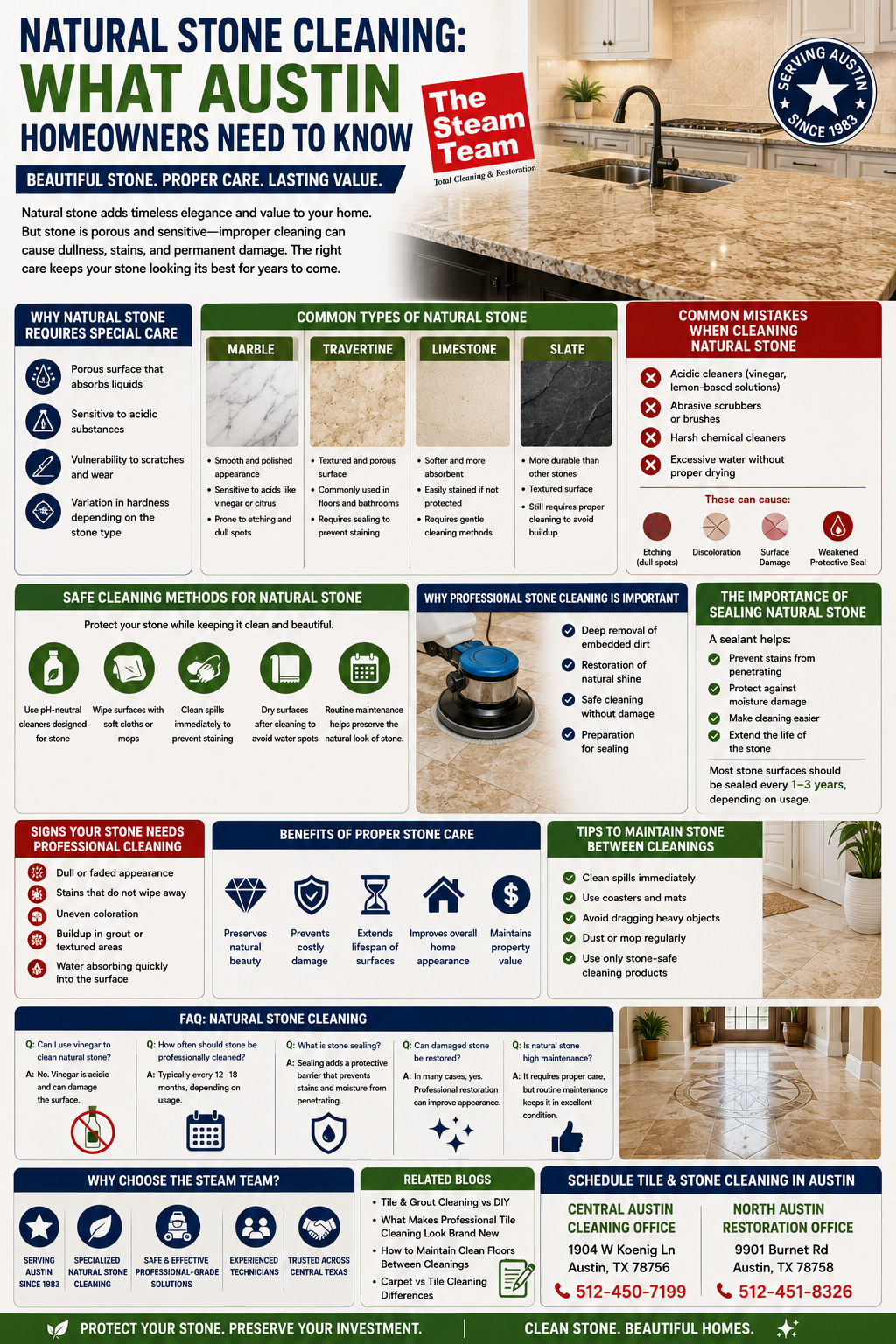
Natural stone surfaces such as marble, travertine, limestone, and slate; add elegance and value to homes. These materials are commonly used in flooring, countertops, showers, and backsplashes across Austin homes.
However, unlike tile or synthetic materials, natural stone is porous and sensitive, which means it requires specialized care. Improper cleaning methods can damage the surface, dull the finish, or cause permanent staining.
Understanding how to properly clean and maintain natural stone helps homeowners protect their investment and keep surfaces looking beautiful for years.
Why Natural Stone Requires Special Care
Natural stone is formed over time through geological processes, making each piece unique. However, this also means it is more delicate than man-made materials.
Key characteristics of natural stone:
• porous surface that absorbs liquids
• sensitivity to acidic substances
• vulnerability to scratches and wear
• variation in hardness depending on the stone type
Homes in Austin, Westlake Hills, and Tarrytown often feature high-end stone surfaces that require careful maintenance.
Common Types of Natural Stone in Homes
Different types of stone require different cleaning approaches.
Marble
• smooth and polished appearance
• sensitive to acids like vinegar or citrus
• prone to etching and dull spots
Travertine
• textured and porous surface
• commonly used in floors and bathrooms
• requires sealing to prevent staining
Limestone
• softer and more absorbent
• easily stained if not protected
• requires gentle cleaning methods
Slate
• more durable than other stones
• textured surface
• still requires proper cleaning to avoid buildup
Common Mistakes When Cleaning Natural Stone
Many homeowners unknowingly damage stone surfaces by using the wrong products.
Avoid:
• acidic cleaners (vinegar, lemon-based solutions)
• abrasive scrubbers or brushes
• harsh chemical cleaners
• excessive water without proper drying
These can cause:
• etching (dull spots)
• discoloration
• surface damage
• weakened protective seal
Safe Cleaning Methods for Natural Stone
Proper natural stone cleaning focuses on protecting the surface while removing dirt and buildup.
Recommended steps:
• use pH-neutral cleaners designed for stone
• wipe surfaces with soft cloths or mops
• clean spills immediately to prevent staining
• dry surfaces after cleaning to avoid water spots
Routine maintenance helps preserve the natural look of stone.
Why Professional Stone Cleaning Is Important
Over time, dirt, grime, and residue can build up on stone surfaces, especially in high-traffic areas.
Professional stone cleaning provides:
• deep removal of embedded dirt
• restoration of natural shine
• safe cleaning without damage
• preparation for sealing
Professionals use equipment and solutions specifically designed for natural stone.
The Importance of Sealing Natural Stone
Sealing is one of the most important steps in stone maintenance.
A sealant helps:
• prevent stains from penetrating
• protect against moisture damage
• make cleaning easier
• extend the life of the stone
Most stone surfaces should be sealed every 1–3 years, depending on usage.
Signs Your Stone Needs Professional Cleaning
Watch for these signs:
• dull or faded appearance
• stains that do not wipe away
• uneven coloration
• buildup in grout or textured areas
• water absorbing quickly into the surface
These indicate that the stone may need deep cleaning and resealing.
Benefits of Proper Stone Care
Maintaining natural stone surfaces provides long-term benefits:
• preserves natural beauty
• prevents costly damage
• extends lifespan of surfaces
• improves overall home appearance
• maintains property value
Proper care helps avoid expensive restoration or replacement.
Tips to Maintain Stone Between Cleanings
Homeowners can protect their stone surfaces with simple habits:
• clean spills immediately
• use coasters and mats
• avoid dragging heavy objects
• dust or mop regularly
• use only stone-safe cleaning products
Consistent care reduces wear and damage.
FAQ: Natural Stone Cleaning
Q- Can I use vinegar to clean natural stone?
A- No. Vinegar is acidic and can damage the surface.
Q- How often should stone be professionally cleaned?
A- Typically every 12–18 months, depending on usage.
Q- What is stone sealing?
A- Sealing adds a protective barrier that prevents stains and moisture from penetrating.
Q- Can damaged stone be restored?
A- In many cases, yes. Professional restoration can improve appearance.
Q- Is natural stone high maintenance?
A- It requires proper care, but routine maintenance keeps it in excellent condition.
Why The Steam Team?
• Serving Austin since 1983
• Specialized natural stone cleaning services
• Safe, professional-grade cleaning solutions
• Experienced technicians
• Trusted across Central Texas
Related Blogs
• Tile & Grout Cleaning vs DIY
• What Makes Professional Tile Cleaning Look Brand New
• How to Maintain Clean Floors Between Cleanings
• Carpet vs Tile Cleaning Differences
Schedule Tile & Stone Cleaning in Austin
Central Austin Cleaning Office
1904 W Koenig Ln
Austin, TX 78756
📞 512-450-7199
North Austin Restoration Office
9901 Burnet Rd
Austin, TX 78758
📞 512-451-8326