
Austin texas Fire Damage
When a fire is extinguished, the damage does not stop immediately. Smoke, soot, odors, water from firefighting efforts, and damaged building materials can continue affecting a property long after the flames are gone. The Steam Team provides 24/7 emergency response for Austin homes and businesses, helping stabilize affected areas, clean recoverable materials, address persistent odors, and move the property toward repair.
Understanding Fire and Smoke Damage After a Fire
Putting out the flames is only the beginning of property recovery. Smoke can travel into rooms untouched by the original fire, while soot may settle across walls, ceilings, furniture, equipment, and personal belongings. Residue and odors can remain even in areas that appear unaffected.
What burned also matters. Synthetic furnishings, flooring, plastics, wood, and other materials can leave different types of smoke and soot behind. Those residues do not respond to every cleaning method the same way, and waiting too long can make some surfaces or belongings more difficult to restore.
The Steam Team helps homeowners and businesses throughout Austin and surrounding communities, including Rollingwood, West Lake Hills, Bee Cave, and Round Rock, evaluate these conditions after a fire. Experienced restoration professionals identify affected areas, determine what may be salvageable, and develop a recovery plan based on the extent and type of damage. Acting quickly can help limit further deterioration and give property owners a clearer path forward.
What's Included With Professional Fire and Smoke Recovery?
Restoring a property after a fire involves more than removing visible soot. Technicians must evaluate how far the smoke traveled, determine which materials remain salvageable, address odors, and identify structural areas requiring repair.
Services may include:
Emergency pre-cleaning
Smoke and soot residue removal
Wall and ceiling cleaning
Contents cleaning
Contents pack-out and storage
Professional deodorization
Stabilization of affected areas
Coordination of additional recovery work when required
Every fire loss has a different scope. The restoration plan depends on the source and severity of the incident, materials involved, smoke migration, water exposure, structural conditions, and the amount of recoverable property.
Why Prompt Smoke and Soot Cleanup Matters
Smoke does not remain confined to the room where a fire started. Air movement can carry particles into adjoining spaces, HVAC pathways, enclosed cavities, and areas that appear unaffected at first glance.
Soot presents another challenge. Residue can settle onto painted surfaces, ceilings, cabinetry, flooring, textiles, electronics, and other contents. The appropriate cleaning method depends on what burned and the material being treated.
Early professional attention can help:
Limit continued smoke and soot contamination
Identify belongings that may be salvageable
Address odors embedded in porous materials
Reduce additional damage to finished surfaces
Find hidden areas affected by smoke migration
Prepare damaged sections for repair
Document conditions for the insurance process
Move the property toward safe recovery sooner
Property owners should avoid wiping soot-covered surfaces before an assessment. Incorrect cleaning methods can smear residue or push contamination deeper into certain materials. Request a quick quote today to connect with a local restoration team and schedule emergency service.
How the Fire and Smoke Restoration Process Works
The Steam Team adapts the recovery plan to the conditions found at each property. Its established approach incorporates five key stages from the company's existing fire and smoke restoration process while allowing for additional mitigation and reconstruction when the loss requires it.
Step 1: Emergency Response and Assessment — Restoration professionals inspect affected areas, evaluate safety concerns, identify the extent of visible and hidden damage, and establish priorities for stabilization and recovery.
Step 2: Emergency Pre-Cleaning — Vulnerable surfaces may receive early attention to help limit further effects from soot and smoke residue while the broader restoration plan is developed.
Step 3: Contents Cleaning and Pack-Out — Salvageable belongings are evaluated for appropriate treatment. Depending on the loss, affected contents may be cleaned on-site or inventoried, packed, transported, and stored while work continues at the property.
Step 4: Wall, Ceiling, and Surface Cleaning — Technicians address soot and smoke residue on affected structural surfaces using methods appropriate for the material and type of contamination.
Step 5: Deodorization and Restoration — Persistent smoke odors are treated as part of the recovery process. Damaged building materials may then be repaired or reconstructed as required to return affected spaces to usable condition.
Fire suppression can also leave significant water behind. When that occurs, extraction, moisture assessment, structural drying, and monitoring may become part of the project before repairs proceed.
Why Property Owners Choose The Steam Team For Fire and Smoke Restoration
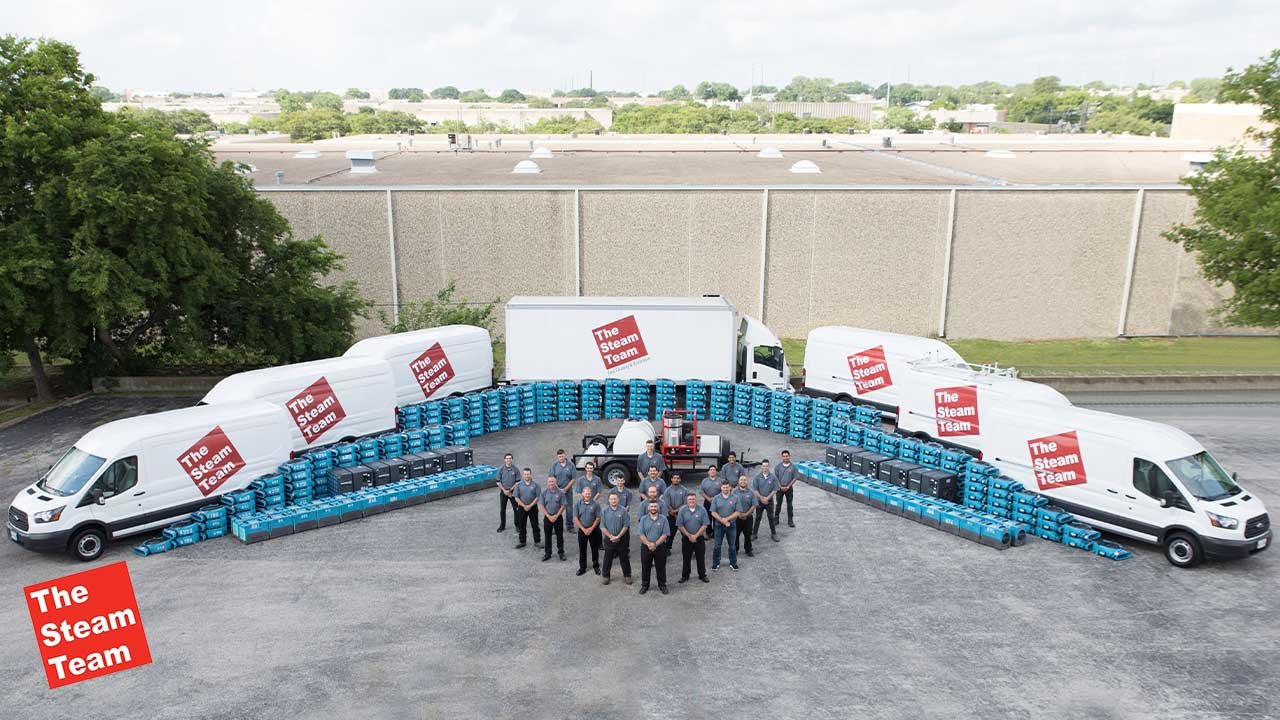
The Steam Team has served Austin property owners since 1983 and provides emergency restoration for residential and commercial losses. Its restoration team handles fire, smoke, water, structural drying, contents recovery, and reconstruction needs from its North Austin operation.
Property owners choose The Steam Team because of:
Serving homes and businesses since 1983
24/7 emergency response availability
Locally based restoration crews
IICRC-trained restoration professionals
Residential and commercial restoration experience
Contents pack-out and storage capabilities
Insurance documentation and carrier communication
Structural repair and reconstruction capabilities
Experience with complex, multi-stage property losses
Recovering from a fire can involve many decisions in a short period. Clear communication helps property owners understand what can be cleaned, what may require removal, how contents will be handled, and which repairs are needed before the property can return to normal use.
FAQ
Fire and smoke losses can affect a property in ways that are not immediately visible. Below are answers to common questions from Austin property owners beginning the recovery process.
After an Austin house fire, can smoke damage rooms the flames never reached?
Yes. Smoke and soot can travel through doorways, open spaces, and ventilation pathways, leaving residue and odors in rooms untouched by flames.
What should be cleaned first after fire and smoke damage?
The Steam Team first assesses the property for safety and damage. Cleaning may then address soot, affected contents, walls, ceilings, and lingering odors.
Can smoke-damaged belongings be restored instead of replaced?
Sometimes. Salvageability depends on the material, heat exposure, type of residue, and severity of damage. A restoration professional can determine what can be cleaned and recovered.
Does fire restoration include water damage caused by firefighting?
Yes, when needed. Firefighting water may require extraction, structural drying, moisture monitoring, and related restoration before repairs can begin.
“Had a fire on the side of my garage that caused damage to the outside and inside…Overall, I am extremely satisfied with The Steam Team.“
-Joseph Lopez
“Although the fire was confined to the attic, it was difficult to locate and so there was damage: smoke and water... The day he called and told us all inspections had passed and we could come home was a glorious day.”
-Bonnie Cheatham
“I recently had the pleasure of working with The Steam Team after experiencing a fire loss at my home, and I couldn't be more grateful for their exceptional service.”
-Shannon Cox
Start Fire and Smoke Recovery Today
Fire and smoke damage can continue affecting surfaces, contents, and indoor spaces long after the flames are extinguished. Contact The Steam Team for 24/7 emergency restoration assistance to help protect the property and begin recovery.