Does Sealing Your Grout Really Make It Easier to Keep Clean?
/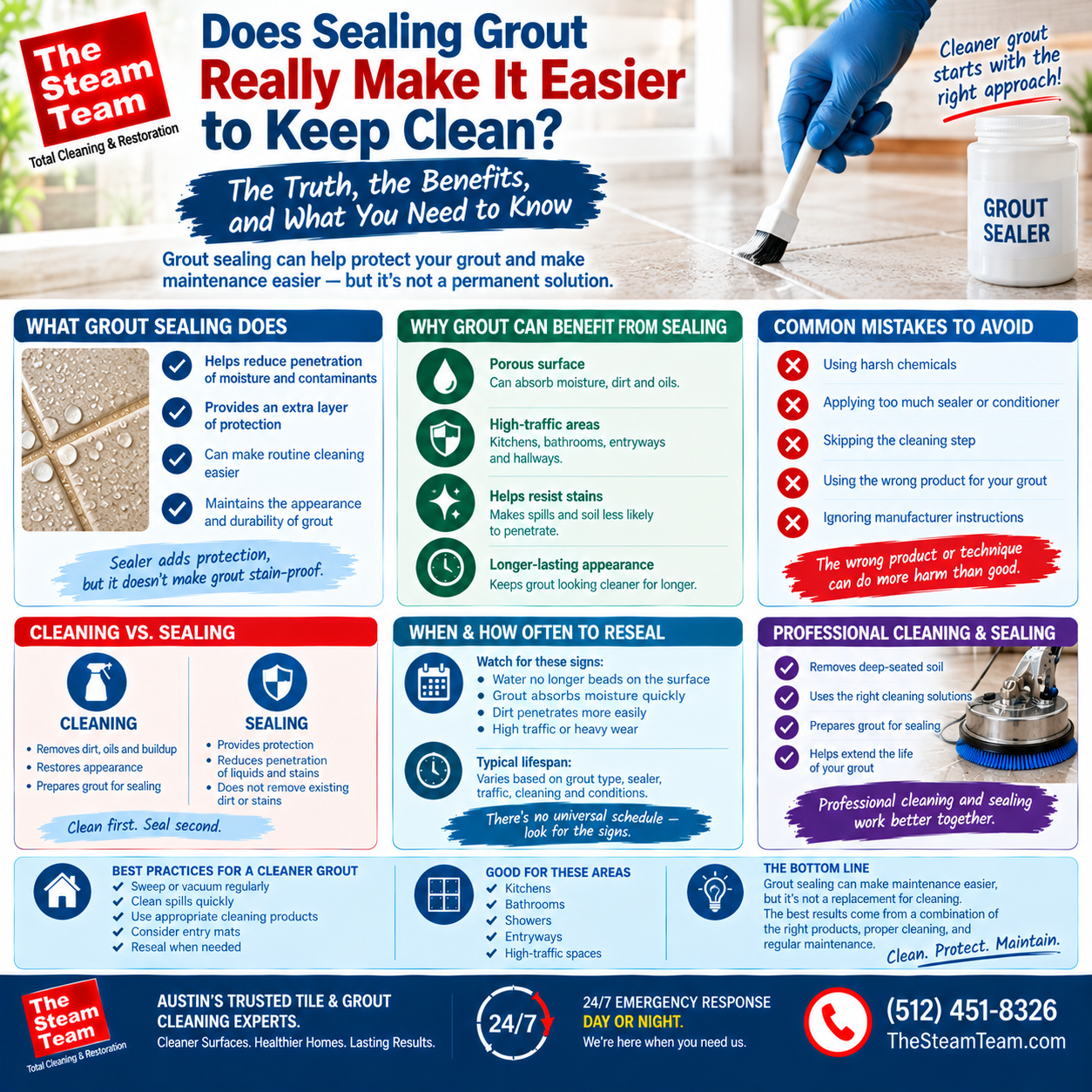
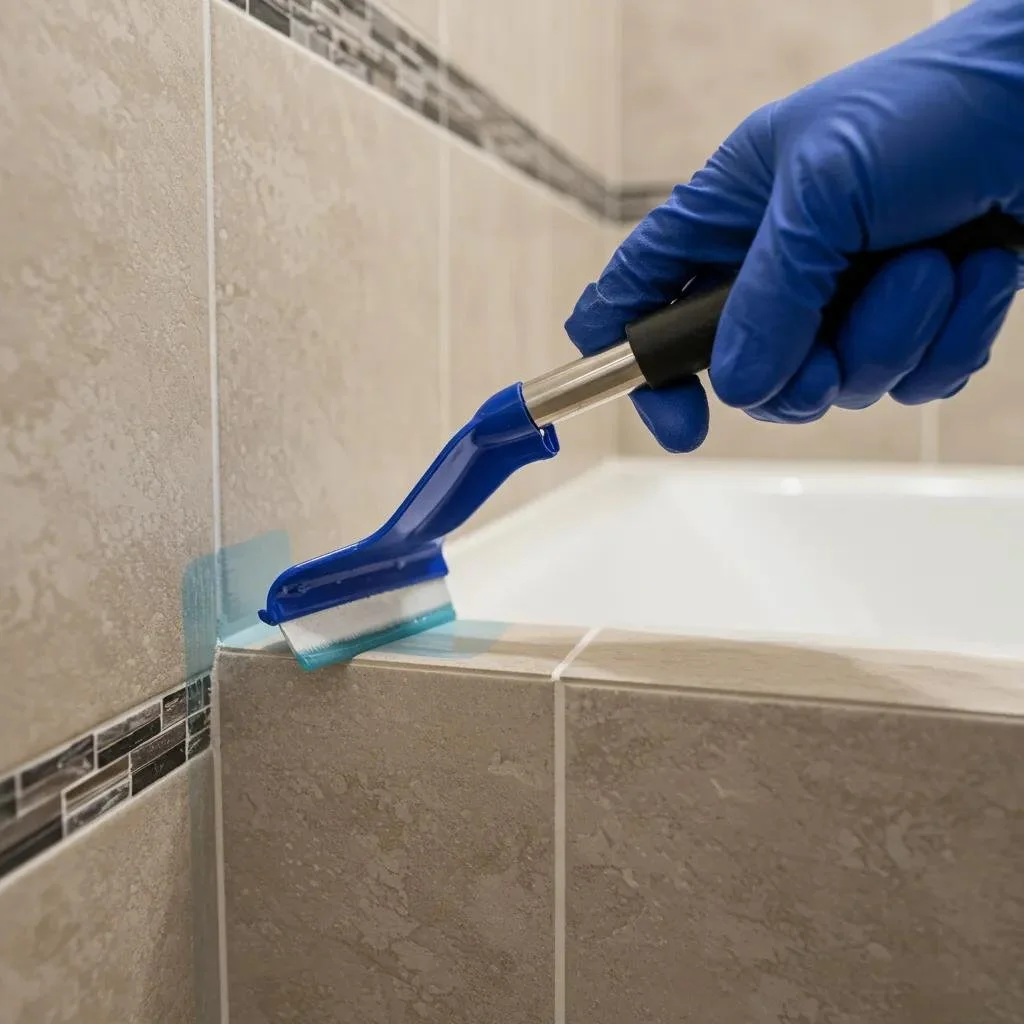
Does grout sealing make tile easier to maintain? Learn how grout sealers work, their limitations, maintenance benefits, and when resealing may make sense.
Read More
Explore expert tips on water damage restoration, carpet cleaning, rug cleaning, mold remediation, and air duct cleaning in Austin, TX. Trusted local insights from The Steam Team since 1983.
Does grout sealing make tile easier to maintain? Learn how grout sealers work, their limitations, maintenance benefits, and when resealing may make sense.
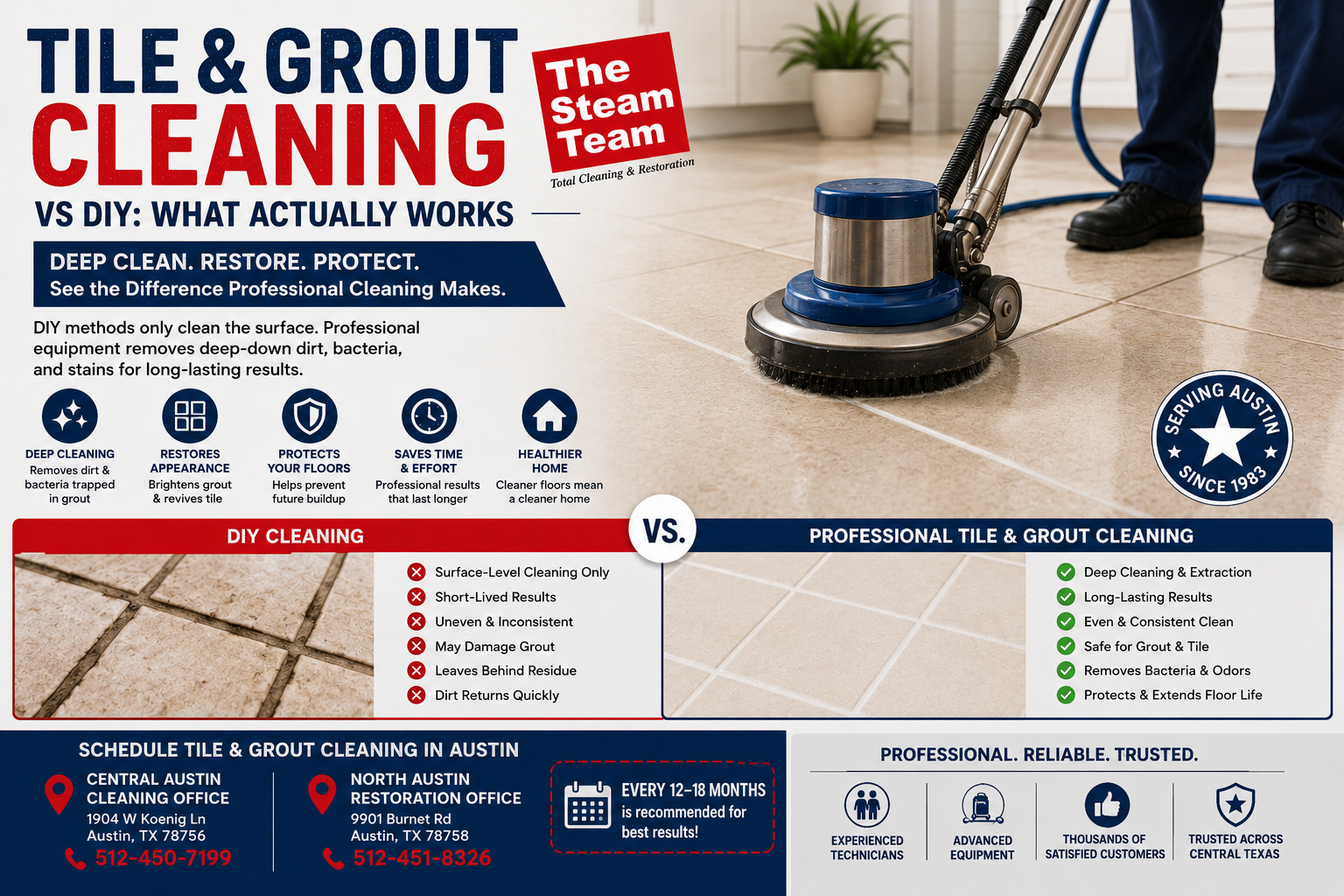
Read MoreProfessional tile cleaning vs DIY: learn how equipment, extraction, cleaning solutions, grout buildup, and professional techniques can affect results.
Read MoreLearn why grout gets dirty so quickly, how its porous surface traps soil and moisture, and what Austin homeowners can do to keep grout cleaner.
Read MoreWondering how much tile and grout cleaning costs in Austin? Learn average pricing, factors that affect cost, cleaning methods, and how professional cleaning restores your floors.
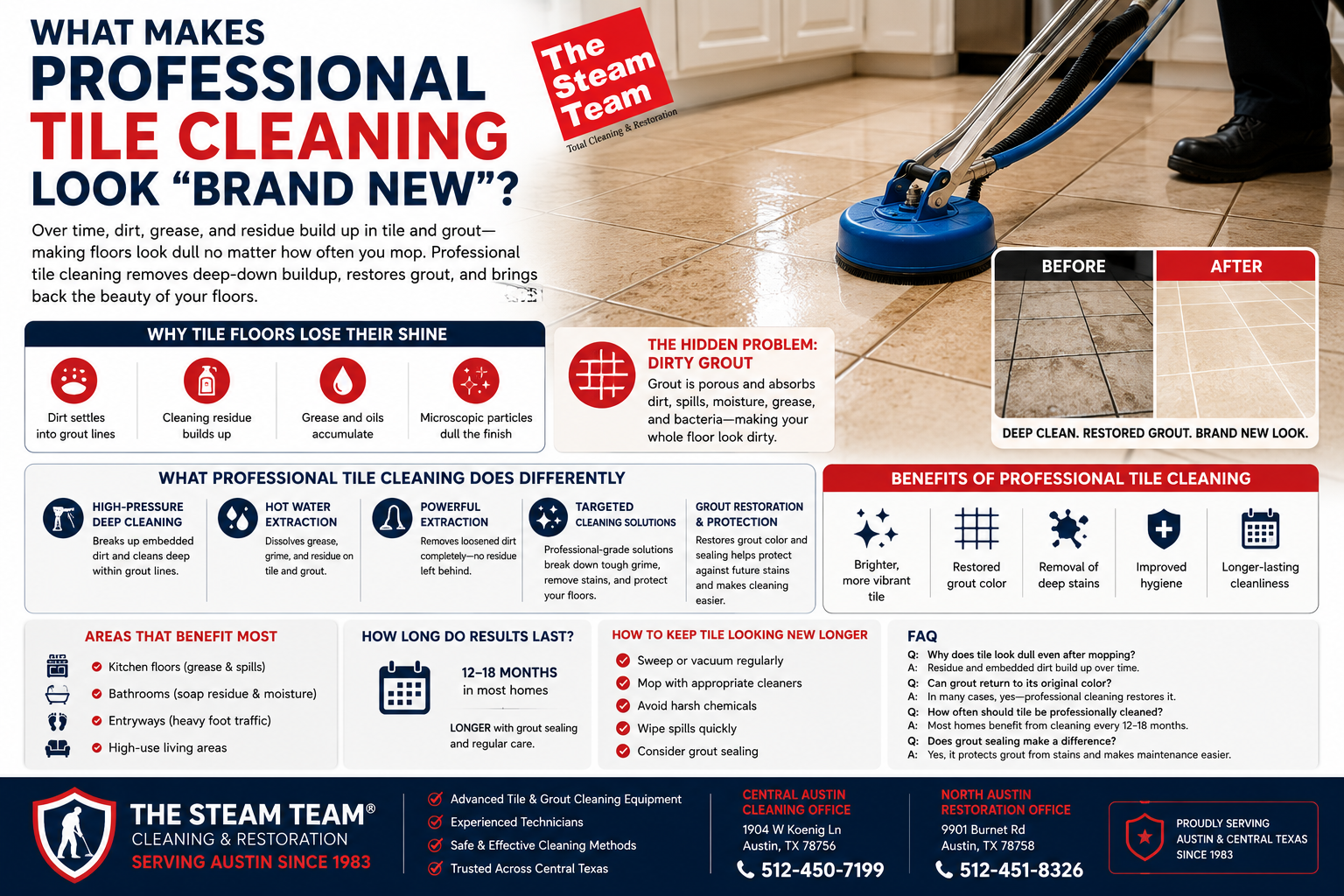
Read MoreWondering why professional tile cleaning makes floors look brand new? Learn how deep cleaning restores tile and grout in Austin homes.
Read MoreTile floors are known for their durability and clean appearance, but over time, dirt and grime can build up especially in grout lines.
Read MoreMany Austin homeowners and business owners wrestle with whether to book tile cleaning, grout cleaning, or both when floors look tired or stained; this article defines each service, explains how they work, and shows how to choose the right approach. You will learn the technical difference between surface tile cleaning and grout-line restoration, why grout problems often drive service requests in Austin, how frequently professional cleaning is recommended for local conditions, and the cost-to-value tradeoffs that influence customer decisions. This guide draws on practical indicators, visual cues, odor, and material type so you can match symptoms to the appropriate service and avoid unnecessary work. The piece also explains restoration workflows, sealing benefits, and real customer response patterns that shape local preferences. Throughout, relevant terms like tile cleaning Austin, grout cleaning Austin, grout sealing Austin, and natural stone tile cleaning Austin are used to help you identify the right treatment for ceramic, porcelain, and natural stone floors.
Tile cleaning targets the tile surface, using specific cleaners, agitation, and extraction to remove surface grime and restore shine; grout cleaning focuses on the porous grout lines where soils, stains, and microbes embed. Mechanistically, tile cleaning often uses low-abrasion solutions and mechanical polishing for stone, while grout cleaning uses targeted agitation, extraction, and sometimes specialized chemistry to lift deep-seated soils. The major benefit for tile cleaning is restored surface appearance and reduced film, whereas grout cleaning restores color uniformity and mitigates mold risk in joints. Understanding this distinction helps customers choose services that address the real problem instead of treating symptoms.
Tile cleaning restores surface shine and removes grime by combining chemistry and controlled mechanical action to lift soils from the tile face while protecting surface finishes. For ceramic and porcelain, pH-balanced cleaners loosen trapped oils and dirt which are then extracted by hot-water or low-moisture equipment; for natural stone, stone-safe cleaners and minimal abrasion prevent etching. Visible results include improved sheen, reduced hazing, and clearer grout contrast, but the extent of improvement depends on tile material and prior sealers. These outcomes mean that surface-focused cleaning can often return the original look without replacing tiles when the issue is primarily film or dullness.
Why is grout cleaning essential for removing stains and mold? Grout is a porous component of tiled floors that soaks up spills and embeds microbes, so routine mopping rarely reaches its depth. Professional grout cleaning uses focused agitation, extraction, and sometimes oxidation or enzymatic action to break apart stain matrices and biofilms, then extracts residues to reveal the grout’s natural color. The health and aesthetic benefits are clear: removing mildew reduces allergenic exposure and prevents ongoing odor, while restoration of grout tone dramatically improves perceived cleanliness. After cleaning, follow-up sealing reduces re-soiling and extends results, which is why targeted grout work is often prioritized when visible dark lines or mold are present.
Different cleaning needs are best compared visually and mechanically:
Service
Typical Method
Typical Outcome
Tile Cleaning
Surface cleaning, agitation, extraction, polishing for stone
Restored shine, removed film, improved slip resistance
Grout Cleaning
Targeted agitation, extraction, stain-lifting chemistry
Restored grout color, mold removal, healthier joints
Combined Service
Integrated assessment, sequential tile and grout processes
Uniform appearance, longer-lasting cleanliness, sealing readiness
Austin customers frequently prioritize grout cleaning because grout shows stains and mold earlier than tile surfaces, especially in wet rooms and busy kitchens. The porous nature of grout means spills, oils, and outdoor track-in concentrate in joints, creating visible contrast that makes floors look older even when tiles themselves are intact. Professional grout cleaning provides observable restoration that DIY methods often cannot achieve because pros use extraction and targeted chemistry rather than surface scrubbing alone. Additionally, grout sealing after cleaning extends the restoration, reducing the frequency of repeat deep cleans and making maintenance easier.
Common grout problems that lead customers to choose grout cleaning generally include deep discoloration, recurring mildew, grout breakdown, and haze from improper cleaners. These symptoms can present as dark lines, powdery surfaces, or persistent odors, visual and olfactory indicators that simple mopping won’t fix. Quick DIY checks include testing with diluted bleach in a hidden area to see if color lifts or using a stiff brush and hot water to assess embedded dirt; when the stain resists those tests, professional intervention is advisable. Recognizing these signs helps homeowners move from short-term fixes to durable restoration.
Professionally applied grout sealing prevents future stains by creating a protective sealer layer that repels water and oil, lowering grout porosity and slowing re-soiling. Sealers come in penetrating or topical forms; penetrating sealers absorb into grout and block internal absorption, while topical sealers form a surface film that can darken grout tone temporarily. Expected longevity varies with traffic and product choice, but resealing every 1–3 years is a practical maintenance strategy. Sealing is a clear value-add because it reduces cleaning frequency and preserves aesthetic gains from a professional restoration.
Austin homeowners consistently cite practical benefits in lists like the one below; these summarize why many choose grout-focused work.
Austin customers choose grout cleaning for several practical reasons:
Stain Removal: Grout lines regain original color after deep extraction.
Mold and Health: Removing mildew improves indoor air quality and reduces allergens.
Longer Results: Sealing after cleaning extends the interval between services.
Cost Efficiency: Targeting grout often avoids replacing tiles and yields big visual improvement.
These points show why grout services often outperform surface-only fixes in perceived value and lasting cleanliness.
Choose tile cleaning when the tile surface looks dull, has hazing, or feels slippery from residue; choose grout cleaning when grout lines are visibly dark, stained, or show mold; choose both when the entire floor lacks uniformity or when tile and grout both show significant wear. Material matters: natural stone may need stone-safe tile work and polishing, while ceramic and porcelain tolerate more aggressive surface cleaning. Traffic and use-case also inform decisions; kitchens, entryways, and commercial zones often require combined plans to restore both appearance and hygiene.
Factors that determine the best cleaning service include tile material, degree of soiling, presence of biological growth, and homeowner goals for aesthetics versus budget. Start with an assessment: inspect grout porosity, test a small area, and evaluate whether surface film or ingrained grout soil is the dominant issue. Scenarios help clarify choices for a high-traffic kitchen with marked grout staining, combined tile and grout cleaning, plus sealing is usually the most cost-effective path; for a lightly soiled hallway with dull tile, surface cleaning alone may suffice. This decision framework helps prioritize services that deliver the greatest visible impact.
Use this quick decision table to match floor conditions to recommended actions:
Condition
Indicator
Recommended Service
Dull or hazy tile surface
Loss of sheen, film on tile
Tile Cleaning (surface-focused)
Dark or discolored grout lines
Visible staining, black lines, odor
Grout Cleaning + Sealing
Whole-floor uniform deterioration
Both tile and grout appear aged
Combined Tile & Grout Cleaning
Natural stone with concern for etching
Sensitive surface, irregular shine
Stone-safe Tile Cleaning; assess for polishing
Recommended cleaning frequency in Austin depends on use and traffic: residential rooms typically benefit from professional attention every 12–18 months, while commercial or high-traffic areas need more frequent service. The local climate and outdoor activity patterns in Austin increase tracked-in soils during certain seasons, so scheduling cleaning after heavy-use months can preserve appearance. Between professional visits, simple maintenance, prompt spill cleanup, regular sweeping, and pH-appropriate cleaners extend results and reduce microbial growth. These intervals balance appearance, health, and budget.
The Steam Team uses an assessment-first approach to recommend tile cleaning, grout cleaning, or a combined restoration plan tailored to the floor type and symptoms observed. Technicians evaluate tile material, grout porosity, and staining mechanisms before proposing a workflow that sequences cleaning, possible recoloring, and sealing as appropriate. Credibility signals include IICRC-certified technicians and local recognition that reflect training and quality control; these elements support predictable outcomes and a customer satisfaction guarantee. The local focus on Austin and Central Texas conditions means recommendations factor in climate, typical traffic patterns, and common household soils.
What makes The Steam Team’s tile cleaning services stand out is a combination of stone-safe methods, specialized equipment, and quality assurance steps that protect delicate finishes while restoring shine. For natural stone tile cleaning Austin customers, techniques emphasize low-abrasion, pH-balanced cleaners and extraction that prevent etching while lifting soils. Equipment choices and product selections are matched to tile hyponyms, ceramic tile cleaning, porcelain tile cleaning, and natural stone cleaning to ensure the method aligns with material needs. The outcome is a balance of restored aesthetics and surface protection that avoids unnecessary replacement.
How are grout cleaning and restoration handled by The Steam Team? The workflow begins with testing and inspection, followed by targeted deep-cleaning using agitation and extraction, then optional recoloring and grout sealing to lock in results. Technicians evaluate whether grout recoloring is appropriate and discuss sealing options to reduce recoloring frequency; the process includes post-service care instructions so homeowners can maintain results. Typical timelines are presented during assessment so customers understand step sequencing and expected downtime, and before-and-after documentation reinforces transparency and decision-making.
For readers ready to act, The Steam Team operates as a lead generation and information hub focused on helping Austin homeowners request quotes or schedule appointments; this includes a customer-focused call to request a personalized estimate. The Steam Team emphasizes useful information about cleaning and restoration services, builds trust through clear explanations, and invites potential clients to request a quote or schedule an appointment to get a site-specific plan. Contact details are provided through their public listings and phone contact; this step helps convert assessment insights into an actionable restoration plan for tile cleaning and grout sealing Austin homeowners often prefer.
Austin customers commonly praise reliability, visible results, and clear communication as top themes when evaluating tile and grout cleaning providers. Reviews frequently highlight dramatic before-and-after transformations where grout lines are restored and tile surfaces regain shine, which directly influences neighborhood reputation and referral behavior. Customers also cite professional credentials and satisfaction guarantees as confidence builders when choosing a provider for sensitive natural stone tile cleaning Austin projects. These themes shape expectations: people want demonstrable outcomes, transparent processes, and a follow-up maintenance plan.
Which tile and grout cleaning reviews highlight customer satisfaction? Representative review themes include on-time arrivals, careful workmanship around fragile surfaces, and follow-through on sealing and maintenance guidance. Summarized excerpts emphasize results, grout lines returning to original color, stone finishes protected, and positive interactions that reduce stress during restoration work. When evaluating reviews, look for consistent mentions of process clarity, before-and-after evidence, and whether the provider addresses follow-up care; aggregated sentiment that repeats these points is a strong indicator of reliable service.
Before-and-after transformations influence customer preferences by providing visual proof that targeted work, especially grout cleaning or combined services, produces an outsized visual impact compared to surface-only approaches. Customers often shift preferences toward combined tile and grout restoration when gallery images show uniform color and renewed tile sheen after a coordinated process. Visual storytelling matters because it helps people imagine final results in their own homes, and galleries that label material types and processes increase trust. Readers are encouraged to compare before-and-after photos that match their tile type to set realistic expectations.
Common review themes seen in local feedback can be summarized:
Reliability: Timely, consistent service delivery.
Results: Noticeable restoration of grout color and tile shine.
Communication: Clear pre- and post-service instructions.
These points indicate why many Austin customers favor providers who combine technical skill with clear customer communication and proof of results.
Cost drivers for tile and grout cleaning include square footage, tile material, level of soil and staining, and any additional restoration steps like grout recoloring or sealing. Labor intensity rises with heavily soiled grout lines and with natural stone that requires stone-safe care, which affects cost but also raises value by preventing damage. The professional value proposition centers on improved appearance, longer floor life, reduced maintenance frequency, and health benefits from mold removal, each contributing to homeowner ROI. Rather than fixed price lists, the best route is a personalized estimate that reflects local conditions and desired outcomes.
How does grout cleaning cost compare to tile cleaning services? Grout cleaning typically demands focused labor along linear joints and can be lower in materials cost but higher per-square-foot in labor intensity; tile cleaning can range from simple surface extraction to more involved stone polishing that increases cost. Combined services may offer efficiencies, sequential workflows prevent rework, and can lower overall per-square-foot cost compared to separate appointments. Decision-makers should weigh immediate expense against longevity gains from sealing, which reduces repeat cleanings and enhances total value.
Presenting costs and value in a compact EAV table helps clarify tradeoffs:
Service
Typical Cost Range
Value / ROI
Grout Cleaning
Lower–Moderate
High visual impact; reduces mold risk and maintenance frequency
Tile Cleaning
Moderate
Restores sheen; protects surface and can improve slip resistance
Combined Tile & Grout
Moderate–Higher
Best long-term ROI; uniform restoration and sealing minimize repeat costs
What makes professional cleaning a worthwhile investment for Austin homeowners is the combination of preserved resale appeal, reduced replacement costs, and improved indoor environmental quality. Removing mold and deep stains protects family health, while sealing and proper stone care extend surface life and reduce the total cost of ownership. Recent practice trends emphasize data-driven frequency recommendations and targeted sealing to maximize intervals between professional services. For homeowners, the right balance of initial investment and maintenance planning yields noticeable savings and preserved floor value over time.
For readers ready to obtain a tailored estimate, requesting a personalized assessment produces the most accurate cost-to-value understanding; many homeowners discover that combined solutions offer the best long-term return.
In Austin, the recommended frequency for professional tile and grout cleaning varies based on usage. Residential areas typically benefit from cleaning every 12 to 18 months, while high-traffic commercial spaces may require more frequent service. Factors such as local climate, outdoor activity, and the type of flooring also influence how often cleaning should occur. Regular maintenance, including prompt spill cleanup and routine sweeping, can help extend the intervals between professional cleanings, ensuring your floors remain in optimal condition.
Sealing grout after cleaning provides several significant benefits. It creates a protective barrier that repels water and oil, reducing the porosity of the grout and slowing down the re-soiling process. This means that your grout will stay cleaner for longer, making maintenance easier and less frequent. Additionally, sealing helps to preserve the aesthetic improvements achieved through professional cleaning, ensuring that the grout retains its restored color and appearance. Resealing every 1 to 3 years is a practical strategy to maintain these benefits.
While DIY tile and grout cleaning is possible, professional services often yield superior results. Professionals use specialized equipment and targeted cleaning solutions that can effectively remove deep-seated stains and mold that household methods may miss. Additionally, they have the expertise to assess the condition of your flooring and recommend the best cleaning approach. If you notice persistent stains or mold, it’s advisable to seek professional help to ensure thorough cleaning and restoration, especially for sensitive materials like natural stone.
To maintain your tile and grout between professional cleanings, regular upkeep is essential. Start with routine sweeping or vacuuming to remove dirt and debris. Promptly clean up spills to prevent staining, and use pH-balanced cleaners that are safe for your specific tile type. Avoid harsh chemicals that can damage the surface or grout. Additionally, consider using mats in high-traffic areas to minimize dirt tracked onto your floors. These practices can help extend the life of your flooring and keep it looking fresh.
Natural stone tiles require specialized cleaning methods to avoid damage. Professionals typically use low-abrasion, pH-balanced cleaners that are safe for stone surfaces. These methods focus on gentle agitation and extraction to lift dirt without etching or scratching the stone. Additionally, steam cleaning may be employed to sanitize and refresh the surface without harsh chemicals. It’s crucial to choose a service that understands the unique needs of natural stone to ensure effective cleaning while preserving the integrity of the material.
Signs that your grout needs cleaning include visible discoloration, dark lines, or persistent odors, which indicate embedded dirt or mold. If you notice that your grout appears dull or has lost its original color, it’s time for a professional cleaning. Additionally, if water is absorbed quickly into the grout rather than beading on the surface, it may indicate that sealing is needed. Regular inspections can help you determine when cleaning or sealing is necessary to maintain the appearance and health of your flooring.
The cost of tile and grout cleaning services is influenced by several factors, including the size of the area being cleaned, the type of tile and grout material, and the level of soil and staining present. More intensive cleaning methods, such as those required for heavily soiled grout or delicate natural stone, can increase labor costs. Additional services like grout recoloring or sealing also contribute to the overall price. For the most accurate estimate, it’s best to request a personalized assessment from a professional service provider.
Choosing the right tile and grout cleaning service can significantly enhance the appearance and longevity of your floors, ensuring they remain a source of pride in your home. Understanding the distinct benefits of tile and grout cleaning helps you make informed decisions that prioritize both aesthetics and health. For optimal results, consider scheduling a professional assessment to determine the best approach for your specific needs. Contact us today to explore tailored solutions that will restore your floors to their original beauty.
Many homeowners unknowingly accelerate wear and discoloration by repeating common tile maintenance mistakes that erode glazes, weaken grout, and invite mold growth. This guide explains why those errors happen, the mechanisms behind grout and stone damage, and practical steps that extend the life and appearance of ceramic, porcelain, and natural stone tile. You will learn material-specific care for different tile types, clear do/don’t routines for spills and daily upkeep, and a neutral decision framework for when professional restoration is needed. The article maps out the most frequent errors, grout maintenance and sealing, destructive daily habits, immediate spill response, professional intervention criteria, and safe product choices, all tailored to Austin’s humidity-driven risks and local maintenance realities. Read on to reduce repair costs, prevent health risks from mold, and keep tile surfaces performing and looking their best.
Most tile cleaning mistakes stem from either using the wrong chemical on a specific tile material or applying excessive mechanical or moisture stress that compromises grout and substrate integrity. These errors cause etching on natural stone, grout erosion, staining, and the growth of mold and mildew in high-humidity environments, which shortens tile life and increases restoration costs. Identifying and stopping the most common missteps early preserves finish, reduces discoloration, and lowers the need for invasive repairs. Below is a concise list of frequent mistakes and safe alternatives to help homeowners act immediately to prevent cumulative damage.
Common tile cleaning mistakes and safer substitutes:
Using harsh acidic cleaners on stone: Acidic products etch marble and travertine; use pH-neutral stone cleaners instead.
Over-wetting floors and grout: Excess water soaks grout and underlayment, promoting mold; damp-mop and dry quickly.
Scrubbing with abrasive tools: Steel wool and harsh brushes scratch glazes; switch to microfiber or soft-bristle options.
Ignoring grout sealing: Unsealed grout soaks in stains and moisture; reseal according to manufacturer guidance.
These quick corrections, choosing the right cleaner, controlling moisture, avoiding abrasives, and sealing grout significantly reduce long-term risk. If the damage is advanced (deep etching, persistent mold, or structural grout failure), professionals can often remediate or restore surfaces, which we discuss in detail in the section on when to call a pro.
Harsh chemicals damage tiles and grout by chemically reacting with surface materials or stripping protective sealants, which accelerates wear and increases re-staining risk. For natural stone such as marble and travertine, acids and bleach can chemically etch the calcite-based surface, causing dull spots and irreversible loss of polish. On ceramic and porcelain, alkaline or acidic cleaners can discolor grout and degrade sealants, making lines porous and harder to clean. Safer alternatives include manufacturer-approved pH-neutral cleaners and labeled stone products that preserve sealants; always test cleaners in an inconspicuous area to confirm compatibility. Understanding the chemical mechanism behind damage helps homeowners choose appropriate products and prevents costly restoration needs down the line.
Research indicates that the glaze layer on ceramic materials can be significantly affected by erosive and abrasive challenges.
Ceramic Glaze Durability: Impact of Erosive and Abrasive Challenges
Effect of erosive and abrasive challenges on the glaze layer applied to ceramic materials
Excessive water penetrates grout and the thinset mortar beneath tile, increasing grout porosity, loosening adhesive bonds, and creating conditions for mold and mildew growth in the subfloor and wall cavities. Repeated soaking accelerates efflorescence and mineral deposits that appear as white, flaky residues, while trapped moisture weakens the mortar bed and can cause loose tiles over time. Practical damp-mopping techniques using minimal liquid, wringing mops thoroughly, and drying floors promptly limit water ingress and reduce biological risk. If you notice persistent dampness, musty odors, or tiles lifting, these signs indicate moisture-related damage that may require professional inspection to prevent structural deterioration.
Grout is porous and chemically sensitive, so prevention focuses on limiting penetration of soils and moisture while preserving sealants that form a protective barrier. Regular maintenance includes routine cleaning with mild, pH-neutral solutions, periodic inspection for cracks or missing grout, and resealing at manufacturer-recommended intervals to maintain resistance against staining and mold. Proper grout care reduces discoloration, eases future cleaning, and minimizes long-term repair costs by extending service life. The quick steps below summarize a practical preventative routine you can adopt for both residential and light commercial settings.
Three preventive grout maintenance steps:
Clean with pH-neutral cleaners monthly to remove surface soil without stripping sealants.
Inspect grout lines quarterly and touch up cracked or missing grout to prevent water ingress.
Reseal grout according to use and manufacturer guidance—high-traffic or wet areas need more frequent attention.
Following these steps reduces the frequency of deep cleaning and the need for replacement, and it creates a stable baseline for spotting early damage that warrants professional remediation.
Intro to grout issue decision table: The table below maps common grout problems to causes and recommended actions, helping homeowners decide whether a DIY fix suffices or a professional service is warranted. This quick reference clarifies severity thresholds and typical remedies.
Grout Problem
Likely Cause
Recommended Action
Surface discoloration
Soil buildup or superficial staining
DIY deep-clean with pH-neutral cleaner; reseal if effective
Dark, musty grout
Mold/mildew from trapped moisture
Clean with a mold-safe product; call a pro if it returns frequently
Cracked or missing grout
Movement, improper installation, or impact
Regrout or patch; call a pro for large areas or structural concerns
Powdery white residue (efflorescence)
Moisture-driven mineral salts
Dry and neutral-clean; professional moisture assessment if persistent
This table helps translate visual symptoms into practical next steps and reduces uncertainty when selecting between DIY care and professional intervention. Regular monitoring and small, timely repairs prevent escalation to more costly restoration.
Ignoring grout maintenance allows moisture and soils to penetrate, which increases the likelihood of persistent stains, mold growth, and eventual structural weakening of the grout joint and substrate. Over time, neglected grout becomes harder to clean, raising labor and remediation costs and potentially creating indoor air quality problems from biological growth in high-humidity regions. Resealing acts as a cost-effective preventive measure that extends grout life and reduces the frequency of deep cleanings. Investing modestly in sealing and timely repairs prevents both aesthetic degradation and more extensive restoration work later.
Grout discoloration results from several mechanisms: surface soil accumulation, chemical reactions with improper cleaners, biological staining from mold and mildew, and mineral deposits from efflorescence when moisture moves through substrate materials. Visual clues spotty versus uniform discoloration, presence of powdery residues, or recurring dark lines, help diagnose the cause and guide treatment choices. Preventive actions include using correct cleaners, maintaining dry conditions, sealing grout, and addressing source moisture through ventilation or repairs. When discoloration persists after targeted cleaning, professional stain removal or selective regrouting may be the most practical restoration approach.
Everyday habits that seem harmless, using a metal scouring pad, skipping daily sweeping, or mopping with dirty water, create cumulative mechanical and chemical damage that abrades finishes and embeds soil into grout pores. Mechanical damage from grit and abrasive tools scratches glazes and dulls polished stone, while neglected dirt becomes an abrasive compound that acts like sandpaper with each footstep. Replacing destructive habits with softer tools, consistent sweeping schedules, and proper mop care prevents micro-scratching and maintains tile appearance. The list below highlights the most damaging habits and immediate corrective practices to adopt at home.
Damaging cleaning habits and corrective steps:
Using steel wool or stiff wire brushes: Replace with soft-bristle brushes and non-abrasive pads.
Skipping daily sweeping: Adopt daily dry sweeping or vacuuming to remove grit before it abrades surfaces.
Mopping with dirty water: Change mop water frequently or use microfiber pads to avoid re-depositing grime.
Changing these routines reduces micro-scratches and keeps finishes intact, which in turn decreases the frequency of restorative polishing or replacement.
Abrasive tools physically remove surface coatings and glaze layers, which can lead to matte patches on glazed tiles and worn edges on grout joints. Repeated abrasion reduces the reflective quality and protective finishes that manufacturers apply, exposing underlying materials to stains and wear. For natural stone, abrasion accelerates loss of polish and can exacerbate etching when combined with improper cleaners. Instead, choose microfiber cloths, soft-bristle brushes, and nylon scrubbers for grout scouring; these alternatives clean effectively without cutting protective layers. Adopting gentle tools preserves surface integrity and reduces the need for professional polishing or refinishing.
Failing to remove loose dirt and grit allows particles to grind into tile and grout underfoot, progressively scratching surfaces and dulling finishes in high-traffic zones. Embedded grime also traps moisture and stains, making routine cleaning less effective and raising the chance of discoloration. A simple maintenance schedule daily sweeping in high-traffic areas, vacuuming with a soft-floor setting weekly, and damp-mopping as needed, prevents embedded abrasion and prolongs the life of both tile and grout. For commercial or busy homes, increasing cleaning frequency in entranceways and kitchens greatly reduces long-term mechanical damage.
Immediate response to spills is essential because many contaminants begin to penetrate grout and react with surfaces within minutes to hours, especially in porous materials or unsealed grout. Quick, appropriate action removes potential stains and reduces chemical interaction that leads to etching or permanent discoloration. Keep a small cleanup kit with microfiber cloths, pH-neutral cleaner, a soft brush, and paper towels near high-risk zones like kitchens and baths for rapid response. The three-step HowTo below provides a clear, immediate action pattern that protects tile and minimizes long-term damage.
Three immediate steps for spills and tracked-in dirt:
Contain and blot the spill immediately: Use paper towels or microfiber to lift the liquid; avoid rubbing, which spreads the stain.
Clean with appropriate product: Use water for most spills, pH-neutral cleaner for residues, and manufacturer-approved stone cleaners for natural stone.
Dry and inspect for residue: Thoroughly dry the area and re-clean if residue remains; seal or spot-treat grout if stains persist.
Spills like wine, oil, or dye begin to interact with grout and porous stone surfaces quickly; delay increases the chance of penetration and permanent staining. For oil-based spills, prompt application of an absorbent followed by an appropriate cleaner often prevents seepage into grout, while acidic spills can etch stone if not neutralized and rinsed promptly. Rapid action reduces chemical and biological pathways that lead to deterioration, and consistent prompt cleanup forms a habit that significantly extends tile life. Knowing which spill types require specific cleaners and when to stop DIY efforts is central to protecting tile investment.
Reusing dirty mop water or not rinsing cleaning tools re-deposits grime across tile surfaces, leaving streaks and a residual film that attracts more soil and dulls finishes. The mechanism is simple: soils remain suspended in the cleaning solution and settle back onto the floor as the water becomes saturated, effectively undoing cleaning efforts. Best practices include frequent water changes when mopping, using dual-bucket systems, or switching to microfiber pads and spray-mopping systems that use minimal water. For heavy soils or large commercial areas, extraction cleaning or professional cleaning methods remove embedded grit and restore the original appearance.
Choose professional services when stains, biological growth, or structural grout problems exceed DIY remedies or when you need restoration rather than routine cleaning. Professionals bring specialized equipment (steam/extraction, rotary cleaning, stone polishing) and knowledge to address deep-set stains, chemical damage, persistent mold, and adhesion failures that DIY methods cannot reliably fix. Clear criteria for calling a pro include recurring mold after cleaning, grout erosion or missing joints, deep etching of natural stone, and widespread discoloration unresponsive to recommended cleaners. The decision framework in the brief table below helps homeowners decide when professional intervention is appropriate and what to expect from corrective services.
Problem
Severity / Signs
Recommended Service / Action
Persistent mold or mildew
Recurs after cleaning; musty odor; visible regrowth
Mold remediation and deep cleaning; professional assessment of moisture source
Widespread grout erosion
Crumbling grout, loose tiles, or movement
Regrouting and substrate repair by a qualified technician
Chemical etching or dull stone
Loss of polish, white spots on the stone
Stone polishing and restoration services
Stubborn staining
Stains not removed by manufacturer-approved cleaners
Deep cleaning with specialty methods; consider regrouting or sealing
This structured guidance clarifies when to invest in professional work and what outcomes are reasonable, from remediation to restoration.
The Steam Team: local expertise note: The Steam Team provides tile and grout cleaning, natural stone restoration, marble polishing, and related restoration services across Central Texas, including Austin. As a local family-owned company that offers emergency response and restoration options, they combine certified technician methods and advanced cleaning systems to address stubborn stains, mold remediation needs, and structural grout issues. Homeowners needing a quote or to schedule an assessment can request an on-site evaluation to determine appropriate restoration steps and receive options tailored to material type and damage severity.
Studies on granite tile cleaning reveal that mechanical cleaning with detergents can affect surface properties, including appearance, color, gloss, roughness, and hydrophobicity.
Granite Tile Cleaning: Effects of Anionic Detergents on Surface Properties
Polished granite cladding tiles are very popular for use as a flooring material in private and public buildings. These tiles are often treated by mechanical cleaning with detergents and scrubbers, and anionic detergents without chelating agents are usually used to prevent damaging the material. In this study, the anionic detergent Teepol® was applied to granite tiles in order to determine the effect of the treatment on the surface properties of this stone, i.e., appearance, colour, gloss, roughness, and hydrophobicity. The results obtained were explained by scanning electron microscopy observations, which enabled characterisation of the microtexture of the surfaces, chemical contamination, and any damage to the different granite-forming minerals. The results were compared with those obtained for tiles cleaned by the same mechanical procedure but with tap water in place of detergent and for tiles treated by immersion in water without any mechanical action. In summary, the properties evaluated were affected by the extraction of the typical oxyhydroxylated iron forms that fill cracks in the granite and by the formation of new cracks due to the mechanical action. Moreover, colour changes and the chemical contamination (C-rich deposits with Na, S, Cl, Ca, and Mg) hindered the effectiveness of the cleaning procedure.
Professional tile cleaning delivers deeper soil and contaminant removal through equipment and methods that preserve substrates while restoring appearance, which is especially important in Austin’s humid climate, where mold and mildew risk is higher. Trained technicians use extraction methods, steam cleaning, and controlled chemical applications that remove embedded soils without over-wetting or aggressive abrasion, preventing further damage. Local professionals also understand material-specific strategies for natural stone and ceramic surfaces and can recommend sealing schedules and eco-friendly options. Access to professional services reduces repeat cleaning frequency and mitigates health risks from persistent biological growth, providing both aesthetic and functional benefits.
Professionals address damage through tailored restoration pathways: deep cleaning and stain extraction for soiled grout, chemical-neutralizing and polishing for etched stone, regrouting and substrate repairs for structural issues, and mold remediation for biological contamination. Each approach begins with diagnostics to identify material type, extent of damage, and moisture sources; treatments are selected to maximize salvageability and minimize replacement. While some severe cases may require tile replacement, many issues can be significantly improved through restoration when performed by experienced technicians. Follow-up maintenance plans and sealing recommendations are typically provided to preserve the work and reduce the chance of recurrence.
Safe product selection hinges on matching cleaner chemistry to tile material and avoiding agents that strip sealants or etch stone. pH-neutral cleaners are broadly safe for glazed ceramic and porcelain and are essential for natural stone to avoid acid-induced etching. Eco-friendly products can protect indoor air quality and reduce chemical exposure, but effectiveness varies, so testing and manufacturer approval are important. Below is a comparative reference table of cleaner types showing pH, suitability, and cautions to help select the right cleaner for specific tile and stone types.
Intro to cleaner comparison table: Use this table to compare cleaner types quickly and pick a safe option based on tile material and sensitivity.
Cleaner Type
Typical pH / Suitability
Notes / Avoid With
pH-neutral cleaner
~7 / Safe for ceramic, porcelain, and most stone
Manufacturer-approved for stone; test a small area first
Mild alkaline cleaner
~8-10 / Good for greasy soils on glazed tile
Avoid on calcite-based stone (marble, travertine)
Acidic cleaner (vinegar/acid)
<7 / Effective on mineral deposits
Avoid natural stone; it can etch marble and travertine
Bleach/chlorine-based
Variable / Disinfects but can discolor grout
Avoid colored grout and many stone surfaces
This comparison helps homeowners select appropriate cleaners and avoid unintended damage by matching chemistry to material properties. When in doubt, seek manufacturer guidance or a professional product-consult to confirm compatibility.
PH-neutral cleaners have a balanced acid/base level (around 7) that cleans without chemically altering tile surfaces or degrading sealants, making them a first choice for routine maintenance across a range of tile types. Manufacturer-approved cleaners are explicitly tested and recommended by tile or stone manufacturers to avoid voiding warranties and to preserve surface finishes. Reading labels for pH information, material compatibility, and dilution instructions helps ensure safe use; perform a small spot test before broad application. For natural stone, always opt for products labeled for stone care and confirm that cleaners are not acidic or highly alkaline.
Eco-friendly cleaners reduce volatile organic compound (VOC) emissions and lessen exposure to harsh chemicals, which benefits indoor air quality and the health of occupants and pets while also reducing the risk of chemical damage to sensitive materials. Many green formulations use plant-based surfactants and buffered pH systems that clean effectively without harsh acids or chlorine, but efficacy can vary by soil type; therefore, testing and proper application are important. Advanced practitioners recommend combining green cleaners with mechanical, low-abrasion methods and periodic professional maintenance to achieve both safety and performance. For homeowners seeking product guidance, professionals can provide recommendations and quotes for eco-friendly service options and product consults.
| Cleaner (Example) | pH Range | Safe For Tile Types |
Cleaner (Example)
pH Range
Safe For Tile Types
pH-neutral stone cleaner
6.5–7.5
Ceramic, porcelain, and natural stone with testing
Buffered eco cleaner
7–9
Glazed tile, sealed grout; test on stone
Specialty stone polish
Variable
Natural stone only; manufacturer approval required
This short EAV-style product mapping clarifies which cleaner classes align with common materials and underscores the value of manufacturer approval for high-value surfaces. If you want a professional product consult or a tailored service quote, a qualified cleaning provider can recommend manufacturer-approved and eco-friendly options compatible with your specific tile types.
Signs that your tile and grout may require professional cleaning include persistent stains that do not respond to regular cleaning, visible mold or mildew growth, and discoloration that appears despite using appropriate cleaning products. Additionally, if you notice crumbling grout, loose tiles, or a musty odor, these indicate deeper issues that may necessitate professional intervention. Regular inspections can help catch these problems early, ensuring your tile surfaces remain in good condition and prolonging their lifespan.
The frequency of grout resealing depends on the type of grout, the level of foot traffic, and the specific conditions of your environment. Generally, it is recommended to reseal grout every 6 to 12 months for high-traffic areas or wet environments, while less frequented spaces may require resealing every 1 to 2 years. Regular inspections can help determine if resealing is needed sooner, especially if you notice stains or moisture penetration. Following manufacturer guidelines can also provide specific recommendations for your grout type.
While vinegar is a popular natural cleaning agent, it is not recommended for cleaning tile floors, especially those made of natural stone like marble or travertine. The acidity in vinegar can etch and damage the surface of these materials, leading to dullness and irreversible damage. For ceramic and porcelain tiles, vinegar may be safe in small amounts, but it is best to use pH-neutral cleaners specifically designed for tile maintenance to avoid any potential harm and preserve the finish.
If you notice cracks in your grout, it is essential to address them promptly to prevent water infiltration and further damage. Start by cleaning the area to remove any debris or moisture. Depending on the severity, you may be able to fill small cracks with a grout repair product. For larger cracks or widespread issues, it may be best to consult a professional for regrouting or repairs to ensure a proper seal and restore the integrity of your tile surfaces.
Yes, there are many eco-friendly cleaning products available that are safe for tile and grout maintenance. These products typically use plant-based ingredients and are free from harsh chemicals, making them safer for indoor air quality and the environment. Look for cleaners labeled as biodegradable or non-toxic, and ensure they are compatible with your specific tile type. Additionally, using mechanical cleaning methods, such as microfiber cloths and soft brushes, can enhance cleaning effectiveness while minimizing chemical use.
To prevent mold growth on tile surfaces, it is crucial to control moisture levels and maintain proper ventilation in areas prone to humidity, such as bathrooms and kitchens. Regularly clean and dry surfaces, especially after spills or showers, and ensure that grout is sealed to prevent moisture penetration. Using a dehumidifier in high-humidity areas can also help reduce moisture levels. If mold does appear, address it immediately with appropriate cleaning solutions to prevent it from spreading.
Hiring a professional tile cleaning service offers several benefits, including access to specialized equipment and expertise that can effectively remove deep-set stains and contaminants without damaging your tile surfaces. Professionals can also provide tailored solutions for different materials, ensuring that the right cleaning methods and products are used. Additionally, they can identify underlying issues, such as moisture problems or grout erosion, and recommend preventive measures to extend the life of your tile and grout, ultimately saving you time and money in the long run.
Proper tile maintenance is essential for preserving the beauty and longevity of your floors, as avoiding common mistakes can significantly reduce repair costs and health risks associated with mold. By understanding the right cleaning techniques and products, homeowners can maintain their tile surfaces effectively while enhancing their overall appearance. For those facing persistent issues, professional cleaning services offer tailored solutions that address deeper problems and restore your tile to its original condition. Take the first step towards better tile care by exploring our expert cleaning services today.
Tile maintenance means more than mopping; it’s a coordinated program of cleaning, sealing, and occasional restoration that preserves surface appearance, prevents moisture damage, and improves indoor hygiene. Proper maintenance works by removing embedded dirt from the tile surface and grout lines, protecting porous materials with appropriate sealers, and restoring damaged finishes so tiles last longer and look better. Austin homeowners who follow best tile maintenance practices can reduce staining, limit mold growth in humid months, and avoid premature replacement costs. This guide explains how common tile materials behave in Central Texas, when to schedule professional tile and grout cleaning, daily and weekly upkeep routines, grout sealing options, restoration approaches, vendor selection criteria, and cost drivers to expect. Throughout, practical checklists, comparison tables, and step-by-step tips focus on residential tile floor care in Austin while highlighting service and restoration options from a local provider when readers are ready to book a quote.
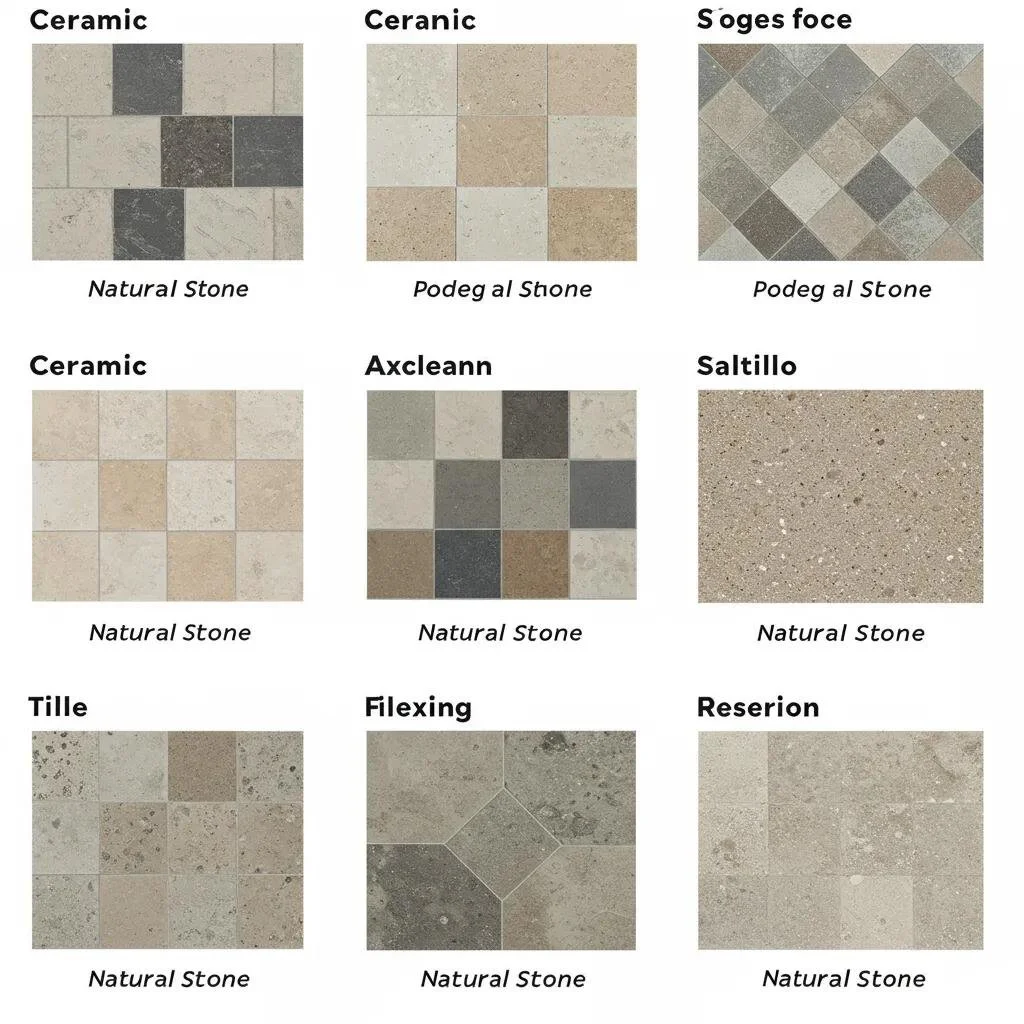
Tile materials in Austin vary widely and each material’s porosity, finish, and composition determine cleaning and sealing needs. Understanding whether a surface is glazed porcelain or unglazed Saltillo clarifies why some tiles tolerate vigorous agitation while others need stone-safe, pH-neutral care. Correctly matching cleaner chemistry and sealer penetration to tile material reduces abrasion, prevents etching, and preserves aesthetic value. Below we summarize material-specific maintenance attributes and offer practical recommendations for homeowners selecting cleaners and sealers for Austin’s climate and household use.
Ceramic and porcelain are common in Austin because porcelain’s low water absorption resists staining while ceramic often has a glaze that tolerates routine cleaning. Saltillo and similar terracotta-style tiles are highly porous, so they require penetrating sealers and gentle cleaners to avoid discoloration and moisture ingress. Natural stone—marble, travertine, limestone—demands stone-safe, pH-neutral products and periodic polishing to maintain finish and prevent etching. When selecting maintenance methods, match cleaning intensity and sealer type to porosity and finish: durable porcelain can handle stronger mechanical cleaning, while stone and Saltillo benefit from low-abrasion, enzyme-friendly approaches.
Intro to comparison table: The table below compares common Austin tile materials by porosity, sealing needs, recommended cleaner type, and typical maintenance value.
| Tile Material | Porosity / Vulnerability | Recommended Care / Sealing |
|---|---|---|
| Porcelain | Very low porosity; glaze protects surface | Regular pH-neutral mopping; topical cleaners for gloss; occasional grout sealing |
| Ceramic (glazed) | Low to moderate porosity at grout lines | pH-neutral cleaners; grout cleaning as needed; penetrating or topical sealer on grout |
| Saltillo / Terracotta | High porosity; absorbs stains easily | Penetrating sealers; avoid acidic cleaners; reseal more frequently |
| Natural Stone (marble, travertine) | Variable porosity; acid-sensitive | Stone-safe, pH-neutral cleaners; penetrating sealers; professional polishing when dulled |
Summary: Matching care to material reduces damage risk and extends lifespan; porous surfaces need penetrating protection while low-porosity tiles tolerate more robust cleaning practices.
Austin’s humid summers and periodic heavy rains increase the risk of mold and mildew in grout lines and damp areas, while hard water common in the region promotes mineral buildup that dulls finishes and discolors grout. Seasonal moisture encourages grout expansion and contraction, which can stress joints and allow dirt intrusion if not monitored and sealed. Homeowners should inspect wet areas after rainy or humid periods and use water-spot testing to detect absorption points that signal resealing needs. Proactive drying, ventilation, and timely grout maintenance minimize climate-driven deterioration and help tiles retain their aesthetic and hygienic function.
Material science explains why cleaners and sealers must be chosen carefully: porosity controls how deeply liquids penetrate, finishes (glazed versus unglazed) affect abrasion tolerance, and chemistry (pH) determines whether cleaners will etch sensitive stones. pH-neutral cleaners preserve natural stone and sealers, while acidic or alkaline formulas can strip protective layers or cause discoloration on marble and travertine. Mechanical cleaning—agitation or pressure—needs to match tile durability to avoid surface wear on softer materials. Understanding these mechanisms lets homeowners select product families that protect both tile surface and sealer integrity over time.
Determine a baseline schedule for professional cleaning by combining surface material, traffic levels, and exposure to moisture; this balance preserves appearance, eliminates deep soil, and prevents mold growth. Professionals use extraction and specialty chemistries to remove embedded grime and biological growth that home routines cannot fully address, restoring grout color and improving surface hygiene. The guidance below provides a recommended interval and explains exceptions for high-use or moisture-prone areas, helping homeowners plan preventive service before problems escalate.
Every 12–18 months is a practical baseline for residential tile and grout deep cleaning in Austin to remove embedded dirt and biological growth. Homes with heavy foot traffic, pets, or active kitchens and showers often benefit from professional service every 6–12 months to manage accelerated soil accumulation and moisture-related staining. Conversely, low-traffic areas with sealed grout can extend toward the 18-month mark when regular home maintenance is consistent. Periodic professional cleaning preserves grout tone, reduces allergen load, and maintains warranty conditions for some sealed surfaces.
High-traffic entryways and family rooms: every 6–12 months
Showers and wet areas: every 6–12 months, or sooner if mold appears
Low-traffic guest rooms: every 18 months or as needed
Summary: Use 12–18 months as a core interval and adjust upward or downward based on traffic, pets, and moisture exposure.
High foot traffic accelerates abrasive grit embedding in grout lines and scuffs on softer tiles, while porous materials like Saltillo and unsealed natural stone show staining sooner under frequent use. Entryways and kitchens usually require more frequent attention because outdoor dirt and cooking residues compound wear and discoloration. Mapping traffic level to maintenance creates a targeted schedule: heavy-use zones get more frequent pro cleaning and earlier resealing, moderate-use spaces follow the baseline, and infrequently used rooms can rely on routine home care with less frequent professional intervention.
Professional deep-cleaning removes allergens, bacteria, and mold from grout and porous surfaces that routine mopping leaves behind, improving indoor air quality and reducing respiratory triggers. Restorative cleaning also brightens grout lines and renews tile gloss, which enhances overall appearance and can increase perceived home value. Technically, extraction cleaning reduces trapped particulates and biological residues that degrade grout binders over time, thereby slowing structural deterioration. Maintaining both health and aesthetics through scheduled professional services yields long-term savings by delaying costly replacements.
Daily and weekly routines form the first line of defense against grime, stains, and microbial growth; consistent minor actions reduce the need for frequent professional interventions. Using the right tools and cleaners prevents abrasive damage and chemical harm, while prompt spill response and strategic placement of mats limit grit and staining. Below are clear daily and weekly actions that, when combined with periodic professional care and sealing, maintain tile surfaces and grout color across Austin’s climate conditions.
Sweep or vacuum daily in high-traffic areas to remove grit that abrades tile and grouts; use a soft-bristle broom or a vacuum hard-floor setting to avoid scratching finishes. Vacuum attachments with soft rollers pick up fine dust without redistributing particles into grout lines, and sweeping at least every other day in moderate-traffic rooms keeps abrasive soils from becoming ingrained. For entryways, place outdoor mats and shake them out regularly to reduce tracked-in sediment. Regular debris removal preserves sealer integrity and reduces the frequency of deep professional cleaning.
Choose pH-neutral, biodegradable cleaners for routine mopping, especially on natural stone and Saltillo, because they clean without stripping sealers or etching finishes. Enzyme-based or oxygenated cleaners work well on organic stains and are generally safe for grout when used per product instructions; avoid acidic or bleach-containing formulas on marble, travertine, or colored grout. For stubborn residues, test a small area first and follow with thorough rinsing and drying to prevent water spots and residue. Regular use of compatible cleaners prolongs sealer life and keeps surfaces hygienic.
Immediate action prevents many stains from setting: blot liquids with a soft cloth, rinse the area with a pH-neutral solution, then dry thoroughly to prevent mineral lines or mold in grout. For oil-based spills, use a gentle degreasing cleaner formulated for tile surfaces to lift residues without harsh scrubbing; for tannin stains such as coffee or wine, blotting followed by oxygenated cleaners often limits penetration. Avoid abrasive scrubbing that can widen grout pores and invite more staining. Prompt cleanup reduces stain removal difficulty and preserves both appearance and sealer performance.
Eco-friendly choices include plant-based, biodegradable pH-neutral cleaners and oxygenated stain removers that avoid harsh solvents while remaining effective against organic soils. DIY options such as diluted castile soap for routine mopping are usable on many glazed tiles, but avoid vinegar or citrus-based acids on stone and Saltillo. Professional services that advertise low-toxicity chemistries or water-efficient extraction can offer effective deep cleaning without heavy chemical loads. Choosing green products reduces indoor toxins while still protecting tile and grout when matched to material and stain type.
Biodegradable formulas
pH-neutral labeling suitable for stone
Low-VOC or plant-derived surfactants
Summary: Eco-friendly cleaners can be both safe and effective when selected with material compatibility in mind.
Grout sealing is a preventive service that reduces porosity, repels liquids, and simplifies cleaning—especially important in Austin where humidity and hard water accelerate staining and biological growth. Selecting the correct sealer type depends on grout composition, tile porosity, and area use; penetrating sealers suit porous grout and Saltillo, while topical sealers can add gloss on high-shine ceramics but need more frequent reapplication. The following sections define sealing, compare sealer types with practical recommendations, and provide reseal timing and DIY checks to keep grout protected.
Grout sealing involves applying a protective layer—either penetrating or topical—that reduces grout porosity and creates a barrier to liquid and dirt penetration. The mechanism prevents stains from embedding deep in the grout matrix and lowers the opportunity for mold and mildew to colonize damp joints, making routine cleaning more effective. Properly applied sealers extend the life of the grout by limiting moisture-driven degradation and easing stain removal. Sealing is a relatively low-cost preventive measure compared to grout replacement or tile repair resulting from long-term moisture damage.
Penetrating sealers soak into porous grout and Saltillo to block absorption without altering surface appearance, making them a preferred choice for high-moisture or exterior-adjacent areas. Topical sealers form a surface film that can enhance gloss and repel spills temporarily but may require more frequent reapplication in high-traffic areas and offer less breathability. Silicone-based penetrating treatments are useful where long-term water resistance is critical; acrylic topical options are suitable for decorative interiors where sheen is desired. Choose penetrating products for porous materials and topical options for aesthetic enhancement with the understanding of differing reapplication needs.
Intro to sealer comparison table: This table outlines common sealer types, their attributes, and best use cases for Austin homes.
| Sealer Type | Attribute (penetration / breathability) | Best Use Case / Reapply Frequency |
|---|---|---|
| Penetrating (silane/siloxane) | Deep penetration, breathable | Porous grout and Saltillo; reapply 1–3 years depending on traffic |
| Penetrating (silicone-based) | Strong water resistance, breathable | Showers and exterior-adjacent tiles; 1–3 year reapplication |
| Topical (acrylic/polymers) | Surface film, less breathable | High-gloss ceramics where appearance matters; reapply 6–18 months |
| Enhancing topical | Adds sheen, temporary protection | Decorative indoor tiles; frequent reapplication required |
Summary: Penetrating sealers generally perform best in Austin’s variable moisture conditions, while topical sealers suit decorative needs with more frequent upkeep.
Reseal intervals vary from about 1 year for topical sealers in high-traffic areas to 3–5 years for quality penetrating sealers under moderate use; moisture exposure and cleaning regimen shorten these intervals. A simple DIY water-drop test helps determine seal integrity: place a few drops on grout; if water beads on the surface, the sealer likely remains effective; if it darkens or absorbs, resealing is advisable. High-moisture locations like showers typically need more frequent inspection and resealing compared with dry living areas. Regular evaluation after seasonal humidity changes keeps protection current.
Observable indicators include persistent staining after cleaning, grout darkening, water absorption during a drop test, and recurring mildew despite cleaning. If grout becomes powdery, crumbly, or shows shrinkage and gaps, the structural integrity is compromised and resealing alone may not be sufficient. Tracking these signs and doing simple home tests informs timely resealing, preventing deeper moisture damage and saving on more extensive repairs.
Professional restoration and repair combine deep cleaning, stain chemistry, polishing, chip repair, and regrouting to recover both function and appearance, often delaying full tile replacement. Restoration addresses embedded contamination and surface degradation that routine maintenance cannot remove, restoring grout color, tile luster, and joint integrity. Understanding the spectrum of restoration services clarifies when to pursue repair versus replacement and how combined restoration plus ongoing maintenance yields the best long-term outcome.
The Steam Team provides specialized tile and natural stone cleaning, marble polishing, tile restoration, and grout remediation services tailored to Austin homes and Central Texas conditions. Their offerings include deep extraction cleaning, color restoration for discolored grout, polishing for stone surfaces, and repair solutions designed to return appearance and performance. As a local provider with industry-recognized certifications and a longstanding operational history, they can assess when restoration is a cost-effective alternative to replacement and provide estimates to homeowners ready to schedule work or request a quote by phone or through their online contact channels.
Stubborn stains require diagnosis—organic, iron, or mineral—followed by targeted chemistry such as oxygenated cleaners for organic residues or specialized poultices for mineral deposits; mechanical extraction may be paired with chemistries for deep-set soils. Minor chip repairs use color-matched fillers or epoxies blended to match tile tone, preserving visual continuity without full replacement. Often multiple techniques are combined across visits—cleaning, localized repair, and final polishing—to achieve the best result while minimizing disruption. Professional methods reduce the risk of damage caused by incorrect DIY attempts and restore both form and function.
Regrouting is necessary when joints crack, crumble, or allow water penetration that can undermine subflooring or promote mold, while chip repair is appropriate when surface damage compromises appearance or creates sharp edges. If grout deterioration is localized, regrouting can renew joint integrity and sealer performance; when tiles are loose or underlying issues exist, more extensive repair or replacement may be required. Choosing repair over replacement often depends on scope, tile availability, and cost-effectiveness; restoration specialists can advise on life-extension benefits after inspection.
A one-time restoration resets surfaces to a clean, stable baseline, and regular maintenance—daily sweeping, weekly pH-neutral mopping, and periodic sealing—prevents recurrence of deep staining and prolongs the restoration’s effectiveness. Sealing after restoration locks in the cleaned state and simplifies routine cleaning, reducing the frequency of disruptive deep-clean visits. Coordinating professional restoration with homeowner maintenance plans yields sustained aesthetics, improved hygiene, and lower lifetime costs versus cyclical replacement.
Selecting the right provider requires evaluating certifications, local experience, process transparency, equipment, and guarantees so that homeowners receive reliable results and accurate quotes. A qualified partner explains methods, shows material-appropriate approaches, and outlines expected outcomes and follow-up care. The checklist below helps homeowners vet providers and request clear proposals, and it also highlights how to prepare information for a faster, more accurate quote.
The Steam Team is an Austin-based cleaning and restoration company with deep local experience and explicit service offerings that include tile cleaning, natural stone care, marble polishing, and tile restoration. Their team holds industry certifications and is noted for customer satisfaction guarantees, and they serve both residential and commercial clients in Austin and Central Texas. Homeowners looking for a local provider can contact The Steam Team by phone to discuss scope and request a quote or schedule an inspection; direct inquiries generally lead to tailored estimates based on tile type, area size, and condition.
Certifications that validate technical competence include industry-recognized credentials for cleaning and restoration, and reputable accreditation such as a high BBB rating signals reliable business practices. The Steam Team’s publicly noted credentials include IICRC certification and an A+ BBB rating, which indicate adherence to professional standards and consumer protection. Verifying certifications and ratings helps homeowners distinguish providers who follow best practices from those using conventional or unverified methods.
Prepare basic project information—square footage, tile material, visible issues, and photos—to speed accurate quoting and clarify service scope for providers. Use a simple three-step approach when requesting service:
Document the area: Measure or estimate square footage, take clear photos of problem zones, and note tile type if known.
Describe symptoms: List stains, odor, loose tiles, moisture issues, or recent damage and any past treatments applied.
Contact and compare: Call or use a provider’s contact form to request a written estimate that outlines included steps, warranties, and recommended follow-up care.
Summary: Clear preparation yields quicker, more accurate quotes and helps homeowners compare proposals on equal terms.
Tile cleaning and maintenance pricing depends on square footage, tile and grout type, soil severity, accessibility, and additional services like sealing or repairs; understanding these drivers clarifies estimates and avoids surprises. Services that address heavy staining or restoration require more time, specialized chemistry, and possibly multiple visits, which elevates cost compared with routine deep cleaning. Below is a breakdown of typical service components, their cost influence, and practical tips to control expenses while preserving tile longevity.
Key variables influencing price include the size of the area, condition severity (deep stains, mold), tile and grout composition, need for mobilization or prep work, and any add-on services such as sealing or regrouting. Accessibility and required drying times can also affect labor hours and equipment needs. The markdown table below outlines common service components, cost factors, and typical influence on price to help homeowners anticipate estimates and prioritize interventions.
| Service Component | Cost Factor | Typical Price Range / Influence |
|---|---|---|
| Square footage | Direct multiplier | Larger areas increase base cost proportionally |
| Soil severity | Time and materials | Heavy staining or mold increases labor and chemical costs |
| Tile type | Complexity | Porous stone or Saltillo requires more prep and sealing |
| Additional repairs | Materials & labor | Regrouting, chip repair add one-time costs |
| Travel/prep | Logistics | Hard-to-access sites or prep increase quoted price |
Summary: Request itemized estimates that separate cleaning, sealing, and repairs so you can compare true scope and cost across providers.
Accurate quotes stem from clear documentation and transparent provider processes: supply photos, measurements, and descriptions of symptoms, and ask for written proposals that list included steps and exclusions. Requesting on-site assessments for heavily soiled or complicated jobs yields the most precise pricing; for straightforward areas, detailed photos often suffice for ballpark estimates. Ask providers about post-service care and any performance guarantees to ensure value and reduce the chance of follow-up charges.
Preventive practices minimize long-term costs by reducing deep-clean frequency and limiting repair needs. Affordable measures include using entry mats, implementing daily sweeping routines, cleaning spills immediately, and applying grout sealer on schedule to prevent stain penetration.
Use entry mats and remove shoes in wet seasons.
Sweep daily and mop weekly with pH-neutral cleaners.
Test grout sealing annually and reseal as needed.
Address chips and cracked grout early to prevent spread.
Summary: Small investments in routine maintenance yield outsized savings by avoiding accelerated wear and the need for restoration.
If you need a professional assessment or an estimate, have your photos and measurements ready and contact local providers for written quotes.
For targeted restoration work, request a scope that separates cleaning, color restoration, and repair so you can prioritize actions.
To schedule ongoing maintenance, establish a baseline professional cleaning interval (12–18 months) and adjust for traffic and moisture, coordinating sealing after any restorative services.
This guidance equips Austin homeowners to keep tile and grout performing well, balance DIY care with professional intervention, and choose service partners that match technical needs and budget priorities. For homeowners ready to request a quote or schedule work, calling a qualified local provider’s office directly with your area details and photos will start the process toward a tailored estimate and timeline.
Signs that your tile may require professional cleaning include visible stains that persist despite regular mopping, discoloration in grout lines, and a dull appearance on tile surfaces. Additionally, if you notice an increase in allergens or odors in your home, it may indicate that dirt and bacteria have built up beyond what regular cleaning can address. If mold or mildew is present, especially in damp areas like bathrooms, it's crucial to schedule a professional cleaning to restore hygiene and aesthetics.
To maintain your tile floors between professional cleanings, establish a routine that includes daily sweeping or vacuuming to remove dirt and grit, which can cause scratches. Use a pH-neutral cleaner for weekly mopping to avoid damaging the tile or grout. Promptly clean up spills to prevent staining, and consider placing mats in high-traffic areas to reduce wear. Regularly inspect grout lines for signs of wear or discoloration, and reseal them as needed to maintain protection against moisture and stains.
When selecting a tile maintenance service, consider their experience and expertise in handling various tile types and materials. Look for certifications that validate their skills, such as IICRC certification. Read customer reviews to gauge satisfaction and reliability. Additionally, inquire about their cleaning methods, equipment used, and whether they offer guarantees on their work. A transparent provider will also provide a detailed estimate and explain the steps involved in the cleaning or restoration process.
While some homemade cleaners can be effective, it's essential to choose ingredients that are safe for your specific tile type. For example, a mixture of warm water and a few drops of dish soap can work well for routine cleaning. However, avoid using vinegar or acidic substances on natural stone tiles, as they can cause etching and damage. Always test a small, inconspicuous area first to ensure compatibility. For tough stains, consider using specialized commercial products designed for your tile material.
To prevent mold growth in grout lines, ensure proper ventilation in areas prone to moisture, such as bathrooms and kitchens. Use exhaust fans during and after showers or cooking to reduce humidity. Regularly clean grout lines with a pH-neutral cleaner and consider applying a penetrating grout sealer to create a barrier against moisture. Promptly address any leaks or water accumulation, and maintain a consistent cleaning schedule to minimize organic material that can promote mold growth.
Penetrating grout sealers soak into the grout, providing a barrier against moisture and stains without altering the surface appearance. They are ideal for porous grout and areas exposed to high moisture. In contrast, topical sealers form a protective film on the surface, enhancing gloss and providing temporary protection but may require more frequent reapplication. Topical sealers are better suited for decorative tiles where appearance is a priority, while penetrating sealers are preferred for long-term durability and moisture resistance.
To determine if your grout sealer is still effective, perform a simple water drop test. Place a few drops of water on the grout surface; if the water beads up, the sealer is likely still intact. If the grout darkens and absorbs the water, it indicates that the sealer has worn off and resealing is necessary. Regular inspections, especially in high-moisture areas, can help maintain the integrity of your grout and prevent moisture-related damage.
Implementing best tile maintenance practices is essential for preserving the beauty and longevity of your Austin home’s surfaces. By understanding the specific needs of various tile materials and adhering to a consistent cleaning and sealing schedule, homeowners can prevent costly repairs and enhance indoor hygiene. For those ready to take the next step, consider reaching out to a local professional for a tailored maintenance plan. Explore our services today to ensure your tile remains in pristine condition for years to come.
Tile and grout play a major role in a property's appearance, hygiene, and long-term durability. Professional care tailored for Austin's climate and traffic patterns can restore surfaces while preventing future problems. This article explains how professional tile and grout cleaning, restoration, and sealing improve aesthetics, reduce health risks from mold and bacteria, and extend the life of ceramic, porcelain, and natural stone floors. You will learn the specific benefits of professional interventions, how advanced methods such as high-pressure steam with oxygenated hydrogen peroxide work, transparent cost drivers and local pricing guidance, and practical maintenance plans for homes and businesses. The guide also compares residential and commercial needs, outlines specialized restoration options like grout color sealing and stone polishing, and shows how to request a clear, no-obligation estimate from a qualified Austin provider. Throughout, relevant keywords such as tile and grout cleaning services Austin, grout restoration Austin, natural stone tile cleaning Austin, and grout sealing Austin are woven into explanations to help you find the services and make informed decisions.
Professional tile and grout cleaning restores appearance, improves hygiene, and preserves flooring integrity by removing embedded soils that routine mopping cannot extract. The process works through targeted chemistry and mechanical extraction that flushes dirt from grout lines and lifts contaminants from stone pores, which reduces staining and microbial growth. For Austin homes and businesses, a professional approach addresses climate-related moisture issues and high-traffic wear patterns, translating into longer tile life and improved slip resistance. The section below breaks benefits into clear categories and shows how treatment choice affects outcomes for different materials.
Professional cleaning offers distinct advantages for appearance and durability:
Deep Restoration of Appearance: Professional extraction removes ingrained soils and residual cleaners that dull tile and grout.
Improved Hygiene: Sanitizing processes reduce mold, mildew, and bacteria trapped in grout lines.
Extended Longevity: Correct chemistry and sealing protect surfaces from accelerated wear and staining.
These benefits create measurable returns by reducing replacement needs and preserving property value, and they set up the next discussion of how professional cleaning improves tile appearance and longevity.
Professional tile cleaning improves appearance by removing entrenched residues, old sealers, and mineral deposits that cloud tile finishes, restoring original color and sheen. Technicians combine appropriate cleaners with agitation and high-extraction methods that reach below the surface rather than simply redistributing soils, which prevents quick re-soiling and keeps surfaces looking fresher longer. Properly selected protective treatments—penetrating sealers for grout and topical finishes for certain tiles—slow future staining and reduce abrasion, extending the effective life of the floor. Understanding these mechanisms clarifies why periodic professional maintenance is more cost-effective than premature replacement.
Evaluating Hard-Surface Cleaning Agents for Tiles and Surfaces
In cleaning of hard surfaces several different types of cleaners can be used. Among the most important components of them are the tensides, whose soil removal ability is enhanced with softeners (complexing agents), solvents, and, depending on the soil, alkalies or acids. The products may also contain disinfectants that destroy microbes and prevent their reproduction. Additional compounds that make the product easier to use or improve its storage life or appearance are also used. Among these are, e.g., foam control agents, preservatives, fillers, dyes, and fragrances. Each component has its special function; however, they also interact. Testing the efficiency of the hard-surface cleaner is based on the standard method that uses a mechanical scrubbing machine. In it a sponge attached to a holder moves back and forth on the soiled tile with adjustable speed and pressure. The manually soiled test materials are rinsed after cleaning with tap water. If the test material is glazed ceramic til
Grout is a porous, wear-prone material that deteriorates under heavy use and in humid conditions; restoration stops progressive damage by addressing discoloration, cracking, and loss of adhesion. Restoring grout removes contaminated material and re-establishes structural integrity, which reduces moisture migration that contributes to mold growth and substrate damage—an important consideration in Austin's variable humidity. Timely restoration also renews aesthetics and prevents safety hazards from uneven grout lines that create trip or slip risks. This function ties directly into the advantages of sealing, which follow naturally as the next protective step.
Grout sealing limits water and oil penetration and makes routine cleaning more effective by reducing surface tension that traps dirt, so sealed grout resists staining and holds its color longer. There are two common approaches—penetrating sealers that protect from within and topical sealers that form a surface film—and the right choice depends on grout composition and traffic patterns. Sealing typically extends the period between professional cleanings and reduces long-term maintenance costs, making it a practical investment for both homes and commercial spaces. After sealing, simple maintenance routines become more effective and help maintain slip resistance and appearance.
Different tile materials respond differently to treatments; the table below compares benefits across common materials to help select the right approach.
| Material | Primary Benefit of Professional Cleaning | Typical Post-Treatment Outcome |
| Ceramic/Porcelain | Surface stain removal and mortar residue extraction | Restored color and improved grout contrast |
| Natural Stone (marble, travertine) | Gentle, pH-appropriate cleaning to prevent etching | Preserved finish and reduced surface haze |
| Saltillo/Slate | Deep debris removal from textured surfaces | Enhanced natural character and easier upkeep |
This comparison highlights that material-specific chemistry and methods matter; choosing the right professional approach yields better, longer-lasting results and prepares surfaces for the protective options discussed later. For local homeowners and businesses seeking trusted service, The Steam Team brings established local experience, IICRC-certified technicians, and a customer satisfaction guarantee—contact options and quote instructions are provided in the cost section below.
The Steam Team uses an advanced cleaning workflow that emphasizes deep extraction, material-specific chemistry, and protective finishes to remove soils and restore surfaces safely in Austin properties. The core method combines high-pressure steam with oxygenated hydrogen peroxide to lift and oxidize deep-set grime while minimizing abrasive action on finishes. Technicians follow a sequence of pre-inspection, targeted pre-treatment, agitation where needed, high-extraction rinsing, and optional sealing or protective application to ensure durable outcomes and minimal downtime. This section details the method and the role of certified technicians in delivering consistent results.
The step-by-step process typically follows these stages:
Inspection & Material Assessment: Evaluate tile type, grout condition, and substrate to choose chemistry and technique.
Pre-Treatment & Agitation: Apply pH-appropriate cleaners and agitate grout lines to loosen embedded soils.
High-Pressure Steam + Oxygenated Hydrogen Peroxide: Use steam combined with oxygenated chemistry to oxidize and lift organic stains and sanitize surfaces.
High-Extraction Rinse & Drying: Extract soils and moisture to accelerate drying and prevent residue.
Protective Sealing (Optional): Apply penetrating or topical sealers appropriate for the material to reduce re-soiling.
These technical steps underscore differences from conventional mop-and-clean approaches: professional extraction removes contaminants beneath the tile surface and grout, while the oxygenated steam combination offers sanitization advantages without harsh acids. The next subsection defines the chemistry and safety profile of the oxygenated steam method.
High-pressure steam cleaning with oxygenated hydrogen peroxide combines thermal energy and a peroxide-based oxidizer to break down organic stains, lift soils, and reduce microbial loads in grout and porous stone. The steam component softens and expands contaminants, while the oxygenated peroxide oxidizes organic molecules, enabling more effective extraction than water alone and offering sanitizing action. This method avoids overly acidic chemistries that can damage natural stone and relies on controlled application and thorough extraction to prevent substrate saturation. For families and businesses, the approach balances deep cleaning performance with careful material compatibility.
Services cover a wide range of tile and stone types, including ceramic, porcelain, marble, travertine, granite, slate, and Saltillo, each of which requires a tailored cleaning and protection plan. Ceramic and porcelain tolerate stronger agitation and standard sealers, while natural stones like marble and travertine need pH-neutral cleaners and gentler mechanical action to avoid etching. Saltillo and textured stones require deeper agitation and extraction to remove debris lodged in surface pits and pores. Understanding material differences informs the selection of chemistry and protective treatments used during restoration.
IICRC-certified technicians bring standardized training in cleaning and restoration protocols that ensure consistent assessment, appropriate chemical selection, and correct equipment use for each material and job condition. Certification emphasizes documented procedures, safety, and moisture-control practices that reduce the risk of surface or substrate damage and provide customers with quality assurance. Onsite quality checks, before-and-after documentation, and customer communication steps are part of a structured workflow that improves transparency and predictable outcomes. These quality controls lead directly into cost considerations and estimating, explained in the next section.
Pricing for tile and grout work in Austin depends on square footage, tile material, grout condition, and whether restoration or sealing is required; heavier restoration and natural stone care typically command higher rates. Typical local cost bands reflect these drivers and often include minimum service charges for small jobs, with higher per-square-foot rates when grout is damaged or requires color sealing and repair. Below is a practical EAV-style table that summarizes how tile type and service affect typical price ranges to help you budget and compare estimates.
| Service | Key Pricing Driver | Typical Cost Range |
| Routine tile & grout cleaning | Square footage and traffic level | $0.50–$2.00 per sq ft |
| Grout restoration (recolor/regrout) | Grout condition, width, access | $2.00–$6.00 per sq ft |
| Sealing (grout or stone) | Product type (penetrating vs topical) | $0.30–$1.50 per sq ft |
This table provides a baseline for Austin-area expectations; actual quotes depend on onsite assessment and whether natural stone polishing or significant grout repair is required. The following list summarizes the main variables professionals use to estimate costs.
Square footage: Larger areas lower the per-foot rate but increase total cost.
Tile and grout condition: Stained, cracked, or mold-affected grout raises labor and materials.
Material-specific care: Natural stone cleaning and polishing require specialized products and time.
Access and remediation: Areas with furniture, tight spaces, or moisture issues add complexity.
Understanding these factors helps you prepare for a transparent estimate. To request a free quote or site visit, provide the service type, approximate square footage, and photos where possible; The Steam Team typically offers clear next steps and responsive scheduling for Austin and Central Texas clients, and contact details are available at the end of this article.
Estimates begin with a material and condition assessment to identify whether the job is routine cleaning, restorative, or requires polishing/repair; each level involves different labor and chemical requirements. Technicians factor in prep work, dwell times for specialty cleaners, mechanical agitation for textured surfaces, and required drying time when calculating labor hours. Access constraints—such as heavy fixtures, alcoves, or multi-room transitions—also increase time on site, and protective sealing is quoted separately based on product selection. A clear written estimate should outline the scope, exclusions, and any follow-up sealing recommendations.
Grout restoration ranges from economical color refreshes to full regrouting depending on depth of damage; color sealing and recoloring are generally less invasive and fall at the lower end, while full removal and replacement sit at the higher end of the band. Narrow, intact grout lines with surface staining may be addressed with recoloring and sealing at modest per-square-foot rates, whereas deep-set deterioration or widespread cracking requires removal and regrouting that raises labor and materials costs. Sealing per square foot varies by sealer type—penetrating sealers tend to be priced lower than topical finishes that provide added sheen or non-slip properties.
To request an accurate estimate, prepare basic information such as approximate square footage, a description of the issue (stains, cracked grout, mold), and clear photos of representative areas; this allows a preliminary remote estimate or schedules an on-site inspection. The typical process involves an initial contact to describe the job, optional photo submission for a ballpark estimate, followed by an on-site assessment for final pricing and scheduling. Expect a written estimate that lists the proposed services, recommended treatments, and any warranty or satisfaction guarantees. If you prefer to speak to a local provider, The Steam Team serves Austin and Central Texas and can arrange an on-site evaluation to provide a free, no-obligation quote.
Maintenance after professional cleaning focuses on routine, material-appropriate care that preserves sealers and reduces soil buildup so surfaces remain clean longer. Daily and weekly habits—such as dry dust-mopping, low-moisture mopping, and using pH-neutral cleaners for natural stone—prevent abrasive grit and chemical damage. A seasonal or annual inspection catches grout wear and sealant depletion early so spot treatments or resealing can be scheduled before major restoration is needed. Below are practical best-practice steps followed by a short maintenance schedule and signs that indicate professional attention is warranted.
Follow these best practices to maximize results:
Use pH-neutral cleaners for stone: Acidic cleaners can etch marble and travertine.
Dry-mop high-traffic areas daily: Removing abrasive grit reduces wear on grout.
Avoid abrasive pads and bleach on grout: These can remove color and damage sealer.
These habits reduce the frequency of professional deep cleaning and help maintain slip resistance and appearance; regular checks inform when to schedule professional interventions, discussed next.
Best practices combine correct product choices with simple routines: dry-mop or vacuum to remove grit, use diluted pH-neutral cleaners for stone and standard cleaners for ceramic/porcelain, and rinse thoroughly to avoid residue. For high-traffic commercial settings, deploy walk-off mats and adopt scheduled low-moisture cleaning to reduce downtime and slip risk. Avoid DIY acid-based or chlorine cleaners on natural stone, and test new products on an inconspicuous area before broad use to prevent discoloration. These preventive actions make professional maintenance visits more productive and extend the protection afforded by sealing.
For most Austin homes, a professional deep clean every 12–18 months keeps grout and tile in good condition, while high-traffic commercial areas may require quarterly to semi-annual service depending on usage and soil load. Natural stone used in kitchens or entryways may need more frequent attention and periodic resealing based on visual wear and manufacturer recommendations. Immediate service is warranted when persistent stains, odors, or mold appear despite routine cleaning. Following these intervals helps avoid costly restorative work and preserves both aesthetic and safety performance.
Look for persistent dark staining that cleaning does not remove, cracked or missing grout, uneven lines causing trip hazards, or repeated mold and mildew outbreaks—each signifying the need for restoration. If grout compresses under a fingernail or tiles feel loose, these indicate substrate or grout failure that requires professional assessment and likely regrouting. Early intervention prevents moisture intrusion and structural damage beneath tile, which is more costly to repair. When these signs appear, schedule a professional inspection to determine whether recoloring, repair, or full replacement is appropriate.
Specialized restoration services address aesthetic and structural issues beyond routine cleaning, including grout color sealing, grout repair and replacement, and natural stone polishing and honing to restore finishes. These services combine corrective steps—such as grout removal and regrouting—with protective sealing and, where appropriate, mechanical polishing to achieve both visual and performance goals. The table below outlines common specialized services, use cases, and expected outcomes to help you choose the right intervention.
| Service | Typical Use Case | Benefit/Outcome |
| Grout color sealing | Inconsistent or heavily stained grout | Unified appearance and stain resistance |
| Grout repair/regrouting | Cracked or missing grout lines | Restored integrity and moisture protection |
| Natural stone polishing/honing | Dull or scratched stone | Restored sheen and smoother |
| surfaces | finish |
These specialized services restore both appearance and function and can be combined depending on condition and desired aesthetic. At the end of this section you will find guidance on requesting specialized work and scheduling.
Grout color sealing recolors and seals grout in a single application to produce a consistent color, reduce the appearance of staining, and add a protective layer that resists dirt penetration. The process is less invasive than full regrouting and can dramatically refresh floor appearance, particularly when grout color has shifted unevenly over time. Color sealing typically lasts through several cleaning cycles and simplifies routine maintenance, which is valuable for busy households and commercial spaces. For many clients, recoloring followed by a compatible sealer offers a cost-effective aesthetic upgrade with protective benefits.
Grout repair starts with a condition assessment to determine whether spot repairs, partial replacement, or full regrouting is required; technicians remove failing grout, prepare joints, regrout with an appropriate mortar, and then seal the new grout. The workflow includes containment of dust and debris, matching grout color or specifying a new color if requested, and ensuring joints are compacted and leveled for longevity. Timelines vary by square footage and access but are typically scheduled to minimize disruption. Proper repair restores moisture resistance and prepares surfaces for effective sealing.
Natural stone cleaning and polishing begins with pH-neutral cleaning to remove soils, followed by mechanical honing or polishing to remove light surface damage and restore luster while preserving the stone’s character. Polishing uses progressively finer abrasives and pads to achieve the desired sheen, and finishing often includes a penetrating sealer to reduce staining and ease cleaning. Technicians choose between honing (matte finish) and polishing (gloss finish) based on the stone type and client preference, taking care to protect edges and grout lines during mechanical work. Post-polish protection reduces maintenance needs and preserves the aesthetic improvements achieved.
What Are the Unique Care Requirements for Marble and Travertine Tiles?
Marble and travertine are soft, calcium-based stones that require avoidance of acidic cleaners and mild, pH-neutral products to prevent etching and loss of polish. Use soft pads and controlled polishing pressure for restoration, and maintain sealed surfaces with recommended sealers to reduce staining and water absorption. These stones typically need more frequent inspection and resealing than harder stones and should be cleaned with low-abrasion methods to preserve surface integrity. Proper handling and tailored maintenance schedules ensure longevity and keep these elegant surfaces performing well.
At the end of specialized restoration, customers are encouraged to request a customized service plan—The Steam Team can provide evaluations and scheduling to match desired outcomes and maintenance budgets.
Residential and commercial tile care share core cleaning principles but diverge in scale, scheduling, safety requirements, and performance targets; commercial work prioritizes rapid turnaround, slip-resistance, and regulatory compliance where applicable. Commercial spaces often use industrial-grade extraction equipment and fast-dry methods scheduled during off-hours to minimize business interruption. Residential work emphasizes material-sensitive approaches and family- and pet-safe chemistries while focusing on aesthetic revitalization and comfort. Tailored proposals and flexible scheduling help ensure each property type receives the appropriate mix of cleaning, restoration, and protection.
Commercial operations address high-traffic challenges with these strategies:
Industrial equipment for quick extraction: Reduces downtime and speeds drying.
Non-slip sealers and safety-focused finishes: Improve traction in kitchens and lobbies.
Scheduled maintenance plans: Maintain appearance without interrupting business.
These operational differences lead naturally into residential recommendations and how providers customize plans for different property types.
Commercial cleaning emphasizes rapid recovery, non-slip treatments, and coordination with business hours to avoid lost revenue and maintain safety compliance; techniques include stronger extraction, durable sealers, and more frequent cycles. Kitchens, entryways, and retail aisles are prioritized, and technicians often schedule deep cleans during nights or weekends to avoid customer disruption. Enhanced documentation and liability-aware procedures are typical for commercial contracts, ensuring consistent outcomes at scale. These practices contrast with residential approaches that focus more on finish preservation and family safety.
Homeowners benefit from pH-neutral cleaners for stone, moderate agitation for ceramic/porcelain, and low-moisture methods near wood transitions to prevent substrate swelling. Periodic professional cleaning combined with appropriate sealing keeps family spaces hygienic and attractive while minimizing the need for aggressive DIY chemicals. Walk-off mats, area rugs, and prompt spill cleanup complement professional care to maintain appearance between scheduled services. These homeowner-focused practices support long-term preservation of floor value and comfort.
Service customization begins with an assessment checklist that records tile type, grout condition, traffic patterns, and access constraints to produce a tailored proposal outlining frequency, scope, and recommended protective treatments. Proposals differentiate between single-service restorations and ongoing maintenance plans, and technicians adjust chemistry and machinery to match materials and client priorities. Flexible scheduling and clear communication help align scope with business operations or household needs, ensuring efficient outcomes with minimal disruption. This assessment-driven approach ensures each property receives targeted care.
Local customer feedback highlights measurable improvements in appearance and service experience, and The Steam Team supports claims with before-and-after documentation for many projects in Austin and Central Texas. The company emphasizes local tenure, an A+ Better Business Bureau rating, IICRC-certified technicians, and a customer satisfaction guarantee as evidence of reliable service delivery. Visual galleries and documented case notes help prospective clients evaluate likely outcomes for similar tile types and issues. The following subsections summarize testimonial themes, certifications, and where to view visual proof prior to requesting service.
Customer excerpts commonly note dramatic stain removal, improved grout color uniformity after recoloring, and efficient scheduling that minimized disruption for busy households and businesses. Reviews emphasize technicians’ material knowledge, careful handling of natural stone, and attention to post-service care recommendations that helped maintain results. Many accounts describe renewed confidence in floor hygiene and appearance after professional restoration. These experiences often lead customers to request recurring maintenance plans to sustain the benefits.
Professional credentials such as IICRC certification indicate adherence to industry standards for cleaning and restoration, ensuring that technicians follow best practices for material assessment, moisture control, and safe chemical use. An A+ rating with the Better Business Bureau signals an established local reputation for resolving customer concerns and delivering consistent service. These credentials combine to give clients assurance that the proposed methods and protective steps meet recognized quality benchmarks. Such assurances guide expectations and inform the decision to proceed with restoration or maintenance work.
Before-and-after galleries document stain removal, grout recoloring, and stone polishing outcomes and demonstrate the visual impact of different restoration strategies on similar tile types. Viewing galleries helps homeowners and business owners set realistic expectations for color matching, sheen restoration, and timelines for multi-step processes like polishing plus sealing. Galleries also illustrate when full regrouting is necessary versus when recoloring and sealing will suffice. Reviewing photos of comparable projects is a helpful prelude to scheduling an assessment and requesting a targeted estimate.
Prepare photos and measurements: Capture representative areas for preliminary review.
Describe issues clearly: Note stains, cracking, and areas of concern.
Request an on-site assessment: Arrange a time for a technician to confirm scope and provide a written estimate.
These steps streamline the quoting process and set the stage for scheduling restoration or maintenance work that matches your property needs and budget. For Austin and Central Texas properties, contact options are available to request a free estimate and schedule an on-site assessment with a qualified, certified technician.
Grout color sealing is a less invasive process that involves applying a colored sealant to existing grout to enhance its appearance and protect it from stains. This method is ideal for grout that is discolored but structurally sound. In contrast, full regrouting involves removing the old grout and replacing it with new material, which is necessary when the grout is cracked, missing, or deteriorated. Choosing between these options depends on the condition of your grout and your desired aesthetic outcome.
Signs that your tile may need professional cleaning include persistent stains that do not respond to regular cleaning, a dull appearance despite cleaning efforts, and visible mold or mildew in grout lines. Additionally, if you notice a buildup of dirt or grime that makes your floors look unkempt, it’s time to consider professional cleaning. Regular maintenance can help prevent these issues, but once they arise, professional intervention is often the most effective solution.
Yes, when cleaning natural stone tiles such as marble or travertine, it is crucial to avoid acidic cleaners, bleach, and abrasive scrubbing pads. Acidic substances can etch the surface of the stone, leading to permanent damage. Instead, use pH-neutral cleaners specifically designed for natural stone to maintain its integrity and appearance. Always test new products on a small, inconspicuous area before applying them broadly to ensure compatibility with your stone surfaces.
The frequency of resealing grout depends on several factors, including the type of sealer used, the level of foot traffic, and the specific conditions of your environment. Generally, it is recommended to reseal grout every 1 to 3 years. High-traffic areas or those exposed to moisture may require more frequent resealing. Regular inspections can help determine when resealing is necessary, ensuring that your grout remains protected and looking its best.
If you notice cracks or crumbling in your grout, it is essential to address the issue promptly to prevent further damage. Start by cleaning the affected area to remove any debris. If the damage is minor, you may be able to apply a grout repair product. However, for extensive damage, it is advisable to consult a professional for a thorough assessment and potential regrouting. Early intervention can save you from more costly repairs down the line.
While steam cleaning is effective for many types of tile, it is not suitable for all surfaces. Ceramic and porcelain tiles generally respond well to steam cleaning, as they can withstand high temperatures. However, natural stones like marble and travertine may be damaged by steam due to their porous nature. Always check the manufacturer's recommendations for your specific tile type before using a steam cleaner to avoid damaging your floors.
Regular maintenance for tile and grout offers numerous benefits, including prolonged lifespan, enhanced appearance, and improved hygiene. Routine cleaning helps prevent the buildup of dirt, stains, and mold, which can lead to costly repairs if left unaddressed. Additionally, regular maintenance can help maintain the effectiveness of sealants, ensuring that your grout remains protected from moisture and staining. Overall, investing in regular care can save you time and money in the long run while keeping your surfaces looking their best.
Investing in professional tile and grout cleaning restoration, and sealing services in Austin significantly enhances the appearance, hygiene, and longevity of your flooring. By addressing deep-seated stains and protecting against future damage, these services not only improve aesthetics but also contribute to a healthier living environment. Don't wait for visible issues to arise; take proactive steps to maintain your surfaces today. Contact The Steam Team for a free estimate and discover how our expert services can transform your tile and grout.
Austin homeowners and business owners face accelerated tile wear, staining, and mold challenges driven by regional humidity, seasonal storms, and heavy foot traffic, so effective tile care preserves appearance and reduces long-term costs. This guide explains why professional tile and grout cleaning in Austin, how modern processes like deep steam extraction and oxygenated cleaning work, and when to choose restoration or polishing for natural stone. Readers will find material-specific maintenance plans for ceramic, porcelain, marble, travertine, and granite, practical DIY versus professional comparisons, and clear guidance on grout sealing tailored to Austin’s climate. The article maps the professional cleaning workflow, supplies decision-making criteria for restoration, and outlines commercial maintenance strategies that minimize downtime and liability. By the end, you’ll understand actionable steps to protect tile investment, recognize warning signs that require professional intervention, and know how to prioritize routine care for different tile types.
Professional tile and grout cleaning removes embedded soils, biological growth, and contaminants that routine mopping cannot reach, restoring hygienic surfaces and visual appeal through controlled chemistry and extraction. These services work by loosening soils, extracting residues, and applying protective treatments that reduce abrasion and moisture intrusion, which together slow material degradation and lower replacement costs. For Austin properties, where humidity and occasional heavy rains increase mold risks, professional cleaning interrupts cycles of staining and microbial growth that lead to grout breakdown. The following benefits illustrate the immediate and long-term value of investing in skilled tile care tailored to local conditions and high-traffic environments.
Professional tile and grout cleaning in Austin delivers three primary benefits:
Hygiene and Health: Removes embedded dirt, allergens, and mold that compromise indoor air quality.
Appearance and Value: Restores original tile color and grout contrast to preserve property aesthetics and perceived value.
Longevity and Cost Savings: Prevents abrasive soil buildup and moisture damage that accelerate tile and grout deterioration.
These benefits directly reduce maintenance frequency and make future sealing or restoration more effective, which leads into the technical steps professionals use to achieve durable results.
Professional cleaning restores tile and grout appearance by extracting soils trapped below the surface, improving overall indoor cleanliness and reducing allergen load through specialized extraction equipment. Technicians apply material-appropriate chemistries and agitation methods that lift stains without etching sensitive surfaces, and controlled drying minimizes moisture retention that encourages mold. For high-traffic commercial spaces and busy Austin households, professional maintenance also shortens downtime by delivering faster, long-lasting results compared with repeated DIY attempts. These outcomes translate to tangible cost avoidance, as delaying proper care often requires more invasive restoration later.
The next subsection explains how these processes extend tile and grout lifespan by interrupting the mechanisms that cause wear.
Professional cleaning extends lifespan by removing abrasive soils that act like sandpaper across tile surfaces and by restoring grout integrity so joints resist moisture and staining. Cleaning with correct pH-balanced solutions prevents chemical etching on softer materials and preserves surface finishes, while extraction systems remove contaminant-laden moisture that can break down substrate adhesives. After cleaning, sealants applied to grout reduce liquid penetration and make routine maintenance less abrasive, which slows cumulative wear. Taken together, these measures reduce the rate of surface degradation and postpone costly repairs or replacement.
Understanding these technical advantages sets the stage for choosing a local provider with the right credentials and experience to execute them safely and effectively.
The Steam Team is a locally based service that offers tile and grout cleaning, natural stone and ceramic tile cleaning, and marble polishing, supported by recognized trust signals relevant to Austin property owners. The company maintains an A+ Better Business Bureau rating, employs IICRC-certified technicians, and has received local awards that reflect community recognition of service quality. Customers seeking a quote or appointment can contact The Steam Team directly by phone to request a site assessment and discuss tailored cleaning or restoration options. These credentials support confidence in professional intervention and lead naturally into a closer look at the cleaning process professionals use.
Professional tile and grout cleaning typically follows a standardized workflow: inspect and identify materials, pre-treat soils, agitate and extract contaminants, and finish with grout cleaning and optional sealing. This process begins with a material assessment to select safe chemistries and methods, proceeds through targeted pre-treatment to loosen embedded soils, and culminates with deep extraction and drying to remove contaminants and limit moisture. The final steps—grout renewal and sealing—protect results and reduce re-soiling, which is especially important in Austin’s variable climate. Below is a concise, step-by-step summary designed to match common featured-snippet queries and help property owners understand what to expect.
Assessment and material identification: Determine tile type, grout condition, and any prior treatments.
Pre-treatment and agitation: Apply appropriate cleaners and mechanically agitate grout lines to loosen soils.
Deep extraction: Use hot-water or steam-assisted extraction to lift and remove contaminants.
Grout cleaning and sealing: Clean grout with targeted tools and apply a suitable sealant if needed to protect results.
This procedural clarity helps property owners prepare for service and compare methods, which leads to a comparison of common professional cleaning methods used in Austin.
Intro to method comparison table: The table below compares common professional cleaning methods by mechanism, suitability, and expected outcome to help readers choose the right approach for their tile and grout conditions.
| Method | How It Works | Best For | Limitations | Expected Outcome |
| Deep steam extraction | Combines heat, pressure, and extraction to loosen and remove soils | Ceramic and porcelain floors, sealed stone with caution | Not ideal for very porous stone without prior sealing | Deep soil removal, improved appearance, reduced allergens |
| Oxygenated cleaning (peroxide-based) | Uses oxygen release to lift organic stains and brighten grout | Organic stains, pet stains, routine maintenance | Slower on mineral/rust stains; less effective on heavy oil | Safer for homes, eco-friendlier, good stain lifting |
| Manual scrubbing (mechanical agitation) | Mechanical brushes/pressure used on grout lines with chemistry | Localized grout restoration | Labor-intensive; may damage soft grout if aggressive | Good for spot work; preparatory step for sealing |
Deep steam extraction uses heated water or steam under pressure to loosen soils and biofilms, while a high-suction extraction wand removes the dissolved contaminants and surface moisture. Heat reduces surface tension and mobilizes oily residues, and strong extraction removes both dissolved soils and excess water to minimize drying time and mold risk. For many ceramic and porcelain installations, deep steam extraction is highly effective because these materials tolerate heat and rapid extraction, but technicians must verify any sealants or stone sensitivity before use. Properly performed, this method restores tile appearance and reduces allergen and microbial loads, which leads to consideration of alternative chemistries such as oxygenated cleaners.
Oxygenated cleaning solutions release oxygen bubbles that lift and suspend organic soils, making them easier to extract without relying on harsh solvents or acids. These solutions are generally lower in toxicity, safe for homes with children and pets when used per instructions, and effective on food stains, pet accidents, and biological discoloration. Oxygenated cleaners often work well as a pre-treatment step before extraction, improving grout brightness without risking etching on sensitive surfaces. Because they balance effectiveness with a favorable safety profile, oxygenated chemistries are frequently chosen for routine maintenance and follow directly into choices about grout sealing and protection.
Grout sealing begins with thorough cleaning and complete drying, followed by application of a penetrating or topical sealant that either soaks into grout pores or forms a protective surface layer. Penetrating sealants repel liquid at the grout's capillary level, reducing stain penetration and moisture migration, while topical coatings create an additional washable layer but may need more frequent reapplication. Sealing is essential because it transforms grout from an open absorbent joint into a more resilient barrier against spills, mold, and dirt accumulation, which reduces cleaning frequency and protects underlying substrates. Understanding sealant types and lifecycle helps owners decide on maintenance intervals and informs the selection process for Austin properties.
Material-specific maintenance preserves tile performance by matching cleaner chemistry and frequency to surface sensitivity and local environmental stressors like humidity and dust. Identifying tile type (ceramic, porcelain, natural stone) is the first step because natural stones demand neutral pH cleaners and regular sealing, whereas ceramic and porcelain tolerate routine neutral detergents and mechanical agitation. A concise maintenance matrix helps homeowners and facility managers plan cleaning frequency, choose safe cleaners, and know when to call professionals for restoration. The table below summarizes best-practice maintenance guidance across common tile types found in Austin properties.
Intro to tile maintenance matrix: Use this quick-reference table to determine recommended cleaning frequency, safe cleaners, and when professional intervention is appropriate for each tile type.
| Tile Type | Recommended Frequency | Safe Cleaners | Avoid | When to Call Pro |
| Ceramic | Weekly sweeping; monthly deep clean | pH-neutral cleaners, oxygenated spot treatments | Acidic or abrasive cleaners | Persistent grout staining or surface wear |
| Porcelain | Weekly sweeping; quarterly deep clean | Neutral detergents, steam extraction | Harsh acids; abrasive pads | Embedded soiling or slip hazards |
| Marble | Monthly gentle cleaning; seal annually | Stone-specific neutral cleaners | Acid-based cleaners (etch risk) | Dull finish, etching, or deep stains |
| Travertine | Monthly cleaning; seal every 6–12 months | Stone-safe neutrals and sealants | Acidic products and excess water | Pitting, erosion, or deep staining |
| Granite | Monthly cleaning; periodic reseal | Neutral cleaners and stone polishes | Abrasives and harsh acids | Surface loss or visible scratches |
This matrix helps property owners select the right routine and triggers for professional restoration, which leads into material-specific best practices below.
Ceramic and porcelain tiles respond well to regular dry cleaning methods that remove abrasive grit before it abrades finishes, and to pH-neutral cleaning products that lift soils without breaking down adhesives. Sweep or vacuum frequently, use a microfiber mop for damp cleaning with neutral detergents, and address spills promptly with oxygenated cleaners for organic stains. Avoid abrasive pads and acid-based cleaners that can dull glazes or damage grout lines, and schedule professional deep extraction roughly every 12–18 months for residential settings depending on traffic. Consistent preventive care reduces deep-clean frequency and keeps grout sealants functioning effectively.
Natural stone requires gentle, stone-specific maintenance to avoid chemical etching and long-term finish loss, beginning with pH-neutral cleaners explicitly designed for stone and avoiding vinegar, citrus, or other acidic agents. Regular sealing is more critical for stone than ceramic: penetrating sealants should be applied per product guidance to limit moisture absorption and staining. Polishing and restoration are best left to professionals who can assess etching versus stain removal and use controlled machinery and abrasives to restore gloss without thinning the stone. These precautions protect stone aesthetics and function, and they clarify when restoration or polishing becomes necessary.
Tile restoration or marble polishing is appropriate when surface gloss is lost, etching or deep stains remain after proper cleaning, or chips and micro-scratches compromise appearance and safety. Restoration typically begins with a diagnostic assessment to determine whether light polishing, regrouting, or full resurfacing is needed, followed by corrective grinding, honing, and polishing sequences for natural stone. Expected results include restored gloss, reduced staining, and a more uniform surface; however, restoration timelines and outcomes depend on severity and substrate condition. When regular maintenance no longer returns acceptable appearance, professional restoration is the recommended path.
DIY cleaning is useful for routine upkeep but carries risks when owners use improper chemicals, over-wet substrates, or apply excessive abrasion that accelerates wear or causes etching on sensitive stone. Professional services bring calibrated chemistry, industrial extraction, and material expertise that reach embedded soils and protect surfaces, often delivering better long-term value despite higher upfront cost. A brief cost-effectiveness perspective shows that periodic professional cleaning and sealing frequently reduces cumulative expenses compared with repeated DIY fixes that escalate into restoration needs. The following lists summarize common DIY pitfalls and the comparative value of professional methods.
Common DIY risks include:
Wrong cleaners on stone: Acidic solutions that etch marble and travertine.
Over-wetting: Saturating grout and subfloor leading to moisture issues.
Abrasive scrubbing: Accelerating surface wear and grout loss.
These risks clarify why certain triggers—persistent stains, mold, or structural issues—should prompt a professional call.
DIY approaches risk unintended damage when homeowners substitute strong acids or abrasive tools for appropriate chemistries and agitation, which can cause irreversible etching or grout erosion. Over-wetting during mop-based cleaning can saturate grout and subfloors, encouraging microbial growth and adhesive failure, while improper stain treatments (e.g., using bleach or acid on rust) compound damage. Additionally, inconsistent drying and incomplete extraction leave residues that attract soil faster, shortening time between cleanings. Recognizing these risks supports a decision framework for escalating to professional services before minor problems become major repairs.
Professional cleaning typically requires a higher initial investment but delivers deeper soil removal, longer-lasting results, and protective sealing that reduces future maintenance frequency and total lifecycle costs. Professionals reach embedded contaminants with extraction equipment that DIY vacuums and mops cannot, reducing the probability of accelerated wear and costly restoration. Many property owners find that scheduling professional cleaning every 12–18 months for residential settings balances cost with performance, while commercial sites choose more frequent service based on traffic. This cost-effectiveness snapshot demonstrates how targeted professional intervention can be an economical strategy over time.
Call a professional when stains persist after appropriate spot treatment, when mold or mildew returns quickly after cleaning, or when large high-traffic areas require efficient, safe restoration to maintain safety and appearance. Other triggers include visible etching on natural stone, grout that crumbles or has extensive discoloration, and post-water-damage scenarios where drying and contamination control are critical. Using professional assessment early often prevents more invasive repairs and helps property owners plan protective measures like sealing to extend the life of tile systems.
Grout sealing reduces stain penetration, limits moisture ingress, and slows microbial growth by creating a protective barrier at the joint level; selecting the right sealant for Austin’s variable humidity and foot-traffic patterns is essential. Penetrating sealants imbue grout with hydrophobic properties that last longer in most floor applications, while topical coatings can enhance appearance for decorative installs though they may require more frequent reapplication. The table below outlines common sealant types, ideal application areas, durability expectations, and pros and cons to help owners match product choice to local conditions and usage.
Intro to grout sealant guide: This table helps Austin property owners choose a sealant type based on application area, durability, and maintenance expectations.
| Sealant Type | Application Area | Durability / Reapply | Pros | Cons |
| Penetrating (silane/siloxane) | Interior and exterior floors, showers | 1–3 years residential; more frequent in heavy use | Long-lasting, breathable, resists moisture | Less sheen enhancement |
| Topical (film-forming) | Decorative interiors, low-traffic areas | 6–12 months typical | Enhances sheen and color | Wears with traffic; periodic reapplication |
| Color seal / grout recolor | Tired or discolored grout | 2–5 years depending on use | Restores uniform appearance | May need professional application for best results |
Sealing decisions should account for traffic, exposure, and desired appearance, and selection often follows a professional inspection to confirm proper adhesion and substrate condition.
Grout sealing offers practical benefits: it makes routine cleaning more effective by preventing deep stain penetration, reduces mold and mildew growth by limiting moisture pathways, and preserves grout color and joint integrity. In showers, kitchens, and entryways—areas prone to moisture and frequent soiling—sealing significantly reduces cleaning effort and prolongs the interval between deep cleans. For commercial settings, sealants help sustain line-of-sight cleanliness and reduce liability related to slip hazards by enabling faster, more effective cleaning. These operational advantages make sealing a cost-effective protective measure for Austin properties.
For Austin’s warm and sometimes humid climate, penetrating sealants are usually the best first choice for floors and showers because they allow grout to breathe while resisting moisture intrusion; topical sealants are practical for decorative areas where sheen and color are priorities. Exterior installations exposed to rain or irrigation benefit from silane/siloxane chemistries that repel water and reduce freeze-thaw exposure, while foodservice areas may require frequent reapplication and specialized sealants compatible with sanitation protocols. Matching sealant family to use-case and traffic ensures effective protection and predictable maintenance intervals.
Reapplication intervals vary by sealant type and traffic: residential floors typically require resealing every 1–3 years, while commercial or heavy-use areas may need checks and reapplication every 6–12 months. Practical signs that reapplication is due include water no longer beading on grout lines, increased staining after routine cleaning, or visible wear of topical coatings. Regular inspection after cleaning cycles helps determine the right schedule for your specific setting, and professional assessments can provide objective measurement and recommend the optimal timeline.
Effective solutions address the root cause—identifying stain chemistry, removing embedded contaminants, and restoring protective barriers—rather than relying on surface-level fixes that mask symptoms. For organic stains, oxygenated cleaners and enzyme treatments lift residues; for mineral or rust stains, professionals may need specialized chelators or poulticing techniques; and for widespread grout failure, regrouting or color-sealing restores aesthetics and function. The following problem-solution lists provide action-first recommendations for common issues, followed by guidance on when to escalate to professional services.
Common problem-solution approaches include:
Stain identification then targeted treatment: Match method to stain chemistry for best results.
Mold prevention: Improve ventilation, dry surfaces quickly, and use periodic professional cleaning to remove embedded spores.
Grout discoloration: Consider color-seal or regrouting when cleaning does not restore color.
These solutions show how combining correct diagnosis with appropriate treatment produces durable results and points toward professional restoration when necessary.
Start by identifying the stain type—organic, oil-based, or mineral—then select a treatment path: oxygenated cleaners for organic stains, biodegradable degreasers for oil-based residues, and specialized rust or mineral removers for iron or hard-water deposits when safe for the tile material. For deeply set stains, poultices or professional chemical restoration may be required to draw the contaminant from the grout or stone. If repeated household treatments fail, professional evaluation is recommended because aggressive or incorrect chemicals can worsen damage, particularly on natural stone.
Prevent mold by ensuring rapid drying after each use—use exhaust fans, open doors, and squeegees—to reduce moisture dwell time on grout surfaces, and maintain a routine cleaning schedule with oxygenated or mild disinfecting cleaners. Periodic professional cleanings remove embedded spores that survive surface cleans, and sealing grout after a thorough clean reduces moisture penetration that fosters microbial growth. Monitoring grout condition and addressing cracks or delamination promptly prevents concealed moisture problems that encourage persistent mold.
Tile restoration evaluates whether discoloration is surface-level or indicative of deeper grout failure, then applies corrective measures such as deep cleaning, grout color-sealing, regrouting, or substrate repair as needed. Restoration steps typically include diagnostic testing, targeted cleaning or poulticing, grout repair or replacement, and post-repair sealing to protect results. Outcomes commonly restore visual uniformity and improve long-term cleanability, and professional restoration provides durability that simple surface cleaning cannot match.
If you want an on-site assessment, professional quote, or to schedule tile and grout cleaning or restoration, contact The Steam Team by phone to discuss service options and arrange an appointment. The Steam Team serves Austin and surrounding Central Texas areas, provides tile and grout cleaning, natural stone care, and marble polishing, and maintains industry credentials and local recognition that support trustworthy service. Calling for a site assessment helps determine the optimal method and provides a clear plan for restoring and protecting tile investment.
Commercial properties benefit from customized maintenance plans that align cleaning frequency, equipment selection, and sanitation protocols with specific business needs to reduce downtime and maintain brand presentation. Professional crews use commercial-grade extraction and agitation tools that clean more efficiently than consumer-grade equipment, enabling quick turnaround in retail, hospitality, healthcare, and foodservice environments. A documented maintenance plan also supports compliance and customer perceptions by consistently delivering clean floors that reduce slip hazards and reinforce professional standards. The following sections outline plan components, durability benefits, and reputation impacts for businesses in Austin.
Commercial tile care plans typically include scheduled cleanings, periodic deep extractions, targeted restorations, and documentation of work completed to support operational and regulatory needs, which leads into specific commercial advantages below.
Customized plans match frequency to foot traffic, prioritize high-risk zones, and specify equipment and chemical regimens that meet sanitation and durability requirements for each business type. For restaurants and healthcare facilities, plans emphasize food-safe protocols and documentation, while retail settings balance presentation and minimal disruption. Tailored plans also include emergency response options and seasonal scheduling to handle peak occupancy or weather-related soiling. These components reduce total maintenance costs and support uninterrupted operations.
By removing abrasive soils and applying protective sealants, professional cleaning reduces micro-abrasion and stain accumulation that prematurely degrades tile and grout in high-traffic zones. Scheduled maintenance prevents cumulative damage, lowers slip-related risks by maintaining clean, dry surfaces, and extends the functional life of floor systems. When combined with documentation and monitoring, professional cleaning programs provide measurable durability improvements and predictable maintenance expenditure for property managers.
Clean, well-maintained floors influence customer perceptions of safety, quality, and operational competence; poorly maintained tile can undermine brand trust and increase liability from slips or contamination concerns. Regular maintenance supports health and safety protocols, helps facilities meet inspection expectations, and ensures that high-visibility areas reflect the business’s standards. For these reasons, investing in routine professional tile care is a practical part of sustaining reputation and reducing operational risk in Austin commercial environments.
This article has provided a comprehensive, material-specific guide to tile care in Austin along with actionable steps and professional options to protect and restore tile systems. For service inquiries, request a consultation by phone with The Steam Team to assess needs and get a tailored quote for cleaning, sealing, or restoration.
If your grout is discolored or stained, start by identifying the type of stain. For organic stains, use oxygenated cleaners or enzyme treatments. For mineral or rust stains, specialized removers may be necessary. If these methods do not yield results, consider professional cleaning or restoration services. Professionals can assess the condition of the grout and determine if regrouting or color-sealing is needed to restore its appearance and functionality.
To prevent mold growth in tile grout, ensure proper ventilation in areas like bathrooms and kitchens. Use exhaust fans and open windows to reduce humidity. After each use, dry surfaces quickly with a squeegee or towel. Regular cleaning with mild disinfectants can help remove any spores. Additionally, sealing grout after thorough cleaning can create a barrier against moisture, further reducing the risk of mold development.
Signs that you may need professional tile cleaning include persistent stains that do not respond to DIY treatments, visible mold or mildew, and grout that appears discolored or crumbling. If you notice a buildup of dirt or grime that regular cleaning cannot remove, or if your tile surfaces feel rough or look dull, it’s time to call in professionals. They can provide a deep clean and restore the appearance of your tile and grout.
For residential properties, it is generally recommended to schedule professional tile cleaning every 12 to 18 months, depending on foot traffic and usage. High-traffic areas may require more frequent cleaning. For commercial properties, the frequency should be tailored to the specific needs of the business, often involving more regular maintenance to ensure cleanliness and safety. Regular assessments can help determine the optimal cleaning schedule for your specific situation.
Using vinegar or bleach on tile and grout is not recommended, especially for natural stone tiles like marble and travertine, as these substances can cause etching and damage. Instead, opt for pH-neutral cleaners specifically designed for tile and grout. These products effectively clean without risking damage to the surfaces. Always test any cleaner on a small, inconspicuous area first to ensure compatibility with your tile material.
Penetrating sealants soak into the grout, providing a barrier against moisture and stains at the capillary level, making them ideal for high-traffic areas. They are long-lasting and breathable. Topical sealants, on the other hand, form a protective layer on the surface, enhancing the appearance and sheen of the grout but may require more frequent reapplication. The choice between the two depends on the specific needs of your tile installation and the desired aesthetic.
To maintain your tile floors between professional cleanings, regularly sweep or vacuum to remove dirt and debris. Use a damp mop with a pH-neutral cleaner for routine cleaning, and promptly address spills to prevent staining. Avoid abrasive cleaners and tools that can damage the surface. Additionally, consider applying a grout sealer after professional cleaning to protect against moisture and stains, extending the time between necessary deep cleanings.
Investing in professional tile and grout cleaning in Austin not only enhances the hygiene and appearance of your surfaces but also extends their lifespan and reduces long-term maintenance costs. By understanding the specific needs of different tile materials and the benefits of regular care, property owners can make informed decisions that protect their investments. Don't wait for visible damage to occur; take proactive steps to maintain your tile today. Contact The Steam Team for a personalized assessment and discover how our expert services can keep your tile looking its best.
Professional tile and grout cleaning vs DIY methods poses a critical choice for Austin homeowners facing stubborn stains, mold growth and long-term maintenance concerns. Understanding how professional deep-steam extraction and high-pressure oxygenated cleaning compare with household vinegar or baking-soda solutions helps property owners weigh initial savings against lasting performance and health benefits. This guide explores each approach’s mechanisms, advantages, risks and costs, furnishing decision criteria for routine upkeep and one-off restorations.
You will discover:
Key process differences between expert technicians and homemade cleaners
Concrete benefits of hiring a local, family-owned team with over 40 years of experience
DIY pitfalls ranging from surface damage to hidden long-term expenses
Price factors and investment comparisons for Austin tile maintenance
Timing indicators that call for professional intervention and protective sealing
Armed with this insight, you can decide whether to tackle grout lines with store-bought ingredients or entrust your floors to a proven local specialist.
Professional tile and grout cleaning leverages industrial-grade equipment, proprietary solutions and trained technicians to penetrate deeply into porous grout and stone surfaces. DIY approaches rely on household chemicals, scrubbing and basic steam devices that often address only surface grime. The Steam Team’s process integrates purified water heated above 200 °F combined with 800+ psi oxygenated hydrogen peroxide injection, whereas DIY recipes typically mix baking soda, vinegar or over-the-counter detergents with manual brushing. Professional services deliver thorough removal of embedded bacteria and mold, protect tile integrity and restore appearance, while DIY methods can leave residue, require significant physical effort and risk incomplete cleaning.
Professional tile and grout cleaning begins with a detailed inspection that identifies tile type, grout composition and problem areas. Technicians then:
Pre-treat grout lines with an oxygenated cleaning solution
Inject heated purified water at high pressure to dislodge deep-seated contaminants
Extract loosened soil and rinse thoroughly to prevent residue
Apply protective sealing to restore luster and inhibit future staining
This multi-step process ensures pore-level extraction of dirt, mold and allergens.
DIY tile and grout cleaning methods often include:
Baking soda paste with water applied and scrubbed into grout lines
Vinegar solution sprayed on tile followed by chlorine-free scrubbing
Hydrogen peroxide soak for light discoloration
Steam mop passes for quick surface refresh
Homeowners mix these solutions in buckets or spray bottles, then use brushes or mops to agitate and rinse until visible grime diminishes.
Homemade grout cleaning offers three primary advantages:
Lower Immediate Cost – Common pantry ingredients cost only a few dollars.
Convenience – No scheduling or waiting for service appointments.
Personal Control – You choose timing and solution strength.
However, DIY approaches have limitations:
Ineffective on deeply embedded mold or oil stains
Risk of chemical residue that attracts new dirt
Labor-intensive scrubbing and drying
Potential erosion of grout surface from harsh acids
These drawbacks highlight why deep cleaning and restoration often require professional expertise.
Professional cleaning outperforms DIY by removing contaminants lodged beneath the grout surface, not merely dissolving visible film. Industrial-grade steam extraction penetrates pores to lift bacteria, mold spores and mineral deposits. Specialized cleaning solutions break molecular bonds of grease and discoloration without harming tile finishes. The Steam Team’s high-pressure oxygenated process sanitizes and flushes debris completely, whereas DIY methods frequently leave microscopic residue that accelerates re-soiling and grout degradation.
Investing in professional tile and grout cleaning in Austin yields aesthetic, structural and health advantages. Expert extraction revives original grout color, prevents grit from scoring tile surfaces and restores natural stone pores to their pristine state. Local technicians adapt their approach for ceramic, porcelain, marble and travertine, ensuring each material receives optimal pH-balanced solutions. Professional services also include mold remediation for humid Central Texas bathrooms and kitchens, safeguarding indoor air quality. With over 40 years of family-owned expertise, The Steam Team combines regional climate know-how with advanced technology to deliver consistently outstanding results.
Deep cleaning preserves grout integrity by removing abrasive particles that grind away surface layers. Professional extraction flushes out mineral deposits and microbial growth that weaken grout bonds over time. By eliminating root-level contaminants, this process extends grout life by up to 50 percent and maintains tile adhesion, preventing costly repairs or re-grouting down the line.
Professional tile and grout cleaning improves indoor air quality by eradicating mold, mildew and allergenic dust mites trapped in porous grout lines. Sanitization reduces exposure to pathogens and fungal spores, leading to healthier living spaces, fewer respiratory irritations and a lower risk of allergy flare-ups for sensitive occupants.
The Steam Team utilizes purified water heated above 200 °F combined with an oxygenated hydrogen peroxide solution delivered at 800+ psi to break down grease, oils and biological contaminants. This unique high-pressure steam extraction method lifts deep-seated grime without harsh chemicals, preserving tile finishes and restoring natural stone surfaces to their original appearance.
A family-owned business with over 40 years of service, The Steam Team understands Austin’s water quality and humidity challenges. Their longstanding local reputation, personalized customer care and commitment to the most outstanding service experience reflect deep community ties and proven reliability for residential and commercial clients alike.
DIY tile and grout cleaning carries inherent risks that can offset its initial savings. Home-based chemicals can etch or discolor delicate stone, and manual scrubbing often leaves abrasion marks in grout lines. Surface-only cleaning fails to remove entrenched mold, grease and mineral deposits, leading to rapid re-soiling. Inadequate rinsing can trap residue beneath grout pores, attracting dirt more quickly. Over time, repeated DIY attempts may accelerate grout deterioration and necessitate professional restoration at greater expense.
Acidic or abrasive homemade scrubs can erode grout joints and dull tile glazes. Uncontrolled use of bleach or vinegar may react adversely with natural stone, causing permanent discoloration or pitting. These chemical interactions compromise surface integrity and shorten the lifespan of both tile and grout.
Surface cleaning solutions only tackle top-level discoloration, leaving fungus and mineral scale embedded below the grout surface. Without high-pressure extraction and specialized sanitizers, mold spores remain active beneath visible grout lines, leading to recurring stains and odor issues.
DIY tile cleaning demands multiple hours for mixing solutions, scrubbing grout lines, rinsing, drying and repeating on large areas. A typical 100 sq ft kitchen floor can take 2–4 hours of continuous labor, causing fatigue and inconsistent results compared with professional crews equipped for swift, comprehensive extraction.
Although DIY ingredients seem inexpensive, repeated applications accelerate grout wear and tile discoloration, leading to premature re-grouting or replacement costs. The cumulative expense of scrubbing tools, commercial chemicals and potential repair work often surpasses a single professional cleaning appointment.
Cost considerations extend beyond upfront expenses to performance, longevity and maintenance frequency. DIY cleaning supplies average $5–$15 per application, but may require monthly repeats for high-traffic zones. Professional cleaning rates vary by square footage, grout condition and tile type, typically ranging from $0.75 to $1.50 per square foot for extraction alone. Adding grout sealing enhances protection at an incremental fee. Evaluating long-term value shows that professional services often reduce overall maintenance spend by extending cleaning intervals and preventing damage.
Professional cleaning costs depend on:
Total square footage of tile and grout surfaces
Grout condition and stain severity
Tile material type and porosity
Inclusion of grout sealing or recoloring services
Accessibility and required preparation work
These variables determine labor time, solution usage and protective sealant application.
| Option | Initial Expense | Long-Term Outcome |
| DIY Cleaning | $5–$15 per session | Frequent repeats, potential grout damage |
| Professional Cleaning | $0.75–$1.50 per sq ft | Deep extraction, extended cleaning cycles |
| Professional + Sealing | $1.25–$2.00 per sq ft | Enhanced protection, less frequent service |
Professional services minimize recurring supply purchases and repair expenses, providing a clearer return on investment.
Yes, professional tile and grout cleaning offers superior cost-benefit by delivering deep sanitation, stain removal and extended material lifespan. The Steam Team’s comprehensive restoration approach reduces the need for frequent DIY upkeep and costly re-grouting, resulting in noticeable savings and consistently pristine floors.
Professional intervention becomes essential when grout lines show discoloration beyond surface stains, mold returns quickly after DIY attempts or large floor areas exceed practical DIY labor. High-traffic kitchens, bathrooms or commercial entryways with persistent grime require expert extraction to restore hygienic conditions and maintain tile integrity. Time constraints and the desire for a guaranteed outcome also signal the need for a professional service appointment.
Severe grout darkening, efflorescence (white mineral deposits), ingrained oil or grease stains and recurrent mold outbreaks exceed the efficacy of DIY methods. Natural stone surfaces with deep fissures or marble flooring demanding careful pH-balanced cleaning also warrant experienced technicians.
Most homes benefit from professional deep cleaning every 12 to 24 months, depending on foot traffic, pets and humidity. High-traffic areas may require annual service, while guest bathrooms or lightly used spaces can extend intervals toward two years. Following expert recommendations ensures lasting appearance and structural soundness.
If grout remains dull after multiple scrubbing sessions, mildew returns within weeks or stubborn stains persist despite stronger home remedies, DIY cleaning is insufficient. Visible grout erosion or changes in tile texture also indicate that professional restoration is required to prevent further damage.
Grout sealing and recoloring apply protective pigments and sealants that fill pores, repel liquids and resist staining. This additional barrier preserves restored grout lines, simplifies routine cleaning and maintains uniform color. Professional application reaches into micro-pores that DIY sealers often miss, delivering durable protection against oils, spills and microbial growth.
Grout sealing involves applying a water-based or penetrating sealant that bonds within grout pores to block moisture absorption and staining agents. This process reduces grout discoloration, inhibits mold formation and extends cleaning intervals by maintaining a non-porous surface.
Grout recoloring infuses specialized pigments into worn-out grout, instantly renewing color uniformity and masking permanent stains. Recoloring combined with sealing restores aesthetic appeal and reinforces grout structure, improving overall resistance to abrasion and moisture.
DIY sealers often sit only on the surface and require precise application techniques to avoid patchiness. Professional sealing uses high-penetration formulations and controlled application tools to ensure complete pore saturation, resulting in long-lasting protection and consistent appearance that DIY kits rarely achieve.
Trained technicians address mold and mildew removal, stubborn grout stains, cracked grout joints and damaged tiles through targeted restoration protocols. Expert solutions include chemical-free hot-water extraction for biological contaminants, color sealing for uniform grout lines, precision regrouting for joint repair and tile replacement for severely cracked sections. These services not only resolve present issues but also implement preventive measures to reduce recurrence.
Technicians apply an oxygenated antimicrobial solution to eradicate mold spores, then use high-pressure steam extraction to flush out residual contaminants. A final sealant application inhibits future fungal growth by blocking moisture ingress.
Stubborn stains from coffee, wine or grease are neutralized using pH-balanced emulsifiers that break down organic compounds, followed by steam-powered extraction to lift particles. Post-treatment sealing preserves results and prevents new staining.
Cracked grout is carefully removed and replaced with matching grout formulations, then smoothing and sealing ensure seamless integration. Damaged tiles are lifted, substrate prepared and new tiles set with precision to restore structural and aesthetic continuity.
By combining deep extraction, antimicrobial sanitization and sealing, professional cleaning interrupts the cycle of dirt accumulation, microbial growth and grout degradation. Regular maintenance appointments maintain protective barriers and detect early signs of wear, ensuring floors remain pristine over time.
At any stage of your tile and grout care journey, scheduling a consultation with The Steam Team ensures expert assessment, tailored solutions and lasting results. Request a quote today and experience Austin’s most trusted, family-owned cleaning and restoration service.
Professional tile and grout cleaning often utilizes eco-friendly products and advanced equipment that minimize water usage and chemical runoff. In contrast, DIY methods may rely on household chemicals that can be harmful to the environment if not disposed of properly. Additionally, professional services are designed to be more efficient, reducing the overall environmental footprint by ensuring thorough cleaning in less time and with fewer resources.
To maintain your tile and grout after a professional cleaning, consider regular sweeping and mopping with pH-neutral cleaners to prevent dirt buildup. Avoid harsh chemicals that can degrade grout integrity. Additionally, applying a grout sealer every 12-18 months can help protect against stains and moisture. Regular inspections for signs of wear or damage will also help you address issues before they require professional intervention.
Yes, certain types of tiles, such as natural stone (e.g., marble, granite, or travertine), require specialized cleaning techniques due to their porous nature and susceptibility to damage from acidic cleaners. Professional services often use pH-balanced solutions tailored to the specific tile type to avoid etching or discoloration. It's essential to consult with experts who understand the unique needs of your tile to ensure proper care and maintenance.
If your grout begins to discolor after cleaning, it may indicate that the sealing process was inadequate or that moisture is penetrating the grout. First, check for any leaks or water damage in the area. If discoloration persists, consider scheduling a professional assessment to determine if re-sealing or recoloring is necessary. Regular maintenance and prompt attention to discoloration can help prevent further issues.
Signs that your DIY cleaning methods may be causing damage include visible erosion or pitting in the grout, dullness in tile finishes, or persistent stains that do not improve with cleaning. If you notice these issues, it may be time to consult a professional. Additionally, if you experience increased difficulty in cleaning or if dirt seems to accumulate more quickly, it could indicate that your methods are not effective and may be harming your surfaces.
Grout recoloring after professional cleaning can significantly enhance the appearance of your tile surfaces by restoring uniform color and masking any permanent stains. This process not only improves aesthetics but also reinforces the grout structure, making it more resistant to moisture and staining. Recoloring combined with sealing can extend the life of your grout, making it easier to maintain and keeping your floors looking fresh and clean for longer.
When selecting a professional cleaning service for your tile and grout, consider factors such as experience, customer reviews, and the types of cleaning methods they use. Look for companies that specialize in your specific tile type and offer eco-friendly solutions. Additionally, inquire about their cleaning process, including the equipment and products they use, to ensure they align with your expectations for quality and safety.
Choosing professional tile and grout cleaning over DIY methods ensures a deeper, more effective clean that protects your investment and enhances your home's appearance. With expert techniques and advanced technology, you can enjoy a healthier living environment free from mold and allergens. Don't compromise on quality; trust a local, family-owned service with decades of experience for your tile maintenance needs. Contact The Steam Team today to schedule your consultation and discover the difference professional cleaning can make.
Professional tile and grout cleaning in Austin addresses embedded dirt, stains, bacteria, and worn sealant to restore floor and wall surfaces to their original condition. As one of Austin's most trusted providers since 1983, The Steam Team combines over forty years of local expertise with advanced steam extraction and oxygenated cleaning agents to deliver deep restoration for ceramic, porcelain, and natural stone tiles. In this guide, you will learn what the professional process involves, why it outperforms DIY methods, how cleaning improves appearance and hygiene, our step-by-step methodology, typical investment levels, service variations for residential and commercial clients, grout restoration options, and the reasons to choose The Steam Team for lasting results.
This comprehensive resource maps exactly to the following themes:
Definitions and scope of tile versus grout cleaning
Aesthetic, health, and durability benefits
The Steam Team's proven cleaning and sealing process
Cost breakdown for common tile types
Residential, commercial, and specialty service categories
Grout sealing, recoloring, and repair enhancements
Unique value propositions that set The Steam Team apart
By the end, you will understand how professional tile and grout cleaning protects your investment, enhances hygiene, prevents stains, and secures enduring beauty.
Professional tile and grout cleaning is a specialized service that removes deep-seated soil, bacteria, and discoloration from tile surfaces and grout lines. This process employs high-temperature steam—over 200 °F—and high-pressure extraction combined with pH-neutral, baby-safe, and pet-safe cleaning agents to lift contaminants without damaging sealant or substrate. By targeting both glazed tile surfaces and porous grout joints, the service restores shine, color, and sanitary conditions that DIY solutions often fail to achieve.
A thorough cleaning typically begins with a pre-inspection to assess tile condition, grout porosity, and any damage. Technicians then remove dry debris, apply formulated solutions, agitate grout lines, extract dissolved soil, and finish with pH balancing. This structured approach ensures consistent results across kitchens, bathrooms, entryways, and high-traffic commercial floors. Understanding these core steps lays the foundation for differentiating tile restoration from grout-specific treatments.
Tile cleaning comprises:
Pre-inspection of grout lines and tile surface conditions
Dry soil removal using high-efficiency vacuums
Application of a scientifically advanced cleaning solution
Steam injection above 200 °F for deep soil breakdown
High-pressure extraction to remove residue
Sealing or protective finish application if requested
Each phase addresses a specific barrier to cleanliness and prepares the surface for subsequent treatments. This multi-stage protocol ensures maximal soil removal without etching or dulling tile, setting up the next topic on grout-focused restoration.
Grout cleaning targets the porous matrix between tiles, where dirt, mildew, and bacteria accumulate more readily than on smooth tile surfaces. Whereas tile cleaning emphasizes steam temperature and extraction volume, grout restoration relies on mechanical agitation—such as rotary brushes—and oxygenated hydrogen peroxide under high pressure to lift embedded stains. Grout cleaning often involves spot-treatment of stubborn discoloration before full-area cleaning.
The distinction in technique ensures that grout lines regain uniform color and structural integrity without over-wetting the tile field. This targeted approach prepares grout for sealing or recoloring, which extends stain resistance and aligns with the broader benefits of professional cleaning.
Homeowners and businesses often attempt DIY scrubbing or chemical cleaners, but these methods carry risks of incomplete soil removal, sealant damage, and lingering odors. Professional cleaning uses calibrated equipment, certified cleaning solutions, and precise temperature control to remove up to 96 percent of bacteria, allergens, and mold. Technicians hold industry certifications that guarantee safe handling and optimal restoration outcomes.
Choosing a professional service reduces repeat maintenance, prevents grout erosion, and safeguards indoor air quality by capturing microscopic pollutants. This expertise ensures that your tile floors maintain their luster and longevity rather than deteriorating under harsh DIY treatments.
Professional cleaning transforms tile floors both visually and hygienically, boosting property value and user well-being. Beyond surface shine, deep cleaning eradicates mold, mildew, and harmful microbes that thrive in porous grout joints, creating healthier living and working environments. When followed by grout sealing, you gain extended protection against stains and moisture intrusion, cutting future maintenance costs and preserving floor integrity.
As Austin's demand for hard surface flooring continues to grow, professional services deliver substantive benefits that align with aesthetic preferences and post-pandemic hygiene expectations. Understanding how each benefit layer works enables informed decisions about when and why to schedule service.
By penetrating micro-pores in tile glazing, steam and cleaning agents lift dulling residues such as hard water scale, soap scum, and general grime. Restoring the original gloss makes colors appear more vibrant and highlights natural veining in porcelain or stone. This visual renewal can make a kitchen or lobby floor look brand-new without replacement.
A radiant tile surface also enhances light reflection and perceived space, elevating design aesthetics and contributing to overall property appeal.
Professional cleaning employs high-heat steam and oxygenated cleaners to kill and extract mold spores and bacteria lurking in grout and microscopic fissures. Deep extraction removes allergens that trigger respiratory issues, while thorough rinsing and pH balancing prevent residue build-up that could harbor microbes. This sanitization process reduces health risks for occupants and provides peace of mind that tile and grout surfaces are truly clean.
Regular professional maintenance eliminates hidden contaminants long after visible dirt is gone, positioning sanitation as a core benefit.
Grout sealing applies a protective barrier that fills microscopic pores, preventing liquids, oils, and pigments from penetrating. A sealed grout joint resists wine spills, coffee drips, and pet accidents, making routine cleaning faster and more effective. Over time, sealing reduces grout deterioration and discoloration, extending the service life of tile installations by years.
This proactive layer of protection maintains aesthetic uniformity and reduces the need for re-grouting or costly repairs.
The Steam Team's proprietary process combines decades of local experience with advanced equipment to deliver consistent, safe, and eco-friendly results. Starting with a detailed inspection, technicians customize solutions based on tile type, grout composition, and soil level. High-pressure steam and oxygenated hydrogen peroxide break down heavy soils, while pH-neutral detergents ensure no residual film remains. The final stage includes optional grout sealing or recoloring that locks in color and repels future stains.
By integrating systematic steps and real-time quality checks, The Steam Team guarantees outstanding service outcomes tailored to both residential kitchens and large commercial facilities.
Before any cleaning begins, a technician assesses grout depth, tile condition, and potential problem areas. Next, dry debris is removed to prevent scratching, followed by application of a custom-formulated solution to loosen soil. High-temperature steam injection then breaks down embedded contaminants, which are immediately extracted with high-pressure vacuum systems. Finally, technicians perform a post-clean inspection to confirm tile shine and grout cleanliness.
By heating purified water above 200 °F, The Steam Team's equipment creates a superheated steam that dissolves dirt at the molecular level. An oxygenated form of hydrogen peroxide under pressure oxidizes stains without corrosive acids or harmful chemicals. All cleaning agents are baby-safe, pet-safe, and pH-neutral, preventing damage to cementitious grout and glaze coatings.
This combination of mechanical force, heat, and safe chemistry delivers maximal cleaning power while preserving the integrity of both tile and grout.
Ceramic tile commonly found in kitchens and bathrooms
Porcelain tile prized for its durability and low porosity
Natural stone varieties such as marble, travertine, granite, and slate
Terrazzo installations that require gentle removal of embedded residues
Each material demands a tailored approach that balances effective soil removal with careful preservation of surface finish. Selecting the correct chemistry and agitation method for each tile type is critical to avoid etching or color loss.
Grout sealing involves impregnating a transparent or colored sealer into joint pores, creating a hydrophobic barrier that resists future staining. For recoloring, technicians apply a stain-resistant coating that restores uniform color and conceals faded or discolored lines. The result is a refreshed appearance that can transform tile installations without complete re-grouting.
This restoration technique extends grout life and aligns the finished look with surrounding décor.
A transparent pricing model helps homeowners and business owners budget for professional cleaning and sealing services. The Steam Team charges a per-square-foot rate with defined minimums to cover travel and setup. Understanding these typical rates and cost factors enables accurate planning and supports requests for quotes that match specific project requirements.
| Service | Rate per sq ft | Minimum Charge |
| Ceramic and Porcelain Tile Cleaning | $0.70 | 100 sq ft or $70 |
Cleaning at this rate includes full tile surface cleaning, grout line agitation, and high-pressure extraction. Smaller areas below the minimum may incur a base fee to cover technician dispatch.
| Service | Rate per sq ft | Minimum Charge |
| Natural Stone Cleaning & Sealing | $1.25 | 100 sq ft or $125 |
This rate covers deep cleaning, pH-balancing rinse, and application of a breathable sealant that enhances color and prevents moisture penetration.
Service cost variables include:
Total square footage to be cleaned
Degree of soil, staining, or mold present
Tile and grout type and condition
Accessibility and layout complexity
Desired protective sealing or recoloring
Higher traffic areas or heavily soiled grout lines may require additional spot treatments, which can influence final pricing.
To obtain an accurate, no-obligation estimate:
Call The Steam Team at (512) 451-8326
Describe your tile type, square footage, and any specific concerns
A technician will confirm minimum charges and next-day availability
This straightforward process ensures clarity on scope, pricing, and scheduling before work begins.
Austin property owners benefit from a variety of service options that address different environments, tile materials, and usage patterns. Whether revitalizing a residential kitchen floor, maintaining a busy restaurant lobby, or restoring historic terrazzo corridors, professional cleaning services adapt to each context. Understanding the range of offerings helps you select the ideal package for aesthetic restoration, health standards, and long-term floor protection.
Kitchen and bathroom floor deep cleaning
Countertop and backsplash tile restoration
Shower and bathtub tile sanitization
Grout line color sealing or recoloring
Each option combines gentle steam power with safe detergents to protect living areas while delivering showroom-quality results.
High-traffic retail and office entryways
Restaurant and hospitality dining floors
Fitness center shower and locker room areas
Multi-unit residential common spaces
Enhanced extraction and rapid-drying techniques minimize downtime and ensure floors are ready for business operations.
Customized low-abrasion cleaning to remove embedded grit
pH-balanced rinses that preserve mineral composition
Application of penetrating sealants that enhance color and block moisture
Polishing when required to restore original sheen
These specialized steps safeguard the value and appearance of stone installations.
Professional cleaning of wet areas eliminates hard water deposits, soap scum, and mold that DIY efforts often fail to remove completely. Deep extraction of grout lines prevents mildew regrowth and slippery residues, improving safety and hygiene. A final sealant layer repels liquids and extends intervals between cleanings.
This focused service revitalizes bathrooms and showers, making daily maintenance effortless.
Grout sealing and recoloring are restoration services that extend the life and appearance of tile installations. Sealing fills microscopic pores so that stains cannot penetrate, while recoloring renews faded grout lines and unifies tile patterns. These enhancements protect your investment by preventing moisture damage and reducing the need for grout replacement, ultimately saving both time and money.
Grout sealing applies a clear or tinted protective barrier into the porous structure of grout joints. This barrier prevents liquids, oils, and dirt from soaking in, making routine cleaning far more effective. By repelling stains before they bond, grout sealing preserves color consistency and reduces grout wear over time.
Strategic sealing maintains sanitary conditions and safeguards against water infiltration under tile.
Recoloring involves applying a stain-resistant coating that refreshes grout lines to a uniform shade. This process conceals unsightly discoloration, gaps, or mismatched grout repairs. A precise color match can even update your tile installation to coordinate with new décor or design trends.
Restoring grout color dramatically transforms room aesthetics without the expense of full re-grouting.
Consider repair or replacement when grout shows cracks, missing sections, or structural failure that sealing cannot rectify. Signs include loose grout particles, tile loosening, or persistent moisture breakthrough. In such cases, careful re-grouting followed by sealing renews both function and appearance.
Addressing these issues promptly prevents water damage beneath tile and avoids costly subfloor repairs.
Selecting The Steam Team leverages decades of local trust, cutting-edge steam technology, and a mission to deliver outstanding service experiences. Our certified technicians follow proven protocols, combining high heat, advanced cleaning agents, and meticulous quality checks. Customer satisfaction is backed by clear pricing, responsive scheduling, and a commitment to eco-friendly solutions that ensure safe environments for families and businesses.
These unique advantages position The Steam Team as Austin's premier choice for both routine maintenance and deep restoration of tile and grout surfaces.
Since 1983, The Steam Team has perfected cleaning and restoration techniques for Central Texas properties. Long-standing local presence fosters deeper knowledge of area soil types, water quality challenges, and residential versus commercial usage patterns. This institutional expertise translates into accurate project estimates, efficient scheduling, and reliable outcomes on every job.
Decades of repeat business demonstrate consistent customer trust and service excellence.
Our equipment heats purified water to over 200 °F and injects an oxygenated form of hydrogen peroxide under high pressure for molecular-level cleaning. pH-neutral, baby-safe, and pet-safe detergents ensure no harmful residues remain. These eco-friendly methods remove embedded contaminants without harsh chemicals, protecting both surfaces and occupants.
Advanced steam extraction maximizes soil removal while minimizing drying times and environmental impact.
Clients consistently praise the dramatic before-and-after transformations and the professionalism of our technicians. Reviews often highlight restored brightness in high-traffic entryways and improved hygiene in family kitchens and bathrooms. Many note the ease of maintenance following sealing and the rapid scheduling responsiveness for both residential and commercial projects.
These testimonials underscore our commitment to customer satisfaction and quality results.
The Steam Team serves all Austin neighborhoods and extends to surrounding communities including Round Rock, Cedar Park, Georgetown, and Lakeway. This broad coverage ensures that homeowners and businesses across Central Texas can access the same high-quality tile and grout cleaning expertise without extended wait times.
24/7 emergency restoration services further demonstrate our readiness and reliability.
Our mission to provide the most outstanding service experience includes transparent pricing, clear communication, and walk-through inspections to verify results. If you are not satisfied with any aspect of our tile and grout cleaning or sealing, we address concerns promptly at no additional cost. This dedication to quality assurance builds long-term relationships and trust in every engagement.
A satisfaction guarantee ensures that your investment in clean, beautiful tile surfaces is fully protected.
Clean, restored tile and grout floors improve aesthetics, hygiene, and durability across residential and commercial spaces. By choosing professional services, you gain advanced cleaning technology, tailored processes, and protective sealing that DIY efforts cannot match. Transparent pricing and a satisfaction guarantee remove guesswork from scheduling a deep clean. For a free quote, call (512) 451-8326 or visit our website to request an appointment and experience Austin's leading tile and grout restoration experts.
Professional tile and grout cleaning is effective on a variety of surfaces, including ceramic, porcelain, and natural stone tiles such as marble, granite, and slate. Each type of tile has unique properties that require specific cleaning techniques to avoid damage. Additionally, grout lines, which are often porous and prone to staining, can be thoroughly cleaned and sealed to enhance their durability and appearance. This service is ideal for both residential and commercial spaces, ensuring that all types of flooring maintain their aesthetic and functional qualities.
The frequency of tile and grout cleaning depends on several factors, including foot traffic, the type of tile, and the environment. Generally, it is recommended to have professional cleaning done every 12 to 18 months for residential spaces. High-traffic areas, such as commercial settings or homes with pets and children, may require more frequent cleaning, possibly every 6 to 12 months. Regular maintenance not only keeps surfaces looking their best but also helps prevent long-term damage and costly repairs.
Yes, professional tile and grout cleaning can effectively remove tough stains from grout. Technicians use advanced cleaning solutions and high-pressure steam to break down and extract deeply embedded stains caused by spills, mold, and mildew. Spot treatments may be applied to particularly stubborn areas before the full cleaning process. This targeted approach ensures that grout lines regain their original color and appearance, enhancing the overall look of your tiled surfaces.
Yes, grout sealing is highly recommended after cleaning. Sealing creates a protective barrier that prevents liquids, dirt, and stains from penetrating the porous grout material. This not only helps maintain the cleanliness and appearance of the grout but also extends its lifespan by reducing wear and tear. A sealed grout joint is easier to clean and less likely to harbor mold and mildew, making it an essential step in the tile and grout maintenance process.
To prepare for a tile and grout cleaning appointment, it is advisable to clear the area of any furniture, rugs, or personal items that may obstruct access to the floors. Ensure that the cleaning team has a clear path to the work area and that pets are secured in a safe location. Additionally, it may be helpful to communicate any specific concerns or problem areas to the technicians upon their arrival, allowing them to tailor their approach to your needs.
Yes, the cleaning agents used by professional tile and grout cleaning services, such as The Steam Team, are typically safe for children and pets. They employ pH-neutral, baby-safe, and pet-safe cleaning solutions that effectively remove dirt and stains without harmful chemicals. This commitment to safety ensures that your home remains a healthy environment while still achieving optimal cleaning results. Always confirm with your service provider about the specific products they use if you have particular concerns.
The drying time after professional tile and grout cleaning can vary based on several factors, including humidity, airflow, and the type of cleaning performed. Generally, surfaces may take anywhere from 1 to 4 hours to dry completely. However, it is advisable to avoid walking on the cleaned areas for at least 24 hours to allow the grout sealant, if applied, to cure properly. Your cleaning technician will provide specific recommendations based on the conditions of your home and the cleaning methods used.
Clean, restored tile and grout floors improve aesthetics, hygiene, and durability across residential and commercial spaces. By choosing professional services, you gain advanced cleaning technology, tailored processes, and protective sealing that DIY efforts cannot match. Transparent pricing and a satisfaction guarantee remove guesswork from scheduling a deep clean. For a free quote, call (512) 451-8326 or visit our website to request an appointment and experience Austin's leading tile and grout restoration experts.
Bringing back the original luster of tired, stained flooring demands more than elbow grease—it requires specialized equipment, advanced cleaning chemistry, and the know-how of seasoned professionals. In Austin, tile and grout cleaning services address persistent discoloration, embedded grime, and mildew growth on ceramic, porcelain, and natural stone surfaces. This article reveals how expert methods restore tile beauty, extend its lifespan, and protect grout from future damage. You’ll discover why professional tile and grout cleaning in Austin outperforms DIY efforts, what services are available for homes and businesses, how The Steam Team’s proprietary steam cleaning process works, transparent pricing details, grout sealing benefits, real-world customer experiences, and answers to common tile care questions. By the end, you’ll understand how to transform your floors and maintain that refreshed look.
Professional tile and grout cleaning in Austin combines powerful thermal extraction, eco-sensitive chemicals, and targeted agitation to remove dirt and bacteria that ordinary mopping leaves behind. By applying purified water heated above 200°F and injecting an oxygenated hydrogen peroxide solution under high pressure, technicians dissolve stubborn stains, lift embedded soils, and sanitize grout lines. This deep cleaning action restores tile surfaces to their near-original condition and sets the stage for protective treatments that preserve beauty and hygiene over time. Understanding these advantages leads us to consider what sets The Steam Team apart.
The Steam Team stands out through a combination of advanced equipment and local expertise. Their technicians heat purified water to over 200°F, then inject an oxygenated form of hydrogen peroxide under high pressure to eliminate organic stains and kill bacteria. This proprietary approach not only cleans but also sanitizes tile and grout, delivering results that “look very much as they did the day they were installed.” Trained in both residential and commercial restoration, The Steam Team guarantees consistent performance across kitchens, bathrooms, patios, and high-traffic retail or healthcare spaces, reinforcing their reputation as Austin’s trusted tile cleaning specialists.
Professional cleaning restores gloss, evens grout color, and removes soil that accelerates wear. The high-temperature steam softens and lifts dirt while high-pressure extraction evacuates contaminants, preventing premature grout erosion and tile etching. As a result, tiles maintain their protective seal longer, reducing the need for frequent deep cleans. Enhanced surface integrity also resists scuffs and scratches, which collectively extends tile lifespan by up to 30 percent compared to DIY maintenance alone.
Expert cleaners tailor methods to tile composition—ceramic, glazed porcelain, or delicate natural stone like marble and travertine each require specific pH-balanced solutions and controlled agitation. For example, ceramic and porcelain tiles tolerate higher-pressure steam, while natural stone benefits from gentler extraction and subsequent polishing or honing. Grout-line restoration techniques, including color sealing and recoloring, further enhance uniformity and shield porous materials from future staining, ensuring each surface type receives the precise care it needs.
Austin’s professional tile and grout services extend far beyond simple washing to include restoration and protection treatments that safeguard investment and aesthetic appeal. The Steam Team offers specialized residential packages for kitchens, baths, and outdoor patios as well as tailored commercial solutions for offices, restaurants, and healthcare facilities. In addition to deep steam cleaning, services include tile sealing, grout color sealing, and minor tile repairs that address cracks or missing grout. These combined offerings form an end-to-end floor care system that not only revives surfaces but also locks in cleanliness for months.
Residential cleaning removes allergens, mold, and embedded soil from living spaces, restoring tile and grout to showroom condition. In kitchens and bathrooms, high-pressure steam eradicates cooking oils, soap scum, and mildew, while patios and entryways emerge free of moss and dirt buildup. Homeowners gain healthier floors, a revitalized aesthetic, and peace of mind knowing that sanitized surfaces reduce respiratory irritants. Continuous maintenance plans further protect floors through scheduled re-cleaning and grout sealing, ensuring longevity and family well-being.
Commercial clients benefit from flexible scheduling, rapid-dry technologies, and color-consistent grout restoration that adhere to industry hygiene standards. Restaurants rely on oil-cutting steam to remove grease buildup in kitchen tile and dining areas, while office buildings receive comprehensive floor maintenance that minimizes downtime. Healthcare facilities require hospital-grade sanitization—The Steam Team’s oxygenated cleaning solution meets these rigorous demands by eliminating pathogens without harsh chemical residues, promoting a safer environment for staff and patients alike.
After deep cleaning, applying a premium sealant fills micro-pores in tile and grout, repelling water, oil, and future staining. Grout recoloring infuses pigment into porous joints, delivering a uniform appearance and preventing discoloration. Together, these restoration services create a barrier that significantly reduces cleaning frequency and shields surfaces from UV fading, chemical spills, and daily wear. Home and business owners enjoy vibrant flooring that stands up to traffic and environmental exposure.
The Steam Team’s advanced process combines thermal extraction, mechanical agitation, and eco-sensitive chemistry to achieve unmatched results on Austin tile floors. Every job begins with pre-inspection and soil mapping, followed by tailored surface preparation. Technicians then use truck-mounted or portable steam units to heat purified water above 200°F, inject an oxygenated peroxide blend, and agitate grout lines with brush attachments. High-pressure extraction evacuates loosened soils, and a post-clean assessment ensures complete satisfaction. This systematic approach restores shine, removes bacteria, and primes surfaces for sealing treatments that extend cleanliness and durability.
Pre-Inspection & Soil Mapping – Identify tile type, grout condition, and risk areas.
Dry Soil Removal – Vacuum loose debris to enhance steam penetration.
Steam & Solution Injection – Heat purified water above 200°F and inject oxygenated hydrogen peroxide under high pressure.
Mechanical Grout Agitation – Use brush tools to dislodge embedded dirt and mold.
High-Pressure Extraction – Remove lifted soils and sanitize grout lines.
Post-Clean Inspection – Verify cleanliness and recommend sealing or repairs.
These sequential actions ensure thorough restoration and pave the way for long-lasting protection.
Incorporating plant-derived surfactants and oxygenated cleaners reduces environmental impact while maintaining powerful stain-lifting performance. Eco-friendly detergents break down organic soils without harsh solvents, safeguarding indoor air quality and preventing chemical residue on flooring. This approach aligns with rising demand for green cleaning, appealing to health-conscious homeowners and businesses committed to sustainable operations. The result is a pristine, toxin-free floor that supports both aesthetic and environmental standards.
High-temperature steam penetrates microscopic fissures where bacteria, mold, and grime hide, while oxygenated cleaning agents oxidize organic matter at the molecular level. The combined heat and oxidative action loosens stubborn residues and kills pathogens without abrasive scrubbing. This dual-mechanism treatment not only restores surface appearance but also sanitizes grout joints, creating a hygienic barrier that resists recontamination. Flooring thus remains cleaner longer, with reduced maintenance needs and extended tile life.
Professional tile and grout cleaning rates in Austin vary by tile type, service scope, and protective treatments selected. The Steam Team offers transparent pricing based on square footage, with clear per-square-foot rates and minimum charges for Austin and Central Texas clients. Typical base rates cover deep steam cleaning, and additional services such as sealing, recoloring, or minor repairs are quoted separately. Understanding these cost components helps homeowners and businesses budget effectively for comprehensive floor care.
| Tile Type | Cleaning Rate (per sqft) | Minimum Charge (Austin) |
| Ceramic/Porcelain | $0.70 – $1.50 | $150 |
| Natural Stone | $1.25 – $2.00 | $200 |
Ceramic and porcelain tile cleaning usually starts at $0.70 per square foot due to their durability and compatibility with high-pressure steam. Natural stone surfaces such as marble or travertine require gentler extraction and often polishing or honing, raising rates to $1.25–$2.00 per square foot. Those material-specific adjustments ensure proper care without etching or discoloration, justifying the higher investment for premium finishes.
Adding grout sealing or tile sealing generally increases the project by $0.40–$0.75 per square foot. Grout recoloring services, which renew pigment in discolored joints, may range from $0.50–$0.80 per square foot. While these protective steps add to the initial outlay, they extend cleaning intervals by up to six months and prevent costly stain remediation, delivering long-term value and reduced maintenance expenses.
To serve Central Texas efficiently, The Steam Team applies a minimum service charge of $150 in Austin city limits and $200 in surrounding areas. Periodic promotions for combined cleaning and sealing packages may further improve value, especially when scheduled during off-peak weekdays. Prospective clients should request an in-home assessment to secure the most accurate quote and learn about current specials.
Grout sealing and restoration create a protective barrier that repels moisture, oils, and dirt, preventing unsightly stains and microbial growth. By filling grout pores with a hydrophobic sealant, surfaces become easier to clean and less prone to mildew or mold accumulation. Color sealing further rejuvenates aged grout lines, delivering uniform appearance and enhancing overall tile aesthetics. These restoration practices not only improve floor hygiene but also prolong the effects of professional cleaning by up to 50 percent.
Sealing grout applies a transparent shield that blocks liquid penetration, stopping spills and dampness from lodging in porous joints. This barrier prevents mold spores and mildew from establishing, reducing indoor allergens and health risks. Daily cleaning becomes more effective because soils no longer embed deeply, cutting routine maintenance time in half and keeping tiled areas looking fresh longer.
Grout restoration uses colorants that bond within the grout matrix, restoring original hues or updating to new shades. This process covers stains, repairs minor wear, and delivers a consistent look across wide areas. Unlike surface coatings that peel, color sealing integrates into the grout, offering durable results that withstand foot traffic and cleaning cycles, revitalizing floors without full regrouting.
Grout sealants generally last 12–18 months in residential settings and 6–12 months in high-traffic commercial environments. Factors such as humidity, cleaning frequency, and surface exposure can shorten that lifespan. Scheduling professional resealing as part of an annual maintenance plan ensures grout continues repelling moisture and stains, safeguarding tile investments and preserving clean-floor aesthetics.
Austin customers consistently praise The Steam Team for transformational results, punctual service, and transparent pricing. Homeowners often highlight dramatic before-and-after improvements in kitchen and shower floors, while business clients note reduced slip hazards and brighter common areas. This positive feedback underscores the company’s commitment to quality, reinforcing trust among prospective clients seeking reliable tile restoration solutions.
Several clients report tile floors that appeared decades old revived to showroom finish, with grout lines restored to original color. One homeowner described organic stains vanishing after decades of buildup, while a restaurant owner noted grease-free kitchen tiles that improve sanitation and safety. These success stories demonstrate the team’s capacity to tackle both aesthetic and hygiene challenges.
Voted best tile cleaning in Austin by community polls and recognized on local business profiles, The Steam Team enjoys high ratings for customer service and results. Their local reputation reflects deep community ties, a robust service ethos, and consistent delivery of exceptional cleaning and restoration solutions that earn top-tier reviews from residential and commercial clients alike.
Scheduling begins with a detailed on-site assessment to evaluate surface conditions and service needs. After delivering a tailored proposal, The Steam Team arranges appointments to suit homeowner and business calendars. Clients benefit from clear communication, punctual arrivals, and a satisfaction-focused process that ensures flooring goals are met efficiently and professionally.
Home and business owners frequently wonder how often to schedule professional cleaning, whether DIY methods compare, service durations, and safety of green solutions. Understanding these aspects helps make informed decisions and ensures tile investments deliver maximum benefit over time. Reviewing these insights clarifies maintenance intervals, cost-benefit trade-offs, and eco-friendly care options.
Professional tile and grout cleaning is typically recommended every 12–18 months for residential spaces and every 6–12 months for high-traffic commercial areas. These intervals balance cost, appearance, and hygiene, ensuring grout remains sealed and tile surfaces stay free from embedded soils and bacteria that ordinary cleaning cannot reach.
DIY approaches use basic detergents and manual scrubbing that often leave grout pores clogged with residues and fail to eliminate deep-seated contaminants. Professional services employ high-temperature steam, oxygenated cleaning agents, and specialized extraction tools that dissolve and remove grime at the molecular level. This results in a deeper clean, sanitized grout lines, and a foundation for protective sealing.
Service duration depends on floor size, tile type, and scope of additional treatments. A standard 500–800 square foot residential kitchen or bathroom typically requires 2–3 hours for deep cleaning and extraction. Adding sealing or recoloring may extend the process by 1–2 hours. Commercial jobs often use multiple technicians for larger areas, minimizing downtime to fit operational schedules.
Plant-based surfactants and oxygenated cleaners are pH-neutral and compatible with ceramic, porcelain, and most natural stones when applied by trained technicians. These green formulas effectively lift organic soils without etching or leaving harmful residues, making them safe choices for health-sensitive environments, including homes with pets, schools, and healthcare settings.
Clean, vibrant tile and grout contribute to both the aesthetics and health of Austin homes and businesses. By choosing expert services, investing in protective treatments, and adhering to recommended maintenance intervals, property owners unlock the full value of their flooring. Partnering with experienced professionals ensures efficient, thorough care that preserves tile beauty and function for years to come.
Common signs that your tiles require professional cleaning include visible discoloration, persistent stains, and a dull appearance that regular mopping cannot improve. Additionally, if you notice mold or mildew growth in grout lines or a buildup of dirt in high-traffic areas, it’s time to consider professional services. If your tiles feel sticky or grimy despite regular cleaning, this indicates that embedded soils are present, which can only be effectively removed through deep cleaning methods employed by professionals.
To maintain your tiles between professional cleanings, regularly sweep or vacuum to remove loose dirt and debris. Use a pH-neutral cleaner specifically designed for your tile type to avoid damaging the surface. Avoid harsh chemicals that can erode grout and tile finishes. Additionally, promptly clean up spills to prevent staining and consider using mats in high-traffic areas to minimize wear. Regularly inspect grout lines for cracks or discoloration and address any issues promptly to prolong the life of your flooring.
While some DIY cleaning products may be safe for tiles, many contain harsh chemicals that can damage grout and tile finishes over time. Acidic or abrasive cleaners can etch natural stone surfaces, while bleach can discolor grout. It’s essential to choose pH-neutral, tile-specific cleaners to ensure safety. If in doubt, consult with a professional cleaning service for recommendations on safe cleaning products that will effectively maintain your tiles without causing harm.
During a professional tile cleaning appointment, you can expect a thorough pre-inspection to assess the condition of your tiles and grout. The cleaning process typically involves dry soil removal, steam cleaning with high-temperature water, and the application of specialized cleaning solutions. Technicians will use mechanical agitation to dislodge dirt and then extract the loosened soils. After cleaning, a post-inspection ensures satisfaction, and recommendations for sealing or additional treatments may be provided to enhance the longevity of your tiles.
To prepare your home for a tile cleaning service, clear the area of furniture, rugs, and any personal items to provide easy access to the floors. Sweep or vacuum the tiles to remove loose debris, although the cleaning team will handle this as part of their service. Ensure that the technicians have access to water and electricity if needed. Discuss any specific concerns or areas of focus with the cleaning team before they begin to ensure that your expectations are met.
Yes, professional tile cleaning offers several long-term benefits, including enhanced appearance, extended lifespan of tiles, and improved hygiene. Regular professional cleaning removes embedded dirt and bacteria that can lead to health issues. Additionally, it helps maintain the integrity of grout, preventing costly repairs or replacements. By investing in professional services, you can also reduce the frequency of cleaning needed, ultimately saving time and money while keeping your floors looking their best.
Choosing professional tile and grout cleaning in Austin not only revitalizes your flooring but also enhances its longevity and hygiene. By investing in expert services, you ensure that your tiles remain vibrant and protected against future stains and damage. Don't wait to experience the transformative effects of a thorough clean, schedule your appointment with The Steam Team today. Unlock the full potential of your floors and enjoy a healthier, more beautiful space.
Professional tile and grout cleaning vs DIY methods poses a critical choice for Austin homeowners facing stubborn stains, mold growth and long-term maintenance concerns. Understanding how professional deep-steam extraction and high-pressure oxygenated cleaning compare with household vinegar or baking-soda solutions helps property owners weigh initial savings against lasting performance and health benefits. This guide explores each approach’s mechanisms, advantages, risks and costs, furnishing decision criteria for routine upkeep and one-off restorations.
You will discover:
Key process differences between expert technicians and homemade cleaners
Concrete benefits of hiring a local, family-owned team with over 40 years of experience
DIY pitfalls ranging from surface damage to hidden long-term expenses
Price factors and investment comparisons for Austin tile maintenance
Timing indicators that call for professional intervention and protective sealing
Armed with this insight, you can decide whether to tackle grout lines with store-bought ingredients or entrust your floors to a proven local specialist.
Professional tile and grout cleaning leverages industrial-grade equipment, proprietary solutions and trained technicians to penetrate deeply into porous grout and stone surfaces. DIY approaches rely on household chemicals, scrubbing and basic steam devices that often address only surface grime. The Steam Team’s process integrates purified water heated above 200 °F combined with 800+ psi oxygenated hydrogen peroxide injection, whereas DIY recipes typically mix baking soda, vinegar or over-the-counter detergents with manual brushing. Professional services deliver thorough removal of embedded bacteria and mold, protect tile integrity and restore appearance, while DIY methods can leave residue, require significant physical effort and risk incomplete cleaning.
Professional tile and grout cleaning begins with a detailed inspection that identifies tile type, grout composition and problem areas. Technicians then:
Pre-treat grout lines with an oxygenated cleaning solution
Inject heated purified water at high pressure to dislodge deep-seated contaminants
Extract loosened soil and rinse thoroughly to prevent residue
Apply protective sealing to restore luster and inhibit future staining
This multi-step process ensures pore-level extraction of dirt, mold and allergens.
DIY tile and grout cleaning methods often include:
Baking soda paste with water applied and scrubbed into grout lines
Vinegar solution sprayed on tile followed by chlorine-free scrubbing
Hydrogen peroxide soak for light discoloration
Steam mop passes for quick surface refresh
Homeowners mix these solutions in buckets or spray bottles, then use brushes or mops to agitate and rinse until visible grime diminishes.
Homemade grout cleaning offers three primary advantages:
Lower Immediate Cost – Common pantry ingredients cost only a few dollars.
Convenience – No scheduling or waiting for service appointments.
Personal Control – You choose timing and solution strength.
However, DIY approaches have limitations:
Ineffective on deeply embedded mold or oil stains
Risk of chemical residue that attracts new dirt
Labor-intensive scrubbing and drying
Potential erosion of grout surface from harsh acids
These drawbacks highlight why deep cleaning and restoration often require professional expertise.
Professional cleaning outperforms DIY by removing contaminants lodged beneath the grout surface, not merely dissolving visible film. Industrial-grade steam extraction penetrates pores to lift bacteria, mold spores and mineral deposits. Specialized cleaning solutions break molecular bonds of grease and discoloration without harming tile finishes. The Steam Team’s high-pressure oxygenated process sanitizes and flushes debris completely, whereas DIY methods frequently leave microscopic residue that accelerates re-soiling and grout degradation.
Investing in professional tile and grout cleaning in Austin yields aesthetic, structural and health advantages. Expert extraction revives original grout color, prevents grit from scoring tile surfaces and restores natural stone pores to their pristine state. Local technicians adapt their approach for ceramic, porcelain, marble and travertine, ensuring each material receives optimal pH-balanced solutions. Professional services also include mold remediation for humid Central Texas bathrooms and kitchens, safeguarding indoor air quality. With over 40 years of family-owned expertise, The Steam Team combines regional climate know-how with advanced technology to deliver consistently outstanding results.
Deep cleaning preserves grout integrity by removing abrasive particles that grind away surface layers. Professional extraction flushes out mineral deposits and microbial growth that weaken grout bonds over time. By eliminating root-level contaminants, this process extends grout life by up to 50 percent and maintains tile adhesion, preventing costly repairs or re-grouting down the line.
Professional tile and grout cleaning improves indoor air quality by eradicating mold, mildew and allergenic dust mites trapped in porous grout lines. Sanitization reduces exposure to pathogens and fungal spores, leading to healthier living spaces, fewer respiratory irritations and a lower risk of allergy flare-ups for sensitive occupants.
The Steam Team utilizes purified water heated above 200 °F combined with an oxygenated hydrogen peroxide solution delivered at 800+ psi to break down grease, oils and biological contaminants. This unique high-pressure steam extraction method lifts deep-seated grime without harsh chemicals, preserving tile finishes and restoring natural stone surfaces to their original appearance.
A family-owned business with over 40 years of service, The Steam Team understands Austin’s water quality and humidity challenges. Their longstanding local reputation, personalized customer care and commitment to the most outstanding service experience reflect deep community ties and proven reliability for residential and commercial clients alike.
DIY tile and grout cleaning carries inherent risks that can offset its initial savings. Home-based chemicals can etch or discolor delicate stone, and manual scrubbing often leaves abrasion marks in grout lines. Surface-only cleaning fails to remove entrenched mold, grease and mineral deposits, leading to rapid re-soiling. Inadequate rinsing can trap residue beneath grout pores, attracting dirt more quickly. Over time, repeated DIY attempts may accelerate grout deterioration and necessitate professional restoration at greater expense.
Acidic or abrasive homemade scrubs can erode grout joints and dull tile glazes. Uncontrolled use of bleach or vinegar may react adversely with natural stone, causing permanent discoloration or pitting. These chemical interactions compromise surface integrity and shorten the lifespan of both tile and grout.
Surface cleaning solutions only tackle top-level discoloration, leaving fungus and mineral scale embedded below the grout surface. Without high-pressure extraction and specialized sanitizers, mold spores remain active beneath visible grout lines, leading to recurring stains and odor issues.
DIY tile cleaning demands multiple hours for mixing solutions, scrubbing grout lines, rinsing, drying and repeating on large areas. A typical 100 sq ft kitchen floor can take 2–4 hours of continuous labor, causing fatigue and inconsistent results compared with professional crews equipped for swift, comprehensive extraction.
Although DIY ingredients seem inexpensive, repeated applications accelerate grout wear and tile discoloration, leading to premature re-grouting or replacement costs. The cumulative expense of scrubbing tools, commercial chemicals and potential repair work often surpasses a single professional cleaning appointment.
Cost considerations extend beyond upfront expenses to performance, longevity and maintenance frequency. DIY cleaning supplies average $5–$15 per application, but may require monthly repeats for high-traffic zones. Professional cleaning rates vary by square footage, grout condition and tile type, typically ranging from $0.75 to $1.50 per square foot for extraction alone. Adding grout sealing enhances protection at an incremental fee. Evaluating long-term value shows that professional services often reduce overall maintenance spend by extending cleaning intervals and preventing damage.
Professional cleaning costs depend on:
Total square footage of tile and grout surfaces
Grout condition and stain severity
Tile material type and porosity
Inclusion of grout sealing or recoloring services
Accessibility and required preparation work
These variables determine labor time, solution usage and protective sealant application.
| Option | Initial Expense | Long-Term Outcome |
| DIY Cleaning | $5–$15 per session | Frequent repeats, potential grout damage |
| Professional Cleaning | $0.75–$1.50 per sq ft | Deep extraction, extended cleaning cycles |
| Professional + Sealing | $1.25–$2.00 per sq ft | Enhanced protection, less frequent service |
Professional services minimize recurring supply purchases and repair expenses, providing a clearer return on investment.
Yes, professional tile and grout cleaning offers superior cost-benefit by delivering deep sanitation, stain removal and extended material lifespan. The Steam Team’s comprehensive restoration approach reduces the need for frequent DIY upkeep and costly re-grouting, resulting in noticeable savings and consistently pristine floors.
Professional intervention becomes essential when grout lines show discoloration beyond surface stains, mold returns quickly after DIY attempts or large floor areas exceed practical DIY labor. High-traffic kitchens, bathrooms or commercial entryways with persistent grime require expert extraction to restore hygienic conditions and maintain tile integrity. Time constraints and the desire for a guaranteed outcome also signal the need for a professional service appointment.
Severe grout darkening, efflorescence (white mineral deposits), ingrained oil or grease stains and recurrent mold outbreaks exceed the efficacy of DIY methods. Natural stone surfaces with deep fissures or marble flooring demanding careful pH-balanced cleaning also warrant experienced technicians.
Most homes benefit from professional deep cleaning every 12 to 24 months, depending on foot traffic, pets and humidity. High-traffic areas may require annual service, while guest bathrooms or lightly used spaces can extend intervals toward two years. Following expert recommendations ensures lasting appearance and structural soundness.
If grout remains dull after multiple scrubbing sessions, mildew returns within weeks or stubborn stains persist despite stronger home remedies, DIY cleaning is insufficient. Visible grout erosion or changes in tile texture also indicate that professional restoration is required to prevent further damage.
Grout sealing and recoloring apply protective pigments and sealants that fill pores, repel liquids and resist staining. This additional barrier preserves restored grout lines, simplifies routine cleaning and maintains uniform color. Professional application reaches into micro-pores that DIY sealers often miss, delivering durable protection against oils, spills and microbial growth.
Grout sealing involves applying a water-based or penetrating sealant that bonds within grout pores to block moisture absorption and staining agents. This process reduces grout discoloration, inhibits mold formation and extends cleaning intervals by maintaining a non-porous surface.
Grout recoloring infuses specialized pigments into worn-out grout, instantly renewing color uniformity and masking permanent stains. Recoloring combined with sealing restores aesthetic appeal and reinforces grout structure, improving overall resistance to abrasion and moisture.
DIY sealers often sit only on the surface and require precise application techniques to avoid patchiness. Professional sealing uses high-penetration formulations and controlled application tools to ensure complete pore saturation, resulting in long-lasting protection and consistent appearance that DIY kits rarely achieve.
Trained technicians address mold and mildew removal, stubborn grout stains, cracked grout joints and damaged tiles through targeted restoration protocols. Expert solutions include chemical-free hot-water extraction for biological contaminants, color sealing for uniform grout lines, precision regrouting for joint repair and tile replacement for severely cracked sections. These services not only resolve present issues but also implement preventive measures to reduce recurrence.
Technicians apply an oxygenated antimicrobial solution to eradicate mold spores, then use high-pressure steam extraction to flush out residual contaminants. A final sealant application inhibits future fungal growth by blocking moisture ingress.
Stubborn stains from coffee, wine or grease are neutralized using pH-balanced emulsifiers that break down organic compounds, followed by steam-powered extraction to lift particles. Post-treatment sealing preserves results and prevents new staining.
Cracked grout is carefully removed and replaced with matching grout formulations, then smoothing and sealing ensure seamless integration. Damaged tiles are lifted, substrate prepared and new tiles set with precision to restore structural and aesthetic continuity.
By combining deep extraction, antimicrobial sanitization and sealing, professional cleaning interrupts the cycle of dirt accumulation, microbial growth and grout degradation. Regular maintenance appointments maintain protective barriers and detect early signs of wear, ensuring floors remain pristine over time.
At any stage of your tile and grout care journey, scheduling a consultation with The Steam Team ensures expert assessment, tailored solutions and lasting results. Request a quote today and experience Austin’s most trusted, family-owned cleaning and restoration service.
Professional tile and grout cleaning often utilizes eco-friendly products and advanced equipment that minimize water usage and chemical runoff. In contrast, DIY methods may rely on household chemicals that can be harmful to the environment if not disposed of properly. Additionally, professional services are designed to be more efficient, reducing the overall environmental footprint by ensuring thorough cleaning in less time and with fewer resources.
To maintain your tile and grout after a professional cleaning, consider regular sweeping and mopping with pH-neutral cleaners to prevent dirt buildup. Avoid harsh chemicals that can degrade grout integrity. Additionally, applying a grout sealer every 12-18 months can help protect against stains and moisture. Regular inspections for signs of wear or damage will also help you address issues before they require professional intervention.
Yes, certain types of tiles, such as natural stone (e.g., marble, granite, or travertine), require specialized cleaning techniques due to their porous nature and susceptibility to damage from acidic cleaners. Professional services often use pH-balanced solutions tailored to the specific tile type to avoid etching or discoloration. It's essential to consult with experts who understand the unique needs of your tile to ensure proper care and maintenance.
If your grout begins to discolor after cleaning, it may indicate that the sealing process was inadequate or that moisture is penetrating the grout. First, check for any leaks or water damage in the area. If discoloration persists, consider scheduling a professional assessment to determine if re-sealing or recoloring is necessary. Regular maintenance and prompt attention to discoloration can help prevent further issues.
Signs that your DIY cleaning methods may be causing damage include visible erosion or pitting in the grout, dullness in tile finishes, or persistent stains that do not improve with cleaning. If you notice these issues, it may be time to consult a professional. Additionally, if you experience increased difficulty in cleaning or if dirt seems to accumulate more quickly, it could indicate that your methods are not effective and may be harming your surfaces.
Grout recoloring after professional cleaning can significantly enhance the appearance of your tile surfaces by restoring uniform color and masking any permanent stains. This process not only improves aesthetics but also reinforces the grout structure, making it more resistant to moisture and staining. Recoloring combined with sealing can extend the life of your grout, making it easier to maintain and keeping your floors looking fresh and clean for longer.
When selecting a professional cleaning service for your tile and grout, consider factors such as experience, customer reviews, and the types of cleaning methods they use. Look for companies that specialize in your specific tile type and offer eco-friendly solutions. Additionally, inquire about their cleaning process, including the equipment and products they use, to ensure they align with your expectations for quality and safety.
Choosing professional tile and grout cleaning over DIY methods ensures a deeper, more effective clean that protects your investment and enhances your home's appearance. With expert techniques and advanced technology, you can enjoy a healthier living environment free from mold and allergens. Don't compromise on quality; trust a local, family-owned service with decades of experience for your tile maintenance needs. Contact The Steam Team today to schedule your consultation and discover the difference professional cleaning can make.
Professional tile and grout cleaning in Austin restores tiled surfaces to showroom condition while extending their service life. Stained grout not only detracts from curb appeal but also harbors mold, mildew, and bacteria that undermine health and hygiene. In this guide, you will discover why professional tile and grout cleaning services are essential, how The Steam Team’s proven multi-step process removes even the toughest discoloration, and which stain-specific, material-safe techniques deliver lasting results. We’ll explore tailored solutions for ceramic, porcelain, and natural stone, outline transparent pricing and eco-friendly methods, and explain how easy it is to request a free quote and schedule an appointment. By the end, you’ll understand how affordable professional cleaning protects your investment, promotes a healthier environment, and delivers sparkling grout that looks like new.
Professional grout cleaning uses high-pressure steam and pH-balanced detergents to lift embedded soil and bacteria, delivering a level of cleanliness that DIY methods cannot match. Technicians employ specialized tools that inject hot water below the grout surface and extract contaminants, preserving tile integrity and preventing grout erosion. Relying on accredited professionals also guarantees safe handling of chemical agents, minimizes slip hazards during the process, and protects indoor air quality. Choosing a local expert ensures prompt service and personalized inspection, and working with a trusted provider like The Steam Team means transparent pricing, customer-centric scheduling, and a satisfaction guarantee.
Key reasons to choose professional cleaning include:
Superior stain removal without grout damage
Enhanced health through thorough mold and bacteria eradication
Long-term protection via post-clean sealing
These benefits set the stage for examining common DIY pitfalls and the health advantages that follow.
Attempting to scrub grout with household cleaners often scratches tile surfaces and leaves residue that attracts new soil. Abrasive brushes and unbalanced pH solutions can erode grout joints, accelerating discoloration and requiring premature re-grouting. In contrast, certified technicians calibrate equipment pressure and chemical concentration to match grout porosity, ensuring deep extraction without damage.
Professional cleaning eradicates mold spores and bacterial colonies hidden beneath grout lines, reducing respiratory irritants and eliminating slip-risk biofilms. Steam extraction at high temperatures sanitizes without harsh chemicals, supporting indoor air quality and safeguarding sensitive occupants such as children or allergy sufferers.
By thoroughly removing embedded contaminants and applying a protective sealant, experts prevent grout from absorbing future stains, extend tile lifespan, and reduce the need for costly repairs. Consistent maintenance enhances aesthetic value and cushions long-term flooring budgets.
The Steam Team’s comprehensive tile and grout cleaning process begins with a detailed inspection that identifies grout color, porosity, and existing damage. Technicians map high-traffic zones and note stain types, establishing a tailored treatment plan. Pre-treatment solutions designed for specific contaminants loosen oils, soap scum, and mineral deposits, preparing grout lines for extraction. High-temperature steam coupled with hot water extraction then flushes out loosened particles while minimizing moisture retention. After deep cleaning, a premium sealant is applied to grout pores to repel spills and inhibit microbial growth. Finally, optional grout recoloring or restoration can refresh faded joints, delivering uniform appearance and renewed curb appeal.
This methodical approach ensures consistent results across diverse tile installations and sets the foundation for material-specific protocols.
Technicians visually examine grout shade and use moisture meters to detect deterioration. Mapping problem areas allows precise selection of detergents and steam pressure, ensuring targeted stain removal without overexposure of adjacent tiles.
Pre-treatment formulas incorporate surfactants and enzymes that break down grease, soap scum, and organic residues. Allowing dwell time increases reagent penetration, which simplifies subsequent steam extraction and maximizes stain lift.
Steam at 250–300 °F penetrates porous grout, emulsifying embedded soils. Simultaneously, a high-vacuum nozzle extracts contaminated water and debris, leaving grout fibers clean without over-saturation that can cause mold growth.
Sealing fills microscopic pores in grout, creating a hydrophobic barrier that repels liquids, reduces staining potential, and inhibits microbial colonization. This protective layer preserves grout color and simplifies routine maintenance.
Grout recoloring becomes ideal when deep discoloration persists after cleaning or when you desire a new aesthetic. Restoration experts match pigments to existing tile tones, achieving uniformity in high-traffic or heavily stained areas.
Removing stain-specific grout discoloration requires customized solutions for optimal results. Addressing mold and mildew calls for antifungal pre-treatment and steam sanitization, while grease and pet stains respond to degreasing agents combined with controlled agitation. Persistent mineral deposits from hard water often demand acidic buffers carefully balanced to avoid grout erosion. Below is a comparison of common stain categories and professional removal methods:
| Stain Category | Removal Method | Lasting Benefit |
| Mold & Mildew | Enzymatic anti-fungal pre-treatment + steam flush | Sanitized grout and inhibited regrowth |
| Pet & Grease | Alkaline degreaser + hot water extraction | Deep-cleaned pores resisting oils |
| Mineral Deposits | Mild acidic solution + high-pressure rinse | Restored grout texture and color |
This targeted matrix illustrates how professional techniques ensure thorough stain elimination and support lasting grout integrity. Next, we’ll examine grout solutions for special surface materials.
Enzymatic cleaners break down fungal cell walls, and follow-up steam extraction at sanitizing temperatures eradicates residual spores. This two-stage approach both removes visible growth and prevents recurrence.
An alkaline-based cleaner dissolves lipid-based residues, and high-vacuum extraction clears trapped particles. Proper rinsing restores pore structure, minimizing future odor retention.
Combining deep cleaning with grout recoloring products recalibrates faded stains. Restoration pigments bond to grout surfaces, masking discoloration and delivering a uniform, like-new appearance.
Tile materials exhibit unique porosity and sensitivity, requiring bespoke cleaning protocols. Ceramic and porcelain benefit from high-heat steam that loosens dirt without abrasive contact, whereas natural stone such as marble and travertine demand neutral-pH solutions to protect mineral composition. The following table outlines tailored approaches:
| Tile Material | Cleaning Approach | Special Consideration |
| Ceramic & Porcelain | Steam extraction + pH-balanced detergent | Scratch-free process preserves glaze |
| Marble & Travertine | Neutral-pH cleaner + low-pressure rinse | Prevents etching and color fading |
Prevents etching and color fadingAdapting equipment settings to tile hardness and grout porosity ensures complete restoration without unintended surface damage. Understanding material-specific dynamics guides safe yet effective cleaning that enhances tile longevity.
Technicians select steam pressures below enamel tolerance and apply detergent formulated for non-abrasive soil removal. This method preserves the protective glaze while flushing contaminants.
A neutral-pH solution prevents acid-induced etching, and low-pressure rinsing limits water infiltration into stone pores. Post-clean sealing safeguards mineral integrity and coloration.
Grout cleaning is typically priced per square foot, reflecting surface area and stain severity. Rates in Austin range from moderate residential tiers to specialized commercial packages with volume discounts. The Steam Team offers transparent pricing and bundled services, ensuring cost predictability and maximum value:
Competitive per-square-foot rates based on tile type and condition
Flat-rate room packages for kitchens and bathrooms
Volume discounts for large commercial or multi-unit properties
For a precise estimate, technicians conduct an on-site evaluation that considers tile size, grout depth, and stain complexity. Combining routine maintenance with sealant application often reduces long-term costs by minimizing major restorations. Affordable packages and free quote options let homeowners budget confidently, turning grout renewal into a cost-effective home improvement investment.
Pricing factors include tile material, grout width, and stain severity. Standard rates apply to ceramic and porcelain, while natural stone and deep-restoration services carry a modest premium.
The Steam Team provides bundled kitchen and bathroom rates plus seasonal promotions. Free quotes follow a complimentary site visit, ensuring accuracy and eliminating surprise fees.
Eco-friendly cleaning blends high-efficiency extraction with biodegradable detergents to minimize environmental impact. Low-toxicity solutions break down organic soils without volatile compounds, protecting indoor air quality and reducing chemical runoff. Equipment meets energy-efficiency standards and conserves water through closed-loop extraction systems. Technicians follow strict safety protocols—wearing protective gear and ventilating work areas—to ensure occupant well-being and regulatory compliance. Customers enjoy healthier indoor environments, lower environmental footprint, and the assurance that sustainable practices underpin every grout renewal project.
Biodegradable surfactants and enzyme-based formulations replace harsh acids or alkalis. These solutions dissolve stains effectively while breaking down into harmless byproducts.
Green methods reduce airborne irritants, limit chemical residues on surfaces, and safeguard children and pets. Sustainable water reclamation also conserves resources and prevents contaminated runoff.
Scheduling a professional grout cleaning with The Steam Team is simple and customer-focused. First, complete a brief request form describing surface area and stain concerns. Next, a technician contacts you to arrange an on-site assessment at your convenience. During the visit, you receive a detailed scope of work and transparent pricing. Once approved, we coordinate a service date, arrive punctually with all equipment, and complete the job with minimal disruption. Finally, a follow-up inspection confirms your complete satisfaction.
Key steps to secure your free quote and booking:
Submit basic project details through our online request system.
Receive a callback for scheduling a no-obligation assessment.
Confirm scope and pricing, then select your service date.
This streamlined process prioritizes your time and ensures a hassle-free path to sparkling grout.
Begin by providing property details and preferred contact times. A technician then visits to verify conditions and delivers a firm estimate at no charge.
After you approve the estimate, we offer flexible service windows. Appointments are confirmed by text or email, and our team arrives on schedule to perform treatments.
Common signs that your grout requires professional cleaning include visible discoloration, persistent stains, and a dull appearance that regular cleaning cannot resolve. If you notice mold or mildew growth, or if your grout feels sticky or grimy despite regular maintenance, it’s time to consider professional services. Additionally, if you experience respiratory issues or allergies that worsen in tiled areas, professional cleaning can help eliminate hidden contaminants and improve indoor air quality.
The duration of the professional grout cleaning process can vary based on the size of the area being cleaned and the severity of the stains. Typically, a standard cleaning for an average-sized bathroom or kitchen can take anywhere from 1 to 3 hours. Larger spaces or those with extensive staining may require additional time. The Steam Team ensures efficient service while maintaining high-quality results, so you can expect a thorough job without unnecessary delays.
Yes, The Steam Team prioritizes safety by using eco-friendly and biodegradable cleaning products that are safe for both pets and children. These products effectively break down stains without harsh chemicals, minimizing any potential health risks. The steam cleaning process also sanitizes surfaces without the need for toxic substances, ensuring a healthier environment for your family and pets. Always inquire about specific products if you have particular sensitivities or concerns.
After professional grout cleaning, it’s essential to maintain the cleanliness and integrity of your grout. Regularly sweep or vacuum to remove dirt and debris, and mop with a pH-neutral cleaner to avoid damaging the grout. Avoid using abrasive tools that can scratch the surface. Additionally, consider reapplying a sealant every 1-2 years to protect against stains and moisture. Promptly clean up spills to prevent staining and maintain the appearance of your grout.
Yes, many homeowners choose to combine grout cleaning with other services such as tile cleaning, carpet cleaning, or upholstery cleaning for a comprehensive home refresh. The Steam Team offers bundled service packages that can save you money while ensuring your entire space looks its best. Combining services also minimizes disruption, allowing for a more efficient cleaning process. Be sure to ask about available packages when requesting your free quote.
If your grout appears stained even after professional cleaning, it may require additional treatments such as recoloring or sealing. Some stains, particularly those from dyes or deep-set water damage, can be challenging to remove completely. The Steam Team can assess the situation and recommend the best course of action, whether it’s a specialized cleaning method or a restoration service to achieve the desired appearance.
Regular professional cleaning every 12 to 18 months helps prevent buildup of grime and microbial growth. High-traffic or moisture-prone areas may require biannual maintenance for optimal results.
Most organic, grease, and mineral stains respond to professional multi-stage treatments. Severe discoloration from dyes or deep water damage may need combined sealing or recoloring services to fully restore appearance.
Yes, sealing grout pores is essential to repel spills and inhibit microbial colonization. A quality sealant preserves grout color and simplifies routine cleaning, extending the interval between professional visits.
The Steam Team delivers tile and grout cleaning across Austin and surrounding Central Texas communities, including Lakeway, Bee Cave, Dripping Springs, Round Rock, Cedar Park, Georgetown, and Leander.
Investing in professional tile and grout cleaning not only revitalizes your surfaces but also enhances the health and hygiene of your home. With tailored solutions that effectively remove stains and protect your investment, you can enjoy a cleaner, safer environment for your family. The Steam Team’s expert services ensure lasting results and peace of mind. Request your free quote today and take the first step towards sparkling grout and a healthier home.
Our mission is to provide you with the most outstanding service experience ever. Some of our most popular services include Carpet Cleaning, Tile Cleaning, Air Duct Cleaning, Water Damage, Fire Damage Restoration and Construction Services.
Email: info@thesteamteam.com
Georgetown: (512) 868-0358
Dallas: (214) 631-8326
Naples, FL: (239) 450-1936
Toll Free: (800) 880-7785